Items Similar to 19th Century French Gothic Cathedral Giltwood
Glass Reliquary / Vitrine
Want more images or videos?
Request additional images or videos from the seller
1 of 21
19th Century French Gothic Cathedral Giltwood
Glass Reliquary / Vitrine
$3,080
$5,75046% Off
£2,345.36
£4,378.5046% Off
€2,700.61
€5,041.7346% Off
CA$4,364.63
CA$8,148.2646% Off
A$4,694.79
A$8,764.6146% Off
CHF 2,509.03
CHF 4,684.0646% Off
MX$55,338.14
MX$103,309.8446% Off
NOK 31,632.98
NOK 59,055.0846% Off
SEK 28,918.55
SEK 53,987.5546% Off
DKK 20,178.14
DKK 37,670.2446% Off
About the Item
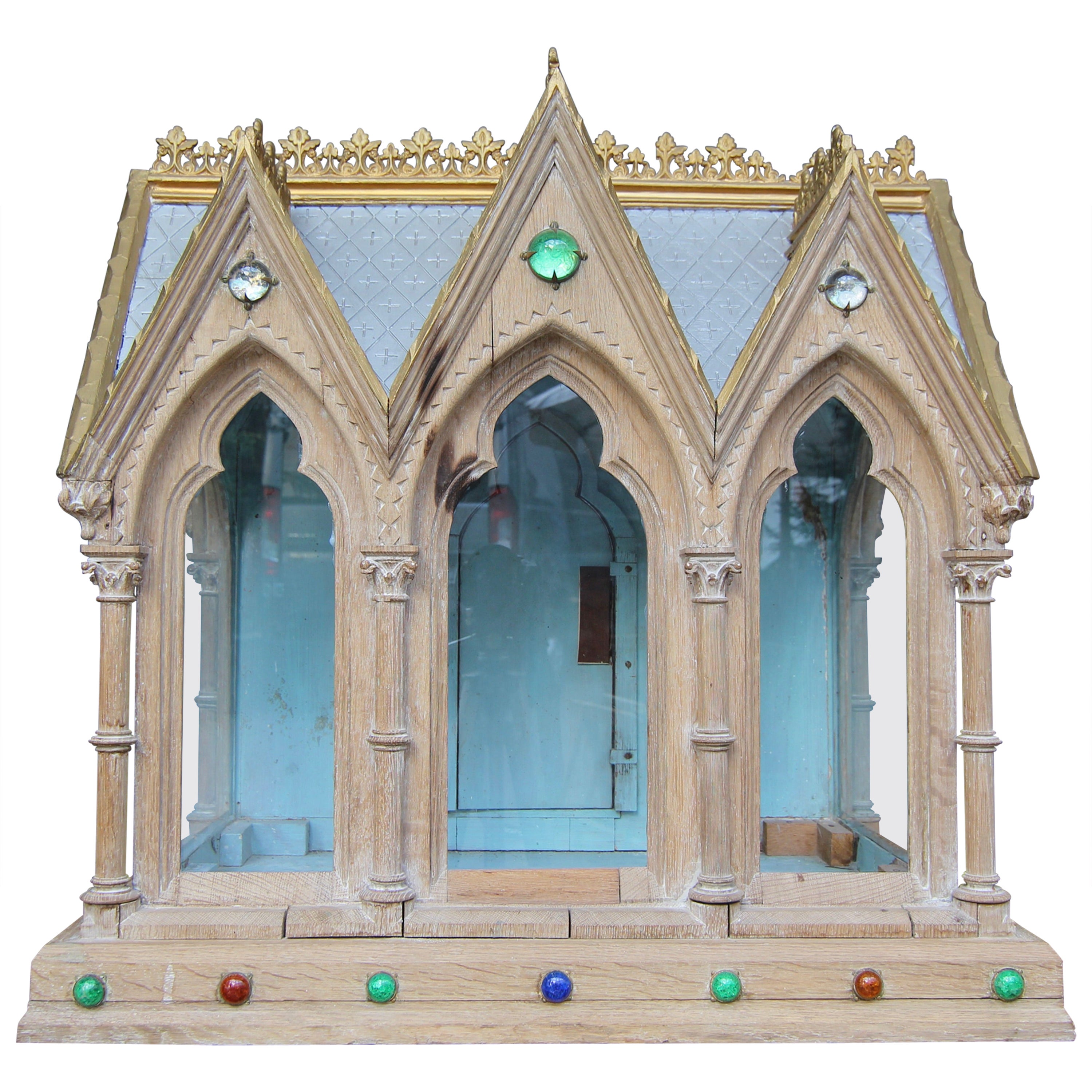
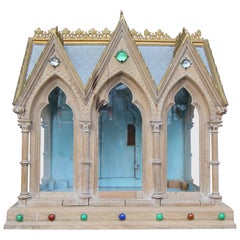
19th Century French gothic cathedral giltwood
glass reliquary / vitrine
France, mid-19th century.
A reliquary is a container for the display and keeping holy relics safe. Relics, (Sometimes physical remains of saints or items associated with them) are venerated in the Christian tradition.
This exquisite architectural example is one of the finest we have ever offered.
Comprising of two pieces the removable carved giltwood shingled roof, with polychromed iron-red interior.
Resting on a remarkable carved giltwood and glass Gothic architectural model of
a cathedral. Fitted with four stylized pierced frieze glass windows at each side. Three tall pointed arch and giltwood stone work glass windows are at each end. The interior is polychromed/painted the same iron-red as the roof.
This is the perfect display vitrine, for a religious or non-religious valued object of your choice.
Overall Measurements:
11.5-inch deep x 20-inch wide x 19-Inches tot he end steeples, 15-inch high tot eh top of the side pierced giltwood frieze.
Fitted with four 3.5-inch x 8-inch high windows at each side (8 total) .
Fitted with three inch x 11-inch high at each end (6 total).
The removable roof measures 8-inch high x 17.5-inch wide x 7-inch deep.
Condition Report:
Overall in excellent well cared for antique condition, structurally sound, some minor breaks and losses, to gilt and wood. Presents beautifully, ready to place and use.
- Dimensions:Height: 19 in (48.26 cm)Width: 20 in (50.8 cm)Depth: 11.5 in (29.21 cm)
- Style:Gothic Revival (Of the Period)
- Materials and Techniques:
- Place of Origin:
- Period:
- Date of Manufacture:1850s
- Condition:Replacements made: The glass is not original. It s an older replacement. Wear consistent with age and use. Minor structural damages. Condition Report: Overall in excellent well cared for antique condition, structurally sound, some minor breaks and losses, to gilt and wood. Presents beautifully, ready to place and use.
- Seller Location:West Palm Beach, FL
- Reference Number:Seller: 8666 / SDHU5T22661stDibs: LU2592329610962
About the Seller
5.0
Platinum Seller
Premium sellers with a 4.7+ rating and 24-hour response times
Established in 1996
1stDibs seller since 2017
1,489 sales on 1stDibs
Typical response time: 1 hour
- ShippingRetrieving quote...Shipping from: Atlanta, GA
- Return Policy
More From This Seller
View All19th C. American Brass Ecclesiastical Revolving Dual Sided Lectern/ Music Stand
Located in West Palm Beach, FL
19th Century American Brass Ecclesiastical Revolving Dual Sided Lectern/ Music Stand
USA, 1871
A Remarkable piece of 19th-century American ecclesiastical workmanship: a Brass Revol...
Category
Antique 19th Century American Gothic Revival Religious Items
Materials
Brass, Steel
$4,760 Sale Price
20% Off
19th Century French Moorish Gilt Bronze Figural Centerpiece
Located in West Palm Beach, FL
19th Century French Moorish Gilt Bronze Figural Centerpiece
France, 1880s
Experience the allure of late 19th century French Moorish/Orientalist art with this extraordinary gilt bro...
Category
Antique Late 19th Century French Moorish Decorative Dishes and Vide-Poche
Materials
Bronze
$3,840 Sale Price
20% Off
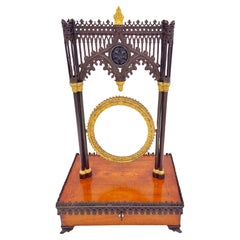
French Charles X Gothic Vanity Mirror and Jewelry Casket, circa 1835
Located in West Palm Beach, FL
French Charles X Gothic Vanity Mirror and Jewelry Casket, circa 1835
The French Charles X period mirrored vanity box, which dates to approximately 1835–1850, showcases remarkable Go...
Category
Antique 19th Century French Charles X Table Mirrors
Materials
Bronze, Iron, Ormolu
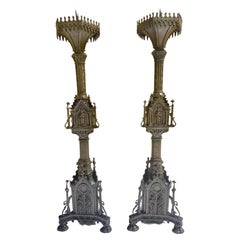
19th C. French Bronzed Zinc Gothic Architectural Pricket Altar Candlesticks
Located in West Palm Beach, FL
Pair of 19th-century French Bronzed Zinc Gothic Architectural Altar/Pricket Candlesticks, France, circa 1870s
A stunning pair of 19th-century Fren...
Category
Antique 19th Century French Gothic Revival Candlesticks
Materials
Zinc
$3,116 Sale Price / set
20% Off
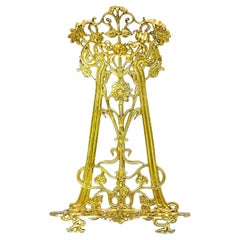
English Art Nouveau Floral Brass Table Bookstand/ Easel
Located in West Palm Beach, FL
English Art Nouveau Floral Brass Table Bookstand/Easel
England, 20th century
A magnificent example of English Art Nouveau is this exquisite brass table bookstand/easel. Made in Eng...
Category
20th Century English Art Nouveau Easels
Materials
Brass
$956 Sale Price
20% Off
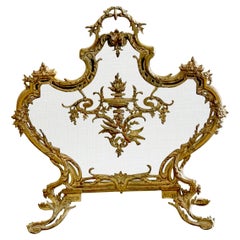
French Louis XVI Style Gilt Ormolu Blackened Mesh Classical Motifs Fire Screen
Located in West Palm Beach, FL
French Louis XVI Style Gilt Ormolu and Blackened Mesh Fire Screen with Classical Trophy Mounts
France, Late 19th to Early 20th Century
Overall: 31" H x 28" W x 8" D
Cartouche screen...
Category
Antique Late 19th Century French Louis XVI Fireplaces and Mantels
Materials
Metal, Steel, Ormolu
You May Also Like
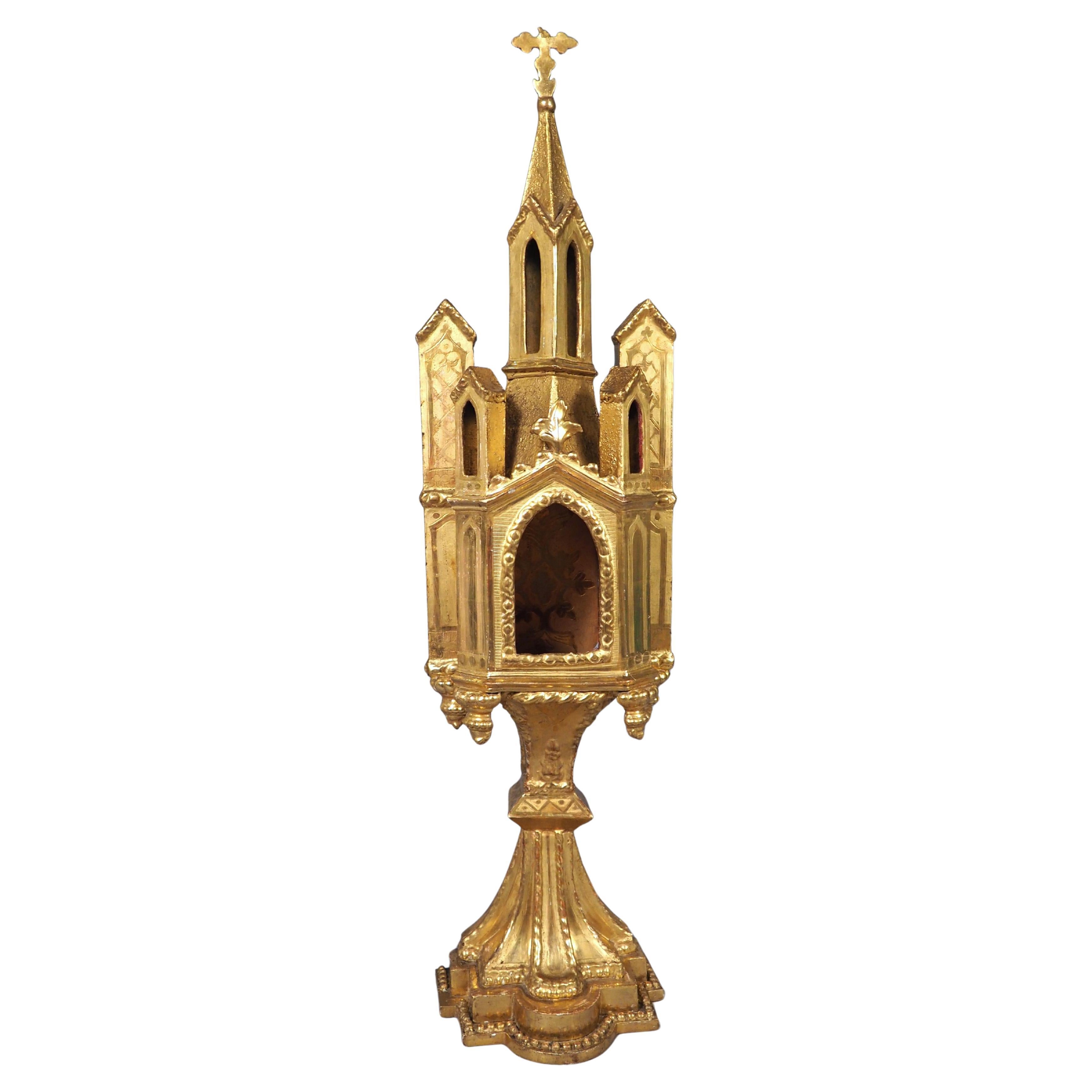
18th Century French Giltwood Architectural Monstrance
Located in Dallas, TX
More information coming soon…
A beautiful and towering French monstrance, measuring 37 inches tall. Hand-carved in the 1700s, the giltwood architec...
Category
Antique 18th Century French Gothic Religious Items
Materials
Silk, Upholstery, Wood, Giltwood

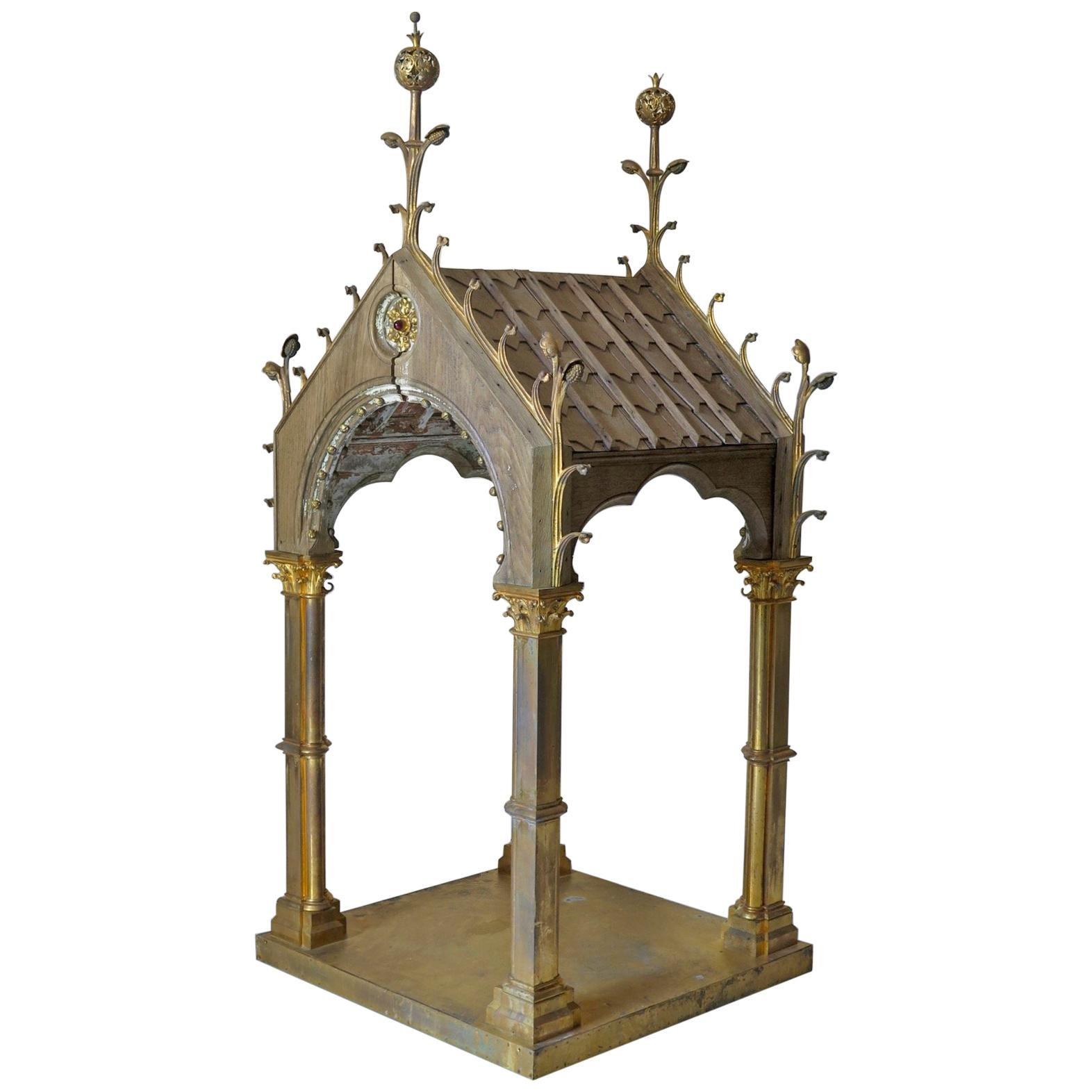
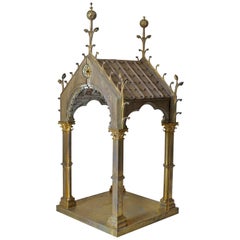
French Gothic Revival Religious Artifact, circa 1880s
Located in Isle Sur La Sorgue, Vaucluse
Catholic artifact, originally made to house a statue. Made of oak, clad in copper The Gothic style decor on the roof is made of brass.
Category
Antique Late 19th Century French Gothic Revival Religious Items
Materials
Brass, Copper
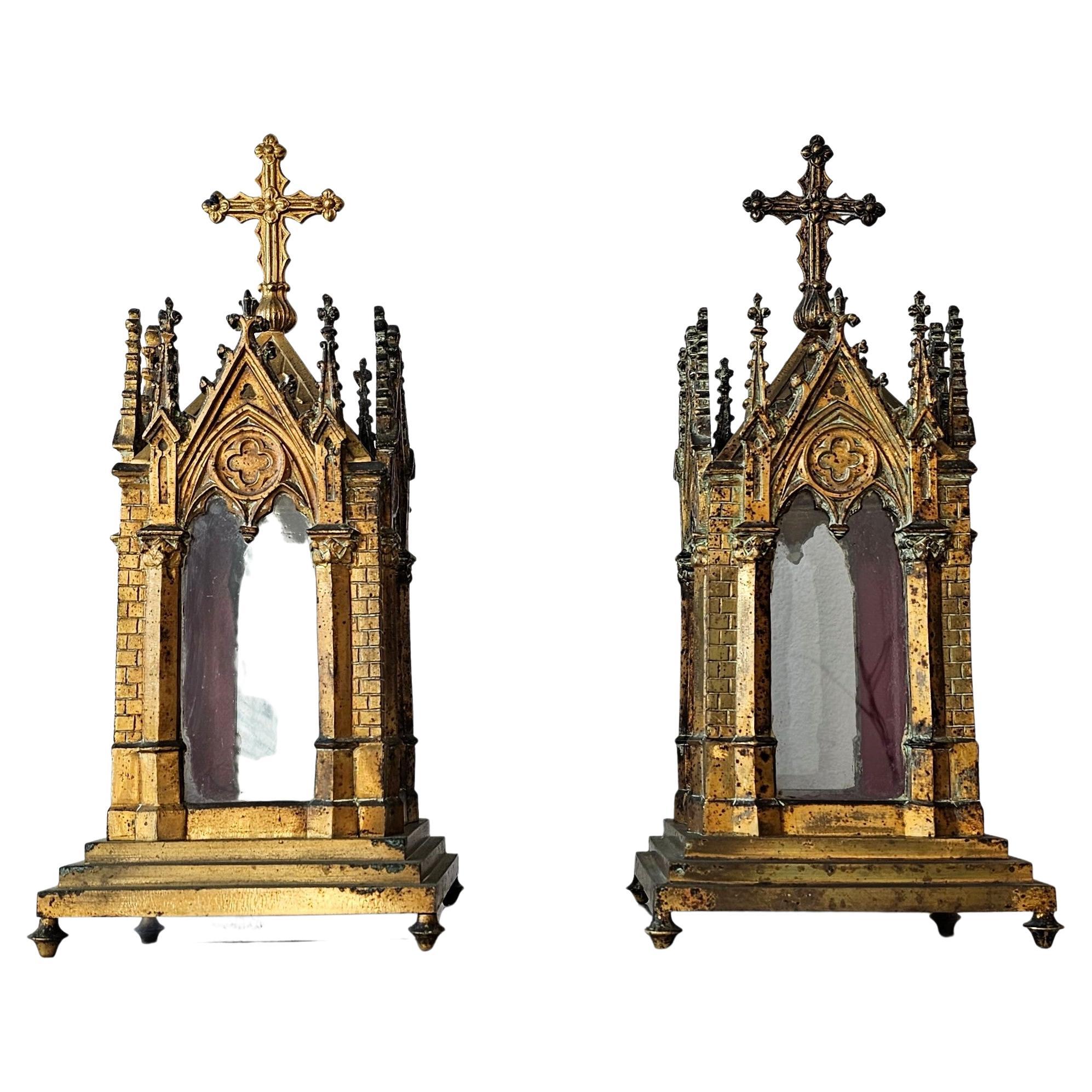
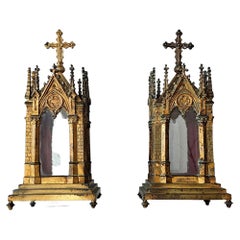
Fine 19th Century French Neo-Gothic Gilt Metal Cathedral Church Reliquary Pair
Located in Forney, TX
A stunning pair of very fine quality French Neo-Gothic gilt metal church reliquaries. circa 1860s
Most impressive objets d’art, born in France in the second half of the 19th century, most likely Parisian gilded bronze and brass ormolu work, exceptionally executed sculptural form, the exquisitely detailed architectural cathedral shaped case having a removable pointed steeple roof with cross finial, opening to relic display case surrounded on all sides by original glazed glass panes, stepped base, rising on disc feet. Signed, stamped by maker / bronzier "BC" (unknown) model "5096" and other faint marks to lid interiors.
Additional photos available upon request
Dimensions: (approx)
14.75" High, 6.75" Wide, 6.75" Deep; 13.25 lbs total
History:
A reliquary (also referred to as a shrine, by the French term châsse or monstrance) is a container for important religious relics.
The earliest reliquaries were essentially boxes, either simply box-shaped or based on an architectural design, taking the form of a model of a church with a pitched roof. These latter are known by the French term chasse, and typical examples from the 12th to 14th century have wooden frameworks with gilt-copper plaques nailed on, decorated in champlevé enamel. Limoges was the largest production centre; NB the English usage differs from that of the French châsse, which denotes large size rather than shape.
Relics of the True Cross became very popular from the 9th century onward and were housed in magnificent gold and silver cross-shaped reliquaries decorated with enamels and precious stones. From about the end of the 10th century, reliquaries in the shape of the relics they housed also became popular; hence, for instance, the skull of Pope Alexander I was housed in a head-shaped reliquary. Similarly, the bones of saints were often housed in reliquaries that recalled the shape of the original body part, such as an arm or a foot.
A philatory is a transparent reliquary designed to contain and exhibit the bones and relics of saints. This style of reliquary has a viewing portal to view the relic inside. The feretrum was a medieval form of reliquary or shrine containing the sacred effigies and relics of a saint.
During the later Middle Ages, the monstrance form, primarily used for consecrated hosts, was sometimes used for reliquaries. These housed the relic in a rock crystal, or glass capsule mounted on a column above a base, enabling the relic to be displayed to the faithful. Reliquaries in the form of large pieces of metalwork jewellery also appeared around this time, housing tiny relics such as pieces of the Holy Thorn, notably the Holy Thorn Reliquary now in the British Museum.
Condition:
Superb museum quality examples, in excellent original unrestored antique condition with beautifully aged patina. Wear consistent with age and use. Heavily patinated - scattered oxidation. Overall wonderful examples.
Typically reliquaries were not sold in pairs, so to find a matching pair such as this is exceptionally rare.
Worldwide shipping available
Local pickup available near Dallas, Texas
Additional:
We here at Lynx Hollow Antiques love religious antiques, from Christian tabernacles, Catholic altarpiece, life-size Buddhist temple sculptures, Hindu votive offerings, 16th century Islamic mosque architectural salvaged windows...
Category
Antique Mid-19th Century French Gothic Revival Religious Items
Materials
Brass, Bronze
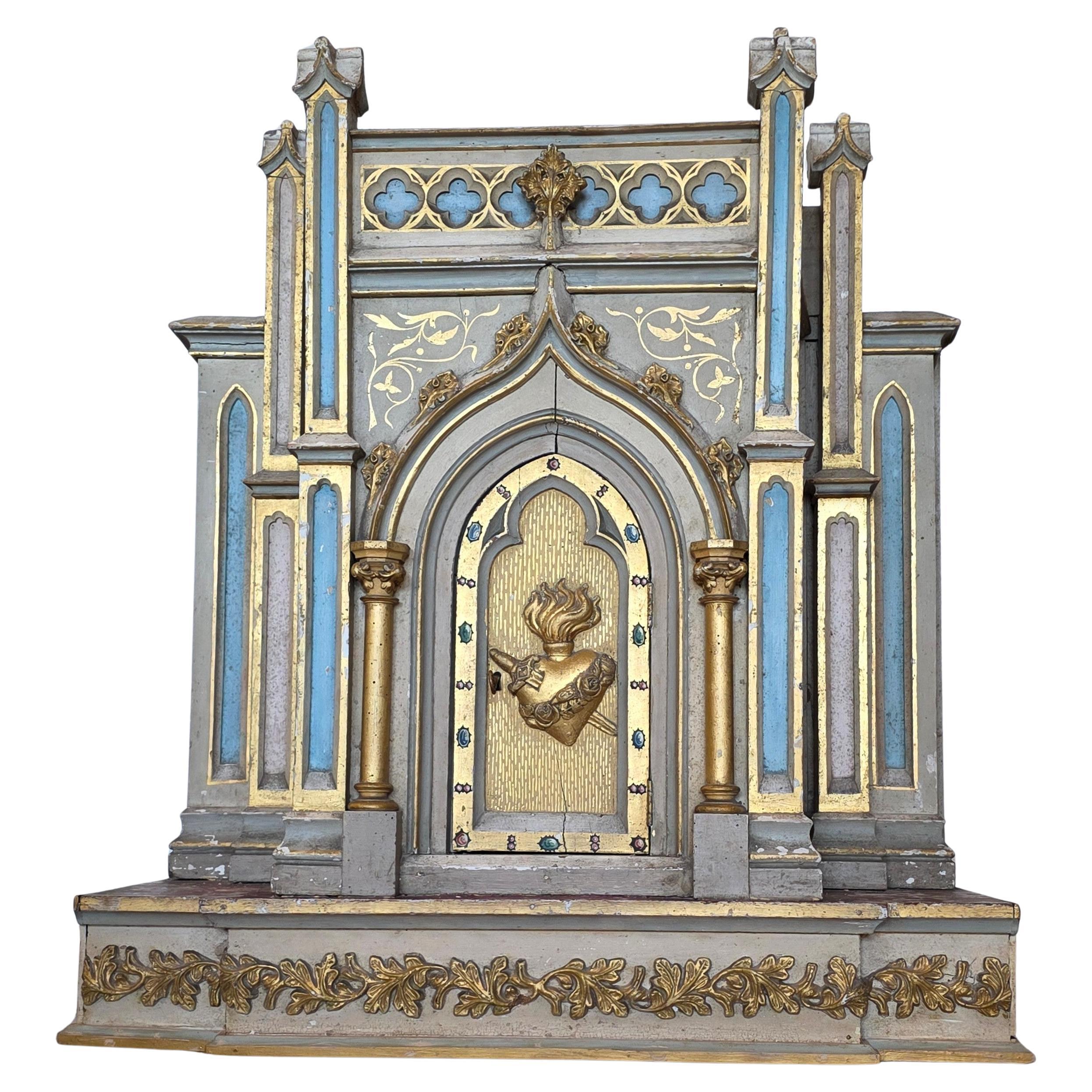
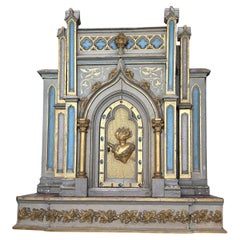
Antique French Gothic Revival Church Tabernacle Cabinet Cathedral Altar Shrine
Located in Forney, TX
A magnificent French Gothic parcel gilt paint decorated church tabernacle. circa 1810
France, early 19th century, executed in period Gothic Revival ...
Category
Antique Early 19th Century French Gothic Revival Religious Items
Materials
Gold Leaf
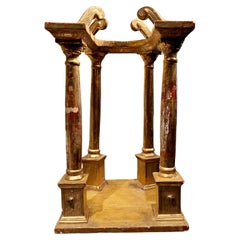
Italian 18th Century Architectural Carved and Giltwood Tabernacle as a Temple
Located in Firenze, IT
This Italian 18th century Louis XVI period hand carved and gilt wood architectural fragment probably was the central section of a bigger altar tabernacle that can now be used as a de...
Category
Antique 18th Century Italian Louis XVI Architectural Models
Materials
Iron, Wrought Iron, Gold Leaf
Late 19th Century Gothic Revival Reliquary Casket
Located in Dusseldorf, DE
A Gothic Revival reliquary. Circa late 19th / early 20th century. Made of solid oak with fine carving.
Reliquaries have been used to store relics since the Middle Ages. In sacred architecture they are often located behind the main altar in the chancel. In addition to classical, often church-like caskets, anthropomorphic, so-called "speaking" reliquaries were also made, which already inform the viewer about their contents through their own design. Mostly they were made of precious metals and decorated with rich sculptural ornaments or precious stones. One of the most famous examples of reliquaries is the Epiphany shrine of Nicholas of Verdun from the late 12th or early 13th century in Cologne Cathedral.
The reliquary offered here has an architectural structure with a rectangular ground plan. The three-sided glazed box with a dormer roof rests on a plinth.
A total of 8 columns of Corinthian order form the arcades which are crowned on both long sides by 3 lancets each and enclose the lancet windows...
Category
Antique Late 19th Century German Gothic Revival Religious Items
Materials
Glass, Oak
More Ways To Browse
19th Century French Gothic Furniture
Gothic Cathedral
Iron Roof
Reliquary Carved
Hand Reliquary
French Reliquary
Gothic Reliquary
French Crucifix
17th Century Cross
19th Century Judaica
19th Century Russian Icon
Antique Religious Silver
Holy Items
Religious Statues
1960s Cross
Antique Hanukkah Menorah
Catholic Religious
Francis Assisi