Video Loading
Want more images or videos?
Request additional images or videos from the seller
1 of 8
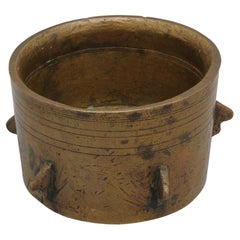
Bronze Sprinkler Bucket - Gothic Holy Water Font 15th/16th Century
Price:$780.58
About the Item
- Dimensions:Height: 6.11 in (15.5 cm)Width: 4.34 in (11 cm)Depth: 4.34 in (11 cm)
- Style:Gothic (Of the Period)
- Materials and Techniques:
- Place of Origin:
- Period:
- Date of Manufacture:15th century
- Condition:Wear consistent with age and use. normal age traces.
- Seller Location:Bilzen, BE
- Reference Number:1stDibs: LU10361244884822
About the Seller
5.0
Platinum Seller
Premium sellers with a 4.7+ rating and 24-hour response times
Established in 1987
1stDibs seller since 2025
27 sales on 1stDibs
Typical response time: 1 hour
Authenticity Guarantee
In the unlikely event there’s an issue with an item’s authenticity, contact us within 1 year for a full refund. DetailsMoney-Back Guarantee
If your item is not as described, is damaged in transit, or does not arrive, contact us within 7 days for a full refund. Details24-Hour Cancellation
You have a 24-hour grace period in which to reconsider your purchase, with no questions asked.Vetted Professional Sellers
Our world-class sellers must adhere to strict standards for service and quality, maintaining the integrity of our listings.Price-Match Guarantee
If you find that a seller listed the same item for a lower price elsewhere, we’ll match it.Trusted Global Delivery
Our best-in-class carrier network provides specialized shipping options worldwide, including custom delivery.You May Also Like
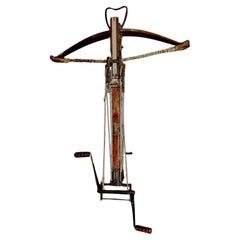
Rare Antique Gothic Windlass Crossbow, 15th–16th Century, Germany
Located in Doha, QA
This remarkable windlass crossbow, dating from the late 15th to early 16th century, is a striking example of early European military craftsmanship, originating from Germany. Measurin...
Category
Antique 15th Century and Earlier German Gothic Arms, Armor and Weapons
Materials
Iron
$54,000
Free Shipping
H 45.28 in W 28.35 in D 5.91 in
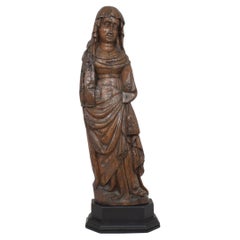
Large Flemish Medieval Gothic 15th / 16th Century Carved Oak Madonna
Located in Buisson, FR
Amazing period piece.
A Gothic / medieval Carved oak Madonna
Southern Netherlands/ Flemish
Circa 1450-1550
Weathered, small losses and old repairs
H:101cm W:35cm D:15cm
Measurement...
Category
Antique 16th Century Dutch Gothic Religious Items
Materials
Oak
$5,704 Sale Price
51% Off
H 39.77 in W 13.78 in D 5.91 in
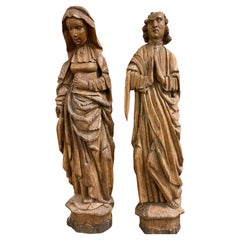
Pair of 15th/16th Century Carved Oak Saints
Located in Basildon, GB
A Pair of Late 15th or Early 16th Century Oak Saints carved in high relief and raised on polygonal bases. The female depicted standing in contrapose with low...
Category
Antique 15th Century and Earlier European Gothic Religious Items
Materials
Oak
Spanish Moorish Gothic Mortar 15th century
Located in DELFT, NL
Spanish - Moorish Gothic bronze mortar and with ribs, most likely from Andalusia.
Of conical shape, resting on a circular base, the exterior decorated with a series of wing-shaped pr...
Category
Antique 15th Century and Earlier Spanish Gothic Scientific Instruments
Materials
Bronze
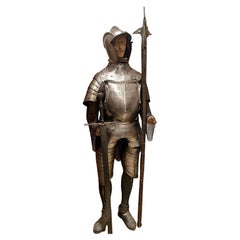
Antique German 15th- 16th Century Infantry Armour with Bascinet, Sword
Halberd
Located in Doha, QA
This extraordinary and remarkably well-preserved ensemble represents a complete set of late medieval German infantry armour, dating from the 15th to early 16th century. Forged entirely from high-quality steel plates and joined with traditional leather straps for proper articulation and fit, the armour embodies the superb craftsmanship and engineering of the German armourers of the period.
The helmet is a finely made European bascinet, the classic combat helmet of the era. It features a gracefully pointed visor and hinged cheek plates, designed to provide both excellent facial protection and freedom of movement, while allowing sufficient ventilation and audibility during combat. The bascinet retains its original character and displays the subtle fluted detailing that became a hallmark of German armour-making in the transitional phase from the Gothic to the early Renaissance styles.
The suit is mounted on an antique wooden mannequin stand measuring 175 cm in height and includes its original linen undergarment and chainmail shirt...
Category
Antique 15th Century and Earlier German Gothic Arms, Armor and Weapons
Materials
Steel
$150,000
H 68.9 in W 23.63 in D 13.78 in
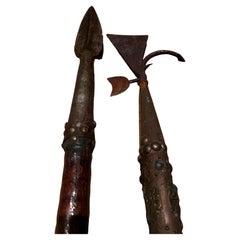
Antique Rare Medieval Pole Arms-Spear and Glaive 15th-16th century Austria
Located in Doha, QA
An extraordinary pair of medieval pole arms from the 15th-16th century, originating in the Habsburg Empire (Austria).
These rare weapons- comprising a long iron spear and a glaive- w...
Category
Antique 16th Century Austrian Gothic Arms, Armor and Weapons
Materials
Bronze, Iron
$14,500 / set
Free Shipping
H 61.82 in W 1.58 in D 1.78 in
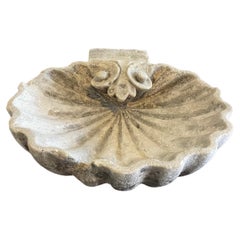
19th Century Limestone Holy Water Font
Located in Zedelgem, BE
19th century Beautiful little holy water font in limestone (Italian church).
Category
Antique Late 19th Century European Louis XV Religious Items
Materials
Limestone
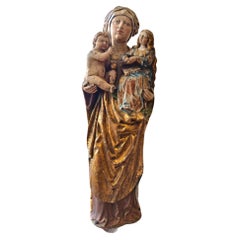
15th Century Gothic Virgin
Located in Madrid, ES
15th century Gothic Virgin
Gothic Virgin of the 15th century Virgin in carved and polychrome wood of the 15th century. In its original state, muse...
Category
Antique 15th Century and Earlier Figurative Sculptures
Materials
Wood
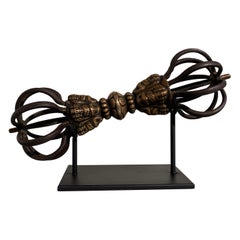
Large Himalayan Inlaid Bronze Vajra with Wrathful Faces, 15th-16th Century
Located in Austin, TX
A large and unusual Himalayan bronze and mixed metal nine prong vajra featuring wrathful faces. In the style of the Tangut (Western Xia) Kingdom (1038 to 1227), but probably later, most likely 15th-16th century.
The body of the vajra crafted from a copper alloy, with five wrathful faces on either side and gold and silver inlays to the center. The prongs crafted of iron, with each side having eight prongs arcing outwards around a central prong before coming back to a copper alloy point.
The vajra is meditational tool...
Category
Antique 16th Century Mongolian Metalwork
Materials
Iron, Gold, Silver, Bronze
$9,500
H 9 in W 5.75 in D 3 in
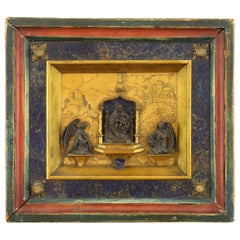
"Madonna with Child and Angels". Italy, 15th-16th Centuries
Located in Madrid, ES
Bronze in its color and gold, lapis lazuli, rock crystal, enamel.
In the centre of the work is presented, enthroned, the figure of Mary, with a mantel (fireplace) on her shoulders and hair and holding on her knees the child, who appears addressing one of the angels. The virgin is also sheltered by an ogee arch supported on turned columns, and raised visually by steps. This composition achieves a very striking contrast: the dark bronze figure, in contrast to the lapis lazuli background and the part of the arch and the outside of it, in gilded bronze. Under the steps there is a heraldic enamel shield with a key on an azure background. The angels, kneeling, are flanking this figure, and, appearing in dark bronze, visually share the "category" of religious figures with Mary, while their (lower) position gives more status to both the Mother and Jesus. The rest of the composition is completed with a delicate landscape: constructions and walls on mountains, clouds in the sky, plants, stones, etc. To the outside, another lapis lazuli frame is placed decorated in the corners with appliques, giving way to carved and polychrome wood. The lapis lazuli is a semiprecious stone already known in the seventh millennium BC., found in deposits from the Caucasus to Mauritania. From the end of the middle ages, it increased its export to Europe, its use being more frequent since then both to use it as a pigment in paintings after grinding it (giving rise to the finest and most expensive of the blues, and of the colors in many occasions), as for backgrounds of paintings, incrustations in works of art, jewelry and, a little later, in the well-known "hard stone works". The figure of Mary still shows an influence of Gothic models, although more European than Italian, along with elements that could already show a closeness to the Renaissance: although the nakedness of Jesus is already shown in Gothic works (Madonna with Angels by Fra Angelico ), the creation of space by playing with the cloth in front of Christ can be appreciated in more advanced paintings (Virgin with Child by Domenico Ghirlandaio, National Gallery of London); the presence of a powerful throne can be seen frequently in Italian Madonnas of the Quattrocento (and before), but not quite as presented here. As for the landscape, it is necessary to compare it, for example, with that of the fresco of the Condotiero Guidoriccio de Fogliano (Simone Martini, finished in 1328). This is a work of great technical and aesthetic quality, not to mention the materials chosen for its creation, comparable only to outstanding examples from around the world, such as those preserved in the Palazzo Madama in Torino (Italy), where the coral It also has an important role. It is essential to mention, also, works such as the plate of hard stones (lapis lazuli between them) with a relief of Mary with the Child in...
Category
Antique 16th Century Italian Renaissance Religious Items
Materials
Lapis Lazuli, Bronze, Enamel, Other
More From This Seller
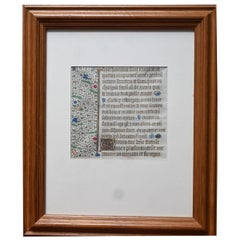
View AllIlluminated Manuscript Parchment, Gothic Period, 15th Century
Located in Bilzen, BE
A double-sided illuminated manuscript on parchment hand-written and coloured from the Gothic period (15th century)
This is a page from a liturgical book such as the Psalters and cour...
Category
Antique 15th Century and Earlier German Gothic Historical Memorabilia
Materials
Parchment Paper
Gothic period carved oak panel, 14th - 15th century
Located in Bilzen, BE
A Flemish carved oak panel in reliëf from the Gothic period, 14th - 15th century
21.2 x 38.5 cm
Category
Antique 15th Century and Earlier Belgian Gothic Historical Memorabilia
Materials
Wood
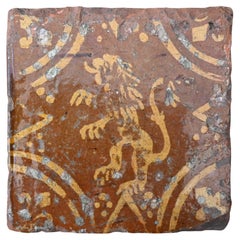
Medieval Tile From Gravensteen (counts
Castle) – Ghent – 14th–15th Century
Located in Bilzen, BE
Medieval floor tile from the Gravensteen Castle – Ghent, 14th–15th century
Rare red earthenware floor tile decorated with a heraldic lion, incised and inlaid with yellow slip under ...
Category
Antique 15th Century and Earlier Belgian Gothic Historical Memorabilia
Materials
Ceramic
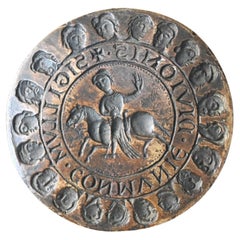
Important Bronze Seal – Sigillum Comitatus Namurcensis Belgium, 19th Century
Located in Bilzen, BE
"Important Bronze Seal – Sigillum Comitatus Namurcensis Belgium, 19th Century"
Important bronze seal – Sigillum Comitatus Namurcensis
Belgium, 19th century – Neo-Gothic historicist s...
Category
Antique 19th Century Belgian Gothic Historical Memorabilia
Materials
Bronze
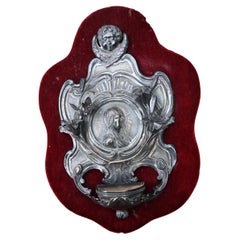
Large Holy waterfont In Sterling Silver, 19th century
Located in Bilzen, BE
Holy font in solid silver, hallmarked with 800
Holy font height 31 cm, width 19.5 cm, with rear shelf 38 x 28 cm
The silver waterfont can get taken of easely...
Category
Antique Late 19th Century German Baroque Religious Items
Materials
Sterling Silver
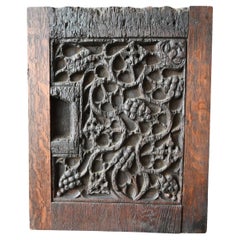
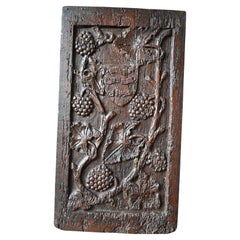
Rare Gothic Oak Panel Carved With Vine And Grape Cluster Motif, Circa 1320–1400
Located in Bilzen, BE
"Rare Gothic Oak Panel Carved With Vine And Grape Cluster Motif, Circa 1320–1400"
Rare Gothic Carved Oak Panel with Vine & Grape Motif, c. 1320–1400
This exceptional carved oak panel is a fine example of pure Gothic design, originating from Northern Europe—most likely Flanders, northern France, or England—and dating to the early–mid 14th century.
The panel is richly carved in openwork with an interlacing vine scroll bearing clustered grapes, a motif strongly associated with medieval Christian symbolism, representing the Eucharist and the “True Vine” of Christ. The design is entirely Gothic in conception, free of any later Renaissance influence, with flowing, organic tracery rather than strict symmetry.
A rectangular mortise is present to one side, indicating that the piece originally formed part of a cabinet or small door—possibly from a church sacristy...
Category
Antique 15th Century and Earlier Belgian Gothic Historical Memorabilia
Materials
Wood