Items Similar to Monstrance, San Martín de Cartes. Gilt bronze. Spanish school, 1680.
Want more images or videos?
Request additional images or videos from the seller
1 of 16
Monstrance, San Martín de Cartes. Gilt bronze. Spanish school, 1680.
$10,007.70
£7,435.02
€8,400
CA$13,876.12
A$14,922.61
CHF 7,979.15
MX$179,962.41
NOK 100,901.78
SEK 91,934.51
DKK 64,021.95
About the Item
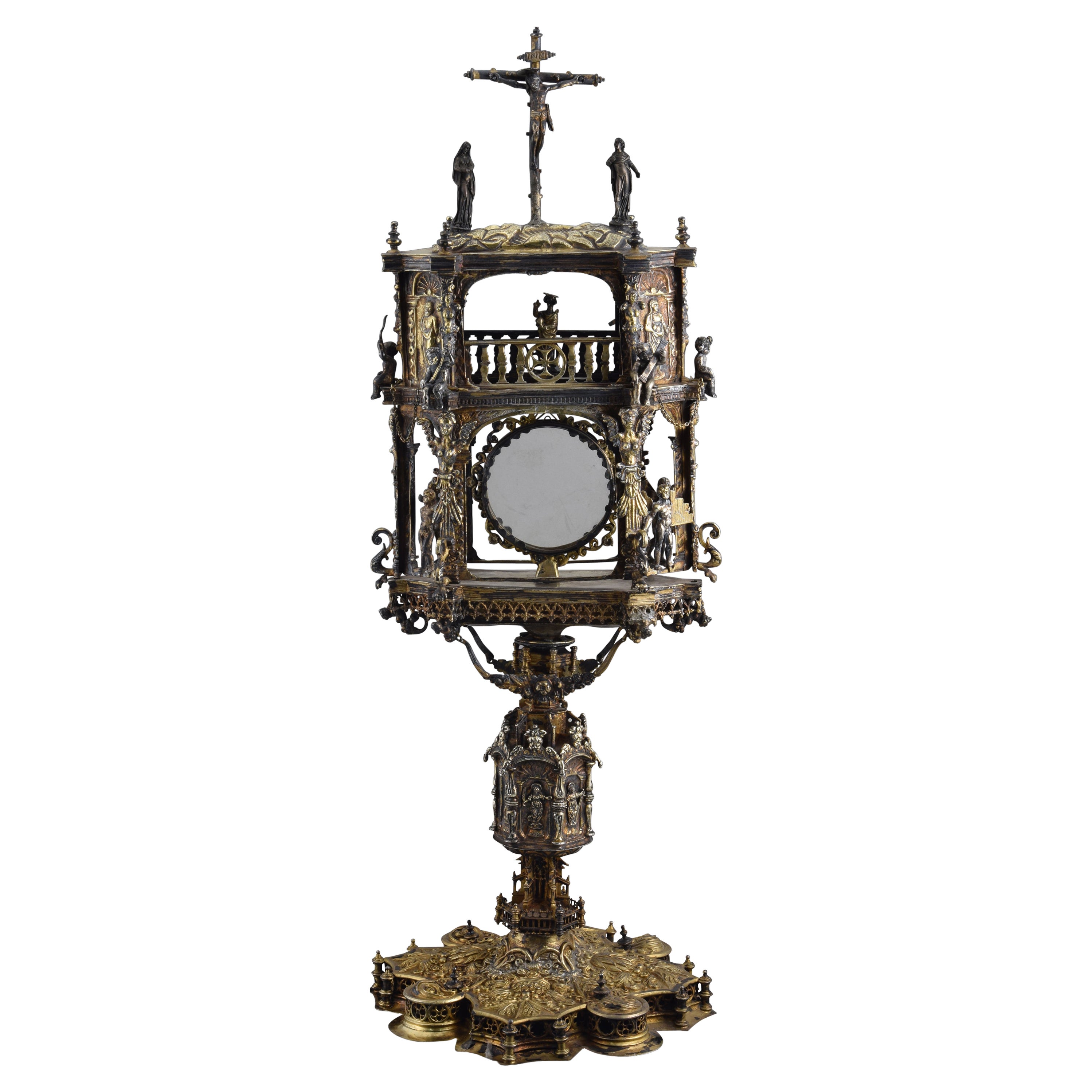
Monstrance, San Martín de Cartes (Cantabria, España). Gilt bronze. Spanish school, 1680.
With registration and date on base.
Bibliography: Heredia Moreno, María del Carmen. “Origin and diffusion of the iconography of the double-headed eagle in Spanish and Hispanic-American religious silverware.” / Sigaut, Nelly. “The monstrances of the double-headed eagle.”
This monstrance, made of gilded bronze, is of the type known as a "sunburst" due to the shape of its upper section and the rays it features (alternating between smooth rays ending in stars, wavy rays, and smooth rays without ends). The upper section also displays a vegetal motif with a winged angel's head, and the area where the Sacred Host would be placed also features rays (alternating between smooth and wavy) and a frame with engraved elements (dots, rhombuses, and C-shapes). The central axis of the piece begins with a winged angel's head, a vase-like shape, and a crowned double-headed eagle with a Franciscan shield (Latin cross and two arms) engraved on its abdomen. It continues with several discs and moldings engraved with small geometric elements and dots. The base consists of several tiers, all engraved with vegetal, geometric, and other motifs. simple, ending in a cruciform base on which the inscription “RAI FELPE 1680” is engraved (note that the R with which it begins shows elements that suggest a possible combination of F and R, resulting, perhaps, in Fray, although the bibliography mentioned cites RAY). Based on the consulted publications, the present piece is presumed to be the monstrance of San Martín de Cartes (Cantabria, Spain), the most austere and earliest of a particular group of monstrances that feature a double headed eagle on the stem and which is attributed, with reservations, to the Madrid school. Compare it with the monstrance of Santa María de Orduña from 1683, the one from the church of Alquézar Castle (Barbastro, Huesca), the one from the Carmelites of Alba de Tormes, the one from Santa María de Valtierra in Navarre, or the one from the Archbishopric of Popayán (Colombia). Apparently, the origin of the double headed eagle iconography dates back to Maximilian I's adoption of the title of Emperor of the Holy Roman Empire in 1508, with the incorporation of this symbol into his coat of arms. In 1519, this emblem was introduced to the Iberian Peninsula thanks to an engraving of Charles V as King of Spain aspiring to the Holy Roman Empire. The eagle motif appeared on religious silverware during the second half of the 17th and the beginning of the 18th centuries, the period to which the monstrances mentioned in the cited bibliography have been dated. These sources add that the use of this emblem in religious silverware was due to very specific reasons. According to the year inscribed on this monstrance (1680), Charles II was reigning, a time marked by the intrigues of Fernando de Valenzuela, which culminated in the excommunication of nobles and the corresponding acts of reparation to the Blessed Sacrament promoted by the monarch in response to the "violation of the Monastery of El Escorial by the nobility." It is important to remember, however, that from this period the iconography of the double-headed eagle was so successful that it continued to be used until the 19th century.
Weight: 4550 grams. · Size: 34x26,5x60 cm
International Buyers – Please Note: for those articles that need Export Permits (those older than 100 years), the obtaining of the Permit will be processed without additional expenses (if you choose the seller sends it to you), but the period for the obtention of it may vary from 10 to 35 days.
- Dimensions:Height: 23.63 in (60 cm)Width: 13.39 in (34 cm)Depth: 10.44 in (26.5 cm)
- Style:Other (Of the Period)
- Materials and Techniques:
- Place of Origin:
- Period:1680-1689
- Date of Manufacture:1680
- Condition:Wear consistent with age and use. Minor losses. Minor fading. Check pictures and description.
- Seller Location:Madrid, ES
- Reference Number:Seller: zf14851stDibs: LU2951348219802
About the Seller
4.9
Vetted Professional Seller
Every seller passes strict standards for authenticity and reliability
Established in 1985
1stDibs seller since 2017
359 sales on 1stDibs
Typical response time: 21 hours
- ShippingRetrieving quote...Shipping from: MADRID, Spain
- Return Policy
More From This Seller
View AllDevotional plaque, San Telmo or Sanct
Elmo. Bronze. Spanish school, 19th century
Located in Madrid, ES
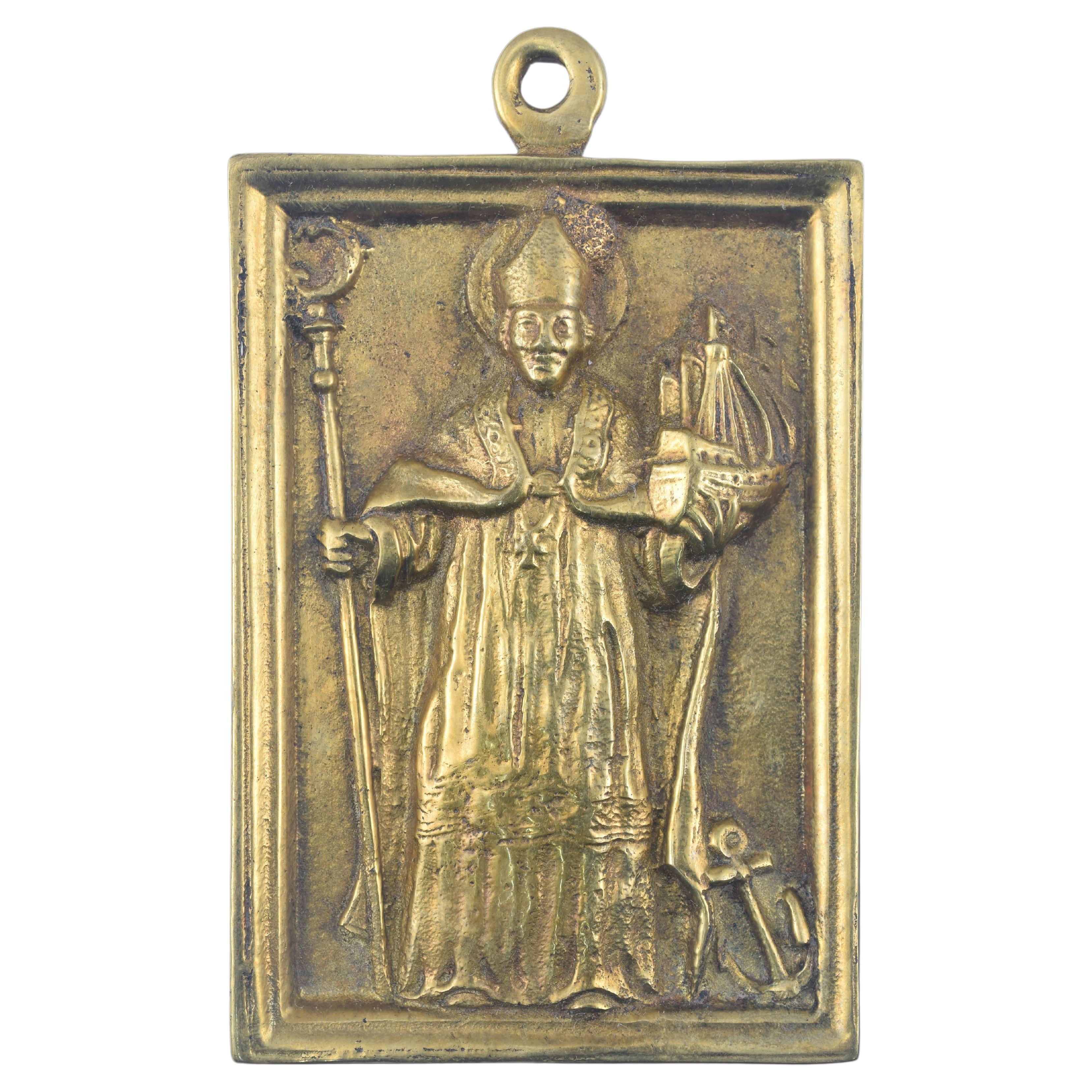
Devotional plaque, San Telmo or Sanct'Elmo. Bronze. Spanish school, 19th century.
Saint Pedro González became bishop of Palencia, later entering the Order o...
Category
Antique 19th Century Spanish Neoclassical Revival Religious Items
Materials
Bronze
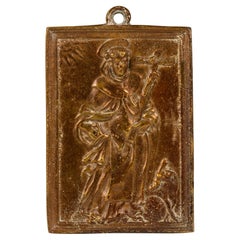
Devotional plaque, Saint Dominic de Guzmán. Bronze. Spanish School, 17th century
Located in Madrid, ES
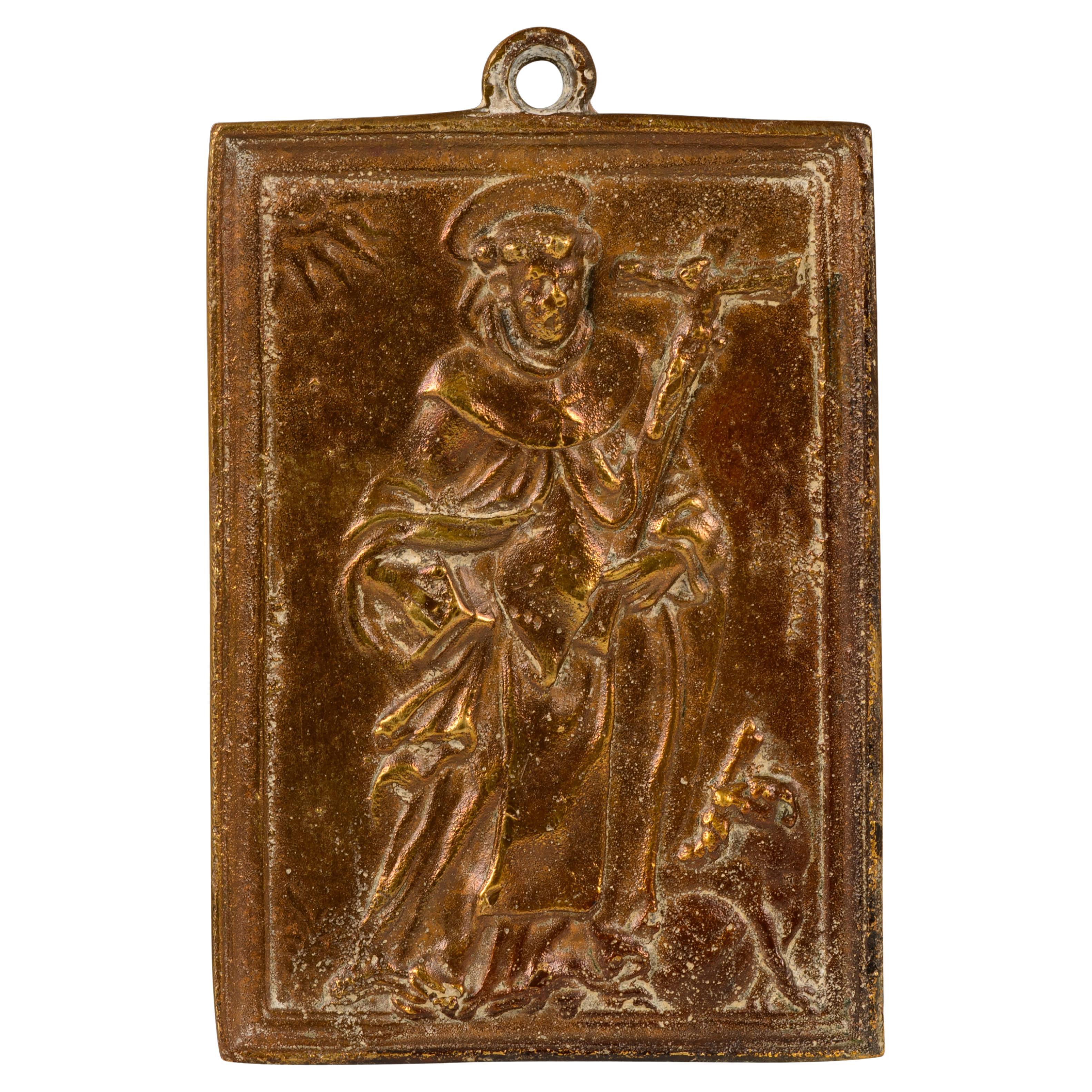
Devotional plaque, Saint Dominic de Guzmán. Bronze. Spanish School, 17th century.
Rectangular bronze devotional plaque with a ring at the top, a molded frame, and a relief figurativ...
Category
Antique 17th Century Spanish Baroque Religious Items
Materials
Bronze
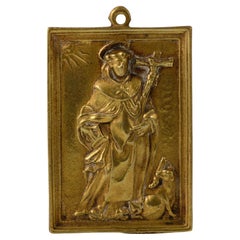
Devotional plaque, Saint Dominic de Guzmán. Bronze. Spanish School, 17th-18th c
Located in Madrid, ES
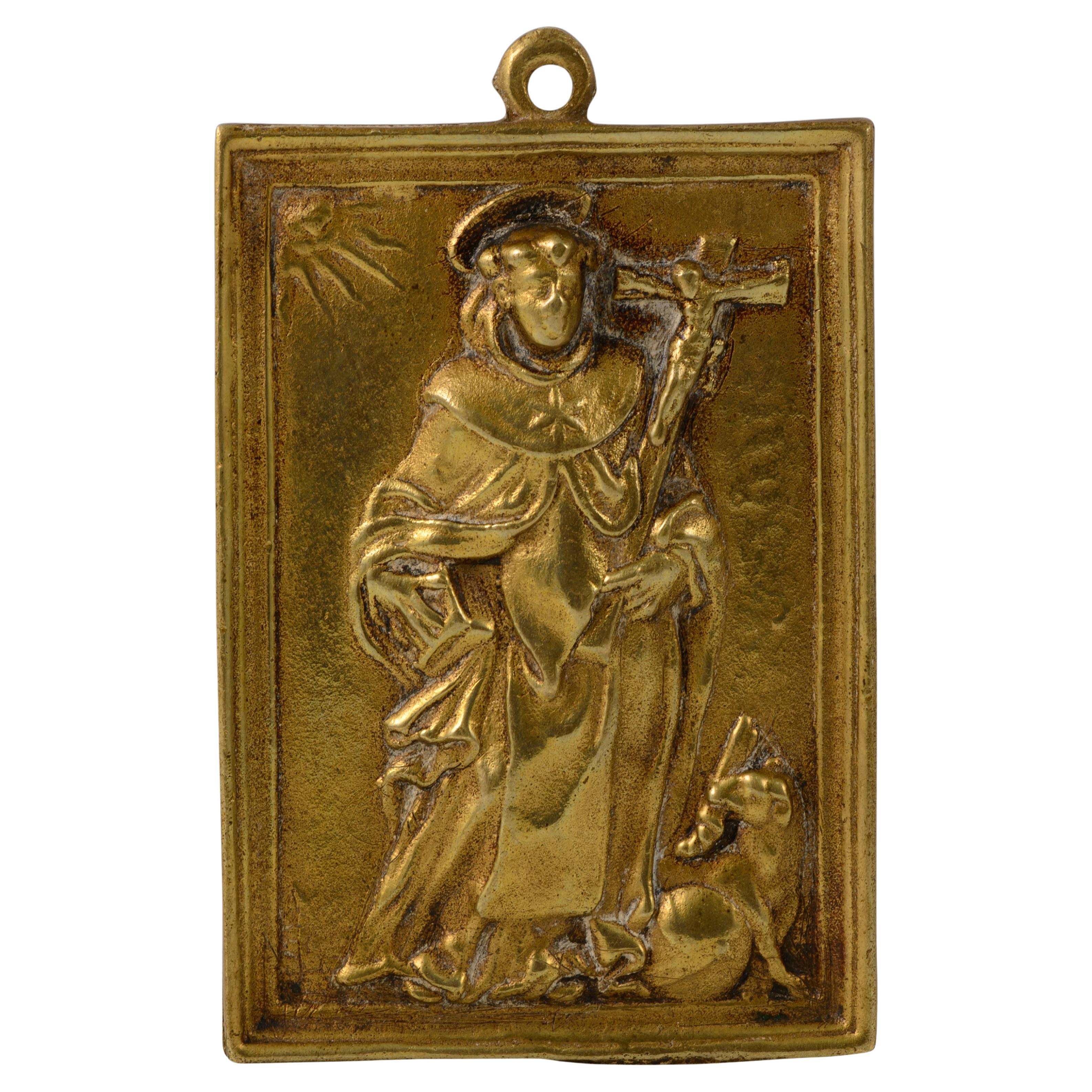
Devotional plaque, Saint Dominic de Guzmán. Bronze. Spanish School, 17th-18th centuries.
Rectangular bronze devotional plaque with a ring at the top, a molded frame, and a relief f...
Category
Antique 18th Century Spanish Baroque Religious Items
Materials
Bronze
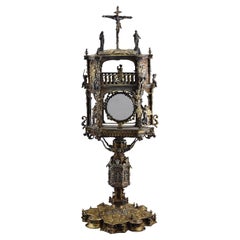
Monstrance (temple type). Silver. Spain, 16th century with restorations.
Located in Madrid, ES
Portable temple custody. Gilded silver, glass. 16th century, possible restorations.
Custody made of gilded silver (the finish has been lost in some points) composed of a base, an ax...
Category
Antique 16th Century Spanish Renaissance Religious Items
Materials
Silver, Other
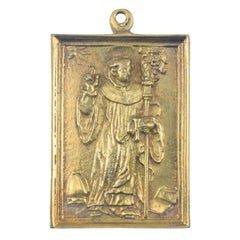
Devotional plaque, Saint Bishop Bronze. Spanish school, 19th c.
Located in Madrid, ES
Devotional plaque, Holy Bishop. Bronze. Spanish school, 19th century.
Rectangular devotional plate with a ring at the top and smooth moldings enhancing a figurative relief. You can see a male figure with a halo, carrying a bishop's staff, and is accompanied by a book and a tiara...
Category
Antique 19th Century Spanish Neoclassical Revival Religious Items
Materials
Bronze
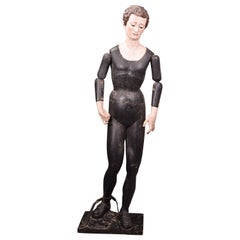
Saint Aloysius de Gonzaga (dress up). Spanish school, 18th century.
Located in Madrid, ES
San Luis Gonzaga, dressing room. Polychrome wood, etc. Spanish school, 18th century.
Carving made of polychrome wood that shows, on a rectangular base, a young man without a beard, ...
Category
Antique 18th Century Spanish Neoclassical Religious Items
Materials
Other
You May Also Like
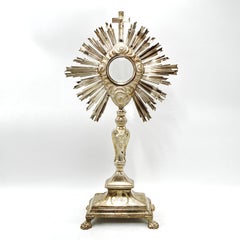
19th Century French Silver and Bronze Monstrance
Located in Victoria, BC
This striking 19th-century French monstrance is an wonderful example of ecclesiastical metalwork, featuring a solid silver upper half—fully hallmarke...
Category
Antique Late 19th Century French Religious Items
Materials
Silver, Bronze
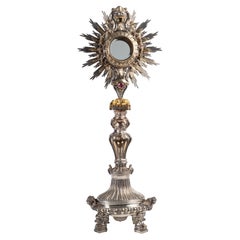
18th Century Silver Monstrance c. 1797–1799 Augsburg Neoclassical Gilt Lüders
Located in Epfach, DE
Augsburg silver sunburst monstrance, c. 1797–1799.
Master: Jakob Hermann David Lüders
This impressive late 18th century sunburst monstrance was crafted in Augsburg between 1797 and...
Category
Antique 1790s German Neoclassical Religious Items
Materials
Silver
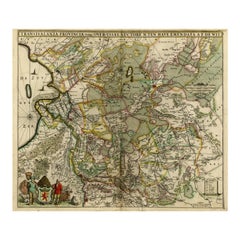
Antique Map of Overijssel by De Wit, c.1680
Located in Langweer, NL
Antique map titled 'Transisalania Provincia Vulgo Over-Yssel'. Original antique map of Overijssel, the Netherlands, showing the regio between Zutphen, Zwolle, Blokzijl, Coevorden, Ol...
Category
Antique 17th Century Maps
Materials
Paper
$424 Sale Price
20% Off
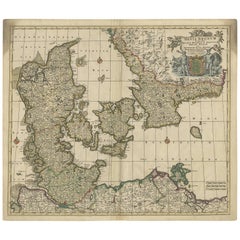
Antique Map of Denmark by F. de Wit, 1680
Located in Langweer, NL
Antique map titled 'Dania Regnum'. Large, attractive map of Denmark, Sleschwig-Holstein and southern Sweden. Good detail throughout. Embellished with a title cartouche with the Danis...
Category
Antique Late 17th Century Maps
Materials
Paper
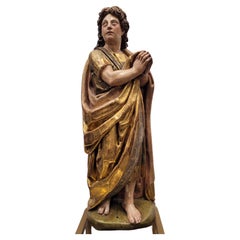
Spanish Carving of Saint John the Evangelist, School of Juan de Ancheta
By Spanish Manufactory
Located in Valladolid, ES
Outstanding Spanish carving of San Juanito, 16th century, school of Juan de Ancheta.
Juan de Ancheta (1533 - November 30, 1588) was a Spanish sculptor in the Romanesque style. His w...
Category
Antique 16th Century Spanish Renaissance Religious Items
Materials
Gold
$8,482 Sale Price
20% Off
Large Antique Map of France by De Wit, c.1680
By Frederick de Wit
Located in Langweer, NL
Antique map titled 'Accuratissima Galliae Tabula vulgo Royaume de France'. Detailed map of France. Shows provinces, cities, rivers etc.
Artists and Engravers: Frederick de Wit (1...
Category
Antique 17th Century Maps
Materials
Paper