Items Similar to Pax or Pax Board, Bronze, Spain, 16th Century
Want more images or videos?
Request additional images or videos from the seller
1 of 6
Pax or Pax Board, Bronze, Spain, 16th Century
$932.93
£692.75
€780
CA$1,281.70
A$1,393.47
CHF 738.82
MX$16,704.15
NOK 9,390
SEK 8,602.52
DKK 5,946.10
About the Item
Paper holder bronze, 16th century.
Portapaz made of bronze with an "asymmetric" handle on the back, which presents a decoration in light relief framed in an architectural composition decorated with elements of classical influence (scallop, plant elements in the upper area, columns with shaft decorated, architrave, basement with semicircular arches ...), which has a heraldic shield in the center of the lower area. Under the head of a winged angel, the central theme of the holder is presented: Crying on the body of dead Christ, with the cross in the background, Mary with Christ, flanked by two figures. The heraldic shield is very similar to that of the House of Mendoza used by Íñigo López de Mendoza and de la Vega, I Marqués de Santillana, and parent and head of the Casa Ducal del Infantado (which also presents it)."
Size: 7.5 x 4 x 12 cms.
- Dimensions:Height: 4.73 in (12 cm)Width: 2.96 in (7.5 cm)Depth: 1.58 in (4 cm)
- Style:Renaissance (Of the Period)
- Materials and Techniques:
- Place of Origin:
- Period:
- Date of Manufacture:16th Century
- Condition:Wear consistent with age and use. Minor losses. Minor structural damages. Minor fading.
- Seller Location:Madrid, ES
- Reference Number:Seller: ZF0541A1stDibs: LU2951317108872
About the Seller
4.9
Vetted Professional Seller
Every seller passes strict standards for authenticity and reliability
Established in 1985
1stDibs seller since 2017
359 sales on 1stDibs
Typical response time: 1 to 2 days
- ShippingRetrieving quote...Shipping from: Madrid, Spain
- Return Policy
More From This Seller
View AllBronze Pax or Pax Board, 16th Century
Located in Madrid, ES
Paper holder bronze, 16th century.
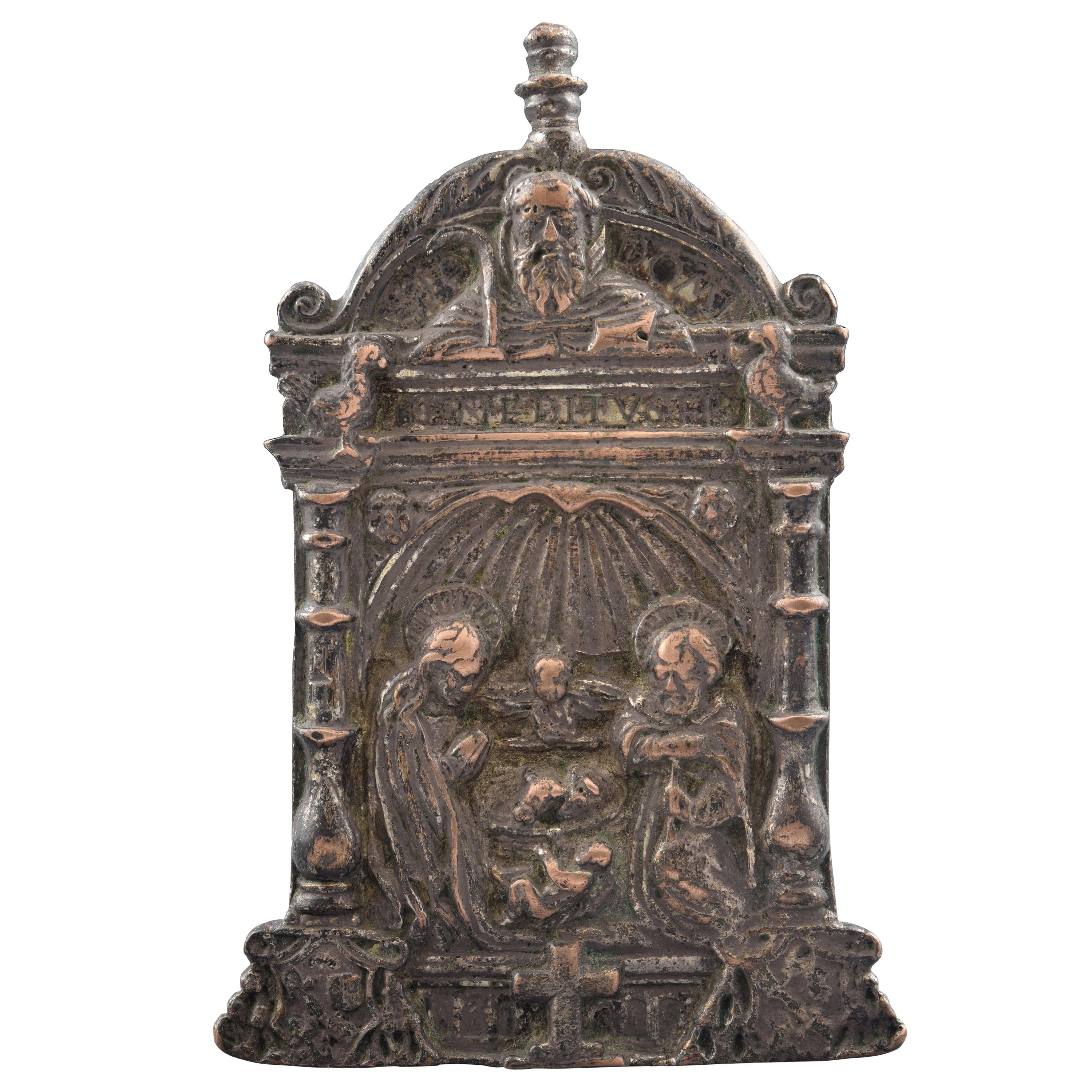
Bronze paper holder with a flat curved handle on the back that features a relief decoration organized in the front through an architectural composition with a classical influence usual in the Renaissance. Under the columns on the sides there are two heraldic shields (without bonnet, laces with tassels on three levels) with a Latin cross in the middle zone; the center shows a birth of Christ under a winged dome with heads of winged angels in the corners; at the top and under a semi-circular arch, the bust of Saint Dominic...
Category
Antique 16th Century Spanish Renaissance Religious Items
Materials
Bronze
Bronze Pax or Pax Board, 16th Century
Located in Madrid, ES
Peacekeeper. Bronze. Century XVI.
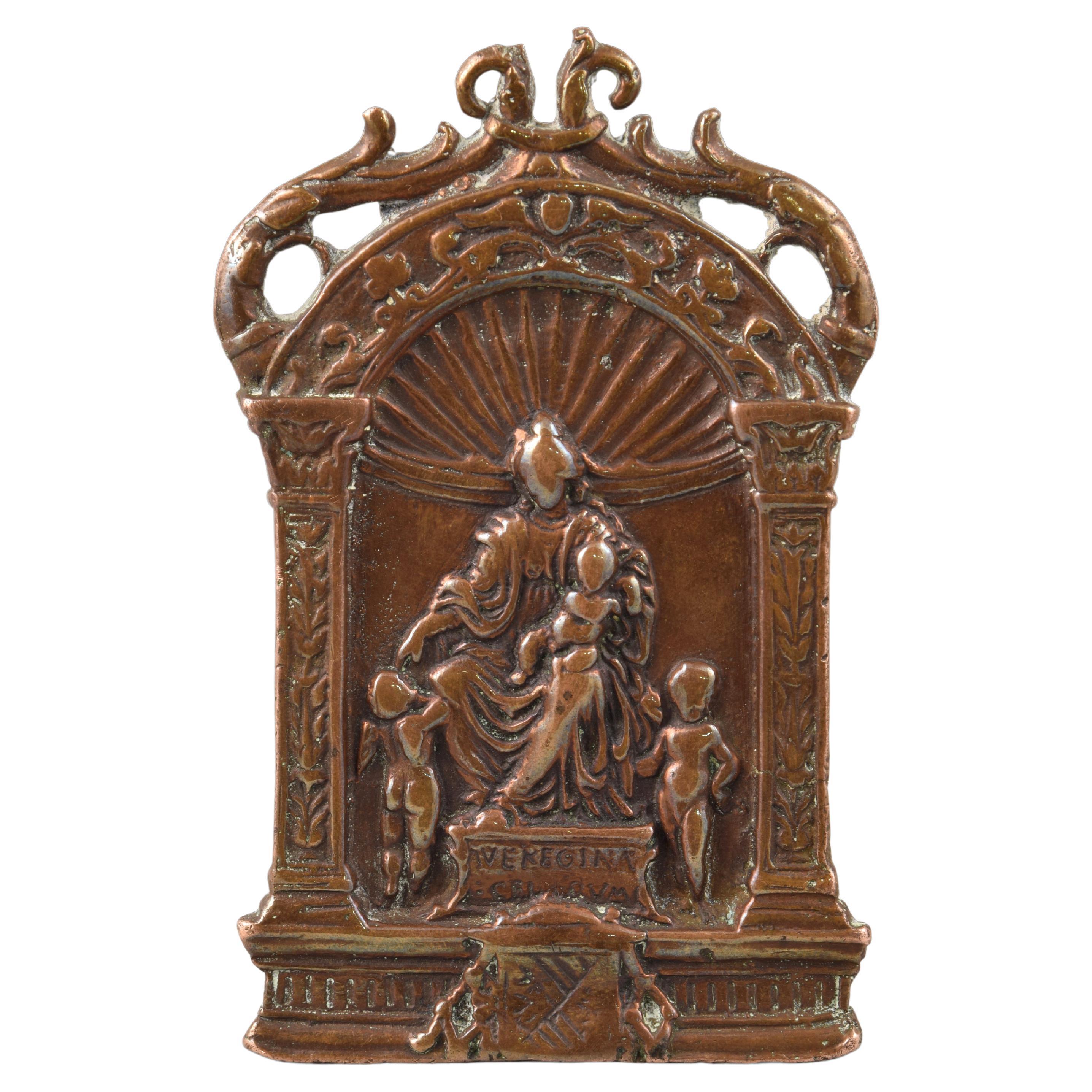
Bronze purse with a handle on the back in the shape of an esse in the same material and a decoration in light relief on the front that shows, unde...
Category
Antique 16th Century Spanish Renaissance Religious Items
Materials
Bronze
Bronze Pax or Pax Board, 16th Century
Located in Madrid, ES
Paper holder bronze, 16th century.
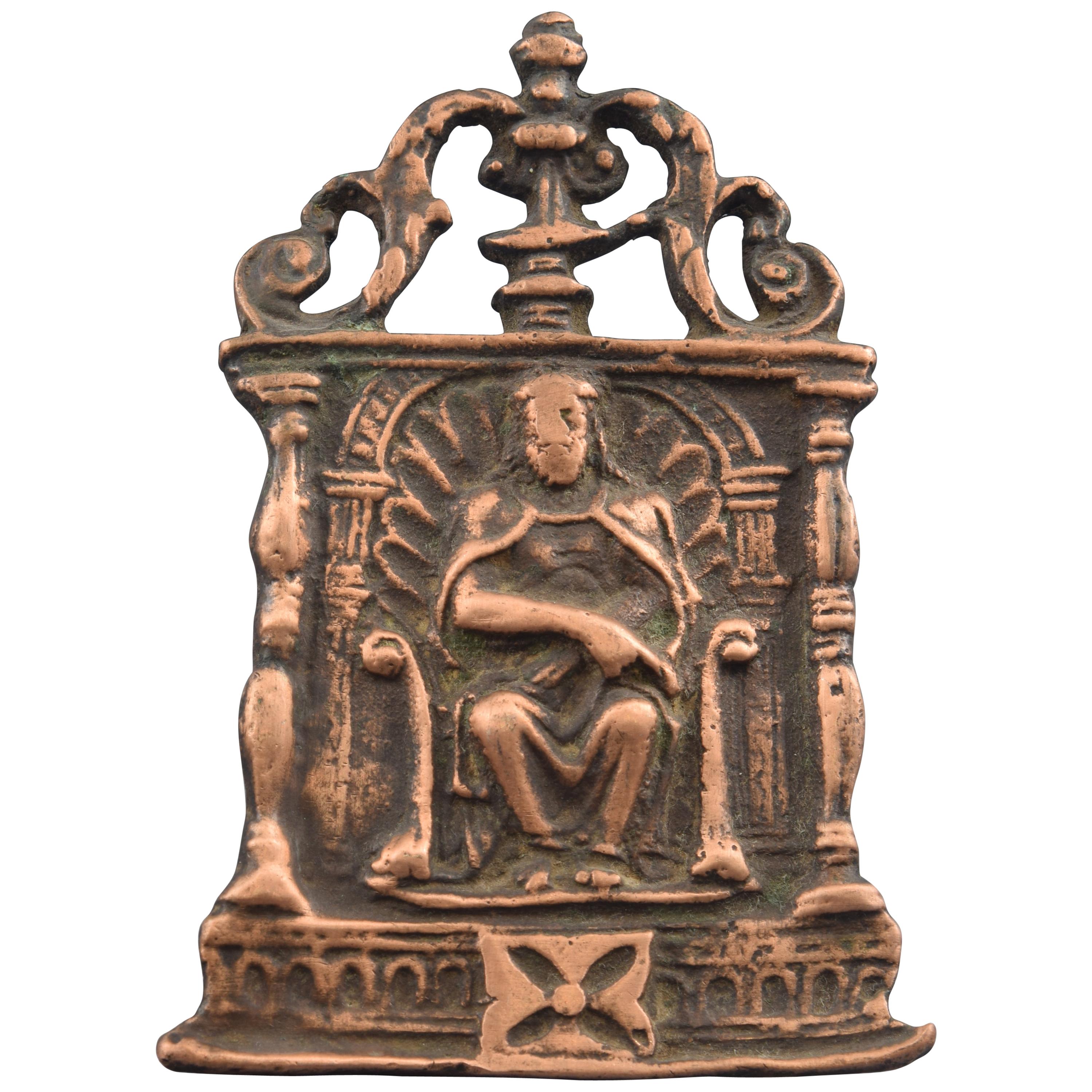
Bronze paper holder with flat handle on the back that features a light relief decoration on the front. Under an auction of openwork elements of cle...
Category
Antique 16th Century Spanish Renaissance Religious Items
Materials
Bronze
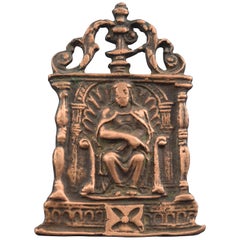
Bronze pax. 18th century
Located in Madrid, ES
BRONZE PAX.
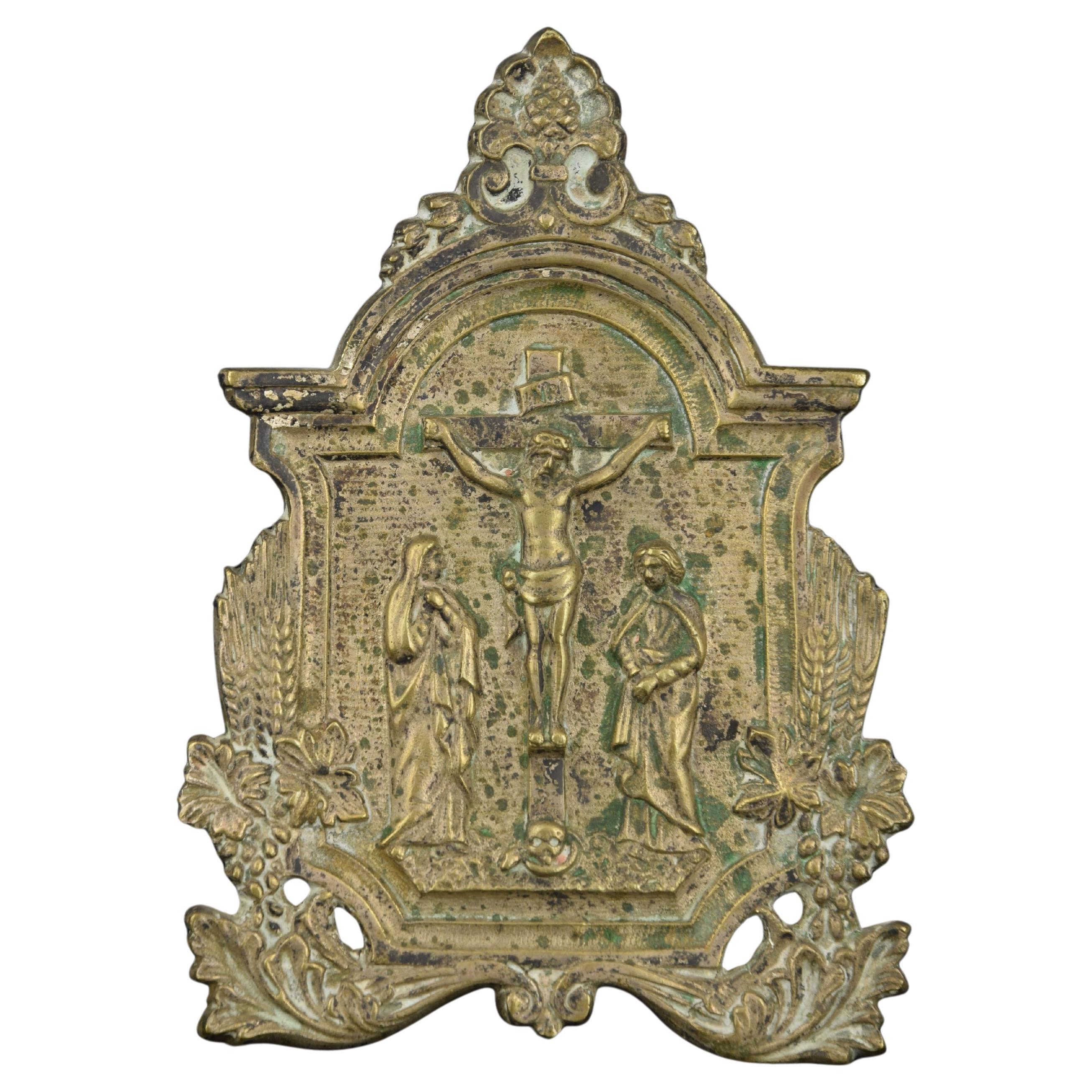
The plaque that forms this element, formerly used in mass to give the osculus of peace with decorum, has been decorated with varied reliefs: in the lower part, vegetal sc...
Category
Antique 18th Century Spanish Rococo Religious Items
Materials
Bronze
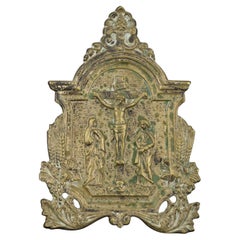
Silver Pax O Portapaz, Spain, 16th Century
Located in Madrid, ES
Portapaz. Silver in its color and gilded. Century XVI.
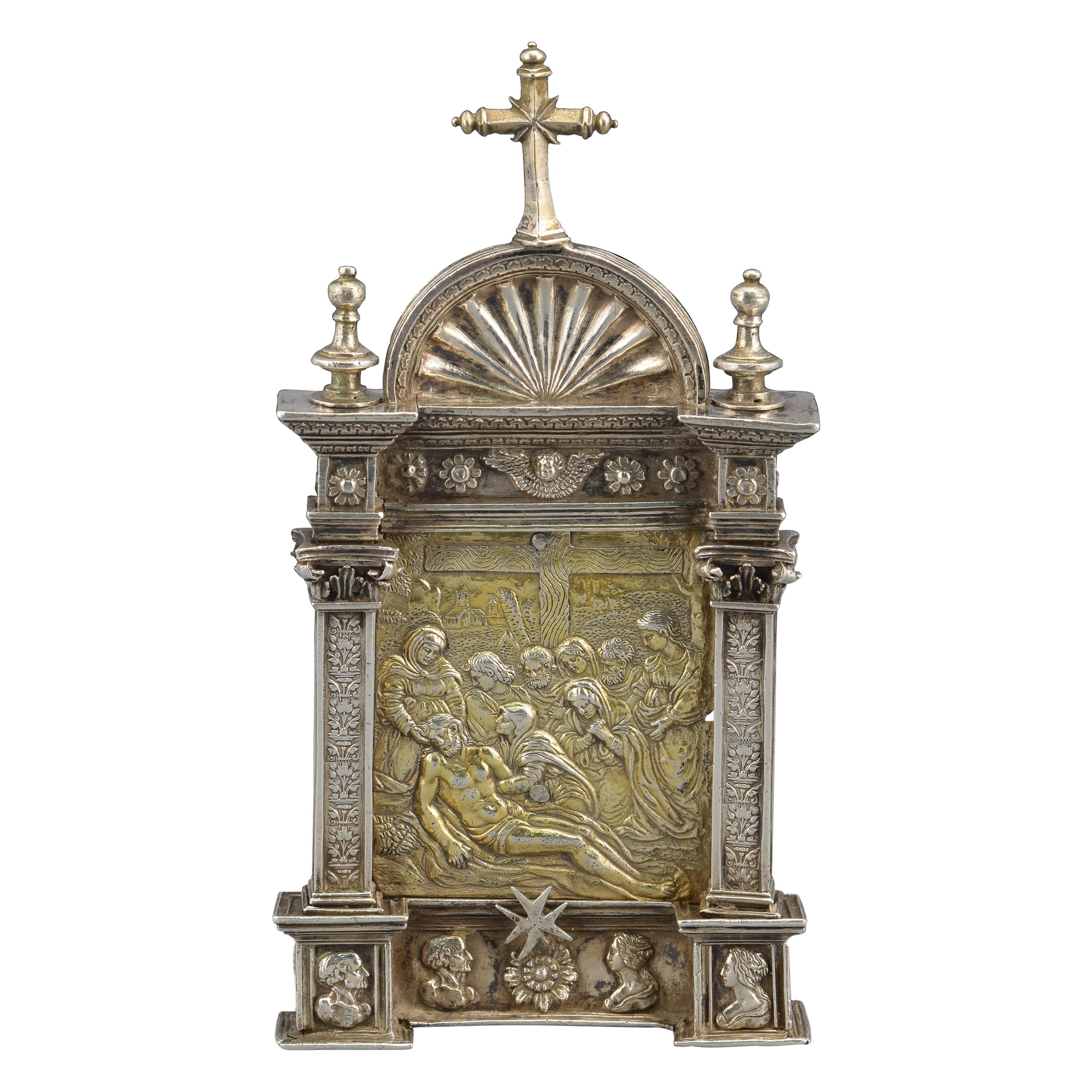
Portapaz made of silver that has a handle (decorated with delicate plant motifs similar to those of the pilasters) and a female and a male bust at the bottom, as well as other architectural elements on the back, and, on the front, an architectural composition classicist basement (with busts flanking a flower and a cross), two pilasters (vegetal decoration and capital recalling the composite order) with entablature (flowers flanking an angel's head; moldings), and a semicircular arch finish with elements veined in relief under cross and flanked by two architectural motifs in the upper part. This composition frames and enhances a gilt silver relief where you can see the Lament or Cry over the Body of Christ, with the Virgin holding the head of Jesus, Saint John at her side, the Magdalene and other characters, a cross following the group and a landscape background with houses and plant elements. This architectural structure mentioned is similar to the one present in other 16th century portapaces, such as that of the Magdalena de Dos Hermanas parish (Hernando de Ballesteros el Mozo, around 1575); or that of the Galaroza parish (same author and date); or that of the portapaz of San Miguel de Jerez de los Caballeros (in some details); etc. As for the relief, it is possible to clearly see a strong Italian influence, and the similarity between it and important pieces such as the Portapaz known as “de Cisneros by Juan de Burgos (1493-1497; MuseoCatedralicio de Alcalá de Henares), as well as in paintings and reliefs. Also noteworthy are both the male and female busts in the lower area and the Maltese cross (or Saint John's) that appears in this area. This symbol was used since the 12th century as an insignia by the Knights Hospitallers of the Order of Saint John of Jerusalem, also known as the Order of Malta...
Category
Antique 16th Century Spanish Renaissance Religious Items
Materials
Silver
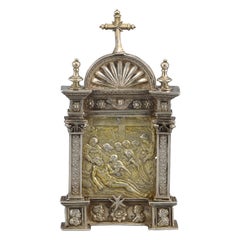
Tabernacle Door, Wood, Metal, 16th Century
Located in Madrid, ES
This type of elements are basic in churches, chapels, etc. since they contain the Sacred Forms, reason why it is logical the abundance, with a series of typologies more habitual and traditional or old than others. There are also iconographies more common than others, a certain thematic preference according to the date or school to which the work belongs, etc., always related to the Sacrifice of Christ, Salvation, Transubstantiation, Eucharist, etc. for being a key element for Christianity (especially the Catholic) what they will always contain.
The present work shows a chalice with Sacred Form in what would originally be the interior of the door (very usual iconography) and a somewhat more striking relief to the exterior. Inside that it is a Eucharistic Christ or Eucharistic Savior, the way of presenting it is more usual of the scenes of the Last Supper, being not so frequent to find it alone like this. Compare for example with works such as the door of the tabernacle attributed to Alonso Cano...
Category
Antique 16th Century Spanish Renaissance Religious Items
Materials
Metal
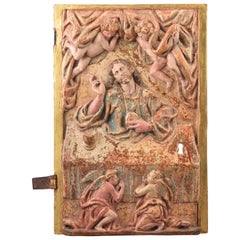
You May Also Like
Italian Liturgical Pax Brede Or Osculatorium From The 16th Century
Located in AMSTERDAM, NH
Italy
16th century
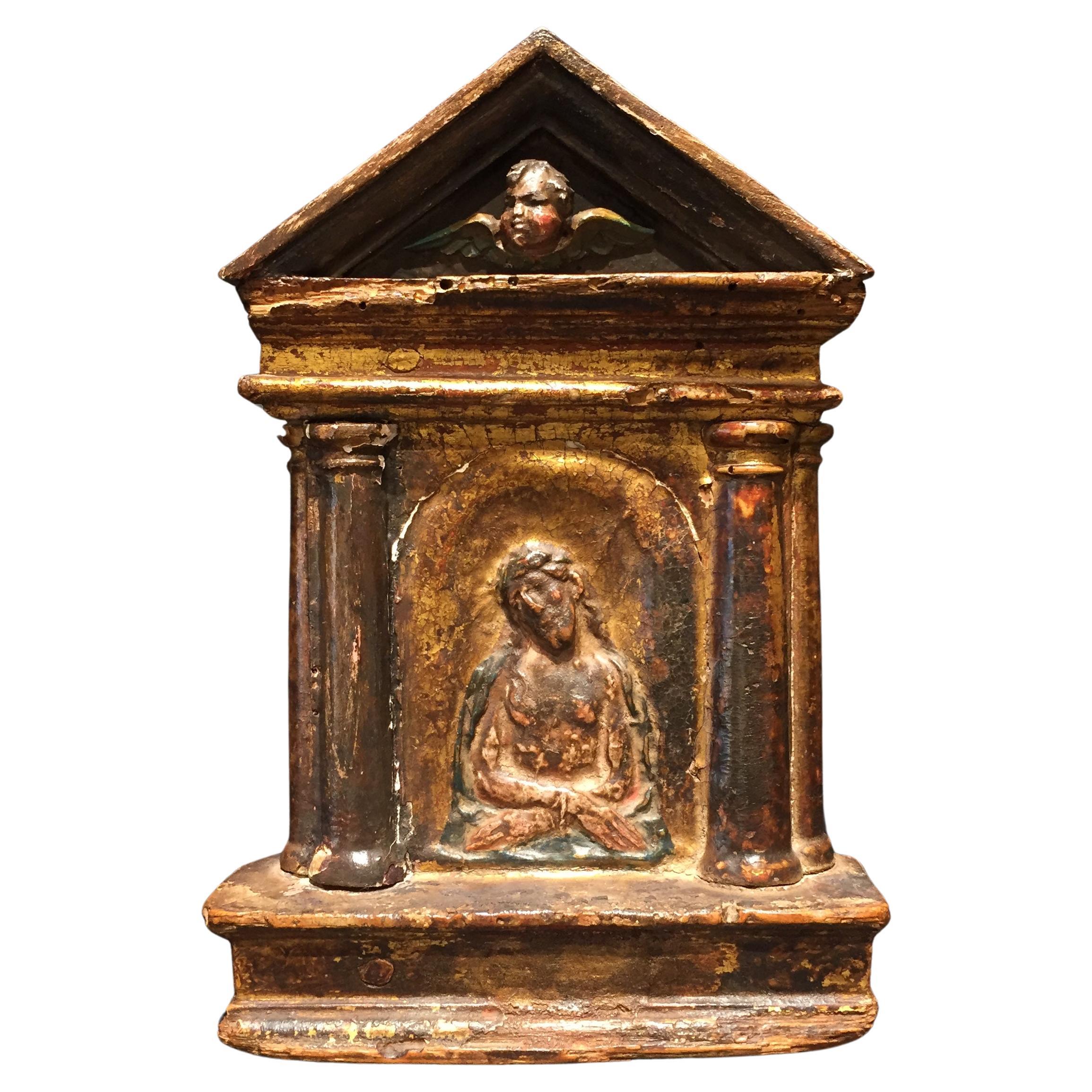
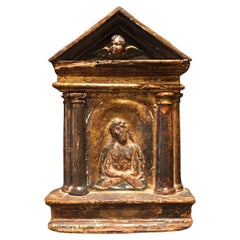
A liturgical Pax Brede or Osculatorium. The carved wooden board “Kiss of Peace” representing Christ as a man of sorrows. The pax has the shape of an ancient templ...
Category
Antique 16th Century Italian Renaissance Religious Items
Materials
Gold Leaf
Antique 19th Century orhodox Bronze Travel Icon
Located in Madrid, ES
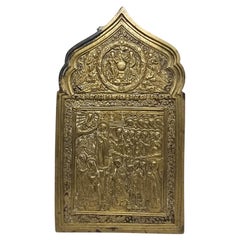
This antique 19th-century travel icon is crafted from bronze , giving it exceptional beauty and durability. Orthodox travel icons were used by the faithful to carry a sacred represen...
Category
Antique Mid-19th Century Religious Items
Materials
Bronze
Powerful 18th Century Bas Relief Baroque Religious Plaque
Located in Hopewell, NJ
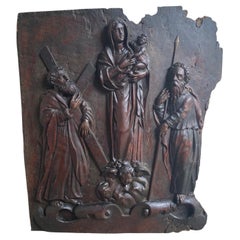
Carved from a single wooden solid plank of walnut, this stunning Italian bas relief plaque depicts Mary holding the baby Jesus, flanked by two apostles, one holding a sword; the othe...
Category
Antique 18th Century Italian Baroque Wall-mounted Sculptures
Materials
Walnut
Antique 19th Century Enamelled Bronze Travel Icon
Located in Madrid, ES
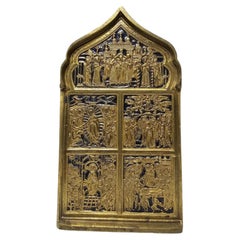
This antique 19th-century travel icon is crafted from bronze and adorned with enamel, giving it exceptional beauty and durability. Orthodox travel icons were used by the faithful to ...
Category
Antique Mid-19th Century Religious Items
Materials
Bronze
Part of an Italian Tabernacle, c. 1880s
Located in Houston, TX
Part of the Italian Tabernacle. The carved wooden surface of it was gilded and silvered.
On the top, the sign "Panis vivus" is a Latin phrase meaning "living bread," which is most f...
Category
Antique 1880s Italian Other Paintings
Materials
Wood
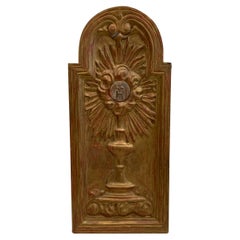
18th Century Italian Tabernacle Door Fragment
Located in San Angelo, TX
18th Century Italian Tabernacle Door Fragment. Unique piece that can go anywhere. Perfect for a sculpture on the wall in a hallway or niche.
Category
Antique 18th Century Italian Religious Items
Materials
Gold Leaf
$1,036 Sale Price
20% Off