Items Similar to Saint on a bed. Polychromed wood. Flemish school, 16th century.
Want more images or videos?
Request additional images or videos from the seller
1 of 10
Saint on a bed. Polychromed wood. Flemish school, 16th century.
$5,039.82
£3,734.83
€4,200
CA$6,887.96
A$7,498.11
CHF 3,980
MX$90,218.36
NOK 50,431.99
SEK 46,209.95
DKK 31,992.65
About the Item
Dream of a saint. Carved and polychrome wood. Flemish school, 16th century.
Relief made of carved and polychrome wood that shows an old man with a particular headdress (reminiscent of some chaperones) lying on a bed and accompanied by two friars dressed in habits, who talk to each other. Iconographically, the figure of the old man lying on the bed (note the cushion that raises the upper part of the body, following the common use of the time) who has not died (probably) because he was not completely lying down, is reminiscent of how he was usually represented, for example, to San Antón, San Jerónimo, etc. It is not very likely that it is the subject of the Transit or Death of Saint Francis of Assisi due to the absence of the Stigmata and due to age. It would be part of a cycle of scenes in the altarpiece of a church, an accompaniment that would give the viewer more clues about the identity of those represented. Stylistically, Flemish sculpture along with that of Germanic countries was developed with a realism that could be seen in all the ornamental details, where the sculptural work was presented almost as a goldsmith's work that was applied to the large altars made of wood. In general, in the Netherlands, such a high level had been developed during the Gothic period that the acceptance of the Renaissance from Italy was late.
Weight: 3kg. · Size: 36x6x36,5 cm
International Buyers – Please Note: for those articles that need Export Permits (those older than 100 years), the obtaining of the Permit will be processed without additional expenses (if you choose the seller sends it to you), but the period for the obtention of it may vary from 10 to 35 days.
- Dimensions:Height: 14.38 in (36.5 cm)Width: 14.18 in (36 cm)Depth: 2.37 in (6 cm)
- Style:Renaissance (Of the Period)
- Materials and Techniques:
- Place of Origin:
- Period:
- Date of Manufacture:16th century
- Condition:Wear consistent with age and use. Minor losses. Minor fading.
- Seller Location:Madrid, ES
- Reference Number:Seller: ZF11741stDibs: LU2951337541942
About the Seller
4.9
Vetted Professional Seller
Every seller passes strict standards for authenticity and reliability
Established in 1985
1stDibs seller since 2017
359 sales on 1stDibs
Typical response time: 1 to 2 days
- ShippingRetrieving quote...Shipping from: MADRID, Spain
- Return Policy
More From This Seller
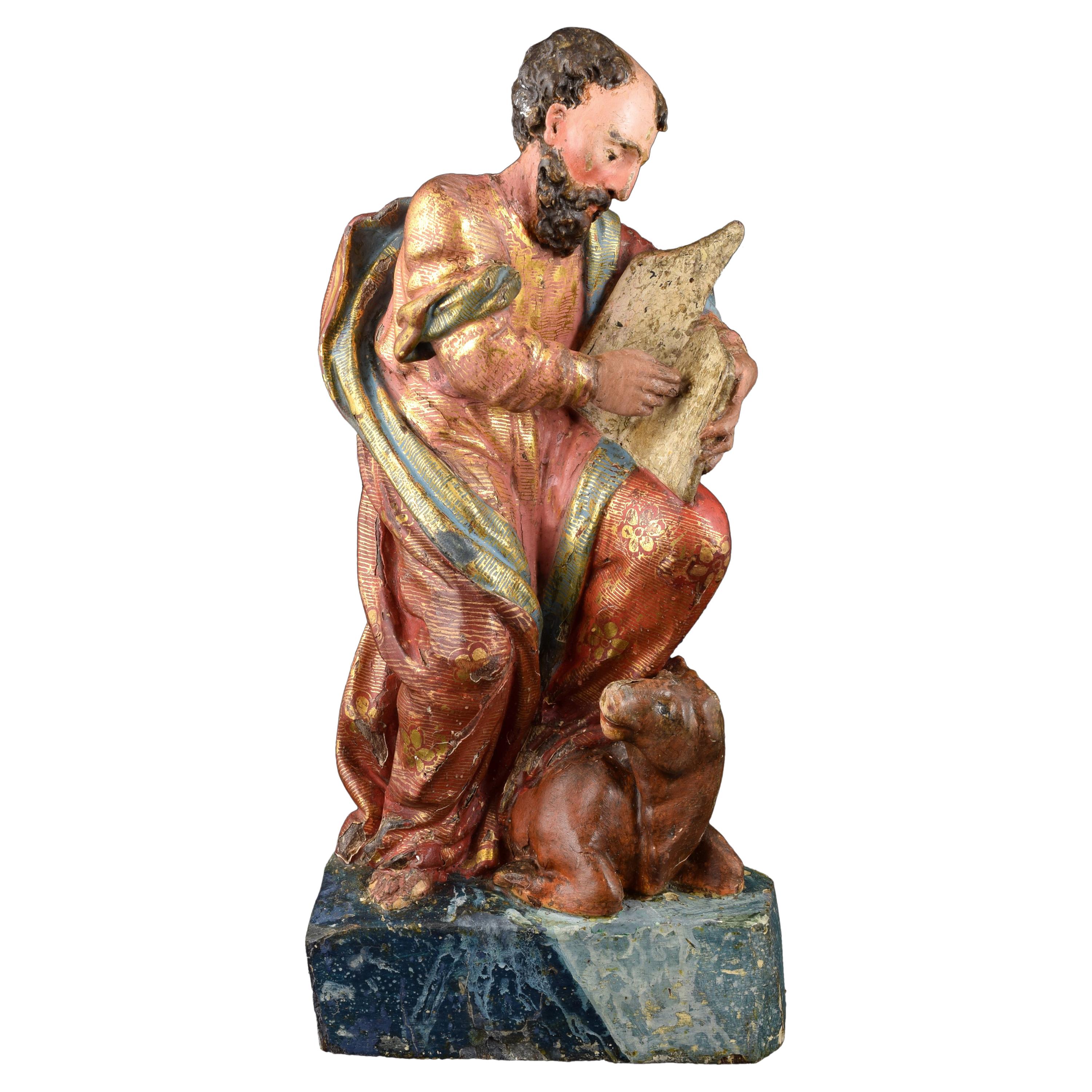
View All"Saint Luke the Evangelist", Polychromed Wood, 16th Century
Located in Madrid, ES
Saint Luke is often represented as a man of mature and bearded age, accompanied by the animal of the Tetramorphs with which he is related (Revelation 4: 67)...
Category
Antique 16th Century Spanish Renaissance Religious Items
Materials
Wood
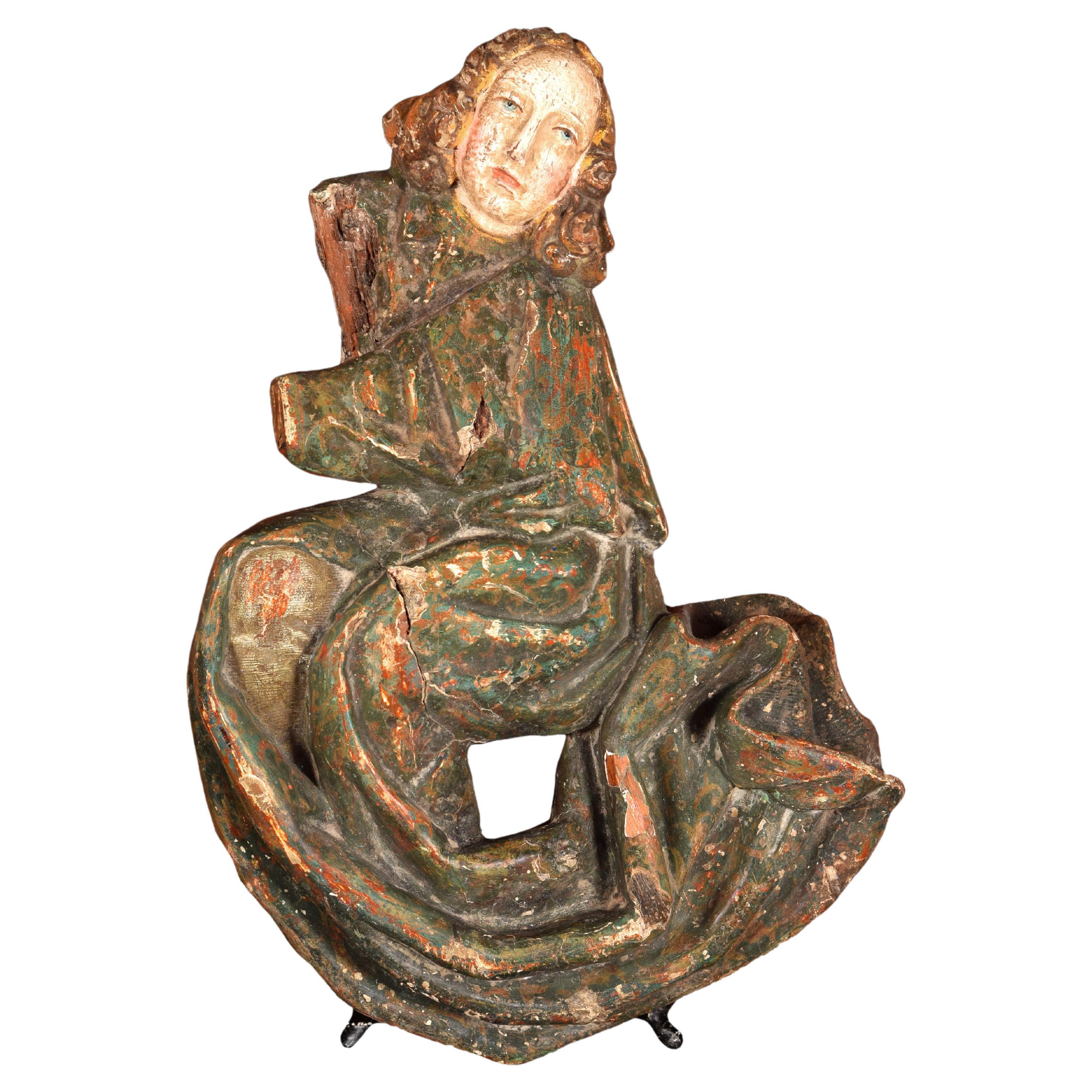
Angel, Carved and Polychrome Wood, 16th Century
Located in Madrid, ES
Angel. Carved and polychrome wood. Century XVI.
Polychrome wood carving showing an angel, with the face facing the viewer and the body in pr...
Category
Antique 16th Century Spanish Renaissance Figurative Sculptures
Materials
Wood
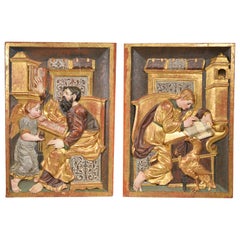
Saints John and Matthew, Polychrome Wood, Possibly, Burgos School, 16th Century
Located in Madrid, ES
Pair of reliefs, San Juan and San Mateo. Polychrome wood. Possibly, Burgos school, 16th century.
Pair of carved and polychrome wood reliefs that each show a seated human figure wri...
Category
Antique 16th Century Spanish Renaissance Wall-mounted Sculptures
Materials
Other
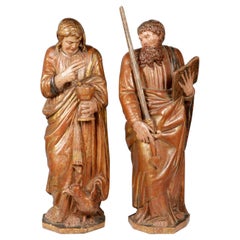
Saints Apostles John and Paul, Wood, Castillian School, 16th Century
Located in Madrid, ES
Pair of polychrome wood sculptures. "San Juan and San Pablo". Castilian school, 16th century.
Both male figures have been represented standing, with their main iconographic attrib...
Category
Antique 16th Century Spanish Renaissance Religious Items
Materials
Other
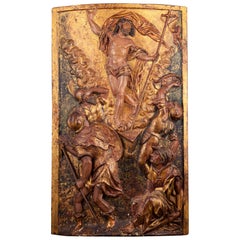
“Ressurrection”, Polychromed Wood, Spanish School, 16th Century
Located in Madrid, ES
The relief was probably a door of the Sagrario. The piece follows a customary decoration in the tabernacles of the Renaissance and the Baroque. Compare, for example, with the sevente...
Category
Antique 16th Century Spanish Renaissance Religious Items
Materials
Other
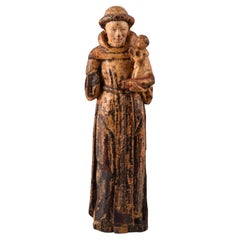
Saint Anthony with the Child Jesus, Wood, Mechelen School, 16th Century
Located in Madrid, ES
Saint Anthony with the Child Jesus. Wood. Mechelen School, 16th century.
Sculpture in carved wood worked, as was usual in that center, on the front because it was designed to be pla...
Category
Antique 16th Century European Renaissance Religious Items
Materials
Other
You May Also Like
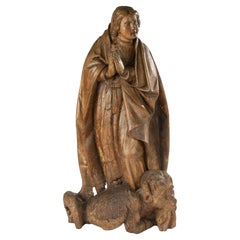
18th Century Sculpture - Saint Margaret - Chestnut Wood - Polychrome Remnants
Located in Casteren, Noord-Brabant
A large and atmospheric 18th century carved wooden statue of Saint Margaret, most likely originating from Spain. Executed in chestnut w...
Category
Antique Early 18th Century Spanish Baroque Religious Items
Materials
Chestnut
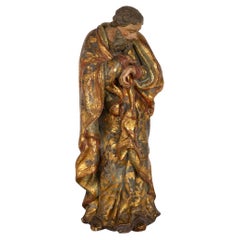
Very Fine Spanish Carved Polychromed Saint Santos Statue c. 1720-50
Located in Shippensburg, PA
FIGURE OF A PENITENT SAINT
Probably Spanish, circa 1720-50
14" H x 6" D x 5 1/8" W
A carved wooden figure of a bearded saint, richly polychromed and gilded in the estofado techniqu...
Category
Antique 18th Century European Baroque Figurative Sculptures
Materials
Wood
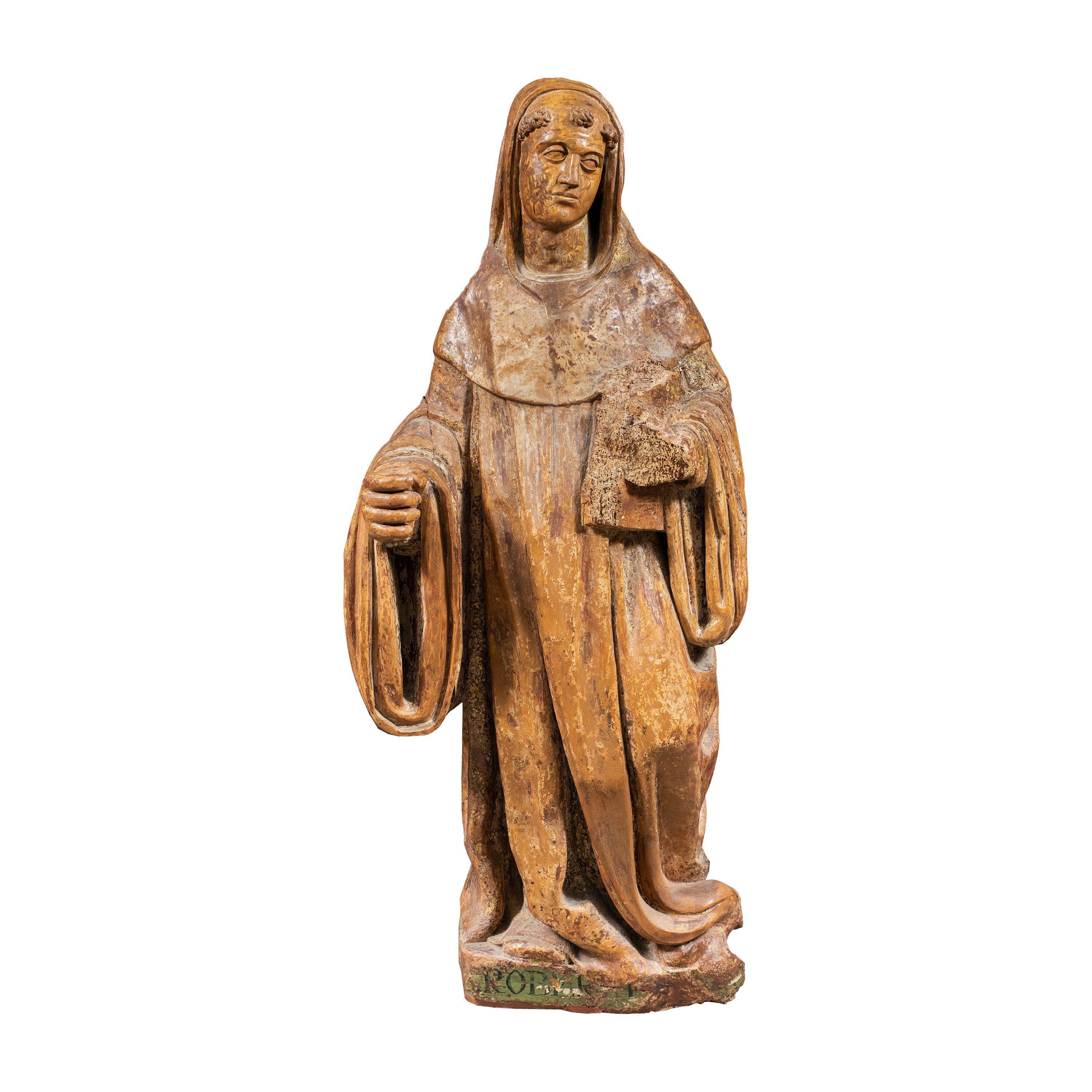
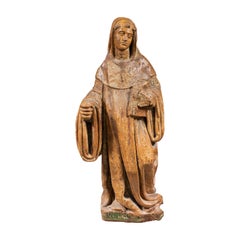
Renaissance Italian sculptor - 16th century carved wood sculpture - Saint Robert
Located in Varmo, IT
Carved wooden sculpture - Saint Robert. Italy, 16th century.
54 x 30 x h 112 cm.
Entirely carved and painted wood with traces of polychrome and gilding.
- Inscribed on the base: "...
Category
16th Century Renaissance Figurative Sculptures
Materials
Wood
$3,599 Sale Price
25% Off
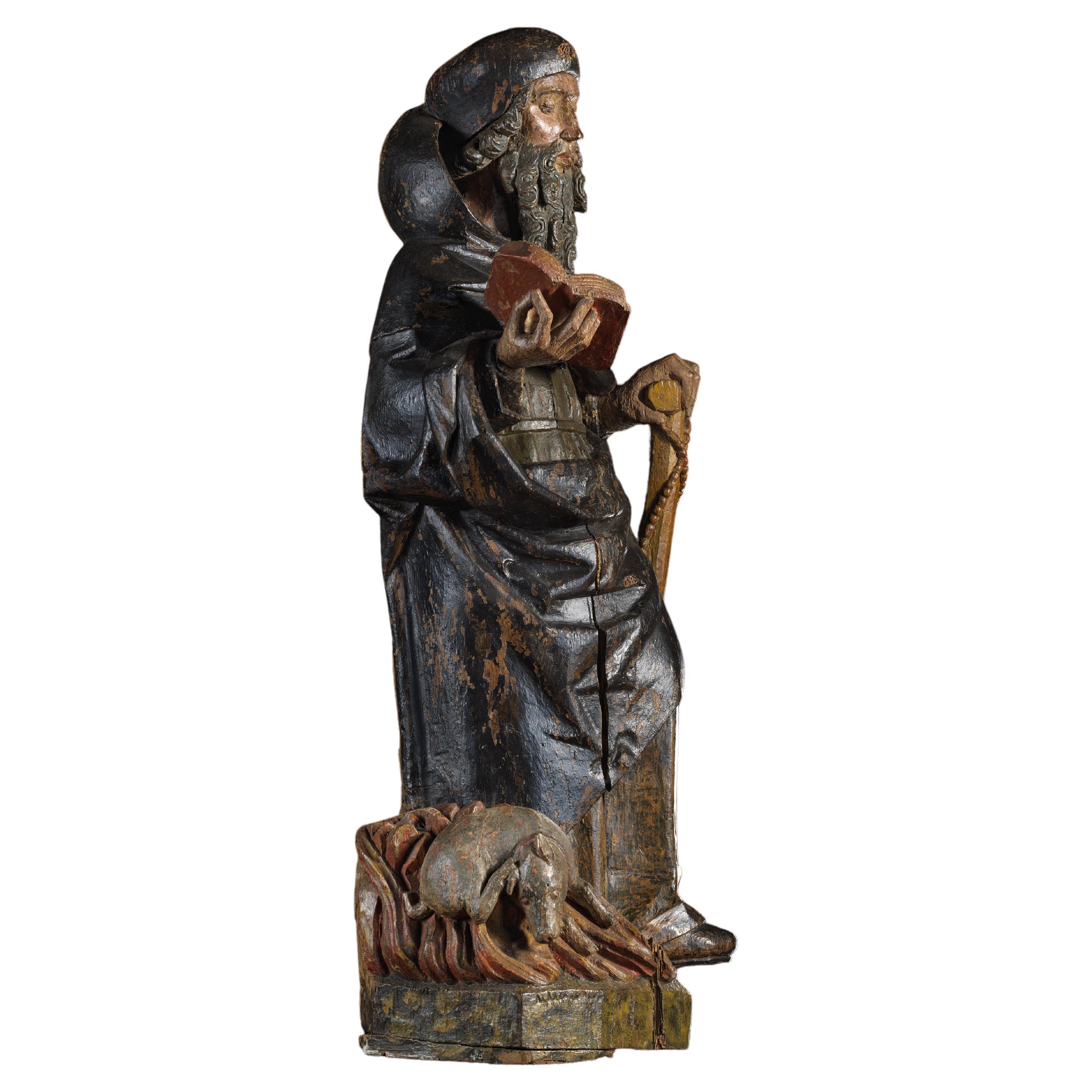
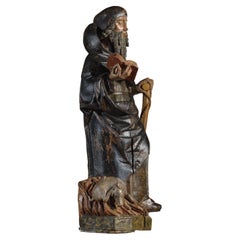
Sculpture in Polychrome Wood Representing Saint Anthony Hermit
Located in Saint-Ouen, FR
Sculpture In Polychrome Wood Representing Saint Anthony Hermit
Origin : East of France
Period : End of the 15th century
Measures: Height : 97 cm
Width : 32 cm
Depth : 26 cm
Polychrome wood
The saint is represented by an old, bearded man, dressed in a hooded monk’s habit over the tunic of his religious order. He is stood upright, holding an open book, La Règle des Antonnites, in his right hand. In the other hand, he is holding a staff in the form of the Greek letter tau with a rosary hanging down over it. At his feet lies a pig wearing a small bell around its neck.
He rests on his right leg, whilst the left advances forward as if he were about to start walking. His belted tunic, forming several rectilinear pleats, is covered by a habit which is open only at the waist, therefore revealing these pleats. He is also wearing a hooded scapular over his shoulders.
His thick hair escapes from under a distinctive hat, forming a collection of finely sculpted ringlets. This fine detail is also applied to the four long ringlets of his superb beard, which sit just below the shorter ones of his moustache.
His face is a picture of harmony, with lowered eyes and his small mouth lost amongst the abundance of hair.
At his feet on a pedestal of flames, hinting to the fire of Saint Anthony no doubt, a pig trying to scratch its ear.
Born in 251 in Upper Egypt, he withdrew into solitude at a very young age. He would have been plagued in the desert with extremely diabolical temptations.
He payed a visit to Saint Paul the hermit towards the end of his life. He was the dean of the Thébaïde anchorites, who was miraculously fed by a crow. On the day that Saint Anthony visited, the crow brought two portions of bread in its beak instead of one.
Some time after, having learnt of the death of his venerable brother, Saint Anthony went to bury him with the help of two lions.
The King of Catalonia pleaded to come and exorcise his posessed wife and children. He left Thébaïde for Barcelona. He appeared at the house of the provost André, bringing him a sow in his mouth, a monstrous piglet born without eyes. André wanted to kill it but Anthony stopped him, telling him that the poor beast wanted to ask for healing, as the King had done for his offspring.
He made a sign of the cross on the piglet and it suddenly acquired its sight and the members which it did not have at birth. After which, André, guided by Saint Anthony, exorcised the Queen of Catalonia in the same way whilst she knelt at his feet.
Théophile discovered the body of Saint Anthony wrapped in a palm fibre tunic which he had been given by Saint Paul the Hermit.
In the Red Sea Desert there are two Coptic, IV century, monasteries which stand next to each other, one dedicated to Saint Anthony, the other to Saint Paul the Hermit. They are the oldest monasteries in the Christian world.
The body of the famous hermit was transported to Constantinople and would have been transferred into the abbaye, Saint Antoine-en-Viennois, Dauphine.
The Antonnite Order was a charitable order which specialised in treating contagious diseases. The fire of Saint Anthony, was identified by doctors as a grangrenous ergotism, caused by a diet of rye bread contaminated with the parasite ergot. The effect of this is the drying out of hands and feet which then need amputation, the plague and then later syphilis. All the skin diseases came from Saint Anthony.
Saint Anthony’s pilgrimage to Dauphine rivaled that of Saint Jacques to Compostela. Thanks to the various commanderies created by the mother house, Saint Anthony’s cult spread throughout Christianity.
In order to maintain commanderies and their hospitals, the Antonnites resorted to pig farming. They enjoyed having the benefit of letting their pigs roam freely through the streets of the villages, with little bells round their necks that had a recognisable chime so that they were able to find them. This privilege was very envied by other monastic Orders.
Saint Anthony was the patron saint of several crafts such as basket makers and gravediggers.
However it is to the pig that he owes the majority of his patronages; pigkeepers, pig sellers, butchers, porc butchers, brush makers who use pig bristle and bell-ringers because of the pig bells...
Category
Antique 15th Century and Earlier Figurative Sculptures
Materials
Wood
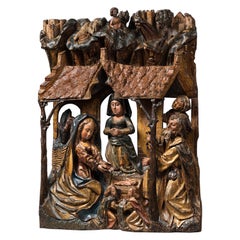
Late 15th Century Polychrome Wood Carving Depicting the Nativity
Located in Saint-Ouen, FR
While the birth of Christ is briefly told in the Gospel of Luke (2, 7) it is in the apocryphal texts that we find most of the elements and details that have then inspired artists. As of the 14th century and even more of the 15th century the subject of the Adoration of the Child replaces in Western art the scene of the Birth, much favoured in Byzantine art. Instead of being depicted lying with the new-born swathed in the manger, the Virgin is now kneeling, her hands joined in prayer in front of the naked child. This change was probably hastened by the popularity of the visions of Saint Bridget of Sweden to whom the Virgin allegedly appeared to show how she had given birth to Jesus (Visions, VII, chap. 21).
Sheltered by a thatch-roofed structure the Virgin is kneeling in front of the Child Jesus. She wears a magnificent red dress under a large gold cloak. Her curled blond hair is partially veiled. The newborn is lying on a straw mat. Joseph is depicted with a parted beard and stands opposite from the Virgin. He wears a tunic and a coat with a purse hanging from the belt. His costume reminds us of the long journey him and Mary have accomplished to reach Bethlehem.
Two other women are present. One is looking through the stable’s window to observe the Holy Family while another one kneels in prayer in front of the divine child. The rich costume of the lady might indicate she is a donator.
However they could also both represent the women who took part in the birth of Christ, Zelemi and Salome. Salome, incredulous did not believe in the virginal conception of Mary and she is represented far from the scene. The artist has depicted her with an expression of doubt on her face. Zelemi, on the contrary, is a believer. She is rewarded by a place of honour at the heart of the scene, close to Mary.
To the left the donkey and ox that have accompanied Mary and Joseph to Bethlehem observe quietly the scene.
On the foreground two angels hold a scroll reading an excerpt from the Gloria : “/Gloria/ in excelsis /Deo/.” One of the angels wears a blue cape while the other’s is red Those two colours are very significant as during Middle-Ages blue symbolises hope and red charity. Together they express the hope in redemption thanks to the advent of Christ and his sacrifice to come.
Above the main scene, up a cliff, a small shepherd lets his herd of sheep graze amidst the trees. He is framed by two walled cities.
This wood carving is the work of a very skilled and inventive artist. The piece bears witness to his exceptional talent. The realism of the scene is emphasised by the amount of details depicted. The refinement of the carving itself is highlighted by the well preserved polychromy.
This key moment of the New Testament is set in a contemporary context thanks to the clothes of the characters and the scenes of rural life. The universal dimension of the scene is intensified while allowing contemporary viewers to grasp its meaning more easily.
This care for details, the picturesque realism as well as the extraordinary rendition of the cloths suggest it was made by a Flemish artist during the late 15th century.
This relief can be compared with the panel of the Nativity from the Saint-Vaast altarpiece made by Jacques Daret between 1433 and 1435, today in Madrid’s Thyssen-Bronemisza Museum.
Literature
Louis Réau, Iconographie de l’Art chrétien...
Category
Antique 15th Century and Earlier Dutch Gothic Figurative Sculptures
Materials
Wood
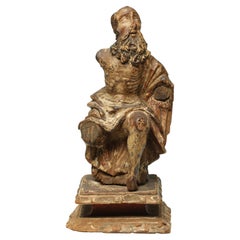
Antique 17th-18th Century Wood Italian Seated Saint Figure Fragment with Beard
Located in Point Richmond, CA
Antique 17th-18th century Italian carved wood seated saint figure fragment with beard. Possibly earlier. Remains of paint or pigments in multiple layers.
Arms and one leg missing, old damage to nose and other areas. Mounted on vintage base...
Category
Antique 17th Century Italian Medieval Tribal Art
Materials
Wood
$1,072 Sale Price
44% Off
More Ways To Browse
Antique Transits
Old Antique Bed
Old Antique Beds
16th Century Bed
Prayer Kneeler Antique
Silver Crucifix
17th Century Plaque
Bezalel Silver
Italian Gold Gilt Wood Religious
Antique Ex Voto
Corpus Crucifix
Cross Mexico
Gothic Velvet
Silver Hanukkah Lamp
Antique Bronze Crucifix
Carved Wood Jesus
Mexican Cross
Religious Antique Boxes