Items Similar to Russian Electromechanical Wheel-Based Cipher Machine Fialka M 125

Want more images or videos?
Request additional images or videos from the seller
1 of 15
Russian Electromechanical Wheel-Based Cipher Machine Fialka M 125
$51,870.83
£38,011.77
€43,000
CA$71,190.12
A$75,218.72
CHF 40,458.88
MX$900,622.79
NOK 506,902.47
SEK 464,249.09
DKK 327,512.40
About the Item
M-125 Fialka-electromechanical wheel-based cipher machine
USSR rotor-based cipher machine
M-125, codename Fialka (Russian: ??????), was an electromechanical wheel-based cipher machine, developed in the USSR shortly after WWII. It was first introduced in 1956 and soon became one of the favorite machines of the Warsaw Pact and some allied nations, such as Cuba. The machine is similar to the American SIGABA, the KL-7 and, to a lesser extend, the Enigma. For this reason the machine is sometimes referred to as the Russian Enigma. The original M-125 was succeeded by the M-125-3M in the mid-1960s and remained in use until the early 1990s.
The machine has 10 cipher rotors, each with 30 contacts at either side. Adjacent rotors move in opposite directions. In addition, the machine has a card reader in which a new punched key card was installed on a daily basis. In addition, it has a printer, a tape reader and a tape puncher.
Each country of the Warsaw Pact had its own customized Fialka version, adapted for the local language. This means that each country had its own keyboard and print head. Furthermore, the wiring of the coding wheels is different for each country. The rest of the machine is identical.
Fialka M-125-3 with open lid
Most machines can be used for messages in Latin and Cyrillic (Russian) writing. Although the Latin alphabet was different for each country, the Cyrillic alphabet had no punctuation marks and was identical on all machines, making them interoperable when a mutual set of wheels was used. A standard – Russian-only – version also existed. It was used by local USSR services like the KGB.
The fall of the Berlin wall in 1989, marked the decline and led to the collapse of the Soviet Union. With the retreat of the Russians from the countries behind the Iron Curtain, the remaining Fialka machines were taken back and have subsequently been destroyed. Fortunately, some machines have miraculously escaped demolition, which enables us to present some details here.
Fialka is a Russian word that means violet ; a rather nice small flower. Around 1956, the Russian Army introduced a brand new cipher machine, which was given the codename FIALKA. Two basic versions of the machine are known to exist: M-125 and M-125-3M, with country-specific variants of each model. In principle, the machine is called M-125, whereas Fialka is the name of the cipher procedure. However, as most people call the machine Fialka, we have used that name throughout this website as well. Here are two examples. The one on the left is a basic M-125.
The older M-125 and the later M-125-3 side by side (Polish versions shown here)
The design of the Fialka is clearly based on the well-known Enigma machine, that was used by the German Armed Forces during WWII. Like the Enigma, it uses electromechanical cipher wheels to scramble the letters typed on the keyboard. With each key-press, the wheels move into a new position, thereby effectively changing the wiring and, hence, the alphabet substitution for each letter that is entered. And that's where the similarity with the Enigma ends.
Rather than presenting the output on a lamp panel, the Fialka prints the coded letter directly onto a paper strip. At the same time it can punch the letter into the same paper tape in a 5-bit digital code, much like the baudot code of a teletype machine. In addition, Fialka is equipped a paper tape transmitter that can be used to transmit or duplicate a message. During WWII, the Russians have clearly learned from the flaws in the Enigma's design and its operating procedures, as they have implemented the following improvements:
10 wheels, rather than 3 or 4 on the Enigma,
More frequent wheel turn-overs,
Adjacent wheels move in opposite directions,
Wheel wiring can be changed in the field (from 1978 onwards),
A punched card is used to replace the Steckerbrett,
A letter can be encoded into itself (impossible on Enigma).
In addition to this, the following extra features are available:
The use of letters, numbers and punctuation marks (M-125-3 only),
Possibility to duplicate a punched-paper tape,
Suitable as a standard teletype machine (in plaintext mode),
Supports both Russian (Cyrillic) and Latin alphabets.
Models
Two basic models of the machine are known. They are often referred to as the old model and the new model. Furthermore, country-specific variants were made for each country in which the M-125 was used. For the old model, this involved the wiring of the cipher wheels, but for the new model, this also involved the layout of the (language-dependent) keyboard and the print head
About the Seller
4.8
Gold Seller
Premium sellers maintaining a 4.3+ rating and 24-hour response times
Established in 2005
1stDibs seller since 2021
397 sales on 1stDibs
Typical response time: 1 hour
- ShippingRetrieving quote...Shipping from: Madrid, Spain
- Return Policy
More From This Seller
View AllEarly 20th Century “National” Brass Cash Register, circa 1900
Located in Madrid, ES
Decorative “National” cash register from around 1900, beautifully crafted in engraved and gilt brass.
This impressive antique model features elaborate relief decoration and the elega...
Category
Antique 1890s Scientific Instruments
Materials
Bronze

Mid-20th Century “National” Red Painted Brass Cash Register
Located in Madrid, ES
Decorative “National” cash register from the 20th century, made of brass painted in red, with elegant detailing and classic industrial design.
This impressive piece retains its origi...
Category
Mid-20th Century Scientific Instruments
Materials
Bronze
Collectible Antique Gilded Bronze Cash Register with Relief Carving
Located in Madrid, ES
An outstanding antique cash register, finely crafted in gilded bronze and richly adorned with intricate relief carvings. This piece exemplifies t...
Category
Antique 19th Century American Other Models and Miniatures
Materials
Bronze
Kinetoscope Projector Thomas Edison, Dated About 1904, USA
By Edison
Located in Madrid, ES
Kinetoscope projector Thomas Edison, dated about 1904,
is a museum piece.
Film Projector Thomas Edison, USA, in excellent condition.
Mounted on a ...
Category
Early 20th Century American Modern Scientific Instruments
Materials
Metal
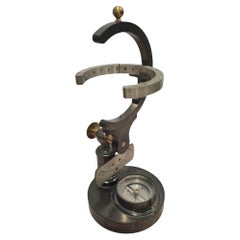
Portable Universal Equinoctial Dial
Located in Madrid, ES
This is an instrument that consists of a brass base and a brass stand on which a semi-circular metal dial plate and gnomon are attached. The base is circular and has a felt bottom. I...
Category
Antique Early 1900s Scientific Instruments
Materials
Brass
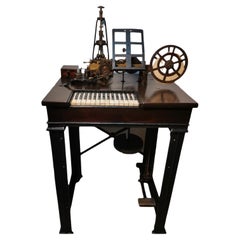
Hughes Telegraph Set Built by Siemens
Halske 19th Century
Located in Madrid, ES
Hughes typewriting telegraph .A Printing Telegraph Set built by Siemens & Halske .This teletyper was invented by David Edward Hughes in 1856.Good condicion overall.Similar telegraph ...
Category
Antique 19th Century German Baroque Scientific Instruments
Materials
Wood
You May Also Like
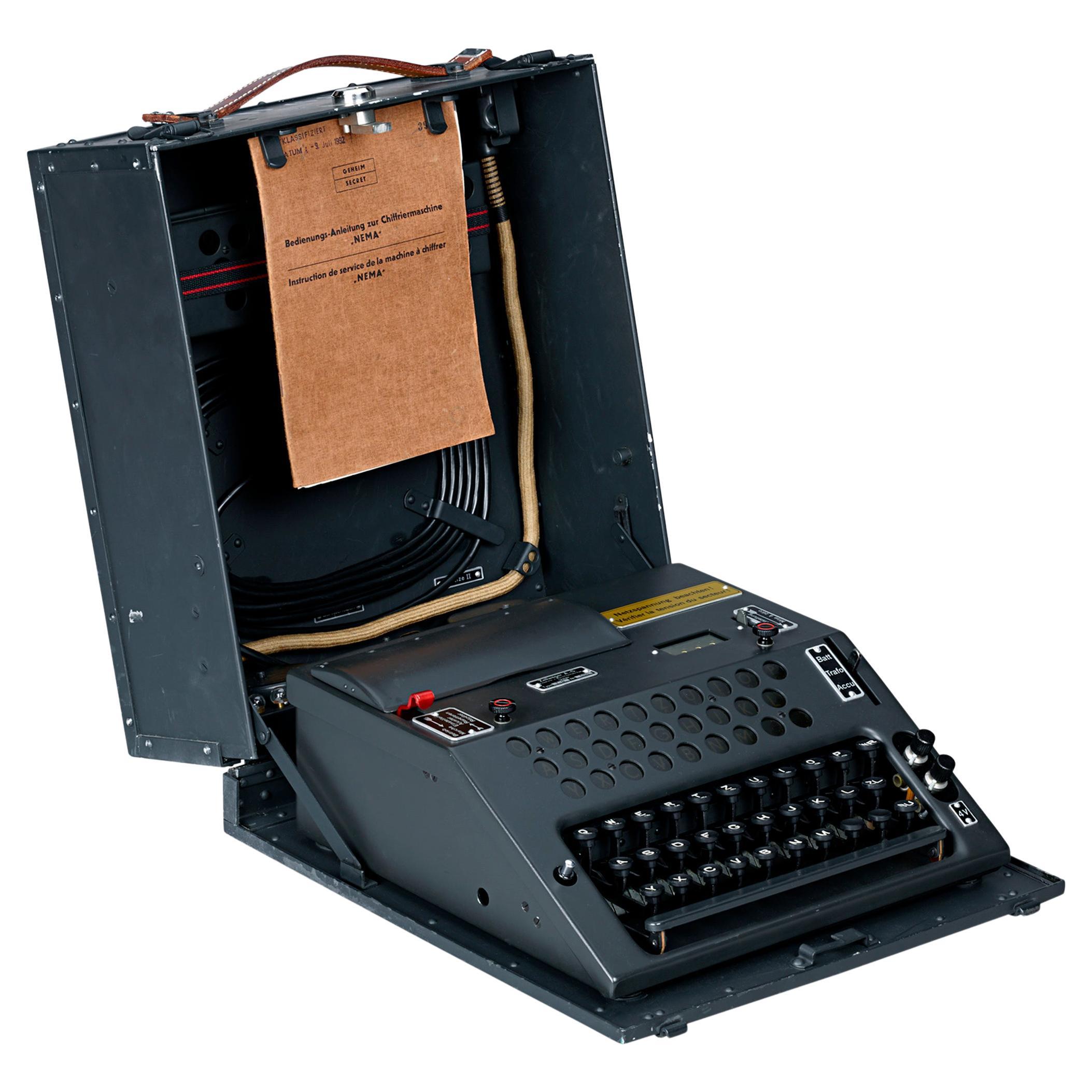
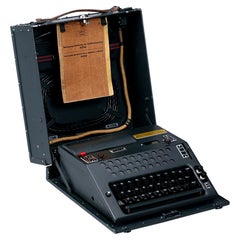
NEMA Cipher Machine
Located in New Orleans, LA
The Swiss NEMA cipher machine is an extraordinary part of both military and mechanical engineering history. Known as the Neue Machine, or “New Machine,” the NEMA was developed by Zel...
Category
20th Century Swiss Historical Memorabilia
Materials
Metal, Wire
$34,500
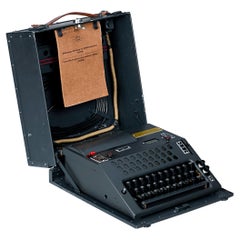
Swiss Nema Cipher Machine
Located in New Orleans, LA
This Swiss-engineered cipher machine is a fascinating piece of 20th-century military and engineering history, and this particular example is one of the ...
Category
20th Century Swiss Other Historical Memorabilia
Materials
Metal
$34,500
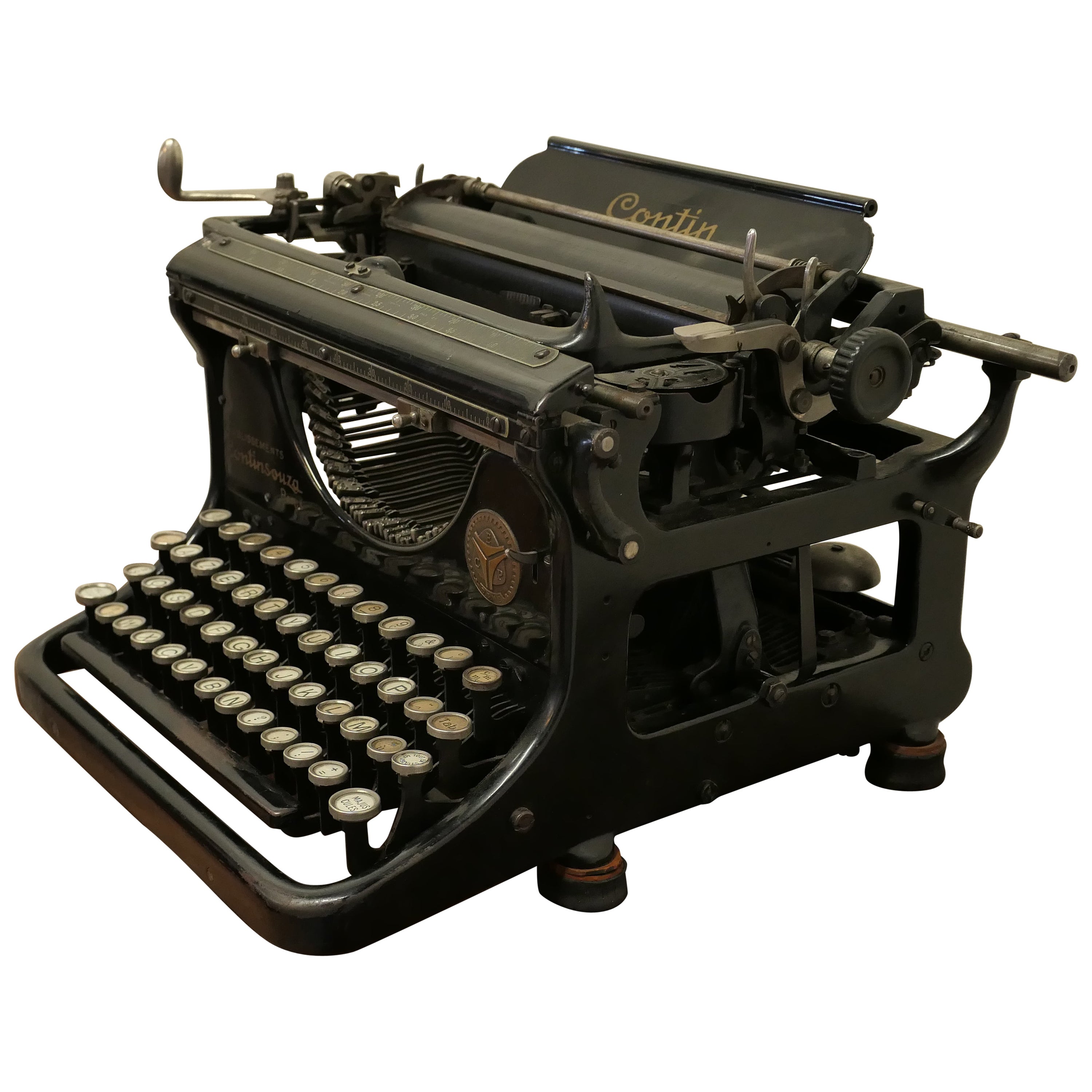
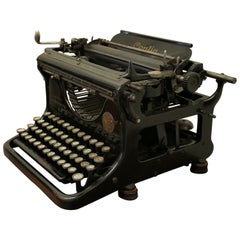
French Antique Contin Typewriter from the, 1940s
Located in Godshill, Isle of Wight
French antique Contin Typewriter from the 1940s
This is a Contin Continsouza Paris, Modèle A n 24 - 1940s, the typewriter is good tidy condition, as a show piece, it all seems to...
Category
Early 20th Century Industrial Scientific Instruments
Materials
Metal
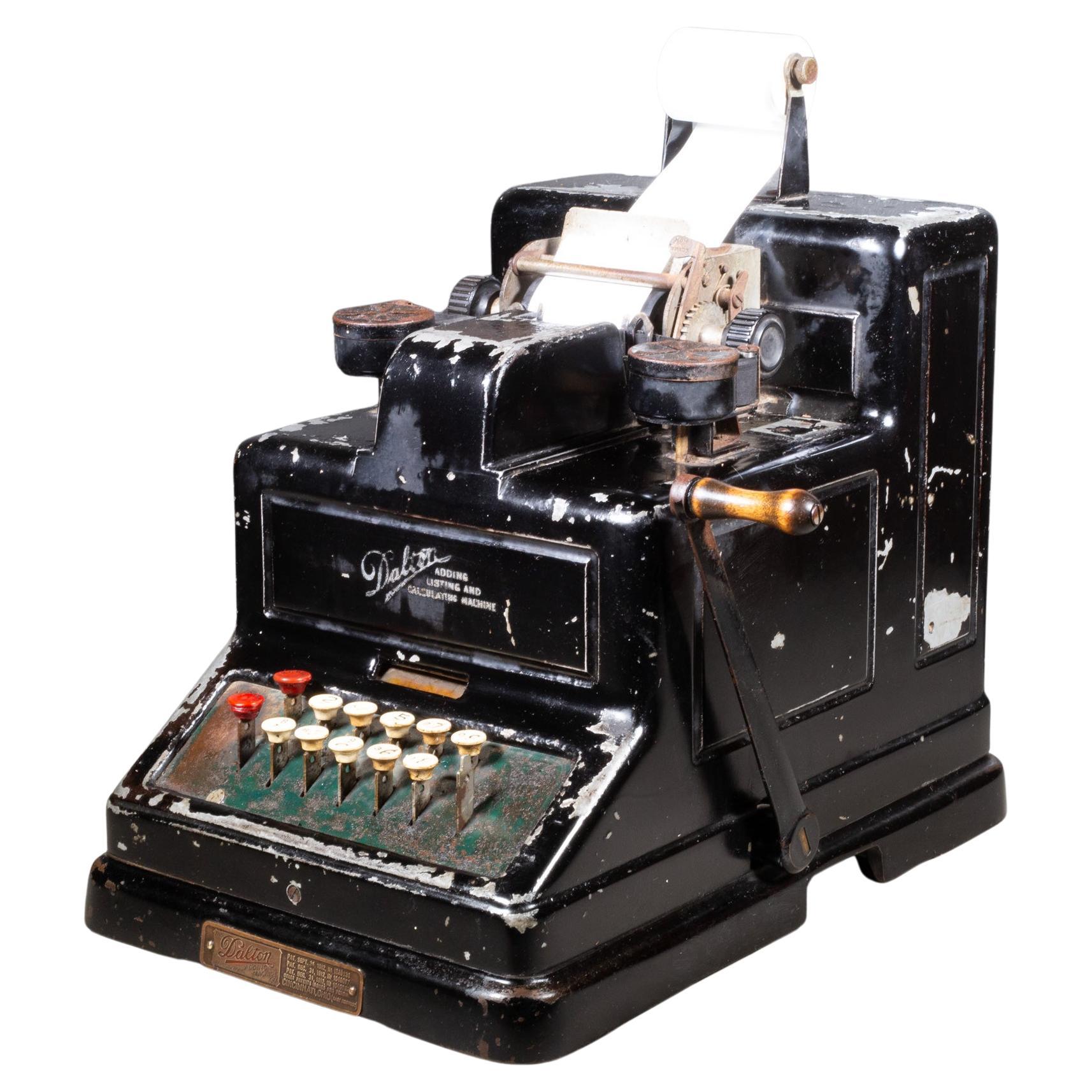
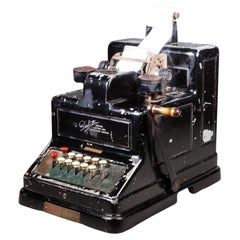
Antique Dalton Adding Machine c.1912
Located in San Francisco, CA
ABOUT
An antique cast iron and steel Dalton adding machine with Bakelite keys, wooden handle and original brass plaque with patent dates of 1912. With a fully functional wood and st...
Category
Early 20th Century Industrial More Desk Accessories
Materials
Metal, Iron
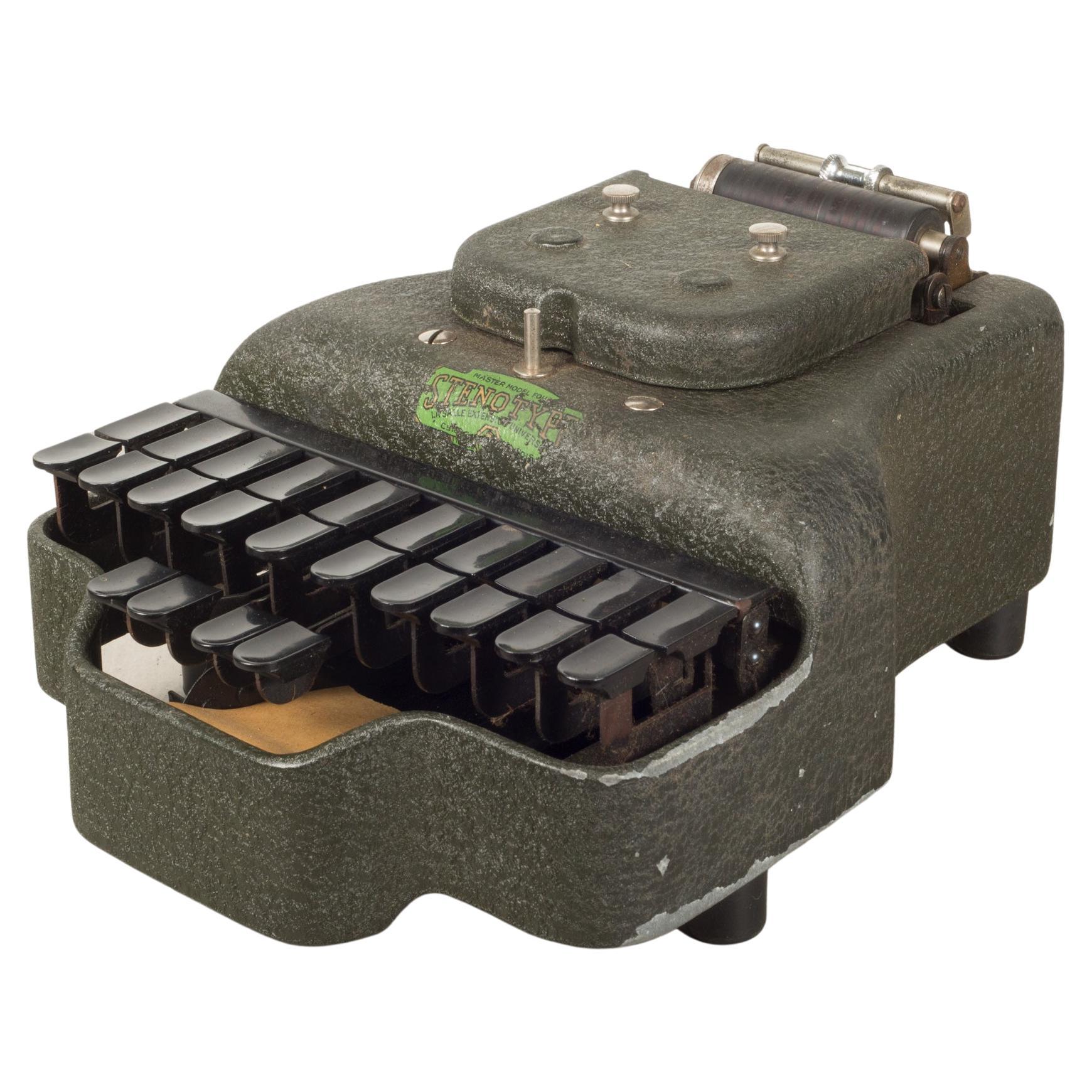
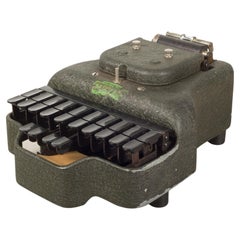
Antique Stenograph with Original Case/Manual, circa 1930
By The Stenotype Co. 1
Located in San Francisco, CA
About:
This is an original Stenotype stenograph with Bakelite keys and original case and manual. All the keys work properly but doesn't seem to imprint on the paper.
Creator: Steno...
Category
Early 20th Century American Industrial More Desk Accessories
Materials
Steel
$100 Sale Price
44% Off
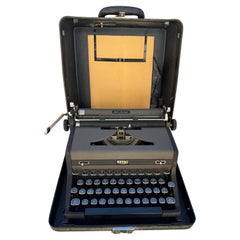
Vintage Royal Manual Typewriter Quiet Deluxe
Located in Pasadena, TX
This is a mid century manual typewriter by Royal.
The typewriter is functional..
The ribbons can still be acquired for it.
It comes with a matching case.
Category
20th Century American Mid-Century Modern Historical Memorabilia
Materials
Metal
More Ways To Browse
Vintage Canning Machine
Cipher Machine
English Mortar And Pestle
Victorian Telescope
19th Century Balancing Scale
Antique Brass Level
Antique Cameras Folding Cameras
Antique Hanging Scale
Antique Pomanders
Antique Standing Scale
Antique Wall Thermometer
Antique Weather Stations
Antique Wood Plane
Art Deco Camera
Didactic Model
French Binoculars
German Barometer
Retro Weather Station