Items Similar to Wooden stick barometer threaded brass at the edges John Maineri 1820
Want more images or videos?
Request additional images or videos from the seller
1 of 14
Wooden stick barometer threaded brass at the edges John Maineri 1820
$3,828.59
£2,858.30
€3,200
CA$5,274.16
A$5,786.76
CHF 3,048.19
MX$68,839.59
NOK 39,046.90
SEK 35,655.15
DKK 24,385.22
About the Item
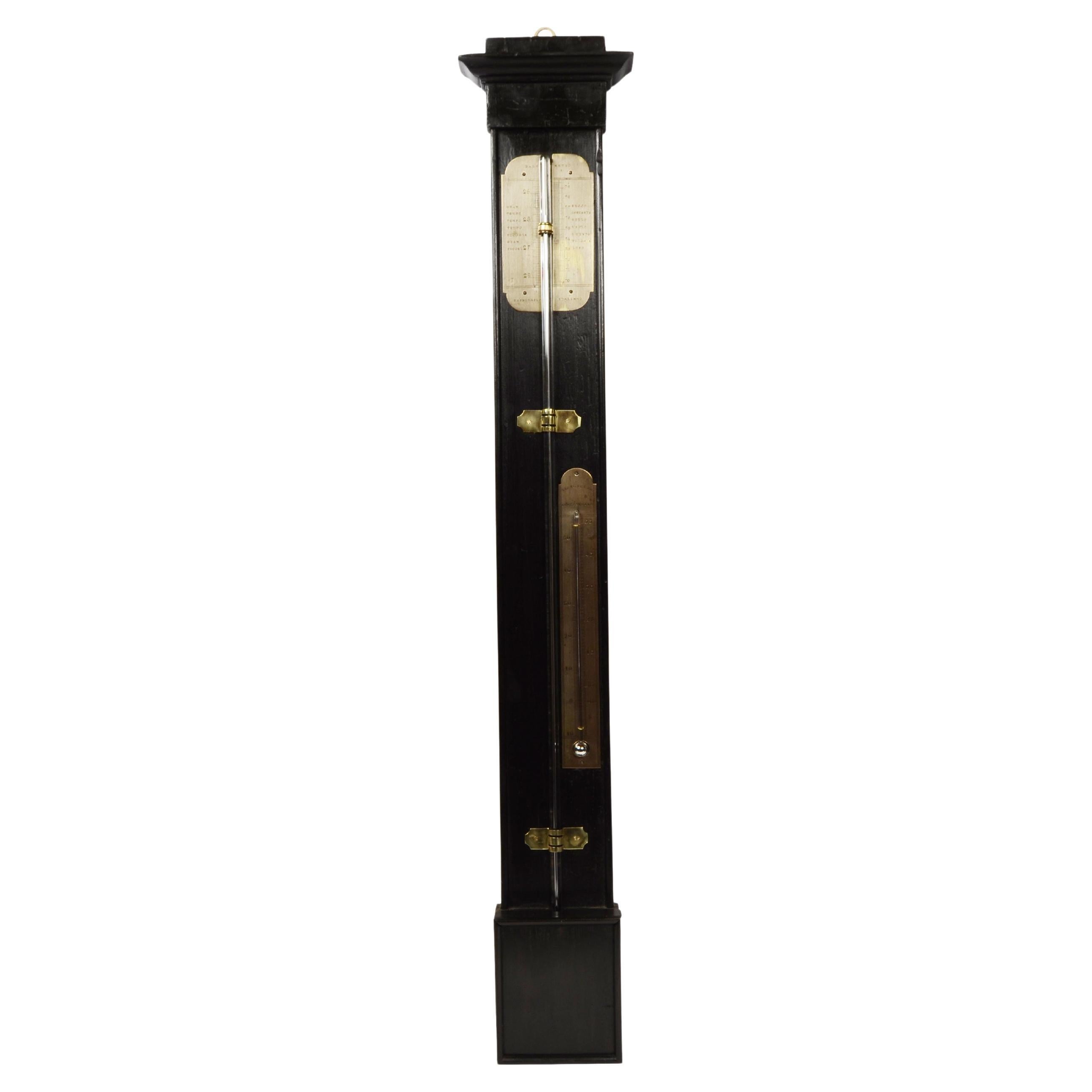
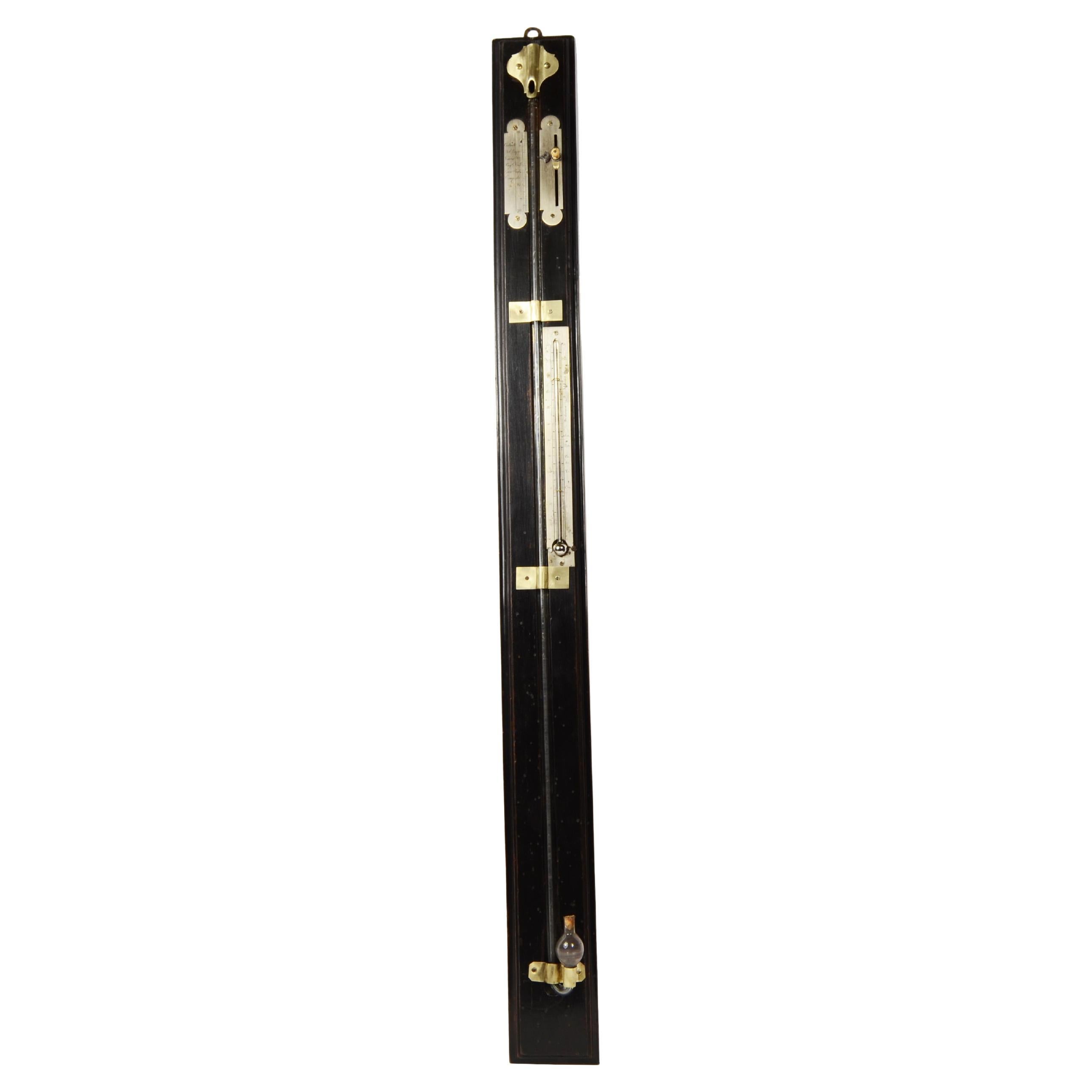
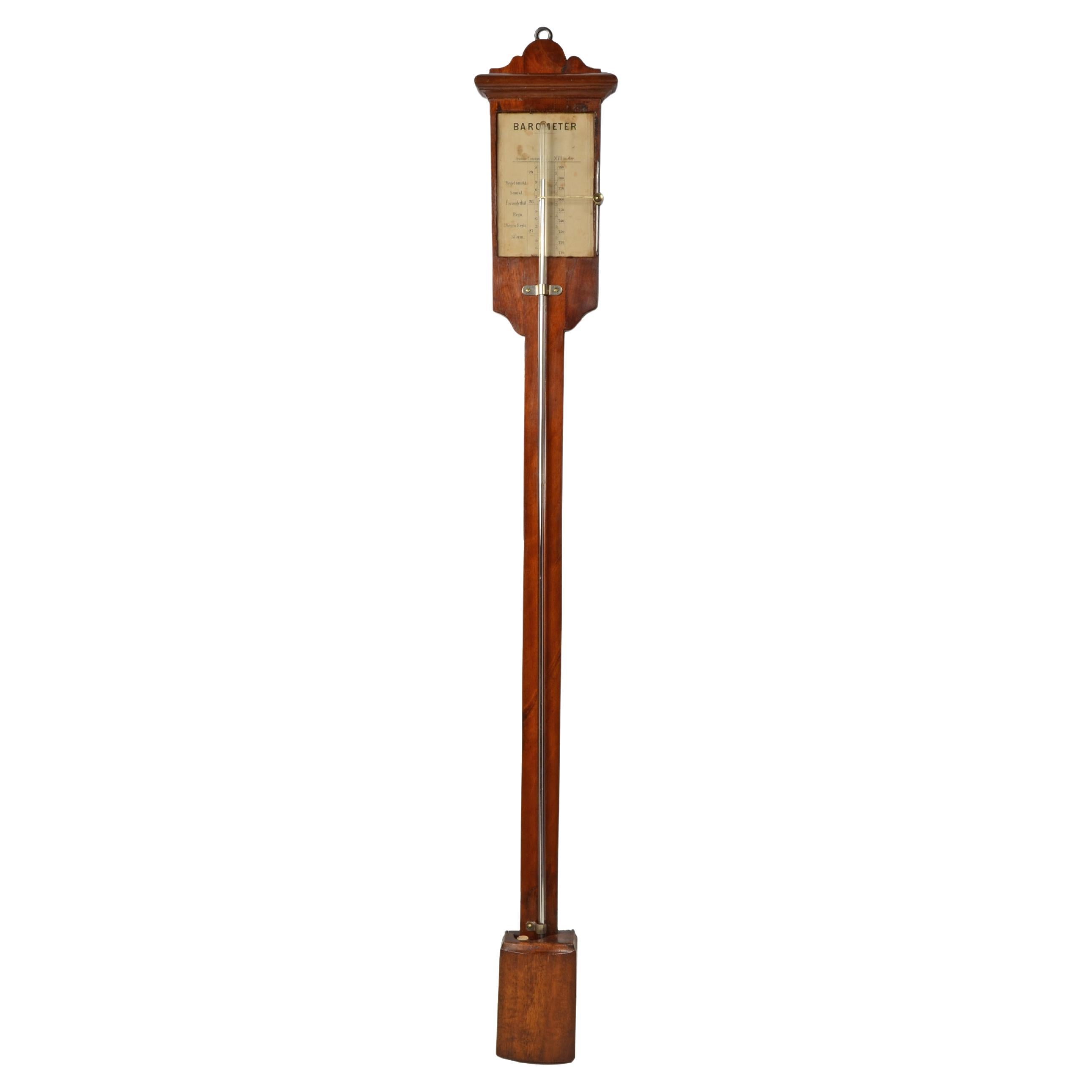
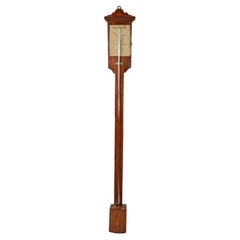
Ebonized wood cue barometer with brass threading at the edges, signed Giovanni Maineri early 19th cent.
Barometer with ebonized wood reservoir complete with sea bone float indicating the correct mercury level, adjusted by the setting screw below the reservoir.
The barometer is complete with a nonius for reading the change in atmospheric pressure, hygrometer and mercury thermometer.
Good condition, signs of use, measures 8x6x100 cm - inches 3.1x2.4x39.4
To be sure, the barometer is emptied of mercury.
Evangelista Torricelli (1608-1647), mathematician and physicist, a disciple of Galileo, was the first in 1643 to build a measuring instrument capable of detecting changes in pressure Mercury was already known in antiquity to the Chinese and Hindus; it was found in Egyptian tombs dated around 1500 BC. By 500 B.C. its use as an amalgamant for other metals began. The ancient Greeks used it as a pigment for paintings, and the Romans employed it in cosmetics. According to medieval alchemists it was the matter from which everything else was formed, and they thought that once hardened it would turn into gold. In the 18th and 19th centuries, mercury nitrate was used to remove hair from hides used to make hats: this caused many cases of brain damage among those who made these headdresses, even leading to the coining of the saying "mad as a hatter."
Since ancient times man, as a farmer and navigator, has observed and attempted to predict weather patterns. The scientific study of the changes occurring in the atmosphere began in the mid-17th century in connection with experiments tending to prove the existence of a vacuum, which ancient philosophers denied since "nature abhors a vacuum!" If you fill a long tube with water and place it upside down in a bucket with water, the column of liquid will descend until its weight is counterbalanced by air pressure on the surface of the water in the bucket: at some point in the upper, closed end of the tube there will be a vacuum.
About the Seller
5.0
Vetted Professional Seller
Every seller passes strict standards for authenticity and reliability
Established in 1999
1stDibs seller since 2014
400 sales on 1stDibs
Typical response time: 4 hours
- ShippingRetrieving quote...Shipping from: Milan, Italy
- Return Policy
More From This Seller
View AllEbonized wood stick barometer signed TECNOMASIO ITALIANO circa 1870
Located in Milan, IT
Ebonized wooden stick barometer signed TECNOMASIO ITALIANO , from the second half of the 19th century.
Complete with reading nonius for atmospheric pressure change and mercury therm...
Category
Antique 1870s Scientific Instruments
Materials
Wood
Stick barometer signed Scalvino Milano from the first half of the 19th century
Located in Milan, IT
Batten barometer signed Scalvino Milano from the first half of the 19th century, made of ebonized wood.
Complete with reading nonius for atmospheric pressure change and mercury therm...
Category
Antique 1830s Scientific Instruments
Materials
Wood
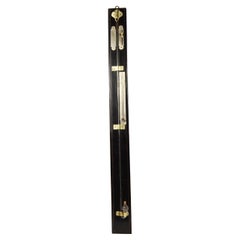
Torricellian batten barometer on mahogany board Mario de La Pierre Turin
Located in Milan, IT
Torricellian mercury stick barometer on mahogany wood board, signed Dr. M. De La Pierre Torino, from the 1950s, complete with atmospheric pressure reading nonius.
Measures 7.5x4.8x ...
Category
Mid-20th Century Scientific Instruments
Materials
Wood
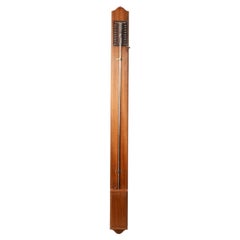
Torricellian cue barometer on oak wood table Germany 1870
Located in Milan, IT
Torricellian mercury stick barometer on oak wood table, complete with atmospheric pressure reading nonius, late 19th-century German manufacture.
Measurements 13.5x4.5x 96 cm - inches...
Category
Antique 1870s Scientific Instruments
Materials
Wood
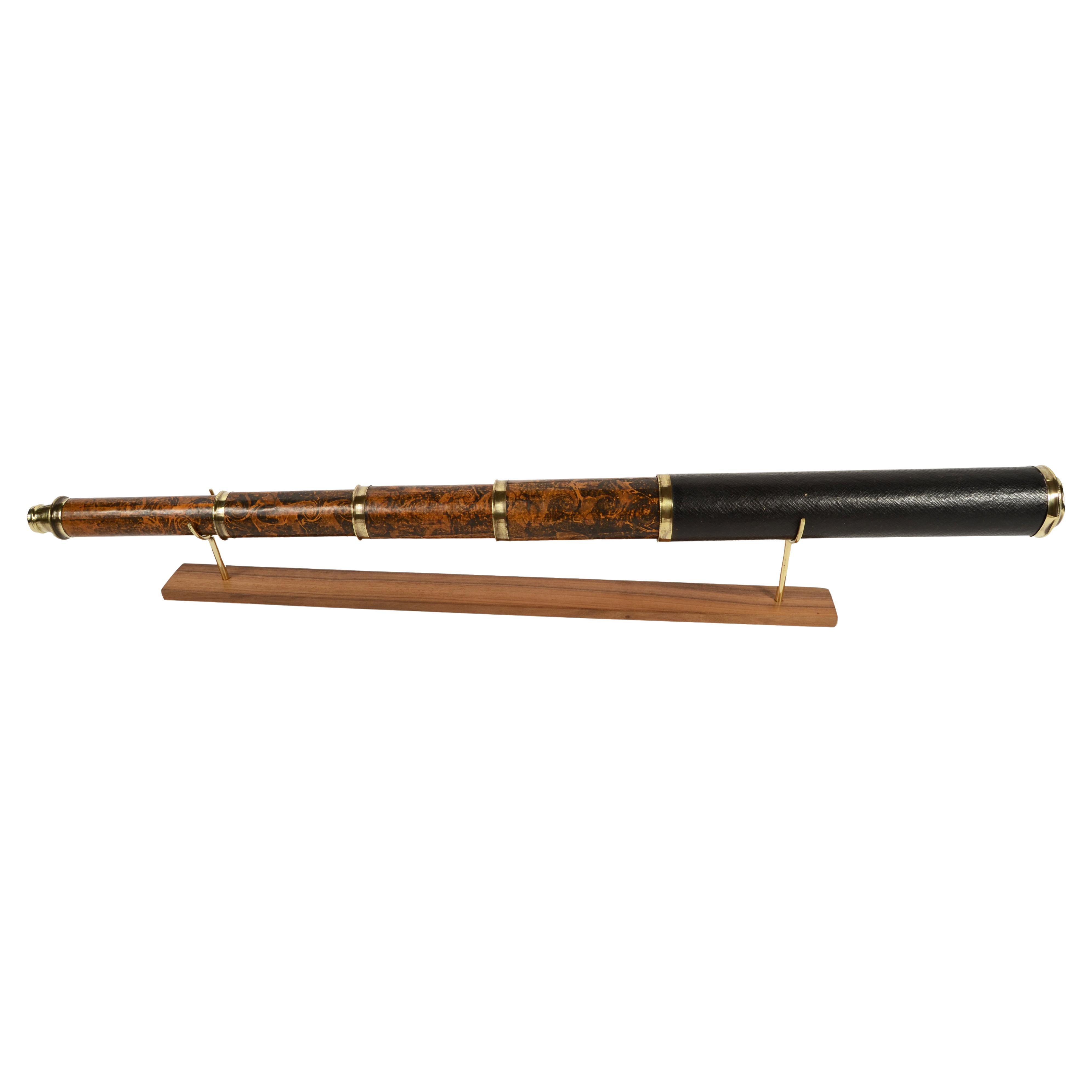
Cardboard round section telescope with four extensions and brass ferrules
Located in Milan, IT
Rare round cardboard scope with four extensions and brass ferrules, german manufacture from the early 19th century. Excellent state of conservation.
Maximum length cm 95 - 37.4 in,...
Category
Antique Early 19th Century Scientific Instruments
Materials
Paper
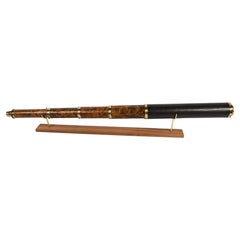
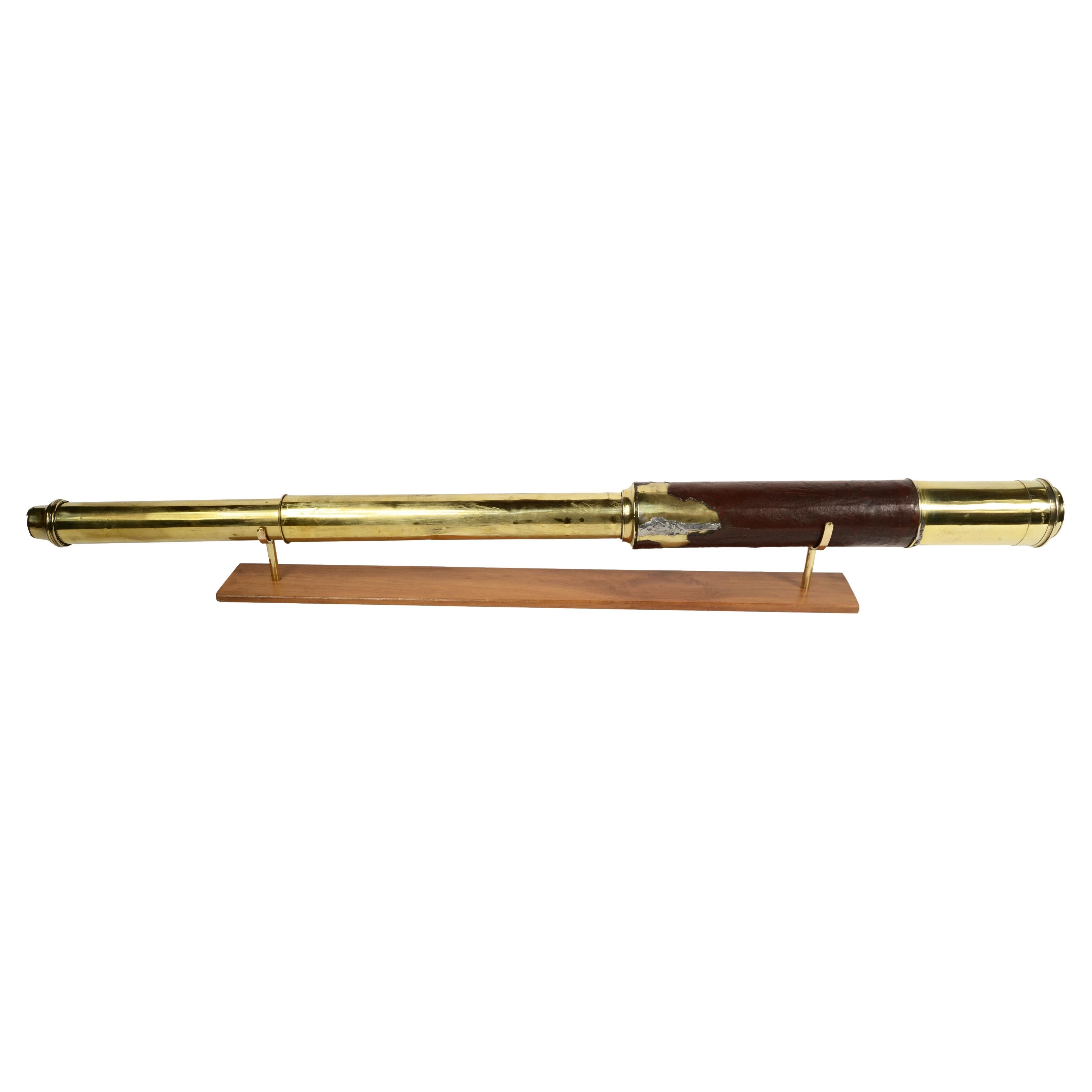
Brass round section telescope with leather-covered handle 1850
Located in Milan, IT
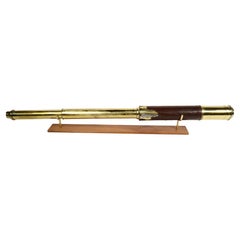
Brass round-section telescope with leather-covered handle, two-extension focus.
English manufacture from the mid-19th century.
Complete with base for support made of custom wood and ...
Category
Antique Mid-19th Century Nautical Objects
Materials
Brass
You May Also Like
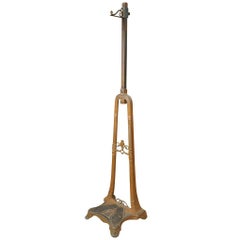
19th Century Italian Height Measuring Apparatus
Located in Round Top, TX
An intriguing 19th century Italian apparatus for measuring one's height in centimeters. Soundly constructed from cast iron with a bronze measure to one side. A whimsical accent perfe...
Category
Antique Late 19th Century Italian Scientific Instruments
Materials
Bronze, Iron
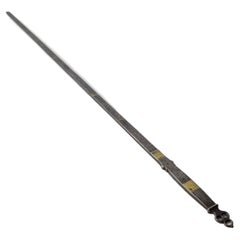
Alnmått (Cubit measure) in iron with gilded details. Baroque, dated 1731
Located in Knivsta, SE
Swedish Alnmått (Cubit measure) in iron with gilded details. Baroque, dated 1731. Provenance: Baron Carl Emanuel Cederström, great collector during the mid-19th Century in Sweden.
W...
Category
Antique 1730s Swedish Baroque Scientific Instruments
Materials
Iron
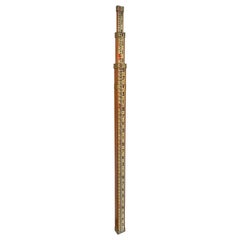
Early 20th Century English Telescoping Surveyors Measure
Located in Burton, TX
Telescoping surveyors measuring staff made of wood with brass fittings. Marked 'Houghton-Butcher Mfg. Co. Ltd., London 1918 N0. 1.195'. Lovingly cared...
Category
Early 20th Century English Scientific Instruments
Materials
Brass
$560 Sale Price
20% Off
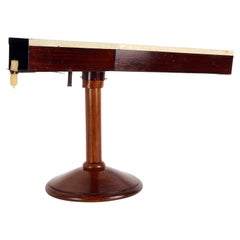
Scientific tool for demonstrating the refraction of light, Italy 1920.
Located in Milan, IT
Scientific tool for demonstrating and assessing the refraction of light. Constructed in boxed metal with a square section, it consists of a horizontal tube that bends a few grids in ...
Category
Early 20th Century Italian Scientific Instruments
Materials
Metal
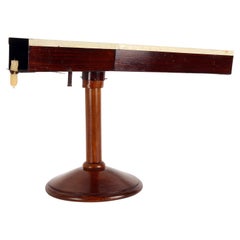
Scientific tool for demonstrating the refraction of light, Italy 1920.
Located in Milan, IT
Scientific tool for demonstrating and assessing the refraction of light. Constructed in boxed metal with a square section, it consists of a horizontal tube that bends a few grids in ...
Category
Early 20th Century Italian Scientific Instruments
Materials
Metal
Fine 18th-century solid brass sector, signed Butterfield, Paris, 1720-1750
By Butterfield Paris
Located in Bilzen, BE
Fine 18th-century solid brass sector, signed Butterfield, Paris, dating from circa 1720–1750.
A rare and fully authentic scientific instrument from the renowned Butterfield workshop,...
Category
Antique Early 18th Century French Other Scientific Instruments
Materials
Brass