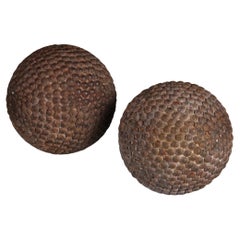
Items Similar to 9 Antique French Boule Lyonnaise Cloutees Studded Nailed Petanque Balls 3"
4.5
Want more images or videos?
Request additional images or videos from the seller
1 of 9
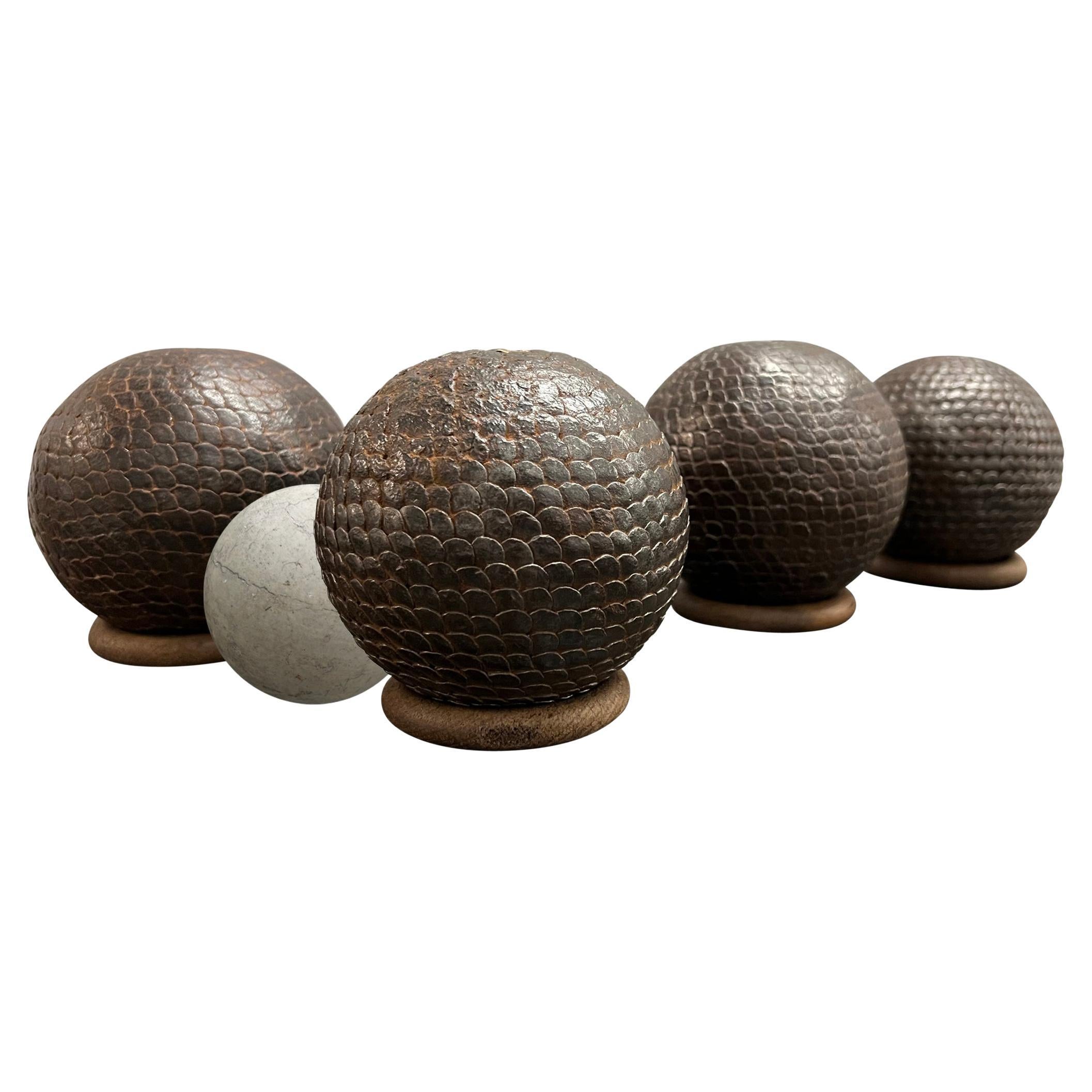
9 Antique French Boule Lyonnaise Cloutees Studded Nailed Petanque Balls 3"
4.5
$560per set
$800per set30% Off
£423.30per set
£604.71per set30% Off
€485.54per set
€693.62per set30% Off
CA$780.66per set
CA$1,115.23per set30% Off
A$849.82per set
A$1,214.02per set30% Off
CHF 451.08per set
CHF 644.40per set30% Off
MX$10,225.11per set
MX$14,607.30per set30% Off
NOK 5,715.83per set
NOK 8,165.47per set30% Off
SEK 5,237.31per set
SEK 7,481.88per set30% Off
DKK 3,625.96per set
DKK 5,179.95per set30% Off
About the Item
Set of 9 antique French bowling game/boules cloutees / nailed balls - spheres of wood studded throughout with nails for durability. Four large, five small.
Dimensions:
Large - 4.5" x 4.5" / Small - 3" x 3" (Diameter x Height)
- Dimensions:Height: 4.5 in (11.43 cm)Width: 4.5 in (11.43 cm)Depth: 4.5 in (11.43 cm)
- Sold As:Set of 9
- Materials and Techniques:
- Period:
- Date of Manufacture:Early 20th Century
- Condition:Wear consistent with age and use.
- Seller Location:Dayton, OH
- Reference Number:Seller: 436481stDibs: LU5343243161092
About the Seller
5.0
Platinum Seller
Premium sellers with a 4.7+ rating and 24-hour response times
Established in 2010
1stDibs seller since 2020
1,749 sales on 1stDibs
Typical response time: <1 hour
- ShippingRetrieving quote...Shipping from: Dayton, OH
- Return Policy
More From This Seller
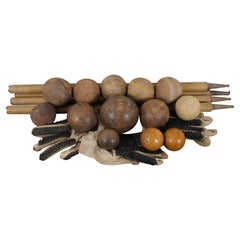
View AllAntique 20 Pc Assorted Lot Cricket Stumps Gloves Wood Bocce Croquet Balls
Located in Dayton, OH
20 piece lot of assorted antique sports equipment including 4 wooden cricket stumps (no bails), 3 cloth and rubber spiked cricket batting gloves, and 13 wooden lawn balls...
Category
Early 20th Century Sports Equipment and Memorabilia
Materials
Fabric, Rubber, Hardwood, Paint
$210 Sale Price / set
30% Off
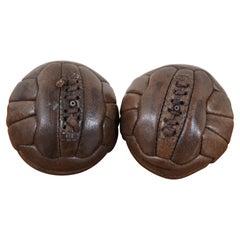
Pair 1930s Vintage English Mark Cross Leather Footballs Futbols Soccer Balls 6"
By Mark Cross
Located in Dayton, OH
Pair of circa 1930s brown leather footballs / soccer balls manufactured by Mark Cross Company. Made in England.
Dimensions:
5.5" x 5.5" x 5.5" (Width x Depth x Height)
Category
Vintage 1930s English Sports Equipment and Memorabilia
Materials
Leather, Cotton
$385 Sale Price / set
30% Off
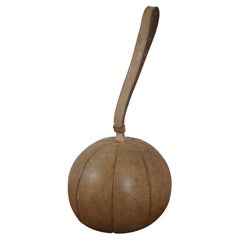
Antique French Leather Boxing Punching Speed Bag Sports Medicine Ball 8"
Located in Dayton, OH
Antique French eight panel leather boxing speed bag / sports medicine exercise ball.
Dimensions:
8" x 6.75"(Diameter x Height)
Category
Early 20th Century Sports Equipment and Memorabilia
Materials
Leather
$287 Sale Price
30% Off
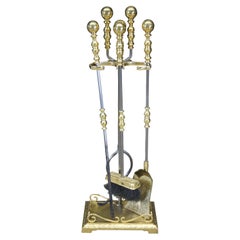
Vintage American Colonial Style Brass Fireplace Tools Hearthware Cannon Ball
Located in Dayton, OH
Vintage 4 piece fireplace tool set. Colonial styling with a scrolled brass stand and ornate tools made from iron and brass with cannonball handles.
Dimensions:
11" x 8" x 31.5"
Category
Late 20th Century American Colonial Fireplace Tools and Chimney Pots
Materials
Brass
$245 Sale Price / set
30% Off
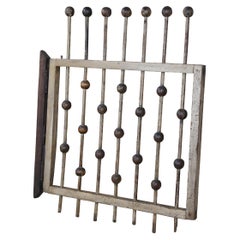
Antique Victorian Ball
Stick Oak Fence Gate Door Architectural Salvage 32"
Located in Dayton, OH
Victorian Era Ball and Stick Fence Gate, circa last quarter 20th Century. Made from oak with a classic design and old hinges. The gate has previously disp...
Category
Antique Late 19th Century Victorian Doors and Gates
Materials
Iron
$490 Sale Price
30% Off
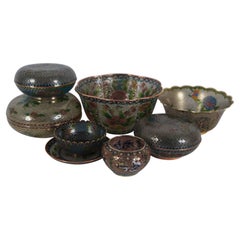
8 Antique Plique a Jour Enamel Trinket Boxes Dishes Bowls Floral Cloisonné
Located in Dayton, OH
Lot of 8 vintage plique a jour pieces including 3 round lidded trinket boxes, 3 scalloped edge bowls, one small plate, and one fish bowl style bud vase. All feature designs of flower...
Category
Early 20th Century Chinoiserie Decorative Dishes and Vide-Poche
Materials
Metal, Enamel
$822 Sale Price / set
30% Off
You May Also Like
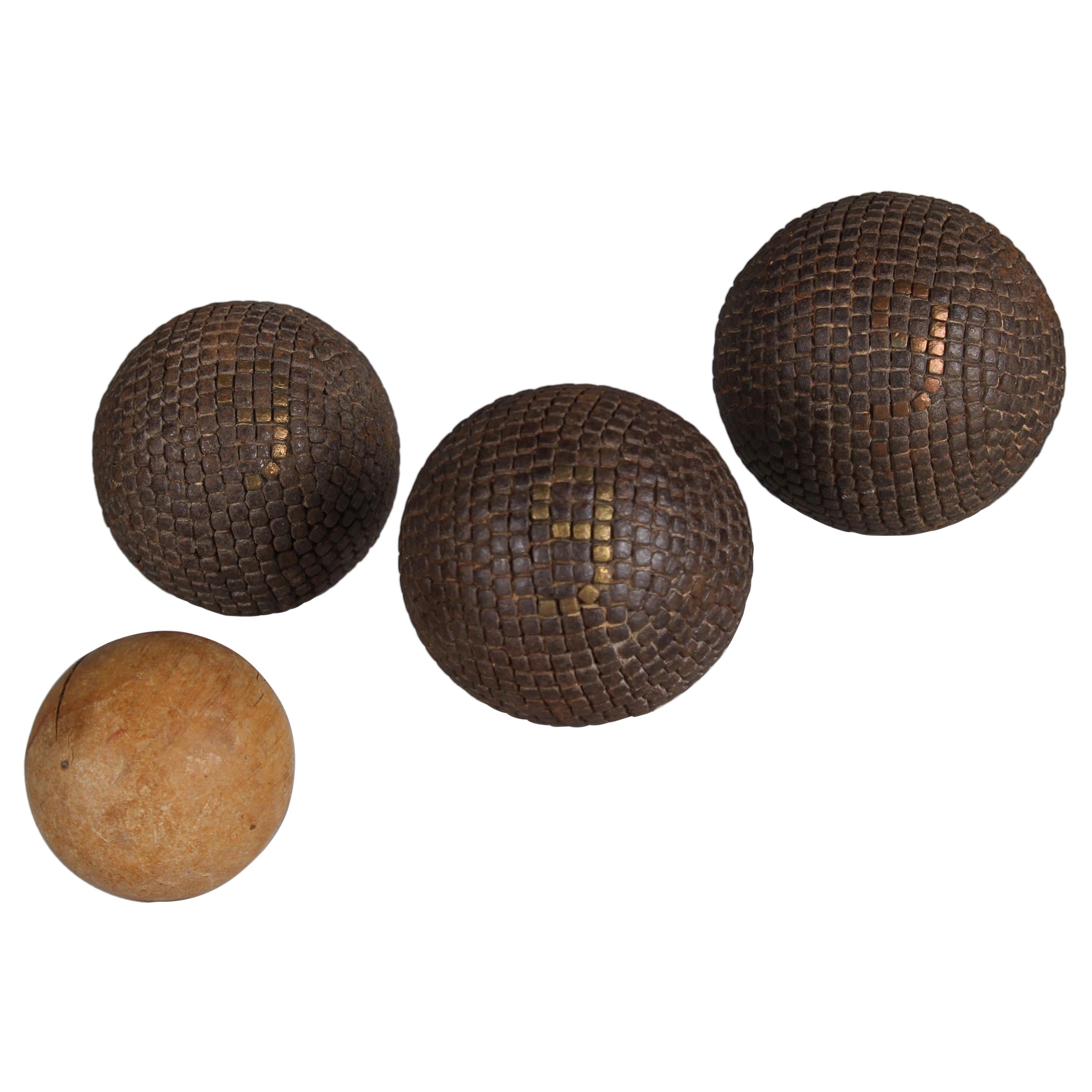
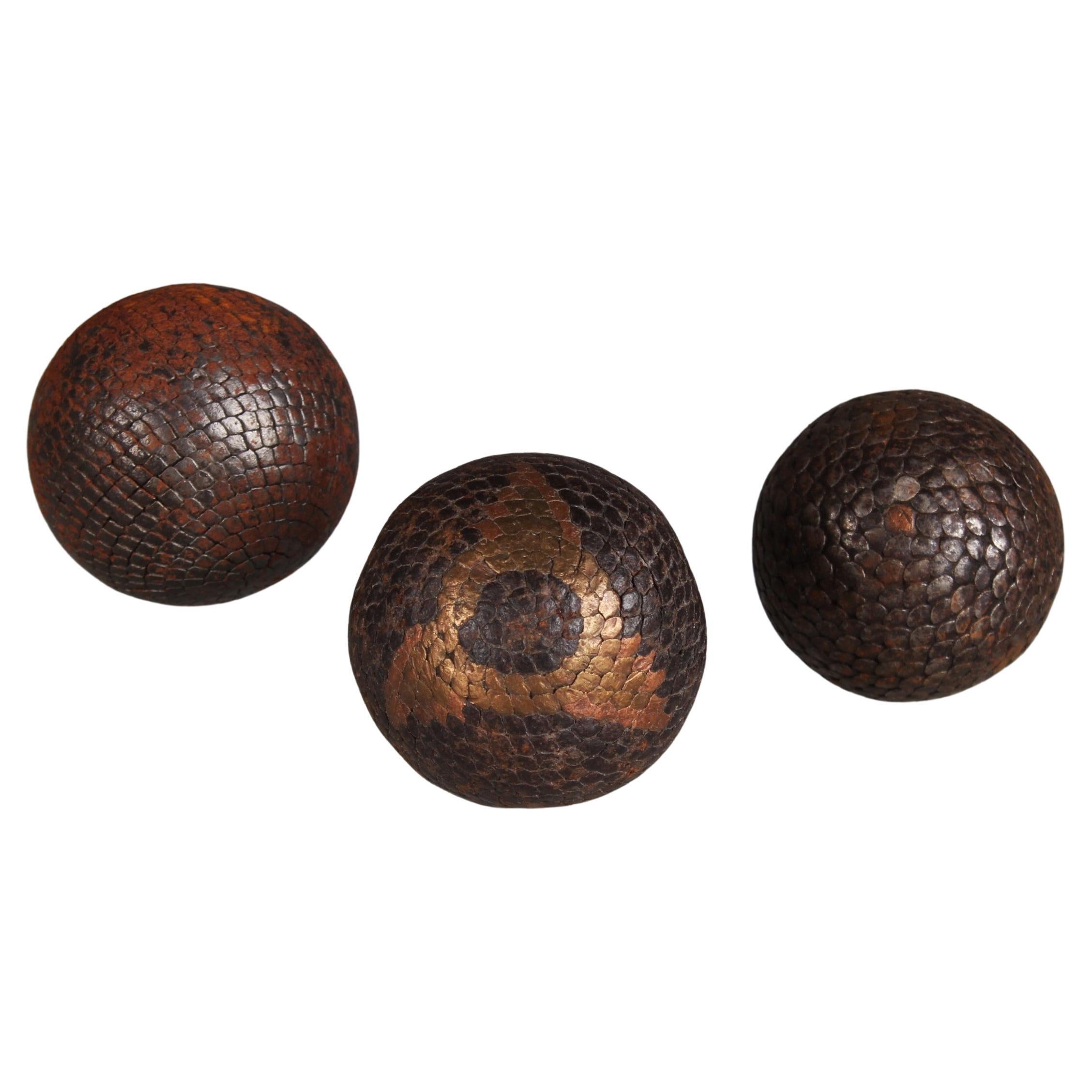
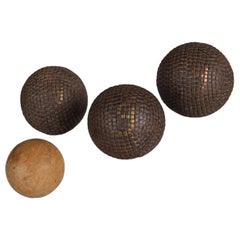
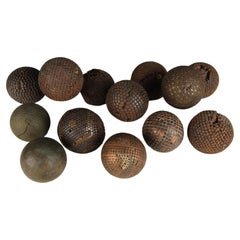
Antique Boule Balls Set "9", Pétanque, 1880s, France, Craftsmanship
Located in Greven, DE
Beautiful, unique Boule set of three Boule balls and one target ball, France, late 19th century.
In the 19th century, the manufacture of boules balls underwent significant development in France as the game of boules, particularly the pétanque variant, gained in popularity. The manufacture of boules balls during this period was a manual process that required expertise, precision and love to detail.
In the late 19th and early 20th centuries, particularly in rural areas of France and other Mediterranean regions, olive wood was a commonly used source of material for making boules balls. This was not only due to the availability of the material, but also to the outstanding properties of olive wood, which was characterized by hardness, strength and a rich grain.
First, the olive wood was carefully selected and shaped into raw balls, which were then sanded to the desired size and shape. The nails were then hammered into the balls one by one, making sure that they were evenly distributed and firmly anchored. Finally, the spheres were polished and coated with a protective varnish to enhance their natural beauty and protect them from the elements.
The use of nails to decorate and reinforce olive wood boules was a traditional practice that not only gave the ball a rustic aesthetic, but also improved its durability and contributed to customization. Many balls were made according to the specific requirements and preferences of the players. Nails were driven at regular intervals around the ball, with each nail hole precisely placed so as not to affect the balance and weight distribution of the ball. These nails not only served as a decorative element, but also helped to strengthen the structure of the ball and make it more resistant to the hard knocks and wear and tear during play. Individual engravings or decorations were often applied to the balls to make them unique and identify the player.
Antique boules...
Category
Antique Late 19th Century French Late Victorian Antiquities
Materials
Olive
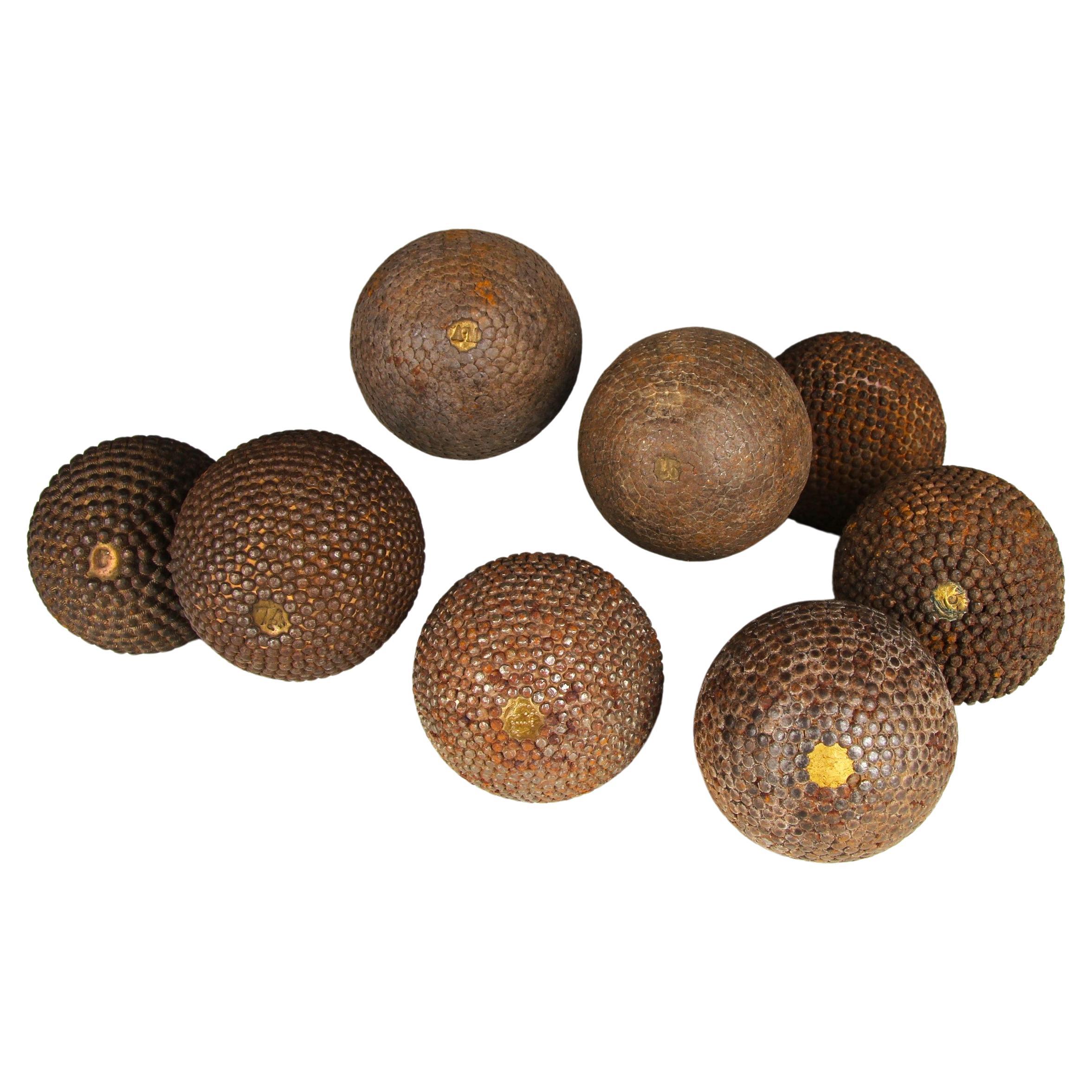
Complete Set Of Antique Boule Balls, 8 Pieces, Pétanque, 1880s, France
Located in Greven, DE
Complete Boule ball set of 8 pieces, France, late 19th Century.
In the 19th century, the manufacture of boules balls underwent significant development in France as the game of boule...
Category
Antique Late 19th Century French Late Victorian Antiquities
Materials
Metal
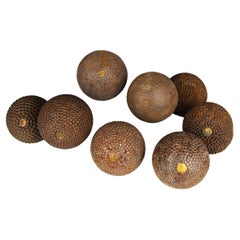
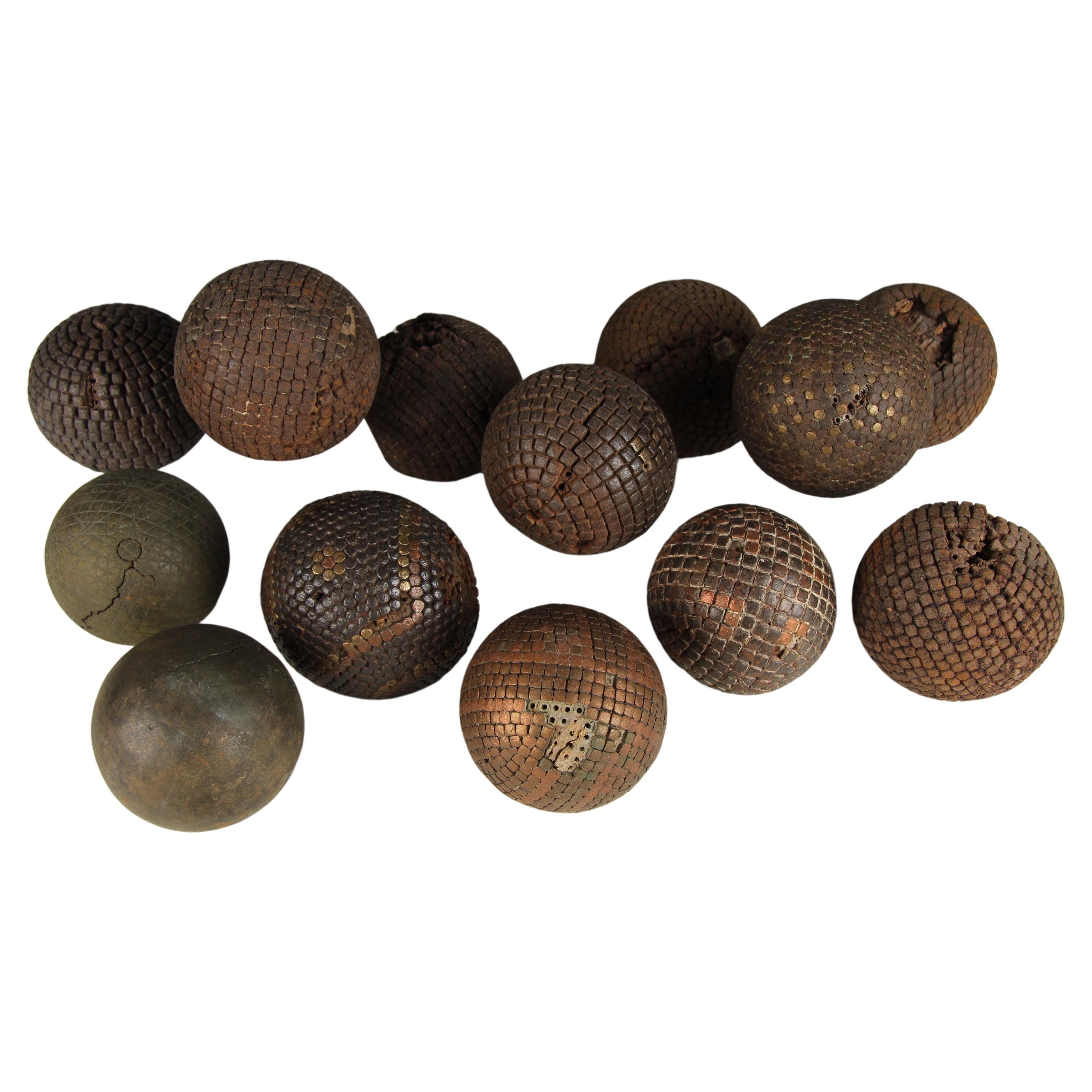
Large Set Of Antique Boule Balls, 13 Pieces, Pétanque, 1880s, France
Located in Greven, DE
Large Boule ball set of 13 pieces, France, late 19th Century.
Unrestored, original condition with signs of age and use.
In the 19th century, the manufacture of boules balls underwen...
Category
Antique Late 19th Century French Late Victorian Antiquities
Materials
Metal, Copper, Steel
Set of 19th Century French Pétanque Boules
Located in Chicago, IL
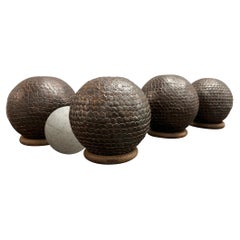
A playful set of 19th century French pétanque boules, comprised of four iron studded balls and one marble cochonnet (jack). The set can be used in pla...
Category
Antique 19th Century French Rustic Mounted Objects
Materials
Marble, Iron
$1,650 / set
Antique Boule Balls Set "B", Pétanque, 1880s, France, Craftsmanship
Located in Greven, DE
Beautiful, unique Boule set of three Boule balls, France, late 19th Century.
In the 19th century, the manufacture of boules balls underwent significant development in France as the game of boules, particularly the pétanque variant, gained in popularity. The manufacture of boules balls during this period was a manual process that required expertise, precision and love to detail.
In the late 19th and early 20th centuries, particularly in rural areas of France and other Mediterranean regions, olive wood was a commonly used source of material for making boules balls. This was not only due to the availability of the material, but also to the outstanding properties of olive wood, which was characterized by hardness, strength and a rich grain.
First, the olive wood was carefully selected and shaped into raw balls, which were then sanded to the desired size and shape. The nails were then hammered into the balls one by one, making sure that they were evenly distributed and firmly anchored. Finally, the spheres were polished and coated with a protective varnish to enhance their natural beauty and protect them from the elements.
The use of nails to decorate and reinforce olive wood boules was a traditional practice that not only gave the ball a rustic aesthetic, but also improved its durability and contributed to customization. Many balls were made according to the specific requirements and preferences of the players. Nails were driven at regular intervals around the ball, with each nail hole precisely placed so as not to affect the balance and weight distribution of the ball. These nails not only served as a decorative element, but also helped to strengthen the structure of the ball and make it more resistant to the hard knocks and wear and tear during play. Individual engravings or decorations were often applied to the balls to make them unique and identify the player.
Antique boules...
Category
Antique Late 19th Century French Late Victorian Antiquities
Materials
Olive
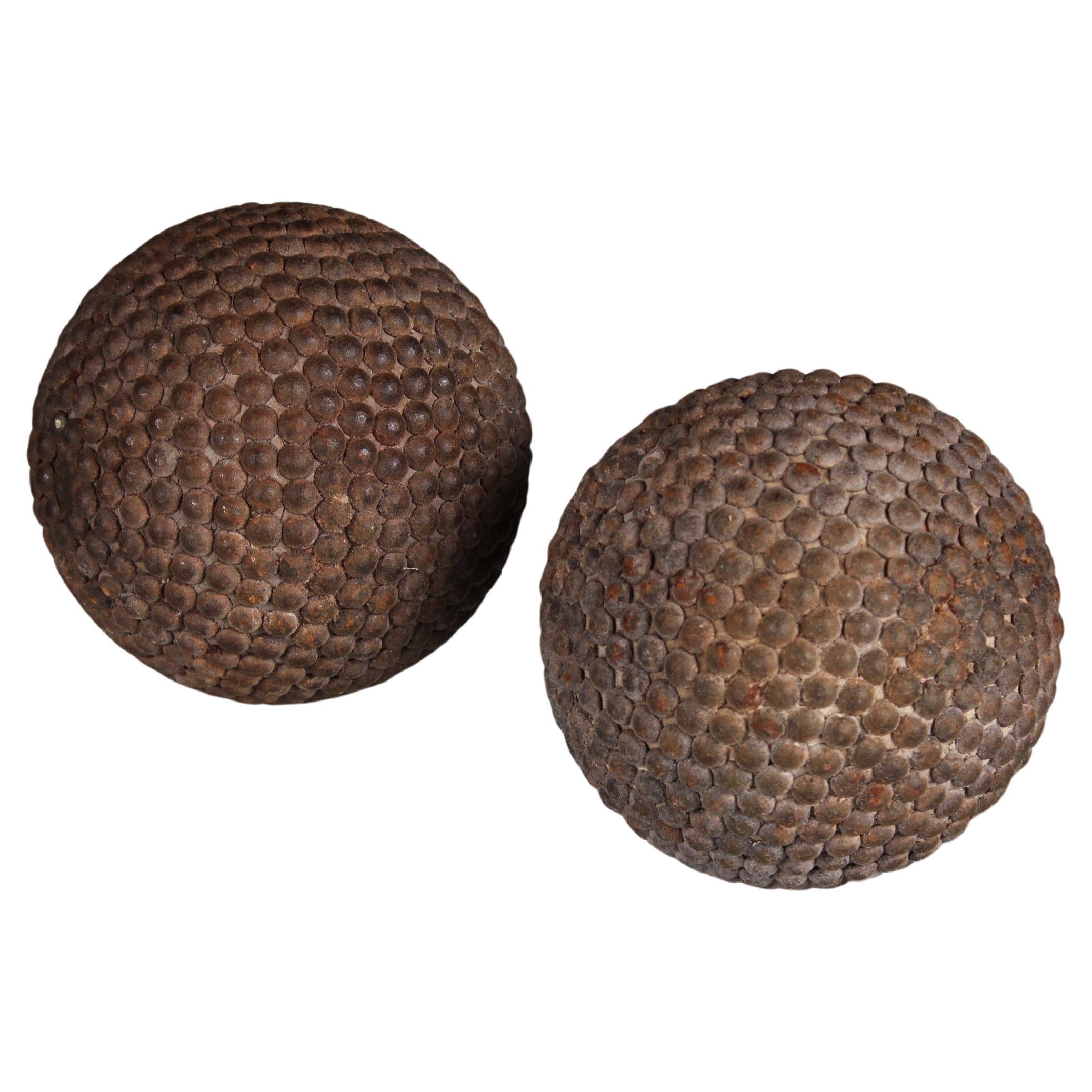
Pair Of Antique Boule Balls, Pétanque, 1880s, France, Craftsmanship
Located in Greven, DE
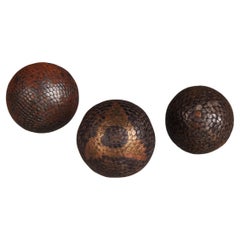
Beautiful, unique Boule ball pair, France, late 19th Century.
Diameter 9,5 cm.
In the 19th century, the manufacture of boules balls underwent significant development in France as the game of boules, particularly the pétanque variant, gained in popularity. The manufacture of boules balls during this period was a manual process that required expertise, precision and love to detail.
In the late 19th and early 20th centuries, particularly in rural areas of France and other Mediterranean regions, olive wood was a commonly used source of material for making boules balls. This was not only due to the availability of the material, but also to the outstanding properties of olive wood, which was characterized by hardness, strength and a rich grain.
First, the olive wood was carefully selected and shaped into raw balls, which were then sanded to the desired size and shape. The nails were then hammered into the balls one by one, making sure that they were evenly distributed and firmly anchored. Finally, the spheres were polished and coated with a protective varnish to enhance their natural beauty and protect them from the elements.
The use of nails to decorate and reinforce olive wood boules was a traditional practice that not only gave the ball a rustic aesthetic, but also improved its durability and contributed to customization. Many balls were made according to the specific requirements and preferences of the players. Nails were driven at regular intervals around the ball, with each nail hole precisely placed so as not to affect the balance and weight distribution of the ball. These nails not only served as a decorative element, but also helped to strengthen the structure of the ball and make it more resistant to the hard knocks and wear and tear during play. Individual engravings or decorations were often applied to the balls to make them unique and identify the player.
Antique boules...
Category
Antique Late 19th Century French Late Victorian Antiquities
Materials
Olive