Items Similar to Antique Monogrammed Bone Inlaid English Lawn Balls c.1900
Want more images or videos?
Request additional images or videos from the seller
1 of 6
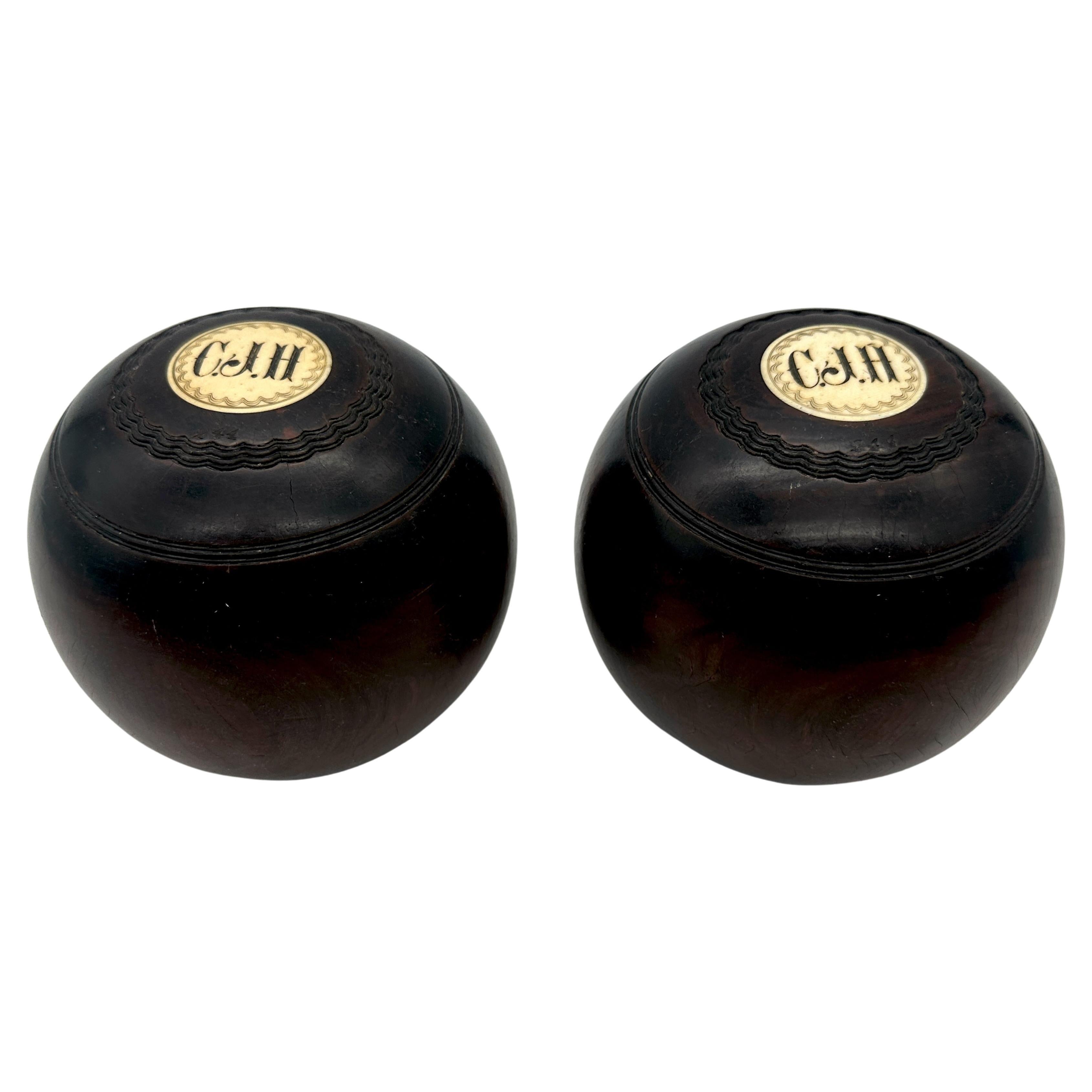
Antique Monogrammed Bone Inlaid English Lawn Balls c.1900
$250per set
$695per set64% Off
£188.97per set
£525.34per set64% Off
€216.76per set
€602.59per set64% Off
CA$348.51per set
CA$968.86per set64% Off
A$379.38per set
A$1,054.68per set64% Off
CHF 201.38per set
CHF 559.83per set64% Off
MX$4,564.78per set
MX$12,690.09per set64% Off
NOK 2,551.71per set
NOK 7,093.75per set64% Off
SEK 2,338.09per set
SEK 6,499.88per set64% Off
DKK 1,618.73per set
DKK 4,500.08per set64% Off
About the Item
ABOUT
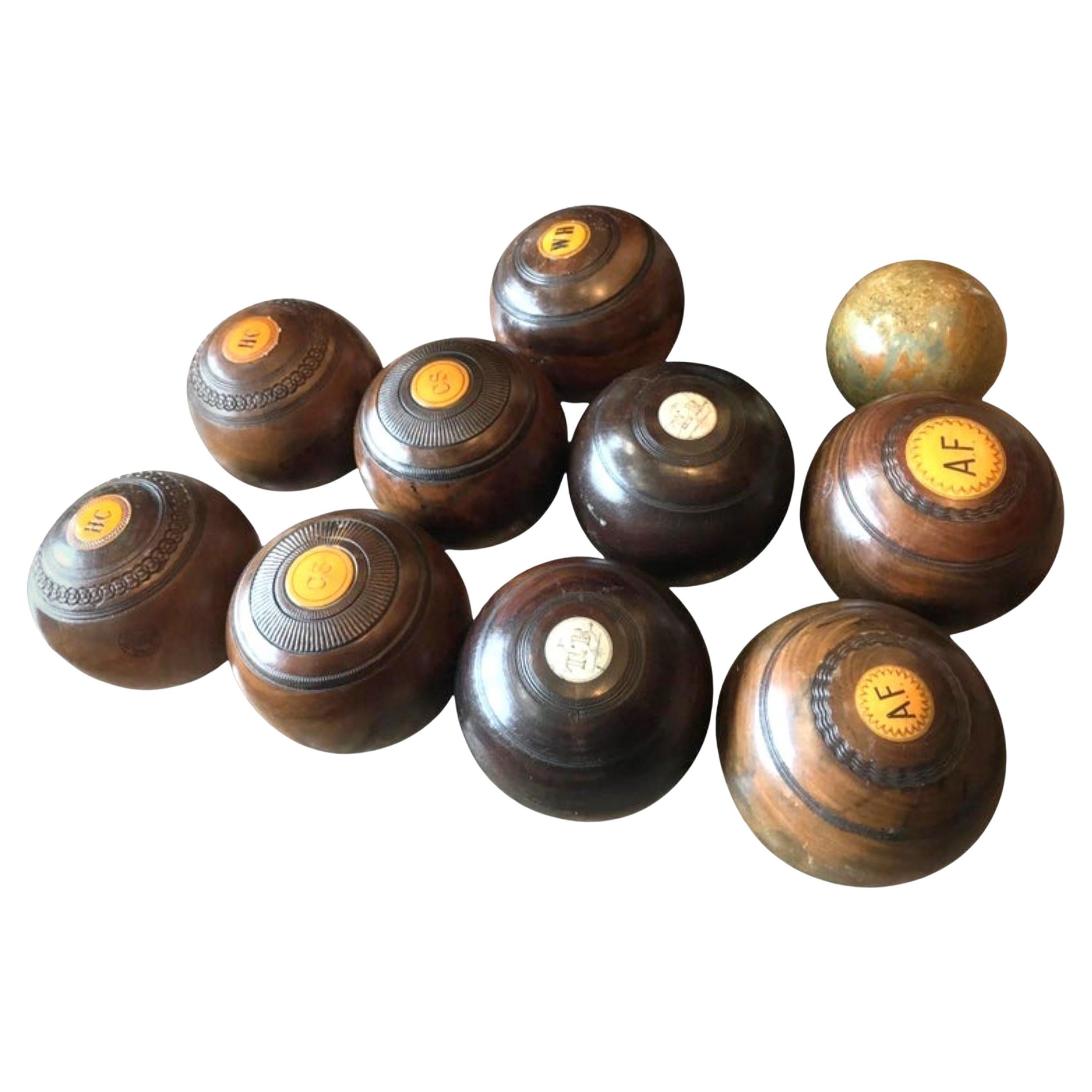
A set of English lawn bowls made of Lignum Vitae Wood inlaid with bone. Monogrammed "AJG" and "WPS" and "1" and "2" the other side.
CREATOR Unknown. Made in Scotland.
DATE OF MANUFACTURE c.1900.
MATERIALS AND TECHNIQUES Bone, Lignum Vitae Wood.
CONDITION Good. Wear consistent with age and use.
DIMENSIONS 5 in. x 4.75 in.
HISTORY
Lignum Vitae is the densest and hardest wood known. The trees are indigenous to the Caribbean and the northern coast of South America (e.g., Colombia and Venezuela) and have been an important export crop to Europe since the beginning of the 16th century. The self oiling wood was once very important for applications requiring a material with its extraordinary combination of strength, toughness and density.
- Dimensions:Height: 4.75 in (12.07 cm)Diameter: 5 in (12.7 cm)
- Sold As:Set of 3
- Style:Victorian (Of the Period)
- Materials and Techniques:
- Place of Origin:
- Period:
- Date of Manufacture:1900
- Condition:Wear consistent with age and use.
- Seller Location:San Francisco, CA
- Reference Number:1stDibs: LU1280236374092
About the Seller
5.0
Platinum Seller
Premium sellers with a 4.7+ rating and 24-hour response times
Established in 2014
1stDibs seller since 2015
1,359 sales on 1stDibs
Typical response time: <1 hour
- ShippingRetrieving quote...Shipping from: San Francisco, CA
- Return Policy
More From This Seller
View AllWood and Metal Throwing Discus circa 1930-1940-ONE LEFT
Located in San Francisco, CA
ABOUT
Wood and metal discus available. The other two have sold.
Antique wood and brass and solid rubber discus. Two are marked "Gill".
CREATOR Gill Sporting Goods Company.
DATE...
Category
Early 20th Century Industrial Sports Equipment and Memorabilia
Materials
Brass, Metal
$60 Sale Price
50% Off
Collection of 19th c. Mortise Marking Guages
Located in San Francisco, CA
ABOUT
Collection of 19th century Rosewood and Boxwood mortise marking gauges with bronze knobs and accents. One is stamped "Pat. Oct. 22, 1872".
CREATOR Unknown.
DATE OF M...
Category
Antique 19th Century Industrial Scientific Instruments
Materials
Bronze
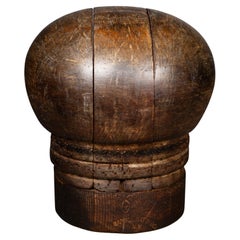
Antique Millinery Puzzle Block Hat Form c.1890-1920
Located in San Francisco, CA
ABOUT
An original late 19th c./early 20th century wooden millinery hat block made in five parts, including the base. Company logo stamped in front along with "3024" and "back" on th...
Category
Antique Late 19th Century Industrial Hat Racks and Stands
Materials
Wood
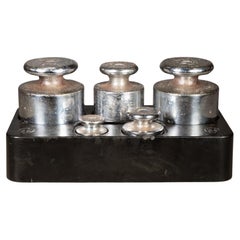
Vintage Toledo Solid Steel Graduating Weights c.1930-1950
By Toledo Scale Company
Located in San Francisco, CA
ABOUT
An original set of solid steel, chromed calibrating weights. Stamped Toledo on each. Two 10 lb, one 5 lb, one 2 lb and one 1 lb set in a solid Bakelite tray.
CREATOR Tol...
Category
Early 20th Century American Industrial Scientific Instruments
Materials
Steel, Chrome
$275 Sale Price / set
21% Off
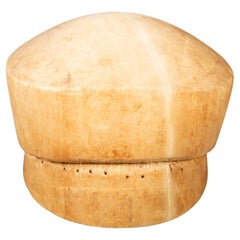
Antique Millinery Hat Form c.1890-1920
Located in San Francisco, CA
ABOUT
An original wooden millinery hat form. Unvarnished. Hat not included.
CREATOR MNN Machine Works, New York City, NY.
DATE OF MANUFACTURE c.1890-1920.
MATERIALS A...
Category
Antique Late 19th Century Industrial Hat Racks and Stands
Materials
Wood
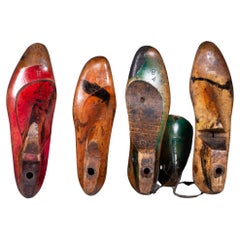
Antique Wooden Shoe Forms c.1920-2 Sets Available
Located in San Francisco, CA
ABOUT
Price is per collection. 2 collections available. (1st set and 4th set have sold) Please specify which set to purchase. Decorative only.
Original cobbler's wooden shoe forms...
Category
Early 20th Century Industrial Figurative Sculptures
Materials
Maple
$30 Sale Price / set
53% Off
You May Also Like
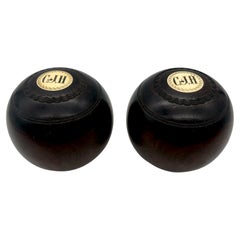
Pair of 19th Century Scottish Monogramed Hardwood Lawn Balls
Located in West Palm Beach, FL
Pair of 19th Century Scottish Monogrammed Hardwood Lawn Balls
A pair of 19th-century Scottish monogrammed hardwood lawn balls. Each ball, measuring 5 inches in diameter, is crafted...
Category
Antique Late 19th Century Scottish High Victorian Sports Equipment and M...
Materials
Hardwood
$416 Sale Price / set
20% Off
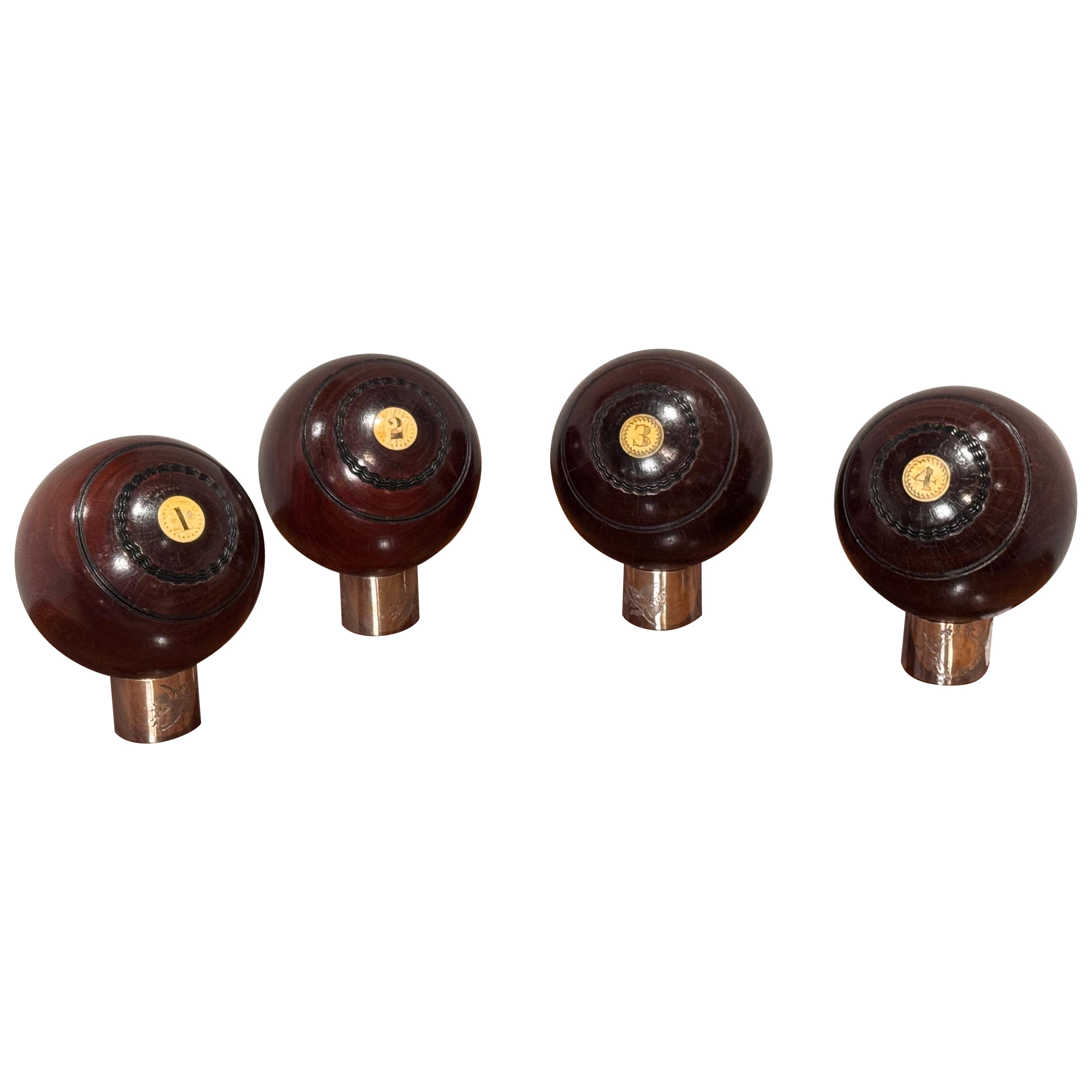
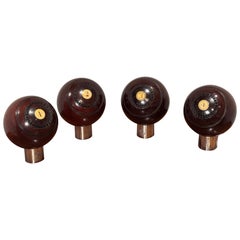
4 Lawn Balls, 19th Century, Lignum Vitae inlaid numbers
Monogram
Located in Huntington, NY
4 Lawn Balls, 19th Century, Lignum Vitae inlaid numbers & Monogram
Nicley Patinated with some minor crazing, Numbered & Monogrammed
Category
Antique Mid-19th Century English Early Victorian Sports Equipment and Me...
Materials
Other
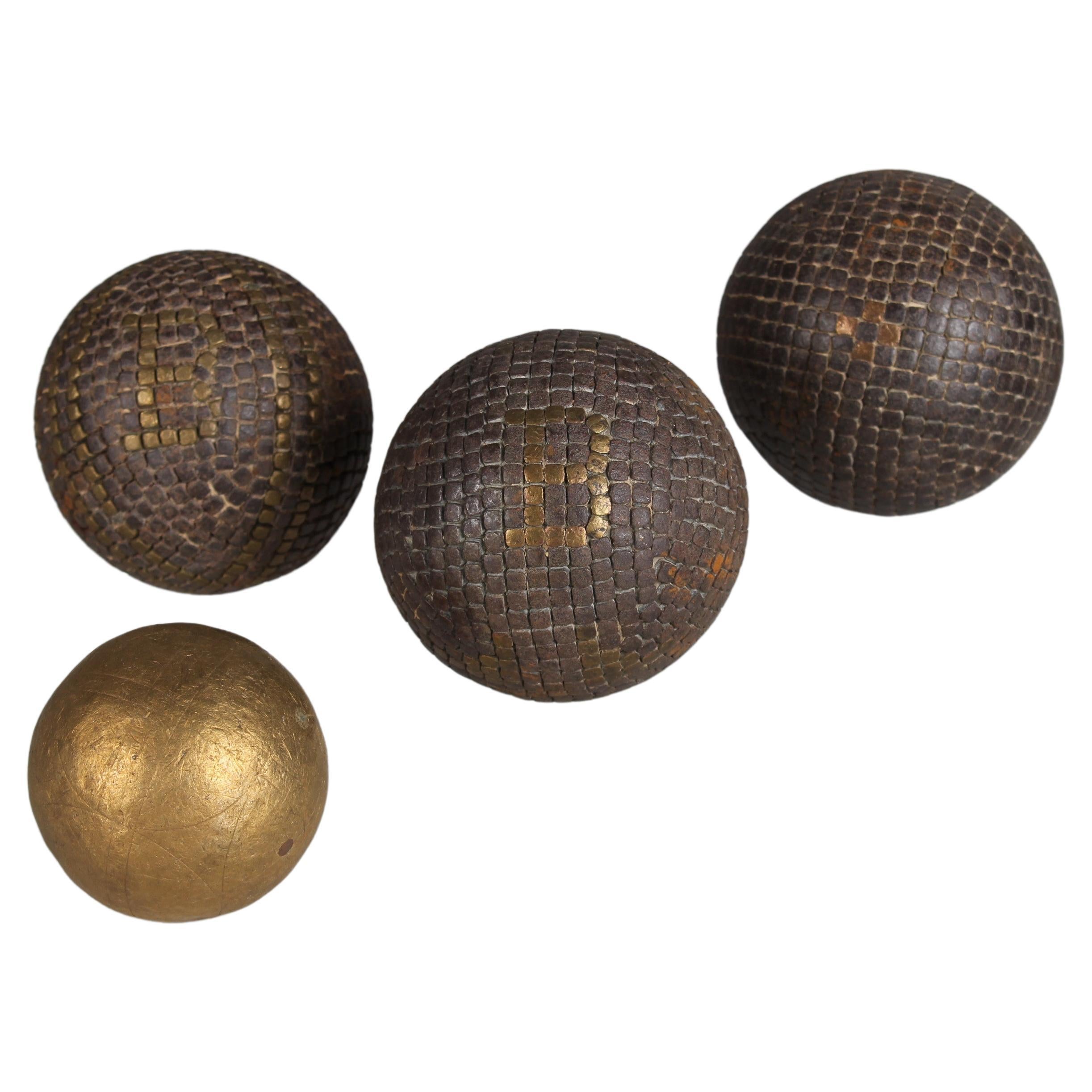
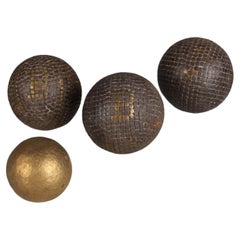
Antique Boule Balls Set "B", Pétanque, 1880s, France, Craftsmanship
Located in Greven, DE
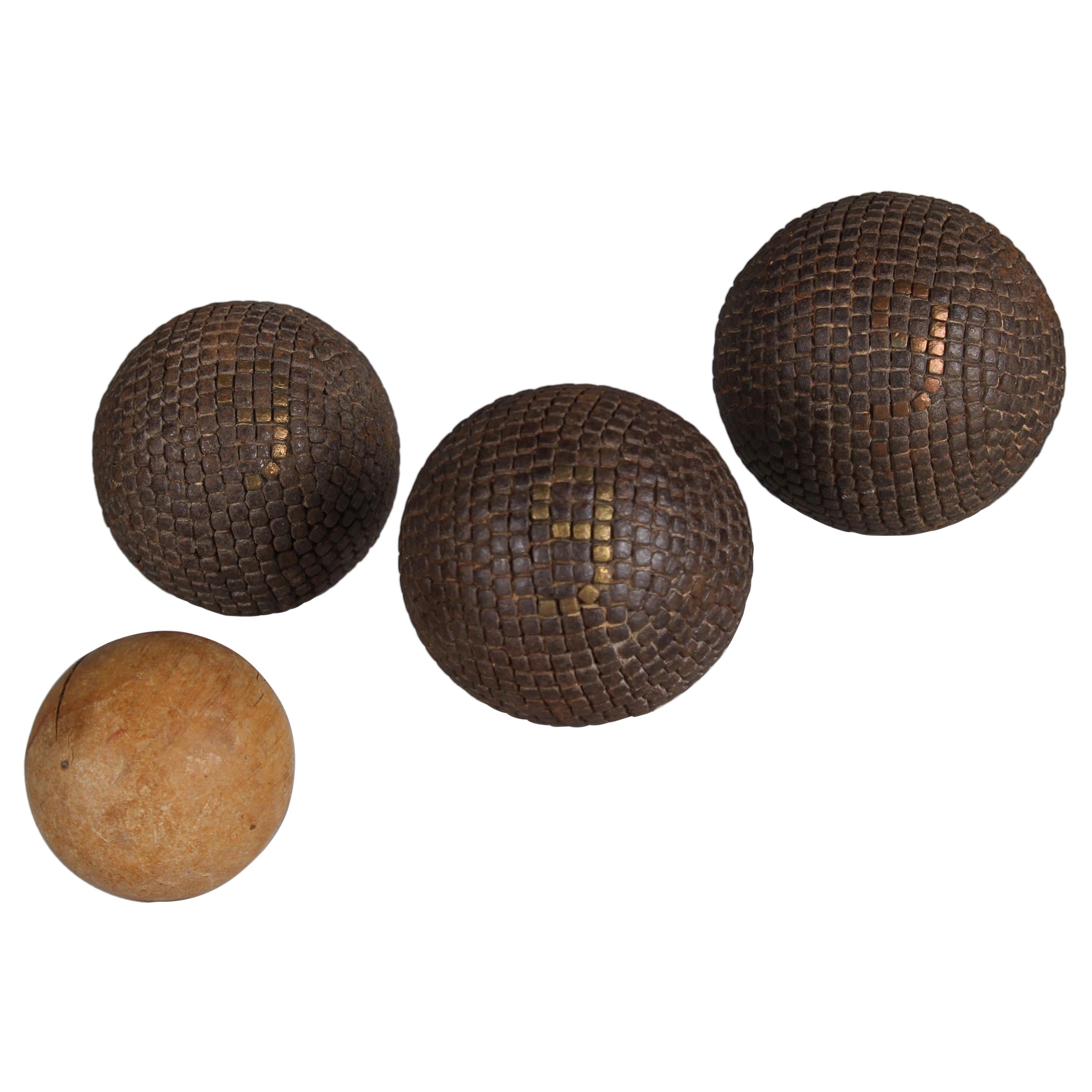
Beautiful, unique Boule set of three Boule balls and one target ball, France, late 19th century.
In the 19th century, the manufacture of boules balls underwent significant development in France as the game of boules, particularly the pétanque variant, gained in popularity. The manufacture of boules balls during this period was a manual process that required expertise, precision and love to detail.
In the late 19th and early 20th centuries, particularly in rural areas of France and other Mediterranean regions, olive wood was a commonly used source of material for making boules balls. This was not only due to the availability of the material, but also to the outstanding properties of olive wood, which was characterized by hardness, strength and a rich grain.
First, the olive wood was carefully selected and shaped into raw balls, which were then sanded to the desired size and shape. The nails were then hammered into the balls one by one, making sure that they were evenly distributed and firmly anchored. Finally, the spheres were polished and coated with a protective varnish to enhance their natural beauty and protect them from the elements.
The use of nails to decorate and reinforce olive wood boules was a traditional practice that not only gave the ball a rustic aesthetic, but also improved its durability and contributed to customization. Many balls were made according to the specific requirements and preferences of the players. Nails were driven at regular intervals around the ball, with each nail hole precisely placed so as not to affect the balance and weight distribution of the ball. These nails not only served as a decorative element, but also helped to strengthen the structure of the ball and make it more resistant to the hard knocks and wear and tear during play. Individual engravings or decorations were often applied to the balls to make them unique and identify the player.
Antique boules...
Category
Antique Late 19th Century French Late Victorian Antiquities
Materials
Olive
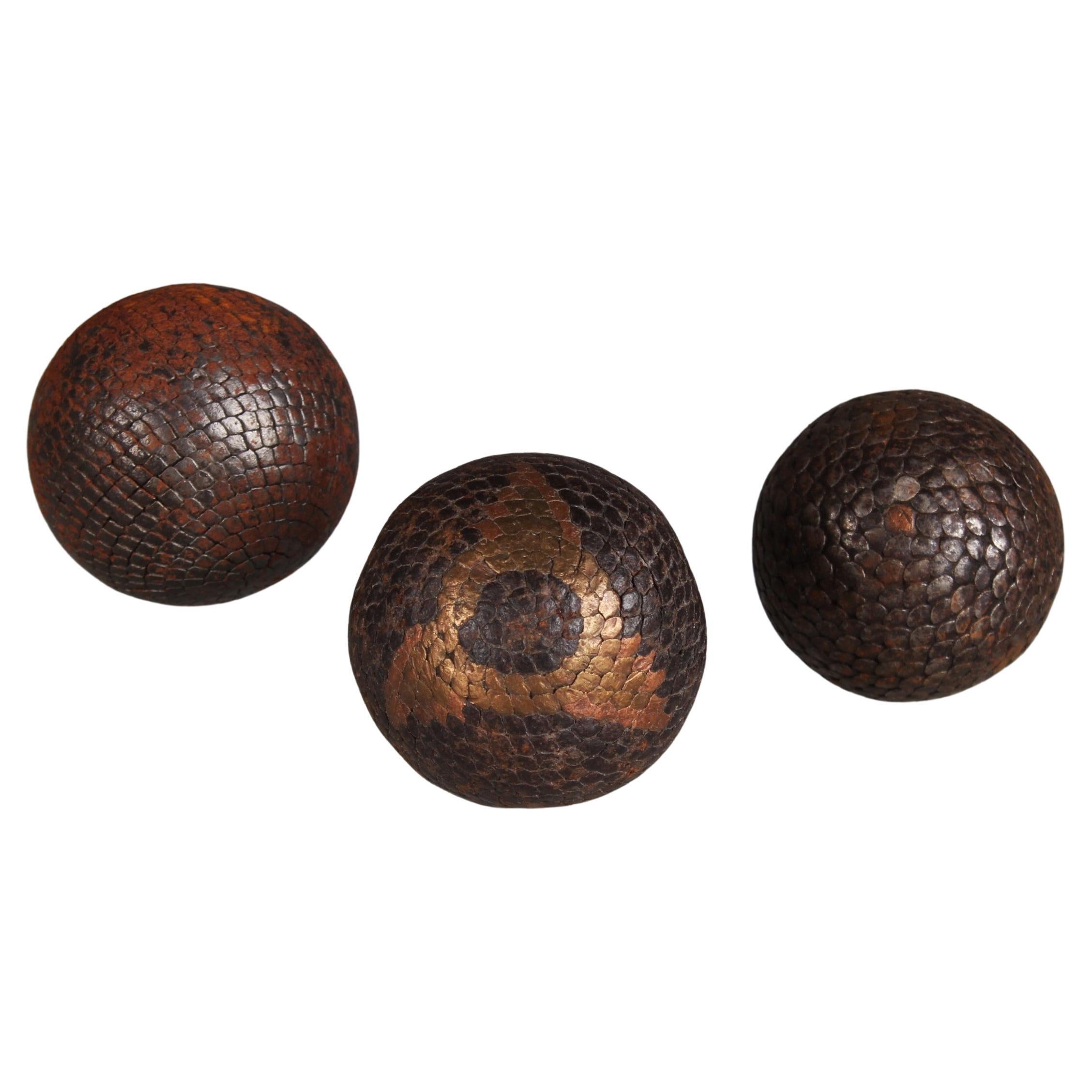
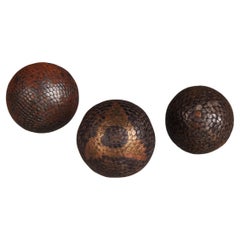
Antique Boule Balls Set "B", Pétanque, 1880s, France, Craftsmanship
Located in Greven, DE
Beautiful, unique Boule set of three Boule balls, France, late 19th Century.
In the 19th century, the manufacture of boules balls underwent significant development in France as the game of boules, particularly the pétanque variant, gained in popularity. The manufacture of boules balls during this period was a manual process that required expertise, precision and love to detail.
In the late 19th and early 20th centuries, particularly in rural areas of France and other Mediterranean regions, olive wood was a commonly used source of material for making boules balls. This was not only due to the availability of the material, but also to the outstanding properties of olive wood, which was characterized by hardness, strength and a rich grain.
First, the olive wood was carefully selected and shaped into raw balls, which were then sanded to the desired size and shape. The nails were then hammered into the balls one by one, making sure that they were evenly distributed and firmly anchored. Finally, the spheres were polished and coated with a protective varnish to enhance their natural beauty and protect them from the elements.
The use of nails to decorate and reinforce olive wood boules was a traditional practice that not only gave the ball a rustic aesthetic, but also improved its durability and contributed to customization. Many balls were made according to the specific requirements and preferences of the players. Nails were driven at regular intervals around the ball, with each nail hole precisely placed so as not to affect the balance and weight distribution of the ball. These nails not only served as a decorative element, but also helped to strengthen the structure of the ball and make it more resistant to the hard knocks and wear and tear during play. Individual engravings or decorations were often applied to the balls to make them unique and identify the player.
Antique boules...
Category
Antique Late 19th Century French Late Victorian Antiquities
Materials
Olive
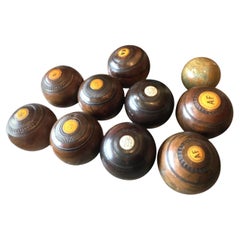
10 Carpet Lawn Bowling Hand Carved Wood
Stone Balls Antique Office Gift Idea
Located in West Hollywood, CA
10 Carpet Lawn bowling hand carved wood & stone balls antique office gift idea. A Beautiful Decorative Antique collection of 9 + 1 boules balls Carved Wood and a Jack Carved Stone ba...
Category
Antique 19th Century Scottish Sculptures and Carvings
Materials
Stone
$4,720 Sale Price / set
20% Off
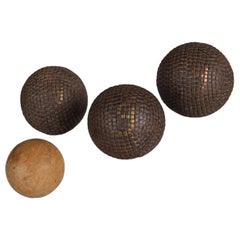
Antique Boule Balls Set "9", Pétanque, 1880s, France, Craftsmanship
Located in Greven, DE
Beautiful, unique Boule set of three Boule balls and one target ball, France, late 19th century.
In the 19th century, the manufacture of boules balls underwent significant development in France as the game of boules, particularly the pétanque variant, gained in popularity. The manufacture of boules balls during this period was a manual process that required expertise, precision and love to detail.
In the late 19th and early 20th centuries, particularly in rural areas of France and other Mediterranean regions, olive wood was a commonly used source of material for making boules balls. This was not only due to the availability of the material, but also to the outstanding properties of olive wood, which was characterized by hardness, strength and a rich grain.
First, the olive wood was carefully selected and shaped into raw balls, which were then sanded to the desired size and shape. The nails were then hammered into the balls one by one, making sure that they were evenly distributed and firmly anchored. Finally, the spheres were polished and coated with a protective varnish to enhance their natural beauty and protect them from the elements.
The use of nails to decorate and reinforce olive wood boules was a traditional practice that not only gave the ball a rustic aesthetic, but also improved its durability and contributed to customization. Many balls were made according to the specific requirements and preferences of the players. Nails were driven at regular intervals around the ball, with each nail hole precisely placed so as not to affect the balance and weight distribution of the ball. These nails not only served as a decorative element, but also helped to strengthen the structure of the ball and make it more resistant to the hard knocks and wear and tear during play. Individual engravings or decorations were often applied to the balls to make them unique and identify the player.
Antique boules...
Category
Antique Late 19th Century French Late Victorian Antiquities
Materials
Olive
More Ways To Browse
Lignum Vitae
Antique Lignum Vitae
Victorian Monogram
Lawn Balls
Antique Lawn Bowls
Bamboo Fishing Rod
Gutta Percha Golf Ball
Hand Carved Walking Cane
Leather Gym Equipment
Olympic Memorabilia
Antique Billiard Memorabilia
Bone Walking Stick
Head Walking Cane
Leather Vintage Football
Midcentury Cowboy Furniture
Penny Farthing
Scoreboard Vintage
Vintage Cricket