Want more images or videos?
Request additional images or videos from the seller
1 of 10
Rare Auchterlonie Jigger from St Andrews, Scotland
Price:$300
$600List Price
About the Item
- Creator:Tom Auchterlonie (Maker)
- Dimensions:Height: 38.5 in (97.79 cm)Width: 4 in (10.16 cm)Depth: 1 in (2.54 cm)
- Style:Edwardian (Of the Period)
- Materials and Techniques:
- Place of Origin:
- Period:
- Date of Manufacture:1915-1920
- Condition:Wear consistent with age and use. Condition is very good for it s age and use.
- Seller Location:Dallas, TX
- Reference Number:1stDibs: LU3978112561631
About the Seller
4.8
Gold Seller
Premium sellers maintaining a 4.3+ rating and 24-hour response times
Established in 2015
1stDibs seller since 2018
399 sales on 1stDibs
Typical response time: 1 hour
Authenticity Guarantee
In the unlikely event there’s an issue with an item’s authenticity, contact us within 1 year for a full refund. DetailsMoney-Back Guarantee
If your item is not as described, is damaged in transit, or does not arrive, contact us within 7 days for a full refund. Details24-Hour Cancellation
You have a 24-hour grace period in which to reconsider your purchase, with no questions asked.Vetted Professional Sellers
Our world-class sellers must adhere to strict standards for service and quality, maintaining the integrity of our listings.Price-Match Guarantee
If you find that a seller listed the same item for a lower price elsewhere, we’ll match it.Trusted Global Delivery
Our best-in-class carrier network provides specialized shipping options worldwide, including custom delivery.You May Also Like
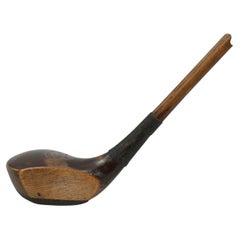
Antique Golf Club, Wood By David Anderson, St Andrews
Located in Oxfordshire, GB
D. Anderson & Sons, St Andrews, Driver.
A typical period socket head persimmon wood driver by D. Anderson & Sons, St Andrews, Scotland. This great looking club has a polished club he...
Category
Early 20th Century Scottish Sports Equipment and Memorabilia
Materials
Wood, Hickory
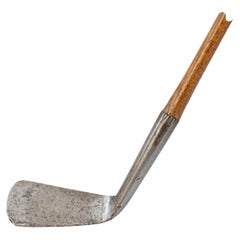
Early Golf Club, Iron By W. Wilson Of St Andrews
Located in Oxfordshire, GB
Early Golf Club, Iron By Willie Wilson of St Andrews.
A rare hand forged blacksmith-made wrought iron Victorian golf club cleek by Willie Wilson of St Andrews. The smooth faced lofting iron is heavy weighted, hickory shafted with crisp nicking to the top of the hosel where it meets the shaft. It is with leather sheep skin grip, the back of the iron club head stamped 'W. Wilson, Maker, St. Andrews'. The patina of the metal head is very attractive to collectors. Willie Wilson was one of the early ironmakers who produced fine clubs during the late 19th century.
The measurements shown are the length of the shaft with hosel and the width and depth of the face.
Willie Wilson of St Andrews was a well-known Scottish golf clubmaker. He began making irons in the 1860's and remained in business to the end of the century. He was among one of the most respected craftsmen in St Andrews, the "Home of Golf".
Willie was known for producing handmade hickory-shafted golf clubs of high quality. His clubs were well-regarded for their balance, finish, and playability, and today they are sought after by collectors of antique golf equipment...
Category
Antique Late 19th Century Scottish Sports Equipment and Memorabilia
Materials
Iron
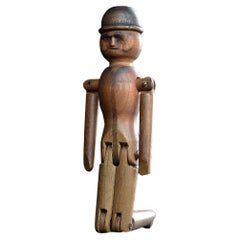
English Jigger Doll
Located in London, GB
English Jigger Doll
We are proud to offer an early 20th century hand carved folk art English jigger doll example. Carved from pine and joined with brass supports. Jig dolls are traditional wooden or tin-plate ‘toys’ for adults or children. Obtained from a private collection in London and untouched in form with all its original featured intact. They are dolls with loose limbs that step dance...
Category
Vintage 1920s British Folk Art Toys
Materials
Pine
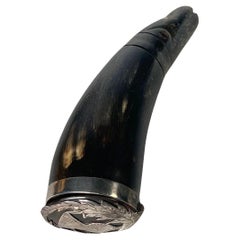
Rare Scottish Horn Snuff Mill
Located in Dallas, TX
A very rare Scottish snuff mull with carved water buffalo with ears and eyes. At the opposite end a silver thistle with opening for snuff. Circa 1...
Category
Antique 1820s Scottish Tobacco Accessories
Materials
Silver
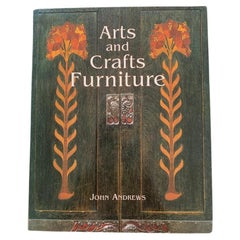
Arts and Crafts Furniture, John Andrews
Located in Montelabbate, PU
It has long been time for a specialist work on Arts and Crafts furniture. Written by a recognised authority on the subject, this book examine...
Category
Mid-20th Century Books
Materials
Paper
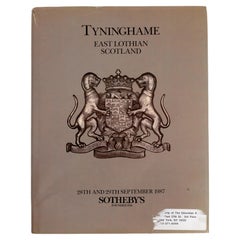
Sotheby
s: the Contents of Tyninghame, East Lothian, Scotland, 1st Ed Hardcover
Located in valatie, NY
The Contents of Tyninghame, East Lothian, Scotland : Including English and Continental Furniture, Gothic Tapestries . : by Direction of the Earl of Had...
Category
Vintage 1980s Books
Materials
Paper
$105
H 11 in W 8.5 in D 0.75 in
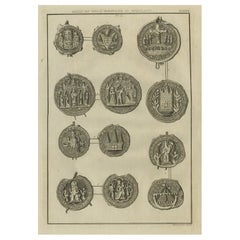
Rare Antique Print of Seals of Royal Boroughs in Scotland, 1792
Located in Langweer, NL
Antique print titled 'Plate XXVII. Seals of Royal Boroughs in Scotland'. Original antique print showing Seals of Royal Boroughs in Scotland. This print originates from 'An Account of...
Category
Antique 18th Century Prints
Materials
Paper
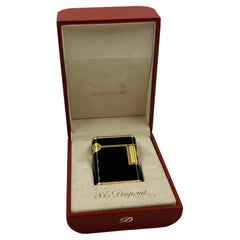
Vintage St. Dupont Soubreny lighter from 1990
By S.T. Dupont
Located in Autonomous City Buenos Aires, CABA
Vintage St. Dupont Soubreny Lighter from 1990
This vintage St. Dupont Soubreny lighter dates from 1990 and features an elegant two-tone design in black Chinese lacquer and gold plati...
Category
20th Century French Post-Modern Tobacco Accessories
Materials
Lacquer
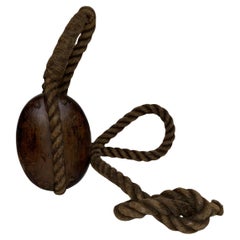
Rare Pulley Block from the USS Constitution
Located in Norwell, MA
Block and tackle from 'Old Ironsides,' the U.S.S. Constitution. A very rare relic removed from the vessel during the restoration in the 1970s, preparing the ship for the bicentennial...
Category
Vintage 1950s North American Nautical Objects
Materials
Wood
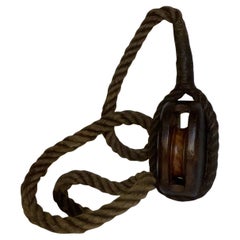
Rare Pulley Block from the USS Constitution
Located in Norwell, MA
Block and tackle from 'Old Ironsides,' the U.S.S. Constitution. A very rare relic removed from the vessel during the restoration in the 1970s, preparing the ship for the bicentennial...
Category
Vintage 1950s North American Nautical Objects
Materials
Wood
More From This Seller
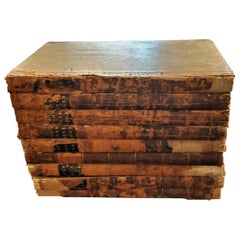
View AllJohn Bull Original Annuals from 1820-1829
Located in Dallas, TX
Presenting a set of 9 volumes, leather bound John Bull yearly annuals.
All the weekly newspaper publications of John Bull for the years 1820-1829 (Inclusi...
Category
Antique Early 19th Century English George III Books
Materials
Paper
$9,800 / set
Rare 19th Century English Tunbridgeware Hair Pin or Slide
Located in Dallas, TX
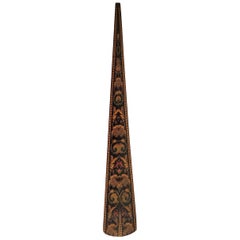
PRESENTING an EXTREMELY UNIQUE and RARE 19C British Tunbridgeware Hair Pin/Bobbin or Slide.
This slide is unlike any of it’s kind we have seen before, it is a VERY RARE survivor.
From circa 1860 – 80 and made in Tunbridge Wells, England.
Made of walnut with gorgeous marquetry inlay on the entirety of the front with classic Tunbridgeware micro-mosaic all over the front. The rear is walnut.
The marquetry inlay appears to be various different woods, namely, maple, walnut and satinwood.
Would have been worn in a Lady’s hair bun with the micro-mosaic facing forward.
This would have belonged to a VERY ELEGANT LADY in the mid to late 19th Century.
Tunbridge ware is a form of decoratively inlaid woodwork, typically in the form of boxes, that is characteristic of Tonbridge and the spa town of Royal Tunbridge Wells in Kent in the 18th and 19th centuries. The decoration typically consists of a mosaic of many very small pieces of different coloured woods that form a pictorial vignette. Shaped rods and slivers of wood were first carefully glued together, then cut into many thin slices of identical pictorial veneer with a fine saw. Elaborately striped and feathered bandings for framing were pre-formed in a similar fashion.
There is a collection of Tunbridge ware in the Tunbridge Wells Museum and Art Gallery in Tunbridge Wells.
The famous makers of Tunbridge ware were in the Tunbridge Wells area of Kent; their most notable work was from circa 1830-1900.
Early makers of Tunbridge ware, in Tunbridge Wells in the mid-18th century, were the Burrows family, and Fenner and Co. In the 19th century, around 1830, James Burrows invented a technique of creating mosaics from wooden tesserae. Henry Hollamby, apprenticed to the Burrows family, set up on his own in 1842 and became an important manufacturer of Tunbridge ware, employing about 40 people.
Edmund Nye (1797–1863) and his father took over the Fenner company when William Fenner retired in 1840, after 30 years in partnership with him. Thomas Barton (1819–1903), previously apprenticed at the Wise factory, joined the Nyes in 1836, and worked as Nye’s designer; he took over the business in 1863 and continued there until his death.
In Tonbridge (near to Tunbridge Wells), George Wise (1703–1779) is known to have had a business in 1746. It continued with his son Thomas, and Thomas’s nephew George (1779–1869), who took over in 1806. In its early years the company made articles such as workboxes and tea caddies with prints of popular views; later items had pictures created from mosaics. Their workshop in Tonbridge, Wise’s Tunbridge Ware Manufactory, was next to the Big Bridge over the Medway; the building was demolished in 1886 to widen the approach to the bridge.
Tunbridge ware became popular with visitors to the spa town of Tunbridge Wells, who bought them as souvenirs and gifts. Articles included cribbage boards, paperweights, writing slopes, snuffboxes and glove boxes.
At the Great Exhibition of 1851, Tunbridge ware by Edmund Nye, Robert Russell and Henry Hollamby was shown; Edmund Nye received a commendation from the judges for his work. He exhibited a table depicting a mosaic of a ship at sea; 110,800 tesserae were used in making the picture.
The manufacturers of Tunbridge ware were cottage industries, and they were no more than nine in Tunbridge Wells and one in Tonbridge. The number declined in the 1880s; competent craftsmen were hard to find, and public tastes changed. After the death of Thomas Barton in 1903 the only surviving firm was Boyce, Brown and Kemp, which closed in 1927.
Marquetry was an old technique which was continued by Nye and Barton to create images such as birds or butterflies.
‘Green Oak’ as caused by the fungus Chlorociboria aeruginascens.
Stickware and half-square mosaic was invented by James Burrows in about 1830: a bunch of wooden sticks of different colours, each having triangular or diamond-shaped cross section, were tightly glued together; in the case of stickware, the resulting block was dried, then turned to form an article such as the base of a pincushion. For half-square mosaic, thin slices were taken from the composite block, and applied to a surface.
Tesselated mosaic, was a development by James Burrows of half-square mosaic; it was adopted by George Wise and Edmund Nye. Minute tesserae were used to form a wide variety of geometric and pictorial designs.
Many sorts of wood were used for the various colours; about 40 were in regular use. Only natural colors were used; green was provided by “green oak”, produced by the action of fungus on fallen oak. Designs for articles were often taken from designs of Berlin wool work.
Category
Antique Late 19th Century English High Victorian Collectible Jewelry
Materials
Satinwood, Walnut
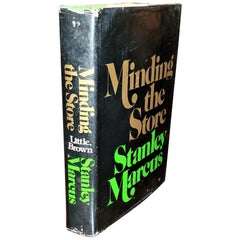
Signed 1st Edition of
Minding the Store
by Stanley Marcus
Located in Dallas, TX
PRESENTING A SIGNED FIRST EDITION of ‘Minding the Store’ A Memoir by Stanley Marcus.
Published by Little, Brown (1974).
First Edition Second Printing. Pages 383.
Dust Cover in fai...
Category
Late 20th Century American Mid-Century Modern Books
Materials
Paper
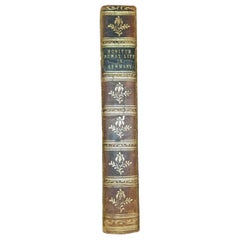
1st Edition of ‘Rural
Domestic Life of Germany’ by W Howitt -1842
By William Howitt
Located in Dallas, TX
PRESENTING AN EXTREMELY RARE FIRST EDITION hardback copy of ‘The Rural and Domestic Life of Germany with Characteristic Sketches of its Cities and Scenery, Collected in a General To...
Category
Antique Mid-19th Century English Country Books
Materials
Paper
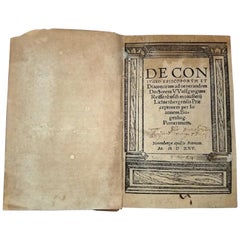
RARE ‘De Conjugio Episcoporum et Diaconorum’ by Johannes Bugenhagen – 1525
Located in Dallas, TX
PRESENTING AN EXTREMELY RARE EDITION hardback copy of De Conjugio Episcoporum et Diaconorum ad uenerandum Doctorem VVolfgangum Reissenbush monasterii Lichtenbergensis Prae ceptorem ...
Category
Antique 16th Century German Renaissance Books
Materials
Leather, Paper
Important Teddy Roosevelt Letter from White House June 1907
By Theodore Roosevelt
Located in Dallas, TX
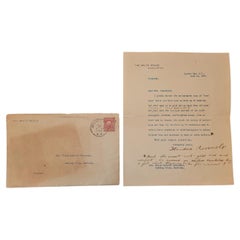
Presenting A Very Important Teddy Roosevelt Letter from White House June 1907.
On ‘The White House’ letterhead. Typed and personally signed and amended by President Theodore Roosevelt.
With it’s original White House envelope, stamp and postage marks.
Dated June 14th 1907.
What makes this letter so important is the author, the office and the content.
It refers to the beliefs and opinions of the then President and First Lady (Edith) towards the women’s sufferage and empowerment movement that was the ‘hot topic’ of the time.
It is addressed to Eliza Calvert Obenchain who was a well known author at the end of the 19th Century and Early 20th Century. In 1905, Teddy referred to her book “Aunt Jane of Kentucky’ in a speech and recommended that every man in America should read it to understand ‘the plight of their womenfolk’. He regularly corresponded with her and we have a number of those letters in our collection. It appears that both he and Edith became big fans of Mrs Obenchain who was also heavily involved in the Suffragist movement.
The letters also provide a fascinating and historic record of Roosevelt’s personal beliefs and feelings on female empowerment.
The Letter Reads:
The White House
Washington
Oyster Bay, N.Y.,
June 14, 1907
Personal
“Dear Mrs. Obenchain:
I gladly accept the autographed copy of “Aunt Jane” which you have been so kind to send me. But Aunt Jane is so good and so wise that she must not (amount “race (illegible)) fall into the terrible mistake of the self-indulgent, selfish, shortsighted women, cold in heart and in temper, who shirk the duties of mother-hood and then try to cover up to themselves and to others their cowardice or self-indulgence by making believe they are actuated by wise or lofty motives. *
With great regard, believe me,
Sincerely yours,
Theodore Roosevelt
*And she must not give aid and comfort to unsexed or sexless creatures by a jest which they may take for earnest !
Mrs. Eliza Calvert Obenchain,
Bowling Green, Kentucky.“
The envelope is From: The White House.
Addressed to: Mrs. Eliza Calvert Obenchain, Bowling Green, Kentucky and marked ‘Personal’.
It is stamped on the front as posted from Oyster Bay, New York Post Office on June 16 1907.
It has a red 2 Cent...
Category
Early 20th Century American American Classical Historical Memorabilia
Materials
Paper
Still Thinking About These?
All Recently ViewedMore Ways To Browse
Antique Jigger
Scotland Golf
Antique Putters
Vintage Sports Memorabilia
Golf Collectables
Antique Walking Canes
Golf Memorabilia
Antique Golf Clubs
Fishing Rod
Tennis Racket
Boxing Glove
Antique Football
Golf Antiques
Vintage Leather Ball
Billiard Furniture
Antique Golf Collectables
Boxing Gloves Used
Hunting Collectibles