Items Similar to Antique French Coquilla Nut Kneeling Monk Snuff Box
Want more images or videos?
Request additional images or videos from the seller
1 of 20
Antique French Coquilla Nut Kneeling Monk Snuff Box
$3,688.98
£2,700
€3,171.16
CA$5,125.11
A$5,512.78
CHF 2,946.19
MX$64,980.02
NOK 37,144.58
SEK 33,957.20
DKK 23,693.90
About the Item
PRAYING MONK SNUFF BOX
From our Collectables Category, we are delighted to offer this Antique Coquilla Nut Monk Snuff Box. The Snuff Box of beautiful patination carved from Coquilla nut is depicted as a young kneeling monk male in prayer with his hands crossed and thumbs up having traditional tonsure haircut. The Monk dressed in robe features a hinged hatch to the rear which opens up for storing snuff. The Coquilla Nut Monk Snuff Box is of French origin and dates to the turn of the 19th century circa 1810 during the French reign of Napoleon (1769-1821).
COQUILLA
The fruit of a Brazilian palm tree whose hard dense shell is used by turners to make ornamental articles such as this snuff box.
SNUFF BOXES
were used for containing snuff which is a mixture of ground tobacco and scented oils. Originally from the Americas Snuff became extremely popular in 18th century Europe, it was seen as a status symbol and undertaken by the elite in society. Commissioned snuff boxes of various materials would be bought by high status individuals as a sign of wealth and power. Snuff boxes became highly prized by collectors from 19th century when snuff was slowly phased out.
MONK
a man who has dedicated his life to religion, partly by giving up some aspects of regular, worldly life. Many monks live together in a religious community. To a greater or lesser extent, a monk has chosen to leave society and devote his life to prayer and service.
NAPOLEON (1769-1821)
Napoleon Bonaparte (Napoleon I) was a French military leader and emperor who rose to power during the late 18th and early 19th centuries. Born in 1769 on the island of Corsica, he became a brilliant general during the French Revolutionary Wars, gaining fame for his strategic genius and bold tactics. In 1799, he staged a coup and became First Consul of France, later declaring himself Emperor in 1804.
During his reign, Napoleon expanded French influence across Europe, defeating major powers such as Austria, Prussia, and Russia. He introduced important reforms, including the Napoleonic Code, which modernized legal systems and influenced laws worldwide. However, his ambitious military campaigns led to costly wars, culminating in a disastrous invasion of Russia in 1812. After his defeat in 1814, Napoleon was exiled to the island of Elba, but he escaped and briefly returned to power in 1815 during the Hundred Days. His final defeat at the Battle of Waterloo led to his exile on the remote island of Saint Helena, where he died in 1821. Despite his downfall, Napoleon remains one of history’s most influential figures, remembered for his military brilliance and lasting impact on Europe.
- Dimensions:Height: 3.75 in (9.5 cm)Width: 1.78 in (4.5 cm)Depth: 1.58 in (4 cm)
- Materials and Techniques:
- Place of Origin:
- Period:
- Date of Manufacture:Circa 1810
- Condition:Wear consistent with age and use. Minor structural damages.
- Seller Location:Newark, GB
- Reference Number:Seller: SYTDD1stDibs: LU6971245038872
About the Seller
5.0
Vetted Professional Seller
Every seller passes strict standards for authenticity and reliability
Established in 2019
1stDibs seller since 2022
40 sales on 1stDibs
Typical response time: <1 hour
- ShippingRetrieving quote...Shipping from: Newark, United Kingdom
- Return Policy
More From This Seller
View AllSwiss Black Forest Walking Bear Hand Carved Tobacco Jar
By Black Forest
Located in Newark, England
FREE WORLDWIDE SHIPPING
RARE MODEL HUMOROUS BEAR CARVING WITH VESTA BOWL
From our Black Forest collection, we are delighted to present this rare Swiss Black Forest Bear Tobacco Ja...
Category
Antique Late 19th Century Swiss Black Forest Animal Sculptures
Materials
Wood
Japanese Edo Period (1603-1868) Skeleton Foetus Netsuke
Located in Newark, England
Laying Foetus
From our Japanese collection, we are pleased to offer this Japanese Edo Period Skeleton Netsuke. The Skeleton Netsuke is carved from Boxwood depicting a skeleton in t...
Category
Antique Mid-19th Century Japanese Edo Sculptures and Carvings
Materials
Wood, Boxwood
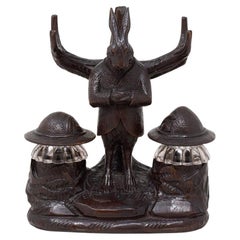
Swiss Black Forest Carved Rabbit Inkwell and Pen Tray
By Black Forest
Located in Newark, England
FREE WORLDWIDE SHIPPING
WHIMSICAL BLACK FOREST DESK ACCESSORY WITH HAND-CARVED RABBIT, TREE PEN REST, AND HAT-LIDDED GLASS INKWELLS.
From our Black Forest collection, we are delig...
Category
Antique Early 1900s Swiss Black Forest Inkwells
Materials
Glass, Wood
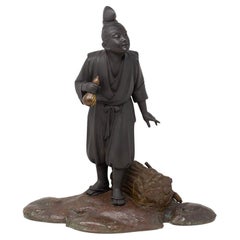
Japanese Bronze Okimono Sculpture by Yamamoto Kozan
Located in Newark, England
YOUNG MAN WOOD CUTTING
From our Japanese collection, we are pleased to offer this Japanese Bronze Okimono by Yamamoto Kozan. The Japanese Bronze Sculpture cast in Bronze with a natu...
Category
Early 20th Century Japanese Meiji Sculptures and Carvings
Materials
Bronze
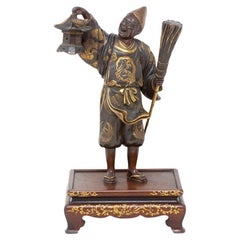
Japanese Bronze Figure by Miyao Eisuke, Meiji Period
By Eisuke Miyao 1
Located in Newark, England
FREE WORLDWIDE SHIPPING
A FINELY DETAILED JAPANESE BRONZE FIGURE BY MIYAO EISUKE, MEIJI PERIOD, CIRCA 1890.
From our Japanese collection, we a...
Category
Antique Late 19th Century Japanese Meiji Sculptures and Carvings
Materials
Bronze
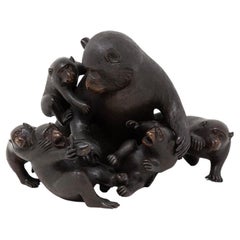
Japanese Meiji Period Bronze Monkey Group Sculpture Okimono Shosai
Located in Newark, England
Featuring Seven Japanese Macaques
Form our Japanese collection, we are delighted to offer this Japanese Bronze Monkey Group by Shosai. The Japanese Bronze Group displaying a male father monkey and his infants playing around and being mischievous with Persimmon fruit. The monkeys modelled as Japanese macaque monkeys (snow monkey). The bronze okimono is beautifully patinated with a highly lifelike and naturalistic casting signed to the underside Shosai 正齊鋳. The Bronze group dates to the Meiji Period (1868-1912) circa 1885.
Japanese macaque (snow monkey) is a terrestrial Old World monkey species that is native to Japan. They are known as snow monkeys because some live in areas where snow covers the ground for long periods each year hence their nickname. No other non-human primate lives further north or in a colder climate than the snow monkey. Individuals have brownish grey fur, pinkish-red faces, and short tails. Two subspecies are known and their conservation Status is of least concern. In Japan, the species is known as Nihonzaru ニホンザル, 日本 (Japan/Nihon) and saru 猿 (monkey) to distinguish it from other primates, but the Japanese macaque is the only species of monkey in Japan.
The Japanese macaque features heavily in the religion, folklore, and art of Japan, as well as in proverbs and idiomatic expressions in the Japanese language. They are often seen in paintings, block prints and represented in all manner of carvings from Okimono to netsuke. Many of these art forms reside in the world’s most famous museums and collections, some of the most prominent pieces by artists such as Mori Sosen and Kawanabe Kyosai. In Shinto belief (Japan’s indigenous religion/nature religion) legendary mythical beasts known as raiju sometimes appeared as monkeys and kept Raijin (the god of lightning/storms) company. In another well known tale the three wise monkeys who warn people to “see no evil, hear no evil and speak no evil” can be seen depicted in relief over the door of the famous Tosho-gu shrine in Nikko.
Meiji Period was an era of Japanese history that spanned from 1868 to 1912. It was the first half of the Empire of Japan, when the Japanese people began to build a paradigm of a modern, industrialised nation state and emergent great power, influenced by Western countries and aesthetics. As a result of radically different ideas, the changes to Japan were profound and it affected the social structure, politics, economy, military, and foreign relations across the board. The period corresponded to the reign of Emperor Meiji and was preceded by the Keio era and was succeeded by the Taisho era.
Cultural Art during the Meiji Period was of particular interest to the government and they overhauled the art export market which in turn promoted Japanese arts via various world’s fairs, beginning in Vienna at the world fair in 1873. The government heavily funded the fairs and took an active role organising how Japan’s culture was presented to the world including creating a semi-public company named Kiritsu Kosho Kaisha (First Industrial Manufacturing Company). The Kiritsu Kosho Kaisha was used to promote and commercialise exports of Japanese art and established the Hakurankai Jimukyoku (Exhibition Bureau) to maintain quality standards. For the 1876 Centennial International Exhibition in Philadelphia, the Japanese government created a Centennial Office and sent a special envoy to secure space for the 30,000 items that would be displayed. The Imperial Household also took an active interest in arts and crafts, commissioning works by select artists to be given as gifts for foreign dignitaries further emphasising the high quality and importance of Japanese art. Just before the end of the 19th century in 1890, the Teishitsu Gigeiin (Artist to the Imperial Household) system was created to recognise distinguished artists. These artists were selected for their exceptionally high quality wares and talent in their own industry. Over a period of 54 years Seventy artists were appointed, amongst these were ceramicist Makuzu Kozan and cloisonné enamel artist...
Category
Antique Late 19th Century Japanese Meiji Sculptures and Carvings
Materials
Bronze
You May Also Like
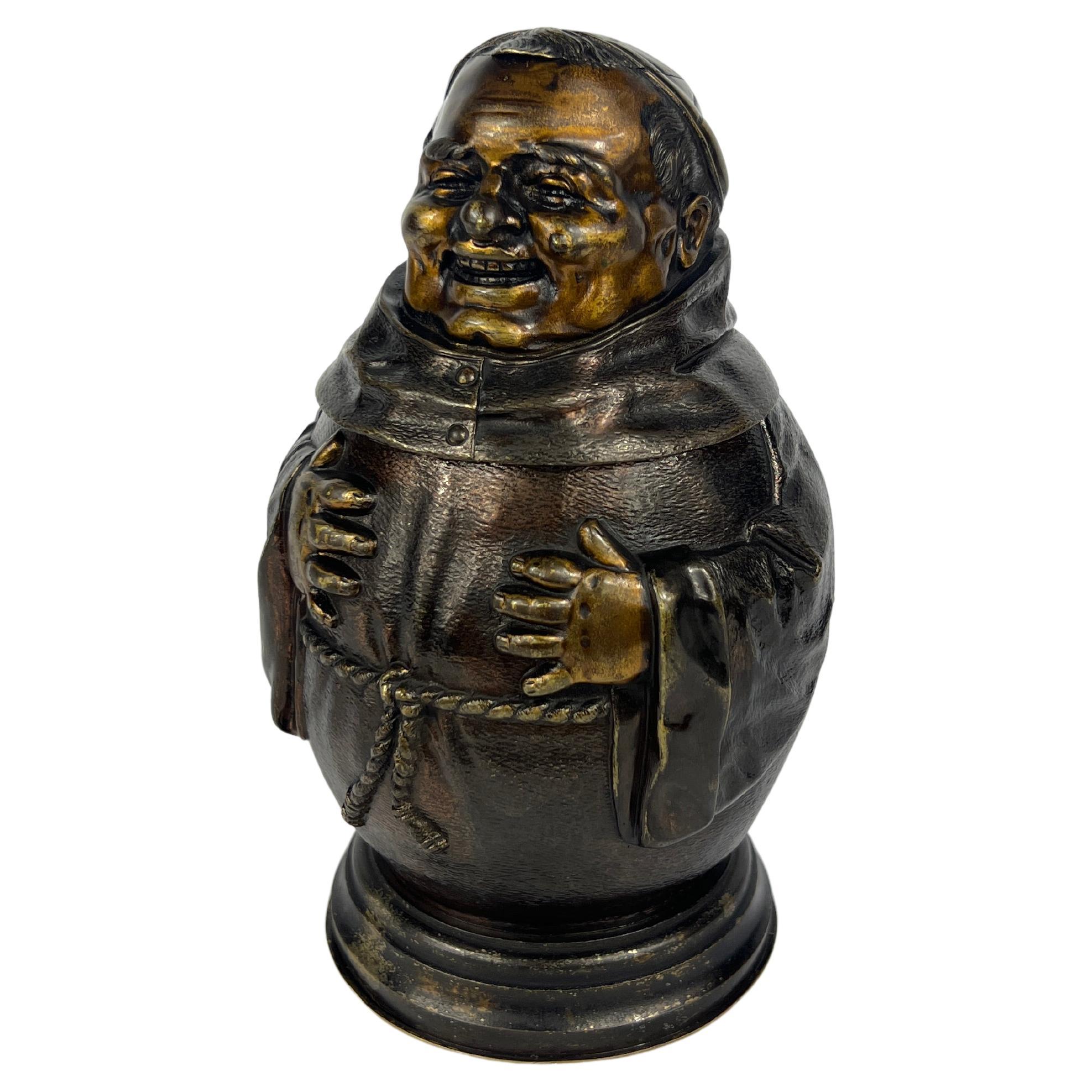
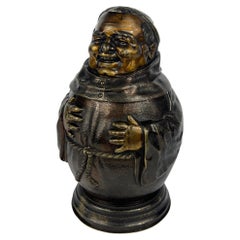
1881 Edward VII Prince of Wales Bronze Monk Inkwell
Humidor Admiral Henry Glyn
Located in Atlanta, GA
English, circa 1881. Highly important gift from the Prince of Wales (Edward VII) to Admiral Honourable Henry Carr Glynn
This charming bronze sculpture depicts a jovial monk in tradi...
Category
Antique 19th Century British Edwardian Figurative Sculptures
Materials
Bronze
$6,800 Sale Price
20% Off
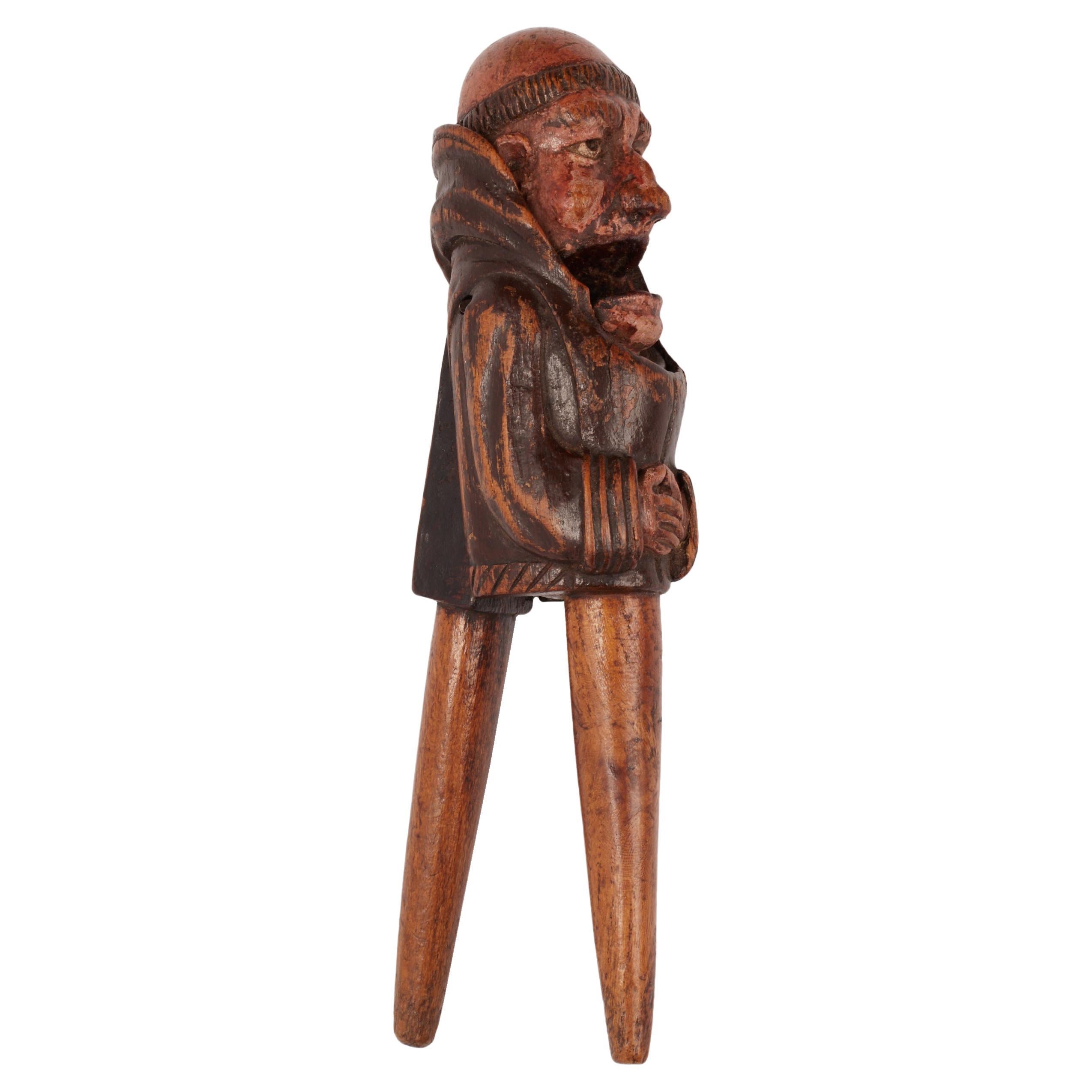
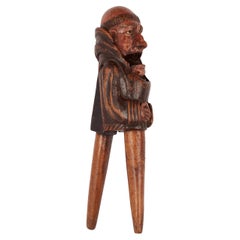
A wooden nutcracker depicting a friar, France 1870.
Located in Milan, IT
Schiaccianoci in legno di nocciolo intagliato. I manici sono a forma di fuso a connettersi alla parte superiore. La scultura raffigura il busto di un monaco con tonaca e cappuccio. L...
Category
Antique Late 19th Century French Sculptures and Carvings
Materials
Wood
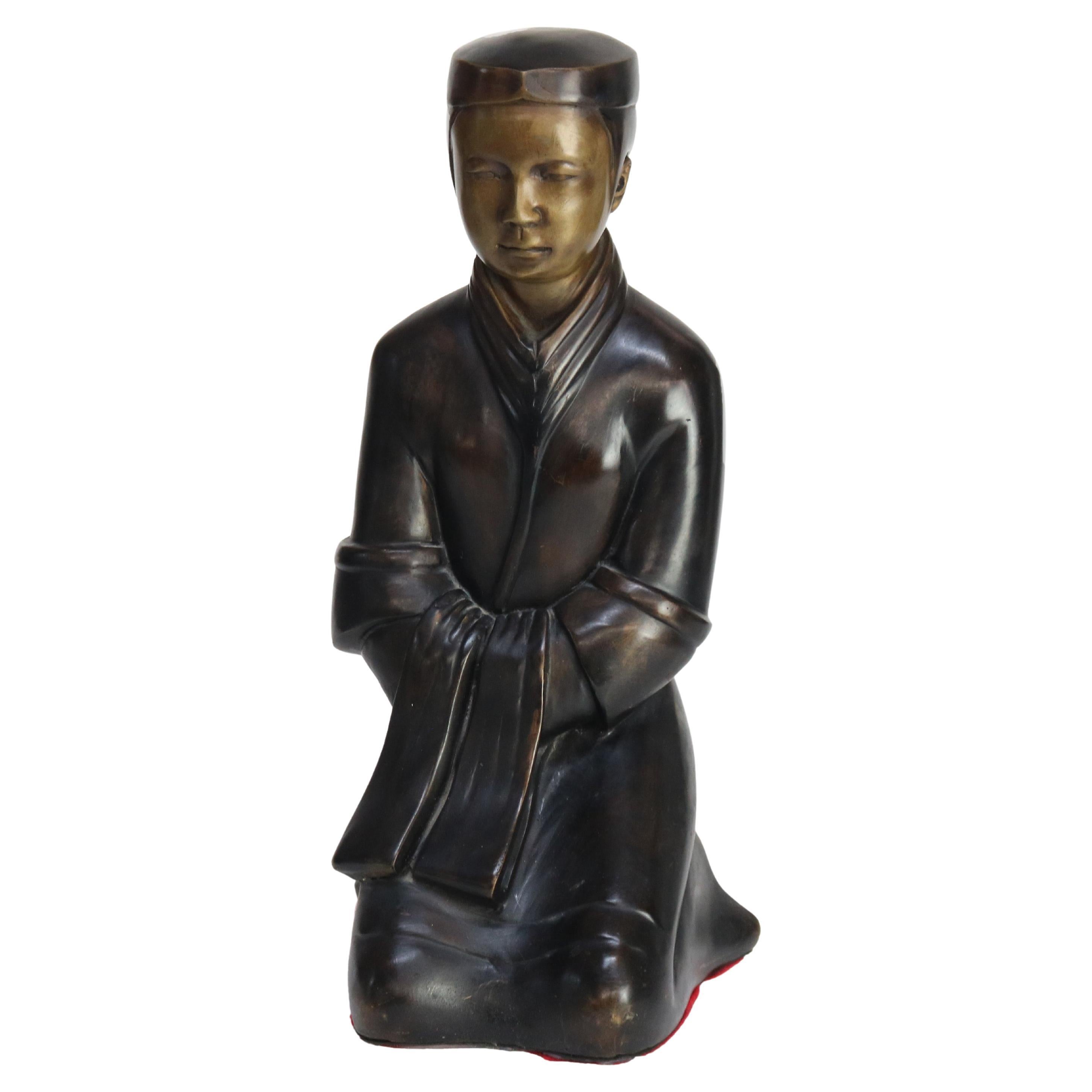
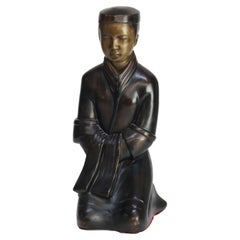
Large Bronze Kneeling Monk 20thC
Located in Big Flats, NY
Large Bronze Kneeling Monk Unsigned 20thC
Measures - 17"h x 7.5"w x 9.75"d
A large bronze sculpture depicting a kneeling monk, crafted in the 20th century. The piece showcases a se...
Category
20th Century Figurative Sculptures
Materials
Bronze
$440 Sale Price
20% Off
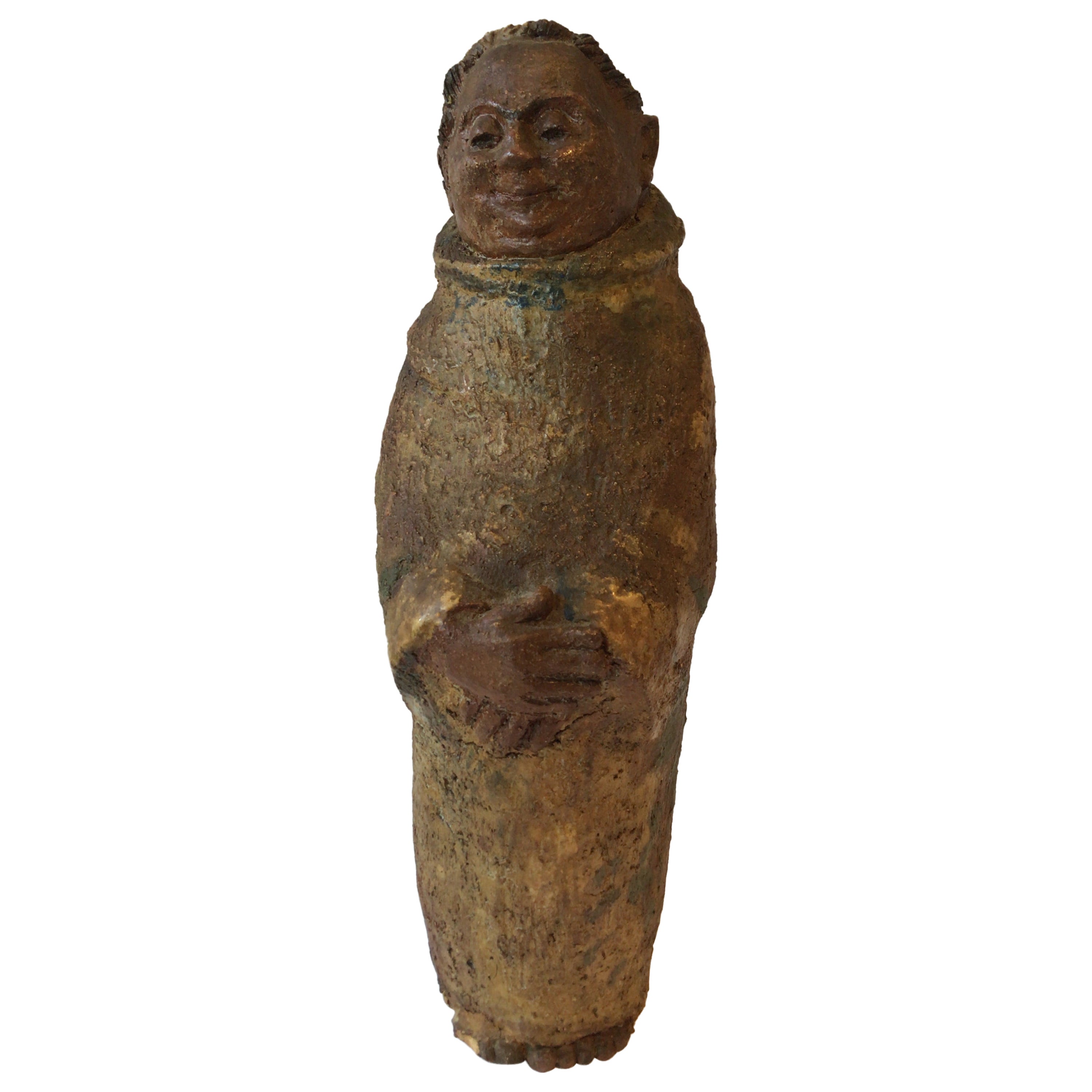
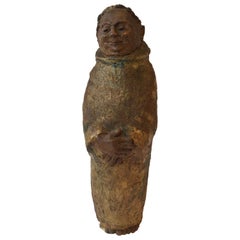
1950s Terra-Cotta Monk Sculpture
Located in Tarrytown, NY
1950s Terracotta sculpture of a monk.
Category
Vintage 1950s Figurative Sculptures
Materials
Terracotta
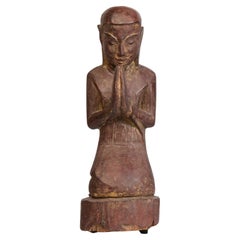
18th Century, Shan, Rare Antique Burmese Wooden Seated Disciple / Monk
Located in Sampantawong, TH
Rare Burmese wooden seated disciple.
Age: Burma, Shan Period, 18th Century
Size: Height 50.4 C.M. / Width 17.7 C.M. / Depth 15.3 C.M.
Condition: Nice condition overall (some expecte...
Category
Antique 18th Century Burmese Antiquities
Materials
Wood
$1,072 Sale Price
20% Off
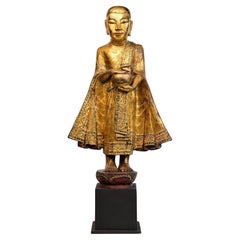
19th Century, Antique Burmese Wooden Standing Disciple / Monk Holding Bowl
Located in Sampantawong, TH
Antique Burmese wooden standing disciple holding bowl with gilded gold and inlay of colorful glass pieces on the borders of the robe.
Age: Burma, Mandalay Period, 19th Century
Size...
Category
Antique 19th Century Burmese Antiquities
Materials
Wood
$1,960 Sale Price
20% Off
More Ways To Browse
Antique Hatch
Antique Fruit Trees
Antique Snuff Glasses
Waterloo Battle
Antique Carved Nut
Japanese Table Lighter
Leather Cigar Case
Ronson Cigarette Lighters
Scottish Horn
Striker Lighter
Vintage Japanese Table Lighter
Antique Sterling Silver Match Case
Arts And Crafts Smoking Stand
Cigarette Holder Case
Dunhill Lift Arm Lighter
Dunhill Lift Lighter
Electric Lighter
German Smoker