Items Similar to French 19th century Beauvais tobacco stoneware
Want more images or videos?
Request additional images or videos from the seller
1 of 15
French 19th century Beauvais tobacco stoneware
$1,166.16per set
£865.94per set
€975per set
CA$1,602.13per set
A$1,741.84per set
CHF 923.52per set
MX$20,880.19per set
NOK 11,737.50per set
SEK 10,753.15per set
DKK 7,432.63per set
About the Item
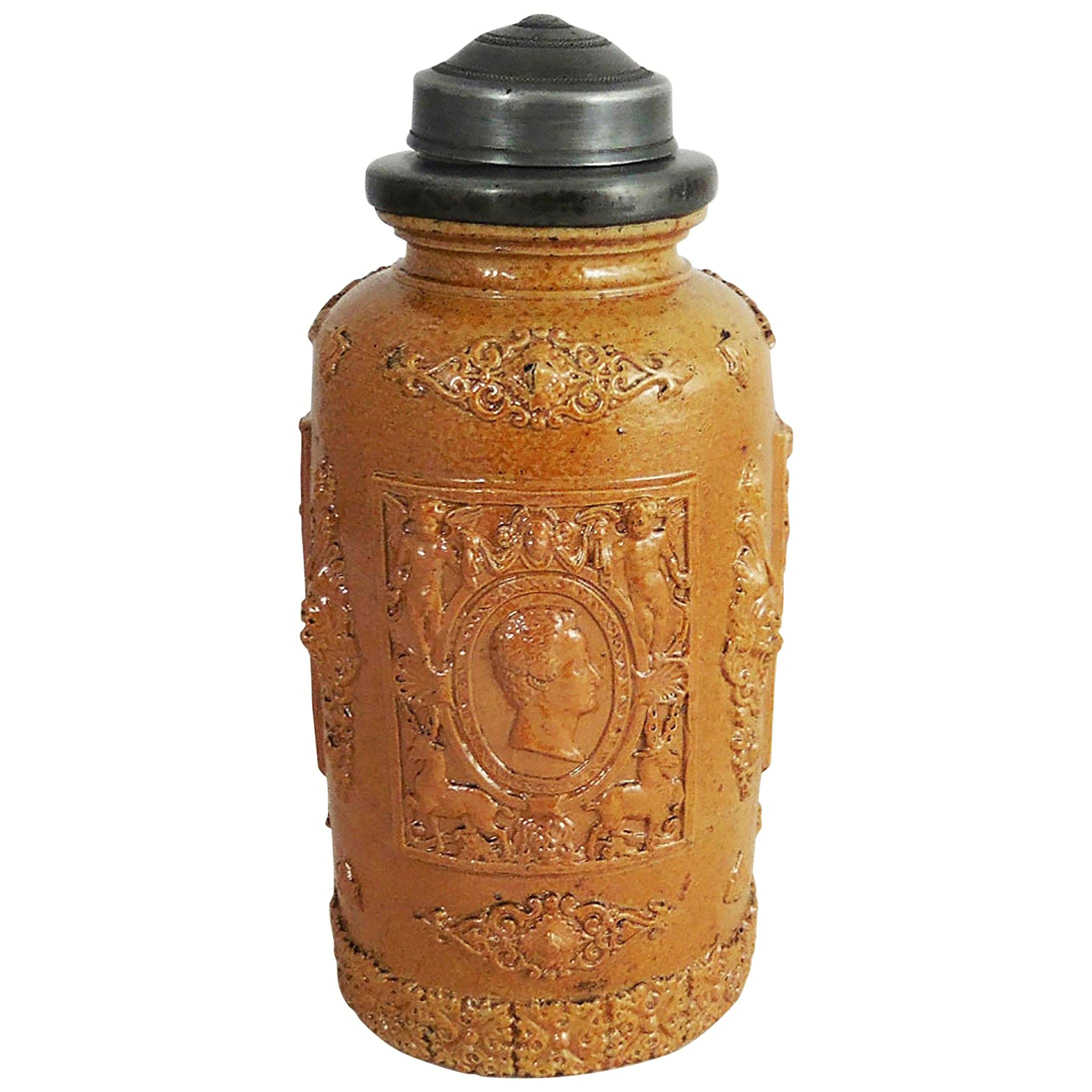
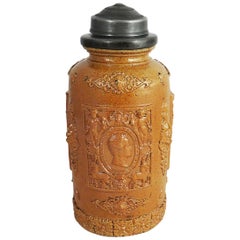
French 19th century Beauvais tobacco stoneware
A collection of six stoneware pots, early 19th Century, raised decoration with salt glaze finish and pewter (hinged) lids. Three tobacco jars and three tobacco snuff bottles. One bottle still has an extra pewter cap inside.
The largest jar is 17 cm high and 13 cm diagonal. (15 cm and 11 cm high)
The bottles from 14 cm to 13 cm high.
The total weight is 2710 grams
- Dimensions:Height: 6.7 in (17 cm)Diameter: 5.12 in (13 cm)
- Sold As:Set of 6
- Materials and Techniques:
- Place of Origin:
- Period:
- Date of Manufacture:Early 19th Century
- Condition:Wear consistent with age and use.
- Seller Location:Delft, NL
- Reference Number:Seller: M19421stDibs: LU3465143985052
About the Seller
5.0
Platinum Seller
Premium sellers with a 4.7+ rating and 24-hour response times
Established in 1995
1stDibs seller since 2018
409 sales on 1stDibs
Typical response time: 1 hour
- ShippingRetrieving quote...Shipping from: Delft, Netherlands
- Return Policy
More From This Seller
View AllEarly 20th Century Set of French Copper Lidded Pots
Located in Delft, NL
Early 20th century set of French copper lidded pots
5 lidded copper pots, French early 20th century with copper handles and knob with twist patter...
Category
Early 20th Century French Tableware
Materials
Copper
Dutch lidded vases by Ivora Gouda Pottery, ca 1915
Located in Delft, NL
2 lidded vases by Ivora Gouda, Model 170 ca 1915
2 lidded vases earthenware with floral hand-painted decoration in Art Nouveau style, made by pottery fact...
Category
Early 20th Century Dutch Vases
Materials
Pottery
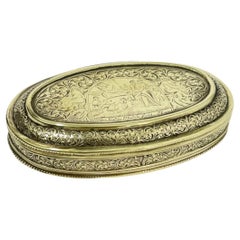
18th Century Dutch Copper Tobacco Box
Located in Delft, NL
18th century Dutch copper tobacco box
18th century copper tobacco box in oval shape with rims. Engraved with Biblical scenes and Dutch text. Text is: "...
Category
Antique Mid-18th Century Dutch Tobacco Accessories
Materials
Copper
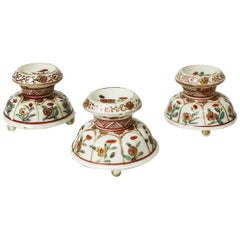
Japanese Arita, Amsterdams Bont, Tripod Salt Cellars, 1690-1730
Located in Delft, NL
Japanese Arita, Amsterdams Bont, tripod salt cellars, 1690-1730
European decoration on Japanese porcelain.
"Arita" porcelain made in Japan, during ...
Category
Antique 17th Century Japanese Antiquities
Materials
Porcelain
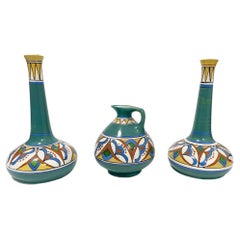
Dutch Arnhem Holland "Elrakka" Pottery, ca 1915
Located in Delft, NL
Dutch Arnhem Holland "Elrakka" Pottery, ca 1915
2 equal long neck vases and a round jug from the Arnhemsche Fayence factory by the Vet brothers, The Netherlands. Ca. 1915. The set is colored in green, brown, blue and yellow with black lines with craquelure. 1 vase has thickening of glaze on the edge and the other viewed with a magnifying glass, probably a miniscule chip. This has been added via photo (enlarged with a loupe)
Klaas and Jacob Vet open their pottery factory in Purmerend in 1903. They already had the necessary ceramic experience. Klaas acquired this as a modeller at Plateelbakkerij De Distel...
Category
Early 20th Century Dutch Vases
Materials
Pottery
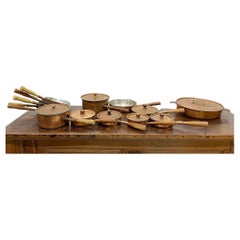
Early 20th Century Set of French Copper Lidded Pots, circa 1930
Located in Delft, NL
Early 20th century set of French copper lidded pots, circa 1930.
Set of 14 pieces copper cooking pots, French early 20th century Inside lined with...
Category
Early 20th Century French Tableware
Materials
Copper
You May Also Like
Chinese Export Porcelain Group of Batavia-ware Urns
Covers
Located in Downingtown, PA
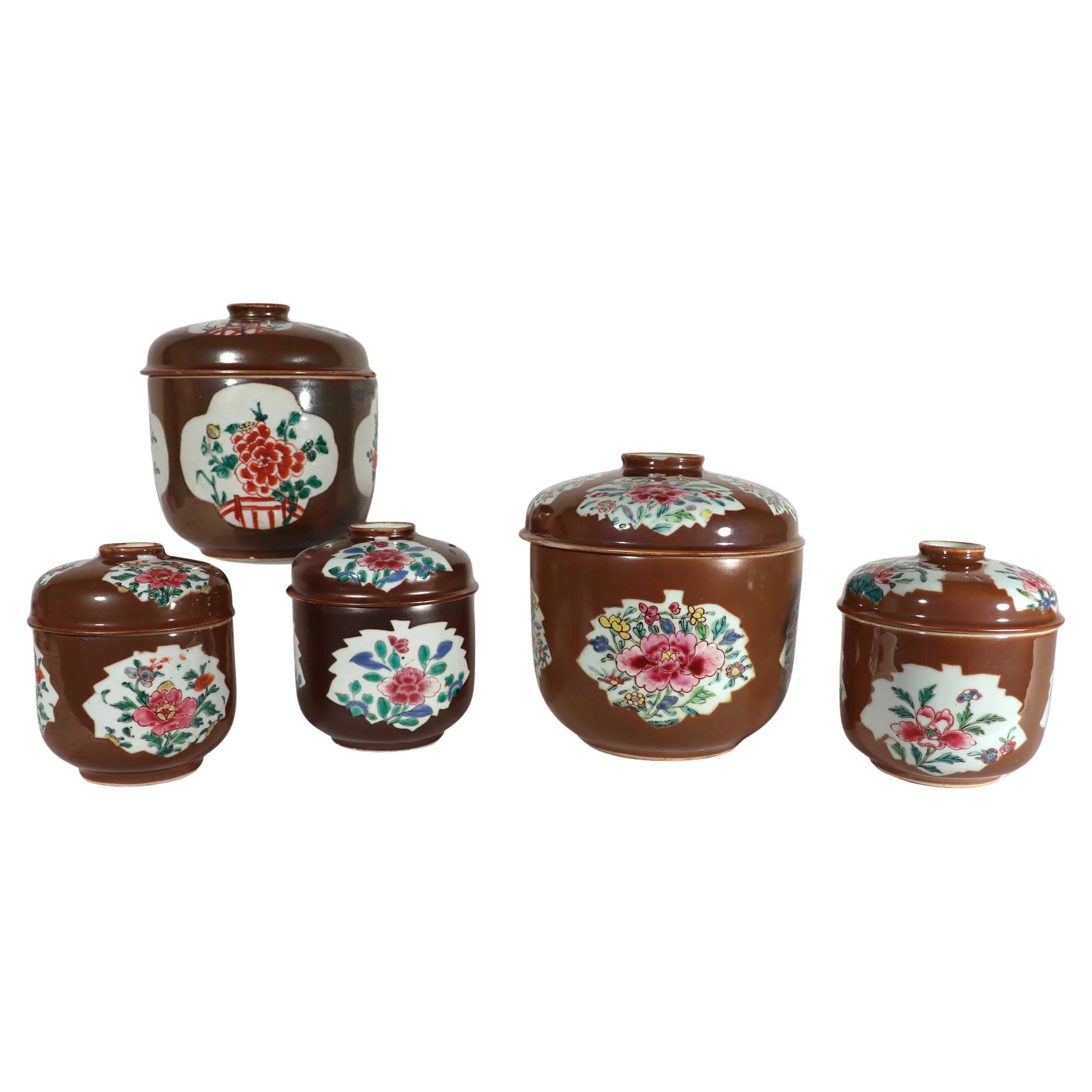
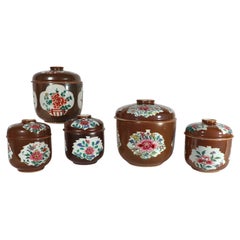
Collection of Five Chinese Export 'Batavia-ware' and Famille Rose Jars and Covers
Qianlong Period, China, Circa 1750s
This handsome collection of five graduated covered jars is a magnificent and rare example of mid-18th-century Chinese Export porcelain, illustrating the highly successful fusion of Chinese ceramic technology and European market demand during the height of the global trade era.
________________________________________
Description and Aesthetic
Medium: Porcelain with underglaze brown glaze and overglaze Famille Rose enamels.
Period: Qianlong (1736–1795).
Origin: Jingdezhen kilns, China, made for the European export market.
The collection comprises two large, two medium, and one small jar, intended to be displayed together as a garniture—a decorative set prized for mantelpieces and cabinets in opulent European interiors.
• The 'Batavia' Ground: Each piece is characterized by a luxurious, deep chocolate-brown glaze covering the exterior, a distinctive aesthetic known historically as "Batavia-ware" or descriptively as café au lait. This rich, monochrome ground was achieved by bathing the porcelain in an iron-rich slip before glazing and firing.
• The Famille Rose Reserves: The dark ground provides a dramatic backdrop for finely painted, leaf-shaped reserves (panels). These panels are adorned with exquisite floral sprays executed in the vibrant Famille Rose palette (meaning "pink family"), which was introduced to China from Europe in the early 18th century. The opaque enamels—dominated by the rose-pink created from colloidal gold—allow for subtle shading and realism, brilliantly depicting the peony (mudan), the Chinese flower of wealth, nobility, and honor.
• The Covers: The domed covers maintain this contrast, with a high, lustrous brown glaze broken by Famille Rose floral sprays that echo the motifs on the body.
________________________________________
Historical Context: Global Trade and Naming
The name "Batavia-ware" is a crucial historical reference, even though the porcelain was manufactured in the kilns of Jingdezhen.
1. The Dutch East India Company (VOC): Batavia (modern-day Jakarta, Indonesia) served as the fortified administrative and trading headquarters of the Dutch East India Company (VOC) in Asia.
2. The Trade Route: Porcelain destined for the European market was collected from various Chinese ports and then centrally transshipped through Batavia. This particular style became famously associated with that major transit port among Western collectors, hence the name, which links the sophisticated manufacturing of China to the powerful trade infrastructure of the Dutch.
3. 18th-Century Opulence: Garnitures like this were highly desirable statements of wealth and worldliness in 18th-century Europe. Their acquisition signified participation in the exotic, global market and a cosmopolitan taste capable of appreciating the high technical and artistic quality of Chinese porcelain.
The successful combination of the deep, rich brown glaze—which evokes a feeling of luxurious Eastern lacquer or polished wood—with the delicate, luminous European-inspired Famille Rose palette represents a brilliant convergence of East-West artistic demands at the height of the Qianlong Emperor’s reign.
________________________________________
Dimensions
Largest Jar: 7 1/2 inches high x 7 1/2 inches diameter; Second Jar: 7 1/4 inches high x 6 1/2 inches diameter; Third Jar: 5 1/2 inches high x 5 inches diameter; Pair of Smaller Jars...
Category
Antique 1750s Chinese Chinese Export Jars
Materials
Porcelain
18th Century German Salt Glaze Tobacco Jar with Pewter Mounts
Located in Stamford, CT
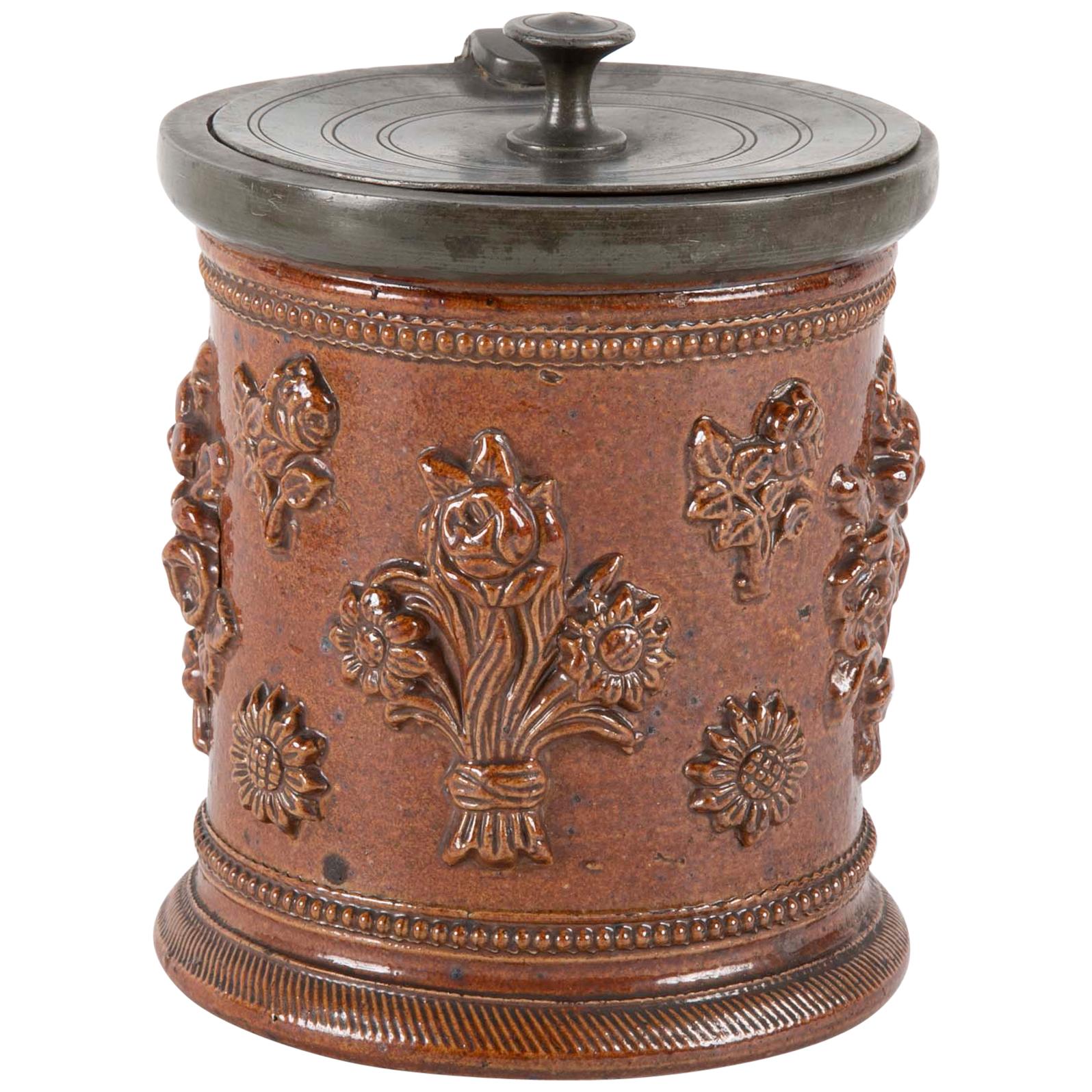
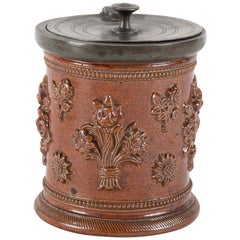
A fine example of a German Baroque tobacco jar with original pewter lid. The rich ocher salt glaze decorated with raised floral motifs. A handsome addition for the collector of pipes...
Category
Antique Early 18th Century German Baroque Tobacco Accessories
Materials
Stoneware
Fine Antique Meissen Bonbonniere
Located in London, GB
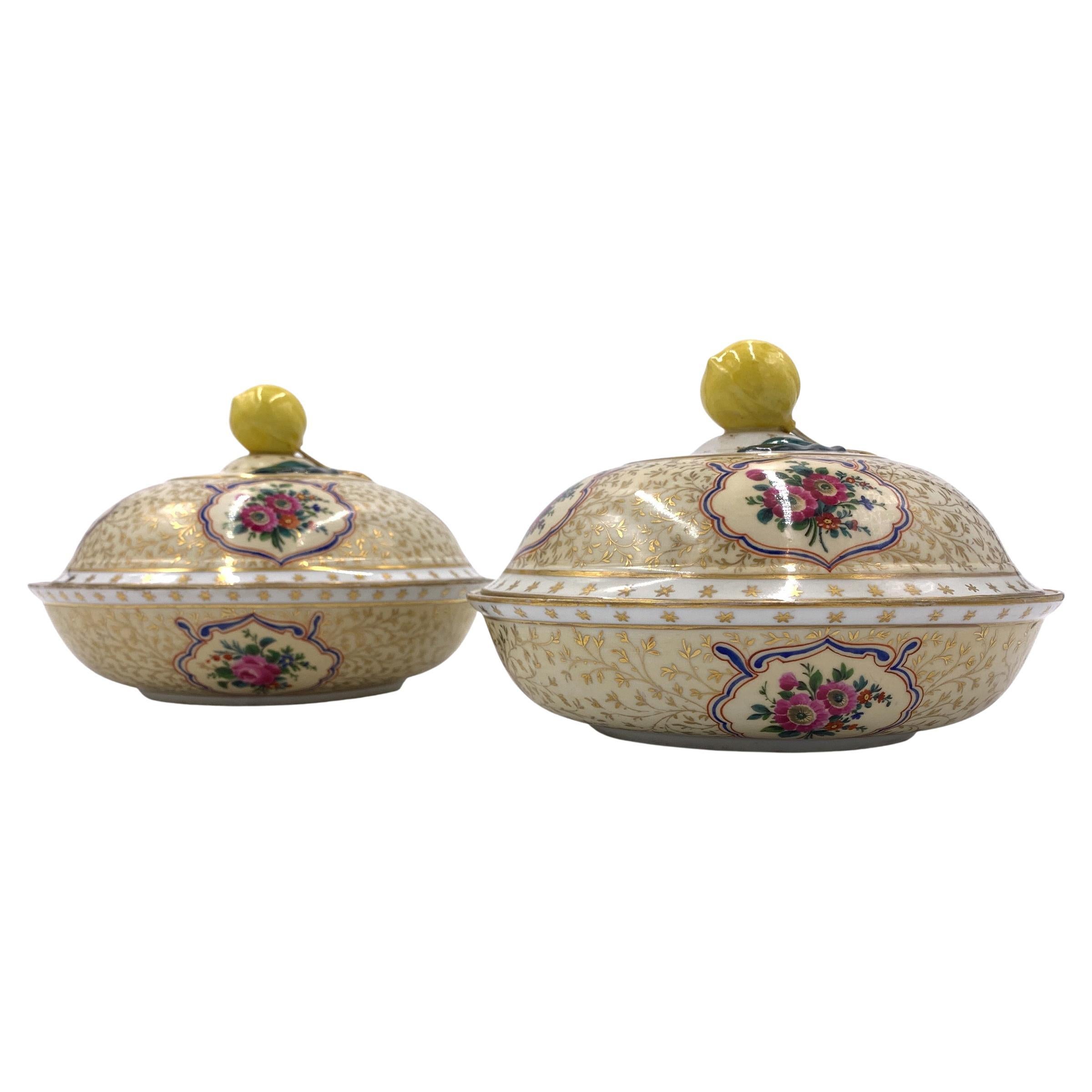
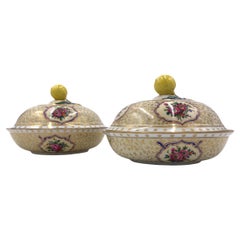
Antique German Meissen, this charming dish and cover is constructed from porcelain and is decorated with elegant red, pink, and blue flowers. The hand-pa...
Category
Antique 19th Century German Planters, Cachepots and Jardinières
Materials
Porcelain
$5,494 Sale Price / set
20% Off
Desk accessories, France, French 19th Century
Located in PARIS, FR
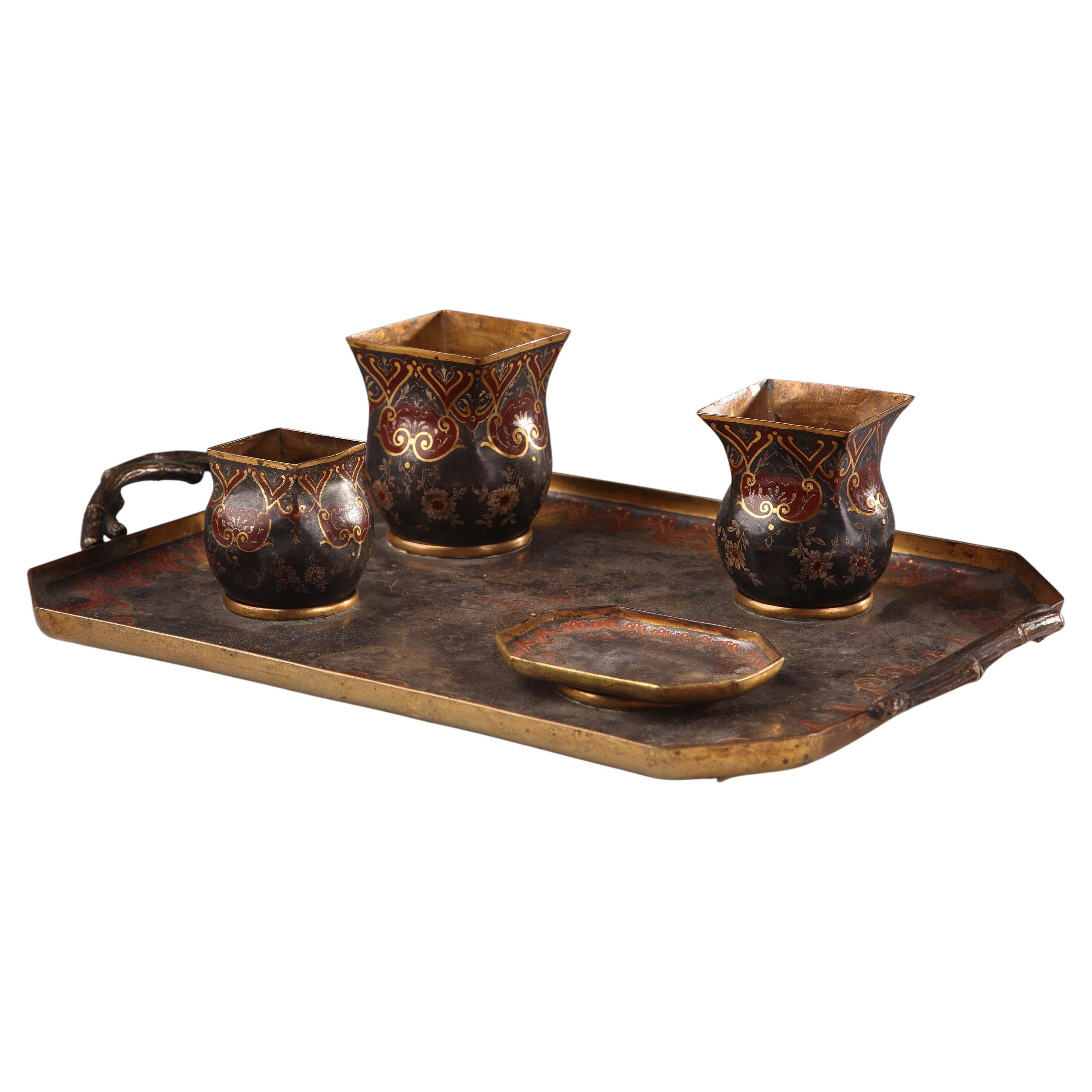
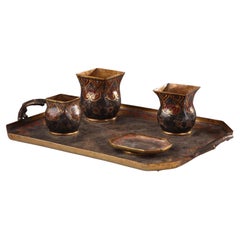
Lovely damascened metal smoking kit composed of a tray with branch-shaped handles and four removable containers. It’s adorned with flowers, red and gilt or...
Category
Antique Late 19th Century French Desk Sets
Materials
Metal
$1,124 / set
19th Century French Pottery Tobacco Jar Humidor Renaissance Style
Located in Austin, TX
Rare complete 19th French pottery tobacco jar inspired by the Renaissance with medallions with his two pewter lids.
Pottery from North of France No...
Category
Antique 1880s French Renaissance Revival Snuff Boxes and Tobacco Boxes
Materials
Pewter
Early 19th Century English Demilune Lusterware Bough Pot With Cover
By Hackwood
Co.
Located in Roma, RM
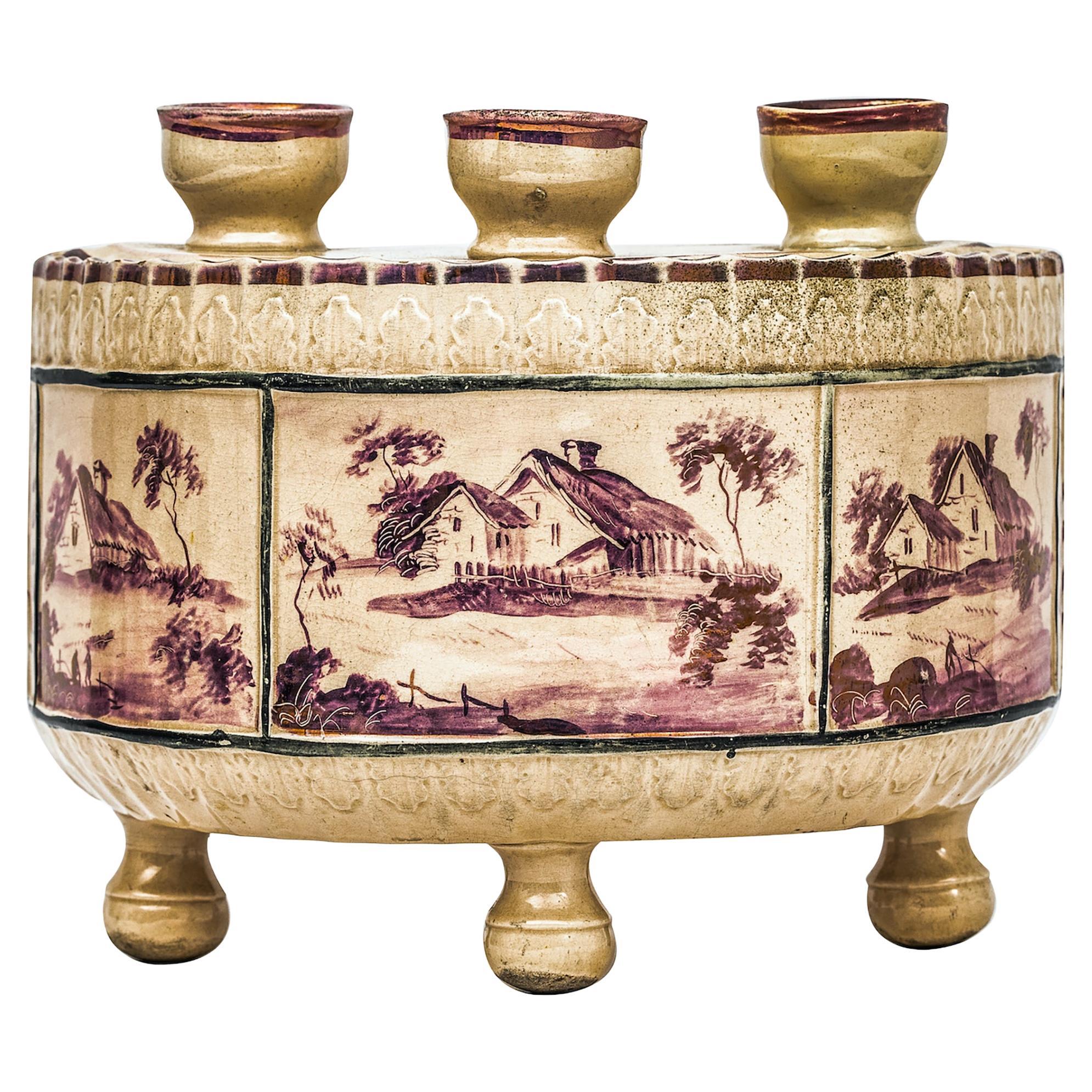
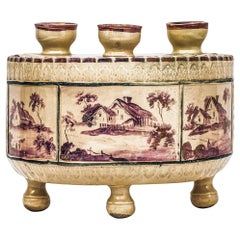
This demilune flower pot or bough pot for forcing springtime bulbs, is adorned with three landscape panels. Each panel, painted in pink lustre, depicts the same cottage in a pastoral setting from three different vantage points. Moulded into the top and bottom rims are acanthus leaves. Pieces in this shape, color and style have been attributed to the Hackwood company, and usually pieces like these, are not marked. William Hackwood & Son was an earthenware factory in Shelton, England, from 1818 until 1853. In addition to lustre ware...
Category
Antique Early 19th Century British Planters, Cachepots and Jardinières
Materials
Ceramic, Faience, Luster
$1,100 Sale Price
50% Off
More Ways To Browse
Antique Salt Glaze
Antique Tobacco Jars
Antique Stoneware Pot
Antique Stoneware Pots
19th Century Salt Glaze
Art Deco Smoking Stand
Bone Spoon
Brass Cigar Cutter
Rare Antique Lighters
Ronson Vintage Table Lighter
Tabletop Lighter Vintage
Vintage Cigarette Machine
Aquarium Table
Dupont Made In France
Japanese Table Lighter
Leather Cigar Case
Ronson Cigarette Lighters
Scottish Horn