Items Similar to Japanese Antique Meiji Period Vesta Case by Fujii Yoshitoyo
Want more images or videos?
Request additional images or videos from the seller
1 of 14
Japanese Antique Meiji Period Vesta Case by Fujii Yoshitoyo
$2,471.30
£1,800
€2,115.78
CA$3,426.56
A$3,684.98
CHF 1,970.37
MX$44,439.83
NOK 24,916.64
SEK 22,702.26
DKK 15,809.55
About the Item
DEPICTING A MYTHICAL HO-O PHOENIX
From our Japanese collection, we are delighted to offer this Japanese Vesta Case by Fujii Yoshitoyo. The Vesta Case extensively decorated with gold flower borders depicting two larger panels, one with a large Ho-o 鳳凰 with trailing tail feathers and the manufactures signature to the bottom right hand corner and the second with birds amongst foliage and chrysanthemum (kiku) flowers. The signature on the bottom right hand corner depicts a version of Mount Fuji which is the mark of renowned metalworker Fujii Yoshitoyo and the vest case dates to the Meiji Period (1868-1912).
FUJII YOSHITOYO
was born in Kyoto, Japan in 1868. Fourth generation metal worker of first rank. He devoted himself to learning about the damascene art and developing the already known techniques used by his family. He left home and moved to Tokyo to develop further and at the age of 35 in 1902 he obtained a patent for his new techniques from the imperial government. In 1909 a second patent was granted to him, he continued to develop his skills and was awarded multiple first class medals throughout his exhibitions and was fortunate enough to sell directly to the imperial household. At its highest point the Fujii factory employer over 200 people mainly exporting sought after objects to Europe and America. During this time he also had his works represented by the Mitsukoshi company. Unlike Komai who use the Zogan (inlay) technique Fujii uses mostly an etching technique on his works.
HO-O
Also referred to as Hoo 鳳凰 or Hou-ou, Ho-o, Hoo-oo, Phoenix in English, Feng 鳳 represents male phoenix, yang, solar Huang 凰 represents female phoenix. In Japan the mythical Phoenix was adopted as a symbol of the imperial household, particularly the empress. This mythical bird represents fire, the sun, justice, obedience, fidelity, and the southern star constellations. The Ho-o bird is a mythical creature in Japanese mythology, adapted from the Chinese Fenghuang. It is a majestic, radiant bird that symbolises peace, prosperity, and the arrival of a virtuous ruler. The Ho-o is often described as having the beak of a rooster, the face of a swallow, the neck of a snake, the back of a tortoise, and the tail of a peacock combining elements of several sacred animals. According to legend, it appears only in times of great harmony and vanishes during times of conflict or corruption. In Japanese art and culture, the Ho-o is often associated with the imperial family, especially the Empress, and is frequently seen in religious architecture, textiles, and lacquerware. It represents not only auspicious power but also the union of yin and yang, embodying balance and divine grace.
CHRYSANTHEMUM (KIKU)
The Kiku flower (Chrysanthemum) holds deep cultural and symbolic significance in Japan. It is considered a symbol of longevity, rejuvenation, and nobility. The Kiku has been associated with the Japanese imperial family for centuries, and the Chrysanthemum Throne is a poetic term for the monarchy itself. With its graceful petals and refined beauty, the flower represents purity and the autumn season. It is featured in festivals, such as the annual Chrysanthemum Festival (Kiku Matsuri), where people display carefully cultivated blooms. The Kiku is also used in family crests, official seals, and various forms of art, reflecting its long-standing role as an emblem of dignity and the refined spirit of Japanese tradition.
VESTA CASE
a small box that houses matches (strike anywhere matches). In England the containers took their name from the term Newton used for his invention, and they became known as “vesta cases”, “vesta boxes” or simply “vestas”. In America the more original term “match safes” was used.
MEIJI PERIOD
was an era of Japanese history that spanned from 1868 to 1912. It was the first half of the Empire of Japan, when the Japanese people began to build a paradigm of a modern, industrialised nation state and emergent great power, influenced by Western countries and aesthetics. As a result of radically different ideas, the changes to Japan were profound and it affected the social structure, politics, economy, military, and foreign relations across the board. The period corresponded to the reign of Emperor Meiji and was preceded by the Keio era and was succeeded by the Taisho era.
Cultural Art during the Meiji Period was of particular interest to the government and they overhauled the art export market which in turn promoted Japanese arts via various world’s fairs, beginning in Vienna at the world fair in 1873. The government heavily funded the fairs and took an active role organising how Japan’s culture was presented to the world including creating a semi-public company named Kiritsu Kosho Kaisha (First Industrial Manufacturing Company). The Kiritsu Kosho Kaisha was used to promote and commercialise exports of Japanese art and established the Hakurankai Jimukyoku (Exhibition Bureau) to maintain quality standards. For the 1876 Centennial International Exhibition in Philadelphia, the Japanese government created a Centennial Office and sent a special envoy to secure space for the 30,000 items that would be displayed. The Imperial Household also took an active interest in arts and crafts, commissioning works by select artists to be given as gifts for foreign dignitaries further emphasising the high quality and importance of Japanese art. Just before the end of the 19th century in 1890, the Teishitsu Gigeiin (Artist to the Imperial Household) system was created to recognise distinguished artists. These artists were selected for their exceptionally high quality wares and talent in their own industry. Over a period of 54 years Seventy artists were appointed, amongst these were ceramicist Makuzu Kozan and cloisonné enamel artist Namikawa Yasuyuki.
- Creator:Fujii Yoshitoyo (Maker)
- Dimensions:Height: 1.78 in (4.5 cm)Width: 1.3 in (3.3 cm)Depth: 0.28 in (7 mm)
- Style:Meiji (Of the Period)
- Materials and Techniques:
- Place of Origin:
- Period:
- Date of Manufacture:Circa 1910
- Condition:
- Seller Location:Newark, GB
- Reference Number:Seller: KRDL1stDibs: LU6971245760652
About the Seller
5.0
Vetted Professional Seller
Every seller passes strict standards for authenticity and reliability
Established in 2019
1stDibs seller since 2022
40 sales on 1stDibs
Typical response time: 3 hours
- ShippingRetrieving quote...Shipping from: Newark, United Kingdom
- Return Policy
More From This Seller
View AllJapanese Mixed Metals Box by Fujii Yoshitoyo, Meiji Period
By Fujii Yoshitoyo
Located in Newark, England
IMPRESSIVE SIZE MIXED METALS BOX
From our Japanese collection, we are pleased to offer this Japanese Mixed Metals Box by Fujii Yoshitoyo.
This substantial rectangular box, raised u...
Category
Antique Late 19th Century Japanese Meiji Metalwork
Materials
Metal, Gold Plate, Silver, Brass
Japanese Silver and Shibuichi Box by Hiroteru Meiji Period
Located in Newark, England
FREE WORLDWIDE SHIPPING
From our Japanese collection, we’re delighted to offer this beautifully made Japanese Silver and Shibuichi Box by Hiroteru 廣照, dating to the late Meiji peri...
Category
Early 20th Century Japanese Meiji Metalwork
Materials
Metal, Gold, Silver
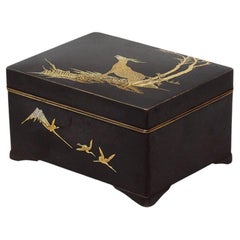
Japanese Meiji Period Damascene Box by Ashizuki with Gold and Silver
Located in Newark, England
INLAID WITH A GOLD AND SILVER DEER
From our Japanese collection we are pleased to offer this Japanese Damascene Box by Ashizuki. The Japanese Box of re...
Category
Antique 19th Century Japanese Meiji Metalwork
Materials
Gold, Silver, Brass, Iron
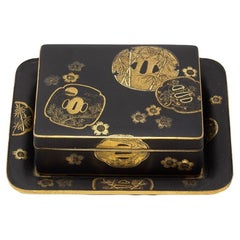
Antique Japanese Meiji Period Tsuba Decorated Box and Dish by Fujii Yoshitoyo
By Fujii Yoshitoyo
Located in Newark, England
Original Box and Dish Pair
From our Japanese collection, we are pleased to offer this Japanese Komai Style Box and Dish Fujii Yoshitoyo. The Box of slim rectangular shape seated upo...
Category
Antique Late 19th Century Japanese Meiji Metalwork
Materials
Metal
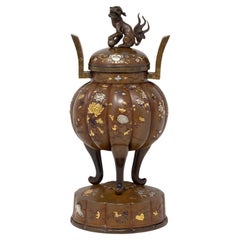
Japanese Bronze and Mixed Metals Koro by Kumagai, Meiji Period
Located in Newark, England
FREE WORLDWIDE SHIPPING
From our Japanese collection, we are pleased to present this Japanese Bronze and Mixed Metals Koro by Kumagai, dating to the Meiji Period (1868–1912).
The ...
Category
Antique Late 19th Century Japanese Meiji Metalwork
Materials
Gold, Silver, Bronze
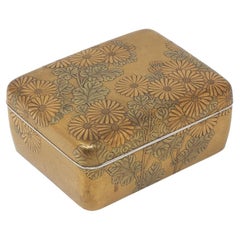
Important Japanese Lacquer Presentation Box Gifted by Japanese President to RAF
Located in Newark, England
PRESENTED BY THE 21ST PRESIDENT OF JAPAN
From our Japanese collection, we are absolutely delighted to bring to market this Important Japanese Lacquer Presentation Box. The Presentat...
Category
Early 20th Century Japanese Art Deco Lacquer
Materials
Lacquer
You May Also Like
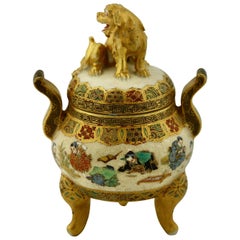
Satsuma Koro and Cover by Yabu Meizan
By Yabu Meizan
Located in West Palm Beach, FL
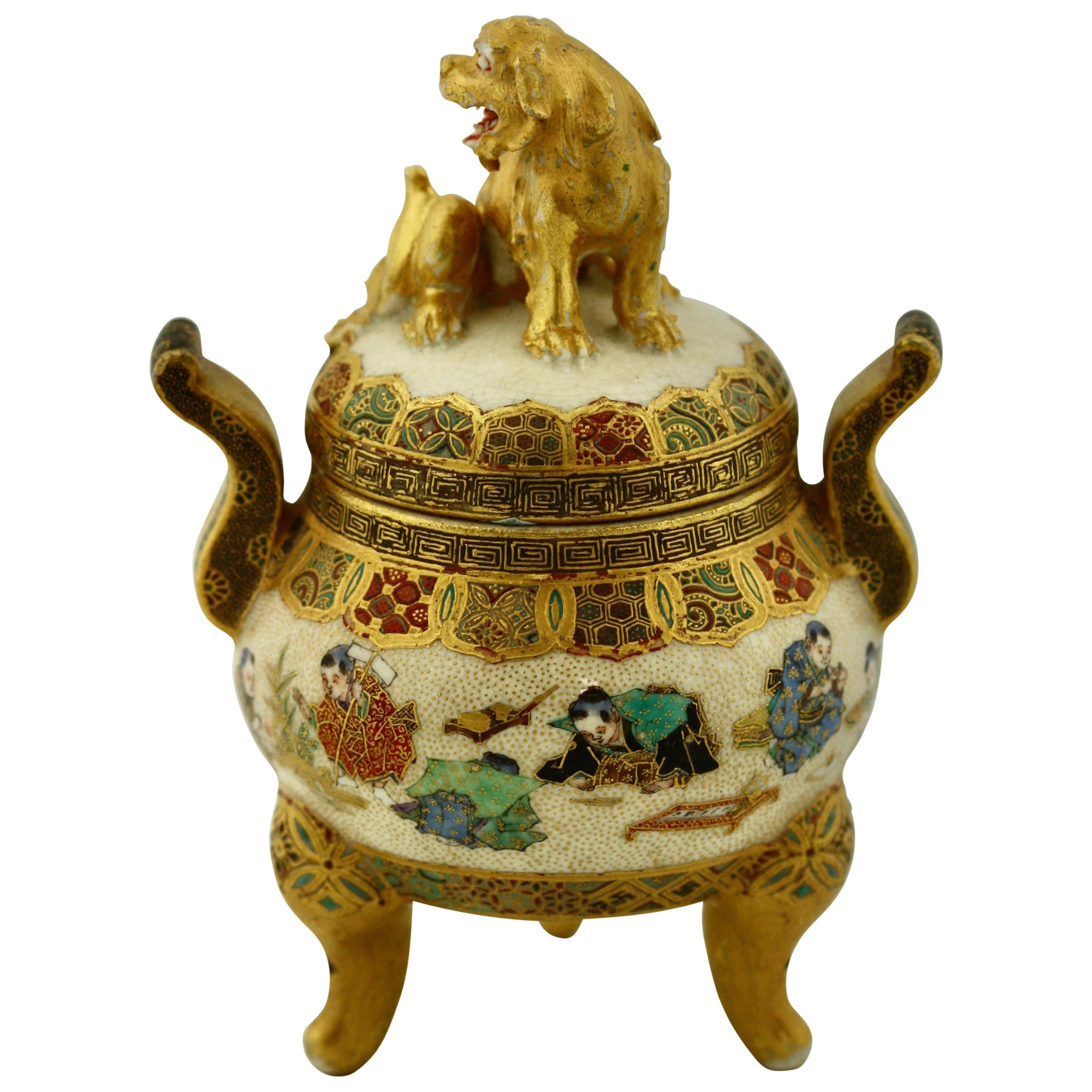
A Satsuma Koro and cover by Yabu Meizan, Osaka, 1853-1934, delicately painted with various scenes of children playing, the top with lion finial, raised on...
Category
Antique Early 1900s More Asian Art, Objects and Furniture
Materials
Ceramic
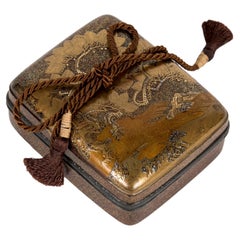
Japanese landscape pine kobako box Edo period 18th century
Located in PARIS, FR
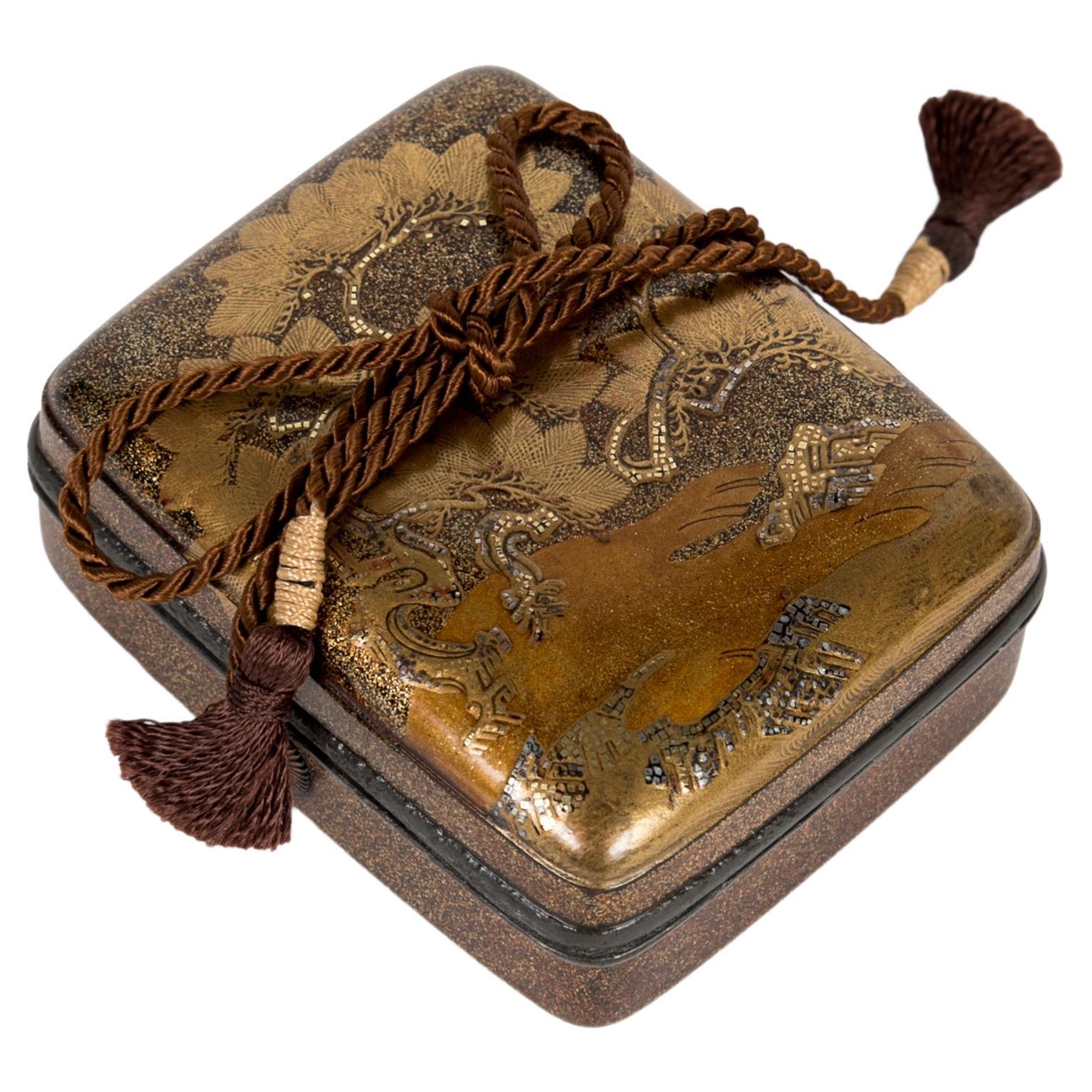
Rectangular black and gold lacquer kobako box decorated with pine trees in a mountain landscape in takamaki-e, kirigane and hiramaki-e lacquer. Background in nashi-ji lacquer. Surmou...
Category
Antique 18th Century Japanese Lacquer
Materials
Gold
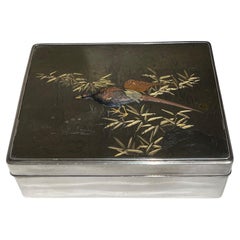
Box signed Katsutoshi Koku, Japan, Meiji period (1868-1912)
Located in PARIS, FR
Box signed Katsutoshi Koku, Japan, Meiji period (1868-1912)
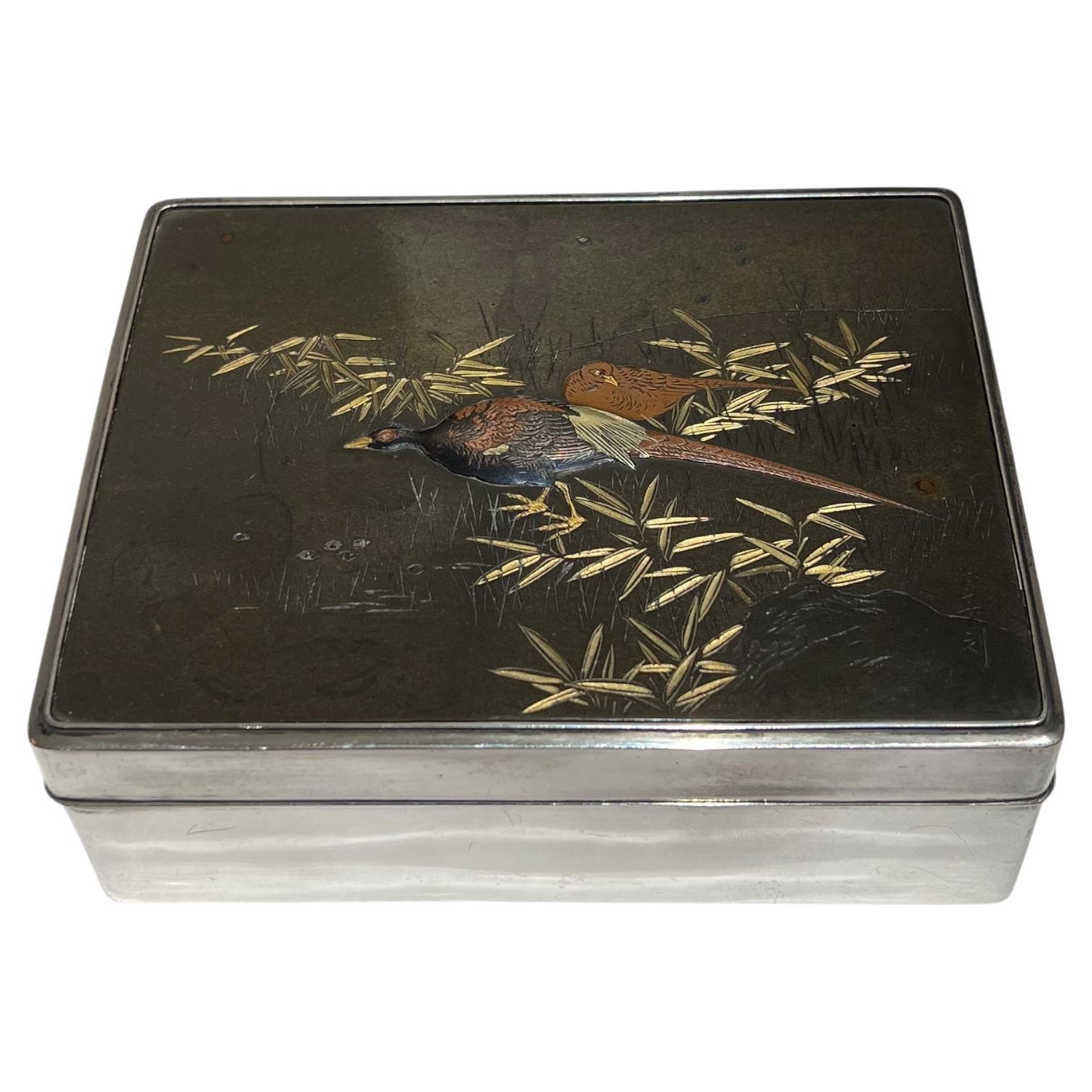
Rectangular silver box bearing the Japanese junjin hallmark, signifying pure silver, made during the Meiji period (1868-1...
Category
Antique Late 19th Century Japanese Decorative Boxes
Materials
Silver
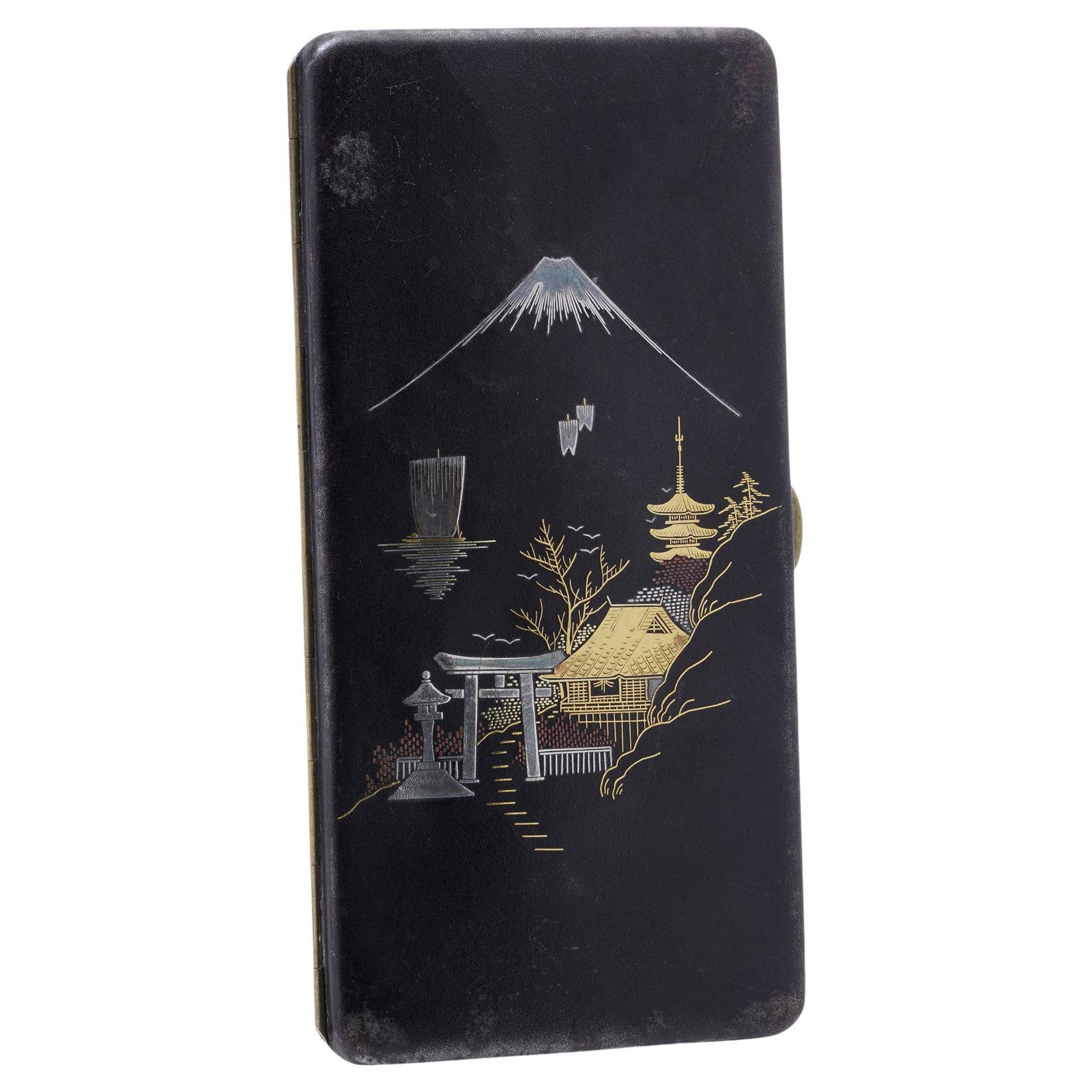
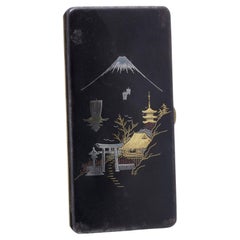
Japanese 19th century Komai 24kt. gold and silver Damascene cigarette case
Located in Braintree, GB
An elegant and finely crafted Japanese Komai-style damascene cigarette or card case, dating from the early 20th century (circa 1900–1940), featuring stunning 24‑karat gold and silver...
Category
20th Century Japanese Cigar Boxes and Humidors
Materials
Metal, Gold
Meiji Period Satsuma Patch Box
Located in Hudson, NY
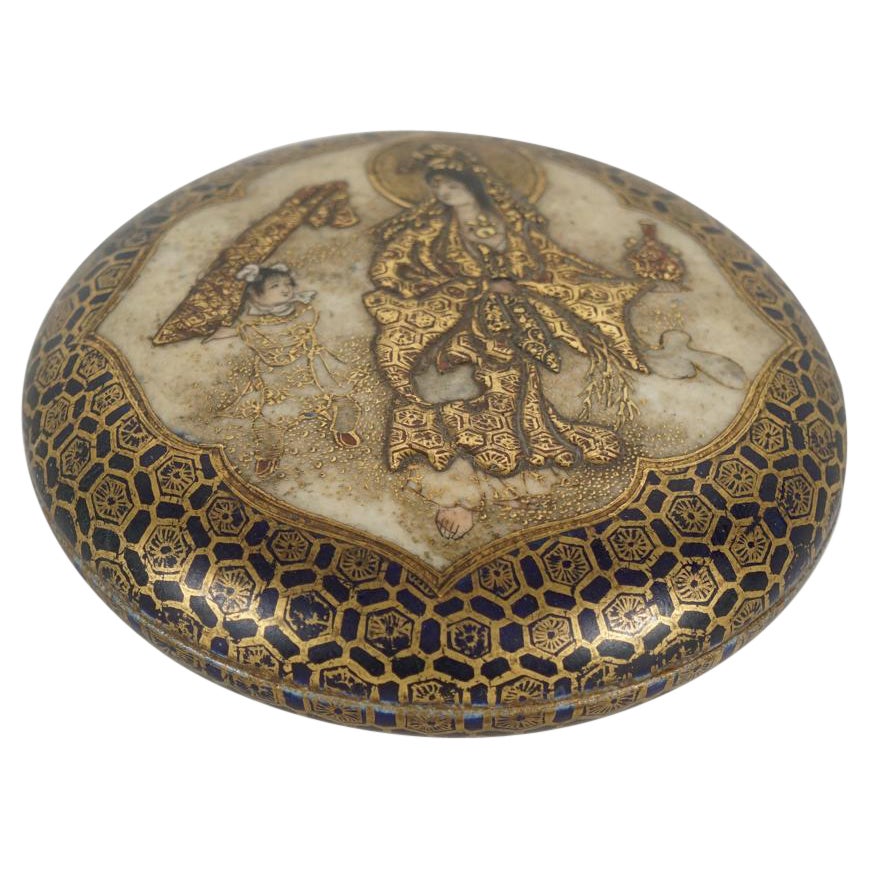
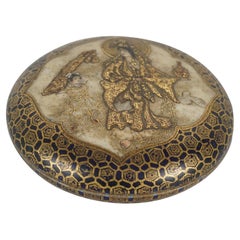
This small detailed work made between 1890 and 1900 is skillfully painted representing a court lady in regal costumes being attended to by a small child carrying a bolt of silk cloth. This centered in a medallion where the raised decoration is heavily embellished with gold and patterned details. The round outer area is done in a cobalt blue with more goldwork designs and the interior of the box holds small painted objects as symbols of refinement and or beauty. The box is signed by the painter's hand but as yet we have not translated or matched it to a specific maker's work.
Wares of this type are most often produced in the city of Kagoshima in Kyushu province during the Meiji period and reflects the export industry designed to cater to western tastes but not particularly bought by Japanese citizens.
Patch boxes...
Category
Antique Late 19th Century Japanese Ceramics
Materials
Ceramic
Japanese golden kobako flowers Edo period 18th century
Located in PARIS, FR
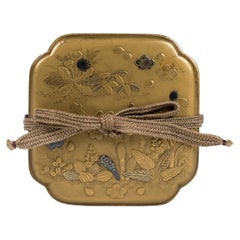
Quadrangular kobako box decorated with flowers in gold and blue lacquer with aogai inlay. Lid and sides in fundame lacquer, underside and interio...
Category
Antique 18th Century Japanese Japonisme Lacquer
Materials
Gold
More Ways To Browse
Antique Inventions
Antique Swallow
Antique Vest
Japan Antiques Collectables
Antique Vesta Cases
Match Strike
Japan Gold Plate
Antique Match Strike
Gold Vesta
Vesta Case Gold
Antique Brass Vesta Case
Fujii Yoshitoyo
Antique Sterling Silver Match Case
Arts And Crafts Smoking Stand
Cigarette Holder Case
Dunhill Lift Arm Lighter
Dunhill Lift Lighter
Electric Lighter