Want more images or videos?
Request additional images or videos from the seller
1 of 21
20th Century Oil Painted On Leather Room Screen, c.1920
$6,605.24List Price
About the Item
- Dimensions:Height: 56.3 in (143 cm)Width: 60.24 in (153 cm)Depth: 0.99 in (2.5 cm)
- Materials and Techniques:
- Place of Origin:
- Period:
- Date of Manufacture:circa 1920
- Condition:Wear consistent with age and use. Minor fading. In Good Condition - Some wear consistent with normal use, please refer to photographs.
- Seller Location:Royal Tunbridge Wells, GB
- Reference Number:Seller: D94671stDibs: LU1348236227892
About the Seller
5.0
Platinum Seller
Premium sellers with a 4.7+ rating and 24-hour response times
Established in 2014
1stDibs seller since 2015
546 sales on 1stDibs
Typical response time: 3 hours
Authenticity Guarantee
In the unlikely event there’s an issue with an item’s authenticity, contact us within 1 year for a full refund. DetailsMoney-Back Guarantee
If your item is not as described, is damaged in transit, or does not arrive, contact us within 7 days for a full refund. Details24-Hour Cancellation
You have a 24-hour grace period in which to reconsider your purchase, with no questions asked.Vetted Professional Sellers
Our world-class sellers must adhere to strict standards for service and quality, maintaining the integrity of our listings.Price-Match Guarantee
If you find that a seller listed the same item for a lower price elsewhere, we’ll match it.Trusted Global Delivery
Our best-in-class carrier network provides specialized shipping options worldwide, including custom delivery.You May Also Like
A handsome hand-painted oriental screen / room divider, 20th century
Located in View Park, CA
A handsome vintage oriental partition or room divider, 20th century. Hand-painted with Asian birds and flowers in tones of licorice, maraschino, and frond green against a glowing gol...
Category
20th Century Asian Chinoiserie Screens and Room Dividers
Materials
Wood, Paint

Early 20th Century French Neoclassical Oil on Canvas Screen Room Divider Art
Located in Kennesaw, GA
This is an early 20th century French screen with neoclassical styling. It has three panels that are oils on canvas. The back is lined and they have both wall mounted and hook connect...
Category
Early 20th Century French Neoclassical Screens and Room Dividers
Materials
Fabric, Canvas

On Hold
$3,495
H 67 in W 76 in D 1.25 in
20th Century Arts
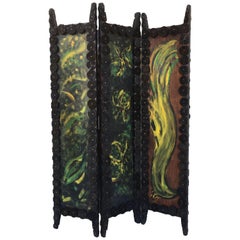
Crafts Folding Screen
Hand Painted Decoration Room Divider
Located in Miami, FL
Unique and highly decorative, work of art folding screen.
Some will call this amazing and practical size folding screen Arts & Crafts and some will call it Classical Art Nouveau. ...
Category
Mid-20th Century Spanish Arts and Crafts Screens and Room Dividers
Materials
Walnut, Paint
$1,520 Sale Price
20% Off
H 63 in W 43.3 in D 2 in
20th Century Continental Hand-Painted Oil on Board Four-Fold Floor Screen
Located in Germantown, MD
Continental Hand- Painted Wood Four-Fold Floor Screen. Oil on board fllor screen or room divider.
Measures 64" in width and stands 72" tall.
Category
20th Century American Modern Screens and Room Dividers
Materials
Wood, Paint

$4,995
H 72 in W 64 in D 1 in
Painted Wooden Folding Screen, 5 Panels, 20th Century.
Located in Saint-Ouen, FR
Painted wooden folding screen, 5 panels, 20th century.
Painted wooden folding screen, 5 panels, 20th century.
Centre: H: 128cm, W: 59cm, D: 2.5cm
Sides: H: 128cm, W: 40cm, D: 2,5cm
Category
20th Century French Mid-Century Modern Screens and Room Dividers
Materials
Wood
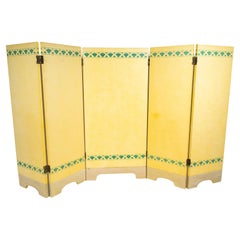
20th Century Four Panel Hand Painted Screen
Located in Miami, FL
An Italian hand painted wood room divider from the 20th century. This antique accordion style folding screen from Italy features 4 connected panels, ...
Category
Mid-20th Century Italian Art Nouveau Screens and Room Dividers
Materials
Wood
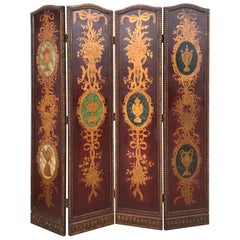
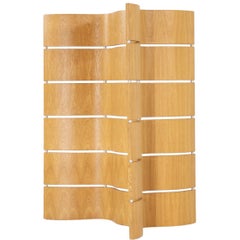
20th Century Danish Mid-Century Modern Birchwood Room Divider - Vintage Screen
Located in West Palm Beach, FL
A sculptural, vintage Mid-Century modern Danish room divider made of hand crafted polished Birchwood, in good condition. The large Scandinavian screen has two adjustable, flexible wa...
Category
Mid-20th Century Danish Mid-Century Modern Screens and Room Dividers
Materials
Metal, Chrome
$8,900
H 72 in W 77.5 in D 13 in
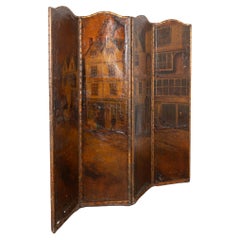
Original Oil on Canvas Painted 4 Panel Screen Room Divider England circa 1900-20
Located in Round Top, TX
Original oil on canvas painted panels form this impressive baroque style folding screen from the early 1900's.
A city street scene with horse drawn carriage and lady walking along si...
Category
Early 20th Century English Baroque Screens and Room Dividers
Materials
Canvas, Wood, Paint
$3,350
H 68.5 in W 72 in D 1 in
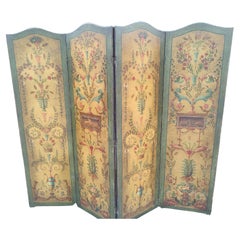
19th Century French Hand Painted Room Divider 4 Panel Leather Screen
Located in Port Jervis, NY
Fantastic leather four panel room divider hand painted and hand crafted screen from the latter part of the 19th century France. Hand painted cherubs with floral accents in outstandin...
Category
Antique 1870s French Empire Screens and Room Dividers
Materials
Brass
Early 20th century Indian screen
Located in Cesena, FC
Early 20th century Indian screen
Early twentieth-century Indian screen, polychrome.
India partition, composed of four hand-painted panels.
Richly decorated with fretwork and hand-pa...
Category
Antique Early 19th Century Indian Screens and Room Dividers
Materials
Wood, Paint

More From This Seller
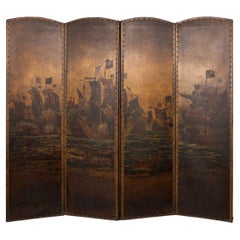
View All20th Century Oil Painted On Leather Room Screen, c.1920
Located in Royal Tunbridge Wells, Kent
Antique 20th Century beautifully painted four panel dress screen depicting 17th Century battleships at sea. Painted oil on leather, each panel is finished...
Category
20th Century European Screens and Room Dividers
Materials
Leather, Paint
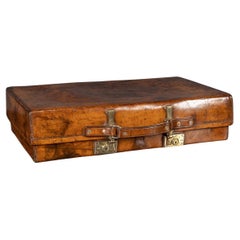
20th Century Revelation Expanding Leather Suitcase, c.1920
Located in Royal Tunbridge Wells, Kent
Antique early 20th Century Bridle Hide Revelation expanding leather suitcase, a hallmark of innovation from the 1920's, showcased a pioneering design that allowed for adjustable stor...
Category
20th Century British Trunks and Luggage
Materials
Brass
Vintage 20th Century Articulated Pine Wood Screen c.1980
Located in Royal Tunbridge Wells, Kent
A 20th Century articulated pine wood screen, with each panel designed to move, transforming a simple screen into a work of art. An exceptional addition to both modern and classic int...
Category
20th Century British Other Screens and Room Dividers
Materials
Pine

20th Century Louis Vuitton Cow Hide Suitcase, France c.1920
By Louis Vuitton
Located in Royal Tunbridge Wells, Kent
A highly unusual and exceptionally rare Louis Vuitton suitcase, originating from the early years of the 20th century, distinguishes itself not with the globally renowned monogram canvas but with a distinctive covering crafted from a singular piece of cowhide. This unique piece represents a special order from Louis Vuitton, showcasing the brand's historical commitment to utilizing only the finest hides available.
Unlike many of its counterparts, leather trunks and cases of this era often struggle to withstand the test of time, requiring regular treatments to prevent drying and disintegration. Remarkably, this particular example defies the odds, retaining the same supple quality it possessed on the day it first graced the shop floor. This suitcase belongs to Louis Vuitton's collection of "speciality materials," which encompasses a diverse range, including, but not limited to, zinc, copper, crocodile leather, and cow leather.
A brief history about Louis Vuitton trunks: Louis Vuitton was born in 1821 to a farmer and milliner and came from a long-established working-class family in eastern France. Vuitton grew up understanding the effects of perseverance and a strong work ethic from watching his family. At the age of 16, he made the decision to walk 292 miles from his hometown to Paris to try and make a new life for himself. When he arrived the city was in the midst of industrialization with current modes of transportation evolving quickly allowing for longer journeys. With this came the need for sturdy travel pieces.
Vuitton was taken as an apprentice for a successful box maker and packer named Monsieur Marechal. He learned to craft durable containers and how to pack them properly – a well-respected profession at the time.In 1854, years after he had mastered his craft and became well respected for it, Vuitton ventured out on his own to open a shop on Rue Neuve des Capucines. It was here that he began to establish himself as a luggage maker. Then, in 1858, Vuitton designed the first Louis Vuitton steamer trunk. At the time trunks had rounded tops to allow for water to run off but this did not allow for convenient stowage. Vuitton introduced a flat, yet waterproof, trunk that was easily stackable. The first of his trunks were outfitted with a grey canvas referred to as Trianon – it wouldn’t be until several decades later that the signature monogram would be introduced.
With a burgeoning business, Vuitton moved his family and workplace to Asniere, where he employed twenty workers to craft his trunks. By 1900 he would have 100 employees, and in 1914 the company would more than double in size. After years of success, Vuitton began to experiment with the design of his luggage by introducing a new striped canvas pattern (1876) and later the still well-known Damier print (1888). The hand-painted patterns were developed to prevent counterfeits. Even in the late 1800s, Louis Vuitton was enough of a status symbol to warrant counterfeiting. In 1886, his son George invented and patented an ingenious locking system that made it impossible to pick the lock of their trunks. This lock is still used today.
1892 would prove to be a time of mourning for the family as Louis Vuitton passed...
Category
20th Century French Other Trunks and Luggage
Materials
Brass
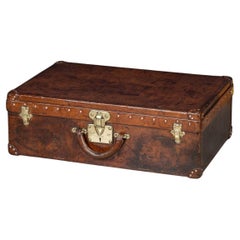
20th Century Louis Vuitton Cow Hide Suitcase, France c.1920
By Louis Vuitton
Located in Royal Tunbridge Wells, Kent
A highly unusual and exceptionally rare Louis Vuitton suitcase, originating from the early years of the 20th century, distinguishes itself not with the globally renowned monogram canvas but with a distinctive covering crafted from a singular piece of cowhide. This unique piece represents a special order from Louis Vuitton, showcasing the brand's historical commitment to utilizing only the finest hides available.
Unlike many of its counterparts, leather trunks and cases of this era often struggle to withstand the test of time, requiring regular treatments to prevent drying and disintegration. Remarkably, this particular example defies the odds, retaining the same supple quality it possessed on the day it first graced the shop floor. This suitcase belongs to Louis Vuitton's collection of "speciality materials," which encompasses a diverse range, including, but not limited to, zinc, copper, crocodile leather, and cow leather.
A brief history about Louis Vuitton trunks: Louis Vuitton was born in 1821 to a farmer and milliner and came from a long-established working-class family in eastern France. Vuitton grew up understanding the effects of perseverance and a strong work ethic from watching his family. At the age of 16, he made the decision to walk 292 miles from his hometown to Paris to try and make a new life for himself. When he arrived the city was in the midst of industrialization with current modes of transportation evolving quickly allowing for longer journeys. With this came the need for sturdy travel pieces.
Vuitton was taken as an apprentice for a successful box maker and packer named Monsieur Marechal. He learned to craft durable containers and how to pack them properly – a well-respected profession at the time.In 1854, years after he had mastered his craft and became well respected for it, Vuitton ventured out on his own to open a shop on Rue Neuve des Capucines. It was here that he began to establish himself as a luggage maker. Then, in 1858, Vuitton designed the first Louis Vuitton steamer trunk. At the time trunks had rounded tops to allow for water to run off but this did not allow for convenient stowage. Vuitton introduced a flat, yet waterproof, trunk that was easily stackable. The first of his trunks were outfitted with a grey canvas referred to as Trianon – it wouldn’t be until several decades later that the signature monogram would be introduced.
With a burgeoning business, Vuitton moved his family and workplace to Asniere, where he employed twenty workers to craft his trunks. By 1900 he would have 100 employees, and in 1914 the company would more than double in size. After years of success, Vuitton began to experiment with the design of his luggage by introducing a new striped canvas pattern (1876) and later the still well-known Damier print (1888). The hand-painted patterns were developed to prevent counterfeits. Even in the late 1800s, Louis Vuitton was enough of a status symbol to warrant counterfeiting. In 1886, his son George invented and patented an ingenious locking system that made it impossible to pick the lock of their trunks. This lock is still used today.
1892 would prove to be a time of mourning for the family as Louis Vuitton passed...
Category
20th Century French Other Trunks and Luggage
Materials
Brass
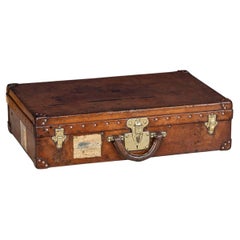
20th Century British Made Bridle Leather Suitcase, c.1910
Located in Royal Tunbridge Wells, Kent
Antique early 20th Century British made Bridle hide covered suitcase. The leather shows wear but is still supple, mounted with brass fittings, oozing charm and elegance. A truly grea...
Category
20th Century British Trunks and Luggage
Materials
Leather
Still Thinking About These?
All Recently ViewedMore Ways To Browse
Embossed Leather Screen
Folding Floor Screen
Tall Room Dividers
Victorian Wood Screens
Four Panel Chinoiserie Screens
Mother Of Pearl Inlay Screen
Regency Pole Screen
Vintage 3 Panel Room Divider
Antique Fire Pole
Fire Screen Pole
Lacquered Screen Art Deco
Mother Of Pearl Divider Black
Vintage Mirror Room Divider
Walnut Folding Screen
Antique Japanese Room Dividers
Antique Japanese Screens Room Dividers
Antique Pole Fire Screen
Chinese Black Room Divider