Items Similar to Chinoiserie-style screen. Italy, second quarter 19th century

Video Loading
Want more images or videos?
Request additional images or videos from the seller
1 of 13
Chinoiserie-style screen. Italy, second quarter 19th century
$23,417.49
£17,344.17
€19,500
CA$32,033.96
A$34,862.79
CHF 18,480.74
MX$419,426.06
NOK 234,395.07
SEK 214,455.07
DKK 148,593.37
About the Item
Five-panel jointed screen; made of poplar entirely lacquered in black, it is decorated with Chinoise-like painted motifs: dragons, monkeys, birds, and reserves depicting scenes of Chinese life, juggling and fighting. Features gilded leaf frames decorating the cymatium and lower part. Revisited by designer Pietro Russo with Dedar fabric.
Already widely used at the end of the perceding century, chinoiserie became truly popular in the nineteenth century, appreciated and in demand by the major European courts. References to China and the Orient in general were able to invoke an exoticism that was as qppereized on an aesthetic level as it was on a cultural level.
Indeed, the calligraphy of the chinoiserie drawings, the heterongeneous bestiary (both real and fantastic), and the scenes of life, offered endless decorative solutions for small objects and entire walls, creating interesting sccenographic effects in the layout of the large rooms. Among the main proponents of chinoiserie was King George IV, who, with the construction of the Royal Pavilion in Brighton as a seaside pleasure palace, decided to fit out some of the rooms in precisely this style. In particular, the Banqueting Room, Long Gallery, and Music Room feature oriental-style furniture, chandeliers, and objects such as china, as well as carpeting and stained glass.
The walls of the room devoted to music, were decorated with scenes of Chinese life, in gold on a red background, created by Frederick Crace and Henry Lambelet and taken from William Alexander's The Customs of China (1805). In the Royal Pavilion, Chinese export hand-painted furniture, objects and wallpapers coexist with others made in England, with an oriental flavor mediated by the Western gaze and fashions. There are numerous examples of chinoiserie in Italian courts as well, a style beloved in particular by the Savoy family, who chose it to set up some of the rooms at Stupinigi and Racconigi.
Another example can be found can be found can be found in the Piedmontese wallpaper room at the Quirinal Palace in Rome.
- Dimensions:Height: 81.5 in (207 cm)Width: 133.86 in (340 cm)Depth: 1.58 in (4 cm)
- Style:Other (Of the Period)
- Materials and Techniques:Poplar,Lacquered
- Place of Origin:
- Period:
- Date of Manufacture:1800s
- Condition:Wear consistent with age and use.
- Seller Location:Milano, IT
- Reference Number:1stDibs: LU1721237891472
About the Seller
4.9
Platinum Seller
Premium sellers with a 4.7+ rating and 24-hour response times
Established in 2015
1stDibs seller since 2015
439 sales on 1stDibs
Typical response time: 2 hours
- ShippingRetrieving quote...Shipping from: Milan, Italy
- Return Policy
More From This Seller
View AllMid-20th Century Italy Walnut Parlour Furniture in Ethnic Taste
By Non-Standard Furniture and Lighting
Located in Milano, IT
1950s hall furniture made by artist Rino Galbiati. An architectural piece of furniture with an ethnic flavor, it has doors in the lower part, hidden drawers in the center band and in...
Category
Vintage 1950s Italian Mid-Century Modern Credenzas
Materials
Nutwood
Chimney. Turin, Early 18th Century
By Non-Standard Furniture and Lighting
Located in Milano, IT
Richly carved gilded chimneypiece, supporting frame and projecting side uprights with double frames with mirrors surmounted by carved architectural cymas. In the center imposing one-...
Category
Antique Early 1700s Italian Other Mantel Mirrors and Fireplace Mirrors
Materials
Mirror, Wood
Armadio in Stile Barocco Italia Fine XIX Secolo
By Non-Standard Furniture and Lighting
Located in Milano, IT
Armadio in stile Barocco, laccato e dipinto. Fronte con coppia di ante pannellate dipinte con dama e cavaliere, grande cassetto nella base con coppia di formelle dipinte con cesti di...
Category
Antique Late 19th Century Italian Baroque Wardrobes and Armoires
Materials
Wood
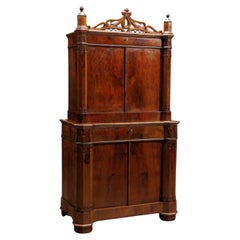
Coin cabinet, Piedmont, second quarter of the 19th century
By Non-Standard Furniture and Lighting
Located in Milano, IT
Two-body cabinet completely veneered in mahogany feather; it has both in the narrower upper part and in the lower part two doors surmounted by a drawer and framed by a pair of uprigh...
Category
Antique 19th Century Other Sideboards
Materials
Mahogany
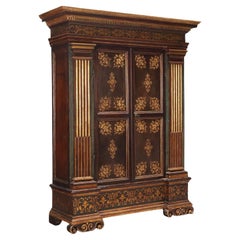
Armadio Manierista Toscana, inizio XVII Secolo
By Non-Standard Furniture and Lighting
Located in Milano, IT
Armadio Manierista in noce laccato, con parti in noce, parti dipinte e parti dorate a foglia oro. Fronte con coppia di ante esternamente bipartite, decorazioni fogliacee dorate nell...
Category
Antique 17th Century Italian Other Wardrobes and Armoires
Materials
Nutwood
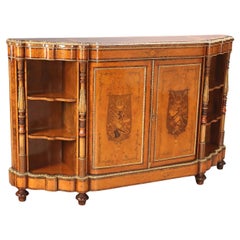
Servante Inglese XIX Secolo
By Non-Standard Furniture and Lighting
Located in Milano, IT
Servante impiallacciato in radica di acero, noce e mogano. Ante frontali ricurve con intarsio centrale in essenze varie, rappresentante strumenti musicali, fianchi scantonati con tr...
Category
Antique 19th Century English Other Buffets
Materials
Mahogany, Maple, Nutwood
You May Also Like
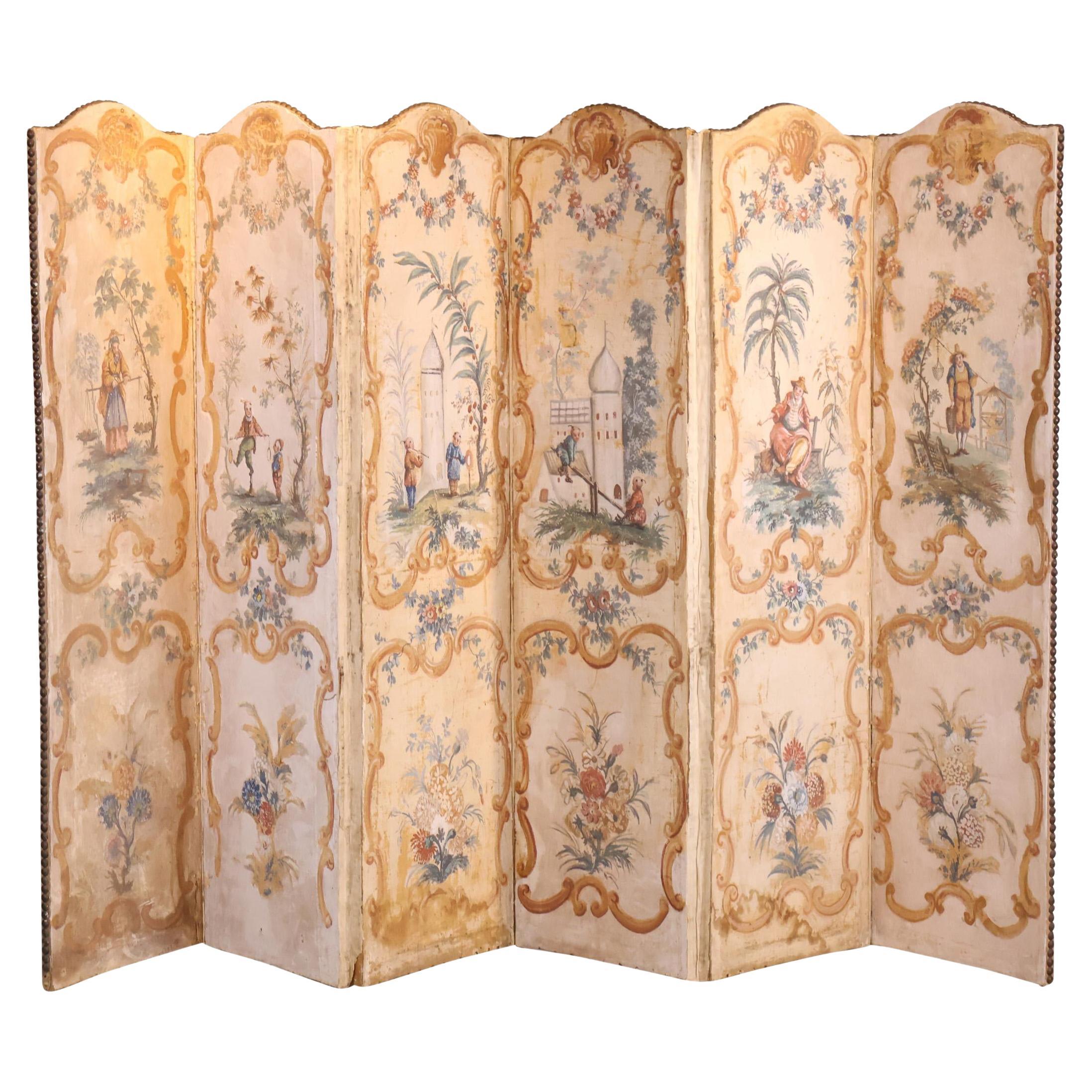
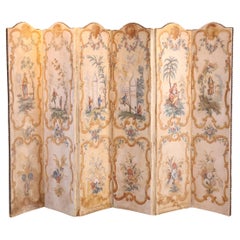
19th Century Continental Chinoiserie Screen
Located in Solebury, PA
An early 19th-century six-panel decorated canvas screen, executed in the chinoiserie style, is exquisitely and finely painted to depict detailed scenes of daily Chinese life, trade, ...
Category
Antique Early 19th Century European Screens and Room Dividers
Materials
Fabric, Wood, Paint
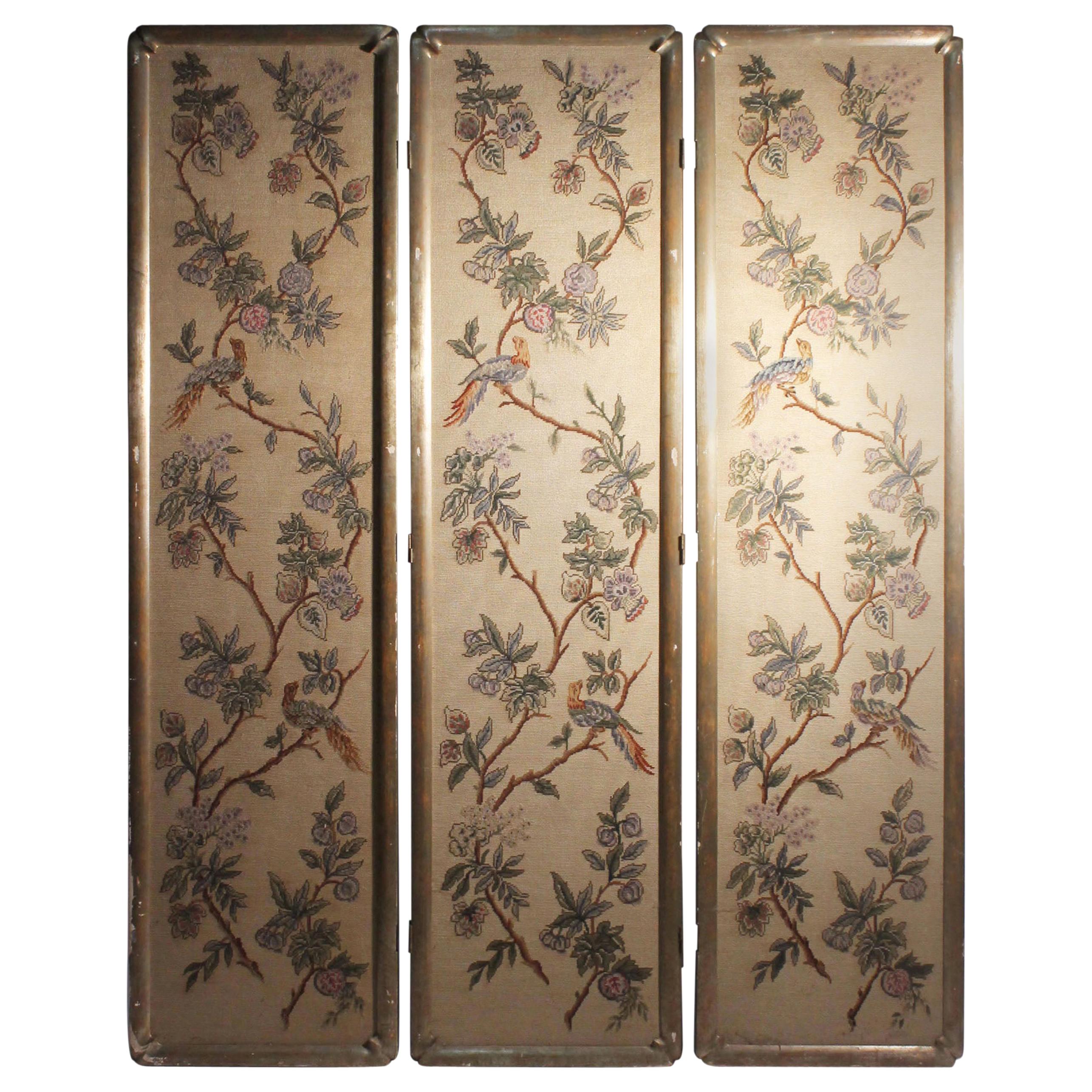
Vintage Italian Chinoiserie Room Divider Screen
Located in Chicago, IL
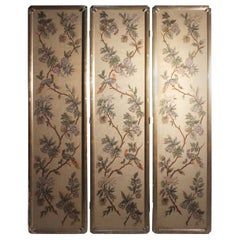
Beautiful vintage Italian chinoiserie or oriental room divider screen with stitched panels of foliage, flowers and birds of different colo...
Category
Mid-20th Century Italian Mid-Century Modern Screens and Room Dividers
Materials
Wood
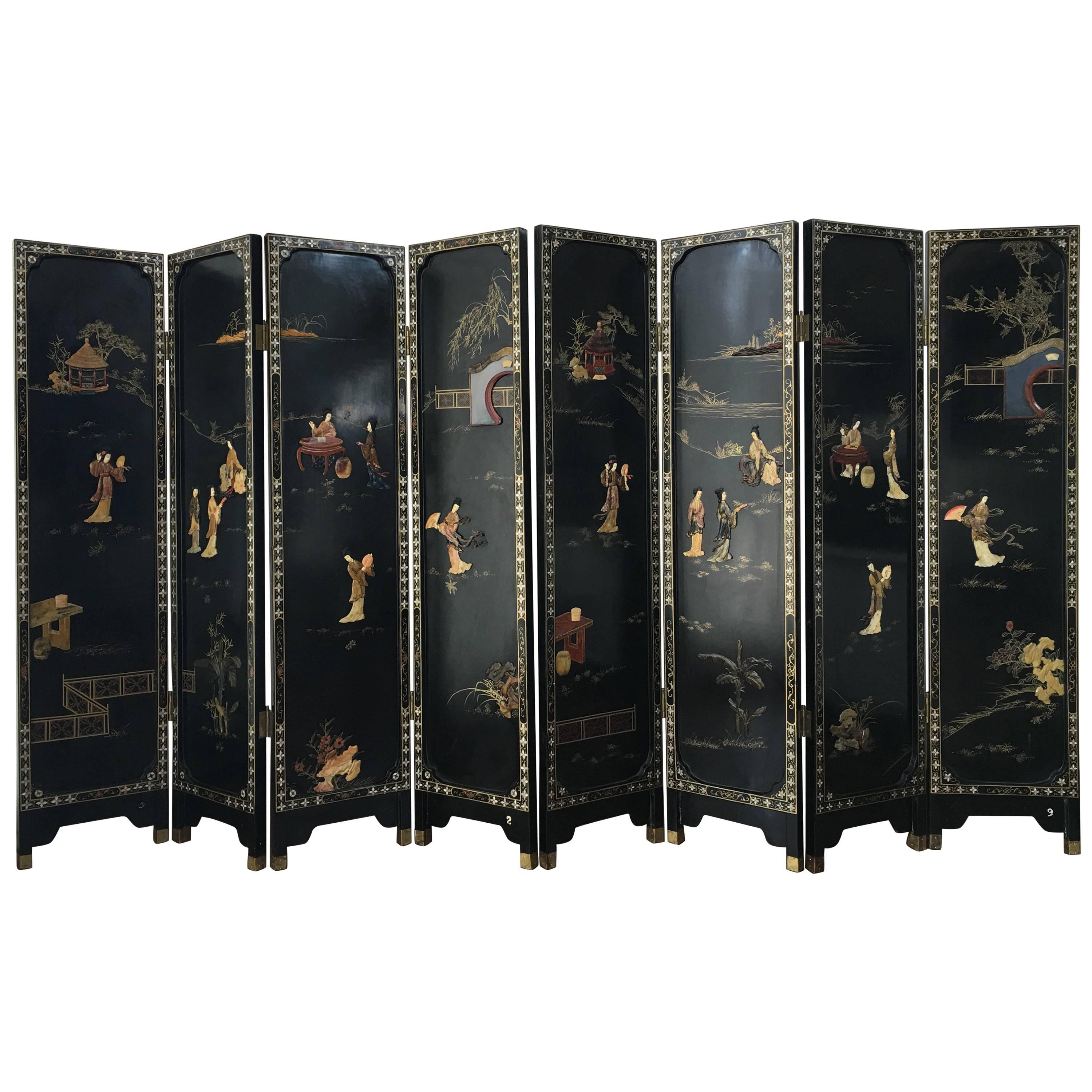
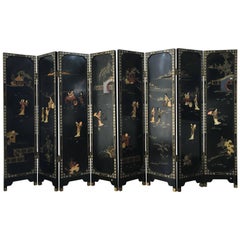
Pair of Four-Panel Reversible French Chinoiserie Coromandel Screens Paris, 1920s
Located in Miami, FL
Eight-Panel Reversible Chinese Coromandel Screen
Pair of French chinoiserie screens, Paris, 1920s
This French chinoiserie screens from the ...
Category
Early 20th Century French Chinoiserie Screens and Room Dividers
Materials
Wood, Mother-of-Pearl
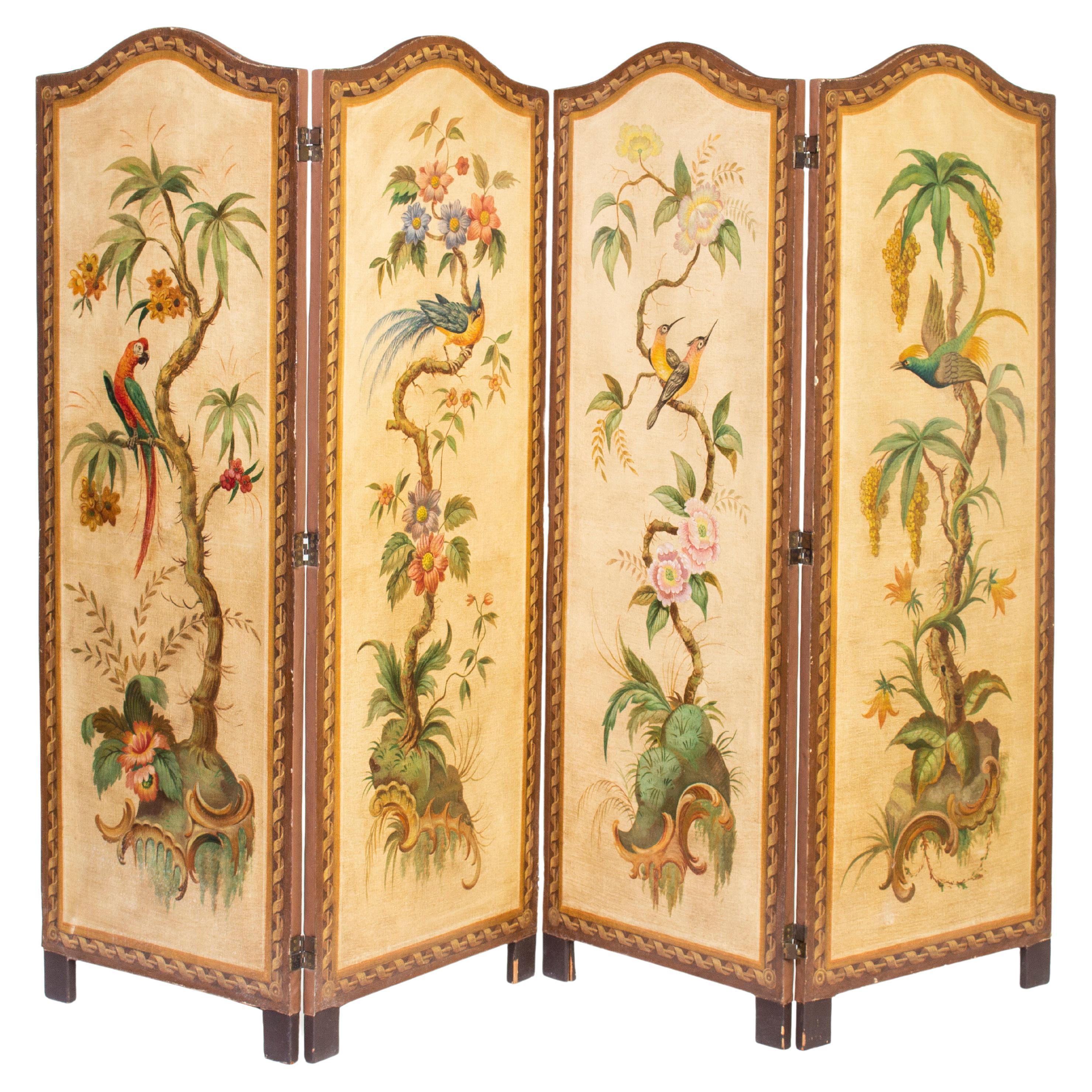
Baroque Folding Screen
Located in Budapest, Budapest
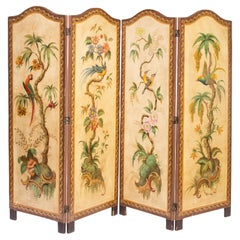
Baroque folding screen in excellent condition. Pine frame, painted canvas.
Category
Antique 18th Century Italian Baroque Screens and Room Dividers
Materials
Canvas, Wood
$5,043 Sale Price
30% Off
Italian Folding Screen
Located in Houston, TX
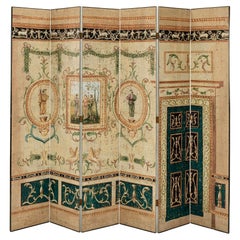
This six-panel screen borrows from the Roman practice as an homage to the great designers that came before. Ancient roman courtyard houses typically had architectural elements crown ...
Category
Early 20th Century Neoclassical Screens and Room Dividers
Materials
Wood, Paper
$4,800
19th c. Chinese Chippendale Folding Screen
Located in Queens, NY
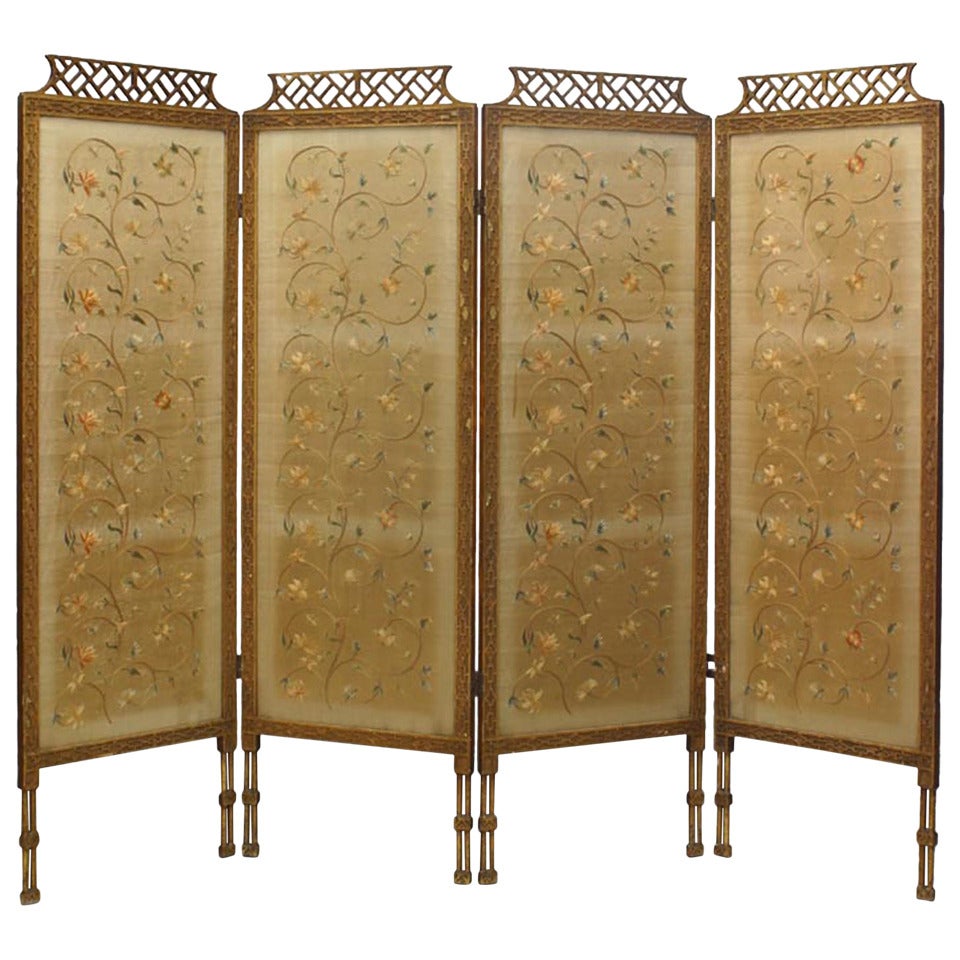
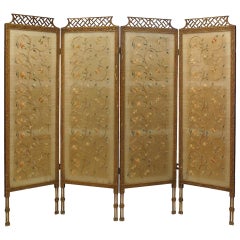
Nineteenth century English Chinese Chippendale four fold screen with silk panels embroidered with floral chinoiserie patterns framed in giltwood carved with filigree fretwork tops.
Category
Antique 19th Century British Chinese Chippendale Screens and Room Dividers
Materials
Gold Leaf
More Ways To Browse
Brighton Pavilion
Royal Pavilion
Antique Tanto
Mother Of Pearl Divider Black
Vintage Mirror Room Divider
Walnut Folding Screen
Antique Japanese Room Dividers
Antique Japanese Screens Room Dividers
Antique Pole Fire Screen
Chinese Black Room Divider
Eastern Accents
Floral Room Divider Screens
Folding Table Screen
Midcentury Design Room Dividers
Tri Fold Screens
Antique Painted Leather Panels
Chinese Folding Room Divider
Mother Of Pearl Room Divider