Items Similar to An exceptional documented folding screen by T. Robertson and Sons of Alnwick
Want more images or videos?
Request additional images or videos from the seller
1 of 20
An exceptional documented folding screen by T. Robertson and Sons of Alnwick
$50,112.63
£36,750
€42,673.71
CA$69,052.80
A$75,905.85
CHF 39,850.22
MX$902,575.15
NOK 511,767.28
SEK 466,164.69
DKK 318,841.12
About the Item
An exceptional documented folding screen made by T. Robertson and Sons of Alnwick in 1877 with paintings of Northumberland castles by Thomas Henry Gibb
This truly exceptional screen has been in some very famous 20th century collections, including that of Mrs John Hay Whitney, but, until now, the early provenance of the piece had not been established. We are delighted to report that research in the newspaper archives has revealed not only the maker of the piece and its date of manufacture but also the castle in which the piece was located prior to 1925.
The screen consists of an ebonised and gilt framework with panels of paintings of Northumbrian castles. Between these paintings are borders of Vitruvian scroll decoration. It is now possible to state with certainty that the piece was made in 1876-77 by Thomas Robertson and Sons, a firm with premises in Alnwick and London that styled itself as, according to BIFMO, ‘cabinet makers, upholders, house furnishers, timber merchants, auctioneers and joiners’. The firm was a highly interesting one with clients including the New School of Art in Chiswick and Alnwick Castle whilst also being known to have supplied other retailers such as Shoolbred with pieces for stock. It is an article from the Alnwick Mercury, 7th of April 1877, that has proved crucial in terms of our research. The article is quoted below in full. Circa 1875.
Provenance
Made by T. Robertson and Sons of Alnwick, with paintings by Thomas Henry Gibb, and exhibited in their windows in 1877
Acquired for Callaly Castle, Whittingham, Northumberland
Sold from Callaly Castle by auction on the 14th of September 1925 for £16 10s
Collection of G. K. S. Bush, Washington D. C.
Collection of Mrs John Hay Whitney
Another private American collection
‘WORK OF ART: A beautiful local work of art is now being exhibited in the shop window of Messrs T. Robertson and Sons, Narrowgate. It consists of a screen displaying pictures of the principal castles of Northumberland, painted by the skilful hand of Mr. T. H. Gibb, artist, of this town. The screen has four folds, each having painted on it three main views on the three panels into which it is divided, with four smaller views in the spandrels of each centre panel, making twenty eight views in all. In the first fold-Bamburgh Castle, from near the Stag rocks, occupies the top panel of the fold; the centre pictures being Warkworth Castle, on each side of which in the spandrels, are the rugged walls of Harbottle Castle; the ruins of Mitford; Bywell-on-the-Tyne, and Langley on the Dilston estate. The bottom picture is Beaufront-on-the-Tyne. In the second fold, Kielder in the north Tyne is placed on the top panel, surrounding which is Prudhoe Castle on the north Tyne, Haughton, Holy Island by moonlight, and the ruins of Edlingham, under a similar aspect: the bottom panel being filled by Etal on the Till. In the top panel of the third fold, Holy Island with Lindisfarne Priory in the distance is placed. The centre view being Alnwick Castle from the Lion Bridge, surrounded by the draw-well and the Norman arch within its precincts; the court yard of Chillingham Castle; the ruins of Ayden, as seen through the entrance gate; Thirlwell on the borders of Cumberland, enwrapped in snow; Norham castle in the evening being seen in the panel underneath. The fourth fold-Dilston-once the seat of the unfortunate Earl of Derwentwater, is placed at the top; Bothal, on Wansbeck, in the centre; on either side of which is Chipchase; Walton, with part of the vicarage and churchyard; Longlangton in winter; and Coupland as seen from the Till. The last view at the bottom of this fold being Ford Castle, bringing in the tower in which it is said King James of Scotland slept the night before the disastrous Battle of Flodden, where the flower and chivalry of the Scottish army were dismounted. All these views are executed in a bold and picturesque style, showing in the artist a decided talent for depicting scenery; and the effect of the whole is very beautiful. The framework of the screen, in which these gems is set, is of black and gold, designed and executed by Messrs Robertson
Son, and is another example of the beautiful workmanship this firm can turn out. Everyone should take an opportunity of seeing this fine work of art whilst it remains for exhibition in its present place’.
The Callaly Castle Provenance
If the above information was not fascinating enough, another reference in the newspapers, this time in the Berwickshire News, 15th of September 1925, has allowed us to establish that this wonderful screen must have been purchased from Robertsons by a member of the Browne family. A military family, the Brownes had lived at Callaly Castle in Whittingham for two generations at this point. The Browne family bought the estate in 1877 from the Calverley family and obviously given the display of the screen at Robertsons in the same year they must have been united at this point. In 1925 Major Alex Browne, son of Major Alex Henry Browne, made the decision to sell the contents of the castle and in a report of the sale the newspaper mentions that the present screen was amongst the items dispersed. The screen is referenced as follows:
‘ebonised and gilt four-fold draught screen inset with 28 oil paintings of Northumbrian castles by T. H. Gibb, £16 10s’.
Surviving photographs showing the interiors of Callaly at this point demonstrate the importance of the collections in the Castle. The screen must have been utterly at home in such distinguished surroundings.
Height 81 ½ Inches Width 27 Inches Depth 1 (Each panel)
- Dimensions:Height: 81.5 in (207.01 cm)Width: 27 in (68.58 cm)Depth: 1 in (2.54 cm)
- Materials and Techniques:
- Place of Origin:
- Period:
- Date of Manufacture:1877
- Condition:Wear consistent with age and use. Good.
- Seller Location:Lymington, GB
- Reference Number:1stDibs: LU973047853222
About the Seller
5.0
Recognized Seller
These prestigious sellers are industry leaders and represent the highest echelon for item quality and design.
Established in 1982
1stDibs seller since 2013
140 sales on 1stDibs
Typical response time: <1 hour
Associations
LAPADA - The Association of Arts
Antiques Dealers
- ShippingRetrieving quote...Shipping from: Lymington, United Kingdom
- Return Policy
More From This Seller
View AllA late victorian inlaid four fold drafts screen, attributed to Hicks of Dublin
By Hicks of Dublin
Located in Lymington, Hampshire
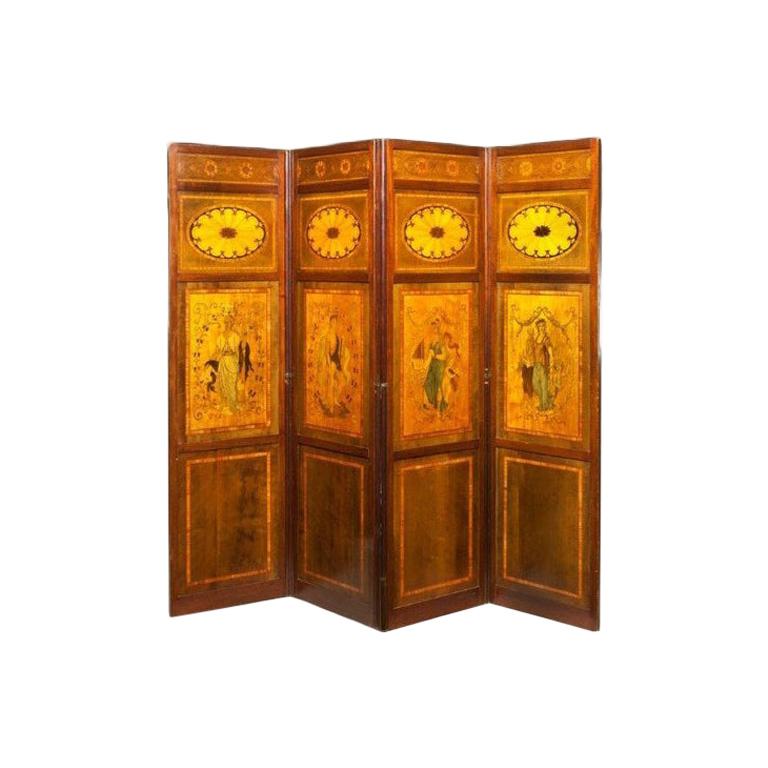
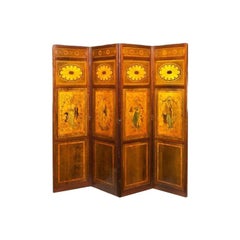
A very fine late Victorian four fold mahogany draught screen, attributed to Hicks of Dublin, each tall rectangular leaf divided into three panels below a flowerhead border, all inlaid with stained and exotic woods on a satinwood ground, the central panels showing four classical muses, the plain lower panels with satinwood stringing on a harewood ground. English, circa 1895.
Footnote: James Hicks was born into a family of Dublin chair-makers and the moved to London to train in workshops on the Tottenham Court Road, London. On returning to Dublin in 1894, he opened a business in Lower Pembroke Street, which rapidly became one of the city’s leading cabinet-making firms and won the royal warrants of King Edward VII and Princess Victoria, the Crown Princess of Sweden. He was inspired by the styles of Sheraton...
Category
Antique Late 19th Century English Late Victorian Screens and Room Dividers
Materials
Mahogany, Satinwood
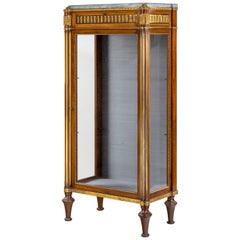
Victorian Single Door Mahogany Cabinet in the French Taste
Located in Lymington, Hampshire
A Victorian single door mahogany cabinet in the French taste, of upright rectangular form with a grey marble top set above a frieze with a disguised drawe...
Category
Antique 1890s English Cabinets
Materials
Glass, Mahogany
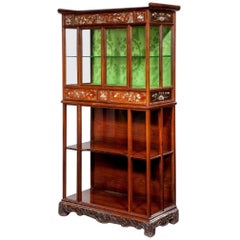
English Victorian Exhibition Quality Cabinet in the Orientalist Style
Located in Lymington, Hampshire
This very fine rosewood cabinet has a glazed upper section with two doors and disguised frieze drawers both above and below, the lower section with two shaped open shelves, finely in...
Category
Antique 1870s English Cabinets
Materials
Mother-of-Pearl, Rosewood
A unique late Georgian satinwood collector’s cabinet painted with maritime scene
Located in Lymington, Hampshire
A unique late Georgian satinwood collector’s cabinet painted with maritime scenes, of rectangular form with the original marble top above, t...
Category
Antique 18th Century English Georgian Cabinets
Materials
Satinwood

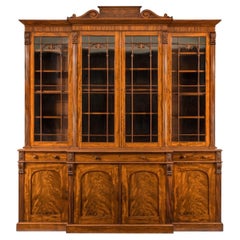
Fine Early William IV Mahogany Breakfront Bookcase Firmly Attributed Gillows
Located in Lymington, Hampshire
A fine early William IV mahogany breakfront bookcase firmly attributed Gillows of Lancaster, in four sections, the top with astragal glazed doors enclosing four adjustable shelves between reeded pilasters with anthemion scroll corbels, the base with four panelled arched doors between acanthus scroll and reeded pilasters, the frieze with two short drawers and a central secretaire drawer fitted with a reading slope and two slides above small compartments, decorated throughout with rich book-matched veneers. The secretaire drawer stamped ‘Preston’. English, circa 1835.
Footnote: Many closely related acanthus carved terminals, anthemion corbels and other typical Gillows features can be seen on the pair of bookcases, on this website, made by Gillows & Co for the library at Dallam Tower, Cumbria in 1829, and on a bookcase shown in Susan E. Stuart, Gillows of Lancaster and London 1730-1840, Antique Collectors’ Club, 2008, vol. I, p.379, pl.450. A similar large breakfront bookcase...
Category
Antique 1830s English William IV Bookcases
Materials
Mahogany
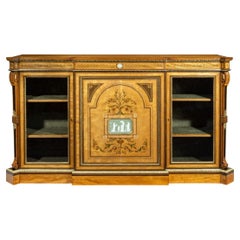
Victorian Satinwood Breakfront Side Cabinet Attributed to Dyer and Watts
Located in Lymington, Hampshire
A Victorian satinwood breakfront side cabinet with Wedgwood plaques attributed to Dyer and Watts, the shaped top above a central door flanked by two gla...
Category
Antique 19th Century English Victorian Cabinets
Materials
Ormolu
You May Also Like
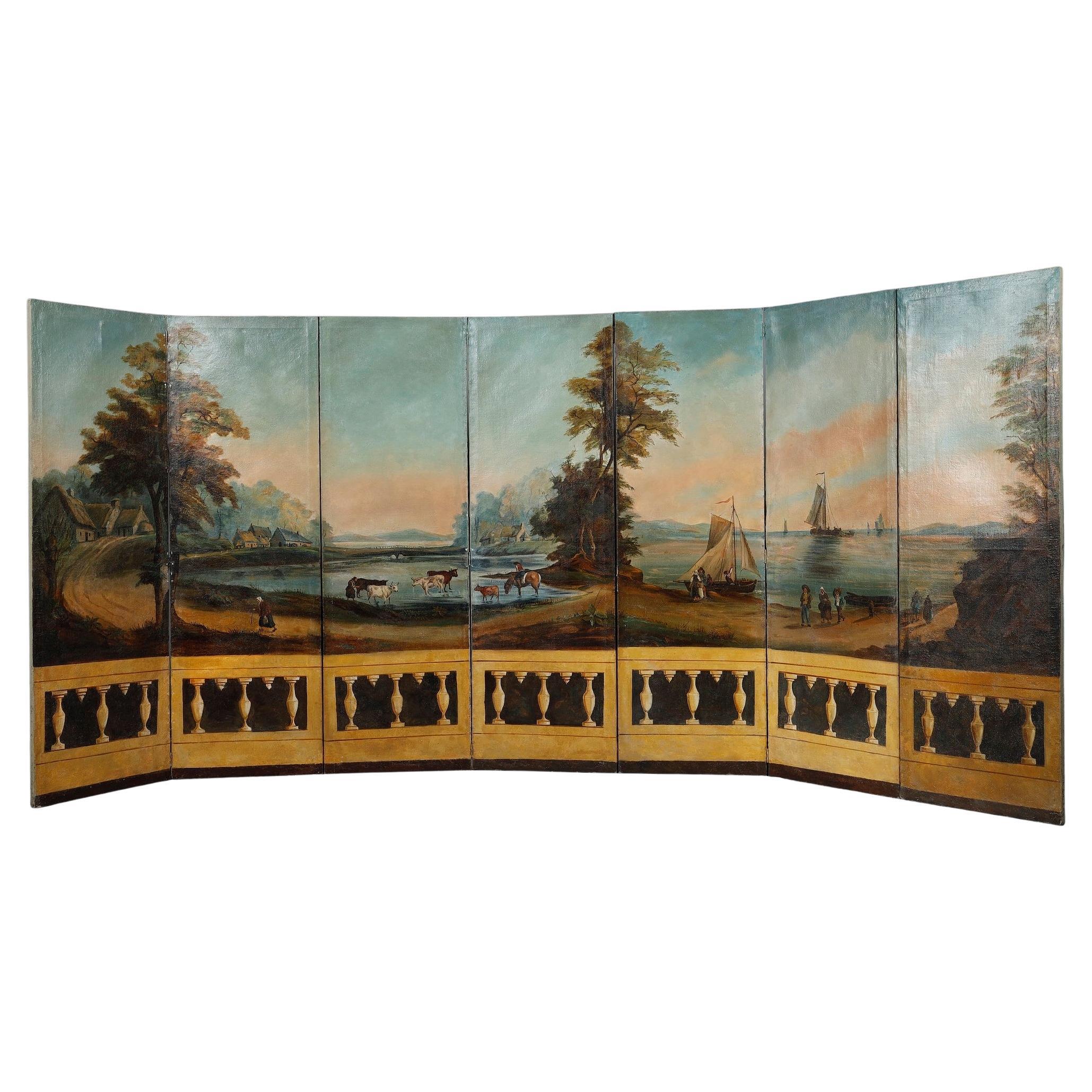
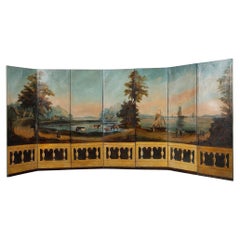
Folding screen in painted canvas, French work, 1830
Located in Paris, FR
Seven-leaf painted canvas screen depicting a lakeside with a few sailboats on the water, a wooded path animated by characters, a horseman watching over a herd of cows drinking, an op...
Category
Antique 1830s French Screens and Room Dividers
Materials
Canvas
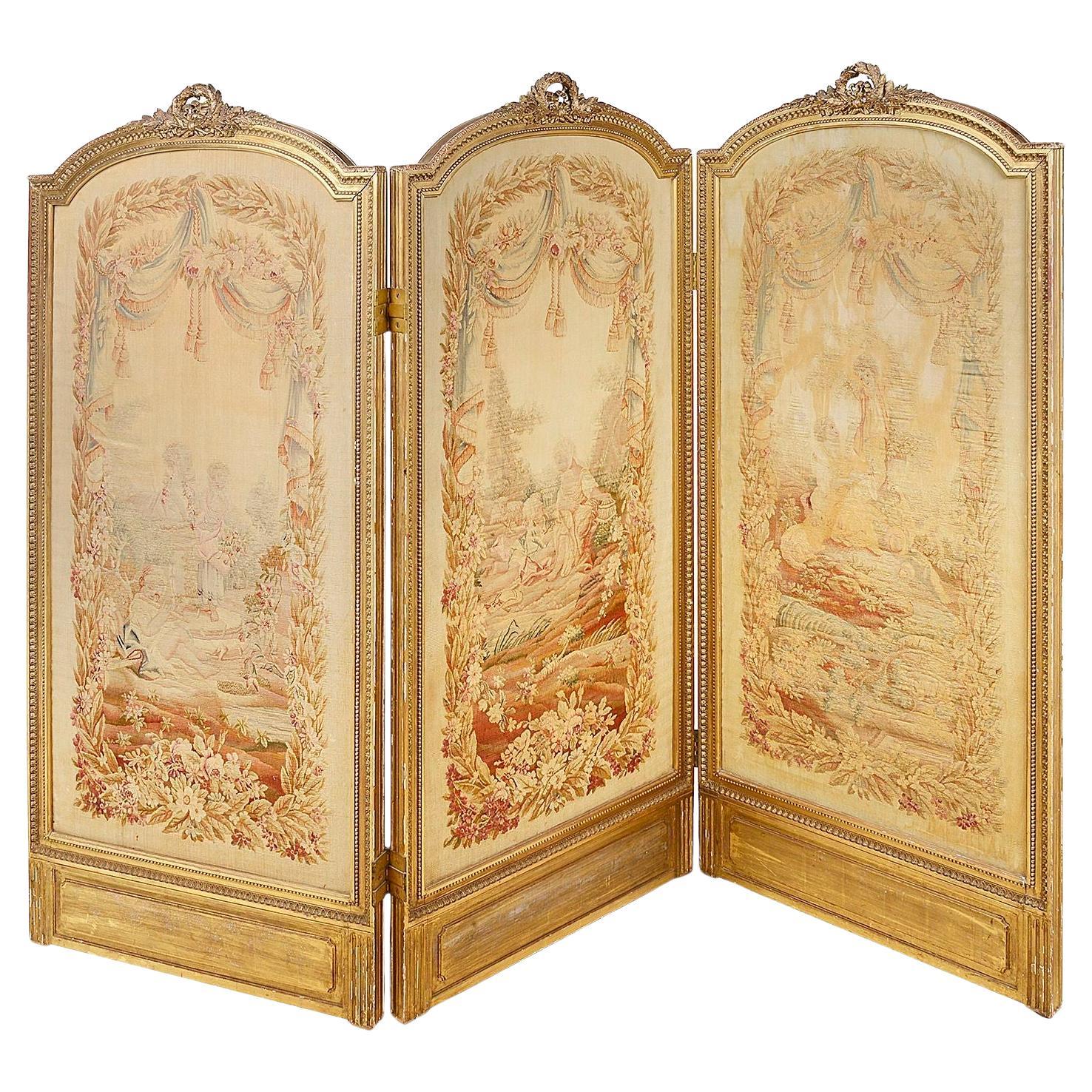
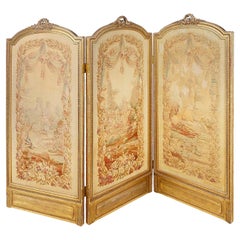
19th Century French Aubusson Screen
Located in Brighton, Sussex
A good quality 19th century French carved giltwood framed, three fold French Aubusson tapestry screen. Depicting classical romantic rural scen...
Category
Antique 19th Century French Paintings and Screens
Materials
Tapestry, Giltwood
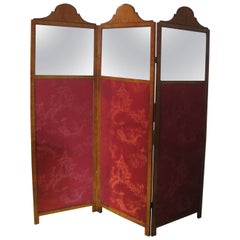
Edwardian Satinwood Folding Screen
Located in Water Mill, NY
Edwardian veneered satinwood, beveled glass and oriental silk dressing screen.
Category
Antique Early 1900s English Edwardian Screens and Room Dividers
Materials
Fabric, Glass, Wood
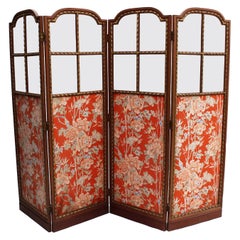
A fine French 1920s 4-Panel Folding Screen Room Divider
Located in Long Island City, NY
A fine French early 20th century folding screen room divider with four mahogany panels adorned with small windows, gilded lacquered molding...
Category
Vintage 1920s French Neoclassical Screens and Room Dividers
Materials
Fabric, Glass, Mahogany
19th Century Stunning Quality Three Panel Folding Screen
Located in Petworth,West Sussex, GB
A stunning quality 19th century mahogany folding three panel dressing screen or room divider, featuring lovely mahogany panels below and astragal openings to the top part. Three mahogany wooden panels on triple swing hinges. The triple swing hinges allow the panels to swing both ways offering more adjustability. In very good condition. Great quality. A good piece of 19th century english antique furniture...
Category
Antique Mid-19th Century British Victorian Screens and Room Dividers
Materials
Wood
19th c. French Regence Style Painted Folding Screen
Located in Queens, NY
Nineteenth century French Regence style three fold screen composed of six oak-framed oil-painted panels depicting Western and Chinoiserie figures surrounded by swag garlands and othe...
Category
Antique 19th Century French Screens and Room Dividers
Materials
Oak