Items Similar to Richard "Dick" Harvey Sculpta Grille Room Divider by Modernica
Want more images or videos?
Request additional images or videos from the seller
1 of 14
Richard "Dick" Harvey Sculpta Grille Room Divider by Modernica
$26,000
£19,702.50
€22,704.86
CA$36,771.17
A$39,544.32
CHF 21,144.42
MX$476,893.22
NOK 267,385.70
SEK 243,622.80
DKK 169,655.63
About the Item
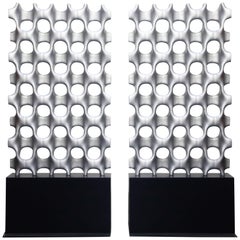
This is a free standing "Contemporary" model C-20 Sculpta room divider.
Born in 1919 and raised in New York City, Richard "Dick" Harvey studied art at Brooklyn Tech High school and received a degree in Mechanical Engineering at City College of New York. His initial goal was a career in the fledgling field of Industrial Design. When World War II broke out, Harvey served in the US Navy. After his navy service he began working with his father, a first class toolmaker, designing and manufacturing plastic injection molds for the doll industry.
Primarily a designer, Harvey observed that modern architectural styles of the 1940s and 1950s could appear Stark and lacking suitable decorative relief. He began researching; sculpting and designing what he felt would be an appropriate complement to modern architectural design. Harvey began hand-building plaster-of-Paris prototypes for classically-styled grille-work. Responses to these designs were overwhelmingly positive and Harvey was encouraged to develop the idea further. He initially chose four Classic designs; "Ring and Bar," "Persian," "Persian-Lattice" and "Arabesque".
The late 1950s were a period of creative entrepreneurship and Harvey made the decision to go into business. Injection molds were built and new-product press releases were sent to trade publications.
In June of 1959 an article and photograph appeared in Interior Design Magazine; inquiries and orders quickly followed. "Harvey Design Workshop" became incorporated and the "Classics" line of "Sculpta-Grille" was officially launched. Methods and tools were developed for assembling the grillwork parts--made of high-quality injection molded plastic--into panels. Two pieces were cemented together to form a hollow unit which could then be assembled into panels of any size, in multiples of one square foot, repeated to form a flowing pattern. The first orders were filled from the basement of the family home in Lynbrook, NY, with assistance from Harvey's wife Ethel and family friends.
It was a happy and exciting time. The business moved to a local shop-- just as neighbors were becoming curious about trucks loading crates from the garage.
Articles and installation photographs continued to appear in trade magazines and newspapers from coast to coast. Ethel, a graphic designer, assisted Harvey in producing an attractive brochure.
The brochure was included in the sweets catalogue--a set of volumes distributed to architects nationwide. (The Sweets Catalogue, a division of McGraw Hill, enabled architects to reference hundreds of architectural products. Today, it is an online resource; the Sweets Network). Sculpta-Grille brochures in Sweets Catalogue (which included specifications for placing orders) became the main mode of sales production.
Gratified with the variety of ways architects utilized the original "Classics" line of Sculpta-grille, Harvey added his own completely original sculptured designs--the "Contemporary" line. There were two basic contemporary designs which could be mounted vertically or horizontally: C-10 (vertical), C-1090 (horizontal), C-20 (vertical), and C-2090 (horizontal).
Recently, the contemporary line has become highly collectable; originals are rare and quite expensive. It has become very popular among set designers, presenting a beautiful Mid-Century Modern look. Contemporary Sculpta-Grille has been used in many films, television commercials and music videos.
Richard "Dick" Harvey captured and helped define an era of design; Mid-Century Modern--they look
feel of the 1950s
1960s. Sculpta-Grille C-10 and C-20 samples are included in the permanent collections of the Cooper Hewitt, National Design Museum, New York, NY.
- Creator:Modernica (Maker),Don Harvey (Designer)
- Dimensions:Height: 79.25 in (201.3 cm)Width: 90.5 in (229.87 cm)Depth: 7.5 in (19.05 cm)
- Style:Mid-Century Modern (Of the Period)
- Materials and Techniques:
- Place of Origin:
- Period:
- Date of Manufacture:Unknown
- Condition:Wear consistent with age and use. One side has yellowed, we professionally repaired one minor break on back of yellowed side.
- Seller Location:Dallas, TX
- Reference Number:Seller: #6000671stDibs: LU1078419357912
About the Seller
5.0
Vetted Professional Seller
Every seller passes strict standards for authenticity and reliability
Established in 2012
1stDibs seller since 2014
431 sales on 1stDibs
Typical response time: <1 hour
- ShippingRetrieving quote...Shipping from: Dallas, TX
- Return Policy
More From This Seller
View AllBert England Hanging Wall Cabinet
By Bert England
Located in Dallas, TX
Walnut hanging cabinet by Bert England for Johnson Furniture. Brass decorative detail, leather front doors. This is stunning!
Category
Mid-20th Century American Mid-Century Modern Cabinets
Materials
Brass
Edward Wormley for Dunbar Tambour Door Chest
By Dunbar Furniture, Edward Wormley
Located in Dallas, TX
Not often seen, a fully restored tambour door chest by Edward Wormley for Dunbar. The cabinet features two tambour doors with brass pulls and loads of interior storage. There are fou...
Category
20th Century American Mid-Century Modern Cabinets
Materials
Brass
Large Abstract Acrylic Painting by Listed Artist Paul Maxwell
By Paul Maxwell
Located in Dallas, TX
1990 Original abstract acrylic painting on canvas that is stretched over board with a custom polish aluminum frame by American listed artist Paul Maxwell 1925-2015. Hand sign on the ...
Category
20th Century American Mid-Century Modern Contemporary Art
Materials
Metal
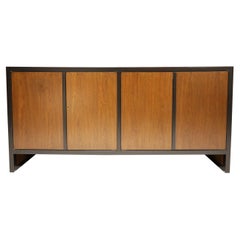
Edward Wormley for Dunbar Sideboard, Rare Model
By Dunbar Furniture, Edward Wormley
Located in Dallas, TX
This is a beautifully restored sideboard by Edward Wormley for Dunbar. The cabinet has plenty of storage and is executed in a rich mahogany with darker banded wood on edges. Cabinets has 4 front doors...
Category
Mid-20th Century American Mid-Century Modern Sideboards
Materials
Mahogany
$14,400 Sale Price
20% Off
Erik Pitsokos
American, 1924-
Located in Dallas, TX
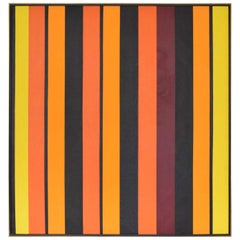
Multicolor vertical stripes abstract geometric modern color field oil painting. The painting (similar to the work of Gene Davis and other Washington Color School artists), was proudly displayed in the living room of a Classic Mid-Century Modern house designed by a student of architect Frank Lloyd Wright. Oil on canvas painting is signed Erik 74 on reverse also inscribed Erik Pitsokos. Measures 49 inches high,47.5 inches wide. Frame measures 51 inches high, 49.5 wide. In good condition.
From St. Petersburg Times - Sept. 12, 1975: The Greek-born sculptor Erik Pitsokos received his art education in Greece, Italy and Canada. He immigrated to Canada in 1964 and became a Canadian citizen. In Canada he had an art school adjacent to his studio where he took only accomplished artists for highly advanced instruction in the finer points of sculpture. His entry at the International symposium of Arts held in Washington, D.C. in 1969 won him the first award for sculpture. He exhibited throughout Canada and his works have been donated to the purchased by individuals, galleries, public buildings and schools in Canada. He moved to the United States in 1975, became an American citizen and taught classes at the Florida Gulf Coast Art...
Category
Mid-20th Century American Mid-Century Modern Contemporary Art
Materials
Canvas, Paint
Monumental Pair of Modeline Sculptural Lamps
By Modeline Lamp Co.
Located in Dallas, TX
A unique pair of large-scale sculptural table lamps by Modeline. The lamps have Lucite shades that rest on a high density dark bronze colored resin base. The shades are removable and...
Category
20th Century American Mid-Century Modern Table Lamps
Materials
Resin, Lucite

$6,850 / set
You May Also Like
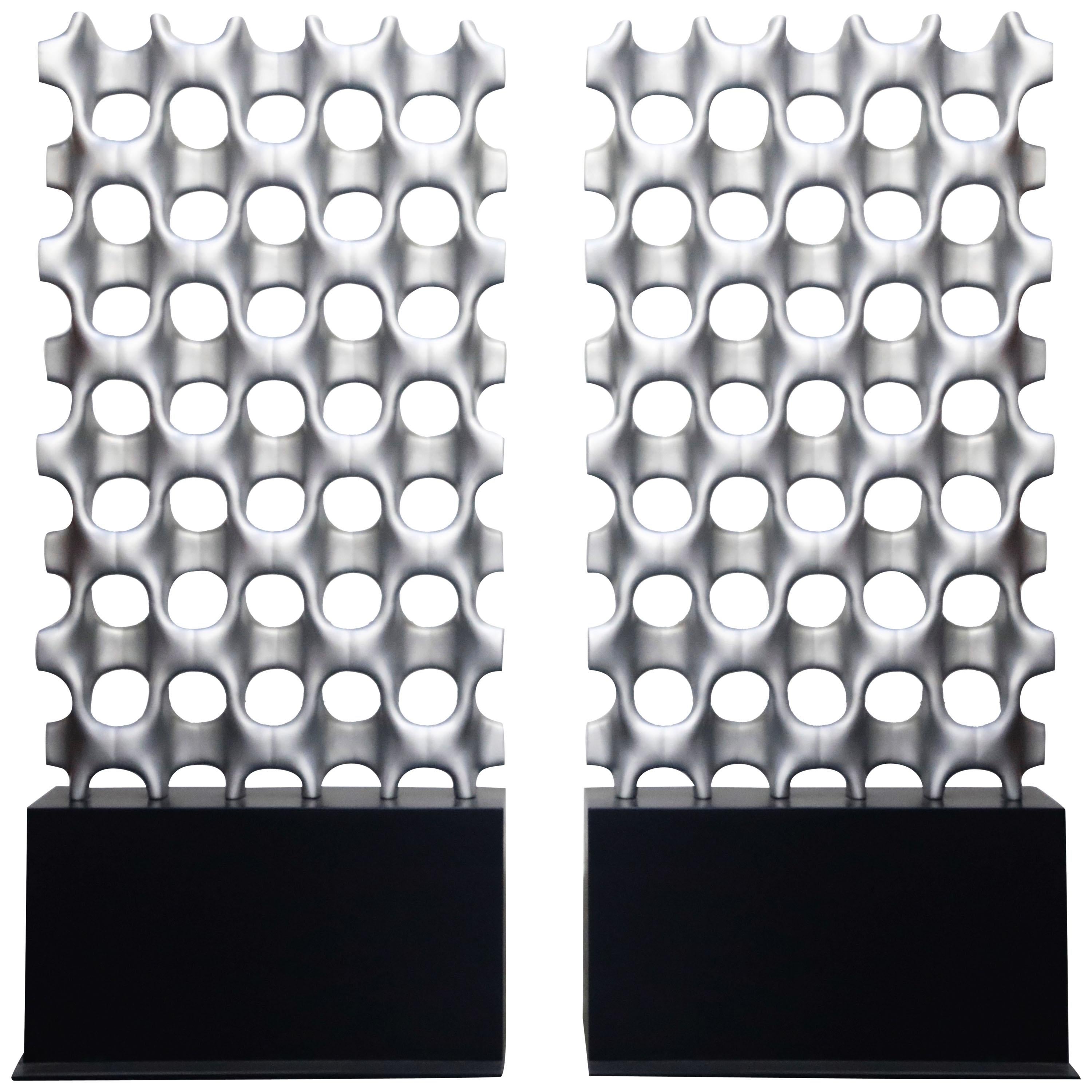
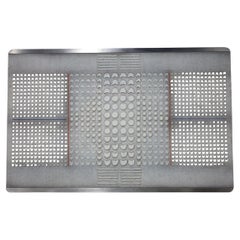
Richard Harvey Sculpta-Grille Model C-20 Freestanding Room Divider, 1959
By Richard Harvey
Located in Los Angeles, CA
This freestanding model C-20 Sculpta-Grille room divider by Richard Harvey for Harvey Design Workshop, Inc was conceptualized and designed in the 1950s a...
Category
Vintage 1960s American Mid-Century Modern Screens and Room Dividers
Materials
Metal
$6,950 Sale Price / item
26% Off
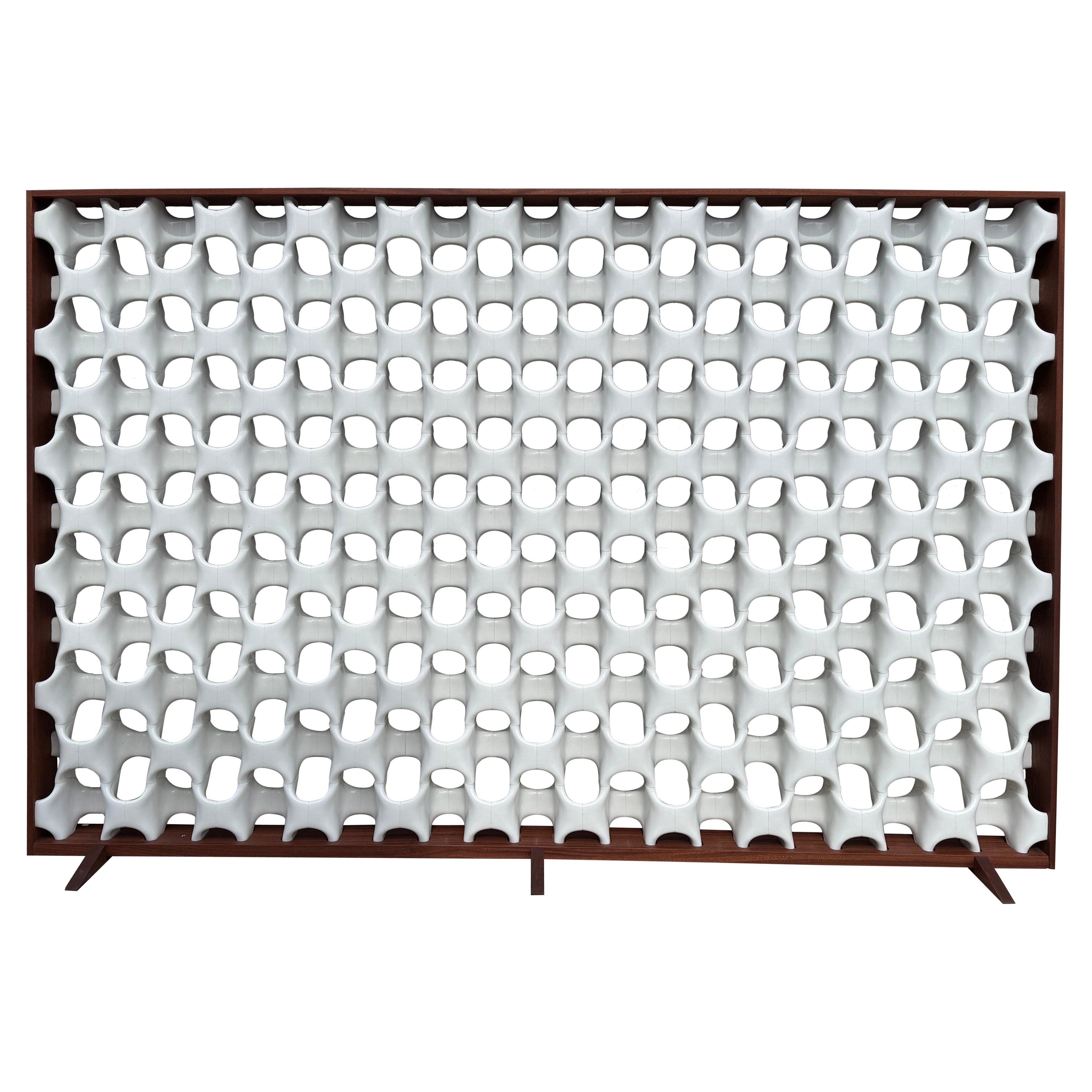
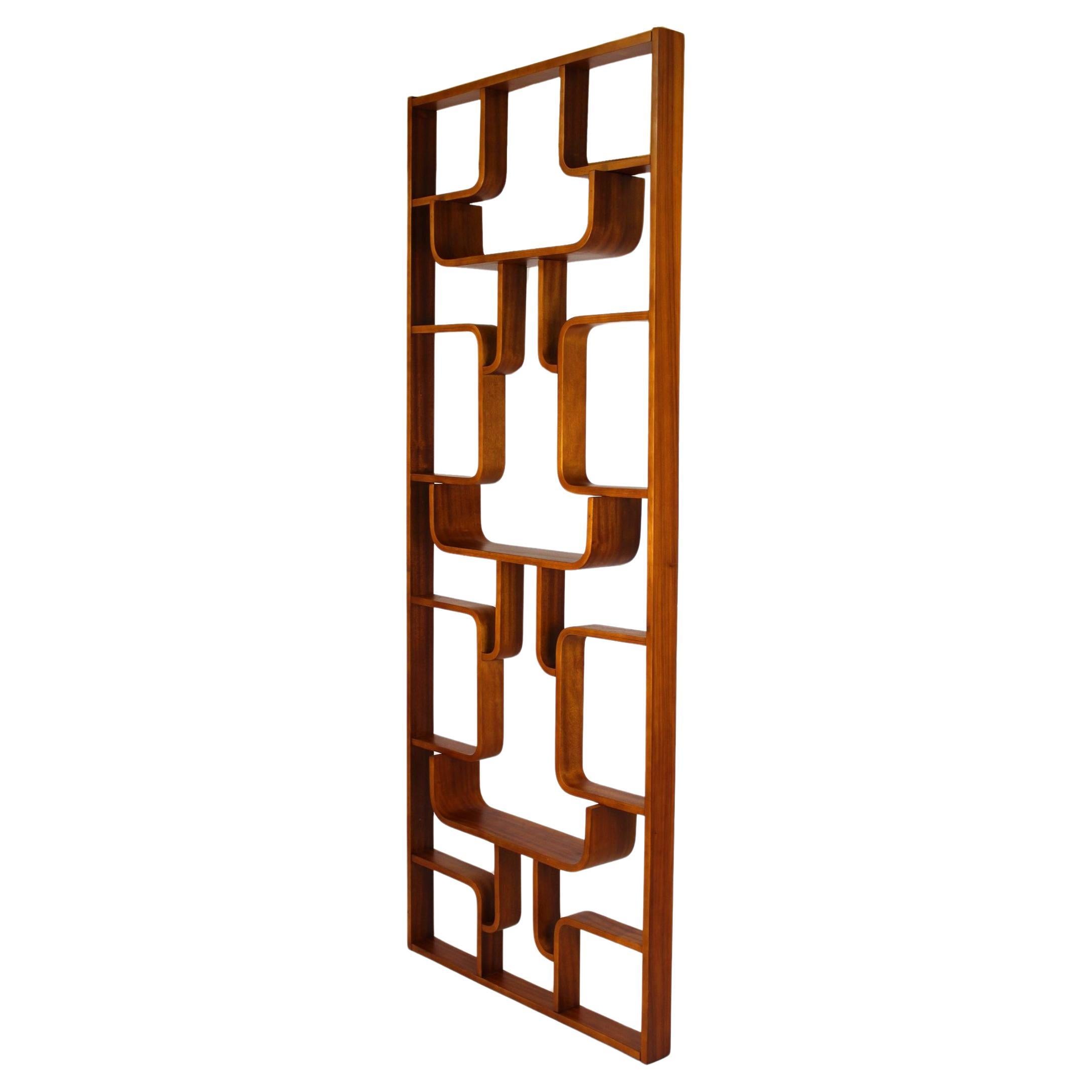
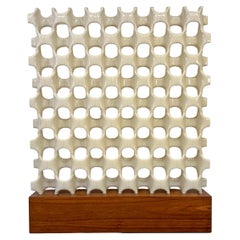
Large Richard Harvey Sculpta Grille Room Divider In Walnut Frame by Modernica
By Richard Harvey
Located in Palm Springs, CA
A large 10 foot wide room divider originally designed by Richard Harvey in 1962 and subsequently produced by Modernica. It stands slightly over 79 inches tall. It is framed in a pret...
Category
2010s American Screens and Room Dividers
Materials
Plastic, Walnut
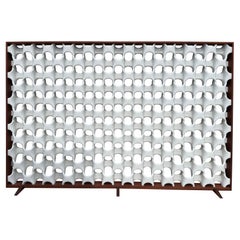
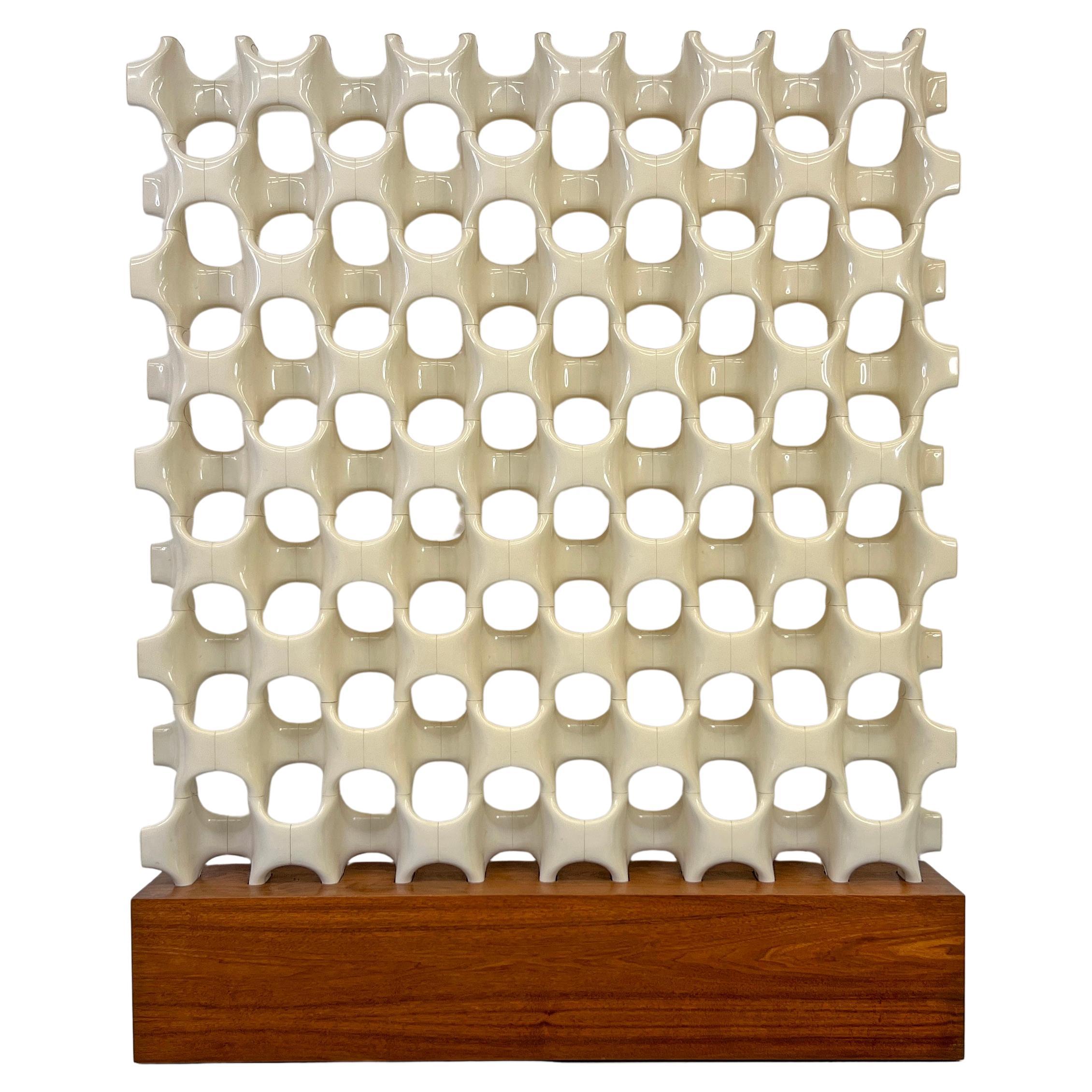
Patinated Sculpta-Grille Bones Screen on Walnut Base by Richard Harvey, 1960s
By Richard Harvey
Located in Culver City, CA
This isn’t just a room divider. This is a tanned, well-traveled, effortlessly bronzed bombshell who’s been sunning her curves on the French Riviera since 1968. A screen with a backst...
Category
Vintage 1960s American Mid-Century Modern Screens and Room Dividers
Materials
Resin, Walnut
$8,720 Sale Price
20% Off
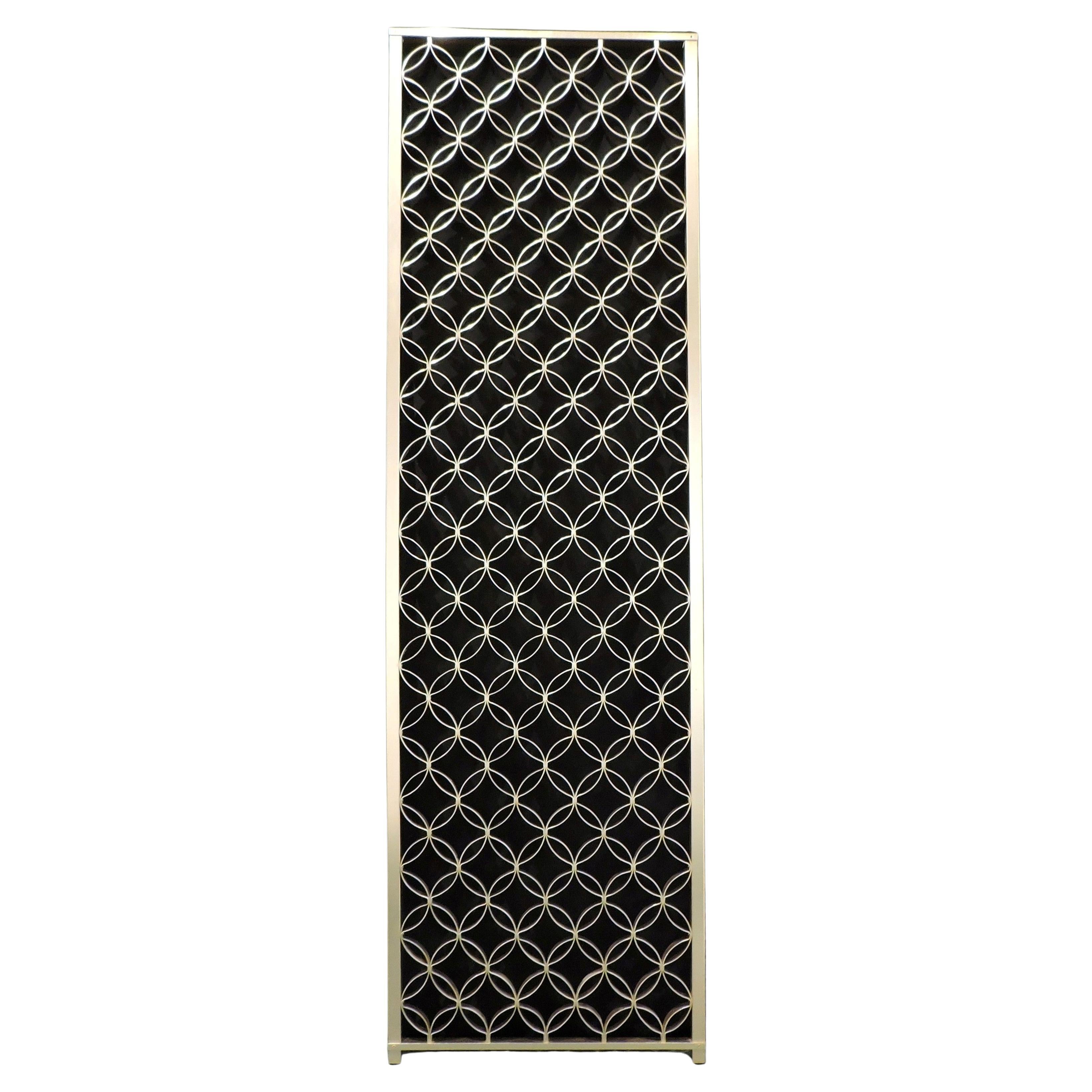
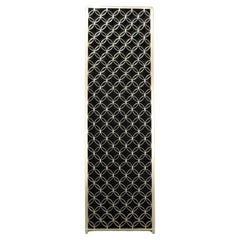
Mid Century Modern Geometric Metal Single Panel Screen or Room Divider
Located in Chesterfield, NJ
Beautiful mid century modern architectural single panel room divider. This sturdy and well made screen is made of a bronze tone metal in an intricate interlocking circle lattice desi...
Category
Vintage 1960s American Mid-Century Modern Screens and Room Dividers
Materials
Metal
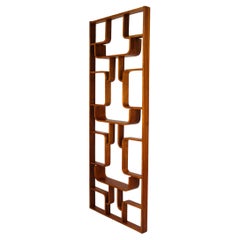
Restored Midcentury Room Divider by Ludvik Volak for Drevopodnik Holesov, 1960s
By Ludvik Volak
Located in Żory, PL
This room divider was designed by Ludvik Volák for Drevopodnik Holešov in the 1960s.
It has been completely restored, varnished in a satin finish. Please send us a message with your ...
Category
Mid-20th Century Mid-Century Modern Screens and Room Dividers
Materials
Plywood
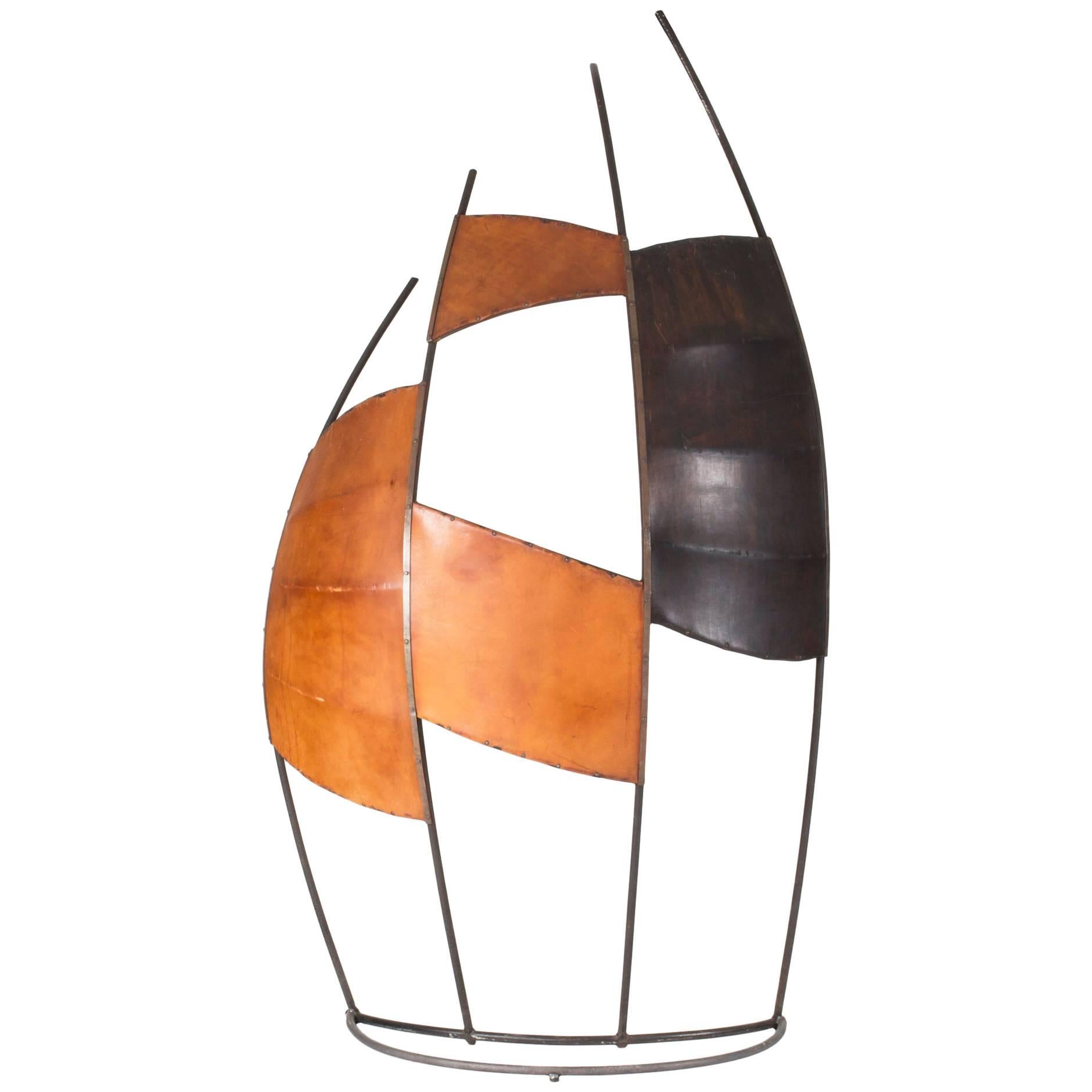
Room Divider by Fred Leyman
By Fred Leyman
Located in Stockholm, SE
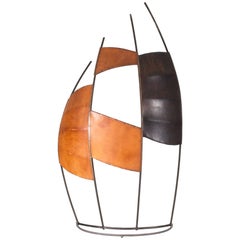
Spectacular sculptural room divider by Fred Leyman, custom-made for Majorna Library in Gothenburg in 1963. This piece is one of four that are each unique, made from wrought iron and hardened leather. The room dividers were granted substantial public interest and the studies for them were subsequently exhibited at Liljevalchs Konsthall in 1966. They were returned to the artist in the 1990s and acquired by Nordlings from the Leyman family in 2016.
Fred Leyman was a Swedish artist, schooled at the renowned Valand Art Academy in Gothenburg during the 1950s. Leyman worked in a distinctly modernist style influenced by the international modernist movement, music, political ideas and the environment in which he lived. He is best known for his around 40 large-scale sculptures erected in public spaces in Gothenburg and other parts of southwestern Sweden.
Fred Leyman lived on the island of Orust with his wife and children, in accordance with what he found to be ”a good life” close to nature on a small farm with sheep and horses. He was also deeply interested in music, particularly traditional folk music. Both the open, marine landscape of Orust and the rhytmical qualitites in music were vital forces in his artistry and in the development of his personal style. Leyman used iron and steel and sometimes wood and leather in his sculptures. These are characterized by sharp and billowing graphic lines and the use of negative space, seemingly always reaching somewhere. It is an expression striking the perfect balance between abstract and concrete.
Leyman’s materials of choice were particularly suitable for large and sustainable...
Category
Vintage 1960s Swedish Mid-Century Modern Screens and Room Dividers
Materials
Wrought Iron
$22,338
More Ways To Browse
Persian Ring
Doll Molds
Richard Harvey Sculpta Grille
Richard Harvey Sculpta
Sculpta Grille
Mid Century Modern Screens By Richard Harvey
Don Harvey Screens
Black Lacquer Room Dividers
Vintage Chinese Panels
Vintage Room Divider
French Divider Screen
Italian Panels Screens
Antique French Folding Screens
Mid Century Metal Screen
Pole Screen
Arts And Crafts Screen
Antique Pole Screen
Antique Wooden Screen