Want more images or videos?
Request additional images or videos from the seller
1 of 21

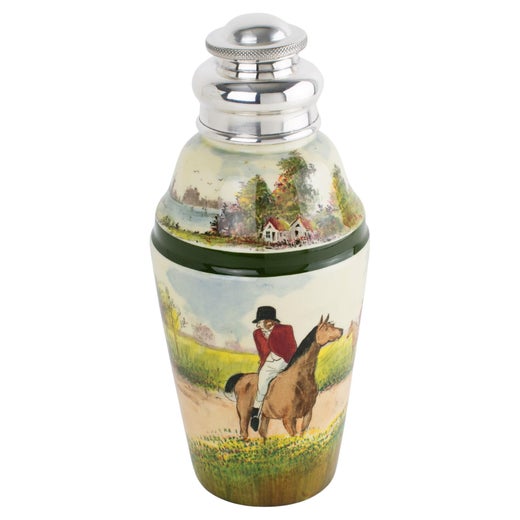
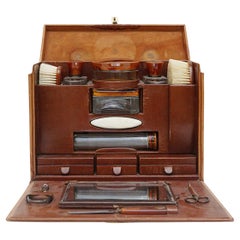
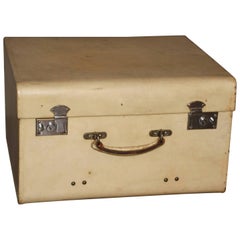
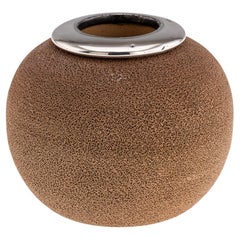
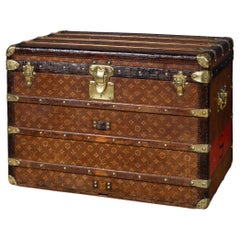
Antique 20th Century Vellum Overnight Case By Royal Doulton c.1920

$2,198.56List Price

You May Also Like

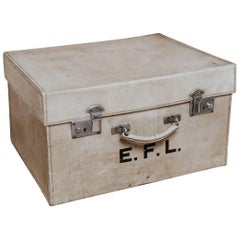
Early 20th Century Vellum Suitcase
Located in Brecht, BE
charming suitcase, from the 1920's
Category

Early 20th Century French Trunks and Luggage

Materials

Leather

Early 20th Century Vellum Suitcase
$1,381
H 9.85 in W 18.12 in D 14.57 in
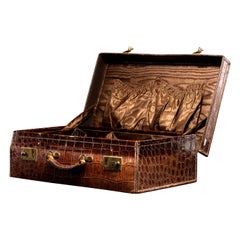
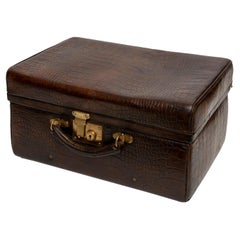
Antique 20th C Handmade Crocodile Travel Overnight Suitcase
Located in Leuven , BE
Antique early-20th century British made crocodile overnight travel case, with original cotton lining and small document holder on the inside. The case is oozing style and elegance, t...
Category

Antique 19th Century British Trunks and Luggage

Materials

Leather

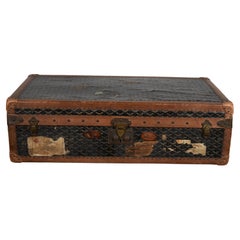
Early 20th Century Goyard Case
Located in New York, NY
Hand-picked by buyers at Ann-Morris Inc.
Category

Early 20th Century French Trunks and Luggage

Materials

Leather

Early 20th Century Goyard Case
$12,950
H 9 in W 29.5 in D 16 in
Royal Doulton Rare Pair Art Deco Figural Musician Bookends
By Royal Doulton
Located in Bishop s Stortford, Hertfordshire
An unusual and very rare pair Royal Doulton novelty figural bookends modeled as musicians dating from around 1920. The ceramic bookends portray two novelty figures of men dressed in oversized clothing...
Category

Vintage 1920s British Art Deco Bookends

Materials

Ceramic

Royal Doulton Rare Pair Art Deco Figural Musician Bookends
$2,682 / set
Free Shipping
H 6.3 in W 2.96 in D 2.27 in
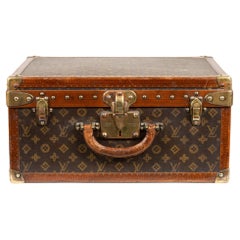
Early 20th Century Louis Vuitton Monogram Bisten Case
By Louis Vuitton
Located in Chicago, IL
This Louis Vuitton Bisten case, dating from 1910 to 1930, exemplifies the brand's innovative craftsmanship. It features hand-painted canvas monogram, solid brass hardware, and reinfo...
Category

Early 20th Century French Art Deco Trunks and Luggage

Materials

Brass

Early 20th Century Louis Vuitton Monogram Bisten Case
$25,000
H 17.5 in W 19.5 in D 9.25 in
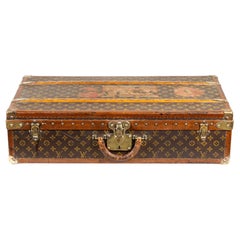
Early 20th Century Louis Vuitton Monogram Twelve Shoe Case
By Louis Vuitton
Located in Chicago, IL
This Louis Vuitton shoe case, dating from 1910 to 1930, exemplifies the brand's innovative craftsmanship. It features hand-painted canvas monog...
Category

Early 20th Century French Art Deco Trunks and Luggage

Materials

Brass

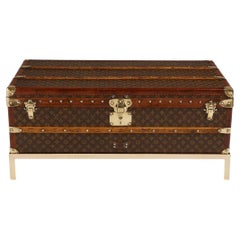
Antique Early 20th Century Louis Vuitton Trunk Origin France Date Circa 1920
By Louis Vuitton
Located in London, GB
This impressive Louis Vuitton trunk features hand-stencilled monogram canvas, light honey-coloured lozine trim, and Louis Vuitton-stamped solid brass locks, clasps, and studs. It als...
Category

Vintage 1920s French Trunks and Luggage

Materials

Leather, Canvas, Wood

Crocodile Attache Briefcase Overnight Case Original Leather Interior
Located in BUNGAY, SUFFOLK
A fine, 19th century, high quality, crocodile attache, briefcase or overnight case with exposed handle, brass hardware with lock stamped 'secure leve...
Category

20th Century English Art Deco Trunks and Luggage

Materials

Brass

Vintage Early 20th Century Vanity Set in Original Leather Case
Located in Forest Row, East Sussex
An early 20th century vanity set. Including sewing items, clothes brushes, perfume bottles, a vanity mirror, pedicure set, nail buffer and more. All origin...
Category

Early 20th Century English Trunks and Luggage

Materials

Leather, Bakelite

1920s Small Beige Vellum Steamer Trunk
Located in Saint-Ouen, FR
This beautiful hat trunk features a very warm cream color vellum and silver color locks. Its interior is all in matching color moire and has got side pockets as well as a removable t...
Category

Vintage 1920s English Art Deco Trunks and Luggage

Materials

Leather

1920s Small Beige Vellum Steamer Trunk
$1,693
H 11.82 in W 18.12 in D 16.15 in

More From This Seller

View All
Antique 20th Century English Silver-Mounted Royal Doulton Ceramic Match Striker
By Royal Doulton, John Grinsell Sons
Located in Royal Tunbridge Wells, Kent
Antique early 20th Century English solid silver mounted ceramic match striker, made by Royal Doulton John Grinsell Sons. The striker, of a round shape is mounted with a p...
Category

20th Century British Other Ceramics

Materials

Silver

Antique 20th Century Louis Vuitton Trunk In Monogram Canvas, France c.1920
By Louis Vuitton
Located in Royal Tunbridge Wells, Kent
An exquisite Louis Vuitton trunk from the early part of the 20th century. An absolutely essential item for elite travellers of its time the trunk is adorned in the iconic LV monogram...
Category

20th Century French Other Trunks and Luggage

Materials

Brass

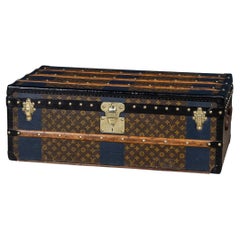
Antique 20th Century Louis Vuitton Cabin Trunk In Monogram Canvas, France c.1920
By Louis Vuitton
Located in Royal Tunbridge Wells, Kent
An exquisite and complete Louis Vuitton trunk from the early part of the 20th century. An absolutely essential item for elite travellers of its time the trunk is adorned in the iconi...
Category

20th Century French Other Trunks and Luggage

Materials

Brass

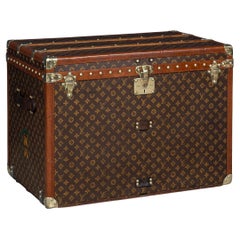
Antique 20th Century Louis Vuitton Hat Trunk In Monogram Canvas, France c.1920
By Louis Vuitton
Located in Royal Tunbridge Wells, Kent
Around the turn of the 19th and 20th century Louis Vuitton had established himself as a market leader in trunk making and needed to set his now famous brand apart from the imitators ...
Category

20th Century French Other Trunks and Luggage

Materials

Brass

20th Century Louis Vuitton Cow Hide Suitcase, France c.1920
By Louis Vuitton
Located in Royal Tunbridge Wells, Kent
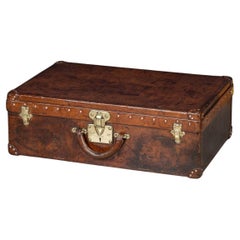
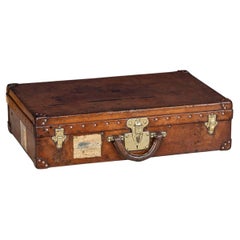
A highly unusual and exceptionally rare Louis Vuitton suitcase, originating from the early years of the 20th century, distinguishes itself not with the globally renowned monogram canvas but with a distinctive covering crafted from a singular piece of cowhide. This unique piece represents a special order from Louis Vuitton, showcasing the brand's historical commitment to utilizing only the finest hides available. Unlike many of its counterparts, leather trunks and cases of this era often struggle to withstand the test of time, requiring regular treatments to prevent drying and disintegration. Remarkably, this particular example defies the odds, retaining the same supple quality it possessed on the day it first graced the shop floor. This suitcase belongs to Louis Vuitton's collection of "speciality materials," which encompasses a diverse range, including, but not limited to, zinc, copper, crocodile leather, and cow leather. A brief history about Louis Vuitton trunks: Louis Vuitton was born in 1821 to a farmer and milliner and came from a long-established working-class family in eastern France. Vuitton grew up understanding the effects of perseverance and a strong work ethic from watching his family. At the age of 16, he made the decision to walk 292 miles from his hometown to Paris to try and make a new life for himself. When he arrived the city was in the midst of industrialization with current modes of transportation evolving quickly allowing for longer journeys. With this came the need for sturdy travel pieces. Vuitton was taken as an apprentice for a successful box maker and packer named Monsieur Marechal. He learned to craft durable containers and how to pack them properly – a well-respected profession at the time.In 1854, years after he had mastered his craft and became well respected for it, Vuitton ventured out on his own to open a shop on Rue Neuve des Capucines. It was here that he began to establish himself as a luggage maker. Then, in 1858, Vuitton designed the first Louis Vuitton steamer trunk. At the time trunks had rounded tops to allow for water to run off but this did not allow for convenient stowage. Vuitton introduced a flat, yet waterproof, trunk that was easily stackable. The first of his trunks were outfitted with a grey canvas referred to as Trianon – it wouldn’t be until several decades later that the signature monogram would be introduced. With a burgeoning business, Vuitton moved his family and workplace to Asniere, where he employed twenty workers to craft his trunks. By 1900 he would have 100 employees, and in 1914 the company would more than double in size. After years of success, Vuitton began to experiment with the design of his luggage by introducing a new striped canvas pattern (1876) and later the still well-known Damier print (1888). The hand-painted patterns were developed to prevent counterfeits. Even in the late 1800s, Louis Vuitton was enough of a status symbol to warrant counterfeiting. In 1886, his son George invented and patented an ingenious locking system that made it impossible to pick the lock of their trunks. This lock is still used today. 1892 would prove to be a time of mourning for the family as Louis Vuitton passed...
Category

20th Century French Other Trunks and Luggage

Materials

Brass

20th Century Louis Vuitton Cow Hide Suitcase, France c.1920
By Louis Vuitton
Located in Royal Tunbridge Wells, Kent
A highly unusual and exceptionally rare Louis Vuitton suitcase, originating from the early years of the 20th century, distinguishes itself not with the globally renowned monogram canvas but with a distinctive covering crafted from a singular piece of cowhide. This unique piece represents a special order from Louis Vuitton, showcasing the brand's historical commitment to utilizing only the finest hides available. Unlike many of its counterparts, leather trunks and cases of this era often struggle to withstand the test of time, requiring regular treatments to prevent drying and disintegration. Remarkably, this particular example defies the odds, retaining the same supple quality it possessed on the day it first graced the shop floor. This suitcase belongs to Louis Vuitton's collection of "speciality materials," which encompasses a diverse range, including, but not limited to, zinc, copper, crocodile leather, and cow leather. A brief history about Louis Vuitton trunks: Louis Vuitton was born in 1821 to a farmer and milliner and came from a long-established working-class family in eastern France. Vuitton grew up understanding the effects of perseverance and a strong work ethic from watching his family. At the age of 16, he made the decision to walk 292 miles from his hometown to Paris to try and make a new life for himself. When he arrived the city was in the midst of industrialization with current modes of transportation evolving quickly allowing for longer journeys. With this came the need for sturdy travel pieces. Vuitton was taken as an apprentice for a successful box maker and packer named Monsieur Marechal. He learned to craft durable containers and how to pack them properly – a well-respected profession at the time.In 1854, years after he had mastered his craft and became well respected for it, Vuitton ventured out on his own to open a shop on Rue Neuve des Capucines. It was here that he began to establish himself as a luggage maker. Then, in 1858, Vuitton designed the first Louis Vuitton steamer trunk. At the time trunks had rounded tops to allow for water to run off but this did not allow for convenient stowage. Vuitton introduced a flat, yet waterproof, trunk that was easily stackable. The first of his trunks were outfitted with a grey canvas referred to as Trianon – it wouldn’t be until several decades later that the signature monogram would be introduced. With a burgeoning business, Vuitton moved his family and workplace to Asniere, where he employed twenty workers to craft his trunks. By 1900 he would have 100 employees, and in 1914 the company would more than double in size. After years of success, Vuitton began to experiment with the design of his luggage by introducing a new striped canvas pattern (1876) and later the still well-known Damier print (1888). The hand-painted patterns were developed to prevent counterfeits. Even in the late 1800s, Louis Vuitton was enough of a status symbol to warrant counterfeiting. In 1886, his son George invented and patented an ingenious locking system that made it impossible to pick the lock of their trunks. This lock is still used today. 1892 would prove to be a time of mourning for the family as Louis Vuitton passed...
Category

20th Century French Other Trunks and Luggage

Materials

Brass

Still Thinking About These?

All Recently Viewed