Want more images or videos?
Request additional images or videos from the seller
1 of 17

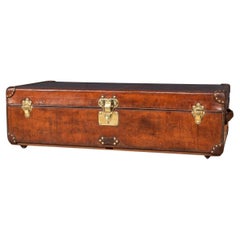
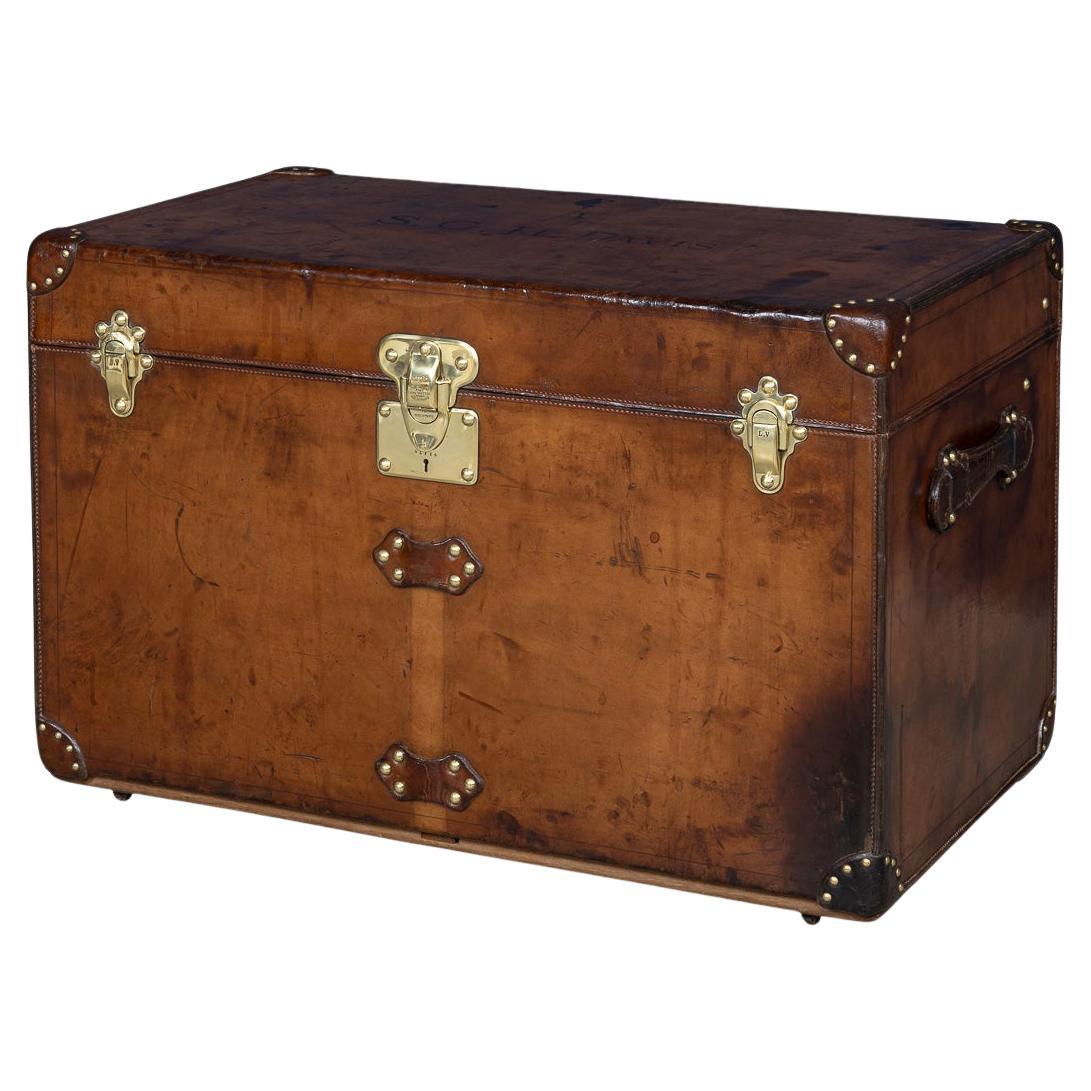
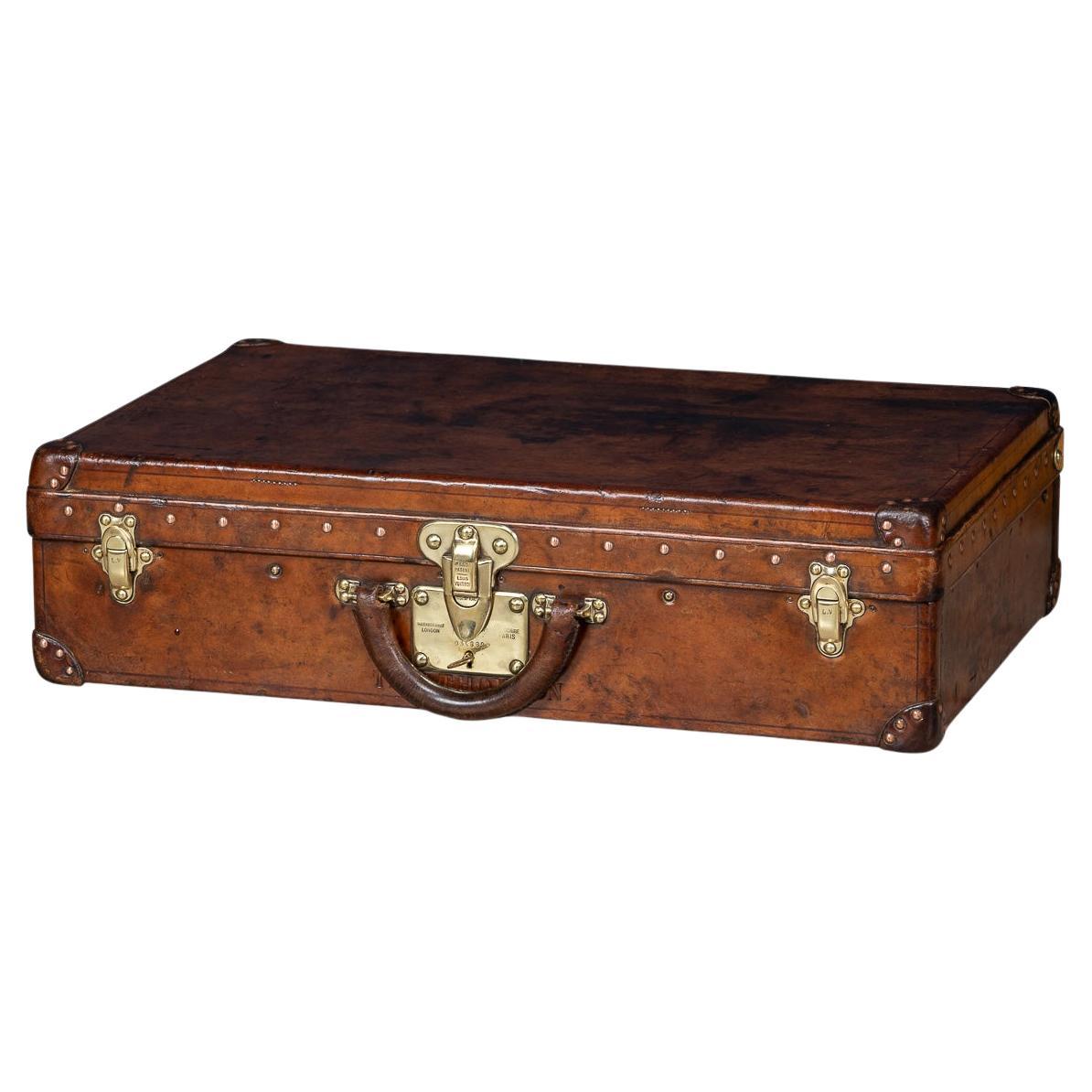
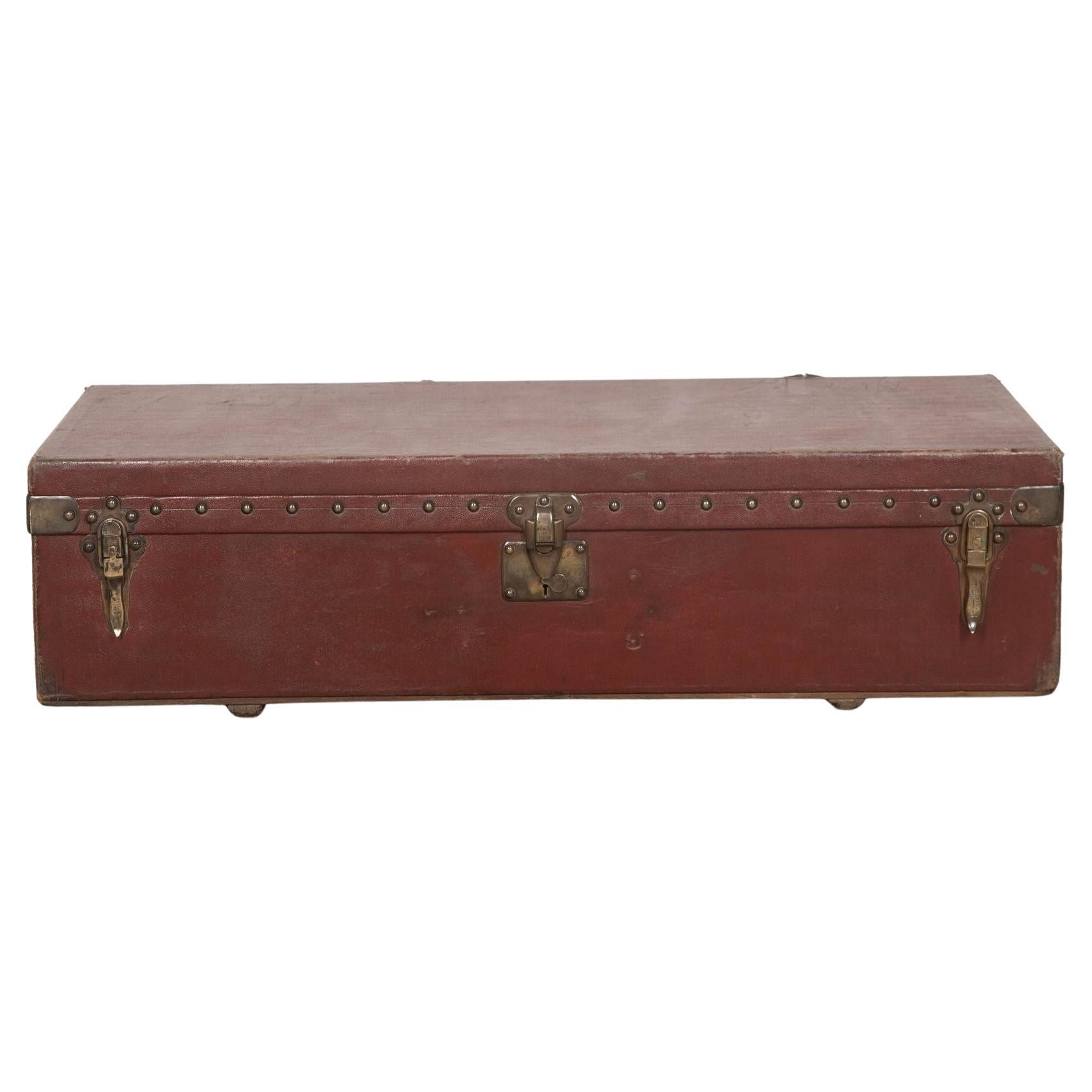
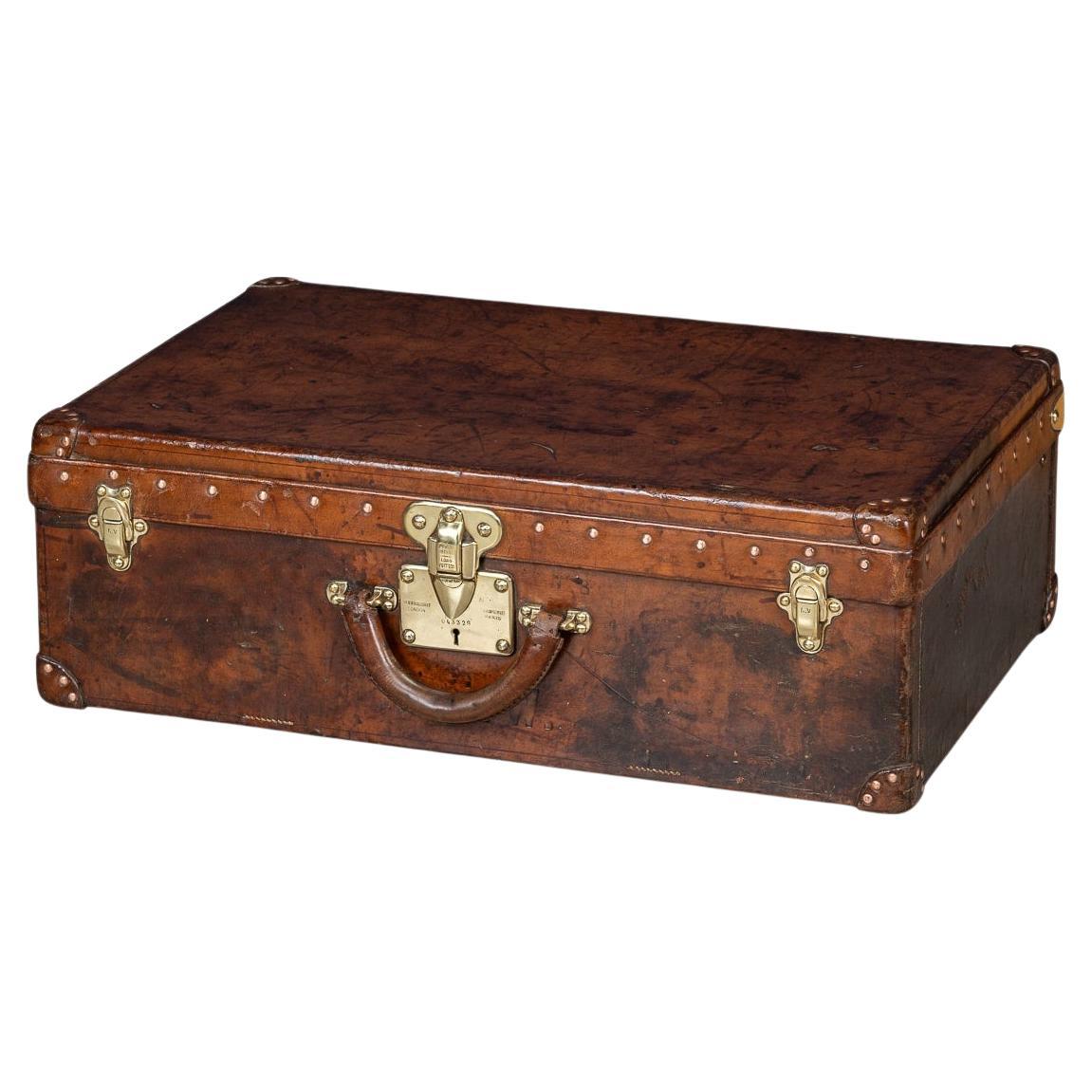
Louis Vuitton Leather Cabin Trunk, circa 1930

$25,333.76
£18,500
€21,685.59
CA$34,886.63
A$37,973.22
CHF 20,120.65
MX$456,685.46
NOK 255,828.96
SEK 234,438.93
DKK 161,990.06

About the Item

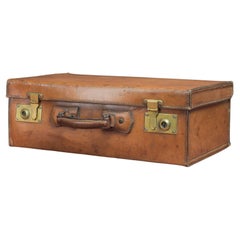
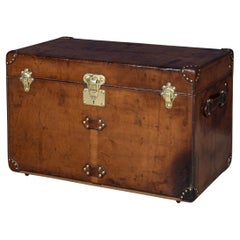
A well proportioned natural leather covered Louis Vuitton cabin trunk that has built up an attractive patina with age. Has original leather handles brass fittings and has its original interior in-tact (including the original tray); Circa 1930. One of the original handle supports is a newly made replacement of the original, that was beyond repair. Provenance: From the collection of Anouska Hempel, noted interior designer, hotelier and taste maker. Dimensions: 91 cm/35⅞ inches (length) x 52 cm/20½ inches (depth) x 34.5 cm/13⅝ inches (height). About Louis Vuitton From humble beginnings, Louis Vuitton laid the foundations for a luggage enterprise serving the upper echelons of 19th-century society. His son, Georges, expanded on his father’s work throughout the 20th century. Louis Vuitton was born on 4 August 1821 in Anchay, a rural village in Eastern France. His father, Xavier Vuitton, was a farmer, his mother, Coronne Gaillard, a milliner. In 1835, aged 13, Vuitton left Anchay on foot for his two-year journey to Paris. He found work as a layetier – a maker of wooden boxes and cases for transporting travelers’ possessions – and was selected as the personal layetier to Empress Eugénie de Montijo, a Spanish Countess and wife of Napoleon III. In 1854, at 4 Rue Neuve de Capucines, Paris, Vuitton launched his enterprise, gaining recognition among Parisian nobility. A second Parisian store opened at 1, Rue Scribe, after the 1871 Siege of Paris. Striped “Rayée” canvas and the first Vuitton Wardrobe Trunk arrived in the 1870s, expanding abroad to 289 Oxford Street, London, and introducing the Damier canvas in the 1880s. Louis Vuitton passed away in 1892, leaving the business to his son, Georges. He set about expanding the family firm even further, selling out at the 1893 Chicago World’s Fair. J.P. Morgan and family became valued clients, and Georges patented the iconic LV monogram design in 1896, paying homage to a medieval Franc box rosette motif from his personal collection. The early 1900s saw the Steamer Bag launch and new premises on the Champs Élysées. Georges was never one to shy away from a bespoke order; customers could, and regularly did, request whatever their heart desired. Legendary commissions included a “Malle Lit” explorer’s camp bed trunk for Pierre Savorgnan de Brazza, luggage for La Crociera Nera, an expedition by Citroën from Paris to Timbuktu, and a special trunk for opera singer Lily Pons carrying 36 pairs of shoes – six more than usual, as her feet were small. The Maison's creative direction also influenced entire design movements. Georges’ son, Gaston-Louis, ushered in the Art Deco era at the 1925 Exposition Internationale des Arts Décoratifs et Industriels Modernes, Paris. The 1930s introduced the Keepall, and a visit from British King George VI and Queen Elizabeth inspired a gift to young Princesses Elizabeth and Margaret: smooth cowhide suitcases lined in pink moiré silk, crafted to house dolls. The first flexible monogram canvas luggage was rubberised canvas in 1958. Louis Vuitton merged with Moët Hennessy in 1987, creating LVMH, the world’s first true luxury goods group. To this day, the Maison consistently ranks as the world’s number one luxury goods brand. Bentleys are Members of LAPADA, the London and Provincial Antique Dealers Association.
  • Creator:
  • Dimensions:
    Height: 13.63 in (34.63 cm)Width: 35.88 in (91.14 cm)Depth: 20.5 in (52.07 cm)
  • Materials and Techniques:
  • Place of Origin:
  • Period:
  • Date of Manufacture:
    circa 1930
  • Condition:
    Repaired: One of the original handle supports is a newly made replacement of the original, that was beyond repair. Replacements made: One of the original handle supports is a newly made replacement of the original, that was beyond repair. Wear consistent with age and use.
  • Seller Location:
    London, GB
  • Reference Number:
    1stDibs: LU960039450072

More From This Seller

View All
Chalons Steamer Trunk, circa 1915
Located in London, GB
A wonderful trunk by the French Grand Magasin, Chalons, of Alexandria Egypt. With brass fittings, and original interior lining and key, circa 1915. Dimens...
Category

Vintage 1910s French Trunks and Luggage

Materials

Brass

Mid Tan Leather Case, Circa 1930
Located in London, GB
Attractive hide leather case, ideal for an overnight or weekend away. Has a sturdy handle, brass catches, re-lined cloth lining to the interior and unusually, no initials. Circa 1930...
Category

Vintage 1930s British Trunks and Luggage

Materials

Brass

Exceptionally Large Louis Vuitton Wardrobe Trunk, circa 1955
By Louis Vuitton
Located in London, GB
A rare, very large scale brass bound Louis Vuitton wardrobe trunk in LV Monogram with lozine trim and original interior fittings providing hanging space; circa 1955. Has the original...
Category

Vintage 1950s French Trunks and Luggage

Materials

Metal, Brass

Louis Vuitton LV Monogram Fly-el Suitcase, circa 1985
By Louis Vuitton
Located in London, GB
Louis Vuitton large ‘Fly-el’ suitcase in LV monogram pattern coated canvas with edges trimmed in lozine, a layered leather flat handle and unpolished brass fittings. Securing the li...
Category

Vintage 1980s French Trunks and Luggage

Materials

Brass

Tan Leather Case, circa 1910
Located in London, GB
An excellent sturdy tan leather case with solid brass catch and original leather lining with pockets and sleeves to accommodate fittings (now missing). The fittings that remain are t...
Category

Vintage 1910s British Trunks and Luggage

Materials

Brass

Large Victorian Leather Cigar Case, Circa 1850.
Located in London, GB
A magnificent hand stitched large leather cigar case or 'cigar protector', circa 1850. Made to put in a bag or case. Has original applied silver monogram. Dimensions (when fully clo...
Category

Antique 1850s British Victorian Tobacco Accessories

Materials

Silver

You May Also Like

20th Century Louis Vuitton Cabin Trunk In Natural Cow Hide, Paris, c.1910
By Louis Vuitton
Located in Royal Tunbridge Wells, Kent
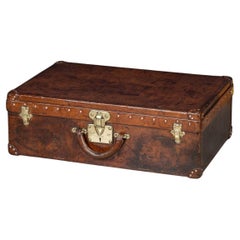
A rare Louis Vuitton cabin trunk covered in leather. Dating to the early part of the 20th century, covered not in the world famous (but more common) monogram canvas but in a single piece of cow hide. These all-leather trunks were made by special order and Louis Vuitton used...
Category

20th Century French Trunks and Luggage

Materials

Leather, Canvas

Antique 20thC Louis Vuitton Courier Trunk In Natural Cow Hide, France c.1900
By Louis Vuitton
Located in Royal Tunbridge Wells, Kent
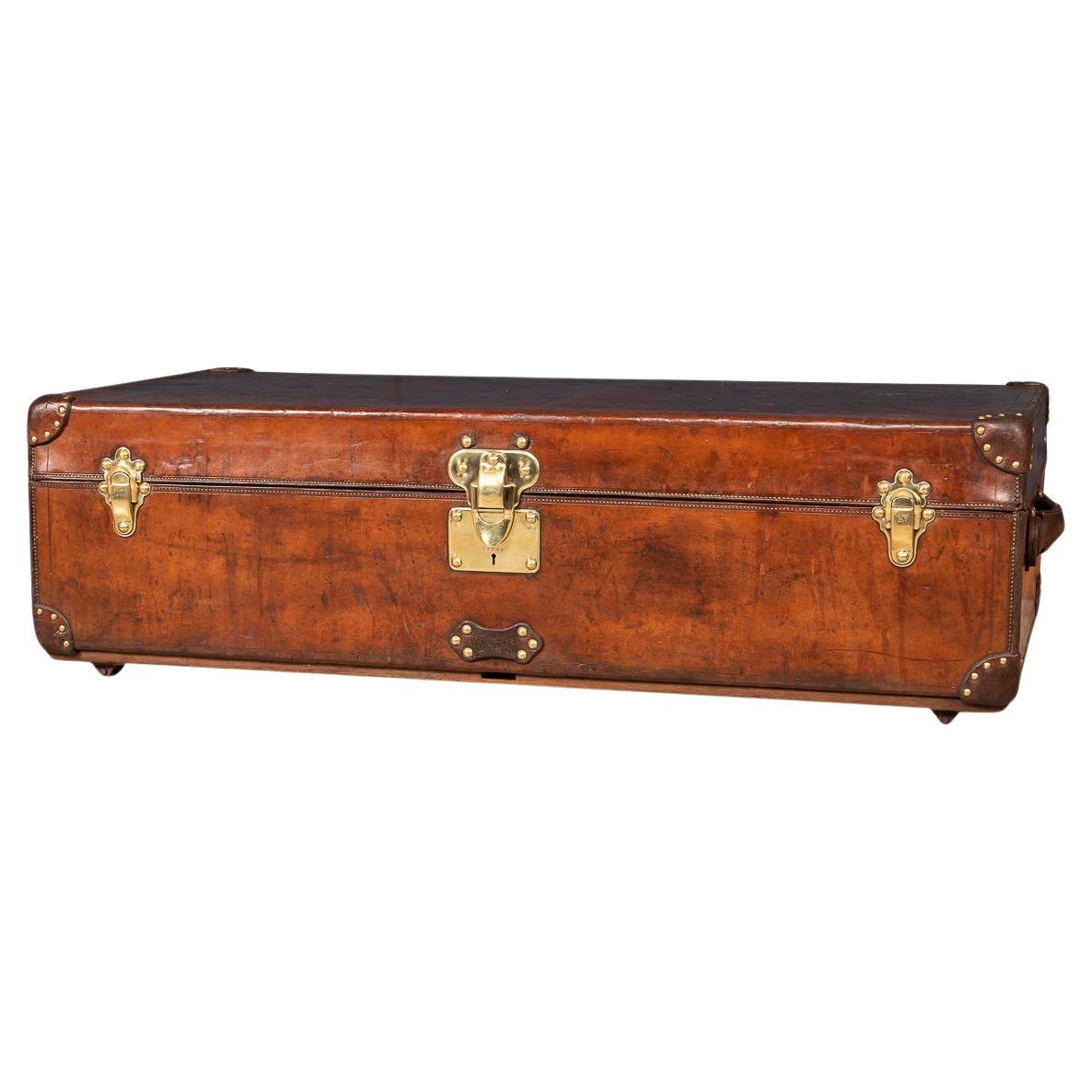
A very rare Louis Vuitton courier trunk covered in leather. Dating to the very early part of the 20th century, covered not in the world famous (but more common) monogram canvas but i...
Category

20th Century French Other Trunks and Luggage

Materials

Brass

1920s Louis Vuitton Vuittonite Cabin Trunk
By Louis Vuitton
Located in London, GB
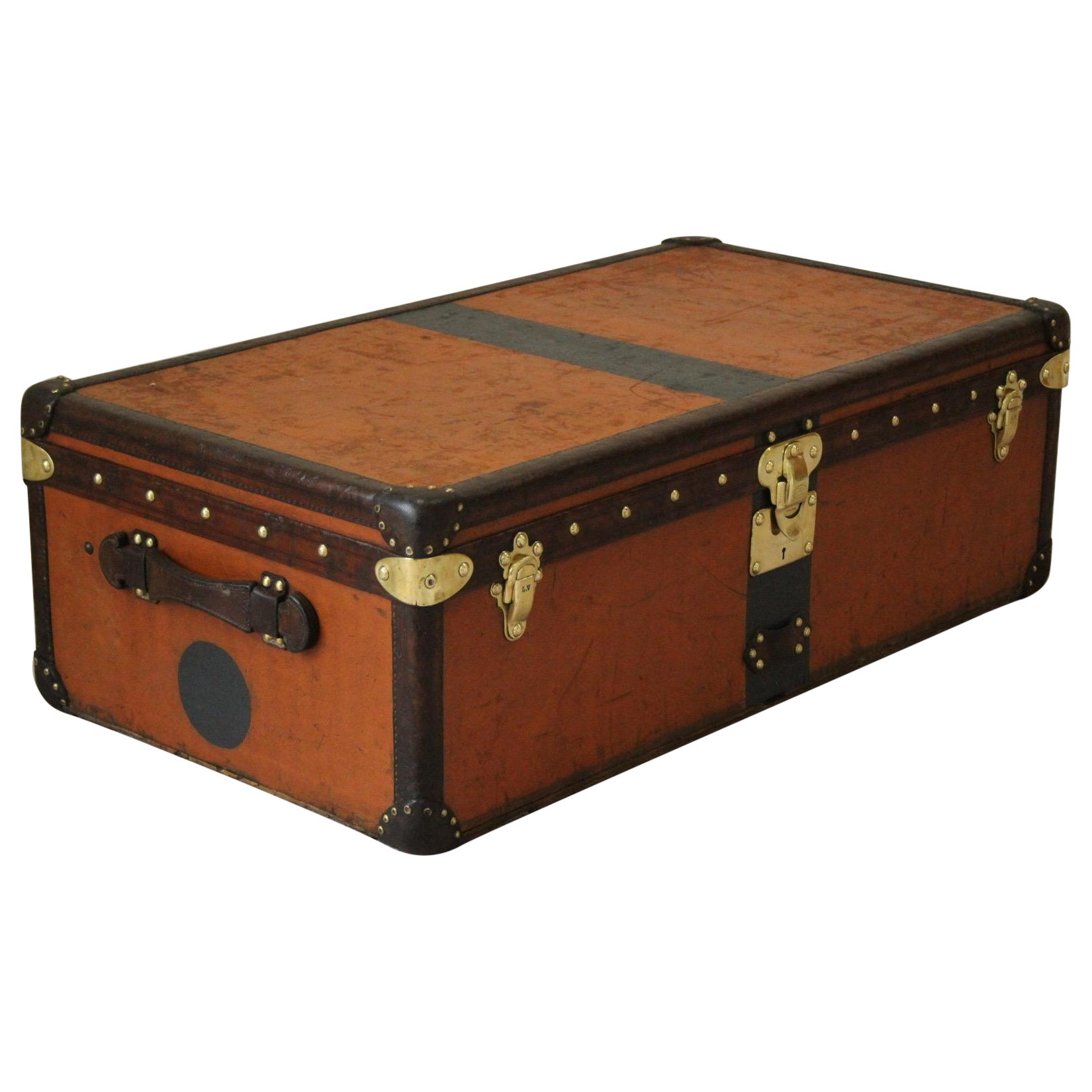
Louis Vuitton Vuittonite cabin trunk finished in iconic orange waterproof canvas with brass stamped hardware, leather trim and leather handles. Condition Report: Good condition Ple...
Category

1920s French Suitcases and Trunks

20th Century Louis Vuitton Suitcase In Natural Cow Hide, France c.1910
By Louis Vuitton
Located in Royal Tunbridge Wells, Kent
A highly unusual and exceptionally rare Louis Vuitton suitcase, originating from the early years of the 20th century, distinguishes itself not with the globally renowned monogram canvas but with a distinctive covering crafted from a singular piece of cowhide. This unique piece represents a special order from Louis Vuitton, showcasing the brand's historical commitment to utilising only the finest hides available. Unlike many of its counterparts, leather trunks and cases of this era often struggle to withstand the test of time, requiring regular treatments to prevent drying and disintegration. Remarkably, this particular example defies the odds, retaining the same supple quality it possessed on the day it first graced the shop floor. This suitcase belongs to Louis Vuitton's collection of "speciality materials," which encompasses a diverse range, including, but not limited to, zinc, copper, crocodile leather, and cow leather. A brief history about Louis Vuitton trunks: Louis Vuitton was born in 1821 to a farmer and milliner and came from a long-established working-class family in eastern France. Vuitton grew up understanding the effects of perseverance and a strong work ethic from watching his family. At the age of 16, he made the decision to walk 292 miles from his hometown to Paris to try and make a new life for himself. When he arrived the city was in the midst of industrialization with current modes of transportation evolving quickly allowing for longer journeys. With this came the need for sturdy travel pieces. Vuitton was taken as an apprentice for a successful box maker and packer named Monsieur Marechal. He learned to craft durable containers and how to pack them properly – a well-respected profession at the time.In 1854, years after he had mastered his craft and became well respected for it, Vuitton ventured out on his own to open a shop on Rue Neuve des Capucines. It was here that he began to establish himself as a luggage maker. Then, in 1858, Vuitton designed the first Louis Vuitton steamer trunk. At the time trunks had rounded tops to allow for water to run off but this did not allow for convenient stowage. Vuitton introduced a flat, yet waterproof, trunk that was easily stackable. The first of his trunks were outfitted with a grey canvas referred to as Trianon – it wouldn’t be until several decades later that the signature monogram would be introduced. With a burgeoning business, Vuitton moved his family and workplace to Asniere, where he employed twenty workers to craft his trunks. By 1900 he would have 100 employees, and in 1914 the company would more than double in size. After years of success, Vuitton began to experiment with the design of his luggage by introducing a new striped canvas pattern (1876) and later the still well-known Damier print (1888). The hand-painted patterns were developed to prevent counterfeits. Even in the late 1800s, Louis Vuitton was enough of a status symbol to warrant counterfeiting. In 1886, his son George invented and patented an ingenious locking system that made it impossible to pick the lock of their trunks. This lock is still used today. 1892 would prove to be a time of mourning for the family as Louis Vuitton passed...
Category

20th Century French Other Trunks and Luggage

Materials

Brass

20th Century Louis Vuitton Auto Trunk
By Louis Vuitton
Located in Gloucestershire, GB
20th Century Louis Vuitton car trunk covered in rare red Vuittonite Rexine. With LV stamped rivets, catches and locks, the outer case has some ...
Category

Vintage 1930s French Art Deco Trunks and Luggage

Materials

Fabric, Wood

20th Century Louis Vuitton Cow Hide Suitcase, France c.1920
By Louis Vuitton
Located in Royal Tunbridge Wells, Kent
A highly unusual and exceptionally rare Louis Vuitton suitcase, originating from the early years of the 20th century, distinguishes itself not with the globally renowned monogram canvas but with a distinctive covering crafted from a singular piece of cowhide. This unique piece represents a special order from Louis Vuitton, showcasing the brand's historical commitment to utilizing only the finest hides available. Unlike many of its counterparts, leather trunks and cases of this era often struggle to withstand the test of time, requiring regular treatments to prevent drying and disintegration. Remarkably, this particular example defies the odds, retaining the same supple quality it possessed on the day it first graced the shop floor. This suitcase belongs to Louis Vuitton's collection of "speciality materials," which encompasses a diverse range, including, but not limited to, zinc, copper, crocodile leather, and cow leather. A brief history about Louis Vuitton trunks: Louis Vuitton was born in 1821 to a farmer and milliner and came from a long-established working-class family in eastern France. Vuitton grew up understanding the effects of perseverance and a strong work ethic from watching his family. At the age of 16, he made the decision to walk 292 miles from his hometown to Paris to try and make a new life for himself. When he arrived the city was in the midst of industrialization with current modes of transportation evolving quickly allowing for longer journeys. With this came the need for sturdy travel pieces. Vuitton was taken as an apprentice for a successful box maker and packer named Monsieur Marechal. He learned to craft durable containers and how to pack them properly – a well-respected profession at the time.In 1854, years after he had mastered his craft and became well respected for it, Vuitton ventured out on his own to open a shop on Rue Neuve des Capucines. It was here that he began to establish himself as a luggage maker. Then, in 1858, Vuitton designed the first Louis Vuitton steamer trunk. At the time trunks had rounded tops to allow for water to run off but this did not allow for convenient stowage. Vuitton introduced a flat, yet waterproof, trunk that was easily stackable. The first of his trunks were outfitted with a grey canvas referred to as Trianon – it wouldn’t be until several decades later that the signature monogram would be introduced. With a burgeoning business, Vuitton moved his family and workplace to Asniere, where he employed twenty workers to craft his trunks. By 1900 he would have 100 employees, and in 1914 the company would more than double in size. After years of success, Vuitton began to experiment with the design of his luggage by introducing a new striped canvas pattern (1876) and later the still well-known Damier print (1888). The hand-painted patterns were developed to prevent counterfeits. Even in the late 1800s, Louis Vuitton was enough of a status symbol to warrant counterfeiting. In 1886, his son George invented and patented an ingenious locking system that made it impossible to pick the lock of their trunks. This lock is still used today. 1892 would prove to be a time of mourning for the family as Louis Vuitton passed...
Category

20th Century French Other Trunks and Luggage

Materials

Brass