Items Similar to Shapland and Petter. A good Arts and Crafts oak hall stand
Want more images or videos?
Request additional images or videos from the seller
1 of 21
Shapland and Petter. A good Arts and Crafts oak hall stand
$3,409.02
£2,500
€2,902.97
CA$4,697.47
A$5,163.66
CHF 2,710.90
MX$61,399.67
NOK 34,814.10
SEK 31,711.88
DKK 21,689.87
About the Item
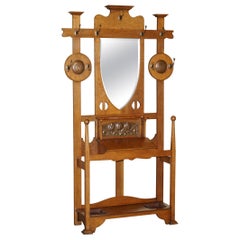
A good Arts and Crafts oak Hall stand by Shapland and Petter with a seat to the left and a mirror and glove drawer to the right, the lower section with Shaplands typical square shaped spindles in front of the umbrella stand and original drip tray below.
- Creator:Shapland Petter (Maker)
- Dimensions:Height: 80.01 in (203.2 cm)Width: 42.01 in (106.68 cm)Depth: 13.51 in (34.29 cm)
- Style:Arts and Crafts (Of the Period)
- Materials and Techniques:
- Place of Origin:
- Period:1900-1909
- Date of Manufacture:1900
- Condition:
- Seller Location:London, GB
- Reference Number:Seller: PV0044621stDibs: LU2243340327812
About the Seller
5.0
Platinum Seller
Premium sellers with a 4.7+ rating and 24-hour response times
Established in 1989
1stDibs seller since 2016
305 sales on 1stDibs
Typical response time: 1 hour
- ShippingRetrieving quote...Shipping from: London, United Kingdom
- Return Policy
More From This Seller
View AllShapland
Petter. An Arts
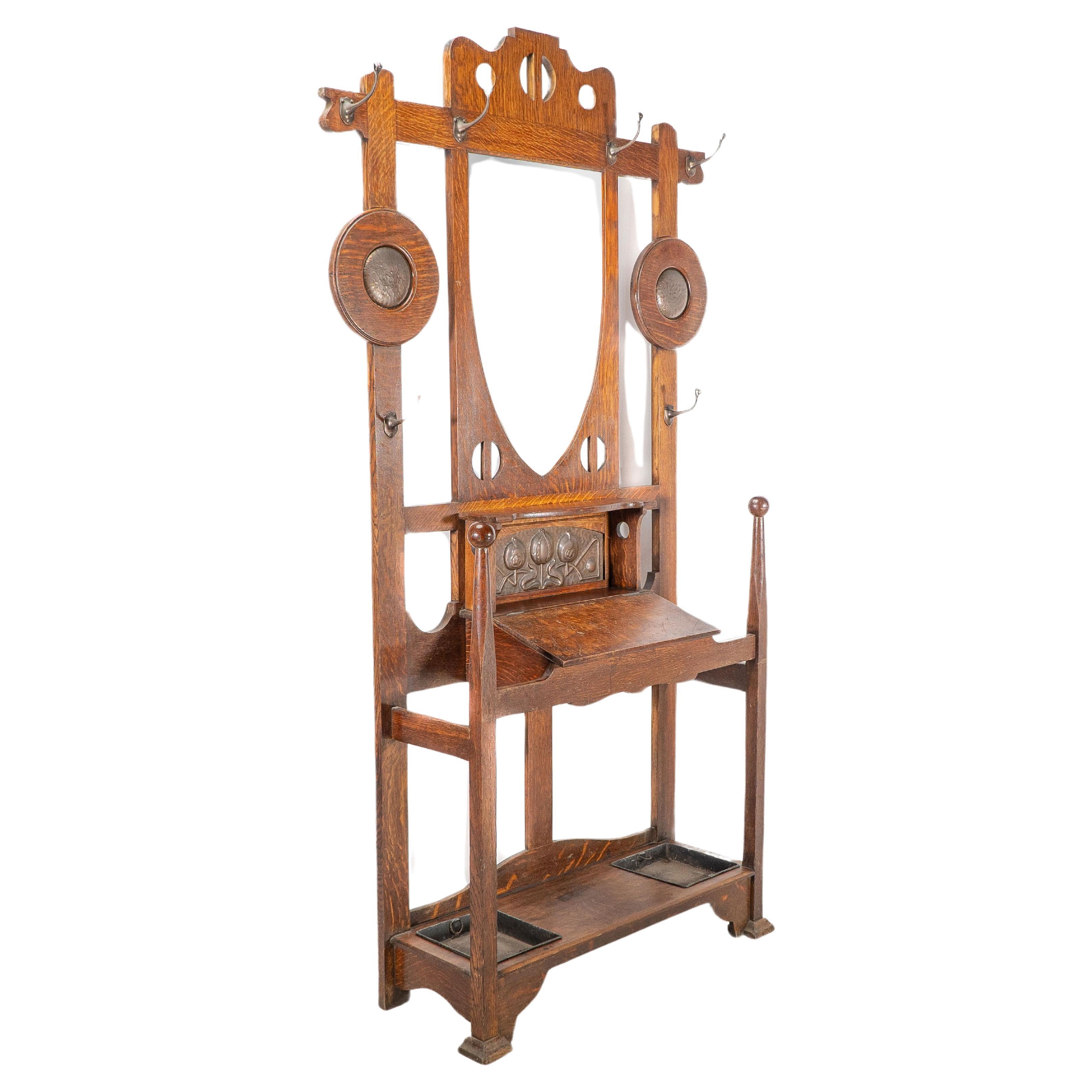
Crafts oak hallstand with mirror and copper panel
By Shapland
Petter
Located in London, GB
A top quality Arts and Crafts oak Hallstand by Shapland and Petter with bevelled mirror flanked by a circular copper disc with hat and coat hooks, stylised cut-outs and stylised flor...
Category
Antique Early 1900s English Arts and Crafts Coat Racks and Stands
Materials
Copper
Shapland
Petter, Style of MH Baillie Scott, an Arts
Crafts Oak Hall Cupboard
By Shapland
Petter, Mackay Hugh Baillie Scott
Located in London, GB
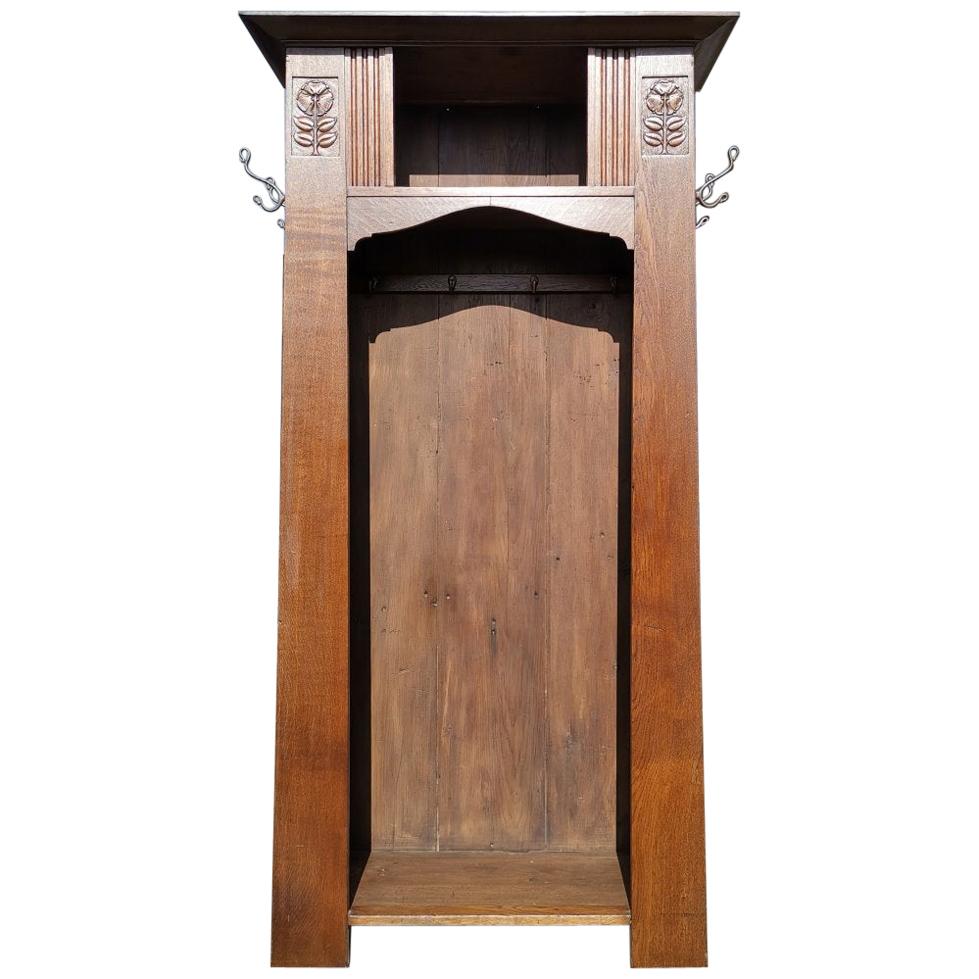
Shapland and Petter. An Arts & Crafts oak hall cupboard in the style of M.H. Baillie Scott, of tapering Architectural form. The flaring cornice with an open upper hat cupboard, flank...
Category
Antique Early 1900s English Arts and Crafts Coat Racks and Stands
Materials
Oak
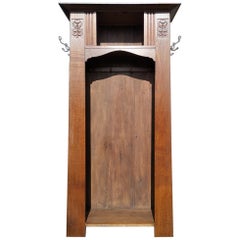
Shapland
Petter. An Arts
Crafts walnut hall stand with a copper panel
By Shapland
Petter
Located in London, GB
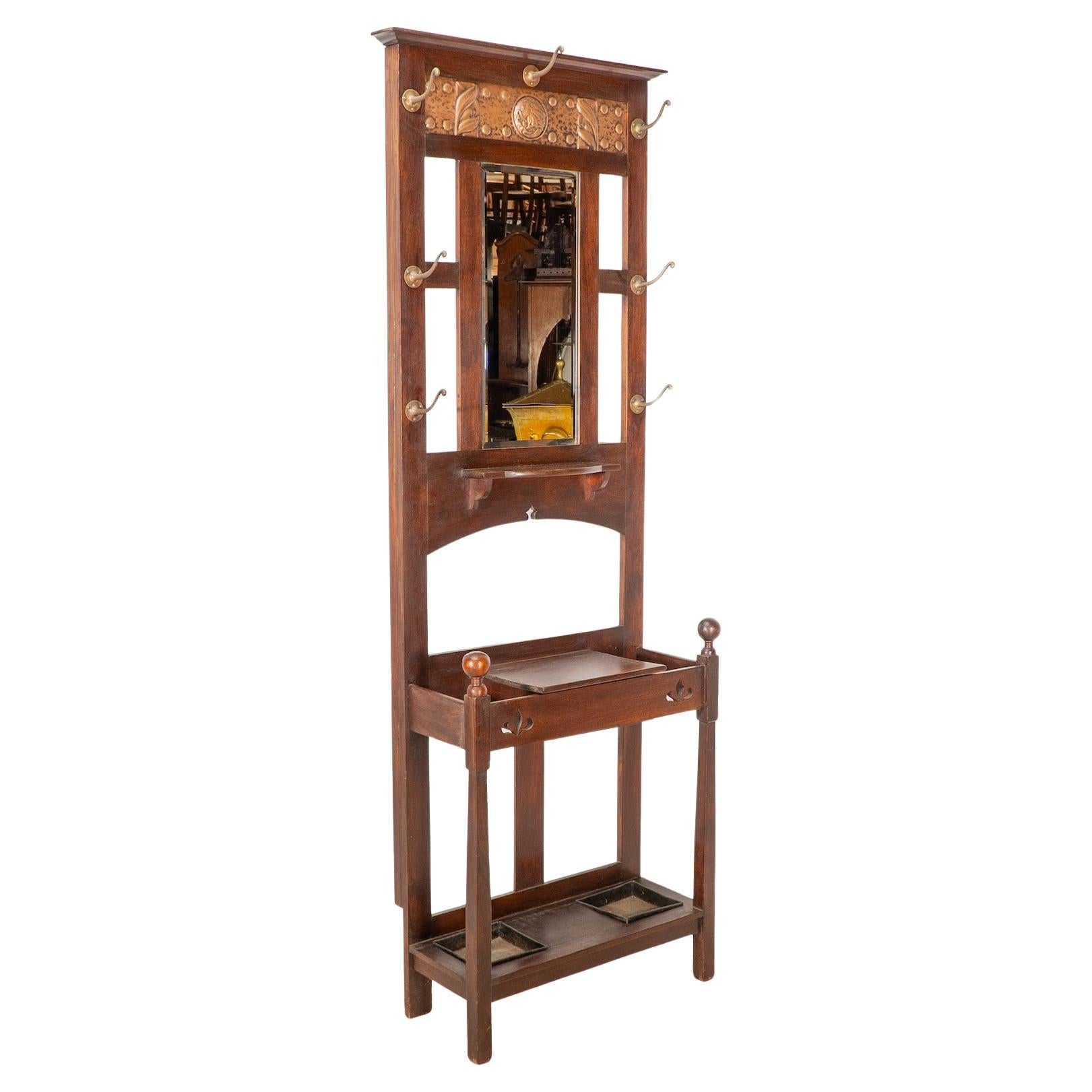
An Arts and Crafts walnut Hall stand by Shapland and Petter with a copper panel depicting a mythical creature to the top, leaf cut-outs to the centre with circular ball uprights to e...
Category
Antique Early 1900s Arts and Crafts Coat Racks and Stands
Materials
Copper
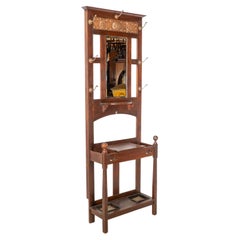
Dr C.Dresser Style of, Aesthetic Movement Oak Hall Stand with Floral Decoration
By Christopher Dresser
Located in London, GB
Dr C. Dresser style of, An Aesthetic Movement Gothic style oak hall stand with central arched mirror, flanked by open sides and six turned button ended coat hooks to the outer edges, with mitred plank details above a lift up seat with storage...
Category
Antique 1870s English Aesthetic Movement Coat Racks and Stands
Materials
Oak
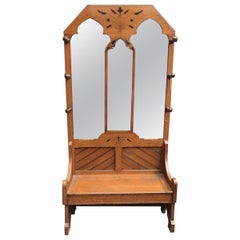
Arts and Crafts Oak Cabinet by Shapland
Petter with Fretwork Pediment
By Shapland
Petter
Located in London, GB
Shapland & Petter. An Arts and Crafts oak cabinet of angular form, featuring a shaped and fretwork pediment with an oversailing top supported by curved brackets. The upper cupboard h...
Category
20th Century Arts and Crafts Cabinets
Materials
Oak
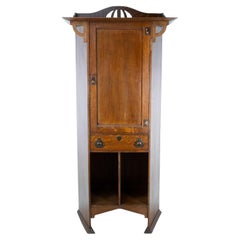
Shapland
Petter attri. An Arts
Crafts oak hall cupboard with flaring cornice
By Shapland
Petter
Located in London, GB
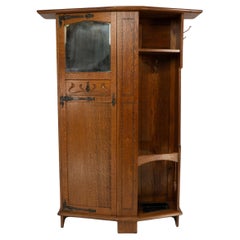
An Arts and Crafts oak hall cupboard attributed to Shapland and Petter with a flaring cornice perfect to pop hats on, an upper bevelled mirror and an unusual half revolving drawer fo...
Category
Antique Early 1900s English Arts and Crafts Cupboards
Materials
Copper
You May Also Like
Oak hall stand
Located in Cheshire, GB
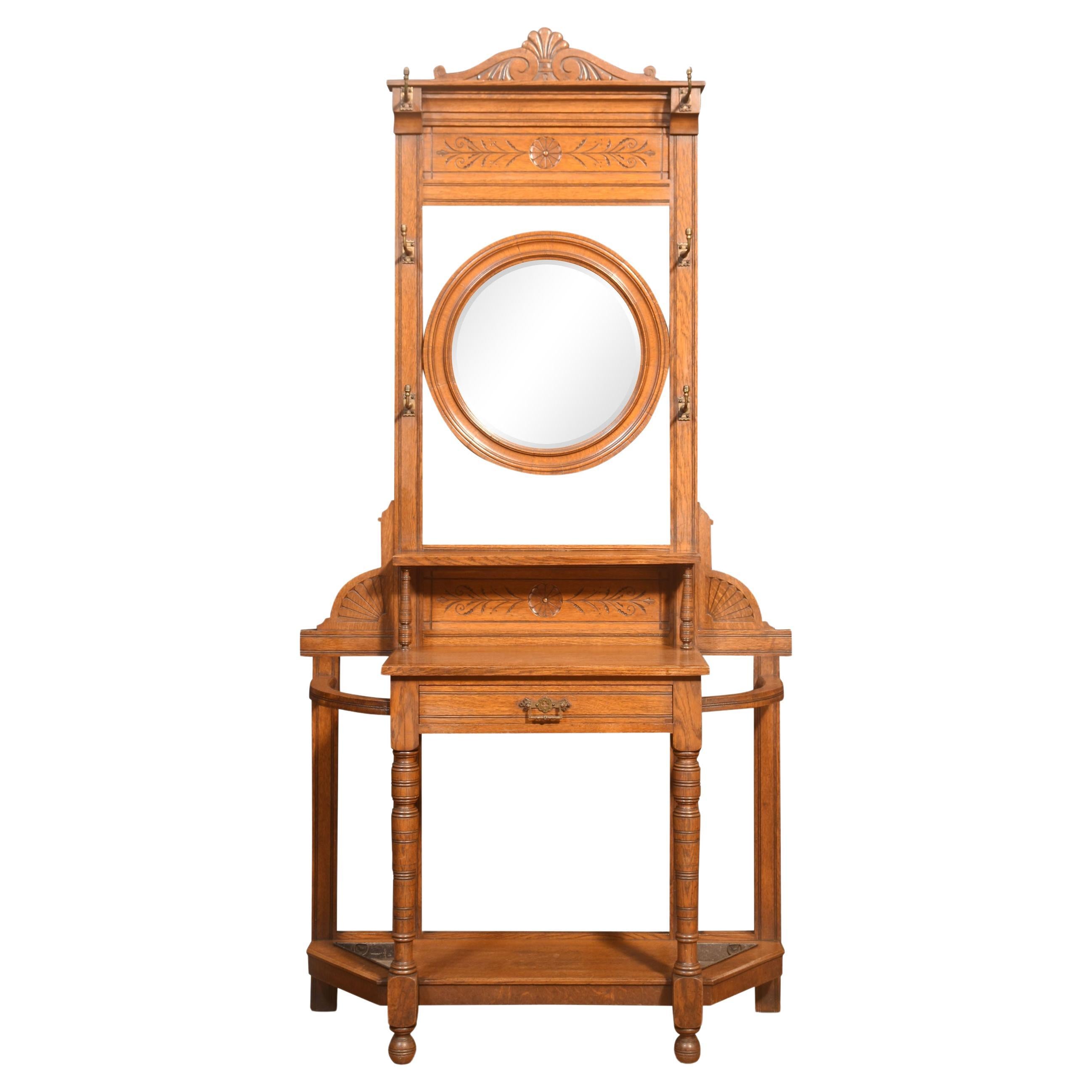
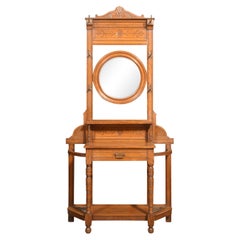
Oak hallstand, the superstructure with a central circular beveled mirror surrounded by metal hooks. The base section having a single short drawer. All raised up on turned front legs ...
Category
Early 20th Century British Hat Racks and Stands
Materials
Oak
$2,181 Sale Price
20% Off
19th Century English Oak Hall Stand
Located in High Point, NC
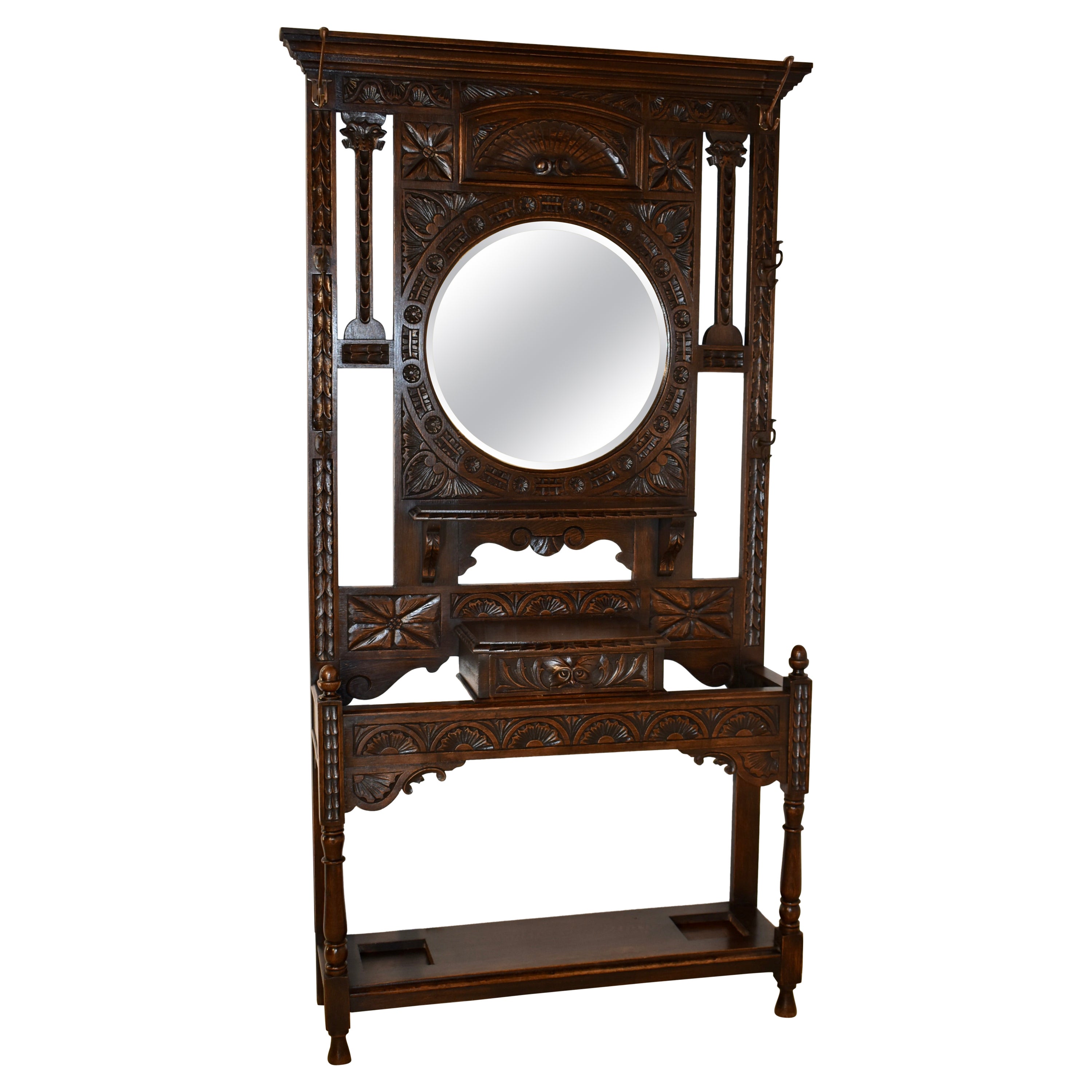
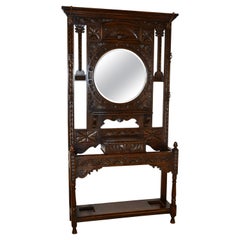
19th century oak hall stand from England. The top has a lovely crown molding, over a hand carved central panel, flanked by carved sides, which have three brass hooks on each side fo...
Category
Antique 19th Century English Victorian Coat Racks and Stands
Materials
Brass
Victorian Oak Hall Stand in the manner of Christopher Dresser
Located in High Peak, GB
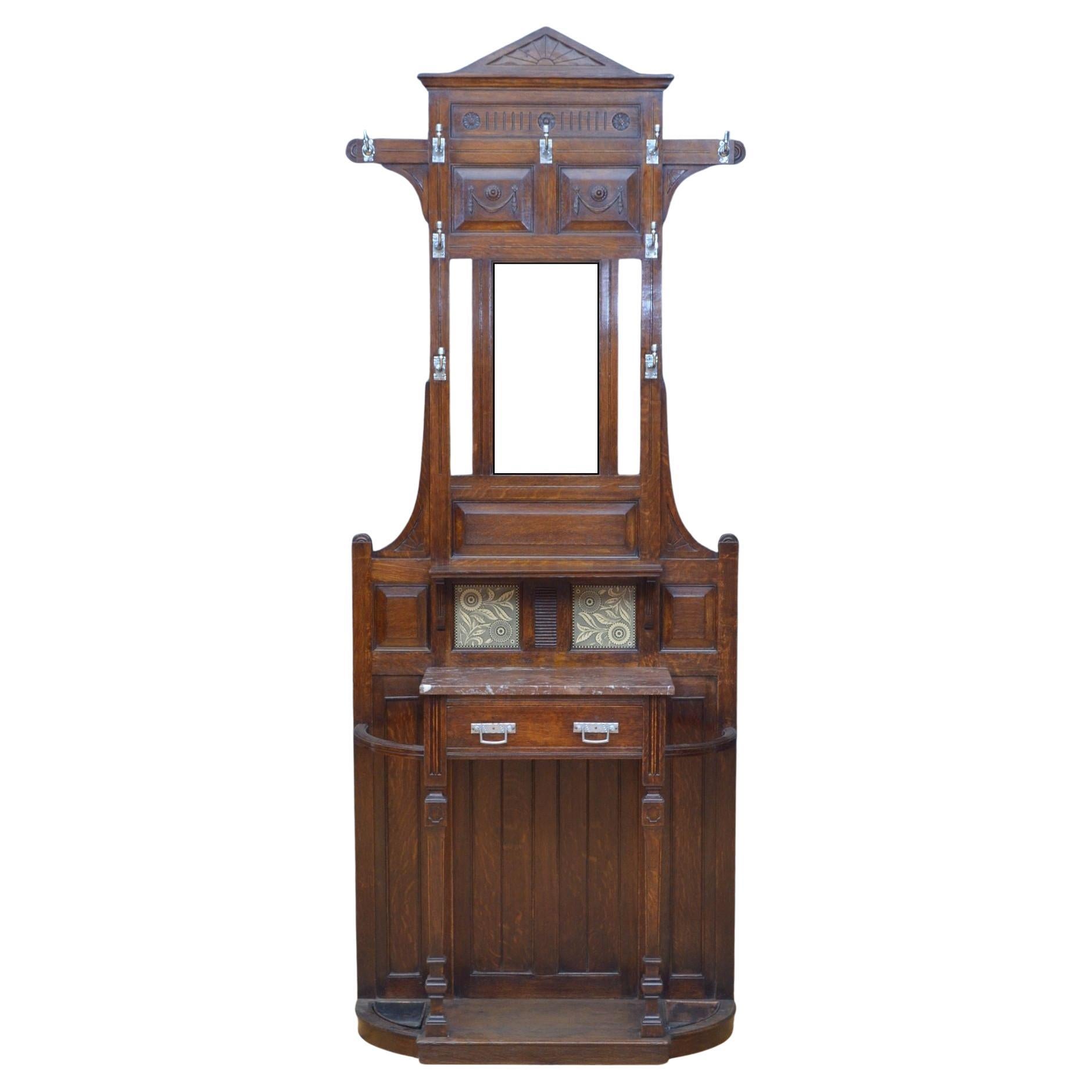
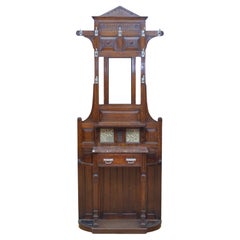
St041 Stylish Victorian coat stand in oak in the manner of Christopher Dresser, having architectural pediment with sunray carvings above panelled and fielded back with beehive style ...
Category
Antique Late 19th Century British Victorian Coat Racks and Stands
Materials
Oak
$3,709 Sale Price
20% Off
ANTiQUE 1900 ARTS
CRAFTS SHAPLAND AND PETTER HALL COAT GLOVE UMBRELLA STAND
By Shapland
Petter
Located in West Sussex, Pulborough
Royal House Antiques
Royal House Antiques is delighted to offer for sale this stunning original Arts & Crafts Shapland & Petter Hall stand with hand hammered Copper panels over a Walnut frame with inset sheild mirror
Please note the delivery fee listed is just a guide, it covers within the M25 only for the UK and local Europe only for international, if you would like an accurate quote please send me your postcode and I’ll provide you with the exact price
A very good looking well made and decorative hat glove coat and scarf rack, this one is rare as it has the central mirror and its an earlier than usual example circa 1900
Made by Shapland & Petter, a full blub on their life and works can be found below
In terms of the condition it is straight and solid, the piece sits well in any setting and looks decorative and very English country house, we have cleaned waxed and polished the timber, there is one hook slightly bent, otherwise its in fine order
Dimensions
Height:- 205cm
Width:- 113cm
Depth:- 40cm
Please note all measurements are taken at the widest point, if you would like any additional or specific measurements please ask
Shapland and Petter of Barnstaple
Introduction
This Barnstaple based company manufactured some of the finest pieces of furniture in Arts and Crafts style but very little has been written about the company or the pieces they produced. It a great shame that whilst Shapland and Petter pieces have been illustrated in books and auction catalogues they are invariably attributed to other makers such as Liberty and Co in London or Wylie and Lochhead in Glasgow. With this feature, we intend to inspire a more thorough appreciation of the work of the company; readers are invited to help with the task by sending photographs and information.
Collectors and auction houses are now showing significantly more interest in Shapland and Petter pieces. The company, based in Barnstaple, England produced a very wide range of furniture in several different styles including many pieces in period reproduction and municipal style for town halls and commercial premises alongside their superb Arts and Crafts range
Distinctive features of their superb Arts and Crafts style are the use of heart shaped piercing, geometric shapes with angled arches and the application of repousse copper panels. Decoration with marquetry, metal inlay, mounting of ceramic and enamel cabochons were techniques which they mastered with a combination of state of the art technology and traditional craftsmanship. Most distinctively, the pieces were extremely well made, with care and very best quality materials
The growing interest in Shapland and Petter has raised many questions about the origins of the firm, and the sources of influence on their designs, some of which resemble designs by Ashbee, Ballie Scott, Voysey and Talwin Morris. Links have been assumed with Liberty and Co with the supposition Shapland and Petter worked on commissions for Liberty. There appears to be little evidence to support many of the assumptions which have developed around the company and this article is intended to help to start the discussion and to stimulate research
The History of Shapland and Petter
The Museum of North Devon in Barnstaple have an archive of Shapland and Petter which includes some company records and a small display of furniture and related items. The following text gives history of the company and is reproduced from the display boards in the museum with kind permission of North Devon Museums
For over 100 years the Shapland and Petter factory has stood at the end of Barnstaple Long Bridge. Manufacturers of doors, door sets, and custom wood interiors, NT Shapland and Petter Ltd are still one of the towns largest employers. The company was established by Henry Shapland (b. 1823), a cabinet maker by trade. He embarked on a voyage to America in 1848, where he was inspired by an invention for a wave-moulding machine. He was only allowed to see it if he left the country immediately. Returning home with only rough notes, he reproduced the machine and in 1854 began a cabinet making business in one room at the Raleigh woolen mill in Pilton. Later the firm moved to Bear Street in Barnstaple. Henry Petter was an accountant who entered into partnership with Mr Shapland. The business progressed and in 1864 they bought the Raleigh Factory where Shapland first began his work. Success was rapid, but in 1888 the building burnt down. Immediately work began on a bigger and better factory - their present site by the Long Bridge - which included many modern inventions
The two Henrys died within two years of each other - Petter in 1907 and Shapland in 1909. In 1924 Shapland and Petter merged with the Barnstaple Cabinet Company, producing North Devon's biggest industry. During the First World War Shapland and Petter's skilled craftsmen turned their hands to wooden propellers for the aircraft of the Royal Flying Corps. After the war, public tastes changed, and hand carved furniture was too expensive for many. Shapland and Petter's output now included elegant veneered pieces with smooth Art Deco lines. The company fitted out Pullman carriages and ocean liners and made hand-carved church furniture. The famous England Rugby Captain W. W. Wakefield was appointed Company Director in 1927. Throughout the depression of the late 1920's and early 1930's the company still managed to produce high quality work
Furniture manufacturing continued until the outbreak of the Second World War in 1939. Many workers left to fight, while the factory worked on Air Ministry contracts for ammunition boxes. After the war came radio cabinets and laboratory and contract furniture, until eventually large quantities of doors were being produced for hospitals, hotels, schools, offices and other buildings. Examples of Shapland and Petter's work can be seen all over North Devon. In Barnstaple, the shop front at 109 High Street is a good example, and the interior of the old Lloyd's Bank, now Chamber's Brasserie, was also Shapland's work. Examples of carving by Shapland's men can be seen in two chairs and a reading desk in Barnstaple Parish Church
As cabinet makers, Shapland and Petter employed up to 350 people at a time. There were designers, carvers, cabinet makers, machinists, polishers, and labourers. The company was one of the first to install American labour-saving devices and was keen to adopt the most up-to-date machinery
The fire of 1888 at the Raleigh Cabinet Works was a huge loss for the company. However, it resulted in a new factory which was altogether more modern and better equipped. The new building by the river was arranged into blocks. The production line began with the saw mills and ended with the finishing rooms. There was modern machinery in every department - one of their saws was the first of its kind in Britain. Water sprinklers and electric lights were a necessity - this factory would not burn down
As well as the furniture production, Shapland and Petter imported timber by sea and rail. The new factory 's facilities were exceptional
Shapland and Petter were renowned for excellent design and workmanship. The carvers were highly skilled, serving seven year apprenticeships and attending classes at the Barnstaple School of Art. Ornately carved furniture required up to a hundred tools
The factory produced made to order woodwork for banks, hotels, and shops; mantelpieces, paneling and staircases. They fitted out Pullman railway carriages, the London Guildhall, and Edgar Wallace 's dining room as well as houses like Tapeley Park in North Devon
Much of the work involved intricate leaded glass panels, or inlaid fruitwood designs, like the white bedroom suite shown in the exhibition here. This type of work is typical of Art Nouveau 1895 to 1910, inspired by the fluid shapes of plants and flowers
Many pieces were made from standard designs. There were hundreds to choose from, and a selection could be seen in local and London showrooms and in catalogues. Although mass-produced, this furniture was well-made by skilled technicians and modern machinery
Arts and Crafts designs of Shapland and Petter
The development of the Arts and Crafts Movement in the South West of England has not been written up in any detail though we do know of the Art Potters of Barnstaple from the excellent book of this name by Audrey Edgeler. Less is known of the Barnstaple Guild of Metal Workers. We know of the Bath Cabinet Makers and the Newlyn School of Industrial Art in Cornwall but very little has been written about the furniture makers of Barnstaple in Devon
The establishment of a large cabinet making firm in Barnstaple is not remarkable in itself; there were several cabinet makers in the area. What is interesting is that this particular Barnstaple firm should become a leading maker of Arts and Crafts furniture, copying the styles of the leading Architect designers and creating their own unique style
Critics may point out that as their work was commercially driven and reliant upon machines it therefore does not really qualify as Arts and Crafts. Whilst the company was highly innovative in machine technology, they also employed many craftsmen who worked with their hands in woodcarving, marquetry work, design and application of decorative copperwork and other artistic embellishment in the true Arts and Crafts tradition. Anyone who has experience of Shapland and Petter workmanship knows the level of craftsmanship invested in each piece
Sources of inspiration
There appears to be no evidence to link any known architect, artist or designer to the Shapland and Petter company. Their designs appear to have been created solely by their own internal design staff none of whom appear to have published or registered their work in any other context
C. R. Ashbee who established the Guild of Handicrafts visited Barnstaple in 1893 and provided a twelve week course on the design and decoration of furniture. It is presumed that this visit was hosted by Shapland and Petter, and that their own staff and those from other local furniture makers attended the course. Ashbee appears to have been unimpressed by the commercial attitudes he encountered and apparently disappointed at the lack of interest in his (high minded) lectures. What is interesting however is the similarity between some of his designs and those used by Shapland and Petter, particularly in respect to inlaid floral design. Perhaps he left a lasting influence which has not yet been verified
There has been some speculation on the influence of Scottish designers, particularly because of the use of Glasgow rose designs which are typical of the Glasgow School, and particularly of Talwin Morris. There are also several designs which use similar motifs to those used by Baillie Scott, the use of two doves in flight for example. More research is needed to trace possible links here. One thing that is clear is that there was a great deal of copying and selling designs in the furniture industry at the time and a nineteenth century survey on the furniture trade recorded that '' Barnstaple pays the best prices for designs ..''
Collaboration with other companies
There is evidence that Shapland and Petter organised a wide network of companies to retail their products and hence many pieces have the labels of retail furnishers added. Little is known of their marketing in Europe and America but it may be that many Arts and Crafts pieces were sold abroad. Shapland and Petter had excellent access to rail and shipping lines for importing timber and presumably for exporting their finished products
The extent of their collaboration with other companies is yet to be ascertained but there is evidence that their suppliers included the Della Robbia Pottery, Pilkingtons Tile...
Category
Antique Early 1900s English Arts and Crafts Coat Racks and Stands
Materials
Copper
Arts and Crafts Oak Coat Stand, England c1890s
Located in High Peak, GB
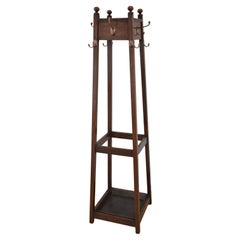
K0637 Stylish and elegant English Arts and Crafts, late 19th century solid oak coat stand / hall stand, having four decorative turned finials above a moulded edge and four copper p...
Category
Antique Late 19th Century English Arts and Crafts Hat Racks and Stands
Materials
Oak
19th Century English Mahogany Hall Stand
Located in High Point, NC
19th century English mahogany hall stand with wonderful shape and carved details. This piece has a lovely profile as well, and would be show-stoppi...
Category
Antique 19th Century English Victorian Coat Racks and Stands
Materials
Mahogany