Want more images or videos?
Request additional images or videos from the seller
1 of 8

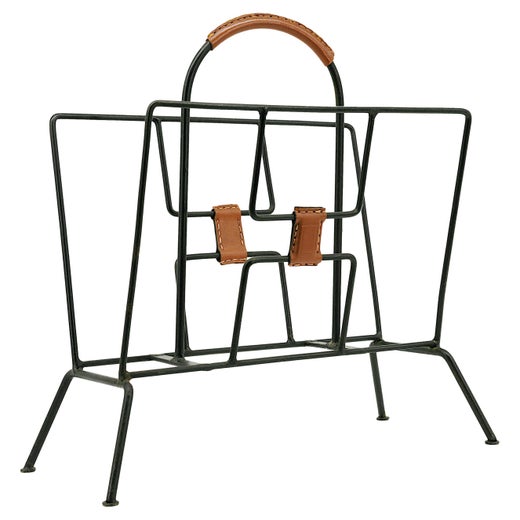
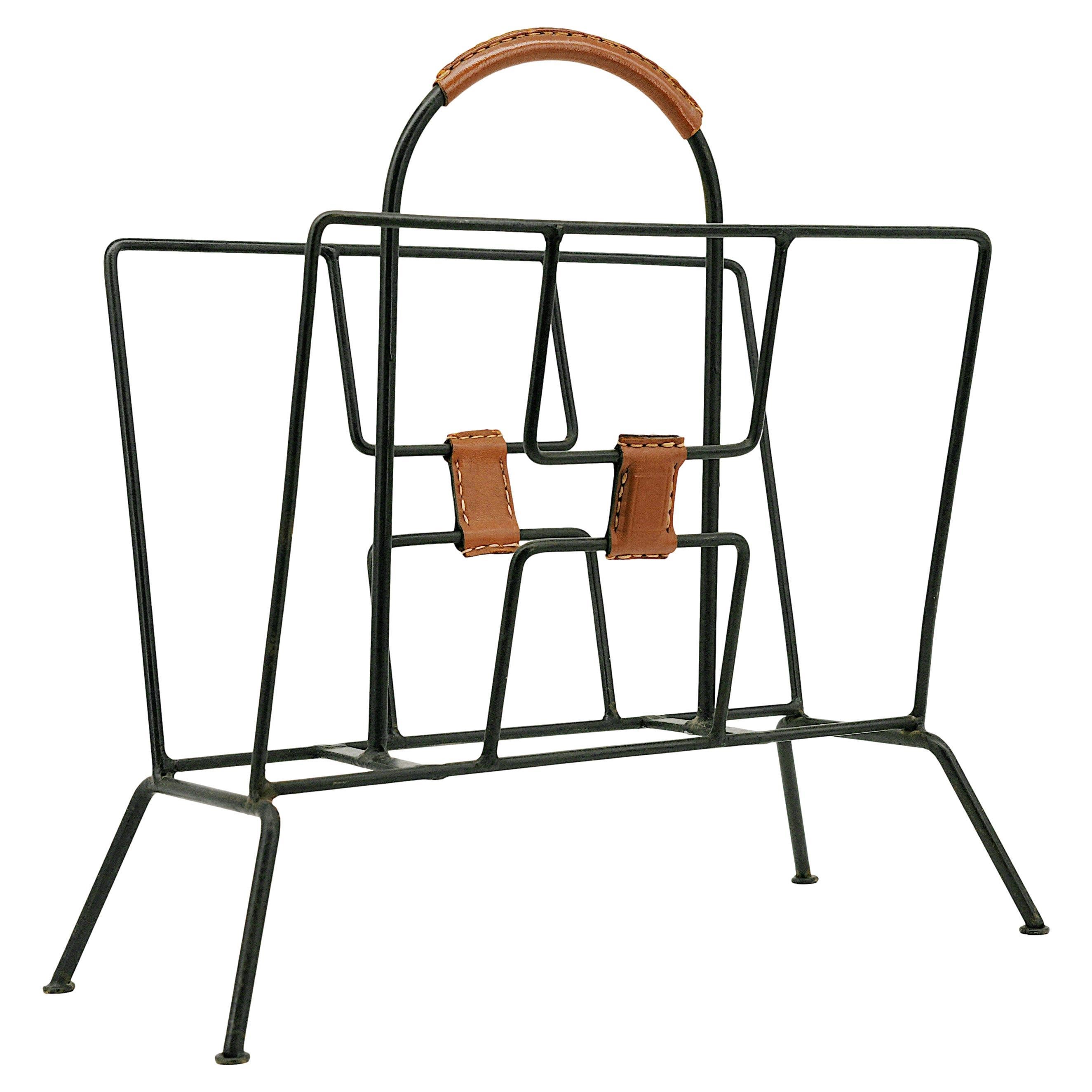
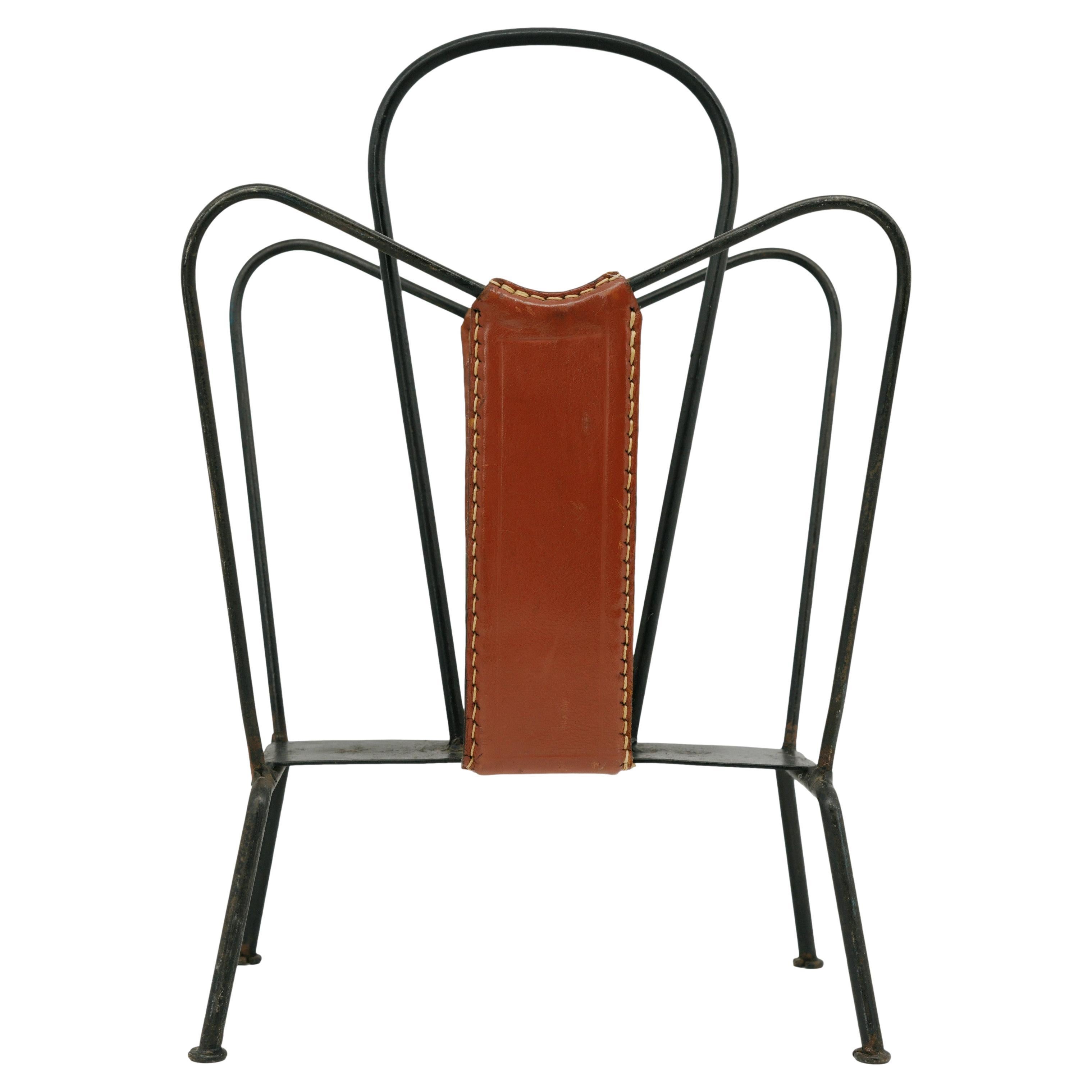
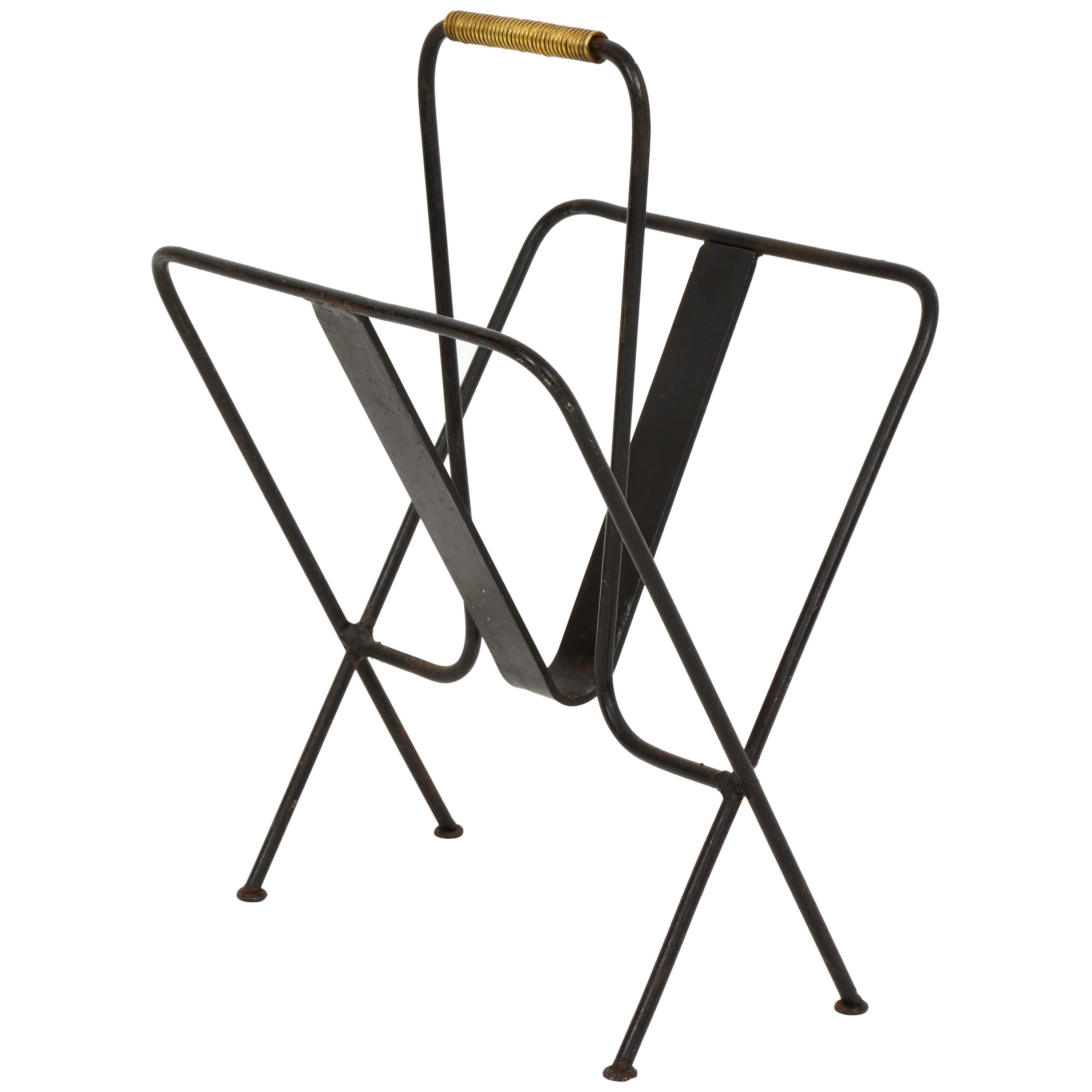
Jacques Adnet Magazine Holder 1950

$1,420.64
£1,061.32
€1,200
CA$1,978.16
A$2,125.43
CHF 1,140.29
MX$25,039.99

About the Item

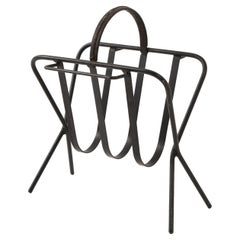
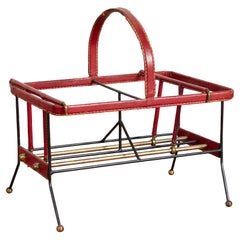
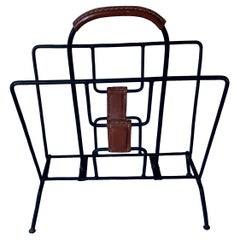
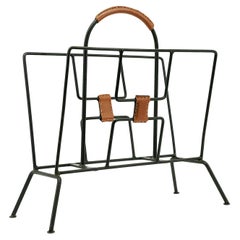
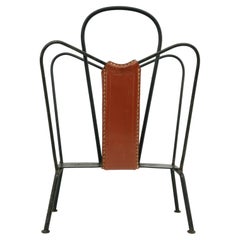
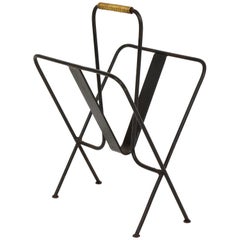
1950s magazine rack. Black iron frame, brown leather-covered joints. In very good condition. Height: 41 cm Width: 21 cm Length: 44 cm Weight: 1.5 kg Jacques Adnet was born in 1900 in Châtillon-Coligny, France. In 1928, Jacques Adnet became the director of the prestigious Compagnie des Arts Français, whose motto is "Evolution within Tradition." Jacques Adnet's style is characterized by its successful blend of modern aesthetics and traditional craftsmanship. His preferred materials are chrome-plated or nickel-plated metal, mirrored glass, Saint-Gobain glass slabs, Baccarat crystal, parchment, black lacquered wood, and opaline glass. After his modernist creations of the 1930s and his sumptuous furniture in exotic woods or lacquer of the 1940s, Jacques Adnet created furniture, lighting, and objects in metal covered with leather or imitation leather in the 1950s. Jacques Adnet was born in 1900 in Châtillon-Coligny, France. On the advice of one of his teachers, he entered the entrance exam for the École des Arts Décoratifs in 1916, where he and his twin brother, Jean, were accepted with flying colors. His teachers were Aubert for decoration and Genuys for architecture; the former's teaching would be influential in Jacques Adnet's future work. Not wanting to limit himself to theory, he took a job with the decorators Tony Selmersheim and Maurice Dufrène after receiving his diploma, where he learned the art and technique of furniture making. It was this latter position that he followed when he was appointed director of "La Maîtrise" at Galeries Lafayette in 1922. At the 1925 International Exhibition of Modern Decorative and Industrial Arts, Jacques Adnet and his brother exhibited ceramics at the "La Maîtrise" stand. They won numerous awards, including a gold medal in the furniture category and a silver medal in the ceramics category. In 1927, Jacques Adnet won the Blumenthal Prize. In 1928, Jacques Adnet became the director of the prestigious Compagnie des Arts Français, whose motto was "Evolution within Tradition." The 28-year-old decorator wanted to give the company a different direction. Even the logo, created in 1919, was redesigned in a completely modernist style; the tone was set. As a man of his time, Jacques Adnet sought to establish links between decoration and new inventions such as photography, cinema, electricity, the automobile, and the airplane. He assembled a remarkable team of painters within his company, including Lurçat, Chagall, Dufy, and Léger; decorators such as Charlotte Perriand, Francis Jourdain, and René Gabriel; as well as glassmakers, coppersmiths, jewelers, ceramists, ironworkers, and sculptors, including Goupy, Daurat, Bouquet, Lenoble, Poillerat, Yencesse, and the Giacometti brothers—whose decorative art he published after the death of Jean-Michel Frank. Jacques Adnet's style is characterized by its successful marriage of modern aesthetics and traditional craftsmanship. His preferred materials were chrome-plated or nickel-plated metal, mirrored glass, Saint-Gobain glass slabs, Baccarat crystal, parchment, black lacquered wood, and opaline glass. Jacques Adnet was one of the first to use glass and metal in the manufacture of objects, lighting fixtures, furniture, and in architecture, collaborating with architect René Coulon on the Saint-Gobain pavilion for the 1937 International Exposition of Arts and Techniques. Following his modernist creations of the 1930s and his sumptuous furniture in exotic woods or lacquer of the 1940s, Jacques Adnet created furniture, lighting fixtures, and objects in metal covered with leather or imitation leather in the 1950s. For several decades, he designed furniture ensembles for private clients, for luxury hotels on the French Riviera, and for the ocean liner Ferdinand de Lesseps in 1952; he also decorated Vincent Auriol's study and private apartments at the Château de Rambouillet and the Élysée Palace. His most famous clients included the billionaire Frank Jay Gould, the actress Alice Cocéa, the director Marcel Carné, and the writer Georges Simenon. Rather than figures from the worlds of fashion or entertainment, he often counted intellectuals among his clients, who wished to remain discreet, which suited him perfectly. In 1959, he closed the Compagnie des Arts Français and became the director of the École nationale supérieure des Arts Décoratifs, a position he held until 1970. Now retired, he devoted himself to his other passions: poetry and gardening. He died in Paris in 1984.
  • Creator:
    Jacques Adnet (Designer)
  • Dimensions:
    Height: 16.15 in (41 cm)Width: 17.33 in (44 cm)Depth: 8.27 in (21 cm)
  • Style:
    Mid-Century Modern (Of the Period)
  • Materials and Techniques:
  • Period:
  • Date of Manufacture:
    1950
  • Condition:
    Wear consistent with age and use.
  • Seller Location:
    NANTES, FR
  • Reference Number:
    1stDibs: LU7403248301952

More From This Seller

View All
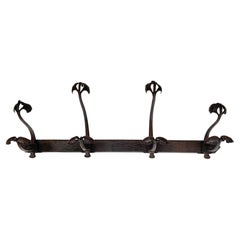
Edgar Brandt Art Deco Wrought Iron Coat Rack
By Edgar Brandt
Located in NANTES, FR
Art deco coat rack circa 1910 by Edgar Brandt. Stamped Brandt. Wrought iron decorated with ginko biloba leaves. In perfect condition, ready to hang. 2 fixing holes. Height: 34...
Category

Vintage 1910s French Art Deco Coat Racks and Stands

Materials

Wrought Iron

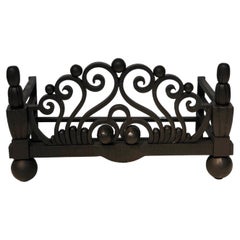
Art Deco Chenet in the Style of Sue and Mare
Located in NANTES, FR
Chenet, wrought iron fireplace log door, ar deco in the style of Sue et Mare. Object in perfect condition. Width: 54 cm Height: 31 cm Depth: 31 cm Weight: 21KG.
Category

Vintage 1920s French Art Deco Andirons

Materials

Wrought Iron

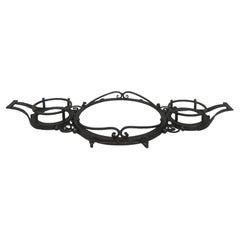
Art Deco Wrought Iron Tray
Located in NANTES, FR
Wrought iron tray around 1930. Finely hammered in the spirit of Edgar Brandt. Height: 7cm Length: 63cm Width: 27cm Weight: 2.7 Kg.
Category

Mid-20th Century French Art Deco Tray Tables

Materials

Wrought Iron

Zadounaisky Lampadaire Art Déco
By Michel Zadounaïsky
Located in NANTES, FR
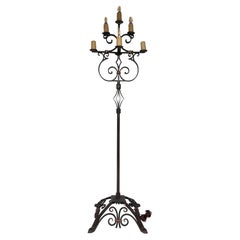
Zadounaisky Art Deco floor lamp Floor lamp circa 1930 in wrought iron with 7 branches and 7 LED bulbs. Finely hammered, electrified. In perfect condition. Total height: 171 cm Base: 44cm x 44cm Length: 48cm Width: 27cm Weight: 20 Kg you can contact me for more information and delivery costs. Son of Russian emigrants, Michel Zadounaisky moved to France in 1916. I In 1920, he discovered wrought iron work by joining the Fournet chandelier factory. He also devotes himself to embossing in the round, that is to say the confrontation with metal with the sole tool of a hammer, and with the help of fire, techniques in which he is a past master. In 1924, he opened his first studio in Lyon and worked there until 1953, when he became one of the emblematic figures of Lyon's decorative arts. Michel Zadounaisky regularly exhibits pieces influenced by the Art Deco style in the Salons Lyonnais. From the 1930s, his theme was personalized, and appeared a whole bestiary of animals sometimes bordering on the fantastic and the strange. Naturalized in 1948, Michel Zadounaisky continues to create, in close and intimate collaboration with Buer (binder) and Dumaine (glassmaker), objects intended for a wealthy and enlightened clientele. Eager to abolish the boundary between the liberal arts and the useful arts, he is a craftsman, an artist, and perhaps the only Art Deco iron sculptor...
Category

Vintage 1930s French Art Deco Floor Lamps

Materials

Wrought Iron

Art Deco floor lamp by Jules Cayette and Schneider
By Charles Schneider, Jules Cayette
Located in NANTES, FR
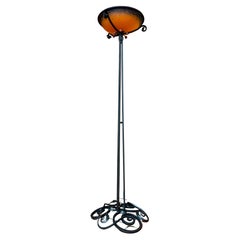
Art Deco floor lamp circa 1925. Wrought iron base by Jules Cayette. Glassware by Charles Schneider. 1 basin of 40 cm in diameter and 6 blown glass balls. In perfect condition, electrified, 3 lights. Height: 167.5 cm Base diameter: 49 cm Basin diameter: 40 cm Weight: 16 Kg Édouard Élie Jules Cayette, born on May 27, 1882 in Paris and died on January 2, 1953 in Nancy, was a French ironworker, bronze worker, cabinetmaker, sculptor and interior decorator, representative of the Art Nouveau movement, then of that of Art Deco. In 1896, he enrolled for the first time at the municipal and regional school of fine arts in Nancy. He left the school in 1899 and entered as an apprentice with Férez, a wood sculptor and carpenter from Nancy. In 1900, he re-enrolled at the Beaux-Arts in Nancy, while continuing his apprenticeship with Schwartz. He left the school for good in 1902. During this apprenticeship, he received instruction from Victor Prouvé and Eugène Vallin. His classmates were Auguste Vallin, Joseph Mougin and Pierre Mougin. In 1904, he joined Jacques Gruber as a collaborator, where he perfected his style. He modeled many compositions and made sculptures in place of the master as far as furniture was concerned. The workshop then adjoined that of Vallin, hence the latter's definite influence on Cayette's early works. In 1910, Jules Cayette set up his own business and officially began his activity on August 1st. From 1912, he exhibited regularly at the Société lorraine des amis des arts. It was at this time that he met his main patron, Saint-Just Péquart (1881-1944). He set up his first workshop on rue Collinet de La Salle in Nancy in 1913, the date of his first mention in the Meurthe-et-Moselle commercial directory. He married Marie Lucie Berche (1893-1933) on May 11, 1918. In 1919, he moved and set up his workshop at 63, rue des Jardiniers (which would be supplemented by the one on rue du Montet, currently avenue du Général Leclerc, bought from the widow Guth). The 1920s were the glory years of the workshops, which employed a dozen workers. The productions were very varied: from bronze ashtrays to light fixtures — always with Daum glassware...
Category

Vintage 1920s French Art Deco Floor Lamps

Materials

Wrought Iron

Art Deco Wrought Iron Desk Lamp
Located in NANTES, FR
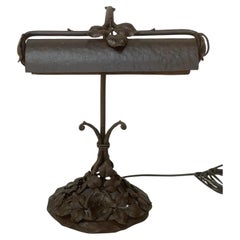
Desk lamp circa 1925. In wrought iron with floral decoration. In perfect condition and electrified. Total height: 37 cm Base diameter: 18 cm Weight: 1.8 Kg
Category

Vintage 1920s French Art Deco Table Lamps

Materials

Wrought Iron

You May Also Like

Jacques Adnet Style Magazine Rack, France 1950 s
By Jacques Adnet
Located in New York, NY
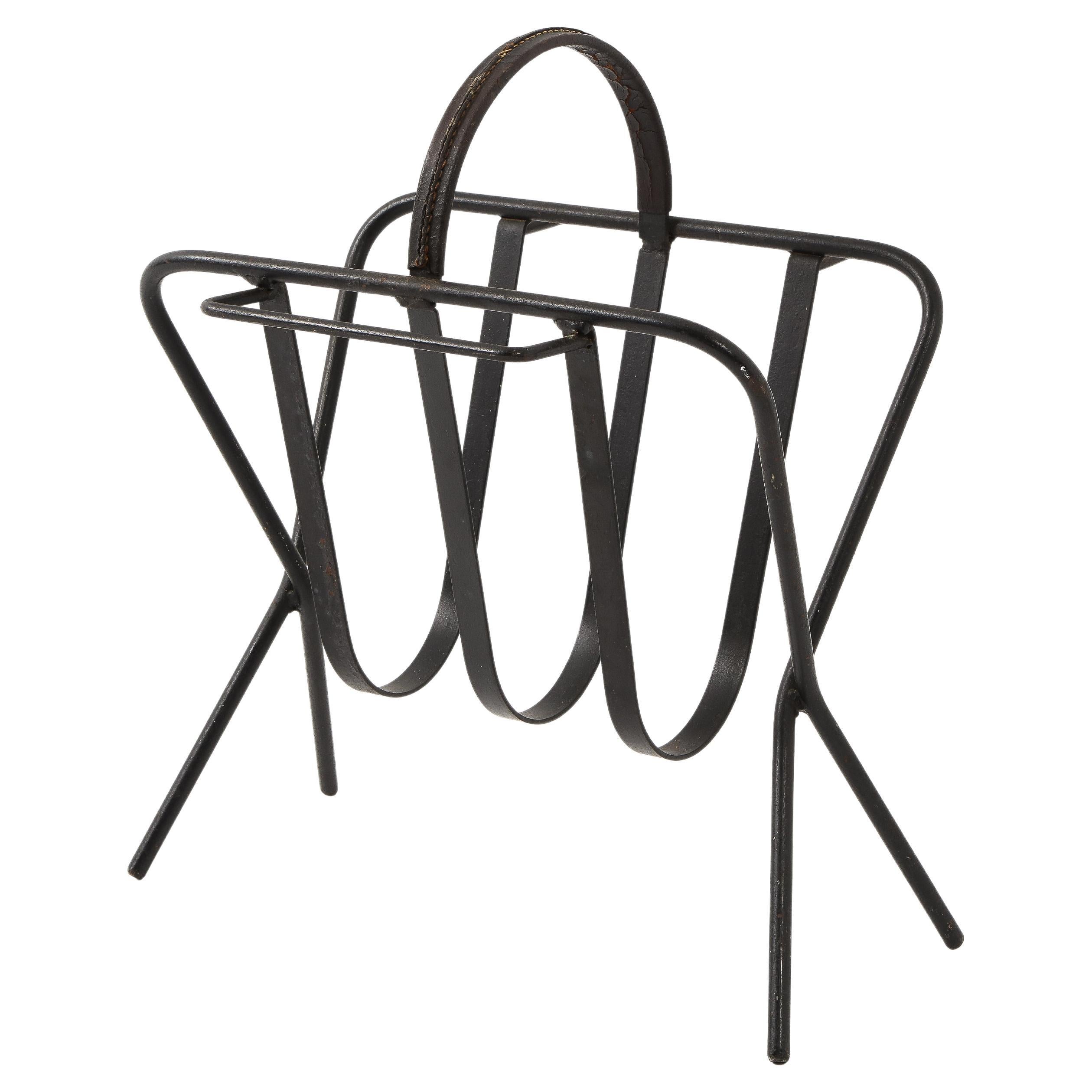
Wrought iron and stitched leather magazine holder by Jacques Adnet.
Category

Mid-20th Century French Mid-Century Modern Magazine Racks and Stands

Materials

Wrought Iron

Jacques Adnet Magazine Holder
By Jacques Adnet
Located in Beverly Hills, CA
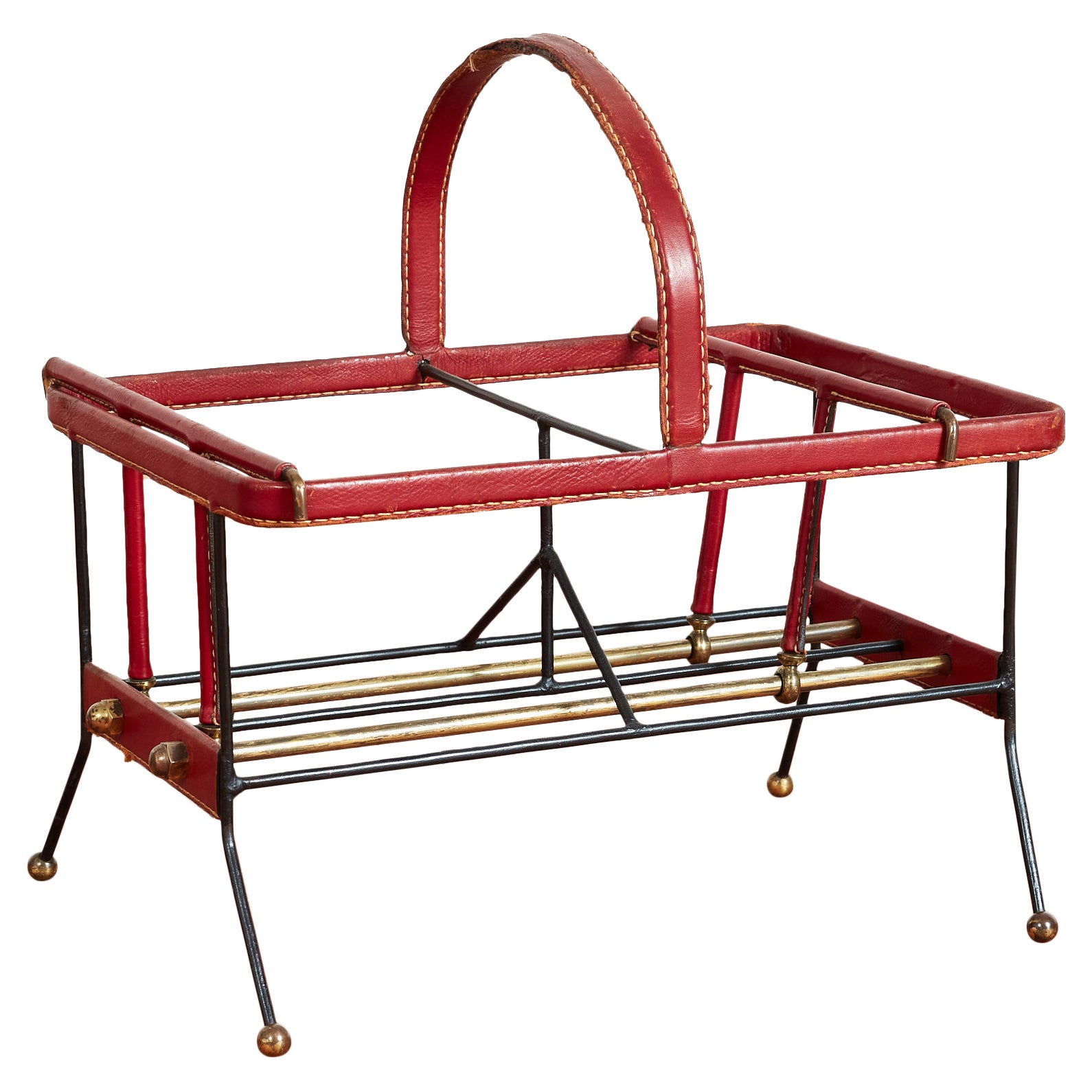
Jacques Adnet magazine or book holder in red leather, iron and brass Sliding dividers on both sides to keep books or magazine in place.
Category

Vintage 1940s French Magazine Racks and Stands

Materials

Brass

French Jacques Adnet Magazine Rack
By Jacques Adnet
Located in Miami, FL
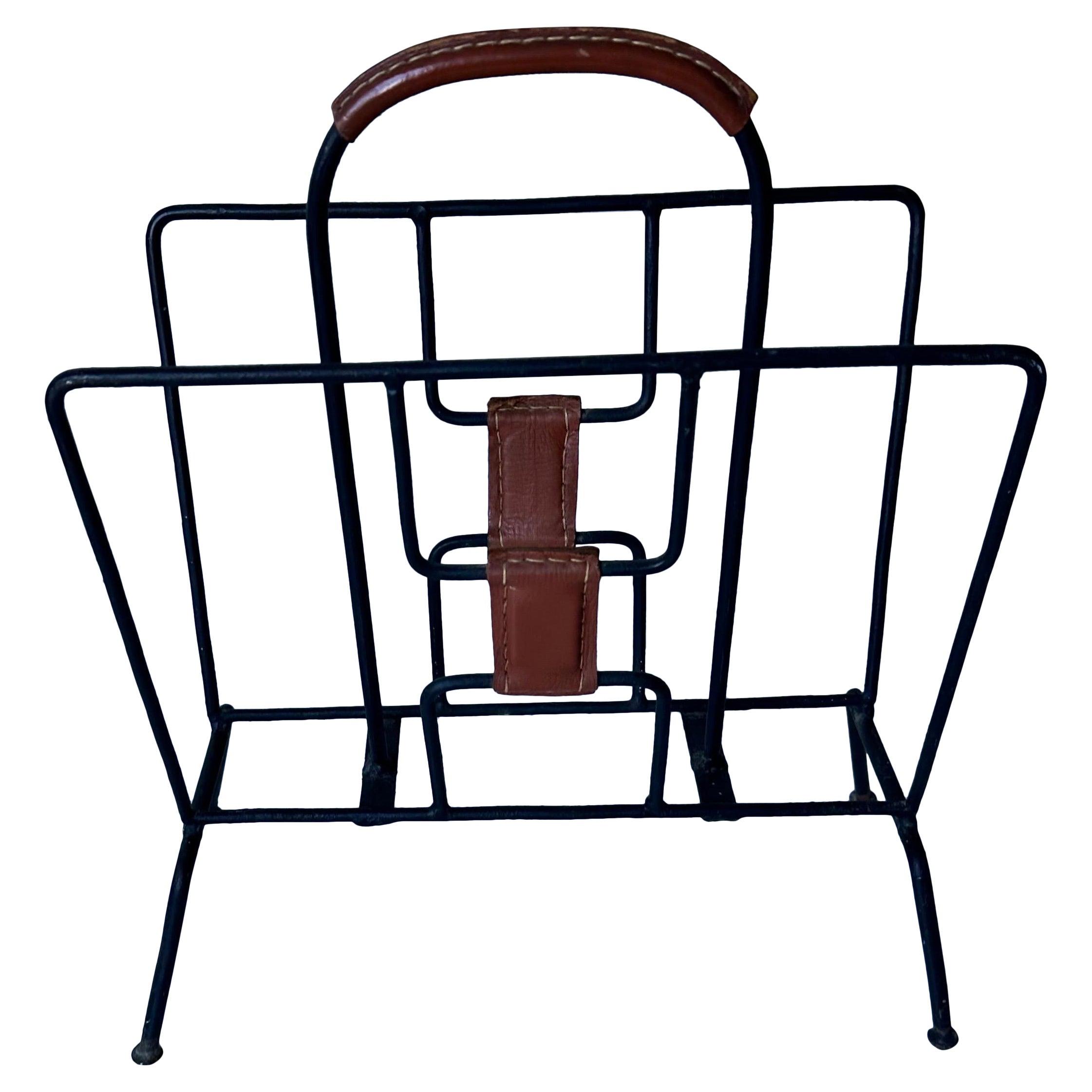
French Jacques Adnet Magazine, wrought iron and leather circa 1960.
Category

Vintage 1960s French Art Deco Magazine Racks and Stands

Materials

Wrought Iron

Jacques ADNET French Mid-century Magazine Rack 1950s
By Jacques Adnet
Located in Saint-Amans-des-Cots, FR
French Mid-century magazine rack by Jacques ADNET, France, 1950s. Magazine rack in leather and iron with two compartments and pastille base. Height : 16.25"(41.3cm), Width : 16.25"(4...
Category

Vintage 1950s French Mid-Century Modern Magazine Racks and Stands

Materials

Iron

Jacques ADNET French Mid-century Magazine Rack, 1950s
By Jacques Adnet
Located in Saint-Amans-des-Cots, FR
French Mid-Century Modern Magazine Rack by Jacques Adnet, France, 1950s. Elegant French Mid-Century Modern magazine rack by Jacques Adnet, designed in France during the 1950s, a per...
Category

Vintage 1950s French Mid-Century Modern Magazine Racks and Stands

Materials

Iron

Jacques Adnet Iron Magazine Rack Midcentury, 1940, 1950, France
By Jacques Adnet
Located in New York, NY
Jacques Adnet iron magazine rack midcentury, 1940, 1950, France. Classic Jacques Adnet magazine rack with brass trim on top. Same era as: Charlotte Perriand, Jean Prouve, Pierre Pa...
Category

Mid-20th Century French Art Deco Magazine Racks and Stands

Materials

Iron