15th Century and Earlier Furniture
to
52
297
140
512
4
2
1
1
1,600
2,292
5,046
8,491
1,341
1,891
1,250
213
57
183
149
90
233
282
292
187
90
168
160
114
61
52
217
132
108
84
70
512
512
512
1
1
1
1
Period: 15th Century and Earlier
Search Within: Ancient
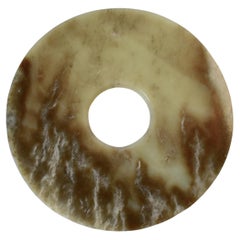
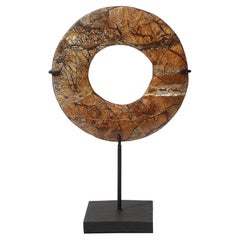
Archaic Jade Bi, Zhou Dynasty
Located in Atlanta, GA
Translucent green and brown jade Bi from the Zhou Dynasty (1046 B.C. to 256 B.C.). The organic shapes created by the blending of these two main colors evoke a flame-like beauty, whil...
Category
Chinese Antique 15th Century and Earlier Furniture
Materials
Jade
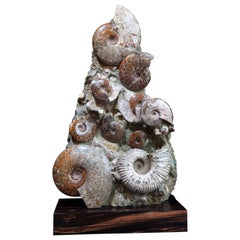
Giant Ammonite Cluster from Madagascar
By Dale Rogers Ammonite
Located in London, GB
Rare ammonites from Madagascar are highly sought after by collectors and paleontologists due to their exceptional preservation and unique features. These...
Category
Malagasy Antique 15th Century and Earlier Furniture
Materials
Stone
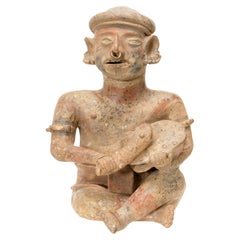
Prehistoric Majested Seated Drummer Figurine
Located in Coeur d
Alene, ID
Prehistoric majestic seated drummer figurine from Nayarit, West Mexico. Sporting a nose ring, complex ear ornaments, armlets and an open mouth that would seem to indicate a 'singing'...
Category
American Native American Antique 15th Century and Earlier Furniture
Materials
Clay
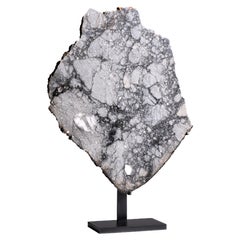
Mosaic-like Lunar Meteorite Cross Section
Located in London, GB
This spectacular polished slice of the Lunar meteorite Gadamis 004, reveals a mosaic-like interior, evoking the surface of the Moon as seen by the eye on a clear night. Weighing 149 ...
Category
Antique 15th Century and Earlier Furniture
Materials
Stone
Neolithic Chinese Red Soapstone Bi Disc Carving on Iron Base
Located in New York, NY
This exquisite red soapstone Bi disc is a remarkable artifact from Neolithic China, dating back to the 3rd millennium BC. Set on a modern iron base, the disc reflects the timeless be...
Category
Chinese Chinese Export Antique 15th Century and Earlier Furniture
Materials
Soapstone, Iron
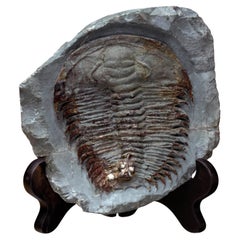
Paradoxides Trilobite Fossil
Located in New York, NY
This Paradoxides trilobite specimen presented as-unearthed in matrix dates back over 499 million years to the Middle Cambrian Epoch. Paradoxides is one of the earliest known genus of...
Category
Asian Antique 15th Century and Earlier Furniture
Materials
Other
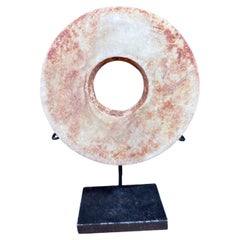
Chinese Rare Large Yellow Jade Bi Disc with Vibrant Colors
Located in South Burlington, VT
A rare handsome Chinese Heavenly jade Bi disk carved in a rarely found combination of mutton fat yellow and green jade with patches of brown accents in the stone that depict a green ...
Category
Chinese Antique 15th Century and Earlier Furniture
Materials
Jade

$316 Sale Price
20% Off
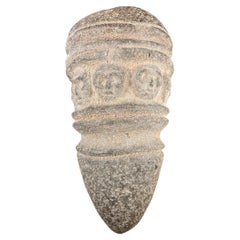
Columbia River Massive Pre Contact Carved Stone Nine Effigies Ceremonial Mortar
Located in South Burlington, VT
From Native America's Northwest Columbia River area comes this substantial and unique ancient hand carved basalt stone ceremonial bowl or mortar possessing nine (9) human like heads within a circular double band, Columbia River.
It comes from a private Colorado collection.
The stone hand carved from a large basalt...
Category
American Native American Antique 15th Century and Earlier Furniture
Materials
Stone
$6,195 Sale Price
27% Off
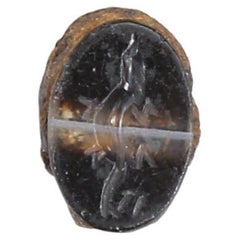
Original Antique (3rd Century AD) Roman Carved Agate Intaglio
Located in BENSENVILLE, IL
Intaglio is a technique which dates back to antiquity and is still in use today. Images are carved or engraved in gemstones leaving a hollow impression in the untouched background. T...
Category
Italian Antique 15th Century and Earlier Furniture
Materials
Agate
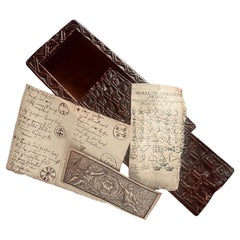
Antique Gothic Judaica Box with Kabbalistic Seals and Sacred Texts
Located in Doha, QA
This rare and evocative Medieval Gothic box contains a powerful combination of Salomon’s Kabbalistic seals, a sacred ex libris dedicated to God, and a Star of David inscribed with He...
Category
German Renaissance Antique 15th Century and Earlier Furniture
Materials
Wood, Paper
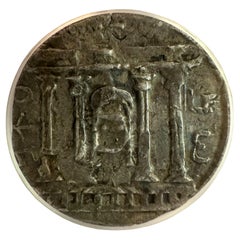
Rare RM Jewish Judaea Silver Tetradrachm AD 134–135 Hadrian Jewish Uprising
Located in New York, NY
This is a rare and historically significant Roman Provincial silver tetradrachm, minted in Jerusalem during AD 134–135, under the rule of Emperor Hadrian. Struck at the height of the...
Category
Israeli Antique 15th Century and Earlier Furniture
Materials
Silver
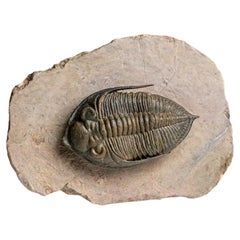
Genuine Trilobite (Zlichovaspis rugosa) Fossil on Matrix (1.5 lbs)
Located in New York, NY
This is a beautiful trilobite (Zlichovaspis rugosa) from Atchana, Morocco. It is laid out nice and prone with excellent detail including visible eye facets in both eyes.
Trilobites ...
Category
Moroccan Antique 15th Century and Earlier Furniture
Materials
Cement, Other
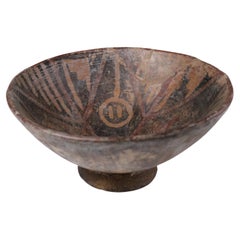
Pre-Columbian Nariño Footed Polychrome Bowl
Located in Topanga, CA
A striking example of Pre-Columbian artistry, this footed bowl hails from the Nariño culture of southern Colombia, dating from 850–1500 AD. Crafted with a rich red-orange slip and ad...
Category
Ecuadorean Pre-Columbian Antique 15th Century and Earlier Furniture
Materials
Terracotta
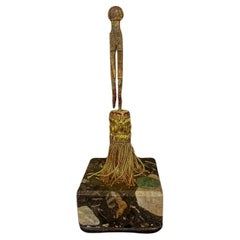
Antique Roman Bronze Rare Architects Geometrical Compass/Divider 3.AD
Located in Doha, QA
Extremely rare and one of a kind ancient Roman bronze geometrical compass/divider. It is in an excellent condition for its age. The Compass is displayed on a dark marble block with a...
Category
Italian Classical Roman Antique 15th Century and Earlier Furniture
Materials
Stone, Bronze
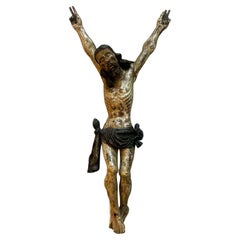
Rare Antique Gothic Corpus Christi 1480 -1530
Located in Doha, QA
An extraordinary and museum-worthy 15th century Gothic Corpus Christi, masterfully hand-carved in wood with exceptional anatomical detail and partially polychromed in white and royal...
Category
German Gothic Antique 15th Century and Earlier Furniture
Materials
Wood
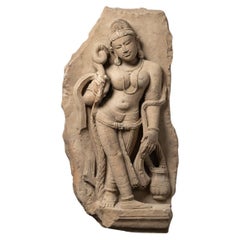
13-14th century Antique Indian sandstone Apsara statue from India
Located in DEVENTER, NL
This antique Indian sandstone Apsara statue is an extraordinary and rare piece of sacred art, dating back to the 13th–14th century and originating from t...
Category
Burmese Antique 15th Century and Earlier Furniture
Materials
Sandstone
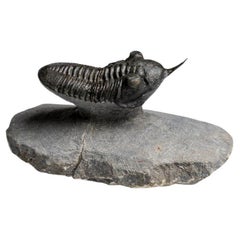
Phacopid (Morocconites Malladoides) Trilobite from Morocco (276.2 grams)
Located in New York, NY
Here is one of the more unusual species of trilobites, a Morocconites malladoides from the Devonian of Morocco. It's a member of the Phacopida trilobites and has a very defining feat...
Category
Moroccan Antique 15th Century and Earlier Furniture
Materials
Cement, Other
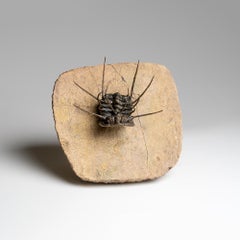
Spiny Ceratarges Trilobite Fossil on Matrix from Morocco (299.6 grams)
Located in New York, NY
This alien-looking trilobite, known as Ceratarges ziregensis, has a strikingly otherworldly appearance. It's difficult to believe that this creature once roamed the ancient seas. Fou...
Category
Moroccan Antique 15th Century and Earlier Furniture
Materials
Cement, Other
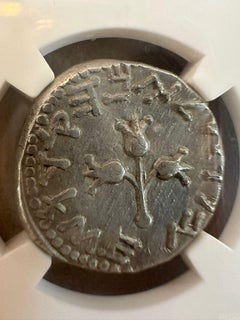
Jewish Judaea Silver Shekel – Year 2 of the First Jewish Revolt (AD 67/68)
Located in New York, NY
This silver shekel, weighing 14.32 grams, was struck in Judaea during the First Jewish–Roman War, a significant period of resistance against Roman occupation that lasted from AD 66 t...
Category
Israeli Antique 15th Century and Earlier Furniture
Materials
Silver
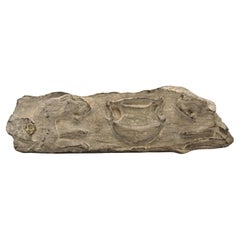
A Rare Second Temple Period Limestone Table Fragment, Jerusalem, 1st Century BCE
Located in New York, NY
A Rare Second Temple Period Limestone Table Fragment – Featuring Lions of Judah – Jerusalem, Circa 1st Century BCE – 1st Century CE
A remarkably evocative artifact from the very hea...
Category
Israeli Antique 15th Century and Earlier Furniture
Materials
Limestone
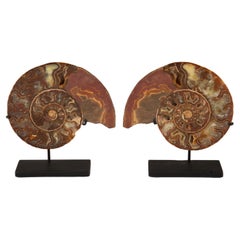
Mounted Terracotta Ammonite 5" Pair
Located in New York, NY
Pair of Fossilized Ammonite Slices on Custom Metal Bases. This stunning pair of fossilized ammonite slices showcases the intricate and mesmerizing patterns of these ancient marine mo...
Category
Antique 15th Century and Earlier Furniture
Materials
Stone, Metal
$800 / set
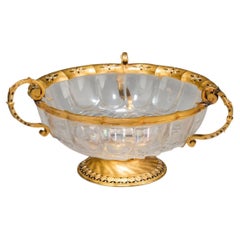
Exquisite 13th Century Rock Crystal and Gold Bowl in Superb Condition
Located in London, GB
Rock crystal vessels were highly demanded and valuable in Medieval times. Inventories from European royal houses and the highest aristocratic families detail the important and sophisticated collections of ewers and bowls. Rock crystal has also been used extensively in religious art. Fine European reliquaries were also made of Rock Crystal including gems, enamel and other precious materials. The work of rock crystal is very ancient. The materials has been worked and valued for its solidity and its purity: it has been believed to be water ice permanently frozen.
Our superb example is a gold-mounted rock crystal bowl with enamel.
The items origin is not clear and various features and characteristics may lead us to think of different origins and periods of creation.
A single piece of stone mounted with gold could be a Milanese work. Although the cut could be French as similar pieces belonged to the French royalty (especially the art lover Duc de Berry, (1340-1416)). French and Italian crystal cutters have been active at the same time and it is often difficult to differentiate their works.
Islamic art also influenced European artists. The famous Fatimid treasury provided examples of their sophistication and quality. The seven ewers carved for the Fatimid Imans (known as "The Magnificent Seven") display impressive quality of both rock crystal and enamelled mounts.
Even though not identical to works by French silversmith Jean-Valentin Morel who was appointed goldsmith to Queen Victoria in 1852 or Reinhold Vasters (1927-1909) another renown German goldsmith who embellished older rock crystal items, there are similarities between these works. Both reduce their use of colour to black and white on pure gold mounts. Moreover the black enamel design is quite similar. Also, no gems are included and no human figure is represented.
Sotherby's described our bowl as a "German Rock crystal bowl with later gold mounts, 15th century." Other items from the period from Germany or Austria are usually silver mounted and the decorations are more colourful and include gems or human figures but they have in common enamel motifs.
In our case, the gold foot, handles and rim could date from the 1900s. An expert has established the foot, handles and rim are pure gold. The goldsmith responsible for the improvement of the bowl is possibly the most famous Reinhold Vasters whose work has been displayed in the greatest museums such as the V&A in London and the Metropolitan Museum of Art in New York.
The Rock Crystal bowl we have is gold mounted. The gold shows in enamelled details that are black and white. The gold handles are also enamelled with black acanthus-like leaves.
The enamelling method could be "champleve" or "painting metal". The metal that is usually preferred is copper but these techniques are also applied to gold.
The bowl itself could be from the 14th century. It's cut reminds of an estimated 14th century rock crystal ball bearing the Buoncompagni family arms...
Category
Italian Antique 15th Century and Earlier Furniture
Materials
Rock Crystal
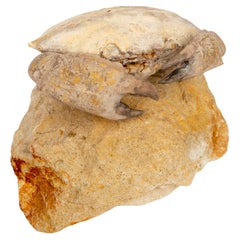
Crabby Time Capsule: Fossilized Eocene Crab from Monte Baldo Italy
Located in New York, NY
This exceptional fossilized crab (Harpactocarcinus) originates from the Eocene period and was discovered in Monte Baldo, Italy. Measuring 4 inches in height, this well-preserved spec...
Category
Italian Antique 15th Century and Earlier Furniture
Materials
Stone
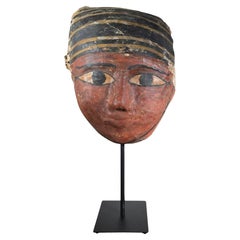
Original Egyptian Cartonnage Mask – Ptolemaic Period
Located in Madrid, ES
An important Egyptian sarcophagus mask from the Ptolemaic Period (711–332 B.C.), crafted with remarkable artistry and historical significance.
Material: Made from stuccoed linen tex...
Category
Antique 15th Century and Earlier Furniture
Materials
Gesso
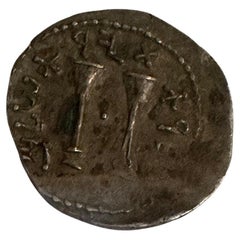
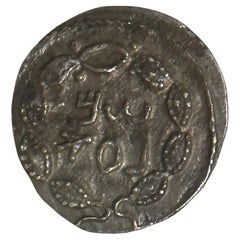
Rare Bar Kokhba Revolt Jewish Silver Zuz (132–135 AD) — Grapes
Temple Trumpets
Located in New York, NY
This silver AR Zuz, weighing 3.13 grams, was minted during the Bar Kokhba Revolt, a defining moment in Jewish resistance against Roman rule between 132 and 135 AD. Struck in the thir...
Category
Israeli Antique 15th Century and Earlier Furniture
Materials
Silver
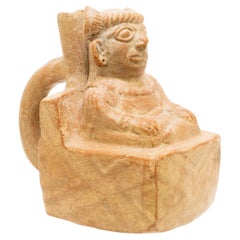
Moche Red Ware Pottery Vessel
Located in Coeur d
Alene, ID
Moche Red Ware Pottery Vessel with man figure. Moche Horizon of Peru, Circa 450 - 550 CE. In overall good condition, some chipping around the mouth of the narrow spout, and there’s a small spiderweb push on the back of the jar that appears to have resulted from a probe that penetrated the left side just below the figure (two small holes, one on the front upper left corner of the throne, and the other just around to the side, have been repaired). 6” x 4” x 6”. Ex. Hank Johnson Collection.
Hank Johnson was a geologist, and passionate collector of historical and ancient artifacts. Starting with relics and bottles from ghost towns, he later focused on Anasazi pottery...
Category
Peruvian Antique 15th Century and Earlier Furniture
Materials
Pottery
Pre-Columbian Jalisco Red Ware Dog Vessel
Located in Coeur d
Alene, ID
Jalisco Red Ware Quadruped Dog Vessel. 5” x 4” x 4”. 100 BCE - 250 CE. Ex. Hank Johnson Collection. Hank Johnson was a geologist, and passionate collector of historical and ancient a...
Category
Mexican Antique 15th Century and Earlier Furniture
Materials
Clay

Pre-Columbian Central Mexico Pottery Man
Located in Coeur d
Alene, ID
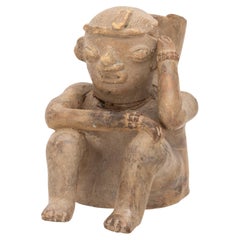
Pre-Columbian central Mexico pottey man. Probably Tlatilco. Seated man figure vessel. 4” x 3” x 4 ¼”. 100 BCE - 250 CE. Ex. Hank Johnson Collection. Hank Johnson was a geologist, and...
Category
Mexican Antique 15th Century and Earlier Furniture
Materials
Clay
Pre-Columbian Manabi (Ecuador) Pottery Dog
Located in Coeur d
Alene, ID
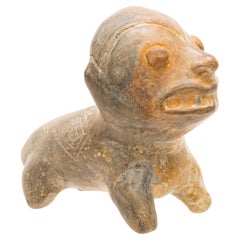
Manabi (Ecuador) Pottery dog figure with incising. 4 ½” x 2 ½” x 3 ½”. 100 BCE - 250 CE Ex. Hank Johnson Collection. Hank Johnson was a geologist, and pas...
Category
Mexican Antique 15th Century and Earlier Furniture
Materials
Clay
A Rare Yue Celadon Cong-Shaped Vase, Western Jin Dynasty(3-5th C)
Located in seoul, KR
This vessel is an exceptionally rare example believed to represent a Cong-shaped ceramic attributable to the Jin Dynasty, and it may be the only known ceramic work of this form from the period. While certain formal similarities have led some scholars to tentatively associate it with the Song Dynasty or later, the present work is more convincingly attributed to the Western Jin Dynasty (3rd–4th century CE).
The vessel is constructed with a cylindrical inner structure and a square outer profile, conforming to the characteristic geometry of the ancient Cong (琮) form. Its surface is decorated with restrained geometric incised patterns. This structural concept is directly derived from ancient jade Cong (玉琮), which represent the earliest and most authoritative prototypes of the form. Jade Congs...
Category
Hong Kong Antique 15th Century and Earlier Furniture
Materials
Celadon

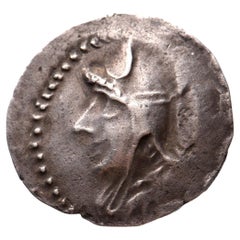
AR drachm Mithradates I, Hekatompylos
Located in UTRECHT, UT
Obverse: head left in bashlyk
Reverse: archer seated right on omphalos, three line legend, H
Not known to Sellwood, unpublished coin of Hekatompylos mint
Weight: 3.95 g
Grade: Abou...
Category
Greek Classical Greek Antique 15th Century and Earlier Furniture
Materials
Silver
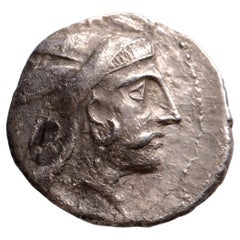
AR Drachm Bagadat, kingdom of Persis, Persepolis
Located in UTRECHT, UT
Obverse: head right, with mustache and earring, wearing diadem and kyrbasia
Reverse: fire temple of Ahura-Mazda, above, half-figure of Ahura-Mazda, to inner left, Baydād (Bagadat) st...
Category
Greek Classical Greek Antique 15th Century and Earlier Furniture
Materials
Silver
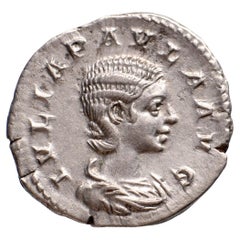
AR Denarius Julia Paula, wife of Elagabalus (219-220)
Located in UTRECHT, UT
Obverse: IVLIA PAVLA AVG, draped bust right, showing later coiffure with small bun
Reverse: CONCORDIA, Concordia seated left, holding patera, star in left field
Beautifully detaile...
Category
Italian Classical Roman Antique 15th Century and Earlier Furniture
Materials
Silver
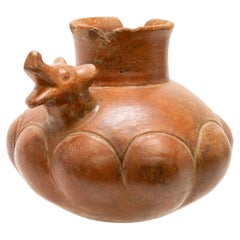
Pre-Columbian Prehistoric Large Pottery Dog Head
Located in Coeur d
Alene, ID
Large Pottery Dog Head from West Mexico. Lobed base with dog head emerging from upper shoulder of vessel. Chip on dog muzzle and jar rim. Dates between 200 BC and 200 AD. 7 ¼”D x 7 ¼...
Category
Mexican Antique 15th Century and Earlier Furniture
Materials
Clay
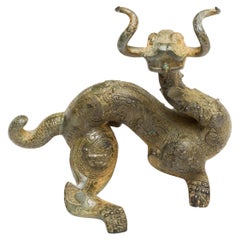
A Rare Gilt-Bronze Mythical Beast
Located in seoul, KR
Cast in bronze, this sculpture depicts a mythical beast with a sinuously curved body and an animated, rising posture. The overall form evokes a dragon or guardian creature, embodying...
Category
Hong Kong Antique 15th Century and Earlier Furniture
Materials
Bronze
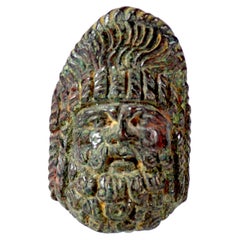
A Roman bronze applique in the shape of a theatre mask
Located in UTRECHT, UT
Mask of a bearded deity, short beard and hair braided in the characteristic high hairstyle, with layered ringlets on either side.
4 cm (h)
Green patina
...
Category
Italian Classical Roman Antique 15th Century and Earlier Furniture
Materials
Bronze
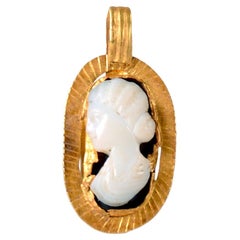
A Roman gold pendant with portrait cameo
Located in UTRECHT, UT
The loop attached to an oval fitting with radiant decoration. The cameo made of agate, showing the profile of a female bust with hair pinned up. The portrait in the style of Faustina...
Category
Italian Classical Roman Antique 15th Century and Earlier Furniture
Materials
Gold
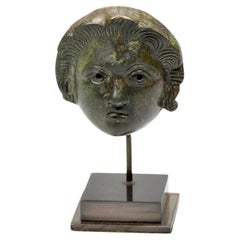
A Roman bronze head attachment of a youth
Located in UTRECHT, UT
A finely detailed appliqué with the face of a youth, wavy hair framing the circular face, with well defined eyes, pierced for inlays.
5.5 cm (h)
Provenance:
Ex Jean-Phillipe Mariaud de Serres...
Category
Italian Classical Roman Antique 15th Century and Earlier Furniture
Materials
Bronze
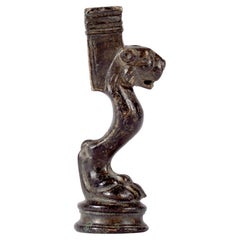
A Roman bronze foot
Located in UTRECHT, UT
With square fitting, hollow at the top for attachment to furniture, one large paw on round base sprouting into lion’s head with visible teeth.
9,5 cm (h)
Ex German private property...
Category
Italian Classical Roman Antique 15th Century and Earlier Furniture
Materials
Bronze
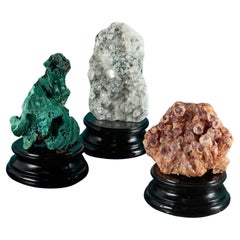
$4,023
Collection of 3 Natural Mineral Specimens
Located in Wormelow, Herefordshire
A fascinating collection of 3 natural mineral specimens.
Each presented on an exclusive small painted display plinth, this group contains a range of impressive cabinet specimens.
T...
Category
Brazilian Antique 15th Century and Earlier Furniture
Materials
Natural Fiber
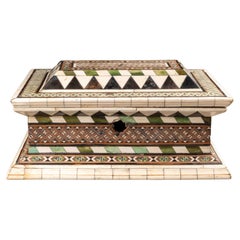
Embriachi workshop marquetry casket - Northern Italy, 15th century
Located in Bruxelles, BE
Embriachi workshop marquetry casket
Northern Italy, 15th century
Alla certosina inlays (bone, stained bone, pewter and wood)
H 28.2 x W 18 x D 14 cm
This beautiful casket of rectangular form is richly decorated with the characteristic geometric patterns of the Embriachi style.
The intricate geometric patterns are fashioned by juxtaposing lighter and darker pieces of wood, (colored) bone, horn and pewter. The lid and base are framed by a broad band of horn. When ivory became scarce in Europe due to disrupted trade routes, bone was substituted.
The attention to Symmetry and balance created an harmonious visual effect
Enhancing the overall aesthetic appeal of the casket.
The application of geometrical motifs is in Italy known as marquetry ‘alla Certosina’, named after the Certosina Church in Pavia with its famous altarpiece decorated in this way. This is ‘intarsia technique’, a term derived from the Arabic 'tarsi', which means ‘incrustation' recalling ancient mosaics made from various materials.
These geometric elements not only enhance the aesthetic appeal of the caskets but also demonstrate the versatility and skill of the artisans in creating multifaceted works of art.
‘Alla Certosina’ became famous through the Northern Italian Embriachi family who achieved a particularly high standard in working in this technique. Venice in particular was known for the production of these luxurious boxes. The caskets, hexagonal or rectangular, surmounted by a lid decorated in several registers constitute the secular, albeit equally renowned component of the workshop’s production, in addition to mirror frames and various everyday objects.
The method of fabrication of those objects was based on two concepts that underlay pre-industrial production: standardization and modularity, thanks to a distribution of skills according to the different phases of fabrication.
even the realization of the marquetry motifs (in the form of ingots from which portions of the desired size were cut) were therefore entrusted to various specialized craftsmen, as were the assembly phase.
Today better known thanks to the extensive research work recently carried out by Michele Tomasi, this workshop owes its name to its founder and owner, the Florentine Baldassare Ubriachi (or degli Embriachi), a merchant and banker established in the Tuscan capital before he settled in Venice in 1395. Together with sculptor Giovanni di Jacopo, who directed the workshop, from the last years of the fourteenth century, Baldassare oversaw a production that was truly original, and still easily recognizable today, comprising monumental altarpieces and various objects, primarily triptychs and caskets.
The precise location of the workshop is unknown, except that it originated in Florence and in ca. 1431 there was apparently a workshop in Venice, in the area of S Luca. They employed local workers specializing in 'certosina' (inlay of stained woods, bone and horn), and the workshop produced items carved in bone (usually horse or ox) with wood and bone marquetry.
The geometric decoration of Embriachi caskets reflects the artistic complexity and attention to detail that characterized their work.
this inlaid casket is a testament to the skill and artistry of the Embriachi family and serves as a stunning example of the decorative arts of the late Middle Ages.
Related Literature :
E. Berger, Prunk-Kassetten: Europäischen Meisterwerke aus acht Jahrhunderten / Ornamental Caskets...
Category
Italian Renaissance Antique 15th Century and Earlier Furniture
Materials
Pewter
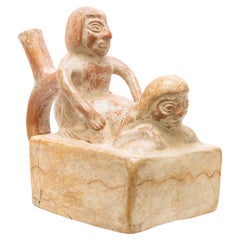
$20,118 Sale Price
22% Off
Prehistoric South American Moche Red Ware Vessel
Located in Coeur d
Alene, ID
Moche Red Ware pottery vessel with copulating motif. Horizon of Peru, Circa 450 - 550 CE. 9” x 5” x 7 ½”. Ex. Hank Johnson Collection. Hank Johnson was a geologist, and passionate collector of historical and ancient artifacts. Starting with relics and bottles from ghost towns, he later focused on Anasazi pottery...
Category
Peruvian Antique 15th Century and Earlier Furniture
Materials
Pottery
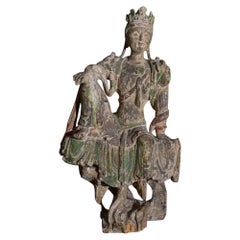
Chinese Guan Yin Figure Early Ming Dynasty
Located in Lymington, GB
A rare Chinese Guan Yin figure, early Ming dynasty (1368-1644).
Beautifully painted carved wood retaining a significant amount of its apparently or...
Category
Chinese Ming Antique 15th Century and Earlier Furniture
Materials
Wood
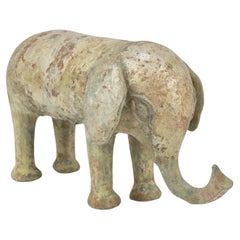
Green-Glazed Pottery Elephant, Han dynasty
Located in seoul, KR
This piece is an elephant statue made of green-glazed pottery. During the Han Dynasty, artworks depicting elephants were quite rare. However, such representations did occasionally appear. For example, the bronze vessel from the Han Dynasty housed in the Shanghai Museum is one of the notable examples of this type of craftsmanship. The existence of elephants in ancient China is attested both by archaeological evidence and by depictions in Chinese artwork. Long thought to belong to an extinct subspecies of the Asian elephant named Elephas maximus...
Category
Hong Kong Han Antique 15th Century and Earlier Furniture
Materials
Pottery
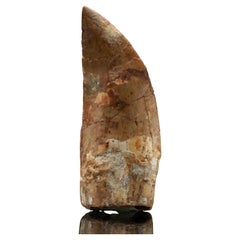
Carcharodontosaurus Tooth (African T-Rex)
Located in New York, NY
This genuine Carcharodontosaurus tooth is a prehistoric treasure from one of the most fearsome predators of the Cretaceous period. With its razor-sharp serrations and blade-like shap...
Category
Moroccan Antique 15th Century and Earlier Furniture
Materials
Bone
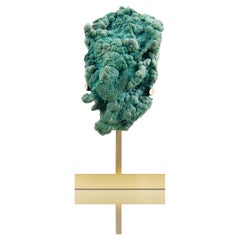
Malachite Crystal in Brass Stand
Located in Scorton, GB
A superior grade of Malachite crystal series prepared in-house and presented on a brass stand series, created for luxe settings within your home. Green-banded Malachite crystallises ...
Category
Congolese Prehistoric Antique 15th Century and Earlier Furniture
Materials
Malachite, Brass
Jewish Bar Kokhba Revolt Silver Zuz (AD 132–135) – Judaean Coin Certified by NGC
Located in New York, NY
This silver zuz coin, weighing 3.30 grams, was minted during the Bar Kokhba Revolt, a Jewish uprising against Roman rule in Judaea from AD 132 to 135. Undated but attributed to the y...
Category
Israeli Antique 15th Century and Earlier Furniture
Materials
Silver
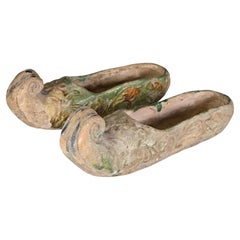
Pair of Sancai Glazed Tang Dynasty Ceramic Slippers
Located in Kilmarnock, VA
A remarkably rare and unusual pair of sancai-glazed slippers dating from the Tang Dynasty (618–907 CE). These were likely created as funerary mingqi—tomb objects made to accompany th...
Category
Chinese Tang Antique 15th Century and Earlier Furniture
Materials
Clay
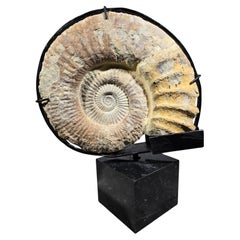
Large Ammonite Fossil - Mounted on Marble Base
Located in Madrid, ES
Presenting an impressive large ammonite fossil, elegantly mounted on a marble base, making it a stunning piece for both collectors and interior decorators. The fossil is securely hel...
Category
Antique 15th Century and Earlier Furniture
Materials
Stone
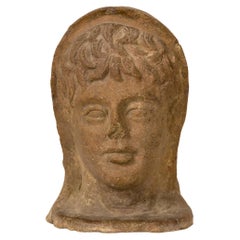
Etruscan Sculpture Head, 4th Century B.C., Italy
Located in Girona, Spain
DESCRIPTION: Etruscan sculpture head made with terracotta, the art represents a young man from the 4th century. It's a very decorative piece and the stat...
Category
Italian Classical Greek Antique 15th Century and Earlier Furniture
Materials
Terracotta
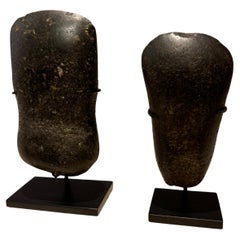
Pair of Neolithic Black Basalt Axe Heads, Great Britain Circa 2200 BC
Located in Stamford, CT
Two Black Basalt carved and polished Neolithic axe heads mounted on steel bases. These wonderful ancient objects are a testament to the artisans who crea...
Category
English Primitive Antique 15th Century and Earlier Furniture
Materials
Stone
Bactrian Bronze Age Marble Column Idol
Located in Vosselaar, BE
Bactrian marble column idol, circa 3000-2000 BC. It has an elegant tapering form with a undeep groove running on the top. The colomn has incrustation on the side where it laid on the...
Category
Afghan Archaistic Antique 15th Century and Earlier Furniture
Materials
Marble

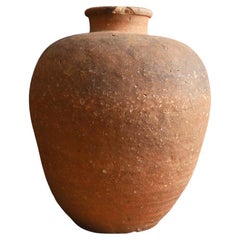
Japanese antique Shigaraki ware vase/withered wabi-sabi vase/16th century
Located in Sammu-shi, Chiba
This is Shigaraki ware pottery made in Shiga Prefecture, Japan. Shigaraki ware is said to have been born in the Shigaraki region of Shiga Prefecture around the 8th century and is one...
Category
Japanese Other Antique 15th Century and Earlier Furniture
Materials
Pottery
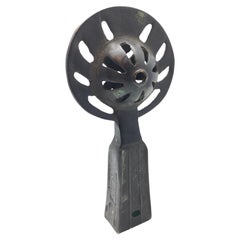
Chinese Ming Dynasty Bronze Luan Chariot Bell
Located in Point Richmond, CA
Cast with a globular top with a central aperture on both sides, pierced with radiating petals to one side, supported on a tall spreading foot of rectangular section cast with raised ...
Category
Chinese Medieval Antique 15th Century and Earlier Furniture
Materials
Bronze
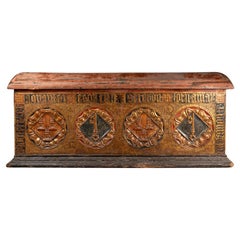
Rare pastiglia marriage chest - North of Italy, First half of 15th century
Located in Bruxelles, BE
Rare pastiglia marriage chest
North of Italy, Liguria or Piemonte
First half of 15th century
wood, gesso, partly gilded, form molded and painted
67 x 156 x 63 cm
Provenance :
Pri...
Category
Italian Renaissance Antique 15th Century and Earlier Furniture
Materials
Gesso, Wood
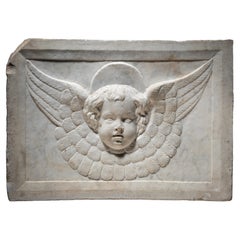
Cercle of Jacopo della Pila - Marble relief depicting a winged Cherub
Located in Bruxelles, BE
Cercle of Jacopo della Pila (Lombard, in Naples 1471-1502)
Marble relief depicting a winged Cherub
Naples, second half of15th century
40 x 57 x 12 cm
Exquisitely carved, this relief portrays a winged cherub with cascading hair and delicate features. The cherub's plump, smooth countenance, rounded cheeks, outlined lips, and finely drawn nose emanate a sense of tenderness. The quadrangular module, is adorned with a carved frame. The relief ascends gradually, transitioning from the low relief of the wings to the high relief of the head.
The rectangular frame and the subtly curved form of the artwork suggest that the relief likely adorned the upper part of an arch or a vaulted chapel. The type is that of the perspective room with a coffered ceiling decorated with figures of winged cherubs, which is found in various Neapolitan chapels of the 15th century. Coffered ceilings attest to the recovery of antiquity and the search for luxury in Renaissance architecture, first in Florence, then in Rome and Naples. The majority of the numerous family chapels and tombs built during the late fifteenth century in south of Italy employ the new formal vocabulary of the Florentine Renaissance in a self-confident manner that permitted a broad spectrum of variations.
The escalating admiration for the classical world, coupled with the development of perspective, significantly contributed to the Renaissance endorsement of coffered ceilings. This artistic and constructive device drew inspiration from the intricate marble patterns observed in historical landmarks such as the Arch of Titus, the Temple of Vesta in Tivoli, the Pantheon, and the Basilica of Maxentius. A distilled product of both mathematical and artistic cultures, deeply scrutinizing the ancient world, the coffered ceiling plays a vital role in the perspective construction of space with its regular and directional geometry. The motif of the coffered ceiling decorated with cherubs in relief was introduced in Naples by Francesco Laurana in the plastic decoration of the Arch of Castelnuovo. Laurana's impact on the art scene in the south of Italy was profound. The introduction of the winged cherub into the region's artistic vocabulary bridged the gap between the classical and the contemporary, creating a synthesis that resonated with both aesthetic and spiritual sensibilities. His influence extended beyond the immediate visual appeal, shaping the cultural identity of the Renaissance in southern Italy. Although the plastic decoration of the Arch of Castelnuovo cannot certainly be ascribed to a mature Renaissance style, it was precisely on this occasion that the sculptors who worked there could get to know and export throughout the Italian peninsula that type of "Florentine classicism" which, even in the 15th century Naples, was conditioned by the Burgundian culture imported into the Kingdom by Alfonso of Aragon himself, with artists called from Spain and Northern Europe. The coffered ceiling, with its geometric patterns and Laurana's winged cherubs nestled within, became a symbol of refinement and cultural sophistication. The relief sculptures, carefully integrated into the overall design, transformed the ceiling into a celestial realm, inviting viewers to contemplate the divine while immersed in the grandeur of the Renaissance space.
Similar winged cherubs appears also in the Naples cathedral. Within the renowned Succorpo Chapel, a mesmerizing marble coffered ceiling adorned with cherubs epitomizes the splendor of the Neapolitan Renaissance. The interplay of light and shadow on the textured surface of the marble coffered ceiling introduces an ethereal dimension, providing an immersive visual experience for observers. The geometric precision and the repeated patterns, reminiscent of classical motifs, establish a sense of harmony and balance that has become the hallmark of the Neapolitan interpretation of Florentine Renaissance aesthetics.
Although probably intended to be admired from a distance, this cherub is intricately detailed and exquisitely rendered: the face and hair are elegantly outlined and the feathers are textured through juxtaposed lines. The marble, both figurative and decorative, adheres to the principles of balance and restrained ornamentation typical of the « Florentine Classicism ». Harmonious shapes and gracefully orchestrated curves , rooted in the classical repertoire, converge to evoke a sense of ethereal beauty. The surface displays the masterful use of a chisel to intricately carve the feathers and facial features, creating an almost abstract quality.
This work is a testament to a sculptor of great skill and rich figurative knowledge, seamlessly blending classical firmness in contours with a refined treatment of the marble's surface. The combination of tradition and innovation point to a stylistic idiom from Lombardy, in particular we can find some comparaisons with the works of Jacopo della Pila, sculptor of Lombard origin working in Naples in the second half of the 15th century. He is documented there between 1471 and 1502, and is a protagonist of the Aragon Renaissance in the second half of the Quattrocento, together with the other great Northern sculptor active in the kingdom, Domenico Gagini.
the first commission he received dates back to August 9, 1471, when Jacopo publicly committed to sculpting the funerary monument of Archbishop Nicola Piscicelli to be placed in the Cathedral of Salerno. The last known work is an altar ordered on July 29, 1502, by the noble Jacopo Rocco for the church of San Lorenzo Maggiore in Naples. Between these two chronological extremes (1471-1502), we must place the fervent activity of the artist, who had trained in Rome, perhaps under the guidance of Paolo Romano but also engaged in dialogue with other major artists of the city, especially Isaia da Pisa. He enriched his experience in Naples, initially drawing inspiration from the works of Domenico Gagini and later from the Tuscan masterpieces of Antonio Rossellino and Benedetto da Maiano destined for the church of Santa Maria di Monteoliveto. Jacopo della Pila's artistic personality is thus based on a complex interplay of influences, contributing to the definition of a highly personal style.
Close comparaison can be made between our cherub and the winged angels reliefs...
Category
Italian Renaissance Antique 15th Century and Earlier Furniture
Materials
Marble
$22,721 Sale Price
20% Off
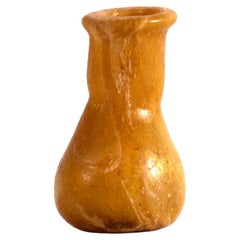
A Roman yellow glass unguentarium
Located in UTRECHT, UT
Belly-shaped with cylindrical neck and with folded down collar rim, the unguentarium with twisted glass decoration with white intertwining the main yellow colour
4.5 cm (h)
Intact
Ex. German private collection H.G., collected between 1970s-1990s
Roman glass was used primarily for the production of vessels. It developed from Hellenistic technical traditions, initially concentrating on the production of intensely coloured cast glass vessels...
Category
Italian Classical Roman Antique 15th Century and Earlier Furniture
Materials
Glass
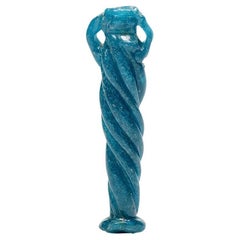
A Late Roman turquoise glass rod-formed balsamarium
Located in UTRECHT, UT
Glass balsamarium with a twisted tubular body, tapering towards the applied disc base, with two trailed handles
12.0 cm (h)
Provenance:
Ex anonymous Sale; Pierre Bergé Auctioneers, Paris, 17 January 2009, lot 38
Roman glass was used primarily for the production of vessels. It developed from Hellenistic technical traditions, initially concentrating on the production of intensely coloured cast glass...
Category
Italian Classical Roman Antique 15th Century and Earlier Furniture
Materials
Glass
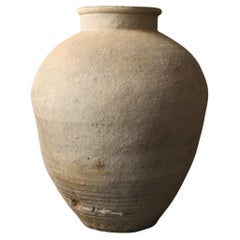
Japanese antique pottery, rare Shigaraki ware vase/ Withered grayish white vase
Located in Sammu-shi, Chiba
This is a Shigaraki ware ceramic piece, crafted in Shiga Prefecture, Japan. Shigaraki ware originates from the Shigaraki region and dates back as far as the 8th century. It is one of...
Category
Japanese Other Antique 15th Century and Earlier Furniture
Materials
Pottery
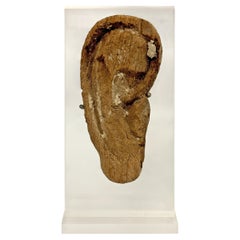
Late-Period to Ptolemaic Period Egyptian Wooden Mummy Mask Ear on Custom Mount
Located in Chicago, IL
This Late Period to Ptolemaic Period Egyptian carved wood ear, once part of a mummy mask, stands as a poignant testament to ancient Egyptian customs and beliefs. Dating back over 250...
Category
Egyptian Egyptian Antique 15th Century and Earlier Furniture
Materials
Wood
More Ways To Browse
Black Forest Wood Frame
Black Gold Jar
Blanc De Chine Guanyin
Blessed Virgin Mary
Blue And White Lidded Temple Jars
Blue Uranium Glass
Blue White Clock
Blue Yellow Pottery
Boffi Kitchen
Bombay Chest Italy
Book Table Stand
Boudoir Set
Brands Of Vintage Glass
Brass Heron Sculpture
Bread Cabinet
Bronze Lalanne
Bronze Spoons
Burl Bedside Chests