15th Century and Earlier Furniture
to
52
297
140
512
4
2
1
1
1,600
2,292
5,045
8,488
1,341
1,891
1,250
213
57
183
149
90
233
282
292
187
90
168
160
114
61
52
217
132
108
84
70
512
512
512
1
1
1
1
Period: 15th Century and Earlier
Search Within: Ancient
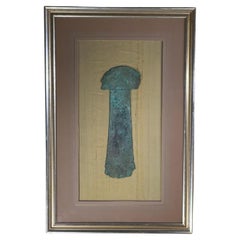
Original Pre Colombian Copper Tumi Tool
Located in Delray Beach, FL
Ancient pre Colombian surgical copper tumi tool, processionally mounted on silk Matt with decorative quality vintage frame .
Original cloth encrustation and wrapping patterns visible...
Category
Peruvian Antique 15th Century and Earlier Furniture
Materials
Copper
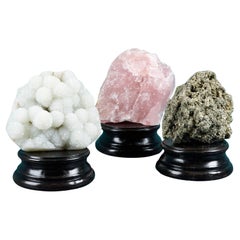
Collection of 3 Large Natural Cabinet Minerals
Located in Wormelow, Herefordshire
A collection of 3 large natural mineral specimens, each presented on an exclusive medium neoclassical style plaster plinth.
Each impressive cabinet specimen, including a Chalcedony,...
Category
Malagasy Antique 15th Century and Earlier Furniture
Materials
Natural Fiber
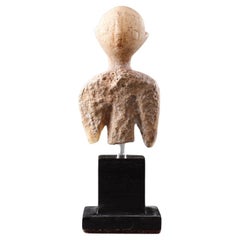
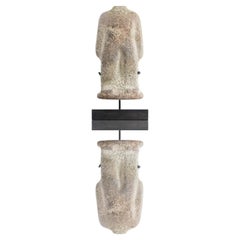
An Anatolian Marble ‘Star Gazer’ Figure
Located in London, GB
An Anatolian Marble ‘Star Gazer’ Figure
Marble
Anatolian
Early Bronze Age / Circa 2700 - 2100 BC
Size: 5cm high, 3cm wide - 2 ins high, 1¼ ins high
The highly stylised oval head wi...
Category
Turkish Antique 15th Century and Earlier Furniture
Materials
Marble
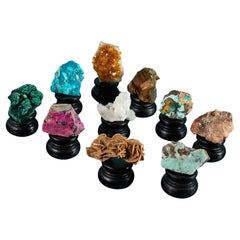
Collection of 10 Natural Mineral Specimens
Located in Wormelow, Herefordshire
A varied and fascinating collection of 10 natural mineral specimens, ex. private British collection.
Each presented on an exclusive small painted display plinths, this group contain...
Category
Mexican Antique 15th Century and Earlier Furniture
Materials
Natural Fiber
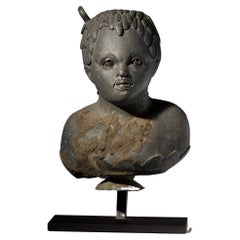
Balsamarium shaped as a Bust of a Black Boy - Roman, 1st – 2nd Century AD
Located in Bruxelles, BE
Balsamarium shaped as a Bust of a Black Boy
Bronze, silver inlaid eyes and lips, Roman, 1st – 2nd Century AD
Provenance:
Private London Collection formed 1965-1975
H 10 cm (4 in...
Category
Italian Classical Roman Antique 15th Century and Earlier Furniture
Materials
Silver, Bronze
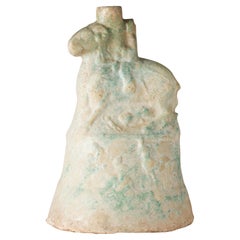
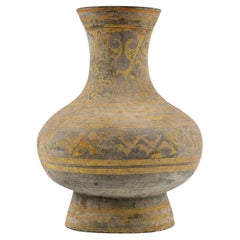
Antique Chinese pottery green-glazed vase/[Liao Dynasty]/10th century
Located in Sammu-shi, Chiba
We are pleased to introduce a glazed ceramic vase from the Liao dynasty of China, dating from the 10th century, about 1,000 years ago.
The Liao dynasty was established by the Qidan ...
Category
Chinese Other Antique 15th Century and Earlier Furniture
Materials
Pottery
![Antique Chinese pottery green-glazed vase/[Liao Dynasty]/10th century](https://a.1stdibscdn.com/antique-chinese-pottery-green-glazed-vase-liao-dynasty-10th-century-for-sale/f_54872/f_442987721743342424199/f_44298772_1743342424463_bg_processed.jpg?width=240 "Antique Chinese pottery green-glazed vase/[Liao Dynasty]/10th century")
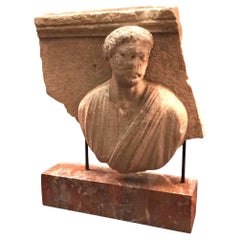
2nd Century Italian Stone Sculpture Roman Relief Aristocrat Mounted Antiques LA
Located in West Hollywood, CA
2nd Century Italian Stone Sculpture Roman Relief Aristocrat Mounted Antiques LA . Hand Carved Stone relief Aristocrat mounted on marble Private collector . ...
Category
Italian Antique 15th Century and Earlier Furniture
Materials
Stone, Limestone

$23,200 Sale Price
20% Off
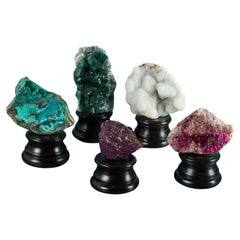
Collection of 5 Cabinet Scale Mineral Specimens
Located in Wormelow, Herefordshire
A striking collection of 5 mineral specimens in natural form.
Each presented on exclusive custom display plinths, this collection showcases a range of outstanding large cabinet spec...
Category
Malagasy Antique 15th Century and Earlier Furniture
Materials
Natural Fiber
Green-Glazed Pottery ‘Money Tree’ Base, Han Dynasty
Located in seoul, KR
This piece, directly referred to as a Money Tree, is a captivating work that embodies wishes for material prosperity. It takes center stage in the Asian collections of institutions s...
Category
Hong Kong Han Antique 15th Century and Earlier Furniture
Materials
Earthenware, Pottery
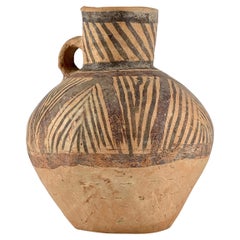
Neolithic Pottery Amphora(Gansu Province), 3rd-2nd Millenium BC
Located in seoul, KR
Neolithic Jar with strap handle from Gansu Province. Acquired in Hong Kong in the late 1990s.
Date : 3,000-2,000 BC
Made in : Gansu province
Dimension : 23cm (Height) x 8.5cm(Mouth ...
Category
Hong Kong Antique 15th Century and Earlier Furniture
Materials
Earthenware, Pottery
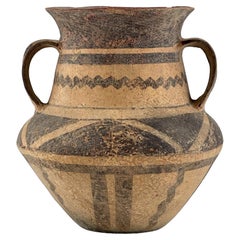
Neolithic Pottery Amphora(Gansu Province), 3rd-2nd Millenium BC
Located in seoul, KR
Neolithic Vase with raised neck, slightly flared, two handles. Geometric designs and stylized bovine heads in black. Acquired in Hong Kong in the late 1990s.
Date : 3,000-2,000 BC
M...
Category
Hong Kong Antique 15th Century and Earlier Furniture
Materials
Earthenware, Pottery
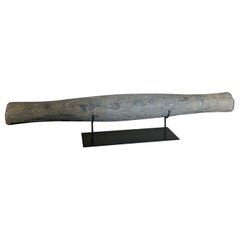
Biconvex Bronze Age Bactrian stone Idol
Located in Vosselaar, BE
A Bactrian biconvex stone idol. Alongside column and figurative idols these intriguing objects belong to the Bactria-Margana culture. An ancient civilization dating between the 3th a...
Category
Afghan Antique 15th Century and Earlier Furniture
Materials
Slate
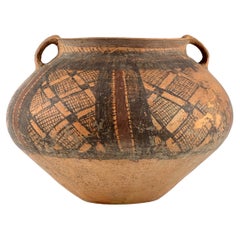
Neolithic Pottery Jar, Majiayao culture, 3rd-2nd Millenium BC
Located in seoul, KR
Fine-grained, buff-colored clay. Potted thin. Upper part of body painted with symbolic patterns in black and chocolate brown. Majiayao culture, Banshan type, 3rd millennium BC
Peri...
Category
Hong Kong Antique 15th Century and Earlier Furniture
Materials
Earthenware, Pottery
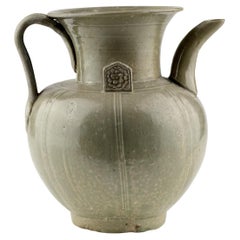
Yue Celadon Ewer, Late Tang-Northern Song Dynasty
Located in seoul, KR
This Yue ware celadon ewer features a softly rounded body rising from a stable foot to a wide, flaring mouth. A translucent olive-green glaze is evenly applied, pooling gently in rec...
Category
East Asian Tang Antique 15th Century and Earlier Furniture
Materials
Celadon
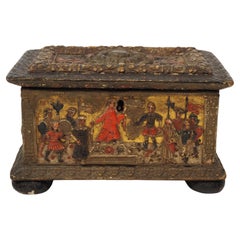
Wooden casket with polychrome and gilded "pastiglia" relief decor, Italy 15th c.
Located in Gorssel, GE
A rare wooden casket with polychrome and gilded pastiglia relief, Italy, 15th century.
The box is adorned with four finely executed scenes from the life of an unknown martyr — beautifully preserved and remarkably vivid after centuries.
Dimensions: 15.5 × 10.4 × 9 cm
Provenance: Dutch private collection
In overall good condition for its age, with minor losses to the surface and possible retouching to the polychromy. The ball feet are likely later additions.
Pastiglia [paˈstiʎʎa], an Italian term meaning "pastework", is low relief decoration, normally modelled in gesso or white lead, applied to build up a surface that may then be gilded or painted, or left plain. The technique was used in a variety of ways in Italy during the Renaissance.
White lead pastiglia was a north Italian speciality, produced between about 1450 and 1550. Six workshops were identified by Patrick M. De Winter, although their location remains uncertain; the Workshop of the Love and Moral Themes, whose products seem the most numerous, was possibly at Ferrara, where the painter Cosimo Tura began his career gilding caskets. Venice is also thought to have produced them. Other workshops identified by De Winter include the "Workshop of the main Berlin casket" and "Workshop of the Cleveland Casket".
The subjects were typically classical, drawn from both mythology and Ancient Roman history (especially the early period covered by Livy), but biblical ones are also found. Compositions can often be shown to be borrowed from another medium, such as prints or bronze plaquettes...
Category
Italian Renaissance Antique 15th Century and Earlier Furniture
Materials
Gesso, Wood
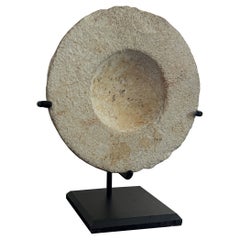
Bronze age stone cup
Located in Vosselaar, BE
Ancient Near East, Holyland, Late Bronze Age, Deir Samit, Judea, ca. 1500 to 1250 BCE. A lovely limestone cosmetic dish presenting a hemispherical body with a flattened top and a dep...
Category
Israeli Antique 15th Century and Earlier Furniture
Materials
Sandstone
$1,006
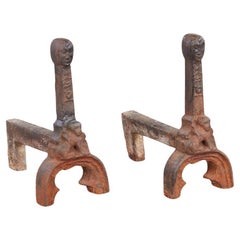
Rare Pair of Medieval Sand Cast Iron Andirons
Located in Greenwich, CT
A pair of rare and ancient weathered sand-cast iron figural andirons with finials in the shape of almond eyed faces with tight widows'-peak headcoverings coming to a point in the mid...
Category
French Medieval Antique 15th Century and Earlier Furniture
Materials
Iron
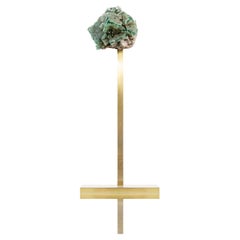
Fluorite Crystal in Brass Stand
Located in Scorton, GB
British isometric fluorite crystal elegantly displayed among clusters of gemstone crystals - authentically encapsulated with striking aesthetics that detail the isometric cubic form ...
Category
British Prehistoric Antique 15th Century and Earlier Furniture
Materials
Rock Crystal, Brass

Fluorite Crystal in Brass Stand
Located in Scorton, GB
British isometric fluorite crystal elegantly displayed among clusters of gemstone crystals - authentically encapsulated with striking aesthetics that detail the isometric cubic form ...
Category
British Prehistoric Antique 15th Century and Earlier Furniture
Materials
Rock Crystal, Brass
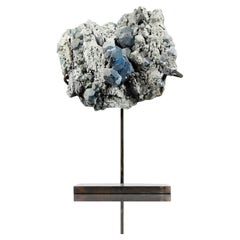
Blue Fluorite Crystal in Bronze Stand
Located in Scorton, GB
Rare blue isometric fluorite crystal clusters encapsulates a striking aesthetic, showcasing intricate detail of isometric cubic form with a seamless contrast between the blue crystal...
Category
British Prehistoric Antique 15th Century and Earlier Furniture
Materials
Rock Crystal, Bronze
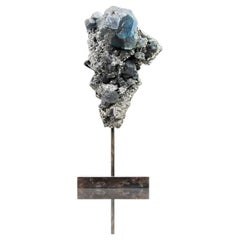
Blue Fluorite Crystal in Bronze Stand
Located in Scorton, GB
Rare blue isometric fluorite crystal clusters encapsulates a striking aesthetic, showcasing intricate detail of isometric cubic form with a seamless contrast between the blue crystal...
Category
Chinese Prehistoric Antique 15th Century and Earlier Furniture
Materials
Rock Crystal, Bronze
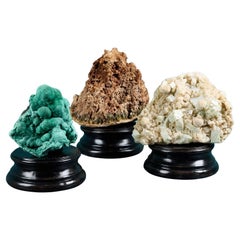
Collection of 3 Natural Mineral Specimens
Located in Wormelow, Herefordshire
A varied and fascinating collection of 3 natural mineral specimens, each presented on an exclusive medium neoclassical style plaster plinth.
Each impressive cabinet specimen, includ...
Category
Congolese Antique 15th Century and Earlier Furniture
Materials
Natural Fiber
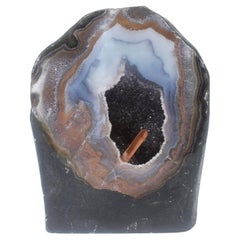
Polished Agate Cathedral with a Tangerine Crystal Point
By Interi
Located in Dublin, Dalkey
Polished agate cathedral with a tangerine crystal point.
Agate is characterized by its fineness of grain and brightness of color. These slabs are clas...
Category
American Organic Modern Antique 15th Century and Earlier Furniture
Materials
Agate, Rock Crystal, Quartz
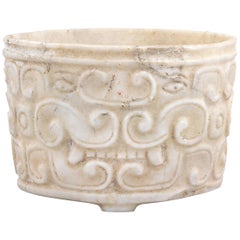
Pre-Columbian Honduran Marble Bowl
Located in New Orleans, LA
This exceptionally rare Ulúa marble bowl displays the lustrous white glow of the stone vessels that are native to the Ulúa river valley region of Honduras. With its alluring fluid flow of relief carvings around the entirety of its form, it exemplifies the remarkable ability of the ancient craftsmen. Ulúa artisans used simple stone tools to create magnificent marble bowls...
Category
Colombian Other Antique 15th Century and Earlier Furniture
Materials
Marble
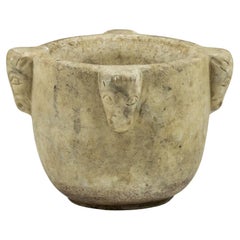
Late Medieval Marble Apothecary Mortar
Located in Pease pottage, West Sussex
Marble apothecary mortar. with four lugs having being worked into horses heads. Most likely for private apothecary use Excellent patination. Marble C...
Category
Italian Antique 15th Century and Earlier Furniture
Materials
Marble
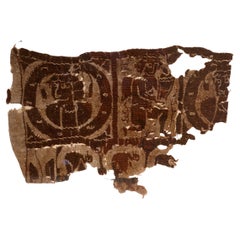
Coptic textile Byzantine Period; 4th–5th Century C.E.
Located in Bruxelles, BE
Coptic textile
Byzantine Period; 4th–5th Century C.E.
Materials: linen, Wool
23 x 16 cm
This fragment features black decorations on a beige background, depicting human figures with...
Category
Egyptian Egyptian Antique 15th Century and Earlier Furniture
Materials
Wool, Linen
$1,704 Sale Price
20% Off
Earthenware Pottery Jar, Han Dynasty(206 BC-220 AD)
Located in seoul, KR
This jar would have served as a mortuary object (mingqi), placed in a tomb as a substitute for the more valuable bronze and lacquer vessels. Along with a variety of other funerary earthenware objects, attendant figures, and animals, richly decorated vessels of this kind were intended to serve the spirit of the deceased in the afterlife.
Period : Han dynasty
Type : Jar
Medium : Earthenware
Dimension : 28.5 cm(Height) x 11cm(Mouth Diameter)
Condition : Good(Overall in well-preserved ancient burial condition with some soil still adhering (showing minor abrasions and wear due to prolonged burial underground)
Provenance : Acquired in late 1990s from Hongkong
* Han Dynasty Earthenware...
Category
Hong Kong Han Antique 15th Century and Earlier Furniture
Materials
Earthenware
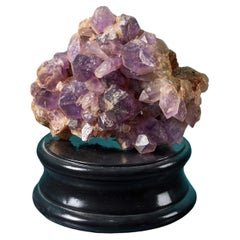
Large Scale Natural Amethyst Specimen
Located in Wormelow, Herefordshire
A large scale natural amethyst specimen originating from Brazil. Crystals from Brazil are most often found as radiating masses, with individual crystals appearing as pyramids, such a...
Category
Brazilian Antique 15th Century and Earlier Furniture
Materials
Amethyst, Multi-gemstone
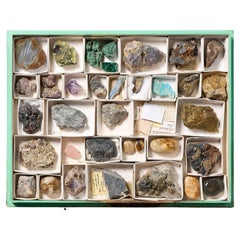
Collection of Museum Minerals in Display Case
Located in Wormelow, Herefordshire
A collection of museum minerals in a display case. Presented in a sleek glazed case, the collection includes 38 European minerals, including amethyst and pyrite, all with their own s...
Category
European Antique 15th Century and Earlier Furniture
Materials
Natural Fiber
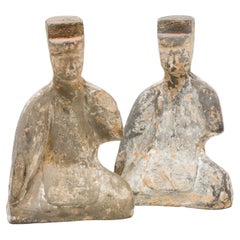
Two Pottery Kneeling Figures of Attendant
Located in seoul, KR
The statuette shows traces of the original red, black, and white pigmentation. Ceramic statuette from the han Dynasty, depicting two court people, probably a musician. They are dress...
Category
Hong Kong Han Antique 15th Century and Earlier Furniture
Materials
Pottery
$3,790 / set
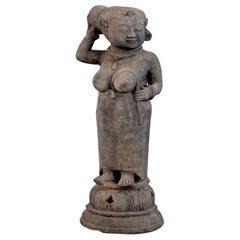
15th Century Majapahit Terracotta Handmaiden Figure (Woman Holding Her Hair)
Located in Brescia, Brescia
The sculpture captures a moment of serene grace, as the woman delicately holds her hair with her right hand, exuding an air of elegance rarely found in similar works. What makes this piece particularly unique is its unusual coloration: unlike most terracotta figures, which typically exhibit reddish-brown tones, this figure has darkened over time to a striking grey-black-brown hue. This transformation occurred due to centuries of submersion in the mud of the Brantas River, where the natural elements enriched the statue with its distinct coloration (refer to the photos of discoveries during the extraction of other statues, as seen on pages 16-17 of the catalog).
Originating from the Trowulan region in East Java, this handmaiden figure is documented on page 161 as figure number 28 in the Majapahit catalog and stands as a rare example of terracotta craftsmanship from this ancient civilization. The piece has been carefully studied and authenticated by Professor Agus Aris Munandar, a distinguished scholar in Indonesian archaeology.
Professor Munandar, born in 1959, is currently the professor of Indonesian Archaeology at the University of Indonesia in Jakarta. His extensive research focuses on Hindu-Buddhist archaeology, iconography, and the ancient history of Indonesia and Southeast Asia. He served as a member of the Indonesian team of experts at National Cultural Heritage from 2015 to 2018 and previously held the role of Head of Institute and Research at the Faculty of Humanities at the University of Indonesia. Now the head of the Department of Archaeology at the University of Indonesia, Professor Munandar has authored numerous articles and 19 books, many of which delve into Majapahit culture and artifacts, solidifying his reputation as a leading scholar in the field.
This extraordinary figure is accompanied by a preface from Professor Massimo Vidale of the University of Padua, who offers invaluable insights into the significance of Majapahit terracotta...
Category
Javanese Folk Art Antique 15th Century and Earlier Furniture
Materials
Terracotta
$6,721 Sale Price
20% Off
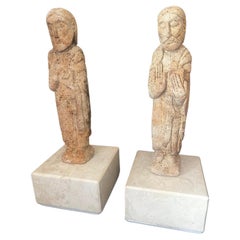
Antique French Romanesque 11th Century Pair of St.Peter and St.Paul Limestone
Located in Doha, QA
An extremely rare pair of original 11th century French Romanesque limestone hand carved sculptures of Saint Peter and Saint Paul. Each figure is represented on a marble block, withou...
Category
French Gothic Antique 15th Century and Earlier Furniture
Materials
Limestone
A Rare and Important Late Roman Marble Column
Located in London, GB
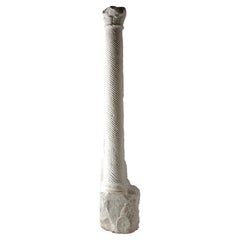
A Rare and Important Late Roman Marble Column
With a fluted spiral central column shaft rising to a carved integral capital with Corinthian ‘acanthus’ leaf decoration, the base with ...
Category
Greek Antique 15th Century and Earlier Furniture
Materials
Marble
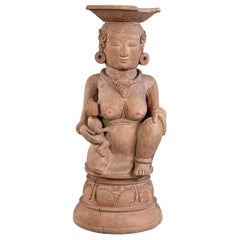
15th Century Majapahit Terracotta Handmaiden Figure (Fertile Woman with Child)
Located in Brescia, Brescia
Immerse yourself in the captivating legacy of the Majapahit Empire with this rare and beautifully preserved 15th-century terracotta handmaiden figure. Depicting a fertile woman tenderly holding her child, this evocative sculpture symbolizes the deep-rooted cultural values of fertility, family, and domestic protection that were integral to Majapahit society. These figures were often kept in households as guardians of the hearth, believed to bring prosperity and ensure the well-being of the family.
This statue radiates a sense of ancient spirituality and reverence. Its connection to both the sacred and the everyday life of Majapahit culture makes it a fascinating piece for collectors and historians alike.
Hailing from the esteemed Trowulan region in East Java, this rare piece has journeyed through centuries before finding its place in the private collection of Anacleto Spazzapan. Documented in the Majapahit catalog on page 144 as figure number 11, it has been meticulously studied and authenticated by Professor Agus Aris Munandar, a prominent authority in Indonesian archaeology.
Professor Munandar, born in 1959, is currently the professor of Indonesian Archaeology at the University of Indonesia in Jakarta. His extensive research focuses on Hindu-Buddhist archaeology, iconography, and the ancient history of Indonesia and Southeast Asia. He served as a member of the Indonesian team of experts at National Cultural Heritage from 2015 to 2018 and previously held the role of Head of Institute and Research at the Faculty of Humanities at the University of Indonesia. Now the head of the Department of Archaeology at the University of Indonesia, Professor Munandar has authored numerous articles and 19 books, many of which delve into Majapahit culture and artifacts, solidifying his reputation as a leading scholar in the field.
Professor Munandar's endorsement, complemented by a preface from Professor Massimo Vidale of the University of Padua, offers invaluable insights into the religious and decorative significance of Majapahit terracotta...
Category
Javanese Folk Art Antique 15th Century and Earlier Furniture
Materials
Terracotta
$7,479 Sale Price
20% Off
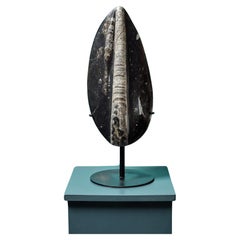
Mounted Polished Orthoceras Fossil Panel
Located in Wormelow, Herefordshire
A natural prehistoric polished Orthoceras fossil panel mounted on a bespoke steel stand. Characterised by its long, straight conical shaped shell, the 370...
Category
Modern Antique 15th Century and Earlier Furniture
Materials
Stone
Wool Tapestry from Egypt
- 5th–7th Century C.E.
Located in Bruxelles, BE
Wool Tapestry from Egypt
Late Antique Period; 5th–7th Century C.E.
This band fragment features geometric decorations in red and black.
Textiles like this are believed to have been...
Category
Egyptian Egyptian Antique 15th Century and Earlier Furniture
Materials
Wool

$1,704 Sale Price
20% Off
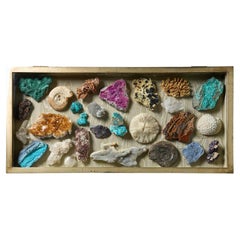
Collection of Natural History Specimens in Antique Case
Located in Wormelow, Herefordshire
A Collection of natural history specimens in an antique glazed display case. Housing 27 exquisite fossils and minerals this is truly a cabinet of curiosities; including three corals,...
Category
British Antique 15th Century and Earlier Furniture
Materials
Natural Fiber
Two Glazed Court Attendants, Ming Period (1368-1644)
Located in seoul, KR
Two finely hollow-moulded terracotta statuettes from ancient China, dating to the Ming Dynasty. The figure is depicted standing, dressed in long, flowing robes, painted in vibrant blue or green and deep amber yellow. The hair is styled into an elaborate top-knot, painted in a muted brown. Areas left unpainted would have been 'cold-painted' after firing, contrasting with the vivid fired blue or green and amber pigments. The figure is shown with the left hand raised to the chest, as if holding something, possibly an offering or incense. Figurines like this were placed in tombs to guide the deceased on their journey to the afterlife.
The Ming Dynasty was known for its exceptional artistic achievements, partly due to its economic prosperity. Since the Han Dynasty, it was customary to bury terracotta miniatures of everyday objects with the deceased. These items, known as mingqi, or "spirit utensils" and "vessels for ghosts," were believed to help and assist the deceased in the afterlife. Mingqi were crafted in the form of cooking utensils, miniature replicas of houses, temples, furniture, and other items. Anthropomorphic and zoomorphic terracotta figures were also popular, designed to assist, entertain, and recreate the living world for the deceased.
Period: Ming Dynasty
Medium: Green/blue-glazed Pottery
Type: Figure
Provenance : Acquired in late 1990s from Hongkong
Reference :
1) Ancient & Oriental - Terracotta Tomb Attendants
(Type : Highly related)
2) La Maison De La Petite Sara S.r.l. - Archaeology section - A Black glazed Terracotta Statuette, Servant with Trumpet, Ming Dynasty
(Price realised : 700 GBP / Type : Highly related)
* Ming Dynasty Glazed Pottery Figures
Ming Dynasty glazed pottery figures are renowned for their bold color palette, intricate detailing, and lifelike forms, distinguishing them from earlier traditions. These figures, which depict officials, warriors, animals, and mythical creatures, are characterized by high-gloss lead-based glazes in green, amber, ochre, and sancai (three-color) combinations. The thickly applied glaze pools in recesses, creating depth and enhancing sculptural details. With dynamic postures, expressive facial features, and meticulously rendered drapery, these figures reflect the period’s advancement in ceramic craftsmanship, offering a greater sense of movement and realism compared to the rigid and stylized forms of earlier dynasties.
A defining characteristic of Ming glazed pottery is its elaborate surface detailing, often achieved through raised relief elements and contrasting glazes. Equestrian figures, for example, feature carefully sculpted saddles, harnesses, and decorative embellishments, while human figures are adorned with intricate robes and headdresses. The large scale of these tomb figures, often more imposing than those from previous periods, underscores the increasing importance of funerary art during the Ming era. Unlike later Qing Dynasty figures...
Category
Hong Kong Ming Antique 15th Century and Earlier Furniture
Materials
Pottery

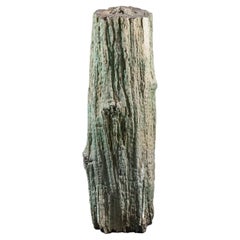
An Outstanding, Highly Important Fossilised Tree
Located in Scorton, GB
A masterpiece of nature that will transform your space into a sanctuary of palaeontological expression. This remarkable piece of natural history that began its journey millions of ye...
Category
Malagasy Prehistoric Antique 15th Century and Earlier Furniture
Materials
Limestone
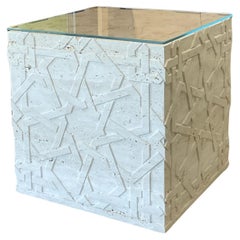
Cube Side Table with Tempered Glass Top, Engraved Square Block Center Side Table
Located in St Petersburg, US
Seljuk-inspired engraved travertine cube side table, meticulously designed by Haand’s renowned designer Barakli. Measuring 40x40 cm (16x16 inches), this stunning piece combines histo...
Category
European Empire Antique 15th Century and Earlier Furniture
Materials
Stone, Travertine
Framed Large Nazca Textile Panel with Geometrical Design
Located in Atlanta, GA
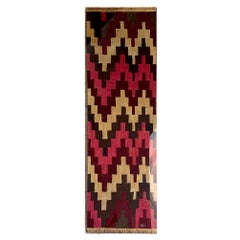
A large woven textile panel from Nazca culture on the south coast of nowadays Peru circa 600 to 800AD. The panel with short fringes on the end used to be half of a sleeveless tunic (similar to poncho) in which two similar pieces were joined together. Professionally mounted and conversed on a linen-backed wood frame and presented in an acrylic shadow box. The textile was finely woven from a camelid fiber dyed with natural pigments. The work strikes the viewer immediately with its unexpected modernity. The tri-colored geometrical blocks created a zigzagged step design that is visually minimal but bold at the same time. Its repetition evokes a lyrical visual rhythm that is unparallel in the ancient textile art and could easily mistake it as an abstract art from the 20th century. The zigzag step design was one of the unusual abstract motifs used by the pre-Columbian weavers from Nazca, who created some of the most mysterious and soul-stirring work with a minimalism aesthetic that was rarely seen in the ancient world. Considering that the artists were completely isolated without the influences of other cultures, their intrinsic creativity and artistic vision are even more impressive.
Reference: James W. Reid, The Lee M...
Category
Peruvian Pre-Columbian Antique 15th Century and Earlier Furniture
Materials
Textile, Acrylic
Kapati textile - Epoque Byzantine; 4th–5th Century C.E
Located in Bruxelles, BE
Kapati Textile
Byzantine Period; 4th–5th Century C.E.
Materials: Plant and Animal Fibers, Wool
9,5 x 9,5 cm
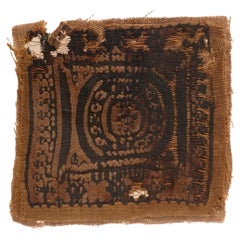
This woolen fabric is woven in the traditional Coptic Kapati style, characteristic of Egypt during the Christian era. The name "Kapati" refers to the Copts of Egypt and describes a weaving technique that does not use embroidery or printing. It is said that Al-Muqawqis, the governor of Egypt, offered the Prophet garments made from Kapati fabric.
At the 1900 Exposition Universelle in Paris, the French archaeologist Albert Gayet showcased the results of his excavations from the winter of 1898-1899. Around one hundred Coptic textiles and fragments were displayed at the Palais du Costume. Their aesthetic generated considerable enthusiasm, particularly among artists like Auguste Rodin and Henri Matisse. This led to a "Coptomania," which, among other things, influenced fashion designers.
The square fragment features black decoration on a beige background; the two squares at the center are separated by scalloped edges, from which hang various ornaments or geometric motifs. At the center of the fragment is an image of a dancing figure surrounded by geometric decorations. This piece dates back to a time when ancient...
Category
Egyptian Egyptian Antique 15th Century and Earlier Furniture
Materials
Wool, Natural Fiber
$1,609 Sale Price
20% Off
Gandharan Stucco Head of a Bodhisattva, 3rd-5th Century
Located in Stamford, CT
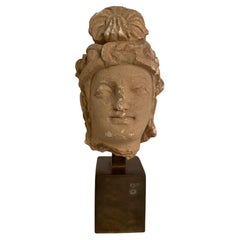
Stucco head of a Bodhisattva, Gandhara, 3rd - 5th century AD. Mounted on a custom made brass base.
12 inches high ( head alone 8.2 in ) 5.5 wide 5 deep
Provanance: Ex Sotheby's, old...
Category
Antique 15th Century and Earlier Furniture
Materials
Stucco
Rare Yue Celadon Chicken-Head Ewer, Jin-Southern Dynasty
Located in seoul, KR
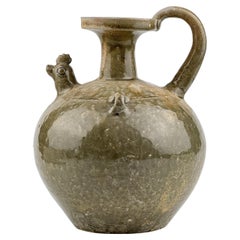
Chicken-head ewers are among the most distinct and emblematic pottery pieces from the Han (206 BC ~ AD 220) to the Tang dynasties. Their production commenced during the Jin dynasty i...
Category
Hong Kong Han Antique 15th Century and Earlier Furniture
Materials
Pottery
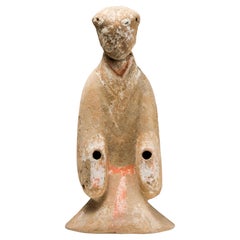
Large Pottery Standing Figure of Attendant
Located in seoul, KR
The statuette shows traces of the original red, black, and white pigmentation. The figure’s body, head, and hands (which in this case are lost) were all made separately to give her an essence of movement and dynamism. Given its almost identical shape to the piece from the Artemis Gallery...
Category
Hong Kong Han Antique 15th Century and Earlier Furniture
Materials
Pottery
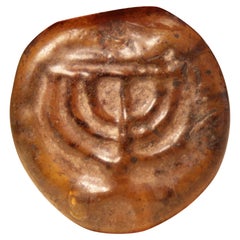
Late Roman/Byzantine Jewish Amber Color Glass Amulet with Menorah
Located in New York, NY
Late Roman to Early Byzantine, ca. 300 to 500 CE. A rare and beautiful amulet of a generally circular form with a flat bottom, a raised periphery, and an integral suspension loop, mo...
Category
Israeli Classical Roman Antique 15th Century and Earlier Furniture
Materials
Glass
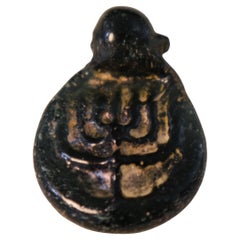
Late Roman/Byzantine Jewish Blue Glass Amulet with Menorah
Located in New York, NY
Late Roman to Early Byzantine, ca. 300 to 500 CE. A rare and beautiful amulet of a generally circular form with a flat bottom, a raised periphery, and an integral suspension loop, mo...
Category
Israeli Antique 15th Century and Earlier Furniture
Materials
Glass
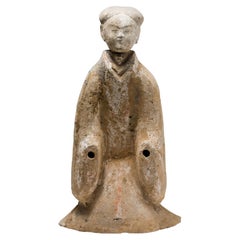
Large Pottery Standing Figure of Attendant
Located in seoul, KR
This artwork, acquired in Hong Kong during the 1990s, is presumed to have been produced in the same kiln from the Han dynasty, based on the head of the Sotheby's reference piece, which also originated from Hong Kong. Furthermore, given its almost identical shape to the piece from the Artemis Gallery...
Category
Hong Kong Han Antique 15th Century and Earlier Furniture
Materials
Pottery
Artefact from the Maghreb Sculptured Torso Figure
Located in Scorton, GB
A human torso (lacking head) carved from a limestone [yet to be determined]; the enigmatic whole torso is strongly represented in an upright stance, arms purposefully rigid to each s...
Category
Malian Prehistoric Antique 15th Century and Earlier Furniture
Materials
Stone
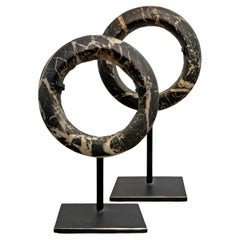
Pair of Neolithic Stone Bracelets from Mali
Located in Chicago, IL
These exquisite Neolithic bracelets from Mali are a captivating testament to ancient craftsmanship and ingenuity. Carved from limestone with natural crystalline veins coursing throug...
Category
Malian Tribal Antique 15th Century and Earlier Furniture
Materials
Stone
$1,950 / set
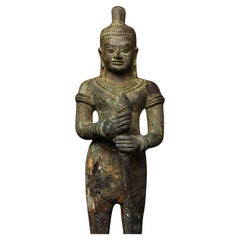
Bronze 10-11thC Cambodian Khmer Era Guardian Figure.
Located in Ukiah, CA
Large Well cast bronze 10-11thC Cambodian Khmer Era Guardian Figure. The dating may be a century or two earlier or later, but this is a large, Angkor Wat period piece. Wear as seen...
Category
Cambodian Antique 15th Century and Earlier Furniture
Materials
Bronze
$4,400 Sale Price
20% Off
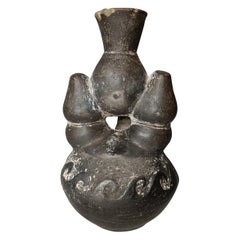
Rare Pre-Columbian Chimu Stirrup Vessel – Sea Plant or Fungi Motif
Located in London, GB
Rare Pre-Columbian Chimu Stirrup Vessel – Sea Plant or Fungi Motif – 12th–14th Century AD, Peru
An intriguing and rare Chimu stirrup vessel from Pre-Columbian Peru, dating to the 12...
Category
Peruvian Antique 15th Century and Earlier Furniture
Materials
Pottery
$569 Sale Price
40% Off
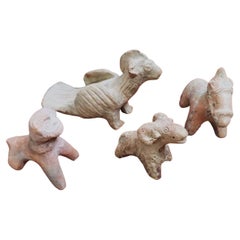
1st Century BC Group of 4 Terracotta Animals from Indus Valley
Located in Dallas, TX
PRESENTING a STUNNING piece of Southeast Asian Antiquity, namely, a Group of 4 Terracotta Animals from the First Century B.C to First Century A.D.
These pieces has impeccable Provenance!
They were purchased by a Private Dallas Collector at Christie’s New York Auction on 16th September 2008. Sale Number 2024, Lot No. 360.
Christie’s operate a twice yearly auction of Southeast Asian Art & Antiquities in New York in the months of March and September.
The Auction was titled: “Indian and Southeast Asian Art”.
The sculptures were described as: “ Lot 360 = Property from the Collection of Mr. and Mrs. Paul E. Manheim – A group of four terracotta animals – Indus Valley, Shunga Period...
Category
Indian Archaistic Antique 15th Century and Earlier Furniture
Materials
Terracotta
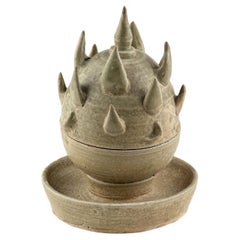
Rare Boshan Incense Burner Yue Celadon, Jin dynasty
Located in seoul, KR
The Boshan incense burner is particularly notable among Han dynasty incense burners for its unique shape. Designed to resemble a mountain or even a mythical mountain, it is characterized by its pointed peaks that rise upwards. These peaks often function as vents for the smoke, creating an effect reminiscent of a volcanic eruption.
The body of the incense burner is typically round, with multiple small peaks surrounding a central, larger peak. The material used is mainly ceramic, although there are instances where they were made of bronze. It is presumed that this incense burner was used for religious or ceremonial purposes during its time. The colors of these burners are usually in shades of pale green or greyish brown, with the application of glaze to achieve a variety of colors on occasion.
Such incense burners are often found in tombs or ritual sites, and their purpose was to burn incense for purification of space or to produce pleasant aromas. The Boshan incense burner also represents a significant cultural heritage, showcasing the craftsmanship and artistic values of the period. Today, it is considered a quintessential example of ancient Chinese art.
Period : Han-Jin Dynasty
Type : Incense Burner
Medium : Yue celadon...
Category
Hong Kong Han Antique 15th Century and Earlier Furniture
Materials
Stoneware
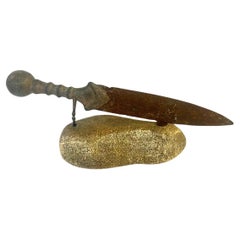
Antique Roman Gladiator Short Sword 1.AD with Bronze Teardrop Terminal Belt
Located in Doha, QA
This Roman Gladiator short sword is an absolutely outstanding and unique example of an ancient Roman Pompeian Gladius Sword from 1. AD. There were three ty...
Category
Italian Classical Roman Antique 15th Century and Earlier Furniture
Materials
Bronze, Iron
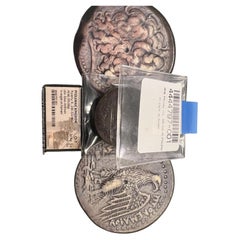
Ptolemy III Bronze Double-Sided Coin 94.5 gr
Located in Newmanstown, PA
This is one of the largest ancient coins ever. Very rare and hard to find. It is in an excellent condition with a lot of details showing. The coin is about 44.5 millimeters wide and ...
Category
Egyptian Antique 15th Century and Earlier Furniture
Materials
Bronze
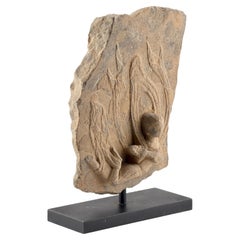
Apsara Carved Limestone Stele with Extremely Rare
Oolitic silica
, Wei Dynasty
Located in seoul, KR
The small dots apparent on the surface of this stone stele are indicative of an oolitic silica structure or oolites formed in what is known as "Oolitic chert." The same phenomenon can also be observed in the Tang Dynasty Limestone Stele at the Asian Art Museum in San Francisco. This formation occurs gradually over the course of thousands to several hundred thousand years within the soil or sea. Similar structures are commonly found in ancient fossils or arrowheads. Ancient peoples chose certain types of stones for tool-making, preferring materials that were easier to work with and could be sharpened effectively. This predilection is believed to be the reason why oolitic silica structures are frequently found in ancient arrowheads.
The development of these oolitic silica structures is a very slow process involving the accumulation of siliceous layers around particulates. This phenomenon, where silica reacts with water to form layers around a nucleus, occurs under specific chemical and physical conditions. Typically, it takes thousands to hundreds of thousands of years for silica to gradually accumulate in layers through contact with moisture, a process that requires a precise harmony of many variables, including chemical conditions, temperature, pressure, pH, and biological activity.
It is known that no other stele with such a silica structure has been identified to date, serving not only as evidence of its authenticity but also significantly enhancing the rarity of this piece.
This stele appears to be a stone sculpture of an apsara, a celestial nymph from Buddhist and Hindu traditions. Despite its fragmentary state, the sculpture conveys grace and movement. The apsara is captured in a dynamic pose, perhaps once part of a larger tableau, playing a flute-like instrument.
The black stand was made in Hong Kong at the time of the acquisition.
Date : Northern Wei/Eastern Wei Dynasty(386~550)
Size : 22cm (Height) x 16cm(diameter)
Condition : Good (oolites dots on surface)
Provenance : Acquired in late 1990s from Hongkong
Reference :
1) Sotheby's New York 20 March 2018 - Jingyatang Treasures Of Chinese Buddhist...
Category
East Asian Han Antique 15th Century and Earlier Furniture
Materials
Stone, Limestone
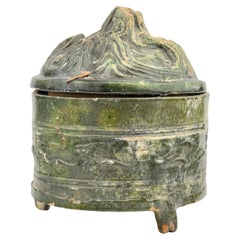
Green-glazed pottery tripod
hill
jar, Han Dynasty, 206 BC - 220 AD
Located in seoul, KR
The modelled animal figures and landscapes of this piece represent the Daoist ideology of the Han dynasty. The mountain-shaped lid refers to the sacred dwellings of the immortals, th...
Category
Hong Kong Han Antique 15th Century and Earlier Furniture
Materials
Stoneware
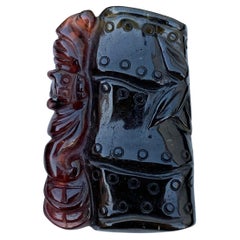
70.85 Carat Bi Colour Tourmaline Drilled Carving From Madagascar
By Deloris "Dee" Giltz 1
Located in Peshawar, PK
Weight: 70.85 Carats
Dimension: 3.5 x 2.4 x 0.7 Cm
Origin: Africa
Colour: Red Pink and Green
Shape: Carving
Quality: AAA
Tourmaline helps to create a shield around a person or room t...
Category
Malagasy Adam Style Antique 15th Century and Earlier Furniture
Materials
Rock Crystal
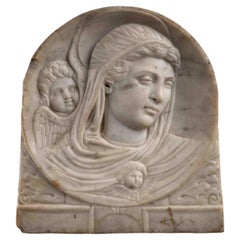
Renaissance Marble Relief - Emilia Romagna, 1470-80
Located in Bruxelles, BE
Renaissance Marble Relief
Emilia Romagna, Faenza ? 1470-80
H 30,2 x L 33 x P 3,5 cm
The carved marble relief depicts the Virgin accompanied by a winge...
Category
Italian Renaissance Antique 15th Century and Earlier Furniture
Materials
Marble
$33,136 Sale Price
20% Off
More Ways To Browse
Black Forest Wood Frame
Black Gold Jar
Blanc De Chine Guanyin
Blessed Virgin Mary
Blue And White Lidded Temple Jars
Blue Uranium Glass
Blue White Clock
Blue Yellow Pottery
Boffi Kitchen
Bombay Chest Italy
Book Table Stand
Boudoir Set
Brands Of Vintage Glass
Brass Heron Sculpture
Bread Cabinet
Bronze Lalanne
Bronze Spoons
Burl Bedside Chests