1850s Furniture
to
335
1,457
834
2,353
342
52
38
36
35
31
31
28
21
12
10
9
9
3
3
3
3
1
40,534
136,330
539,007
287,000
85,790
258,400
124,831
12,646
5,518
18,591
22,853
19,215
53,783
71,109
60,945
21,664
9,458
752
633
599
301
203
1,421
537
448
413
247
2,353
2,353
2,353
15
10
9
8
6
Period: 1850s
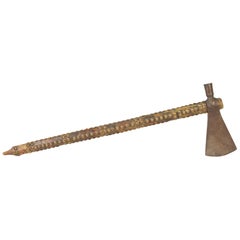
Pawnee Pipe Tomahawk, circa 1850-1870
Located in Coeur d
Alene, ID
Pawnee pipe tomahawk. File burnt and tacked with remnants of yellow paint over entire shaft. Exhibited in the Wichita Falls Museum 1967, Maryland Academy of Art and Science 1969, Flo...
Category
American Native American Antique 1850s Furniture
Materials
Iron
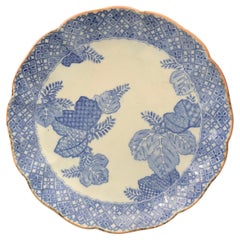
Chinese Soup Plate Inspired by the Blue Family India Compagny, Mid 19th Century
Located in Beuzevillette, FR
Nice « Blanc Bleu » porcelain plate inspired the Compagnie des Indes from XIXth century. This porcelain soup plate represents exotic plant elements. Ornaments are visible on the sides of the plate.
The arrival of porcelain in Europe was linked to the development of shipping and international trade. Porcelain was very popular in Europe because of its lightness and its durability. The import from China is linked to the lack of mastery of this technique by the Europeans. The French, Dutch and British East...
Category
Chinese Chinese Export Antique 1850s Furniture
Materials
Porcelain

$211 Sale Price
20% Off
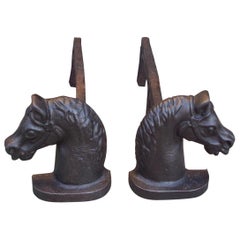
Pair of American Cast Iron Horse Head Andirons with Original Dog Legs, C. 1850
Located in Charleston, SC
Pair of American cast iron horse head andirons with the original rear dog legs. Mid 19th century.
Category
American American Empire Antique 1850s Furniture
Materials
Iron
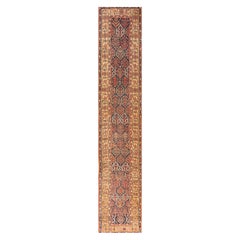
Mid 19th Century W. Persian Kurdish Shrub Runner Carpet (3
x 14
6
- 90 x 443)
Located in New York, NY
Mid 19th Century W. Persian Kurdish Shrub Runner Carpet
3' x 14'6'' - 90 x 443
Category
Persian Antique 1850s Furniture
Materials
Wool
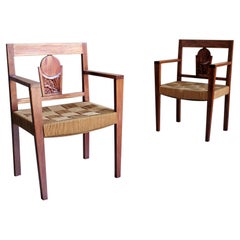
Pair of Colonial Armchairs, 1950
Located in Catonvielle, FR
Pair of colonial armchairs in exotic wood, Africa, 1950. The backs are decorated with a sculpture with a floral motif, the seat is in crossed rope.
Category
African Mid-Century Modern Antique 1850s Furniture
Materials
Rope, Wood
$1,082 / item
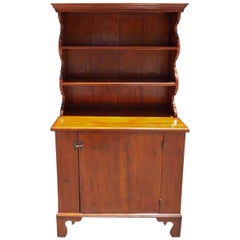
American White Pine Step Back Scalloped Cupboard, Circa 1850
Located in Charleston, SC
American white pine step back cupboard with a carved molded edge cornice, upper case flanking carved scalloping with two exterior shelves, single hinged locking lower case door...
Category
American American Empire Antique 1850s Furniture
Materials
Iron
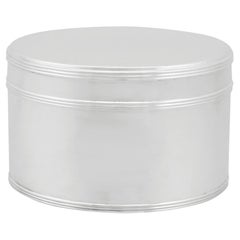
19th Century, 1850s, Dutch Silver Biscuit Box
Located in Jesmond, Newcastle Upon Tyne
An exceptional, fine and impressive antique Dutch silver biscuit box; an addition to the ornamental silverware collection.
This exceptional antique Dutch silver biscuit box has circular form.
The body of the box is plain and encompassed with a band of applied reed decoration to the lower rim.
This biscuit box retains the original hallmarked hinged cover ornamented with further applied reed decoration to the upper and lower rims.
The hallmarks struck to this impressive Dutch silver biscuit box include:
Maker's mark: ICF (untraced)
Duty mark: Minerva head, C (The Hague)
Tax mark: Axe/hatchet mark
Silver quality/purity mark: Crowned lion rampant .934 (934/1000)
Date mark: X (1857)
Retailer's mark: Diemont (William Diemont)
Condition
This antique silver biscuit box...
Category
Dutch Antique 1850s Furniture
Materials
Silver
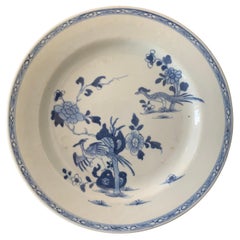
Chinese Porcelain Plate Blue And White From The Blue Family, 19th Century
Located in Beuzevillette, FR
Nice « Blanc Bleu » porcelain plate dating from XIX th century. Blue and white porcelain soup plate. White and blue plate with a couple of peacocks flying through plants and flowers.
This porcelain is characteristic of the blue family.
The arrival of porcelain in Europe was linked to the development of shipping and international trade. Porcelain was very popular in Europe because of its lightness and its durability. The import from China is linked to the lack of mastery of this technique by the Europeans. The French, Dutch and British East India...
Category
Chinese Chinese Export Antique 1850s Furniture
Materials
Porcelain
$182 Sale Price
20% Off
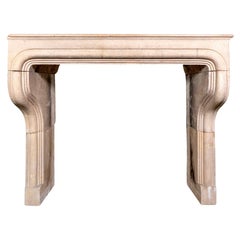
Antique French Limestone Mantel
Located in Dallas, TX
A 19th-century antique mantel from France, carved from limestone. It features channel molding across the front and down the legs, with a soft, curved profile. Worn details and aged p...
Category
Antique 1850s Furniture
Materials
Limestone
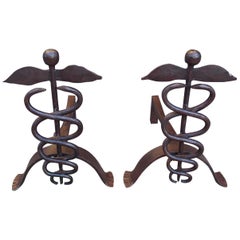
Pair of American Wrought Iron Finial Caduceus Andirons with Splayed Feet, C 1850
Located in Charleston, SC
Pair of American wrought iron ball finial caduceus andirons with stylized splayed feet, Mid-19th century.
The caduceus is the traditional symbol of Hermes a...
Category
American American Empire Antique 1850s Furniture
Materials
Wrought Iron
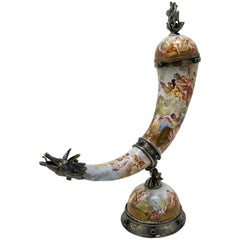
19th Century Viennese Miniature Covered Silver and Enamel Cornucopia
Located in New York, NY
A very fine antique jeweled, silver Viennese enamel covered Cornucopia. Each panel is beautifully enameled with cupids, Angeles and Maidens with neoclassical mythological subjects, f...
Category
Austrian Medieval Antique 1850s Furniture
Materials
Enamel
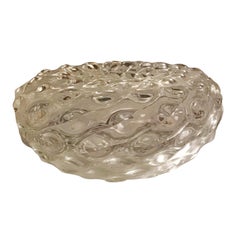
Seguso Vase Murano Glass 1950 Italy
Located in Milano, IT
Seguso vase Murano glass 1950 Italy.
Category
Italian Other Antique 1850s Furniture
Materials
Murano Glass
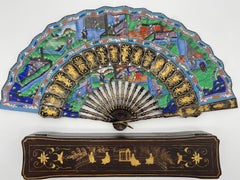
19th Century Chinese Gilt Lacquer Fan with Mother of Pearl Faces and Lacquer Box
Located in Brea, CA
Antique 19th century hand painted Chinese fan with mother of pearl faces, Qing dynasty, the fan features black and gold lacquered handled a colorful screen with a figural, hand painted, scene in shades of blue, green, purple and brown and red. With antique lacquer fan box...
Category
Chinese Qing Antique 1850s Furniture
Materials
Lacquer
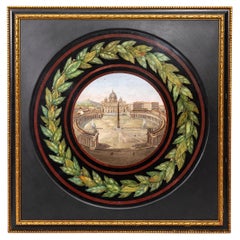
Large Antique Italian Micro Mosaic plaque of St. Peters Square, Rome mid 1800
s
By Vatican Mosaic Studio
Located in New York, NY
A Very Large and Exceptionally Fine Quality Antique Italian Micro-Mosaic Plaque Depicting "The Saint Peter Square" in Rome. The center medallion surrounded by a beautiful Laurel Wreath in multiple shades of Green Mosaic amidst a black Belgium Marble border. The interior rounded subject depicts Saint Peter Square which is found in Rome, Italy. The entire center panel is made up of a captivating array of tesserae in a variety of shapes and colors, which create this stunning mosaic construct. When inspected from up-close, small rectangular tesserae are found in an assortment of colors, which include: white, green, blue, red, black, brown, orange etc. When the subject is seen from afar, a fantastic image of the entire Saint Peter Square can be viewed as if a painting has been created. The oil on canvas of this scene, by was sold in Christie's Auction for over $2,000,000 USD. The plaque rests in a custom ebonized and gilt square frame. This can be used as a decorative object on the wall to serve as a painting, or, be converted to a table-top by mounting it on a table stand.
Rome, Circa: 1850
Giovanni Paolo Panini (Piacenza 1691-1765 Rome), View of Saint Peter's Square, Rome.
From Christie's Auction:
Giovanni Paolo Panini arrived in Rome in 1711, painting capricci and architectural pieces in a vigorous if slightly eccentric style, and by 1719, when he was admitted to the Academy of St. Luke and the virtuosi al Pantheon, he was a rising star in the Roman art world. From around 1719-1726 he was much in demand for decorative frescoes, including quadratura, ornament and landscape and other genres, often in collaboration with figure or flower painters. During this period he worked for Cardinal Patrizi at Villa Patrizi, Cardinal Annibale Albani at Palazzo Albani (now del Drago) alle Quattro Fontane, Livio de Carolis at Palazzo de Carolis, Cardinal Alberoni at Palazzo Alberoni, Innocent XIII Conti in the Quirinal and in the library of S. Croce in Gerusalemme. In 1724 he married Caterina Gosset, the sister-in-law of Nicolas Vleughels, the director of the French Academy in Rome, to which he was admitted in 1732, and as a result he was much patronized by the French. During the 1720s he developed his figure style away from the awkwardness of his early works into one that concentrated on groups of stylishly-dressed aristocrats and skillfully modelled bystanders, sibyls and pseudo-antique figures. These he noted down in drawings (such as a sketchbook in the British Museum) that he drew upon to populate his paintings. He also began to receive commissions to design and record temporary festivals, often for French ambassadors to Rome.
By the beginning of the 1730s Panini was developing a distinctive subgenre of the capriccio in which recognizable monuments are placed in imaginary topographical relationships, which were well-received in the classicizing era of Clement XII Corsini. In 1732 he was one of the panel of judges for the competition instituted by Clement for the Lateran façade, and in the following year painted an impressive View of Piazza del Quirinale for the pope. At about this time he was developing his best-known topographical subjects, interior views of St Peter's and the Pantheon, which were much in demand, to judge by the number of extant versions extending into the 1750s. By about 1734 he was beginning to attract the attention of English patrons, who ordered sets of Roman views, such as those at Marble Hill House (1738) and Castle Howard. In 1736, through Filippo Juvarra, he received important commissions from Philip V of Spain for scenes of the life of Christ in the Chinoiserie room at La Granja in Spain (1736). From as early as the 1720s he had been producing some vedute (view-paintings), initially based on prototypes by Gaspar van Wittel, and he developed the genre in subsequent decades in works that would include impressive panoramic views of the Forum or Palatine, although his staple genre was the capriccio rather than the veduta. He also expanded his repertory of church interiors, adding such churches as S. Paolo fuori le Mura and S. Agnese in Piazza Navona, as well as church interiors recording special events. His son by his first marriage, Giuseppe (1718-1805), began to support him in architectural and festival design projects.
By the 1740s Panini was at the peak of his powers, and evidently had a considerable workshop helping him meet demand, especially of capricci to be used as overdoors and other decorative installations. Giovanni Paolo was successful in elevating himself socially above the usual artisanal status of genre painters, and would sometimes include a self-portrait in paintings commissioned by the great and powerful. He also appears to have been successful financially, and owned a substantial palazzo in via Monserrato. He increasingly concentrated on important commissions, such as a view of the Lottery in Piazza Montecitorio (London, National Gallery, 1743-1744), the designs for the festival decorations for the birth of the Dauphin in Palazzo Farnese (Waddesdon Manor, 1751), or the view of an imaginary picture gallery housing the collection of Cardinal Valenti Gonzaga (Wadsworth Atheneum, 1749). In the mid-1750s he received an important series of commissions from the Duc de Choiseul, French ambassador to Rome and soon to become one of the most powerful men in France, that included his best-known compositions, Ancient Rome (Roma Antica) and Modern Rome (Roma Moderna). These large paintings, of which there are three sets (in Boston and Stuttgart, the Metropolitan Museum, and the Louvre) represent imaginary picture galleries based on the Valenti Gonzaga composition but hung with what purport to be Panini's own vedute of ancient and modern sites respectively (with corresponding pieces of sculpture). These paintings sum up the eighteenth-century canon of the greatest works of architecture and sculpture, and the equivalence between modern and ancient Rome. By this time Panini was being assisted by his son by his second marriage, Francesco (1748-1800), who was a skilled draughtsman and painter who continued his father's work after his death in 1765.
The Farnborough Hall paintings
The Piazza S. Pietro and the Campidoglio are important vedute by Panini painted in 1750 and originally installed, with other works by Panini and Canaletto, in the seat of the Holbech family, Farnborough Hall, Warwickshire (National Trust). Farnborough Hall had been inherited in 1717 by William Holbech (circa 1699-1771), who is documented on the Grand Tour in Florence, Rome and Venice from late 1732 until his return home at the end of April 1734 with his brother Hugh. Holbech is said to have gone on the Grand Tour to recover from a broken heart and to have spent a considerable time there prior to these documented appearances. During his time in Rome he acquired two Paninis, which were seen by an anonymous antiquary around 1746, who referred to various sculptures "all brought from Rome with two pictures, one of the Rotunda, and the other of diverse buildings by Panino" (British Library, Add. MS 6230, pp. 31-32). The Rotunda (the Pantheon) is a painting now in a private collection in New York, and is signed and dated 1734. The Diverse Buildings, which was probably one of Panini's capricci, has not been identified. On his Grand Tour Holbech seems also to have acquired two Canalettos, although they are not mentioned by the antiquary, who may only have had eyes for things Roman.
In about 1746-1747, Holbech remodelled the house by creating a Saloon, now the dining room, at the back of the house. This room, the entrance hall, the staircase, library and closet were stuccoed by William Perritt of York, and a bill for this work dated 14 November 1750 survives (or survived until recently; G. Beard, Decorative Plasterwork in Great Britain, London, 1975, p. 233). The two Canalettos acquired on the Grand Tour were installed in the Saloon, together with two new works commissioned from Canaletto, who was then in England and working nearby at Warwick Castle in 1748. The two Paninis acquired on the Grand Tour may have been installed in the Library, as Alastair Laing assumes (op. cit.), while three new works commissioned from Panini in Rome were placed in the Hall and Saloon: the Piazza S. Pietro for the overmantel in the Hall (fig. 1), the Campidoglio as the overmantel in the Saloon (fig. 2), and an Interior of St Peter's (now in Detroit) (fig. 3) on the adjacent wall facing the windows. Two of the Canalettos flanked the Campidoglio, while the others were on the opposite wall. The Interior of St Peter's was therefore effectively the fifth member of the Canaletto set, distinct from the two overmantels.
Holbech's installation of his Canalettos and Paninis in fixed stucco frames was unusual for England in 1750, and had probably been inspired by what he had seen on his Grand Tour in Northern Italy, where fixed stucco installations of canvases were common in the 1720s and 1730s (Cornforth, II, p. 51). The Campidoglio and the Interior of St Peter's are both signed and dated 1750, a date that corresponds to the payments for the stucco.
The commission for the new Paninis would have been made through an agent, possibly the Roman dealer in antiquities Belisario Amidei from whom some of the antique busts in the Hall were acquired in 1745, who was also a picture dealer; or perhaps the painter Pietro Berton, who on 7 December 1750 shipped a Panini to England.
The paintings were sold to Savile Gallery in 1929 and replaced by copies by one Mohammed Ayoub. The four Canalettos were exhibited at Savile Gallery in 1930 and entered the London art trade, finding their way at various times to Augsburg, Melbourne, Ottawa and a private collection. The Paninis seem to have been resold immediately to Knoedler & Co. in New York. When the stucco was removed from the library by Holbech's great-grandson, another William Holbech, shortly after his succession in 1812, the Interior of the Pantheon and the Diverse Buildings may have been taken down. Although there is no record of either painting being at Farnborough subsequently, the Interior of the Pantheon at least must have remained there, since it appeared at Knoedler's in 1930 at about the same time as the other Paninis, and was presumably acquired at the same time from the same source.
The Campidoglio was a rare subject for Panini: this is the only known extant version, apart from fictive versions in the Metropolitan Museum (1757) (figs. 4) and Louvre (1759) versions of his Roma Moderna composition (but not in the first Boston version of 1757). Probably Holbech insisted on the choice of subject in order to represent the centre of Rome's civic administration to complement the religious one of St Peter's. The Campidoglio may have been of interest to English patrons because it represented the seat of a form of government they were more comfortable with than the papacy. For example, Canaletto painted the subject, together with English subjects, for Thomas Hollis, 'the most bigoted of all Republicans' in 1755, who may have wanted to 'represent London as the heir to the legacy of Ancient Rome and Renaissance Italy' (see Michael Liversidge and Jane Farrington, eds., Canaletto and England, exhibition catalogue, Birmingham Museums and Art Gallery, London, 1993, p. 25). Canaletto also painted the subject for Sir Richard Neave, Ist Baronet (1731-1814) of Dagnam Park, Essex, at the end of his English stay or shortly afterwards (i.e. 1755-1766) (sold, Sotheby's, London, 10 July 2002, lot 8). Like Holbech, Neave mixed Venetian and Roman subjects, but his Roman subjects steer clear of St Peter's: the others were the Piazza del Quirinale and Piazza Navona. While Holbech had gone to both Venice and Rome and commissioned views of both cities, Rome sets the keynote for his decoration: antique busts line the Hall, and its religious and civic centres are the overmantels in the Hall and Saloon respectively.
The Piazza S. Pietro
The Piazza S. Pietro shows the piazza much as it appears today, apart from the absence of Valadier's late eighteenth-century clocks on the towers. Bernini's colonnade (1656-1667), both ends of which are visible, reaches out its arms to embrace the viewer. In the center of the piazza is the obelisk moved by Sixtus V in 1586 from the left side of the church where it had formed part of the Circus of Nero. On either side are two fountains, the one on the right by Carlo Maderno (1613) and the one on the left created to match it by Carlo Fontana in 1677. Beyond is the rectangular forecourt to the church, the piazza retta, leading to the façade by Maderno, completed in 1610, and the dome by Michelangelo, Giacomo della Porta and Domenico Fontana. To the right of the façade the roof of the Sistine Chapel is just visible, followed by the Cortile di S. Damaso, the palace of the Swiss Guards and the palace of Paul V. A Cardinal is being driven in a carriage across the piazza at the right in the direction of the Borgo Nuovo and Ponte S. Angelo with his blue-liveried retinue and subsidiary carriages. Unlike the later versions of the subject that depict the Duke de Choiseul, there seems to be no intent to portray any particular cardinal: the procession of a cardinal here is presented simply as characteristic activity within the piazza. Various groups of figures, including well-dressed women in brightly colored dresses, Swiss Guards, priests, gentlemen, idlers and a pilgrim are distributed around the piazza. In the foreground an imaginary heap of fallen masonry provides visual interest in an otherwise dead space.
Panini painted the Piazza S. Pietro on a number of occasions, and his works falls into two types, one with the viewpoint shifted slightly to left of the axis, as in the Farnborough Hall version, and one with it shifted slightly to the right. The first type is based on a composition by Gaspar van Wittel, of which there are numerous versions from 1684 until 1721 (Fig. 9 van Wittel). The work by Panini that seems closest to Van Wittel and therefore probably the earliest is the version in the Circolo della Caccia, Rome, which has been dated to the second half of the 1730s, but is probably a decade or so earlier. Another, on the London art market in 2002-2009, and a version with workshop participation at Sotheby's, Milan (20 November 2007, lot 137) and currently on the art market in Rome, are closer to an important painting in Toledo (Arisi no. 308) that is signed and dated 1741 (fig. 6).
Van Wittel employed a wide format (about 2:1), showed both of the end faces of the colonnade almost to their full extent, and introduced the theme of a heap of masonry to enliven the foreground. His choice of perspective implies a viewpoint located in the small piazza between the Borgo Nuovo and Borgo Vecchio, now the Piazza Pio XII at the top of the Via della Conciliazione. From this viewpoint a building at the left tended to interfere with the view of the end of the left arm, as can be seen from the Nolli map...
Category
Italian Louis XVI Antique 1850s Furniture
Materials
Glass
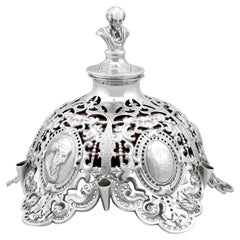
Antique Victorian Sterling Silver and Cranberry Glass Inkwell
Located in Jesmond, Newcastle Upon Tyne
An exceptional, fine and impressive, antique Victorian English sterling silver and red cranberry glass inkwell; an addition to our ornamental silverware collection
This exceptional antique Victorian sterling silver inkwell has a circular shaped domed form.
The body of this exceptional antique inkwell is embellished with impressive pierced and embossed scrolling leaf decoration, accented with pensile, baluster style bead motifs.
The ornamentation to the body incorporates five oval cartouches; four are ornamented with an embossed male profile: two bearded males and two in a soldier's helmet.
The cartouche to the anterior surface of the inkwell features the contemporary engraved crest of a stag encompassed with a garter and the motto 'God and my Honour'.
The intricate sterling silver body of the inkwell incorporates five conical shaped pen receivers.
The swept waisted upper portion of this antique inkwell is fitted with a hinged hallmarked cover, ornamented with engraved simplified leaf decoration.
The cover is surmounted with an impressive embossed three-dimensional bust of a male figure in robes.
This antique inkwell retains the original and substantial red cranberry glass ink bottle liner, with a cut glass star motif to the underside; the cranberry glass liner is highly desirable.
This exceptional silver and glass inkwell is supported by five swept feet, ornamented with a continuation of scrolling leaf and circular motif decoration from the body.
This exceptional example of Victorian silverware, crafted by the renowned London silversmith Joseph Angell II, is the finest example of its type
Condition
This antique ink bottle...
Category
British Victorian Antique 1850s Furniture
Materials
Sterling Silver
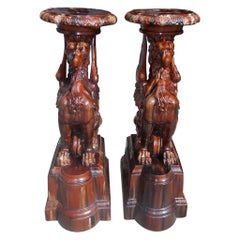
Pair of Italian Griffon Majolica Terracotta Pedestals on Plinths. Circa 1850
Located in Charleston, SC
Pair of Italian Neoclassical Griffon Majolica terracotta pedestals with flanking circular floral tops and resting on molded step back plinths. Mid 19th century.
Category
Italian Neoclassical Antique 1850s Furniture
Materials
Terracotta
$9,600 Sale Price / set
40% Off
Victorian English Sterling Silver Fiddle Pattern Gravy Spoon
Located in Jesmond, Newcastle Upon Tyne
A fine and impressive antique Victorian English sterling silver fiddle pattern gravy spoon; part of our silver cutlery collection.
This antique Victori...
Category
English Victorian Antique 1850s Furniture
Materials
Silver, Sterling Silver

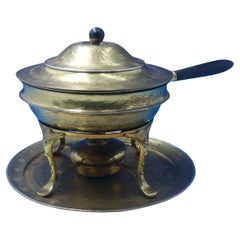
Mixed Metals by Tiffany and Co Sterling Silver Chafing Dish w/Underplate (#5083)
By Tiffany
Co.
Located in Big Bend, WI
Mixed Metals by Tiffany and Co.
Extraordinary Mixed Metals by Tiffany and Co sterling silver (and other metals) chafing dish with underplate with "C" date mark. This dish measures 1...
Category
American Antique 1850s Furniture
Materials
Sterling Silver
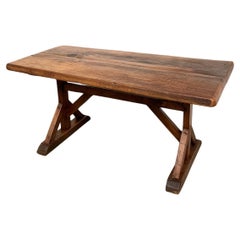
French 19th century brutalist oak table
Located in LYON, FR
Superb 19th-century solid oak table, resting on a sturdy antique oak base, fully doweled. This is a beautiful collector's item with a thick top and unique patina. Composed of two lar...
Category
European Brutalist Antique 1850s Furniture
Materials
Oak
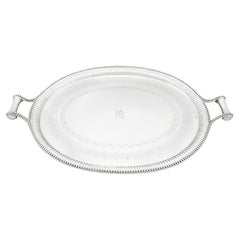
Antique Victorian Sterling Silver Tea Tray
Located in Jesmond, Newcastle Upon Tyne
A magnificent, fine and impressive, antique Victorian English sterling silver oval tray, an addition to our Victorian teaware collection.
This magnificent antique Victorian silver t...
Category
British Victorian Antique 1850s Furniture
Materials
Silver, Sterling Silver
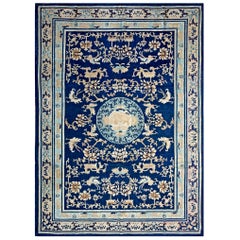
Mid-19th Century W. Chinese Ningxia Carpet ( 6
9" x 9
6" - 205 x 290 )
Located in New York, NY
Mid-19th Century W. Chinese Ningxia Carpet ( 6'9" x 9'6" - 205 x 290 )
Category
Chinese Antique 1850s Furniture
Materials
Wool
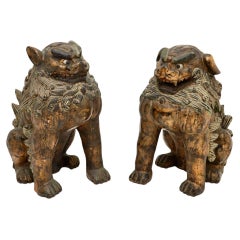
Pair of Antique Chinese Carved Wood Foo Dog Statues
Located in London, GB
A large and extremely impressive pair of antique Chinese carved wood foo dog statues. They date from the 19th century and are genuine antiques, not to be confused with the many contr...
Category
Chinese Antique 1850s Furniture
Materials
Wood
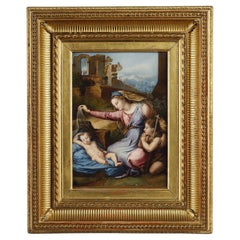
The Virgin and child with little St-John, after Raphaël (1483-1520)
Located in Paris, FR
Miniature depicting The Virgin and Child with Little Saint John, known as the Virgin with Veil or the Virgin with Blue Tiara (Louvre), after Raphael (1483-1520), signed lower left J....
Category
French Antique 1850s Furniture
Materials
Wood
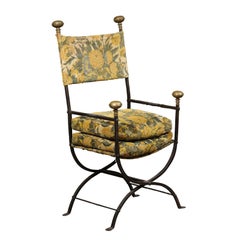
Large 19th Century Iron and Brass Campaign Chair, circa 1850
Located in Atlanta, GA
Large 19th century iron and brass Campaign chair, continental, circa 1850.
Category
European Antique 1850s Furniture
Materials
Brass, Iron
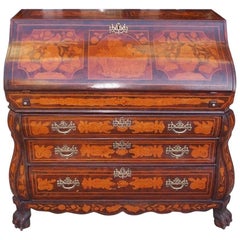
Dutch Marquetry Burl Walnut Bombay Figural and Foliage Inlaid Desk, Circa 1850
Located in Charleston, SC
Dutch Marquetry burl walnut Bombay figural and foliage desk with exotic exterior inlays, fitted interior, three lower case drawers, original urn brasses, carved scalloped skirt, and ...
Category
Dutch Dutch Colonial Antique 1850s Furniture
Materials
Brass
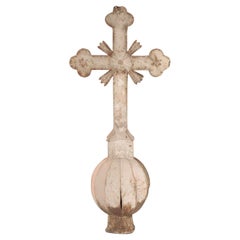
Faded Red Painted Zinc Cross from France
Located in Houston, TX
Faded red painted zinc cross from France. 19th century zinc cross painted in a dusty coral hue faded from its original red color. Beautiful gray zinc color and brownish rust patina. ...
Category
French French Provincial Antique 1850s Furniture
Materials
Zinc
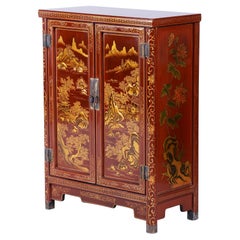
Original Asian-Style Small Cabinet, Wood, Lacquer, Paint, China, 1850s
Located in Brandys nad Labem, Středočeský kraj
This charming Asian-style cabinet originates from China and dates back to the mid-19th century. It is crafted from lacquered and painted wood, adorned with rich ornaments and colors ...
Category
Czech Biedermeier Antique 1850s Furniture
Materials
Wood, Lacquer, Paint
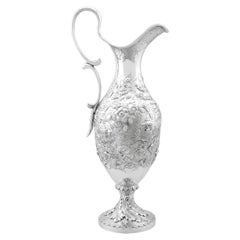
19th Century American Silver Claret Jug
By Samuel Kirkby
Co
Located in Jesmond, Newcastle Upon Tyne
This magnificent antique 19th century American silver claret jug has baluster form onto a plain circular spreading foot.
The body of this antique jug is ...
Category
Unknown Antique 1850s Furniture
Materials
Silver, Sterling Silver
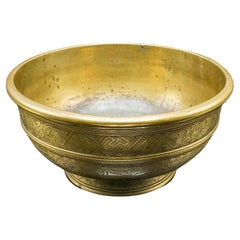
Antique Planter Bowl, Oriental, Brass, Jardiniere, Dish, Early Victorian, C.1850
Located in Hele, Devon, GB
This is an antique planter bowl. An Oriental, brass jardiniere dish, dating to the early Victorian period, circa 1850. Beautifully decorated and of generous size, this jardiniere mak...
Category
Chinese Victorian Antique 1850s Furniture
Materials
Brass
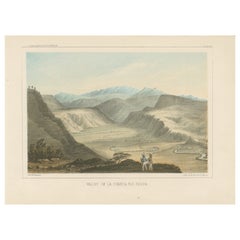
Spectacular View of Valley La Cuesta, Rio Pecos - 19th Century Lithograph
Located in Langweer, NL
Title: Spectacular View of Valley La Cuesta, Rio Pecos - 19th Century Lithograph
Description: This breathtaking lithograph captures the scenic beauty of the Valley of La Cuesta al...
Category
Antique 1850s Furniture
Materials
Paper
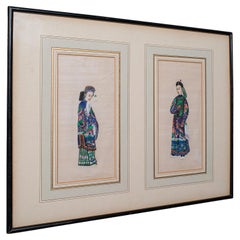
Antique Pith Painting, Oriental Art, Watercolour, Qing Dynasty, Victorian, 1850
Located in Hele, Devon, GB
This is an antique pith painting. An Oriental, framed watercolour figural pair from the Qing dynasty, dating to the early Victorian period, circa 1850. A fine example of Chinese arti...
Category
Chinese Chinese Export Antique 1850s Furniture
Materials
Glass, Paint, Parchment Paper
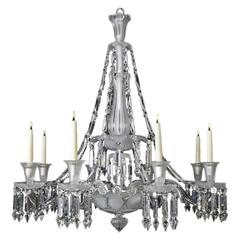
Fine Quality Mid-Victorian Eight-Light Frosted-Glass Antique Chandelier
By F.
C. Osler
Located in Steyning, West sussex
A fine quality mid-Victorian eight-light frosted-glass chandelier the main baluster stem formed as a fountain with cascading drop hung trumpet shape stem pieces the finely decorated ...
Category
English Victorian Antique 1850s Furniture
Materials
Silver Plate
Japanese Woodblock Print One Hundred Famous Views of Edo by Utagawa Hiroshige
Located in Atlanta, GA
Artist: Utagawa Hiroshige (1797 - 1858)
Series: One Hundred Famous Views of Edo (1856-58)
Number: 39 Distant View of Kinryuzan Temple and Azuma Bridge
Publisher: Uoya Eikichi
Format: Vertical Oban
Number of Prints: 120/120 (inc. title page and a replacement print by Hiroshige II)
Medium: Woodblock Print
Date: 1857 (Ansei 4), 8th month
Size (H x W): 14" x 9.25" print only.
Signature: Hiroshige ga
Censor's seals: aratame, Snake 8
No blockcutter's mark
Reference: For a similar print, see the collection of Art Institution Chicago Accession Number 1938.536 and 1965.1062; MFA Boston...
Category
Japanese Edo Antique 1850s Furniture
Materials
Paper

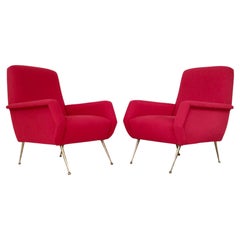
Pair of Red Armchairs Gio Ponti Era circa 1950, Italy
By Gio Ponti
Located in Brussels, BE
Nice pair of armchairs, Gio Ponti Era, circa 1950, Italy.
Brass and light red fabric. New upholstery.
Dimensions: 92 cm H, 69 cm W, 89 cm D, seat height: 45 cm.
Very good condition.
All purchases are covered by our Buyer Protection...
Category
Italian Mid-Century Modern Antique 1850s Furniture
Materials
Brass
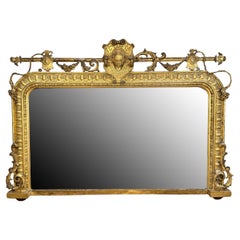
19th Century Renaissance Revival Giltwood Overmantle Mirror
Located in Hastings, GB
A showstopping 19th century Renaissance Revival giltwood and gesso overmantle mirror of incredible proportions.
Circa 1850, England
This truly spectacular mirror boasts egg and...
Category
English Renaissance Revival Antique 1850s Furniture
Materials
Gesso, Wood
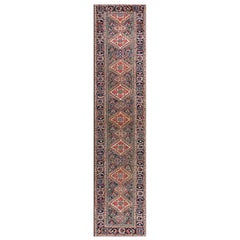
Mid 19th Century N.W. Persian Carpet
Located in New York, NY
Mid 19th Century N.W. Persian Carpet 3' 3" x 16' 5"
Category
Persian Antique 1850s Furniture
Materials
Wool
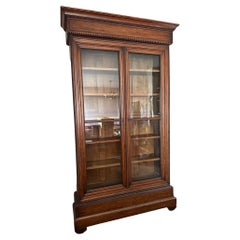
19th century French Walnut and Glass Vitrine, 1850s
Located in LEGNY, FR
Beautiful and rare early 19th-century walnut display case, Restauration period, 1850s.
Very beautiful fluting and carved wood details adorn the entire vitrine and the glass doors. Si...
Category
French Restauration Antique 1850s Furniture
Materials
Glass, Walnut
Large Antique Fireplace Set, English, Inglenook Fire Basket, Andirons, Victorian
Located in Hele, Devon, GB
This is a large antique fireplace set. An English, cast iron inglenook fire basket with a pair of andirons, dating to the early Victorian period, circa 1850. A superb country house e...
Category
British Early Victorian Antique 1850s Furniture
Materials
Iron

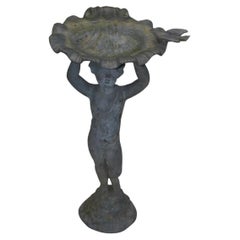
American Figural Boy Lead Bird Bath Holding Shell w/ Dove On Circular Base, 1850
Located in Charleston, SC
American figural boy lead bird bath holding shell above head with dove perched on rim while standing on a circular molded base, Mid 19th Century
Category
American American Empire Antique 1850s Furniture
Materials
Lead
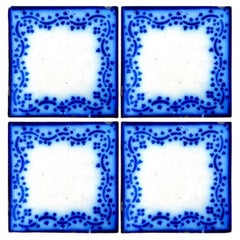
Set of 35 Antique Ceramic Tiles by Pas De Calais Desvres, France, circa 1850s
By Desvres
Located in Rijssen, NL
Recently lifted from its original home, this amazing and unique set of 35 antique French handmade ceramic tiles. Designed by Maison four maintraux-Hornoy and manufactured for Pas de ...
Category
French Folk Art Antique 1850s Furniture
Materials
Ceramic
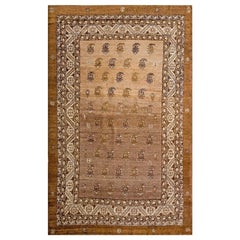
Fantastic Camel Color with Intricate Patterns Antique Bakshaiesh Paisley Rug
Located in New York, NY
Mid-19th Century N.W. Persian Bakshaiesh Paisley Carpet
4'10" x 7'8" - 147 x 235
Category
Persian Bakshaish Antique 1850s Furniture
Materials
Wool
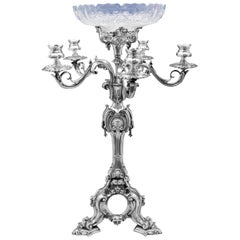
Large Antique Victorian Sterling Silver Centrepiece Candelabrum by Barnards 1854
Located in London, London
Hallmarked in London in 1854 by Barnards, this stunning, Victorian, antique sterling silver Centrepiece, features a central glass bowl and 5 spaces for candles. The centrepiece is ri...
Category
English Baroque Antique 1850s Furniture
Materials
Sterling Silver
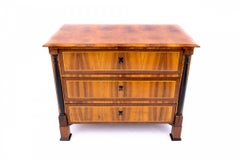
Antique chest of drawers, Northern Europe, year around 1850.
Located in Chorzów, PL
Antique chest of drawers from the mid-19th century, Northern Europe.
The furniture is in very good condition, after professional renovation.
Dimensions: height 91 cm / width 114 cm...
Category
Scandinavian Biedermeier Antique 1850s Furniture
Materials
Walnut
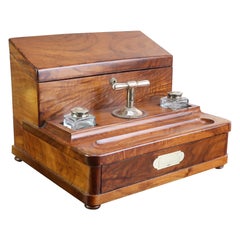
Antique Walnut Letter Box And Copying Press By Mordan. English Dated 1856
Located in St Annes, Lancashire
Wonderful solid walnut letter or stationary box
Combined with a patent copying press
Fabulous colour and figure in the wood
Makers mark of S. Mordan and dated 1856 on the press ha...
Category
English Antique 1850s Furniture
Materials
Brass
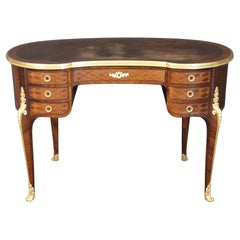
Fine Quality Dore
Bronze French Paul Sormani Parquetry Inlaid Walnut Desk
By Paul Sormani
Located in Swedesboro, NJ
Paul Sormani Louis XV Bronze-Mounted Writing Desk – Exceptional Quality & Parisian Craftsmanship
Presenting a superb Louis XV–style bronze-mounted writing desk attributed to Paul So...
Category
French Louis XV Antique 1850s Furniture
Materials
Bronze
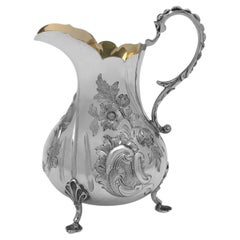
Victorian Antique Sterling Silver Cream Jug or Milk Jug, London 1856
Located in London, London
Hallmarked in London in 1856 by George John Richards, this very attractive, Victorian, Antique Sterling Silver Cream Jug, stands on three scroll feet, and features a gilt interior, a...
Category
English Victorian Antique 1850s Furniture
Materials
Sterling Silver
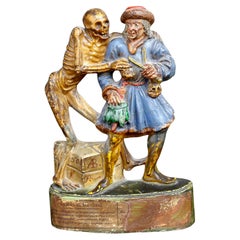
Antique Terracota Figure Death and Merchant Basler Totentanz Macabre Zizenhausen
Located in Malmö, SE
Very rare terracotta figurine of Death and Merchant - after the Zizenhausen Danse Macabre or Totentanz aus Zizenhausen or Basel Dance of Death cycle. I have two figures from the fort...
Category
German Baroque Revival Antique 1850s Furniture
Materials
Terracotta
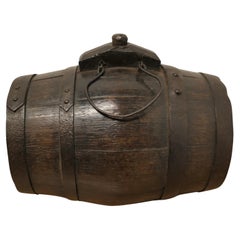
Welsh Oak Cider Flask, Welsh Oak Harvest Costrel
Located in Godshill, Isle of Wight
Welsh Oak Cider Flask, Welsh Oak Harvest Costrel
Just the thing to carry your Lunch time Cider into the field during harvest
A Beautiful looking piece in Oak with Handle ( used to ...
Category
Country Antique 1850s Furniture
Materials
Oak
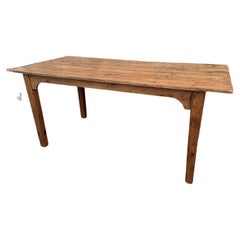
19th Century English Pine Table
Located in Nashville, TN
This 19th century English pine harvest tables is an excellent size 2 people can comfortably set on the sides, narrow enough for small spaces beautiful patina pine ages so well and th...
Category
English Antique 1850s Furniture
Materials
Pine
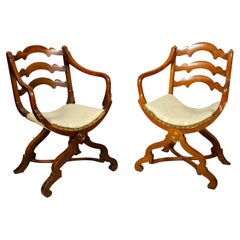
Pair of European Walnut Gondola Chairs
Located in Essex, MA
With shaped ladder back with down scrolled arms and X form legs. From a Bellevue Ave Newport family.
Category
European Antique 1850s Furniture
Materials
Walnut
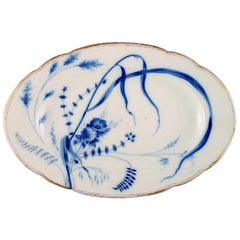
$2,800 / set
Fischer
Mieg, Pirkenhammer, Large Antique Dish in Hand Painted Porcelain
Located in København, Copenhagen
Fischer & Mieg, Pirkenhammer. Large antique dish in hand painted porcelain with floral decoration and golden rim. Dated 1853-1873.
Measures: 43.5 x...
Category
Czech Antique 1850s Furniture
Materials
Porcelain
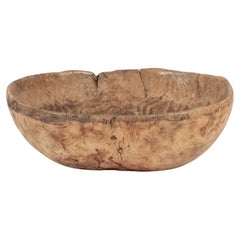
Large Primitive Oval-Shaped Dug Out Bowl from Sweden
Located in Houston, TX
Large primitive oval-shaped dug out bowl from Sweden dating to the mid-19th century. Traces of reddish oxblood color paint on bowl exterior. Interior of bowl is scrubbed leaving a darkened finish that highlights the beautiful wood grain of the fruitwood. Inscribed on bottom "PER SODERBERG...
Category
Swedish Primitive Antique 1850s Furniture
Materials
Fruitwood
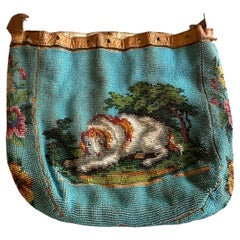
Antique Beaded Drawstring Purse with Dog and Parrot Motif – Germany, circa 1850
Located in Hamburg, DE
This exquisite antique beaded purse from Germany, dating to around 1850, is a remarkable example of 19th-century craftsmanship and textile art. Richly embroidered with vibrant glass beads in exceptionally fresh and bold colors, the purse features a charming depiction of a dog on one side and a colorful parrot on the other. The attention to detail extends even to the edges, where additional animals and floral motifs are intricately stitched, showcasing the skill and artistry of its original maker.
The interior is lined with fine, buttery-soft deerskin leather, offering a luxurious tactile experience. While some minor bead losses and carefully executed repairs are visible, the overall condition is impressively well-preserved for its age. The drawstring is missing, but with the addition of a new ribbon, this delicate piece could even be used again—though it remains most striking as a collector’s item or display piece. Antique purses like this, especially with such vivid imagery and expert beadwork, are increasingly rare and highly sought after. A wonderful find for lovers of textile history, decorative arts, or romantic Victorian accessories.
Category
German Biedermeier Antique 1850s Furniture
Materials
Leather, Glass
The Scarlet Letter by Nathaniel Hawthorne, Second Ed., Tipped-in Signature, 1850
Located in Colorado Springs, CO
Hawthorne, Nathaniel. The Scarlet Letter, A Romance. Boston: Ticknor, Reed, and Fields, 1850. Printed Cambridge: Metcalf and Company. Second edition...
Category
American Antique 1850s Furniture
Materials
Paper

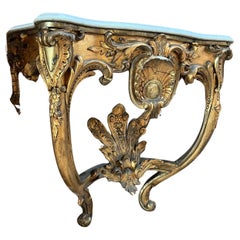
Louis XV-Style Gilded Console Table with Marble Top
Located in TOURCOING, FR
A striking 19th-century Louis XV-style console, richly hand-carved and adorned with gilded scrollwork, floral motifs, and Rococo detailing. This elegant wall-mounted console is toppe...
Category
French Antique 1850s Furniture
Materials
Marble
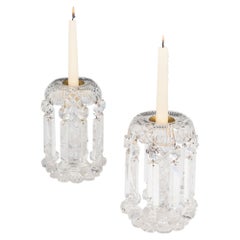
Fine Pair of Richly Cut Victorian Glass Lustres
Located in Steyning, West sussex
A fine pair of richly cut Victorian glass lustres hung with ball drops.
England, circa 1850.
Category
Antique 1850s Furniture
Materials
Glass, Cut Glass
$1,654 / set
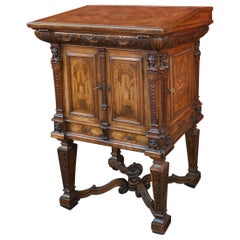
German Lectern Podium with Inlays, 1850 circa
Located in Traversetolo, IT
The lectern podium, dating back to the second half of the nineteenth century, stands out for its exquisite and refined construction, making it an object...
Category
German Baroque Antique 1850s Furniture
Materials
Wood
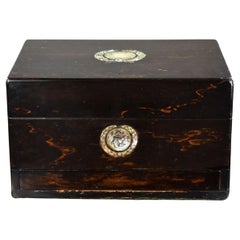
Victorian Rosewood Travelling Vanity/Jewellery Box
Located in Chelmsford, Essex
Victorian rosewood travelling vanity box / jewellery case. The top has an inlaid mother of pearl floral motif and mother of pearl surrounding the lock.
Super example with a suite of wonderful storage and complete vanity items. Displays a desirable aged patina and in good order throughout.
The fitted interior reveals a lift-out compartment tray, dressed with dark navy velvet. A mirror is set within the lid, removable by activating a brass push button which gives access to leather folio sleeve.
There is also small push button within the rear edge which activates the lower jewellery drawer, with individual jewellery compartments and velvet earring...
Category
British Antique 1850s Furniture
Materials
Rosewood
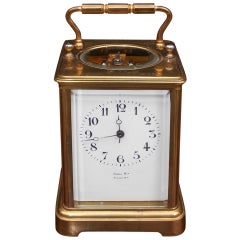
American Brass Miniature Carriage Clock with Beveled Glass, New York. C. 1850
By James Mix
Located in Charleston, SC
American brass miniature carriage clock with beveled glass, carrying handle , and signed enamel over copper face with dial. Clock consists of time, strike,...
Category
American American Classical Antique 1850s Furniture
Materials
Brass, Copper, Enamel
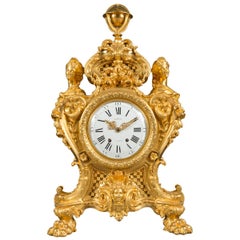
Large French Gilt-Bronze Mantel Clock, signed Marquis à Paris, c. 1860–1880
Located in Tarzana, CA
A magnificent gilt-bronze mantel clock of monumental form, richly cast and finely chased in the Rococo-revival style. The case is surmounted by a celestial globe above a pierced flor...
Category
French Napoleon III Antique 1850s Furniture
Materials
Bronze, Ormolu
Still Thinking About These?
All Recently ViewedMore Ways To Browse
Blue And White Lidded Temple Jars
Blue Uranium Glass
Blue White Clock
Blue Yellow Pottery
Boffi Kitchen
Bombay Chest Italy
Book Table Stand
Boudoir Set
Brands Of Vintage Glass
Brass Heron Sculpture
Bread Cabinet
Bronze Lalanne
Bronze Spoons
Burl Bedside Chests
Burled Walnut Desk
Burnished Bamboo
Butter Table
Cabinet Dowel