Gothic Revival More Carpets

Gothic Revival Style

The Gothic Revival movement (also called Victorian Gothic or Neo-Gothic) emerged in Britain in the 1740s, and reached its height in the late-19th century. Gothic Revival furniture's characteristics include such decorative flourishes as pointed arches, floral details, finials, heraldic motifs and linenfold carving.

The movement was rooted in religious and social conservatism. Gothic Revival's proponents, who included Charles Barry and A.W.N. Pugin, the architects of London’s Houses of Parliament (designed in 1840), believed that the art and architecture of the Middle Ages were authentically spiritual and inherently moral.

In the United States, the Gothic Revival movement shaped both public buildings and private houses. Numerous American schools were built in the early-19th century in a style now called Collegiate Gothic. Many builders and craftsmen were inspired by Andrew Jackson Downing’s widely read 1850 book Architecture for Country Houses, which posited that a family’s home should exemplify their values — and that the Gothic Revival style was particularly well-suited to scholars and clergymen. Furniture with detailing that mirrored that of Gothic Revival buildings appeared in the same period. Such pieces typically feature dark, intricately carved wood, and upholstery in velvet or leather.

Much like the castles or cathedrals that inspired them, Gothic Revival chairs, bookcases and beds make a bold design statement. And while you probably don’t have to cross a moat or raise a portcullis to get through your front door, a Gothic Revival piece will declare that your home is indeed your castle.

to
3
Width
to
Length
to
7
5,133
1,165
908
251
151
142
91
89
60
52
48
32
24
20
16
6
7
1
7
7
7
7
7
7
7
7
7
7
Style: Gothic Revival
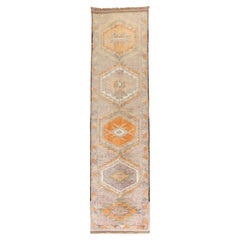
Zabihi Collection Geometric Turkish Anatolian Runner
Located in New York, NY
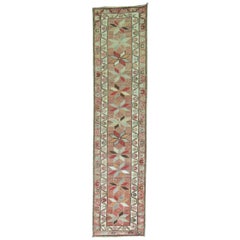
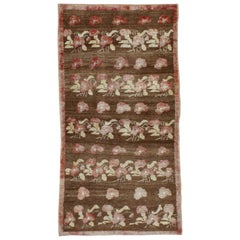
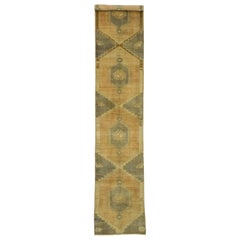
A Turkish anatolian runner from the middle of the 20th century. Measures: 2'7” x 13'9”.
Category

20th Century Turkish Gothic Revival More Carpets

Materials

Wool

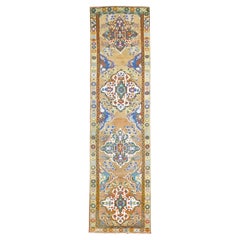
Zabihi Collection Vintage Turkish Anatolian Runner
Located in New York, NY
a Mid-20th Century Turkish Anatolian Runner Details rug no. r5638 size 2' 8" x 14' 5" (81 x 439 cm)
Category

20th Century Turkish Gothic Revival More Carpets

Materials

Wool

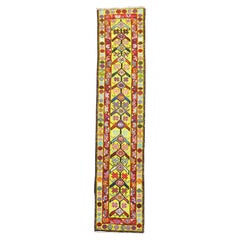
Zabihi Collection Vintage Turkish Anatolian Runner
Located in New York, NY
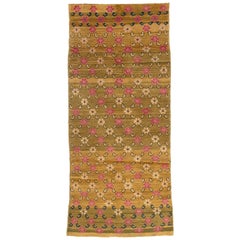
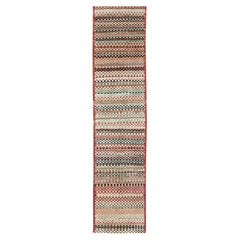
A colorful Turkish Anatolian runner from the middle of the 20th century. A formal palette with intense colors on a camel colored ground Details rug no. 31329 size 3' 3" x 12' 1" (99...
Category

20th Century Turkish Gothic Revival More Carpets

Materials

Wool

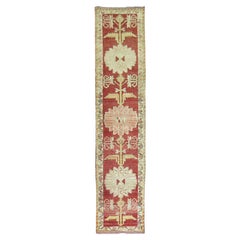
Zabihi Collection bright Yellow Turkish Anatolian Runner
Located in New York, NY
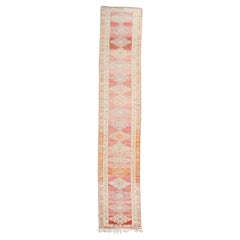
A Bright yellow Turkish Runner from the 3rd quarter of the 20th century. Look at the other colors too ! Details rug no. r5188 size 2' 8" x 12' 2" (81 x 371 cm)
Category

20th Century Turkish Gothic Revival More Carpets

Materials

Wool

Zabihi Collection Red Turkish Anatolian Runner
Located in New York, NY
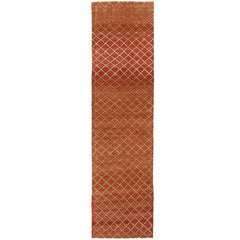
A Turkish anatolian runner from the middle of the 20th century. Measures: 2'10” x 12'4”.
Category

20th Century Turkish Gothic Revival More Carpets

Materials

Wool

Zabihi Collection Star Motif Geometric Turkish Anatolian Runner
Located in New York, NY
Turkish Anatolian runner with a repetitive geometric star motif on a neutral color ground from the middle of the 20th century. Measures: 2'9” x 11'9”.
Category

20th Century Turkish Gothic Revival More Carpets

Materials

Wool

Vintage Turkish Sivas Rug with Byzantine and Gothic Revival Style
Located in Dallas, TX
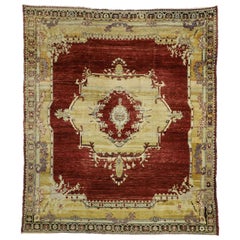
50650 Vintage Turkish Sivas rug with Byzantine and Gothic Revival style. This hand knotted wool features a grandeur central medallion floating in a robust sea of abrash. Each corner ...
Category

Mid-20th Century Turkish Gothic Revival More Carpets

Materials

Wool

Related Items
Vintage Turkish Anatolian Rug
Located in New York, NY
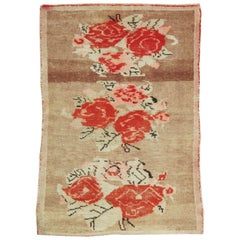
A vintage Turkish Anatolian rug from the mid-20th century. Measures: 2' 2" x 3' 1"
Category

Mid-20th Century Turkish Gothic Revival More Carpets

Materials

Wool

Vintage Turkish Anatolian Rug
$900 Sale Price
20% Off
W 26 in L 37 in
The Anatolian Radiance: A Vintage Turkish Kilim of Geometric Grace
Located in Dallas, TX
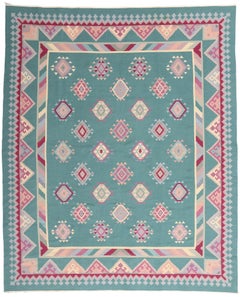
79329 Vintage Turkish Kilim Rug, 07'11 x 09'07. Bathed in the luminous spirit of Anatolia, this handwoven wool vintage Turkish kilim rug embodies a vision of artistry and heritage re...
Category

Late 20th Century Turkish Gothic Revival More Carpets

Materials

Wool

Vintage Turkish Anatolian Rug
Located in New York, NY
A vintage Turkish Anatolian rug from the mid-20th century. Measures: 3' 11" x 7' 5"
Category

Mid-20th Century Turkish Gothic Revival More Carpets

Materials

Wool

Vintage Turkish Anatolian Rug
$1,300 Sale Price
20% Off
W 47 in L 89 in
Vintage Turkish Anatolian Rug
Located in New York, NY
A vintage Turkish Anatolian rug from the mid-20th century. Measures: 2' 9" x 6' 2"
Category

Mid-20th Century Turkish Gothic Revival More Carpets

Materials

Wool

Vintage Turkish Anatolian Rug
$1,400 Sale Price
20% Off
W 33 in L 74 in
Vintage Turkish Anatolian Rug
Located in New York, NY
A vintage Turkish Anatolian carpet from the second quarter of the 20th century.
Category

Mid-20th Century Turkish Gothic Revival More Carpets

Materials

Wool

Vintage Turkish Anatolian Rug
$2,800 Sale Price
20% Off
W 28 in L 110 in
Mid-20th Century Handmade Turkish Anatolian Modernist Small Runner
Located in New York, NY
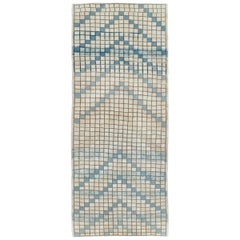
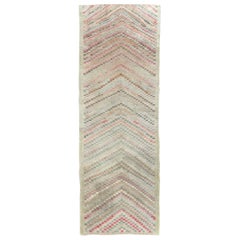
A vintage Turkish Anatolian modernist small rug in runner format handmade during the mid-20th century in shades of cream, light blue, and blue grey.
Category

Mid-20th Century Turkish Gothic Revival More Carpets

Materials

Wool

Vintage Turkish Anatolian Rug
Located in New York, NY
A vintage Turkish Anatolian rug from the second half of the 20th century. Measures: 2' 11" x 6' 2"
Category

20th Century Turkish Gothic Revival More Carpets

Materials

Wool

Vintage Turkish Anatolian Rug
$2,400 Sale Price
20% Off
W 35 in L 74 in
The Anatolian Amulet: A Vintage Turkish Oushak Runner of Modern Nobility
Located in Dallas, TX
50038 Vintage Turkish Oushak Rug, 02'06 X 11'11. Steeped in heritage yet radiating contemporary grace, this hand-knotted wool vintage Turkish Oushak runner is a triumph of restrained opulence. Its composition—anchored by a sequence of commanding hexagonal medallions—reveals a harmony between architectural precision and spiritual symbolism. Each signature medallion functions as a woven talisman, invoking both balance and protection, while its stepped edges suggest the ascending form of ancient ziggurats. This is a Turkish masterpiece designed not simply to adorn, but to elevate—to transform its surroundings into a passage of quiet grandeur and timeless sophistication. The artistry is deeply rooted in Anatolia’s illustrious weaving legacy, where every motif carries a story and every symbol a purpose. Within the medallions, stylized amulets and scorpion motifs stand as ancient guardians against misfortune, their angular geometry expressing both strength and grace. The delicate bird forms woven between them serve as emblems of love and prosperity, softening the design’s rigor with lyrical balance. The interplay between geometry and spirit reflects the dual nature of Oushak artistry—regal yet human, refined yet elemental. The precious rug’s texture adds another dimension to its allure. The hand-spun wool possesses a luminous sheen, responding to light with an almost silken subtlety. Variations in tonality and weave create a painterly effect, a sophisticated abrashed surface that whispers of age, authenticity, and tactility. Its surface exudes the calm richness of timeworn luxury—the kind of beauty that feels inherited rather than acquired. Each inch bears the trace of craftsmanship passed through generations, a legacy of skill refined to near perfection. To own such an exquisite work of art is to possess more than a rug—it is to inherit an artifact of cultural resonance and aesthetic mastery. This exceptional Oushak runner speaks to those who appreciate the nuance of rarity and the poetry of design that transcends fashion. Whether gracing the corridor of a modern penthouse or the entryway of a heritage estate, it embodies an aura of cultivated prestige—an object of enduring beauty for the collector who values history woven into the fabric of modern life. Rendered in variegated shades of camel, butterscotch, caramel, tan, sand, ecru, taupe, coffee, espresso, brown, peanut, and mocha with other neutral striations.  Small repair on one corner...
Category

Mid-20th Century Turkish Gothic Revival More Carpets

Materials

Wool

Mid-20th Century Handmade Turkish Anatolian Art Deco Style Runner
Located in New York, NY
A vintage Turkish Anatolian Art Deco style rug in runner format handmade during the mid-20th century. Measures: 1' 11" x 8' 1" Turkish Rugs Carpets: Until the Great Persian Carpet Revival in the later 19th century, the “Oriental rug” was Turkish. For nearly six centuries, Turkish rugs, both scatter, room size, and even larger, thoroughly dominated the European import market. Whereas the Persian carpet can be divided into urban, village, and tribal types, in Turkey and its predecessor the Ottoman Empire, rugs almost exclusively came from village weavers and from a small number of urban workshops. Ninety percent village, nine percent city, one percent tribal. Turkish weavers have, with very few exceptions, always worked with the symmetric (Turkish) knot. Wool foundations are standard practice among both town and village weavers. The exceptions, very finely woven 20th century and recent Herekeh silks from near Istanbul, and early 17th century Ottoman Court rugs from Bursa, constitute only a tiny part of the total. Always pricey, they appealed and still appeal to the clients who want lots of knots and perfect execution instead of individual personality. The urban workshops have been centered around the western Turkish city of Oushak and its attendant port town of Smyrna. Oushak weaves with the trends in fashion. When color saturated medallion carpets were needed, Oushak was ready in the 17th and 18th centuries. When coarse red and blue carpets...
Category

Mid-20th Century Turkish Gothic Revival More Carpets

Materials

Wool

Vintage Turkish Anatolian Rug
Located in New York, NY
A vintage Turkish Anatolian rug from the mid-20th century. Measures: 2' 7" x 3' 5"
Category

Mid-20th Century Turkish Gothic Revival More Carpets

Materials

Wool

Vintage Turkish Anatolian Rug
$900 Sale Price
20% Off
W 31 in L 41 in
Mid-20th Century Handmade Turkish Anatolian Runner
Located in New York, NY
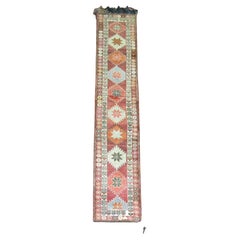
A vintage Turkish Anatolian rug in runner format handmade during the mid-20th century. Measures: 2' 7" x 7' 4" Turkish rugs carpets: Until the Great Persian Carpet Revival in the later 19th century, the “Oriental rug” was Turkish. For nearly six centuries, Turkish rugs, both scatter, room size, and even larger, thoroughly dominated the European import market. Whereas the Persian carpet can be divided into urban, village, and tribal types, in Turkey and its predecessor the Ottoman Empire, rugs almost exclusively came from village weavers and from a small number of urban workshops. Ninety percent village, nine percent city, one percent tribal. Turkish weavers have, with very few exceptions, always worked with the symmetric (Turkish) knot. Wool foundations are standard practice among both town and village weavers. The exceptions, very finely woven 20th century and recent Herekeh silks from near Istanbul, and early 17th century Ottoman Court rugs from Bursa, constitute only a tiny part of the total. Always pricey, they appealed and still appeal to the clients who want lots of knots and perfect execution instead of individual personality. The urban workshops have been centered around the western Turkish city of Oushak and its attendant port town of Smyrna. Oushak weaves with the trends in fashion. When color saturated medallion carpets were needed, Oushak was ready in the 17th and 18th centuries. When coarse red and blue carpets were required, Oushak and Smyrna in the 19th century wove them by the boatload. When tastes changed again, and the European dealers in Smyrna wanted room size carpets with lighter and unusual colors, and with Persianate designs, production ramped up in nearby Oushak. Those antique, all-wool construction turn-of-the-century carpets are still in high demand with designers. Antique carpets with allover, roughly drawn patterns on grounds of shrimp, rust, straw, cream, pale blue, and pale and pea green, hitherto unavailable colors, are in such demand today that contemporary Oushaks have attempted to mimic them with soft palettes, extra-large scale drawing and coarse weaves. Oushaks woven for the Turkish market, for palaces, houses and mosques were often oversize with large, repeating medallions, all in shades of (Turkey) red, dark blue, light blue-teal, and ivory, with lemon and green accents. Turkey, along with India, invented standard sizes. By vertically repeating the medallion, one could get one medallion, one with two end halves, two, three, etc. medallions, up to thirty or so feet in length. The process spared making new cartoons for each length and allowed a quicker turnaround time. Oushak, from the time of 15th century “Holbein” rugs onward, has always been a commercial center. The prayer niche directional rug is primarily a Turkish development. In the towns and villages east of Oushak, in Ghiordes, Kula, Ladik, Kirsehir, Mucur and Konya, among others, arch pattern scatters with bright palettes and weaves varying from relatively fine to moderate were almost the entire production. Antique examples were particularly popular in America around 1900. Other centers of village weaving were situated on the western coast and adjacent islands with the town of Melas and neighboring villages weaving geometric prayer rugs and scatters with a characteristic khaki green and lots of yellow. The other large region was in the northwest of Anatolia, near ancient Troy, with the sizable town of Bergama at its center. The satellite towns of Ezine, Karakecilli, Yuntdag, and Canakkale all wove colorful scatters with moderate weaves in all wool with geometric designs and cheerful palettes. Near to Istanbul, these were among the first Turkish rugs to reach Europe in the Renaissance. The earliest Turkish pieces depicted in Italian Old Master paintings display the so-called “Memling gul”, an allover panel pattern with hooked and stepped elements within the reserves. This pattern continues for centuries in the Konya area and in the Caucasus as well. Turkey is a land of villages and much of the most interesting Turkish weaving comes from one undiscovered village or another. The Konya-Cappadocia region of central Turkey includes the active towns of Karapinar, Karaman, Obruk, Sizma, and Tashpinar, all weaving Konya-esque scatters and long rugs. Karapinar has been active the longest, since the 17th century. The mosques in and around Konya have preserved locally-made rugs from the fourteenth. In the 20th century, the extra-long pile, many wefted Tulu rug was devised, with limited palettes and color block patterns. These are not really antique Tulus, but they must be a product of long-standing village tradition. There are thousands upon thousands of rural Turkish villages, almost all with easy access to local tribal wool. Rug students are discovering new names and rug types almost daily. The common denominators are bright colors, geometric designs, wool construction, moderate to coarse weaves and symmetric knots. Synthetic dyes hit the Turkish rug industry quickly and hard after 1870, and they penetrated to even the most off-the-beaten-track villages. This development was almost entirely negative. The village weavers used fugitive or overly bright dyes which ruined the color harmonies built up over centuries. Characteristic types disappeared or were negatively transmuted. The Turkish village rug of the 1870 to 1920 period is nothing to be proud of. In the eastern provinces, the semi-nomadic Kurdish tribes, collectively called ‘Yuruks’, weave all wool, geometric pieces with medium to medium-coarse weaves, as well as kilims and other flatweaves. The rugs employ cochineal instead of madder for the reds, mustard yellows, greens, and various blues. They are under-collected like the Persian Afshars. Their rugs are in scatter and long rug formats. The far eastern Turkish town of Erzerum has a long tradition of idiosyncratic, semi-workshop rugs and further to the east is Kars with a tradition of rugs in the Caucasian Kazak manner. One Turkish specialty is the Yastiks or cushion cover, made in pairs for the public living rooms of village houses. These are larger rugs in miniature and good ones are highly collectible. Like other Turkish rustic weavings, ones with synthetic dyes are almost totally undesirable. Only the tribal Baluch make similar cushion covers, known as pushtis or balishts, in the same small, oblong format. Yastiks always have a back, usually in plain weave, so that they can be easily stuffed. When the Imperial Carpet Factory at Herekeh near Istanbul closed in the early 20th century, the highly proficient Armenian master weavers set up in the Kum Kapi district of Istanbul where they wove all-silk, exquisitely fine and elaborately detailed small pieces, sometimes enriched with metal thread, for the most discriminating European buyers. Today the best, signed Kum Kapi pieces, usually in the “Sultan’s head” prayer niche design, can fetch upwards of $100,000. They are strictly for the wall. An Interwar all-silk room size Kum Kapi carpet is both exceedingly rare and stratospherically priced. The workshops closed in the 1930s, but the weaving of extremely fine, all-silk small rugs in Herekeh was revived in the 1960s. There has been a recent vogue for larger Turkish village vintage...
Category

Mid-20th Century Turkish Gothic Revival More Carpets

Materials

Wool

Vintage Turkish Anatolian Prayer Rug
Located in Dallas, TX
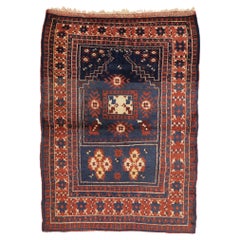
74863, Vintage Turkish Oushak prayer rug. This hand-knotted wool vintage Turkish Oushak prayer rug displays timeless colors blue, soft red and cream with a light yellow accent. A stylized mihrab is filled with a square and additional symbolic Turkish motifs on a blue background. The edges of the mihrab have stair step edges creating two spandrels while the bottom half of displays two bold motifs dotted with smaller stylized flowers. This Anatolian prayer rug...
Category

Mid-20th Century Turkish Gothic Revival More Carpets

Materials

Wool

Vintage Turkish Anatolian Prayer Rug
$674 Sale Price
25% Off
W 43 in L 58 in
Previously Available Items
Zabihi Collection Turkish Anatolian Extremely Long Runner
Located in New York, NY
A rare long Turkish Anatolian runner from the middle of the 20th century. Measures: 2'10” x 20'10”.
Category

20th Century Turkish Gothic Revival More Carpets

Materials

Wool

One-of-a-kind Hand Made Contemporary Eclectic Ivory Area Rug
Located in Norwalk, CT
With an amalgam of sizes and aesthetic influences ranging from art deco to Rorschach and modernist, the rugs in the Eclectic collection defy definition, asking instead to become intr...
Category

Early 2000s Pakistani Gothic Revival More Carpets

Materials

Wool

Gothic Revival more carpets for sale on 1stDibs.

Find a broad range of unique Gothic Revival more carpets for sale on 1stDibs. Many of these items were first offered in the Mid-20th Century, but contemporary artisans have continued to produce works inspired by this style. If you’re looking to add vintage more carpets created in this style to your space, the works available on 1stDibs include rugs and carpets and other home furnishings, frequently crafted with fabric, wool and other materials. If you’re shopping for used Gothic Revival more carpets made in a specific country, there are Asia, Caucasus, and Turkey pieces for sale on 1stDibs. It’s true that these talented designers have at times inspired knockoffs, but our experienced specialists have partnered with only top vetted sellers to offer authentic pieces that come with a buyer protection guarantee. Prices for more carpets differ depending upon multiple factors, including designer, materials, construction methods, condition and provenance. On 1stDibs, the price for these items starts at $2,300 and tops out at $5,900 while the average work can sell for $2,875.

Still Thinking About These?

All Recently Viewed