Items Similar to Antique Karachov Kazak Rug Karachoph Southwest Caucasus Carpet Late-19th Century
Video Loading
Want more images or videos?
Request additional images or videos from the seller
1 of 10
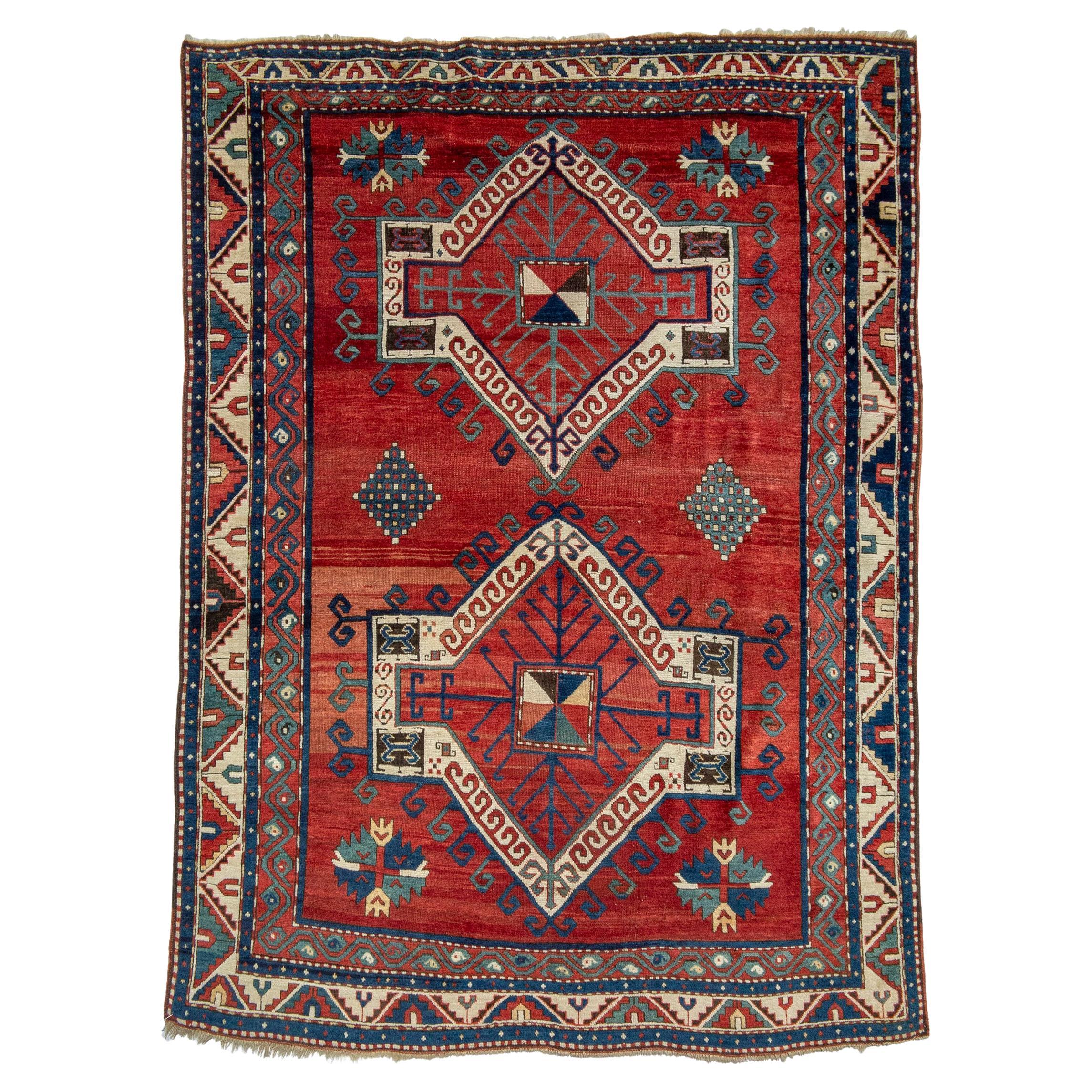
Antique Karachov Kazak Rug Karachoph Southwest Caucasus Carpet Late-19th Century
$9,000
$12,00025% Off
£6,727.74
£8,970.3225% Off
€7,760.59
€10,347.4525% Off
CA$12,600.01
CA$16,800.0125% Off
A$13,313.99
A$17,751.9925% Off
CHF 7,160.34
CHF 9,547.1125% Off
MX$159,393.26
MX$212,524.3425% Off
NOK 89,710.63
NOK 119,614.1825% Off
SEK 82,161.92
SEK 109,549.2225% Off
DKK 57,962.52
DKK 77,283.3625% Off
About the Item
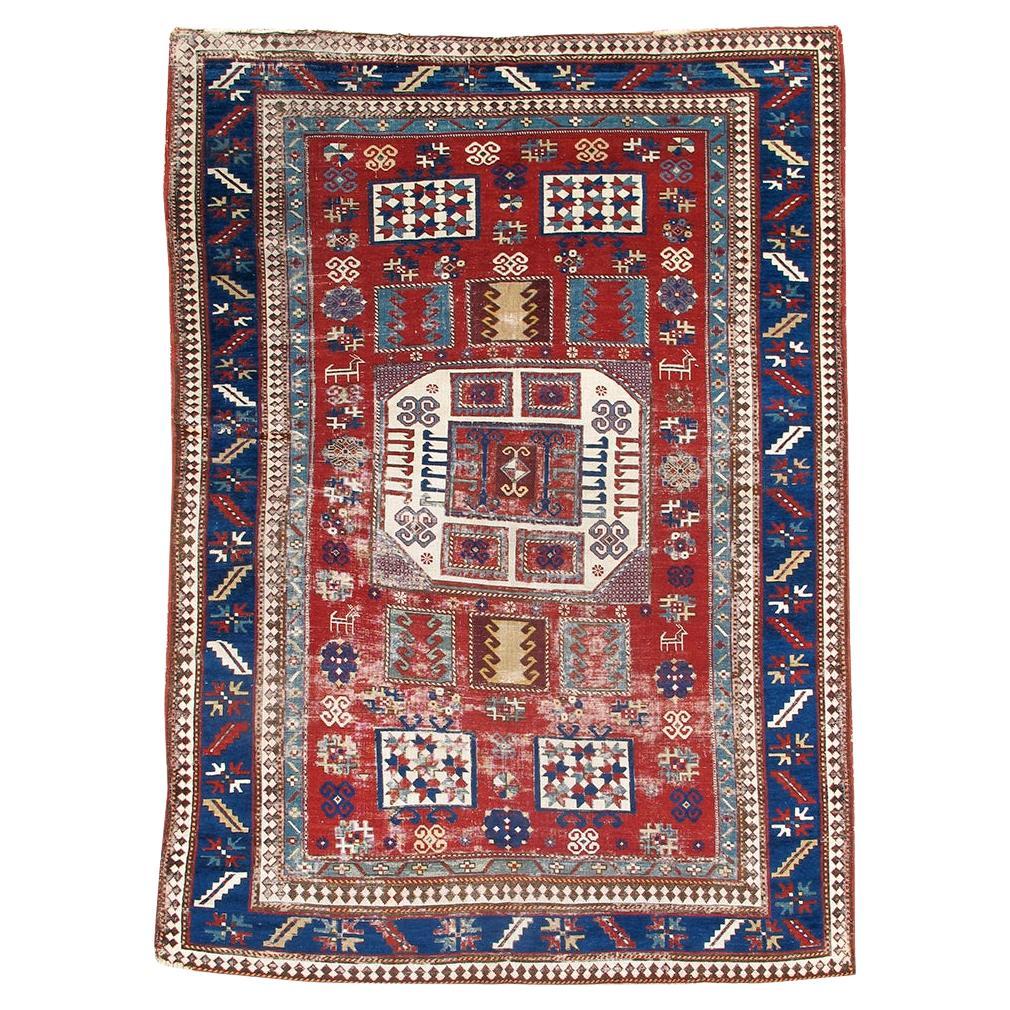
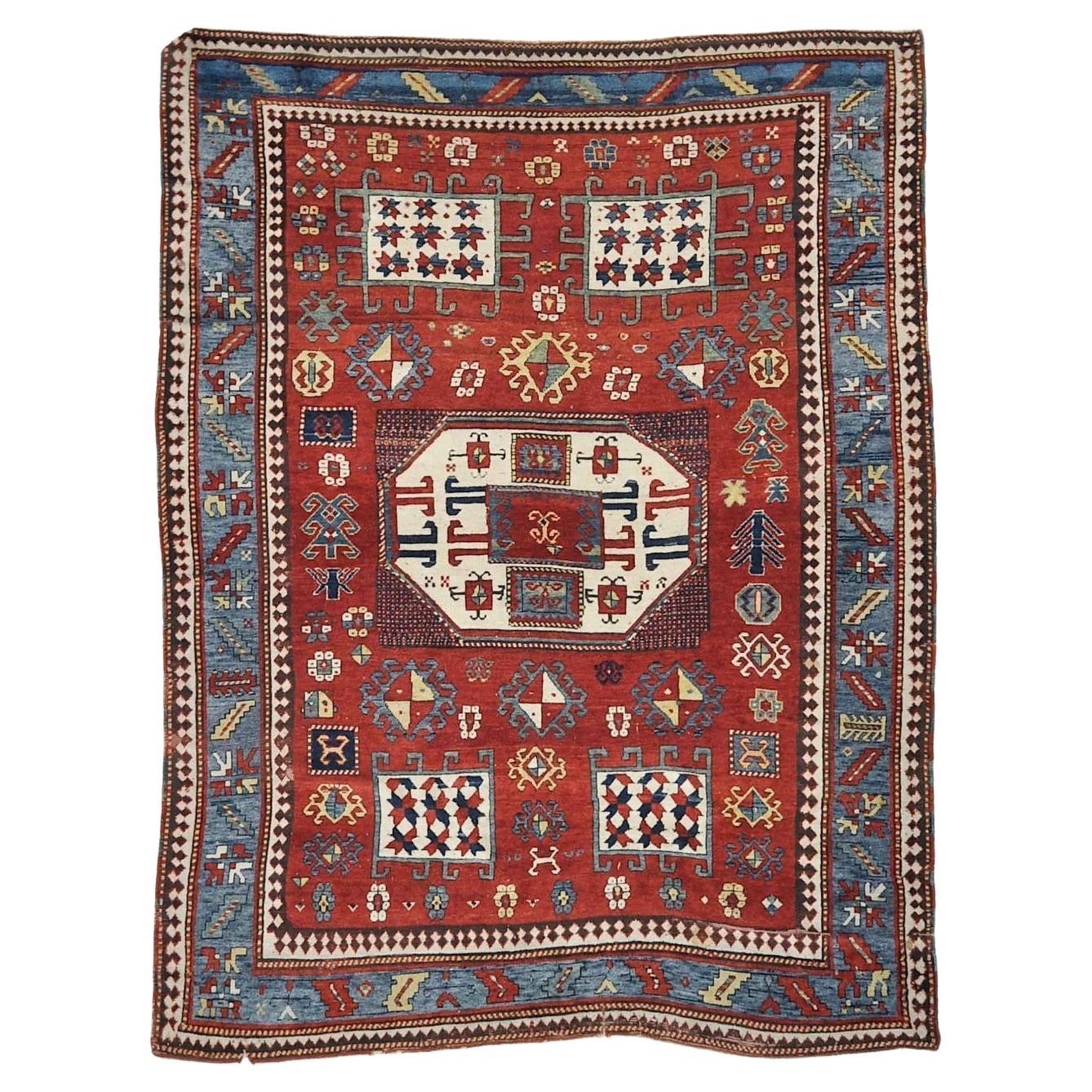
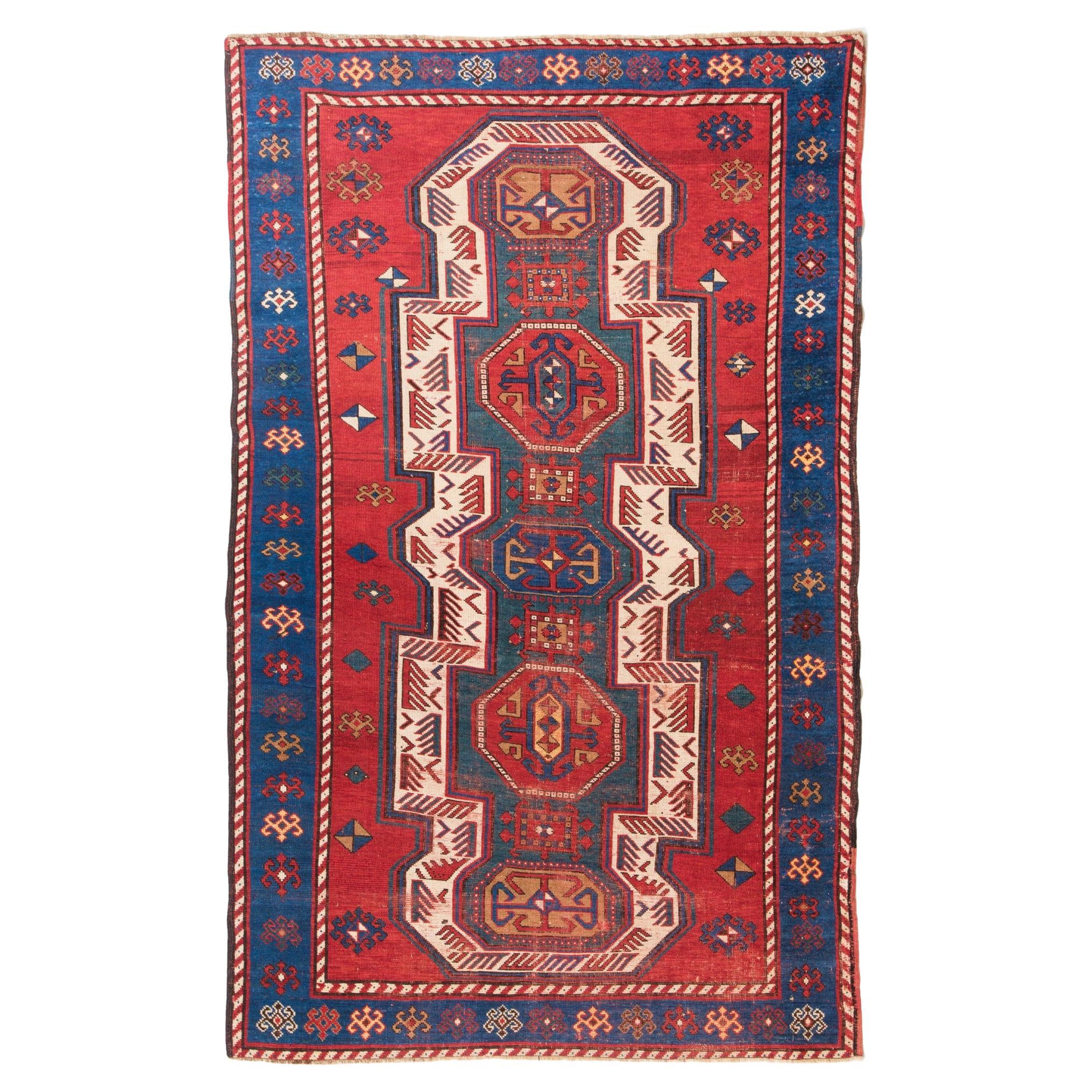
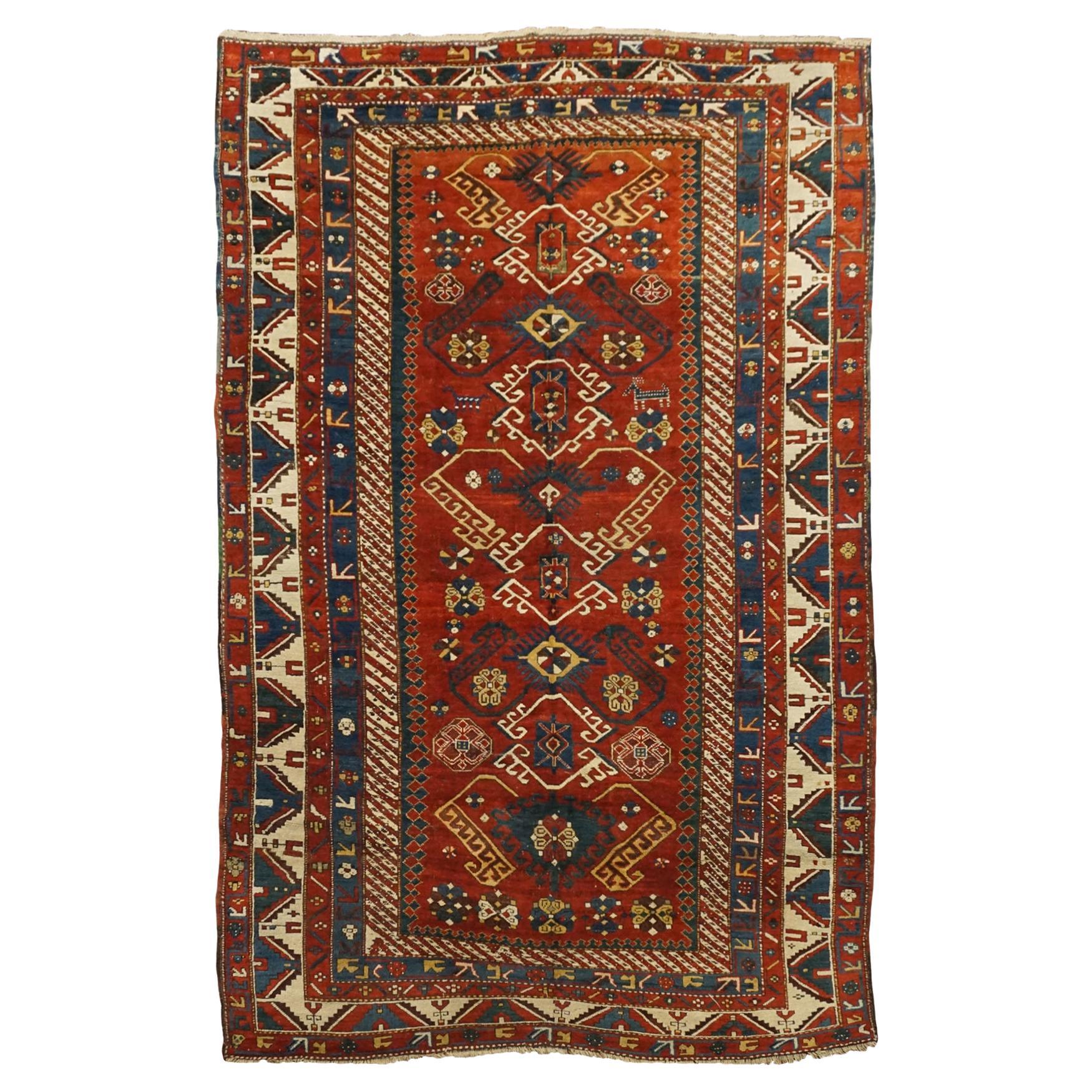
This is an antique Karachov Kazak Rug from the Karachov / Karachoph region, Southwest Caucasus.
The town of Karachov (sometimes rendered Karatchoph or Karachoph) is southeast of Lori-Pambak, between Karaklis and Idjevan. It has given its name to a group of Kazak rugs with bold, majestic designs, the most characteristic of which resemble certain Turkish rugs, notably the Cannakale Bergama group, which, in turn, hark back to one of the most important groups of Classical Turkish carpets, the so-called ‘Large Pattern Holbeins’, which can be traced through European painting back to at least the 15th century. The well-known Karachov version consists of a large central white-ground octagon, flanked at the four corners of the field by four white ground squares; the main field color may be blue, green, blue-green, or red. A second and less well-known group consists of pieces with either three, four, or five medallions arranged along the vertical axis, the medallions being both polygonal, resembling the Yomut Turkoman ‘Kepse’ gül, and rectangular or square. The polygonal medallions almost always have red grounds and the rectangular ones white; the main field color is usually green or blue. Probably more Karachovs survive than any other group of Kazak rugs; they were woven in considerable quantities in the late 19th and early 20th centuries, probably for export to the West.
- Dimensions:Width: 66.93 in (170 cm)Length: 84.26 in (214 cm)
- Style:Oushak (In the Style Of)
- Materials and Techniques:
- Place of Origin:
- Period:
- Date of Manufacture:circa 1880s
- Condition:Repaired: Minor repairs, with antique natural dyed wool threads by our repair specialists. Wear consistent with age and use. Minor fading.
- Seller Location:Tokyo, JP
- Reference Number:Seller: 270571stDibs: LU8206241337542
ARARAT RUGS
We know and believe that the geography we come from, our past, and our lifestyle are the most important bond between us to carry the oriental carpet art and culture to the next generations along with our core values in our ongoing growth journey.
We are aware that the way to achieve this goal and carry this priceless art and culture to the future depends on a lot of work with all our people every day while adhering to our core values.
For us, art is meaningful in the sense that it brings together various cultures around the world. It is an honor for us that oriental carpet art and culture have been instrumental in this for centuries and that we are a part of this business.
We are tirelessly keeping an eye on auction house information around the world about carpets. New York's Metropolitan, London's Victoria
Albert Museums, and other famous art museums, as well as small specialized museums that house private collections, and books about oriental carpets to collect information on outstanding carpet designs and patterns from around the world. It's our Self-improving and Self-developing culture.
As Turkish Culture of Hospitality, the Kurdish Culture of Generosity, and as Japanese Culture of Business Punctuality; are the most important values that this multicultural background has taught and bequeathed to us. It is essential and valuable for us that you feel this feeling not only by looking at our oriental carpets but from the moment you contact us.
About the Seller
5.0
Platinum Seller
Premium sellers with a 4.7+ rating and 24-hour response times
Established in 1970
1stDibs seller since 2023
69 sales on 1stDibs
Typical response time: 1 hour
- ShippingRetrieving quote...Shipping from: Tokyo, Japan
- Return Policy
More From This Seller
View AllAntique Sewan Kazak Rug Sevan Caucasian Carpet Late-19th Century Caucasus
Located in Tokyo, JP
This is a rare antique Sewan Kazak Rug from the Sewan / Sevan region in the southwest Caucasia.
This is another handsome example of the “Sewan” Ka...
Category
Antique Late 19th Century Caucasian Oushak Caucasian Rugs
Materials
Wool, Organic Material, Natural Fiber
$9,375 Sale Price
25% Off
Free Shipping
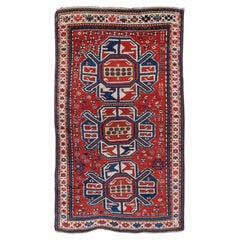
19th Century Antique Karabagh Rug, Caucasus Kazak Karabakh Carpet, Natural Dyed
Located in Tokyo, JP
This is an antique Kazak rug from the late 19th century, Karabakh region, Caucasus area.
Experience the rich heritage and artistry of our antique Kazak Karabagh Caucasian rug, a ma...
Category
Antique Late 19th Century Turkish Oushak Caucasian Rugs
Materials
Wool, Natural Fiber, Organic Material
$6,487 Sale Price
25% Off
Free Shipping
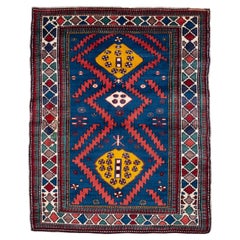
Antique Kazak Rug Old Hand Knotted Caucasian Caucasus Carpet
Located in Tokyo, JP
This is an antique Kazak Rug from the Caucasus region with nice color composition.
Kazak rugs have a strong folk influence on their design. They house big, bold, dominating geometri...
Category
Mid-20th Century Caucasian Oushak Caucasian Rugs
Materials
Wool, Natural Fiber, Organic Material
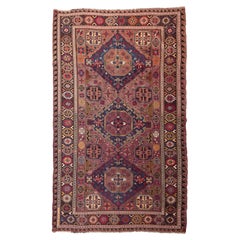
Antique Caucasus Soumak Kilim Sumac Rug, Caucasian Natural Carpet
Located in Tokyo, JP
This is a large Antique Soumak ( Sumak, Sumac ) Kilim from the Caucasus region with a rare and beautiful color composition.
Of the four countries that make up the Caucasus, Azerbaijan produces the most kilims, and the land has a long history of weaving. The nomadic tribes wove kilims and carpets as well as a wide range of storage bags and sacks, such as saffrash, khurgin and chula, and donkey and horse trappings. Smaller bags for salt, utensils, and other items are also common. Not only are the Azerbaijani weavers prolific, but they also employ many techniques at the loom. These include slitweave- known locally by the word kilim, warp-faced patterning (jajim), supplementary weft (zili), weft wrapping (popularly known as soumak), and extra weft wrapping (verneh). Furthermore, flatweaves are defined by regional names such as palas and shadda, so it is possible to ascribe a variety of weaving names to particular provenances as follows: soumaks are made in Kuba, palas, and kilims in Hajikabul, zili in Khizy, verneh and zili in Kazakh, shadda, verneh and zili in Barda, jajim in Agjabedi, and palas and kilims in Jabrail.
Soumak weave is a technique in which new weft threads are added to a plain weave fabric, and one or two warp threads are wound from the front to the back. The resulting kilim is denser and firmer, giving it a unique feel and look. This technique is commonly used in the Caucasus region.
Soumak Kilims have a very beautiful contrast between orange that shines like the sun, deep purple-tinged indigo, and astringent dark red. You can also see the unevenly dyed abrage in this sumac, which is like a magic carpet with an oriental atmosphere.
Features of the Caucasian kilim, such as the unique cosmic geometric floral pattern, are also found in this Soumak. It has a bright look, but it also has a faded and textured feel, so it can be used in a good old atmosphere. The woven fabric is particularly solid, so it is recommended for use in a solid living room or under a dining table without moving or twisting. A nice kilim under a long wooden dining table.
Category
Early 20th Century Caucasian Kilim Caucasian Rugs
Materials
Wool, Natural Fiber
$5,850 Sale Price
25% Off
Free Shipping
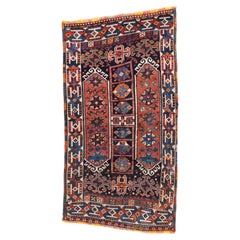
Antique Kurdish Herki Rug - Eastern Anatolian Rug
Located in Tokyo, JP
This is an Antique Kurdish Herki Rug from the Eastern Anatolia and Northern Iraqi region with a rare and beautiful color composition.
Iraqi Kurds are main...
Category
Early 20th Century Turkish Oushak Turkish Rugs
Materials
Wool, Natural Fiber
Antique Caucasus Soumak Kilim Sumac Rug, Caucasian Sumak Natural Carpet
Located in Tokyo, JP
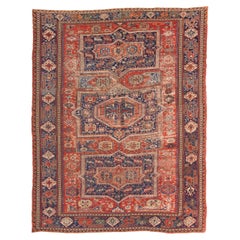
This is an Antique Soumak ( Sumak, Sumac ) Kilim from the Caucasus region with a rare and beautiful color composition.
Of the four countries that make up the Caucasus, Azerbaijan produces the most kilims, and the land has a long history of weaving. The nomadic tribes wove kilims and carpets as well as a wide range of storage bags and sacks, such as saffrash, khurgin and chula, and donkey and horse trappings. Smaller bags for salt, utensils, and other items are also common. Not only are the Azerbaijani weavers prolific, but they also employ many techniques at the loom. These include slitweave- known locally by the word Kilim, warp-faced patterning (jajim), supplementary weft (zili), weft wrapping (popularly known as soumak), and extra weft wrapping (verneh). Furthermore, flatweaves are defined by regional names such as palas and shadda, so it is possible to ascribe a variety of weaving names to particular provenances as follows: soumaks are made in Kuba, palas, and kilims in Hajikabul, zili in Khizy, verneh and zili in Kazakh, shadda, verneh and zili in Barda, jajim in Agjabedi, and palas and kilims in Jabrail.
Soumak weave is a technique in which weft threads are added to a plain weave fabric, and one or two warp threads are wound from the front to the back. The resulting Kilim is denser and firmer, giving it a unique feel and look. This technique is commonly used in the Caucasus region.
Soumak kilims have a very beautiful contrast between orange that shines like the sun, deep purple-tinged indigo, and astringent dark red. You can also see the unevenly dyed abrage in this Soumak, which is like a magic carpet with an oriental atmosphere. Features of the Caucasian Kilim, such as the unique cosmic geometric floral pattern, are also found in this Soumak which has a bright look, but it also has a faded and textured feel, so it can be used in a good old atmosphere.
The woven fabric is particularly solid, so it is recommended for use in a solid living room or under a dining table without moving or twisting. A nice Kilim under a long wooden dining table.
Category
Antique Late 19th Century Caucasian Kilim Caucasian Rugs
Materials
Wool, Natural Fiber
$7,200 Sale Price
25% Off
Free Shipping
You May Also Like
Antique Karachopf Kazak Rug, Late 19th Century
Located in San Francisco, CA
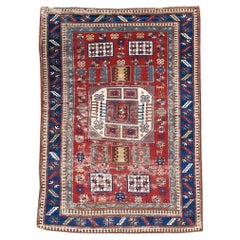
Antique Karachopf Kazak Rug, Late 19th Century
The madder field with a central rectangular medallion within an indigo serrated leaf and rosette bo...
Category
Antique Late 19th Century Caucasian Caucasian Rugs
Materials
Wool
Antique Kazak Karachov Rug, Late 19th Century
Located in Santa Barbara, CA
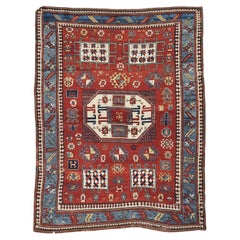
This antique Kazak Karachov rug is a superb example of late 19th-century Caucasian weaving, distinguished by its bold geometric medallions and brilliant natural dyes. Handwoven by tr...
Category
Antique 19th Century European Tribal Caucasian Rugs
Materials
Wool
Antique Caucasus Kazak Rug, circa 1900
Located in Laguna Hills, CA
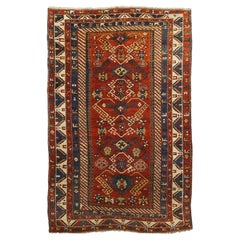
Hand knotted wool pile on a cotton foundation.
Dimensions: 5'6" x 9'2"
Origin: Caucasus
Condition: Excellent
Field Color: Rust
Border Color: Ivory
Accent Colors: Ro...
Category
Early 20th Century Caucasian Kazak Caucasian Rugs
Materials
Wool
Antique Caucasus Kazak Rug, 19th Century
Located in San Francisco, CA
Antique Caucasian Kazak Rug, 19th Century
Additional Information
Dimensions: 5'6" W x 7'2" L
Origin: Caucasian
Period: 19th Century
Category
Antique 19th Century Caucasian Caucasian Rugs
Materials
Wool
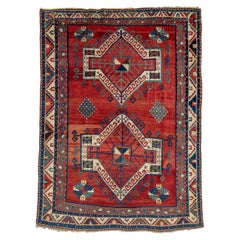
Handmade Antique Caucasian Kazak Rug, 1870s, 1B665
Located in Bordeaux, FR
Handmade antique Caucasian Kazak rug in original good condition. This rug is from the end of 19th century made in unusual design.
Category
Antique Late 19th Century Russian Caucasian Rugs
Materials
Wool
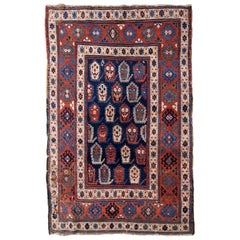
19th Century Caucasian Bordjalou Kazak Rug
Located in Beirut, LB
Relying on ancient tribal motifs, geometric designs, and playful abstractions, Caucasian rugs are woven in tribal settings by either village or nomadic folk.
Caucasian rugs are woven in Georgia, Armenia, Azerbaijan, and Southwest Russia by a multitude of cultures and tribes that employ distinct characteristics unique to their communities.
Woven in the regions around North Armenia and South Georgia, Bordjalou Kazaks use some of the most particular designs among Caucasian rugs. Easily recognizable by their latch-hook designs in diagonal formats, Bordjalou Kazaks combine many rich colors to create timeless warm and earthy rugs.
Four lozenge diamonds are lined up along the central axis of this Bordjalou rug...
Category
Antique Late 19th Century Armenian Kazak Caucasian Rugs
Materials
Wool
More Ways To Browse
Southwest Furniture
Antique Sterling Silver Flatware
Antique Gueridons
French Metal Chairs
Mid Century Glass Bowl Gold
Octagon Tables
Octagonal Tables
Midcentury Bar Cart Italian Trolley
Silver Teapots
Sivas Carpet
Vintage Ceramic Dish
Antique Trestles
Body Furniture
Hand Painted Dining Room Chairs
French Antique Centerpieces
Italian Lacquer Dining Room Chairs
Ray Brown
19th Chinese Blue And White