Late 18th Century Central Asian Rugs
to
Width
to
Length
to
5
21
716
3,165
15,147
863
1,372
711
97
44
171
127
63
364
196
130
272
129
5
5
3
2
5
5
5
4
3
1
1
1
Period: Late 18th Century
Antique 18th Century Chinese Ningxia Rug. 6 ft x 9 ft 9 in
Located in New York, NY
A magnificent rare and collectible antique 18th century Chinese Ningxia rug, country of origin / rug type: antique Chinese rugs, date: circa late 18th century. Size: 6 ft x 9 ft 9 in (1.83 m x 2.97 m)
Antique Chinese Ningxia carpets have a transcendent quality that has made them highly sought-after since the 17th century. If one were to judge from this excellent 18th-century Ningxia rug, it is easy to see how this came to be so. The level of detail in this antique Chinese carpet is found in very few places around the world. The colors blend harmoniously to show off the fine craftsmanship of this carpet from China.
Ningxia is located in a harsh mountainous region are Northwestern China. It borders Mongolia and sits on the plain of the Yellow River, bounded by the Great Wall of China on its Northeastern border. The climate of this region made it perfect for growing strong, yet soft wool. Little is known about antique rugs from this region before the 17th century because of its remote location. A visit from the Kangxi Emperor in 1696 and 1697 brought these carpets to the world. He was struck by the beauty and quality of the carpets he found and decided to establish a royal carpet weaving center in the area.
After the establishment of the rug weaving centers of the Royal Court, designs in Ningxia became more formal and reflected the tastes of the Chinese Courts and noblemen. Carpets from the area became a symbol of wealth and power. At the time when this carpet was created, the royal weaving centers had been operating for about 100 years. By this time, Ningxia had become a name that was associated with high-quality antique rugs.
This early carpet uses a complex range of blues, rose, pinks, light browns, dark browns and ivory. The design uses subtle shading to give it depth and create areas of shadow and light within the individual motifs. It based on a medallion design with four rondels in the field. It is executed with precision and demonstrates focused attention to symmetry.
The center border of the carpet is surrounded by what is known to the Chinese as a cloud and thunder pattern, also known as a meander or Greek key pattern. To the Chinese, this pattern represents the cloud and thunder that brings the life-giving rain and the promise of good crops. It has been found in Chinese art as far back as 1050 BC.
The pile of the rug is soft and supple, and it has a fine weave, more like a heavy textile than a carpet. This is one of the qualities for which Ningxia carpets were known. The level of detail and intricacy of the design is one of the fascinating aspects of the rug. For instance, if you look between the regularly spaced motifs in the field of the carpet, you will see that they are not solid, but contain a delicate pattern of precisely executed dots. This carpet has a high knot count, which is what makes the intricacy of this design possible.
Another remarkable quality of this antique Oriental rug is its excellent shape that it is in for its age. This suggests that this carpet was well cared for over the past several centuries.
This antique 18th Century Chinese Ningxia rug is an example of fine quality craftsmanship and work that was produced by the Ningxia Court rug weavers. The design and colors come together beautifully to create a piece of classic Chinese artwork. It is a special piece that would be a beautiful addition to any Oriental collection...
Category
Chinese Chinese Export Antique Late 18th Century Central Asian Rugs
Materials
Wool
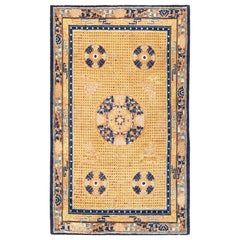
Antique Belouch Turkoman Rug, Fine
Located in Evanston, IL
The Baluchi people where a tribe of nomads that migrated from region near the Caspian sea to the area of southern Soviet central Asia, Afghanistan Khorasan province of Iran and Pakis...
Category
Central Asian Tribal Antique Late 18th Century Central Asian Rugs
Materials
Wool
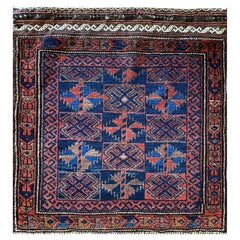
Rare and Elegant 18th Century Antique Yarkand Samarkand Distressed Rug
Located in Milan, IT
A rare and early Yarkand large format rug, distinguished by an infinite repeat pattern of the so-called 'five-flower herati' motif on a soft red back...
Category
Turkestan Khotan Antique Late 18th Century Central Asian Rugs
Materials
Wool
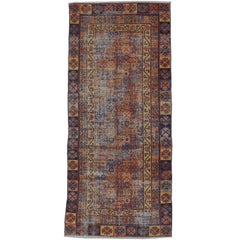
Afghan Rug Herat Late 18th Century
Located in Ferrara, IT
An attractive Aghan Rug Herat.
Hand-knotted in 18th century probably between Afghanistan and Persia this rug measuring 270 × 209 cm (8' 10" × 6' 10") has a woolen fleece over a cotto...
Category
Afghan Other Antique Late 18th Century Central Asian Rugs
Materials
Wool
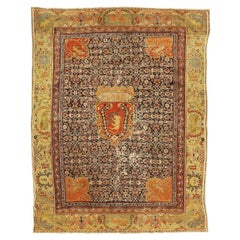
Antique Qashqai Tribal Rug
Located in Los Angeles, CA
The Qashqai rugs are a testament to the rich cultural heritage and unifying spirit of a proud tribal confederation. These pastoral nomads, who trace their lineage to the Turkmen and ...
Category
Antique Late 18th Century Central Asian Rugs
Materials
Wool
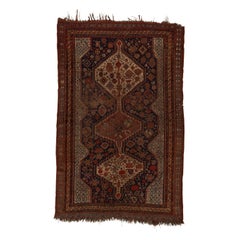
Related Items
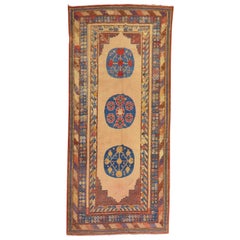
Zabihi Collection Exquisite 19th Century Antique East Turkestan Khotan Rug
Located in New York, NY
Late 19th century colorful antique Khotan gallery rug. The field is a bone color, denim blue, rust accents are dominant.
Measures: 5'8" x 12'11".
Category
Turkmen Khotan Antique Late 18th Century Central Asian Rugs
Materials
Wool

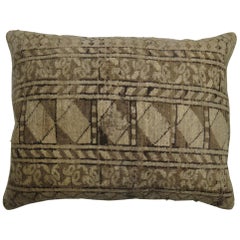
Tribal Antique Ersari Rug Floor Pillow
Located in New York, NY
Large pillow made from an early 20th century antique Ersari rug with cotton back.
1'9'' x 2'3''
Category
Tribal Late 18th Century Central Asian Rugs
Materials
Wool, Cotton, Foam
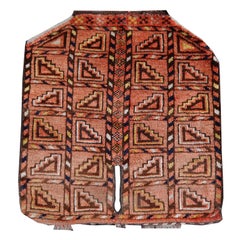
Ersari Rug Saddle Blanket Cover Tribal Turkoman Hand Knotted Antique Carpet
By Turkoman
Located in Lohr, Bavaria, DE
Tribal rug Afghan Ersari Turkoman or Turkmen rug saddle cover- "one of a kind" decorative tribal Art.
The Turkmen or Turkoman people are settling in villages in Afghanistan an Turkm...
Category
Afghan Tribal Vintage Late 18th Century Central Asian Rugs
Materials
Wool
$914 Sale Price
20% Off
W 22.45 in L 23.23 in
Vintage 2
x2
Turkoman Rug
By Turkoman
Located in Saint Petersburg, FL
Traditional Turkoman weaving, featuring the rich, earthy palette and geometric motifs characteristic of this historic textile tradition.
Woven from wool, it's size makes it versatil...
Category
Central Asian Tribal Antique Late 18th Century Central Asian Rugs
Materials
Wool
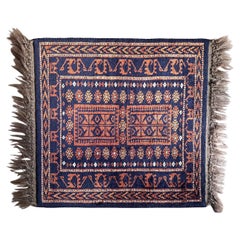
Antique Chinese Ningxia Rug 2
0" x 2
0"
Located in New York, NY
Antique Chinese - Ningxia rug, size: 2'0" x 2'0".
Category
Chinese Antique Late 18th Century Central Asian Rugs
Materials
Wool
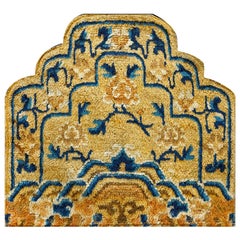
Antique Chinese, Ningxia Rug 3
0" x 5
6"
Located in New York, NY
Antique Chinese - Ningxia rug, Size: 3'0" x5'6".
Category
Chinese Antique Late 18th Century Central Asian Rugs
Materials
Wool
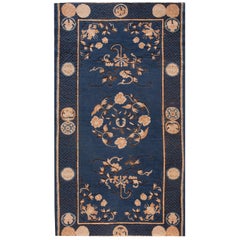
Antique Chinese, Ningxia Rug
Located in New York, NY
Antique Chinese - Ningxia rug, size: 2'2" x 2'3".
Category
Chinese Antique Late 18th Century Central Asian Rugs
Materials
Wool
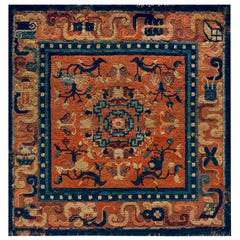
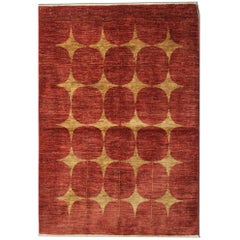
Modern Rugs Orange Fine Contemporary Rugs, Carpet from Afghanistan
Located in Wembley, GB
With rich colours and abstract elements, this woven rug gives a subtle contemporary appearance. The geometric rug is featuring beautiful rust and gold colour. This deep red rug is grounded in stylish colours that will add a touch of modernized sophistication to nearly any space. These modern patterned rugs...
Category
Afghan Modern Late 18th Century Central Asian Rugs
Materials
Wool, Cotton, Organic Material
$1,598 Sale Price
20% Off
W 53.15 in L 75.6 in
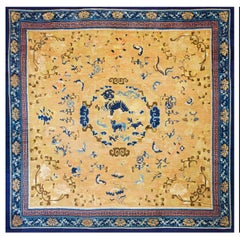
Mid-18th W. Chinese Ningxia Carpet
Located in New York, NY
Mid-18th W. Chinese Ningxia Carpet
Main Hall Carpet
11’9” x 12’
Mid 18th Century
Structural Analysis:
Warp:cotton,off-white,natural,Z-4-S,somewhat irregular;
Weft:cotton,off-white,Z-4-S,winder plied, quite irregular;2 shots alternating;
wefts thick and soft;
Pile:wool,Z-4;
Knot: PL/0 degrees warp depression/horiz. 6 x vertical 5 = 30 knots per square
inch; knots somewhat irregular, some quite thin;
[check for T knots along edges]
Sides: two cords each of two body warps, inner directly weft-attached; figure
eight sparsely weft yarn wrapped;
Weft/knot ratio: 60/40 wefts predominant.
Remarks:
This is another variant on the popular Mandarin nine lion dog carpet...
Category
Chinese Antique Late 18th Century Central Asian Rugs
Materials
Wool
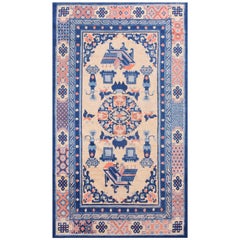
Antique Chinese Ningxia Rug 4
4" x 7
4"
Located in New York, NY
Antique Chinese Ningxia rug, size: 4' 4'' x 7' 4''.
Category
Chinese Antique Late 18th Century Central Asian Rugs
Materials
Wool
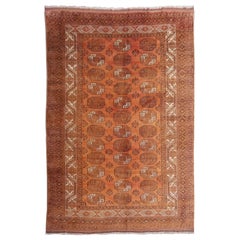
10 x 13 ft Oversized Rug Ersari Tribal Turkoman Hand Knotted Semi Antique Carpet
By Turkoman
Located in Lohr, Bavaria, DE
Large oversized tribal rug Afghan Ersari Turkoman or Turkmen rug - "one of a kind" decorative tribal Art.
Ersari Rugs: Timeless Handcrafted Treasures from Central Asia
Ersari rugs are iconic pieces of art, handwoven by the skilled artisans of the Ersari Turkoman tribes in Turkmenistan. Known for their exceptional craftsmanship and deep cultural significance, these rugs bring a touch of history, tradition, and vibrant color to any space. With their striking designs and durable quality, Ersari rugs are a perfect blend of artistry and functionality, making them a highly sought-after choice for rug collectors and interior design enthusiasts alike.
Crafted with Tradition: Materials & Techniques
Ersari rugs are made from the finest wool sourced from sheep grazing in the vast, rugged landscapes of Central Asia. The wool is carefully spun and dyed using natural, plant-based dyes, resulting in rich, earthy tones that remain vibrant over time. Many Ersari rugs also incorporate cotton to enhance their strength and longevity. The knots used in Ersari rugs are tight and intricate, a hallmark of their craftsmanship, making each piece not only a functional floor covering but also a durable and long-lasting work of art.
Vibrant Colors & Patterns
Ersari rugs are renowned for their bold color palettes and striking geometric designs. The rugs typically feature shades of deep red, rust, burgundy, and earthy brown, combined with accents of blue, yellow, and cream. These colors are derived from natural dyes, giving the rugs their unique, rich hues. The design motifs commonly include medallions, repeating patterns, and symbolic "gul" motifs, which hold deep cultural meaning within the Ersari tribe. These rugs are a visual representation of the tribe’s nomadic heritage, and the color combinations often symbolize nature, life, and spiritual beliefs.
The Ersari Tribe: A Rich Cultural Legacy
The Ersari Turkoman tribe, known for its nomadic lifestyle, has been weaving rugs for centuries. These rugs not only serve as practical items in everyday life, such as floor coverings in tents or yurts, but also represent the artistic expression of the tribe. The Ersari people take pride in their tradition of rug-making, with each design reflecting the environment, culture, and beliefs of the tribe. The geometric and floral patterns found in Ersari rugs often tell stories of the tribe’s past, their connection to nature, and the symbolism behind the designs.
Why Choose an Ersari Rug?
Ersari rugs are more than just floor coverings; they are timeless works of art that embody the history and craftsmanship of the Ersari tribe. With their exceptional durability and stunning aesthetic, these rugs make an ideal addition to any home. Whether you're looking for a piece that tells a story, adds warmth and character to your space, or enhances your collection of traditional textiles, an Ersari rug offers both beauty and history in one unique piece.
The Turkmen or Turkoman people are settling in villages in Afghanistan an Turkmenistan near the Persian border. Their origin is tribal nomadic, but most members of the tribes have settled in villages in the last decades. Typical for most Turkoman carpets is their geometric design made of wide borders and a repeating inner field with symbols called "Gul" The design of the Gul and the borders tell a lot, which tribe of Turkoman made the rug.
The rug listed has 36 octagonal main Guls (eight edged) in 3 rows divided by smaller minor Guls. The golden / beige copper color is very unusual since most Turkoman rugs are made in a bright tomato red. This one has a wool with silk-like shine, a color best defined as very light copper combined with ivory and brown motives. Since tribal people usually have smaller portable looms, it is normal that they make small rugs. Most Turkmen rugs found are between 4 x 6 ft and 8 x 11 ft. For this reason, this 13 x 10 ft rug...
Category
Afghan Tribal Late 18th Century Central Asian Rugs
Materials
Wool
$13,831
W 114.18 in L 159.45 in
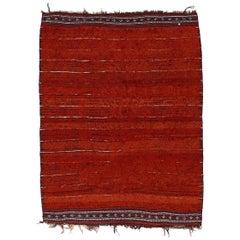
Rare Antique Central Asian Minimalist Tribal Rug
Located in Milan, IT
A very rare and unusual Uzbek rug from Central Asia distinguished by a warm and rich red open field background, a natural color extracted from the madder pla...
Category
Uzbek Minimalist Late 18th Century Central Asian Rugs
Materials
Wool
Still Thinking About These?
All Recently ViewedMore Ways To Browse
Fish Cabinet
Flower Tower
Formia Murano Birds
Formica Pink
Four Glass Mantel Clock
Fox Japanese
Fred And Ginger
Freeform Pottery
French Blue Chest
French Opaline Bowl
French Provincial Dresser Carved
Frog Wood Sculpture
George Ii Mahogany Drop Leaf Table
Georgian China Cabinet
Georgian Welsh Dresser
German Sheep
Glass Blue Apple
Glass Door Wall Cabinet