Items Similar to Galerie Shabab Collection Mid-20th Century American Rag Rug
Want more images or videos?
Request additional images or videos from the seller
1 of 6
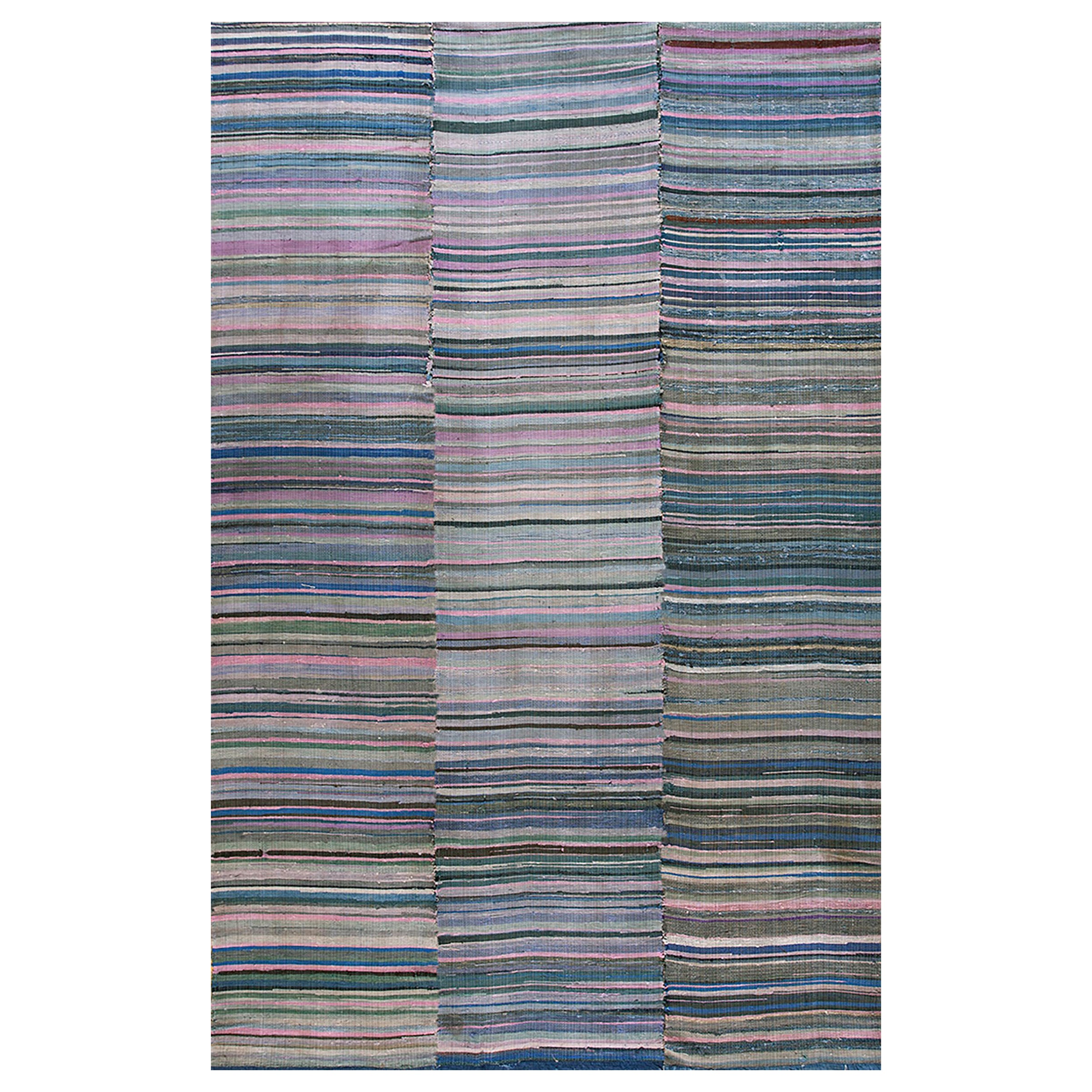
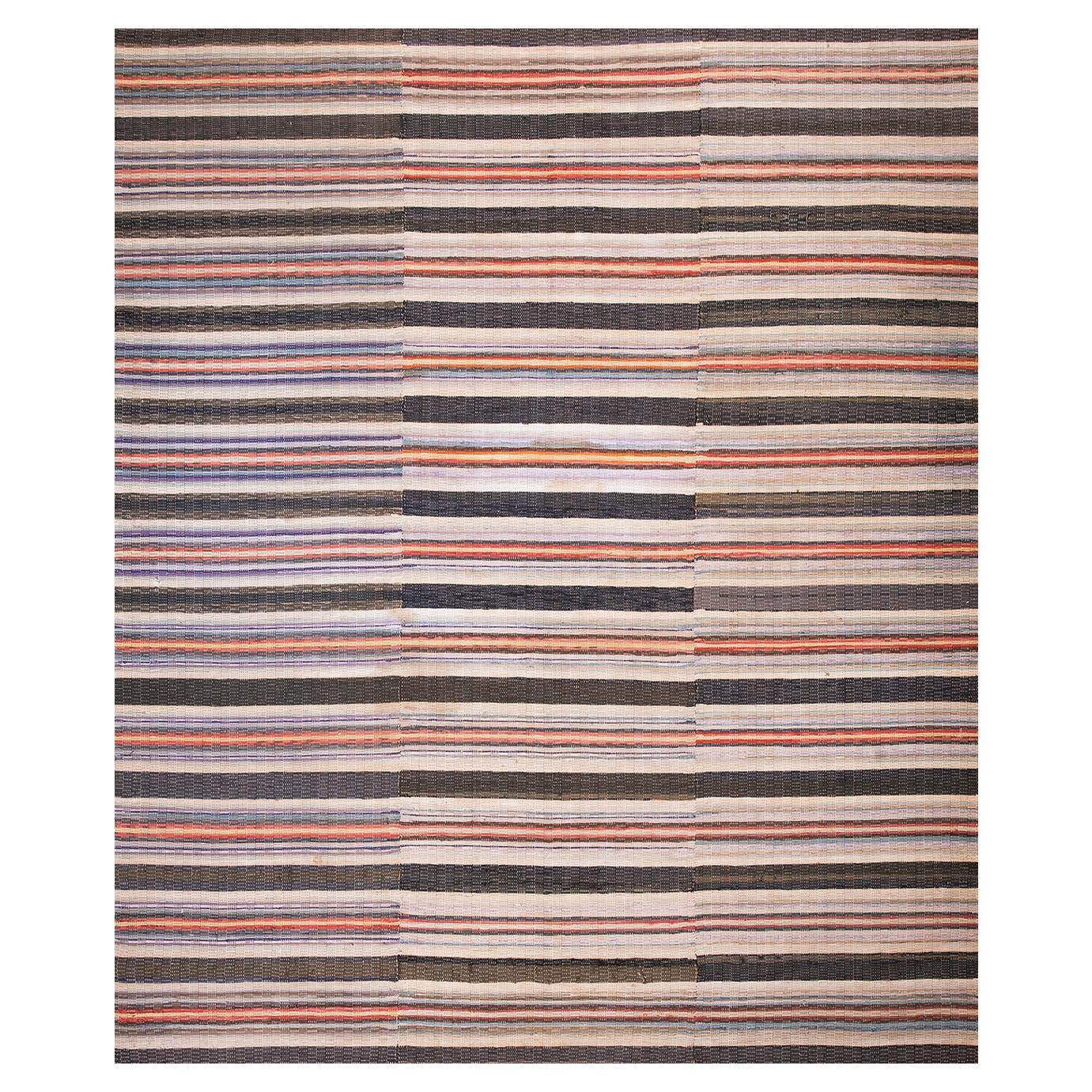
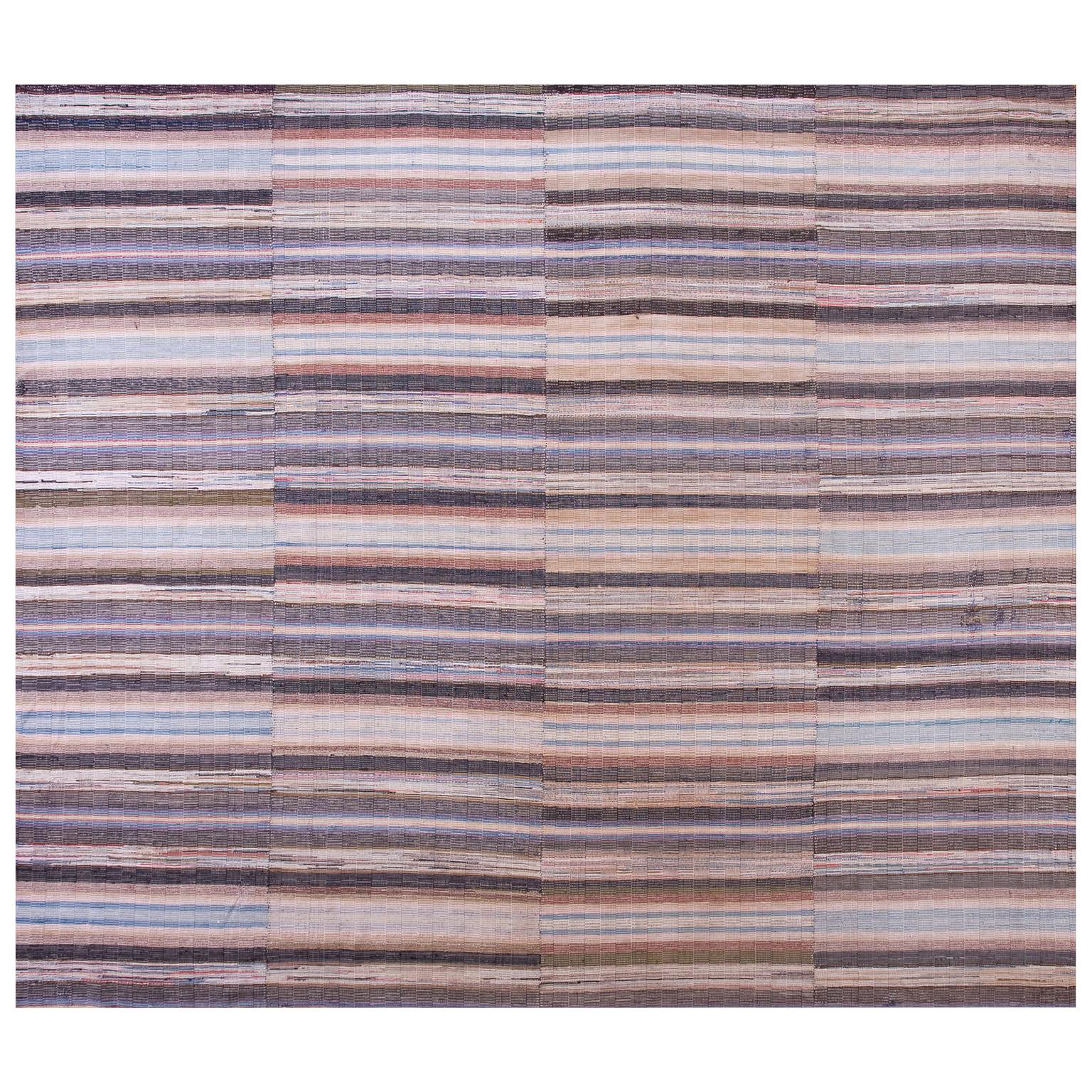
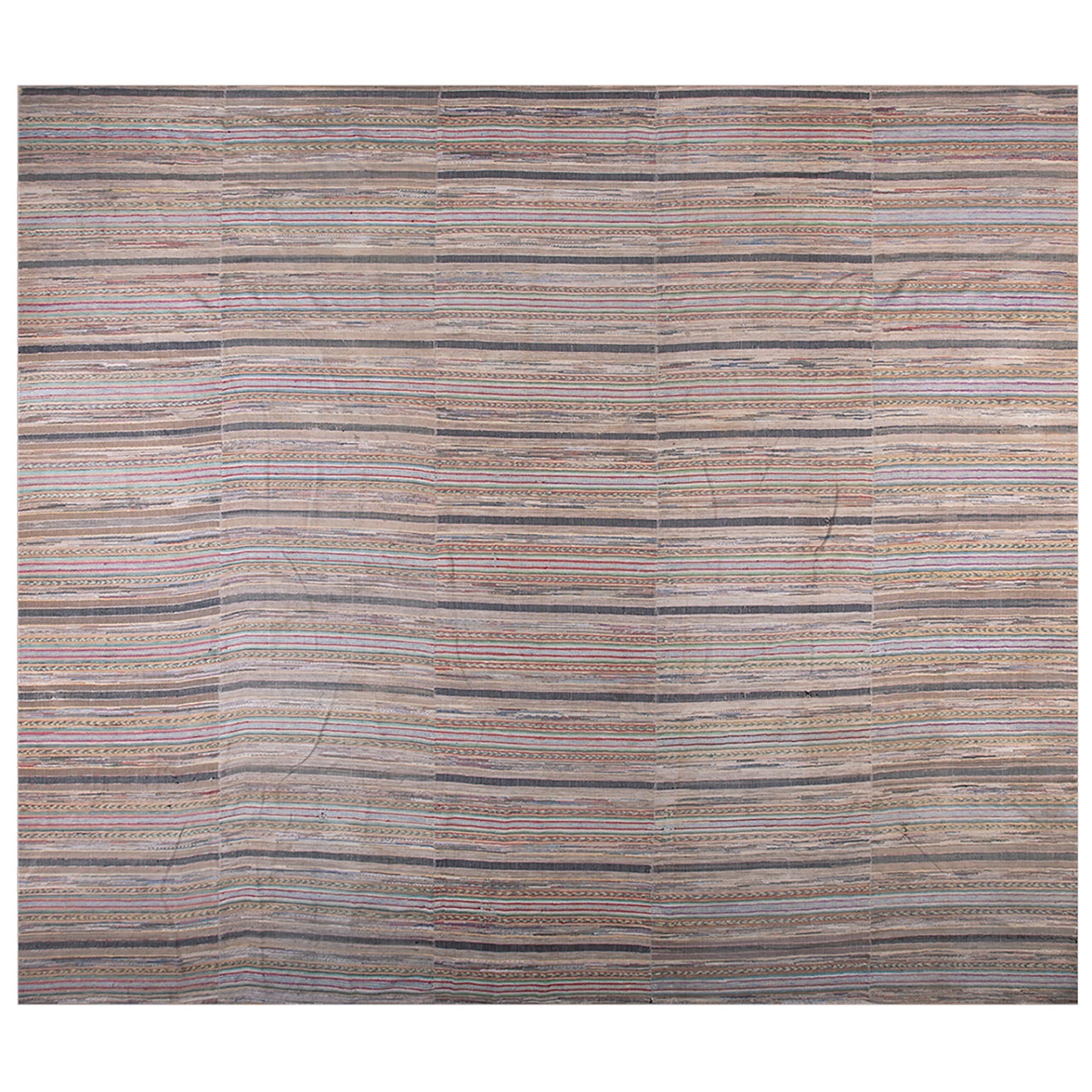
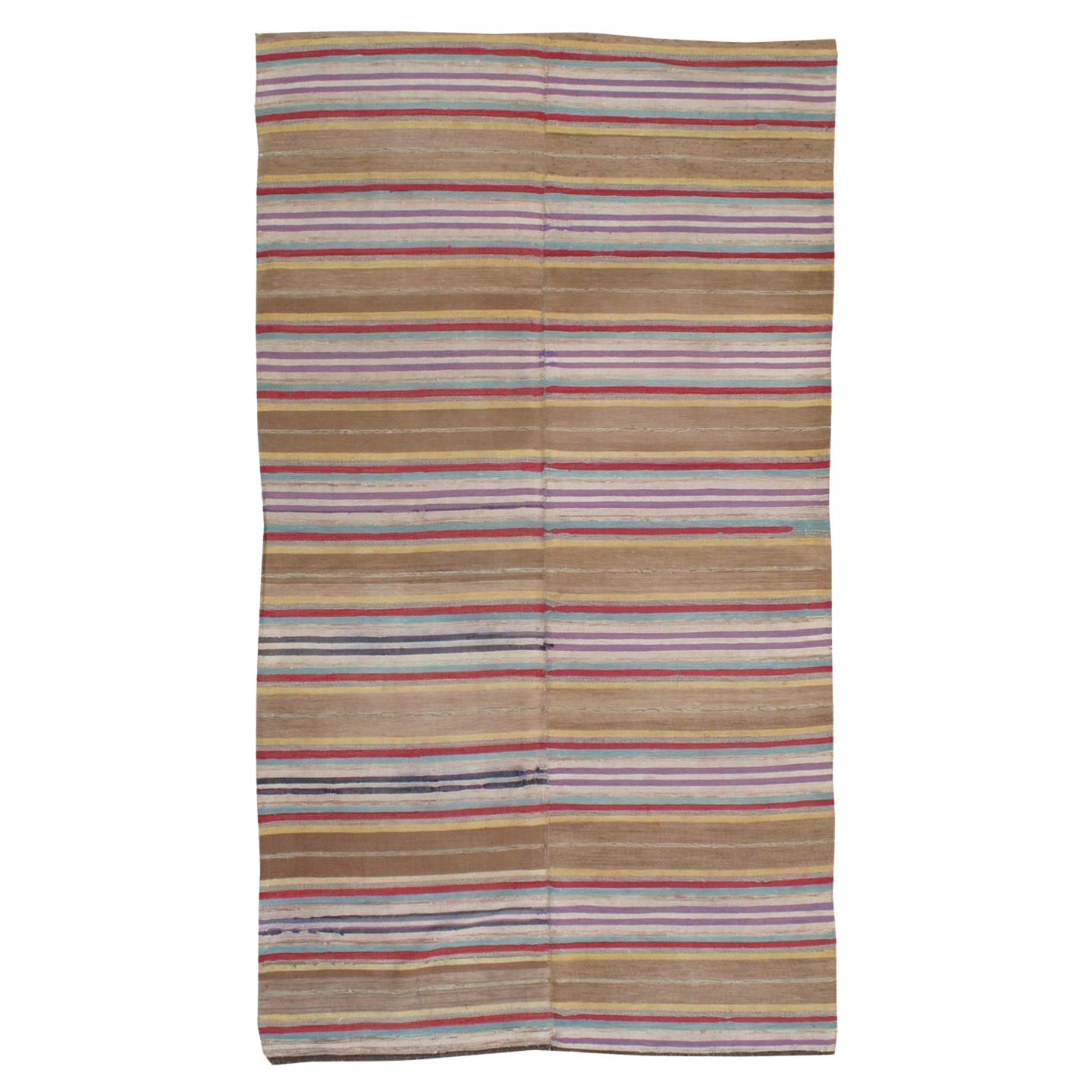
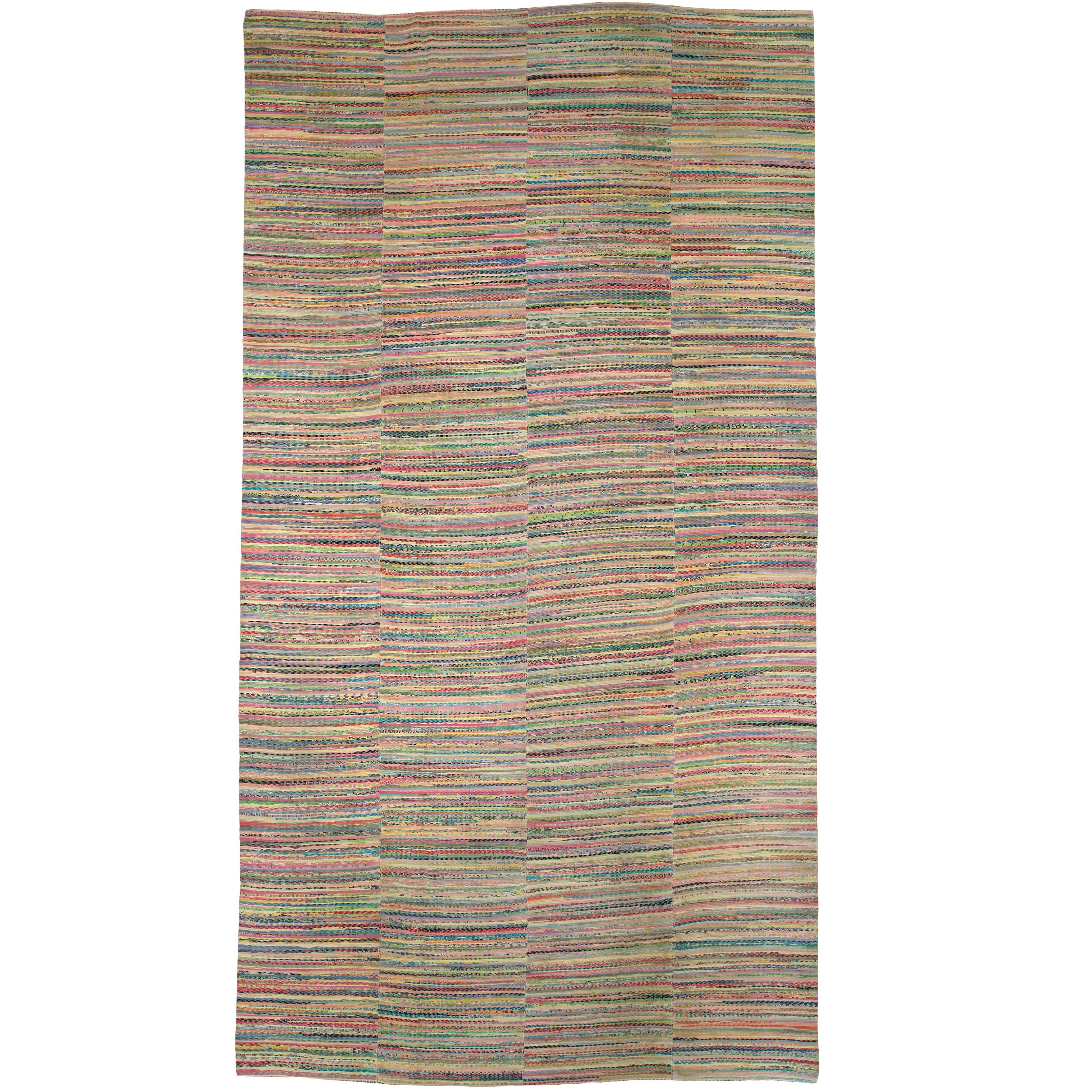
Galerie Shabab Collection Mid-20th Century American Rag Rug
$3,625
£2,764.90
€3,148.55
CA$5,094.23
A$5,555.97
CHF 2,943.18
MX$66,608.24
NOK 37,483.04
SEK 34,275.46
DKK 23,522.76
About the Item
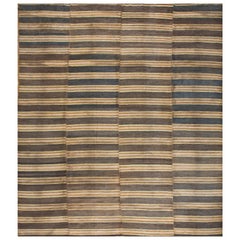
An antique American Rag Rug handmade during the Mid-20th century.
Measures: 8' 10" x 10' 3"
- Dimensions:Width: 106 in (269.24 cm)Length: 123 in (312.42 cm)
- Style:American Craftsman (In the Style Of)
- Materials and Techniques:Wool,Hand-Woven
- Place of Origin:
- Period:
- Date of Manufacture:Mid-20th Century
- Condition:
- Seller Location:New York, NY
- Reference Number:Seller: 108171stDibs: LU882345059192
About the Seller
5.0
Platinum Seller
Premium sellers with a 4.7+ rating and 24-hour response times
Established in 1989
1stDibs seller since 2009
607 sales on 1stDibs
Typical response time: <1 hour
- ShippingRetrieving quote...Shipping from: New York, NY
- Return Policy
More From This Seller
View AllGalerie Shabab Collection Early 20th Century American Rag Rug
Located in New York, NY
An antique American Rag Rug handmade during the Early 20th century.
Measures: 5' 8" x 10' 0"
Category
Early 20th Century American American Craftsman North and South American ...
Materials
Wool
Vintage American Rag Rug
Located in New York, NY
A vintage American rag rug from the mid-20th century.
Category
Mid-20th Century American American Colonial North and South American Rugs
Materials
Wool
$7,500 Sale Price
20% Off
Mid-20th Century Handmade American Rag Rug
Located in New York, NY
A vintage American rag rug handmade during the mid-20th century.
Measures: 3' 6" x 5' 8"
North American rugs
carpets:
North American has never developed a unified handmade rug tradition, but rather it is the unassimilated confluence of several. From Mexico comes the Saltillo serape wearing blanket, and this stimulates the Navajo and Rio Grande (Colorado) weavers, first as blankets, then as rugs. The thrifty habits of rural America gave rise to the New England (and Western Canadian) hooked rug types, while the farmers of the Midwest recycled their disused garments into braided and rag rugs.
The closest to a real ongoing tradition are the Southwestern (New Mexican) Navajo rugs. By the 1860s the native tribes were weaving wearing blankets with wool from the Spanish churro sheep. These were in stripe design, with combinations of undyed wool with cochineal reds and indigo blues. The multi-phase “Chief’s Blankets” from the 1870s-80s are a natural outgrowth of these. Machine spun red wool from Germantown in Pennsylvania appeared in the 1870s with a bright red hitherto unobtainable. The weavers loved it and blankets appeared with bright reds, generally aniline, in “eye dazzler” patterns. Anglo traders established posts beginning in the 1890s. Navajo weavings were perfect accompaniments not only for Western-themed decors, but for East Coast apartments, only they needed to be thicker and more rug like to be truly accepted. The traders brought Caucasian and Turkish village rugs to copy, borders were introduced and central medallions devised. The weavers continued to create on vertical looms, with a shared warp (dovetailing) weft structure to avoid slits. The warps were cotton string. Sizes were generally scatters, but occasionally a special order came in, hence antique room size Navajos are very rare and very pricey. Distinct village/pueblo styles developed. Among the best are: Two Grey Hills (considered the tightest, closest of all Navajo weaving), Crystal Springs, and Ganado. Certain new patterns such as the “Storm pattern” with jagged lightning bolts emanating from a dark cloud developed. The Yei rug with dancing Kachina doll figures became popular. The palette has been expanded beyond the classic grey, tan, dark brown, and cream natural wool combination to again include reds, blues, and greens. Navajo pictorials include American flags, trains, and automobiles, domestic and local scenes and scenery. Individual artist weavers now command gallery shows and correspondingly elevated prices. There are several levels of Navajo work, and antique and vintage scatters with simple flat designs, medium weaves, and tritonal palettes, and in good floor worthy condition are still available reasonably.
The Native American weaving tradition extends into Colorado with two-piece scatters with sharp sawtooth medallions and striped end borders, with wool tapestry weave on cotton warps. These descend from the Saltillo blankets...
Category
Mid-20th Century American Folk Art North and South American Rugs
Materials
Wool, Yarn, Cotton
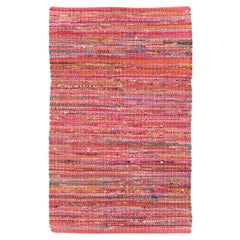
Galerie Shabab Collection Mid-20th Century American Rag Throw Rug
Located in New York, NY
A vintage American Rag throw rug handmade during the Mid-20 century.
Measures: 2' 1" x 4' 5"
Category
Mid-20th Century American North and South American Rugs
Materials
Wool
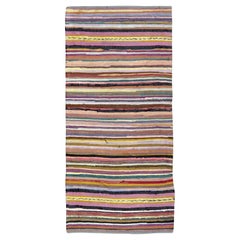
Vintage American Braided Rug
Located in New York, NY
A vintage American braid carpet from the mid-20th century. The braided cloth strips may go across the entire width or only part way, but blue tones, from cyan to navy, definitely pre...
Category
Mid-20th Century American American Colonial North and South American Rugs
Materials
Wool
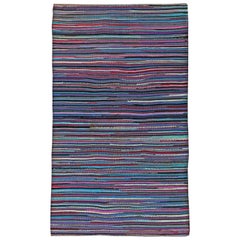
Mid-20th Century Handmade Chinese Art Deco Throw Rug
Located in New York, NY
A vintage Chinese Art Deco throw rug handmade during the mid-20th century.
Measures: 2' 8" x 3' 9"
The Craft of the hand-knotted carpet in China, and the surrounding areas including Mongolia and Tibet, extends into the early centuries of the first millennium, C.E., but we really have a firm grasp only beginning in the later 16th century with large, very coarsely woven carpets, often depicting dragons, created for the Imperial Forbidden City palaces. Chinese carpets have always been commercial and there are no tribal groups responsible for any of the carpet weaving strains.
When the Ming Dynasty fell in 1644, with no Imperial patrons, production moved to the city of Ningxia in north central China where several workshops turned out more finely woven pieces for the Mandarins of the administrative Ch’ing bureaucracy and well-to-do merchants. Ningxia was the major Chinese carpet center up through most of the 19th century, with first allover and then medallion designs on cotton foundations in medium weaves. Palettes were initially limited to yellows, dark blue and cream, but later widened to include reds, browns and even green. These antiques were the first Chinese carpets to be exported to the West and they fitted in well with the craze for Chinese blue-and-white porcelain in the second half of the 19th century. Ningxia also wove shaped and rectangular small rugs for saddle underlays, chair (“throne”) seats and shaped backs, pillar carpets with dragons or monks for Buddhist monasteries, and long divided runners for monastery meditation halls. These small rugs are among the most collectible of all Chinese weavings.
Weavers from Ningxia set up workshops in the capital Peking (Beijing) in the 1860’s and began weaving Western room sizes for export, primarily to America. In blue – and – white and polychrome palettes, with round wreath medallions, precious objects, seasonal flowers, paeonies, lotuses, fretwork, clouds, butterflies and bats, all relatively spaciously drawn. The round “Shou” (Good Luck) character is also a prominent decorative motif. There are also a few Peking landscape pictorials with pagodas, houses, bridges, waterscapes and boats. Peking carpets were woven right up until WWII and production began again after the Cultural Revolution around 1970. They are moderately well-woven, on cotton foundations, exactingly executed and indisputably Chinese. Many are in the blue-and-white style. Nothing else looks like a Peking carpet and for a Chinese “look” in a room, they are absolutely indispensable. Sizes range from scatters and a few runners, through the popular 9’12’ size, to large carpets over 20’ which must have been special orders. The earliest Peking Revival carpets are pliable and fairly thin, but they became heavier and more compact in the 20th century, in competition with Art Deco carpets from Tientsin. The modern, post- 1970, pieces are in the traditional Peking style, but are a little too regular and neat. Exactitude has been favored over character, as hard to explain that as it is.
There are a number of all-silk and silk-and –metal thread pieces, many with inscriptions purporting to link them with rooms in the Imperial palaces, bringing very substantial auction prices, but none are really antique. The genre emerged after WWI and the present demand comes from mainland Chinese. The silk piles often Stand in pattern relief against flat woven gold metal thread grounds. The inscriptions are apocryphal, the rugs are flashily opulent, perfect for nouveaux riches.
The Art Deco period between the two World Wars saw a distinctive carpet industry developing in Tientsin (Tianjin) in northeastern China. These are highly prized for their transitional design character, neither overtly Chinese, nor abstractly modern/contemporary. Woven exclusively for export, usually by and for American firms, such as Nichols and Elbrook, they are totally in the “Jazz Age Modern” style of the 1920’s, often without borders, with abstract or abstracted patterns, and only with, at best, a few Chinese-y pattern elements. Vases asymmetrically placed in the corners are features of some of the more Chinese-y carpets. Open fields with floral sprays and branches growing in from the edges are anther design innovation. Often, Chinese motives have been re-imagined in more sharp-edged, abstract manners. Some have no references whatsoever to natural elements. The patterns are sharp and the rugs are never subdued, soft or restrained. The rugs are heavily constructed, with crisp, unfading dyes and medium to medium coarse weaves on cotton foundations. All are extremely well-executed, with none of the vagaries, variations or twists found on even high-quality Persian rugs. The majority are in the 9’ by 12’ format and a surprising number can be found in top condition. There also was a substantial production in Peking from, especially from the Fette factory. Elliptical and round carpets, and lighter, often pastel colors, were a specialty. Nothing looks like an Art Deco Chinese and they work well with traditional Chinese furniture and the most modern decor as well. These is no substitute for a good Chinese Art Deco carpet.
Chinese carpets also include small scatters from Tibet, with high quality wool, floating dragons and allover textile patterns. The colors of vintage and modern pieces are bright, but there are antique small rugs...
Category
Mid-20th Century Chinese Art Deco Chinese and East Asian Rugs
Materials
Wool
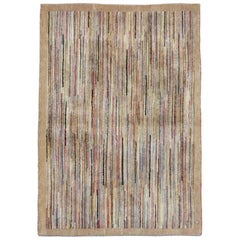
You May Also Like
Early 20th Century American Shaker Rag Rug
Located in New York, NY
Early 20th Century American Shaker Rag Rug 7' 6" x 13' 6"
Category
Vintage 1920s American North and South American Rugs
Materials
Wool
$3,900 Sale Price
35% Off
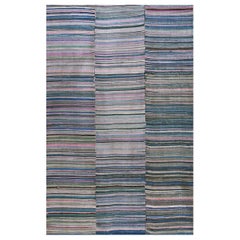
Lovely Multi Brown Tone Ground with Stripe Design Antique American Rag Rug
Located in New York, NY
An American specialty, rag rugs are flat-woven with sections of rags from worn out clothing or furnishings worked in a horizontal stripe design. This particula...
Category
Vintage 1920s American American Classical North and South American Rugs
Materials
Cotton
$4,387 Sale Price
20% Off
Free Shipping
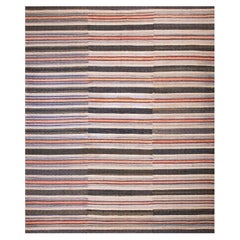
Antique American Rag Rug
Located in New York, NY
Antique American Rag rug, size: 10'8" x 12'0".
Category
Antique Early 1900s American North and South American Rugs
Materials
Wool
$6,370 Sale Price
35% Off
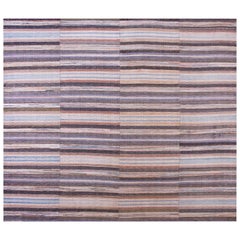
Antique American Rag Rug 13
2" x 15
6"
Located in New York, NY
Antique American Rag Rug, Size: 13'2" x 15'6"
Category
Antique 1880s American North and South American Rugs
Materials
Cotton
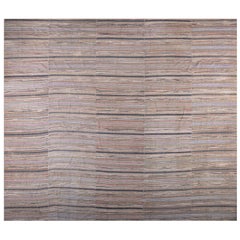
Antique American Rag Rug
Located in New York, NY
Antique American Rag rug. Size: 12'8" x 14'8".
Category
Antique Early 1900s American North and South American Rugs
Materials
Cotton, Wool
Antique American Rag Rug 3
4" x 6
4"
Located in New York, NY
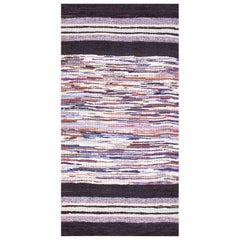
Antique American Rag rug, size: 3'4" x 6'4".
Category
Vintage 1940s American North and South American Rugs
Materials
Wool
More Ways To Browse
Brass Round Glass Top Dining Tables
Coffee Table With Brass Tray
Crystal Decanter With Silver Stopper
Glass Water Pitcher
Hairpin Legs Mid Century Modern
Marble Insert
Mazor Furniture
Meissen Porcelain Rococo
Porcelain Coffee Cups
Prisoner Of War
Round Stone Table
Small Silver Plates
Solid Wood Block
Swivel Mid Century Dining Chair
Victorian Chair Bedroom
Vienna Art Nouveau
Vintage Suede Chair
1960s Painting Canvas