Items Similar to Contemporary Mid-20th Century Handmade Persian Shiraz Small Accent Rug
Want more images or videos?
Request additional images or videos from the seller
1 of 10
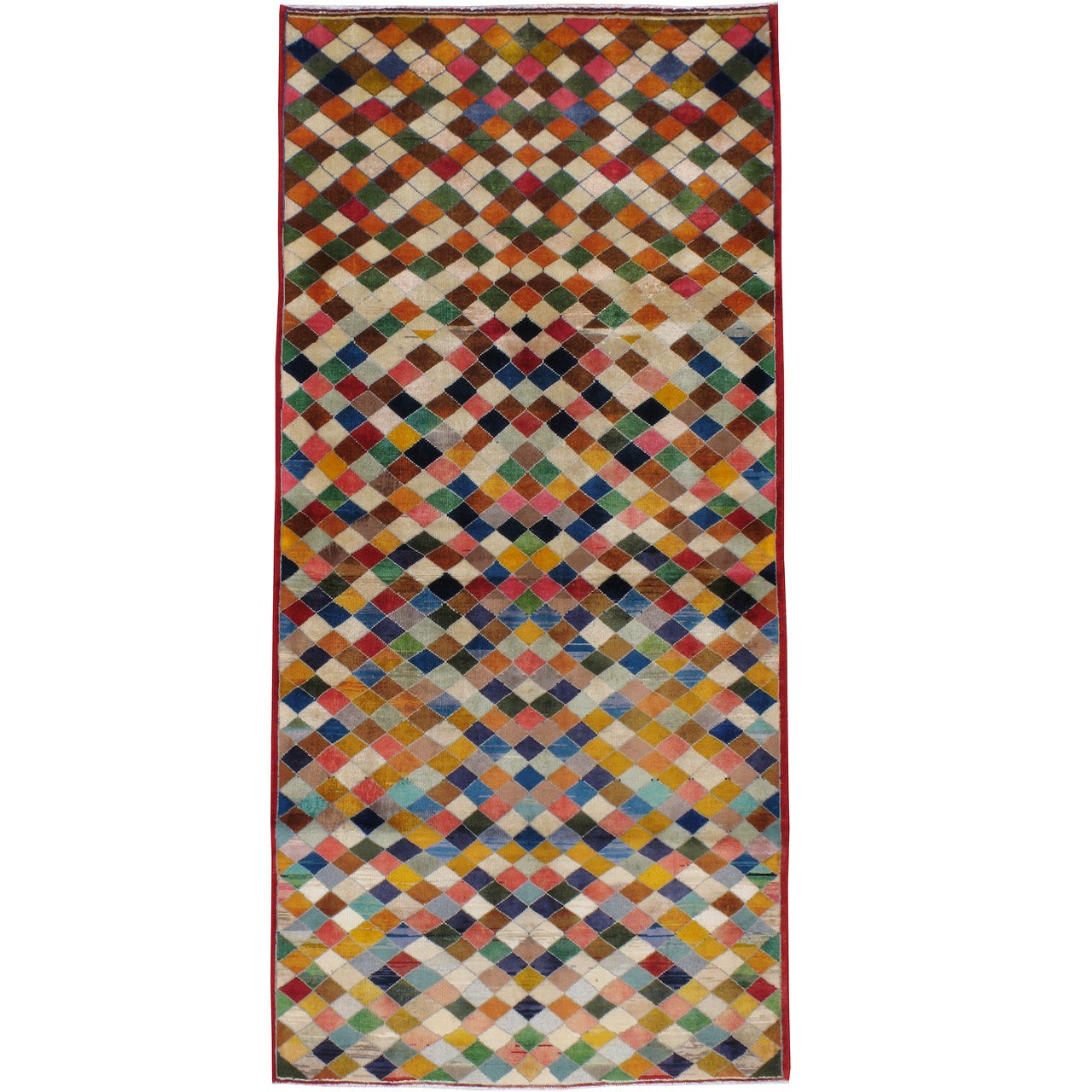
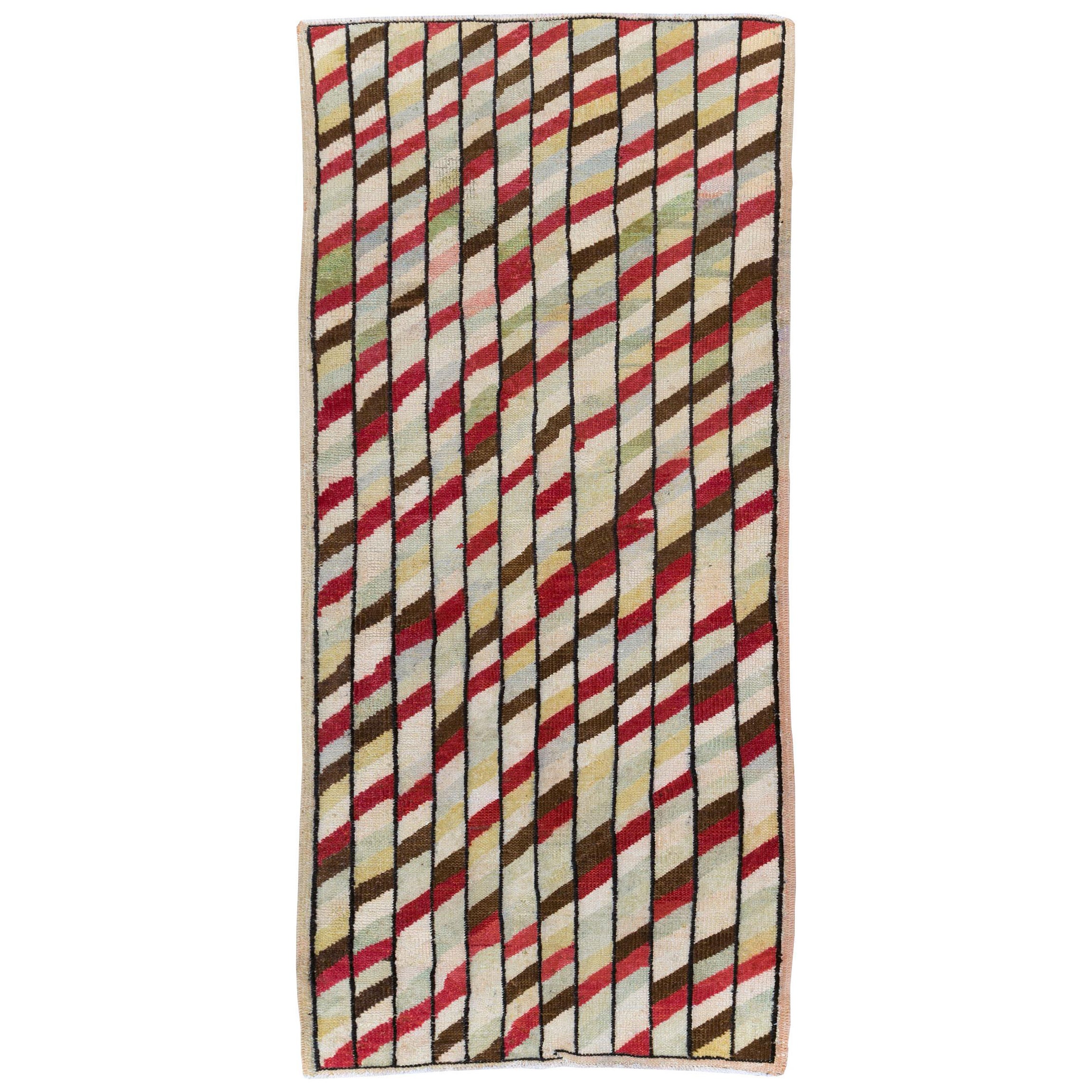
Contemporary Mid-20th Century Handmade Persian Shiraz Small Accent Rug
$4,875
£3,694.22
€4,257.16
CA$6,894.60
A$7,414.56
CHF 3,964.58
MX$89,417.48
NOK 50,134.82
SEK 45,679.27
DKK 31,810.43
About the Item
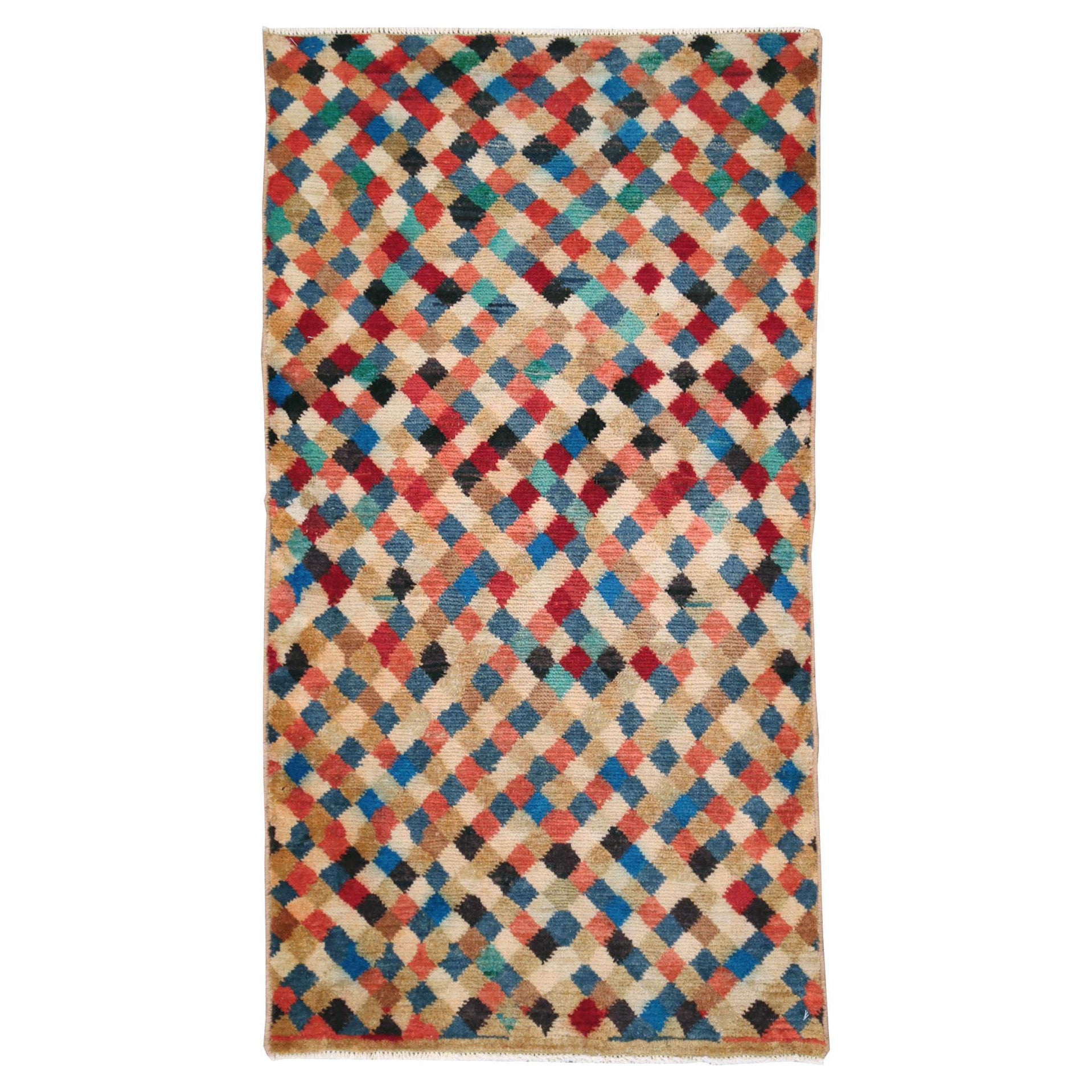
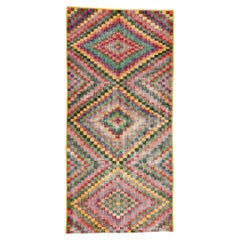
A vintage Persian Shiraz small accent rug handmade during the mid-20th century with a contemporary and colorful diamond checkered pattern.
Measures: 3' 1" x 6' 7"
Persian rugs
carpets:
Persia (Iran) is a moderately large country with a very long history and an enormous art/craft/industry built around the handmade carpet. Until the discovery of oil, carpets were the largest Persian export. The craft goes back to ancient times, although the history is more broken than one might expect or desire. The Pazyryk rug dates from the 3rd/4th century B.C.E., but really no carpets before 1500 or so survive in any sort of numbers. Persia is an upland plateau region, semi-arid in many places, verdantly fertile in others, and a perfect base for a pastoral economy. Sheep beget wool and wool begets rugs. Lots of rugs. Almost every province, city, town, village and tribe made or makes rugs with distinctive local characteristics. The rug literature identifies many of these, but thousands of more locales and tribal segments cannot be connected to known examples and vice versa.
There are essentially three (or four) distinct rug genres: the urban workshop formal rug; the village informal type; and the tribal/nomadic really informal kind. A fourth type is the royal or imperial carpet, woven for the Shah in court ateliers. Workshop, village and tribal rugs will be considered in more depth in specialized essays. Persian rugs must be woven in Persia. Being “in the style of….” does not count. On the other hand, the universally high standards of Persian rug weaving have raised the levels of carpet craftsmanship all over the rug belt. Everyone wants to be Persian, at least where rugs are concerned. “Persian rug” and “Oriental rug” used to be synonymous.
Persian rugs come in all grades. From ultra-coarse tribal rugs to incredibly fine silks from Tabriz and planned urban Isfahan pieces. Persian rugs also come in all sizes. From miniature throw rugs to pieces as large as a parking lot. In weaves from 20 knots per square inch to 2000; in wool, silk, combinations thereof, and more modern synthetic and natural fibers. With natural and synthetic dyes. Most Persian weavers are women, in all contexts, but everybody can weave rugs. The Great Persian Carpet Revival began in the 1870s and the industry mushroomed, with many cities, villages, and tribes taking up or radically expanding rug weaving, from an occasional domestic art to a full-time professional industry. For example, Tehran, the capital, developed an industry-oriented exclusively toward very fine, totally designed carpets for the nascent Persian upper classes. A few rugs were exported, but most went to the wealthy. But this industry did not last past the Interwar period. Other cities have been weaving rugs for centuries. Tabriz, an early capital, has been weaving fine rugs since the 16th century, and with an interruption, has a flourishing industry today. Other cities developed carpet industries as demand expanded around 1900. Before then, nothing much in Mashad, after that lots of activity. Towns like Nain and Qum started from nowhere in the ’30s and now have crafts wholly oriented toward high-quality pieces.
Villages all around Persia have contributed their share to the middle market, but 20th century (and later) pressures have pushed them toward higher qualities, more in the urban manner. This quality upgrade has also affected the nomadic, tribal weavers. Once weaving a few rugs for themselves for domestic consumption, they are now almost exclusively weaving for the market and in competition with urban rugs. So, they have moved up in quality and style.
The Persian carpet is not a static kind of thing, and neither is the craft supporting it. Forget the “timeless east”. Rugs are objects of fashion, with innovations beginning at or near the top, and working their way downward as styles become accepted. Because rugs are a worldwide export, foreign influences seep or crash in. Whole new genres are imported. The red “American Sarouk” detached floral spray style was imported around 1920 and quickly became popular all over Iran, in scatters, room sizes, and runners. Not Persian, but “Persian”. Now accepted everywhere. Rugs are viewed in Iran as art objects, and artists everywhere have always taken advantage of innovations in techniques and materials. In Persia, this has meant machine-spun threads and yarns, synthetic dyes, and chemical washing manipulation. Some experiments lead to real improvement, some are unfortunate dead ends. Some patterns are wildly successful, others are quickly discarded. The allover Herati, Mina Khani, Boteh (paisley or cone), and Gol Hennai patterns have proliferated, and the medallion and corners layout in its infinite variety is virtually synonymous with Persian rugs. Persian weavers seem to have invented all these and more. Today, very finely woven photographic pictorials are fashionable. Who knows if this innovation will last?
A basically semi-desert land needs color, has to have color in its furnishings and household accouterments. Persian rugs are all about color. All types revel in true color: saturated reds, deep blues, salmon, sky blue, cerulean, yellows from mustard to lemon, near black, cream and ecru and ivory, greens from teal to turquoise. From the Orient comes light, and light means color. A real, genuine Persian rug is richly, complexly colored. Maybe too rich. The carpets of the Chahar Mahal (“Bakhtiari”) area are just too colorful, too saturated for the American market. But they go over just fine in Persia. No blah rugs there. Current American decorating trends have shied away from color, complexity, and boldness. Whether these are “coming back” is a question. They have never gone away in authentic Persian rugs.
A tour of the country shows urban weaving centers around the border edge, with a central spine; village weavers in the countryside surrounding the cities; and tribal weavers filling the blank spots almost everywhere. Some towns have been continuously active for centuries, like Kerman; some with interruptions like Isfahan, Kashan, or Tabriz; and some are relative newcomers like Qum and Nain. The picture is incomplete and much of the 18th and 19th centuries have been long ignored. There are large gaps with no extant specimens. But also, discoveries of previously ignored tribal and village weaving keep coming. New types get explored and the picture fills in. Whatever story you believe, it is probably only a fraction of the rich history of the Persian carpet.
About the Seller
5.0
Gold Seller
Premium sellers maintaining a 4.3+ rating and 24-hour response times
Established in 1989
1stDibs seller since 2009
608 sales on 1stDibs
Typical response time: <1 hour
- ShippingRetrieving quote...Shipping from: New York, NY
- Return Policy
More From This Seller
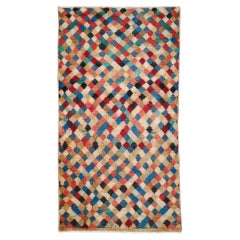
View AllMid-20th Century Handmade Persian Art Deco Style Shiraz Throw Rug
Located in New York, NY
A vintage Persian Art Deco style Shiraz throw rug handmade during the mid-20th century.
Measures: 2' 2" x 4' 0".
Category
Mid-20th Century Persian Modern Persian Rugs
Materials
Wool
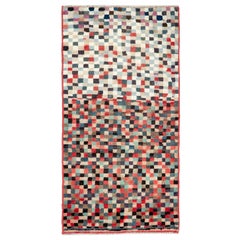
Mid-20th Century Handmade Persian Gabbeh Throw Rug
Located in New York, NY
A vintage Persian Gabbeh throw rug handmade during the mid-20th century.
Measures: 1' 11" x 3' 9"
Persian rugs
carpets:
Persia (Iran) is a moderately large country with ...
Category
Mid-20th Century Persian Modern Persian Rugs
Materials
Wool
Vintage Persian Kashan Rug
Located in New York, NY
A vintage Persian Kashan carpet from the second quarter of the 20th century.
Category
Vintage 1940s Persian Mid-Century Modern Persian Rugs
Materials
Wool
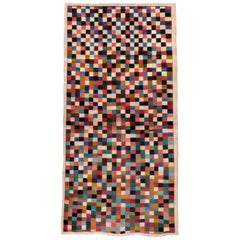
Contemporary Mid-20th Century Handmade Persian Hamadan Throw Rug
Located in New York, NY
A vintage Persian Hamadan throw rug handmade during the mid-20th century with a modern and colorful checkered pattern.
Measures: 3' 4" x 4' 8".
Category
Mid-20th Century Persian Modern Persian Rugs
Materials
Wool
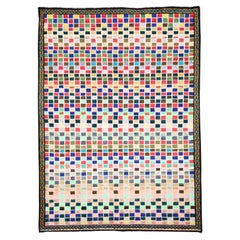
Vintage Persian Kashan Art Deco Rug
Located in New York, NY
A mid-20th century vintage Persian Kashan Art Deco carpet with a modernist geometric pattern in a starburst of colors.
Category
Mid-20th Century Persian Modern Persian Rugs
Materials
Wool
$3,200 Sale Price
20% Off
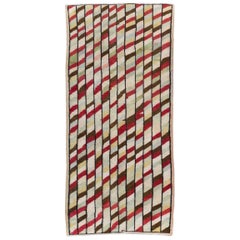
Mid-20th Century Handmade Turkish Anatolian Accent Rug
Located in New York, NY
A vintage Turkish Anatolian accent rug handmade during the mid-20th century.
Measures: 3' 8" x 7' 7"
Category
Mid-20th Century Turkish Modern Turkish Rugs
Materials
Wool
You May Also Like
Vintage Mid-Century Modern Minimalist Persian Flatweave Rug
Located in New York, NY
The Mid-Century Modern Collection is skillfully sourced by NASIRI. These flatweaves embody the minimalist sophistication that emerged in the mid-20th century which continues to thriv...
Category
Vintage 1960s Persian Mid-Century Modern Persian Rugs
Materials
Wool
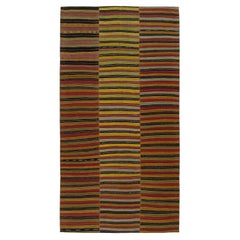
Vintage Midcentury Persian Flat-Weave Rug
Located in New York, NY
The Mid-Century Modern collection is skillfully sourced by N A S I R I and exclusive to our showroom. These flatweaves embody the Minimalist sophistication that emerged in the mid-20...
Category
Vintage 1960s Persian Mid-Century Modern Persian Rugs
Materials
Wool
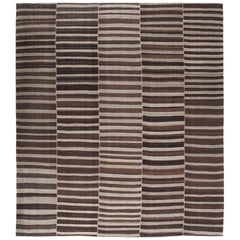
Mid-20th Century Vintage Turkish Wool Runner Rug
Located in Norwalk, CT
Beautiful hand knotted wool runner rug with a red field and ivory accents in a geometric pattern. This rug measures 2' 7" x 7' 10".
Category
Mid-20th Century Turkish Turkish Rugs
Materials
Wool
$1,050 Sale Price
25% Off
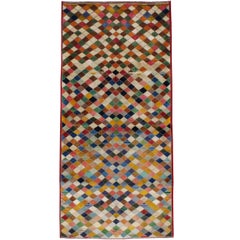
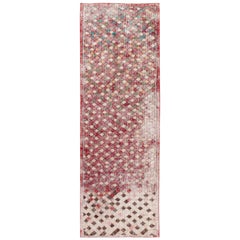
Vintage Karadagh Persian Kilim in Polychromatic Diamond Patterns by Rug
Kilim
Located in Long Island City, NY
This vintage 4x8 Persian Kilim is believed to be a tribal runner of Karadagh—a mountainous region known for its Craft. Handwoven in wool, it originates circa 1950-1960.
Design:
...
Category
Vintage 1950s Persian Tribal Persian Rugs
Materials
Wool
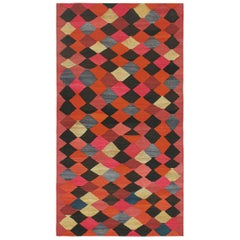
Zeki Muren Vintage Turkish Sivas Rug
By Zeki Müren
Located in Dallas, TX
53294 Zeki Muren Distressed Vintage Turkish Sivas Rug, 04'05 x 09'01. Nestled within the tranquil landscapes of Turkey's Sivas region, Zeki Muren Turkish Sivas rugs pay homage to the...
Category
Mid-20th Century Turkish Mid-Century Modern Turkish Rugs
Materials
Wool
Mid-Century Modern Style Persian Mazandaran Flat-Weave Rug
By Nasiri
Located in New York, NY
Our Mazandaran collection highlights the Minimalist sophistication that existed long before the modern era. The collection was inspired by the kilims that were originally woven by Pe...
Category
2010s Persian Mid-Century Modern Persian Rugs
Materials
Wool
More Ways To Browse
Iran Objects
Spanish Walnut Dining Tables
Square Lacquer Table
Steel Glass Post Modern Coffee Table
Twin Tables
Two Tier Brass Table
Used Gaming Machines
Used Ralph Lauren Furniture
Used Vitra Chairs
Victorian Silver Jug
Vintage Black Lacquer Coffee Table
Vintage Plywood Furniture
Wood And Rattan Coffee Table
Wood Drop Leaf Table
20th Century Art Deco Walnut Chairs
Amber Ceramics
Antique French Farm Tables
Antique Gothic Bronze