Want more images or videos?
Request additional images or videos from the seller
1 of 5
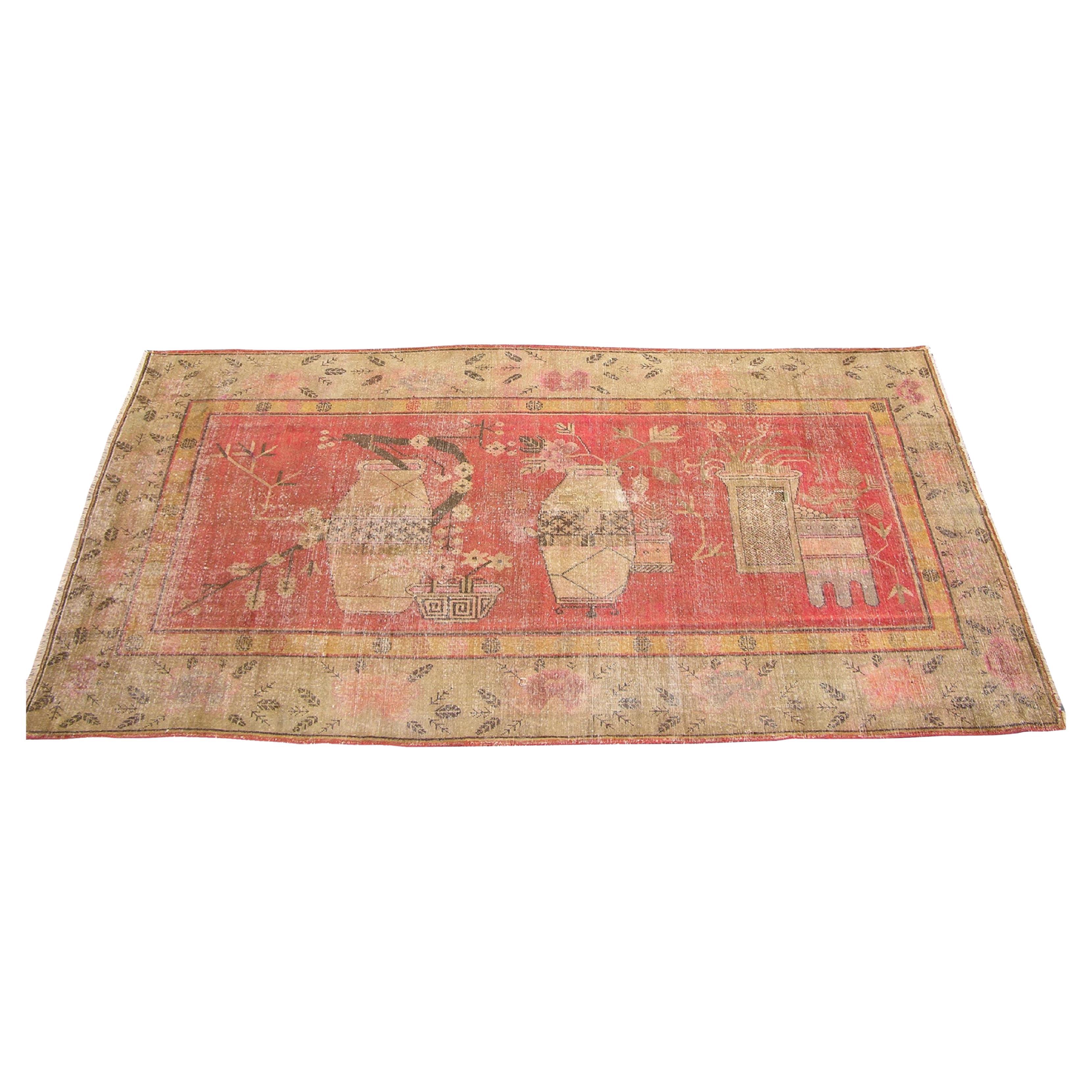
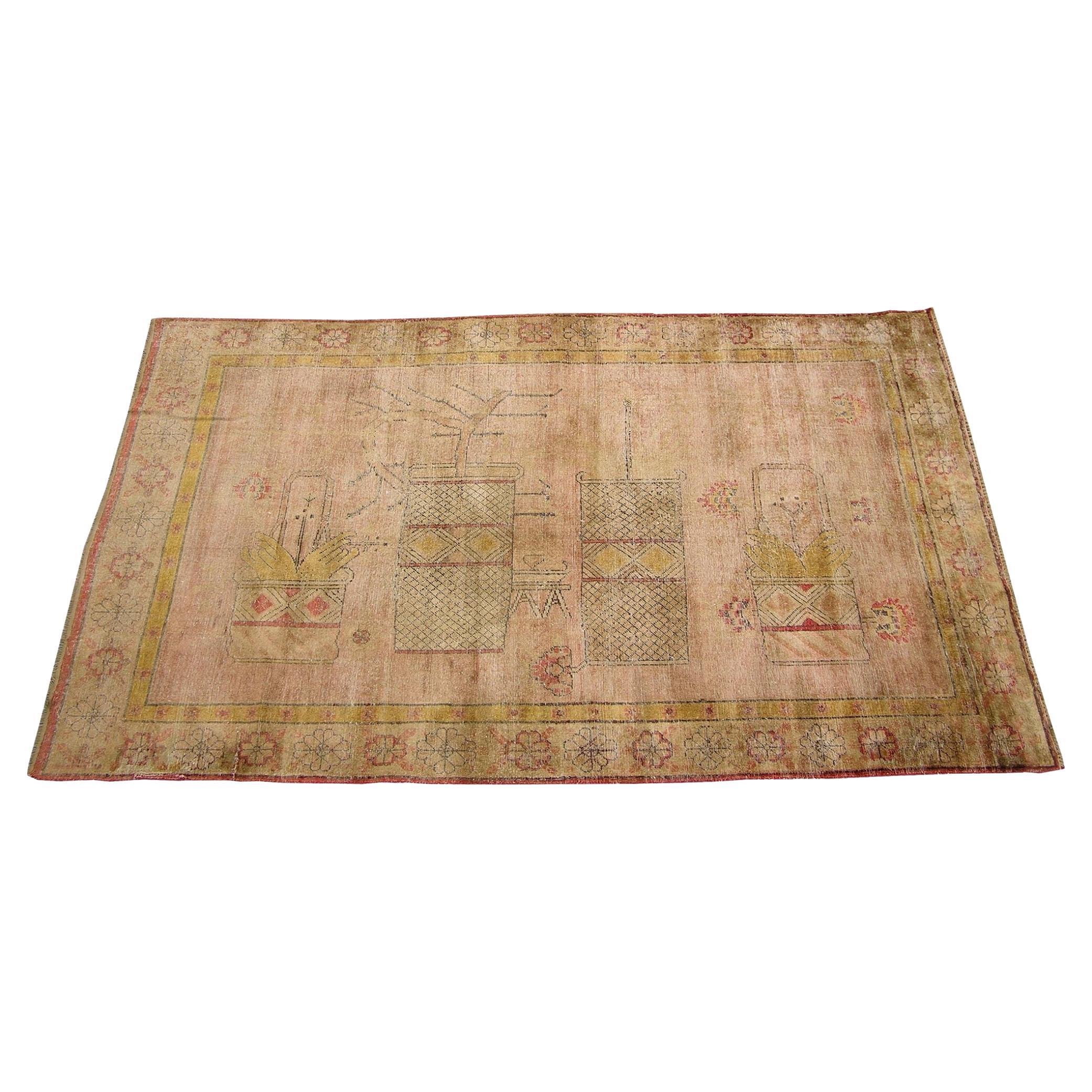
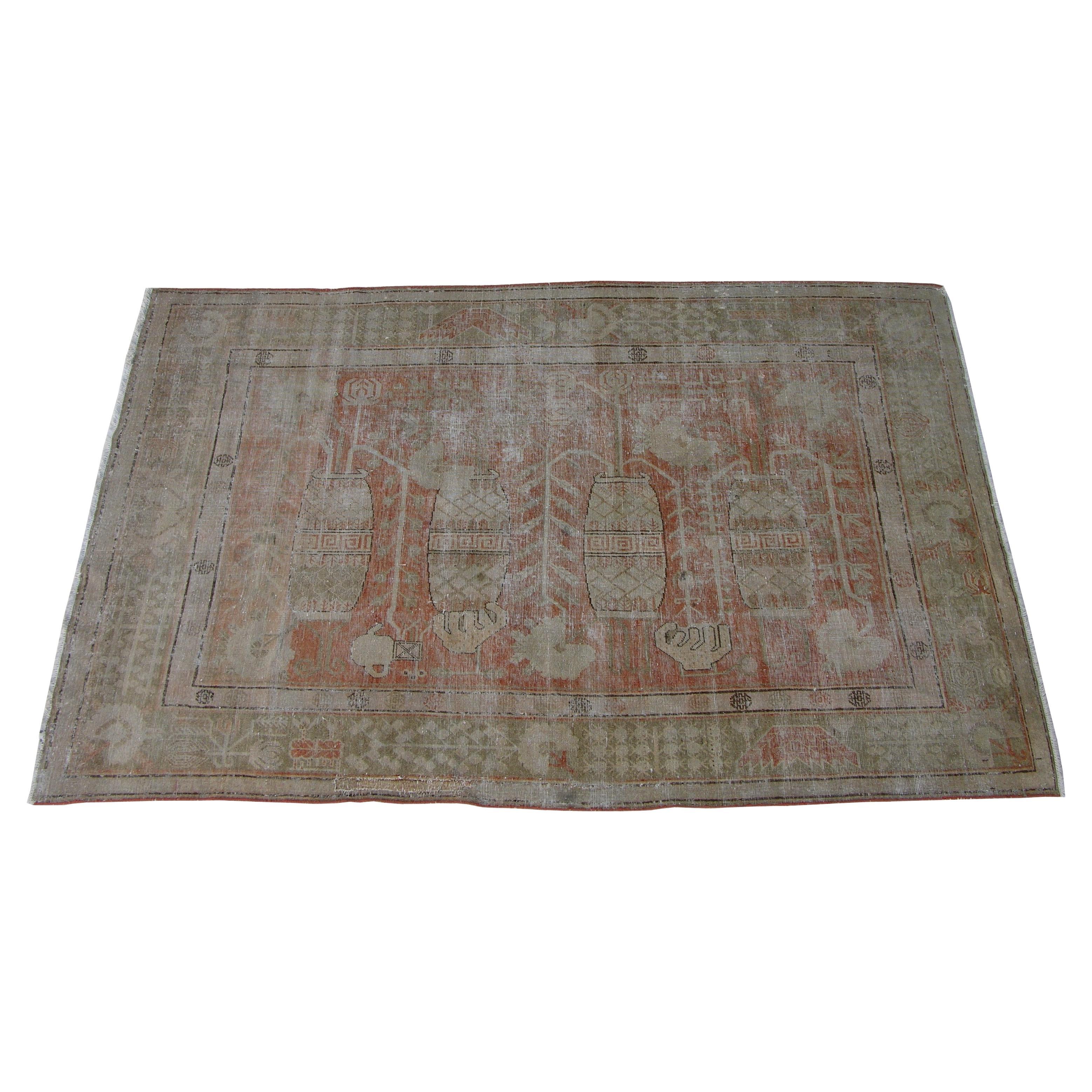
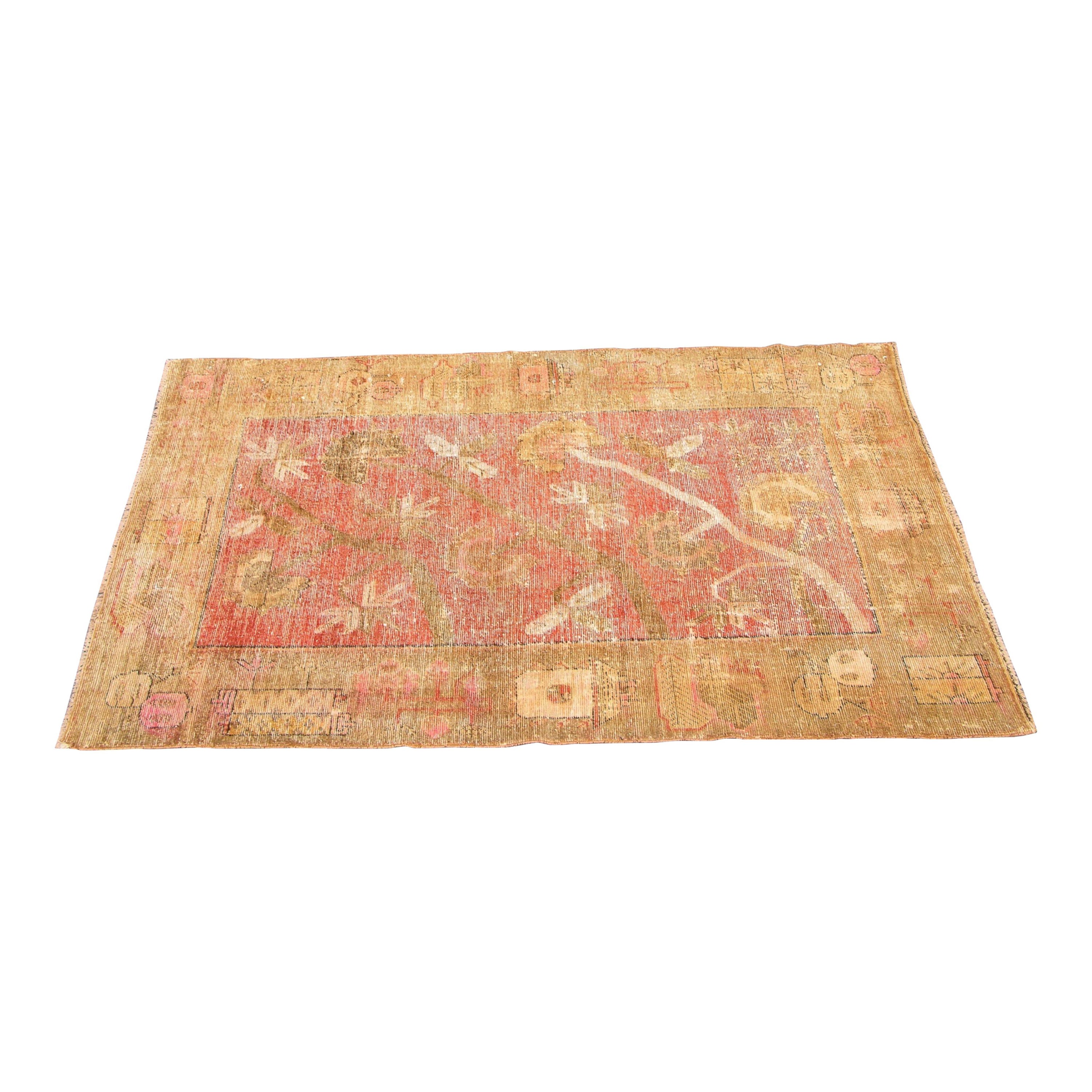
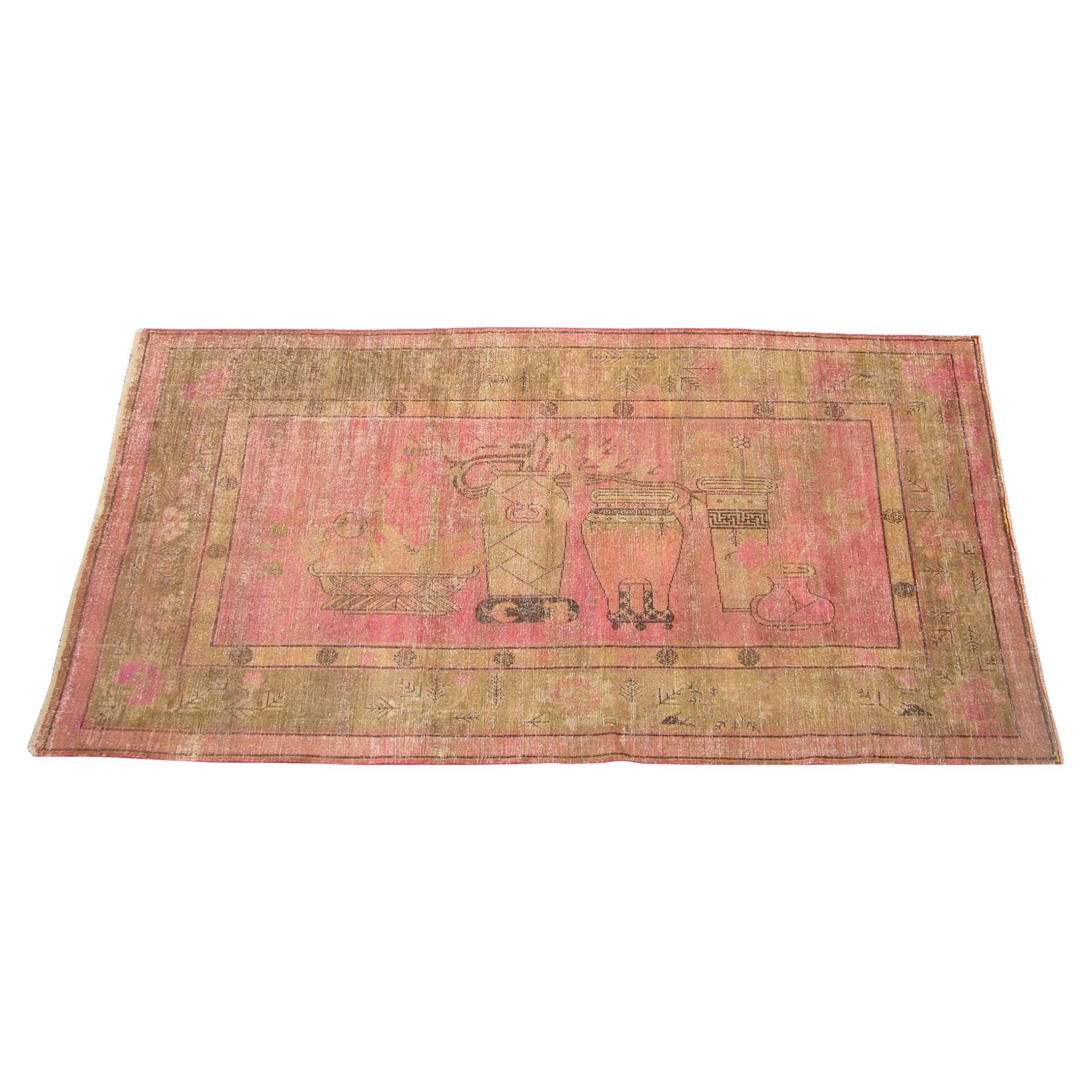
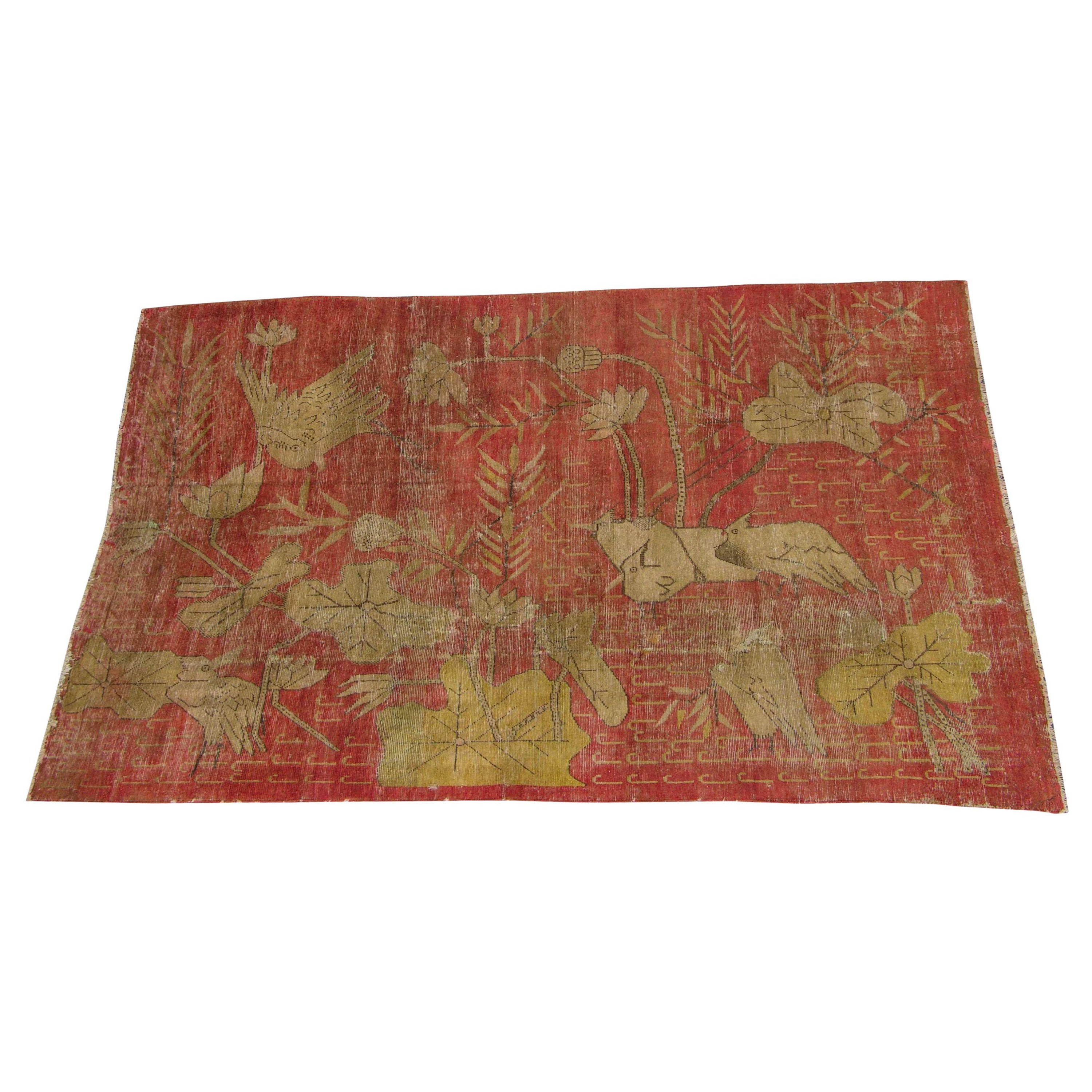
1900s Antique Animal Samarkand Rug
$5,175
£3,947.13
€4,494.83
CA$7,272.45
A$7,931.63
CHF 4,201.64
MX$95,089.01
NOK 53,510.27
SEK 48,931.17
DKK 33,580.76
About the Item
Antique Samarkand Rugs: The desert oasis of Khotan was an important stop on the Silk Road. The people of Khotan were expert carpet weavers who produced high quality antique rugs and carpets for both internal and the commercial trade. Samarkand carpets and reached the height of their popularity between the 17th Century and 19th century although archaeological evidence shows local people produced intricately woven textiles more than 1,000 years earlier.
During the height of Samarkand carpet production, the city of was part of a region designated as Chinese controlled East Turkestan. Today, the city of Khotan or Hotan is located in modern-day China in the region of Xinjiang or the New Frontier. Through the centuries, the Khotan has been controlled by many dynasties and imperial powers that have influenced local carpet design.
Geographically, Khotan is the southern-most of East Turkestan’s three distinct carpet producing regions, which also include Yarkand and Kashgar. The city of Khotan is located on the northern edge of the Tibetan Plateau in fertile valleys between two important glacial rivers the Karakash River and the Yurungkash River, which are known for their deposits of black jade and white jade respectively.
Despite the natural land barriers of the snow-covered Kunlun Mountain range and the harsh Taklamakan desert, Khotan was an important stop on the Silk Road for thousands of years.
Antique Samarkand rugs have been influenced by invading superpowers, travelers, and traders passing through. The Huns were one of the first groups to control Khotan and East Turkestan before the Chinese Buddhists gained power in the year 200.
In the 8th Century, the Uyghurs, a group of Turkic-speaking Muslims, became the controlling power over most of East Asia from the Caspian Sea in the west to the Manchurian coast in the east.
Trade routes linking Khotan and the Kashmir region of Northern India were essential for transporting dye goods to carpet weavers in Khotan. At the time, Kashmiri dyers held a strong monopoly over the brilliant dyes produced by madder and indigo. Yellow, brown, and many natural or earth-tone colors were produced with locally available dye plants.
In urban carpet and rug studios, master weavers were responsible for purchasing materials and overseeing a team of trained workers. Carpet houses ranged from single rooms in a family home to entire buildings. The majority of Khotan rugs were made from wool pile knotted around a cotton warp.
The weft was typically made from wool, but cotton was also used. For each row of knotted pile, weavers generally added two or three shoots of weft, a trait commonly seen in carpets from Kazak regions.
Khotan rugs were traditionally produced using the asymmetric Persian carpet knot, which gives the pile the directional quality associated with carpets from the Far East. Although elements from Chinese and Tibetan rugs are evident in the medallion designs of Khotan, the colors, detailed patterns, execution, and production methods make them unlike carpets produced in the Far East.
Designs used in antique Samarkand rugs were borrowed from Turkey, Anatolia, Iran, India, and many other countries. Eastern designs like one, two and three-medallion motifs were used frequently in Khotan carpet designs.
Rugs featuring repeating gul motifs, all-over arabesques, and branching pomegranate and vase motifs were also popular. Many other motifs like diamonds, flowers, and curving oval elements were borrowed from Mughal carpet weavers to the south.
By the beginning of the 20th Century, weavers in East Turkestan and Khotan switched to synthetic dyes and many of their traditional carpet making techniques were lost. Despite the decline of the Khotan’s rug / carpet weaving industry, rugs produced in this ancient melting pot continue to be prized for their versatile styling and rarity.
- Dimensions:Width: 53 in (134.62 cm)Length: 94 in (238.76 cm)
- Style:Tribal (In the Style Of)
- Materials and Techniques:
- Place of Origin:
- Period:1900-1909
- Date of Manufacture:1900
- Condition:Fair Condition, No Stain, No moth Damage at all.
- Seller Location:Los Angeles, US
- Reference Number:Seller: 5352y1stDibs: LU9020235543832
About the Seller
5.0
Vetted Professional Seller
Every seller passes strict standards for authenticity and reliability
Established in 1920
1stDibs seller since 2023
71 sales on 1stDibs
Typical response time: 1 hour
- ShippingRetrieving quote...Shipping from: Los Angeles, US
- Return Policy
More From This Seller
View AllLate 19th Century Central Asian Samarkand Rug
Located in Los Angeles, US
Antique Samarkand Rugs: The desert oasis of Khotan was an important stop on the Silk Road. The people of Khotan were expert carpet weavers who produced high quality antique rugs and ...
Category
Antique Early 1900s Other Russian and Scandinavian Rugs
Materials
Wool, Cotton
1900 Antique Central Asian Samarkand Rug
Located in Los Angeles, US
Antique Samarkand Rugs: The desert oasis of Khotan was an important stop on the Silk Road. The people of Khotan were expert carpet weavers who produced high quality antique rugs and ...
Category
Antique Early 1900s Other Russian and Scandinavian Rugs
Materials
Wool, Cotton
Antique Samarkand Rug 1900 -8
6
X 5
5
Located in Los Angeles, US
Antique Uzbek Samarkand Rug 8'6'' X 5'5'', tribal and traditional, antique and vintage, wool on cotton foundation
Category
Antique Early 1900s Uzbek Tribal Russian and Scandinavian Rugs
Materials
Wool, Cotton
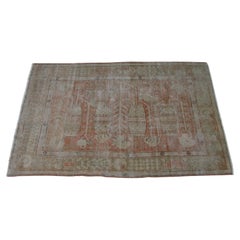
19th Century Samarkand Rug
Located in Los Angeles, US
Antique Samarkand Rugs: The desert oasis of Khotan was an important stop on the Silk Road. The people of Khotan were expert carpet weavers who produced high quality antique rugs and ...
Category
Antique 19th Century Other Russian and Scandinavian Rugs
Materials
Wool
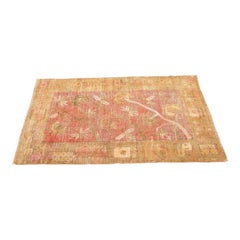
19th Century Vintage Samarkand Rug
Located in Los Angeles, US
Antique Samarkand Rugs: The desert oasis of Khotan was an important stop on the Silk Road. The people of Khotan were expert carpet weavers who produced high quality antique rugs and ...
Category
Antique 19th Century Other Russian and Scandinavian Rugs
Materials
Wool, Cotton
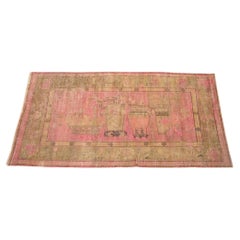
Antique Handmade Samarkand Rug 8
6
X 5
3
Located in Los Angeles, US
Antique Handmade Samarkand Rug 8'6'' x 5'3''
Category
Antique Early 1900s Asian Tribal Russian and Scandinavian Rugs
Materials
Wool, Cotton
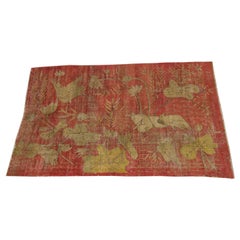
You May Also Like
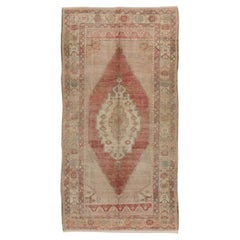
5x9.4 Ft Vintage Oriental Rug for Country Homes, Tribal, Traditional Interior
Located in Spring Valley, NY
A finely hand-knotted vintage Turkish carpet from 1960s featuring a geometric medallion design. The rug is made of medium wool pile on wool foundation. It is heavy and lays flat on t...
Category
Mid-20th Century Turkish Tribal Turkish Rugs
Materials
Wool
$840 Sale Price
50% Off
Free Shipping
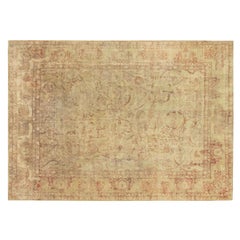
Antique Indian Decorative Oriental Indo Rug in Square Size
Located in New York, NY
Antique Indian Oriental Rug, size 12'8" H x 9'9", circa 1920
An antique Indian Oriental Rug, size 12'8" H x 9'9" W, in Room size, circa 1920. Th...
Category
Vintage 1920s Indian Central Asian Rugs
Materials
Wool
$5,116 Sale Price
20% Off
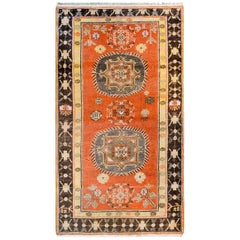
Beautiful Early 20th Century Central Asian Samarghand Rug
Located in Chicago, IL
A wonderful early 20th century central Asian Samarghand rug with two large circular medallions woven in muted lavender on a bold orange field of peonies and other stylized flowers, s...
Category
Vintage 1930s East Turkestani Tribal Central Asian Rugs
Materials
Wool
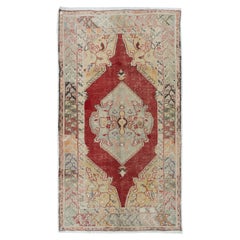
3.5x6.3 Ft Vintage Turkish Wool Tribal Rug, Traditional Handmade Village Carpet
Located in Spring Valley, NY
A finely hand-knotted vintage Turkish carpet from 1960s. The rug has even low wool pile on cotton foundation. It is heavy and lays flat on the floor, in very good condition with no i...
Category
Mid-20th Century Turkish Tribal Turkish Rugs
Materials
Wool, Cotton
$862 Sale Price
20% Off
Free Shipping
Vintage Samarkand Khotan Rug
Located in New York, NY
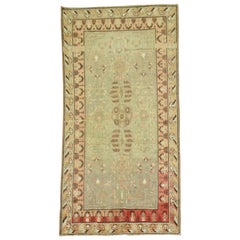
An early 20th century Khotan rug with a feminine vibe.
Measures: 4'3'' x 8'2''
Khotan rugs hail from East Turkestan. Due to its geographical proximity to both Persian and China...
Category
Early 20th Century Chinese Chinoiserie Chinese and East Asian Rugs
Materials
Wool
Vintage Midcentury Tribal Anatolian Rug
Located in New York, NY
Anatolian rugs originated from Anatolia, also referred to as Asian Turkey, due to its geographical location. They are hand knotted, pile rugs made of natural fibers and dyes. Many of...
Category
Vintage 1960s Turkish Tribal Turkish Rugs
Materials
Wool
More Ways To Browse
Pomegranate Vase
Ancient Pot
60s Chairs
Antique Baroque Console Tables
Black Smoked Glass Coffee Table
Danish Modern End Tables
French Glass Top Center Tables
Gold Bronze Console Table
Hollywood Regency Iron Table
Line Bar
Mid Century Chrome Stools
Mid Century Modern 1967
Modern Drinking Glass
Pontil Mark
Portuguese Baroque Furniture
Roger Capron Vallauris
Spanish Leather Armchair
Standing Desk