Items Similar to Ararat Rugs Mamluk Rug with Central Star, 16th C. Revival Carpet, Natural Dyed
Video Loading
Want more images or videos?
Request additional images or videos from the seller
1 of 7
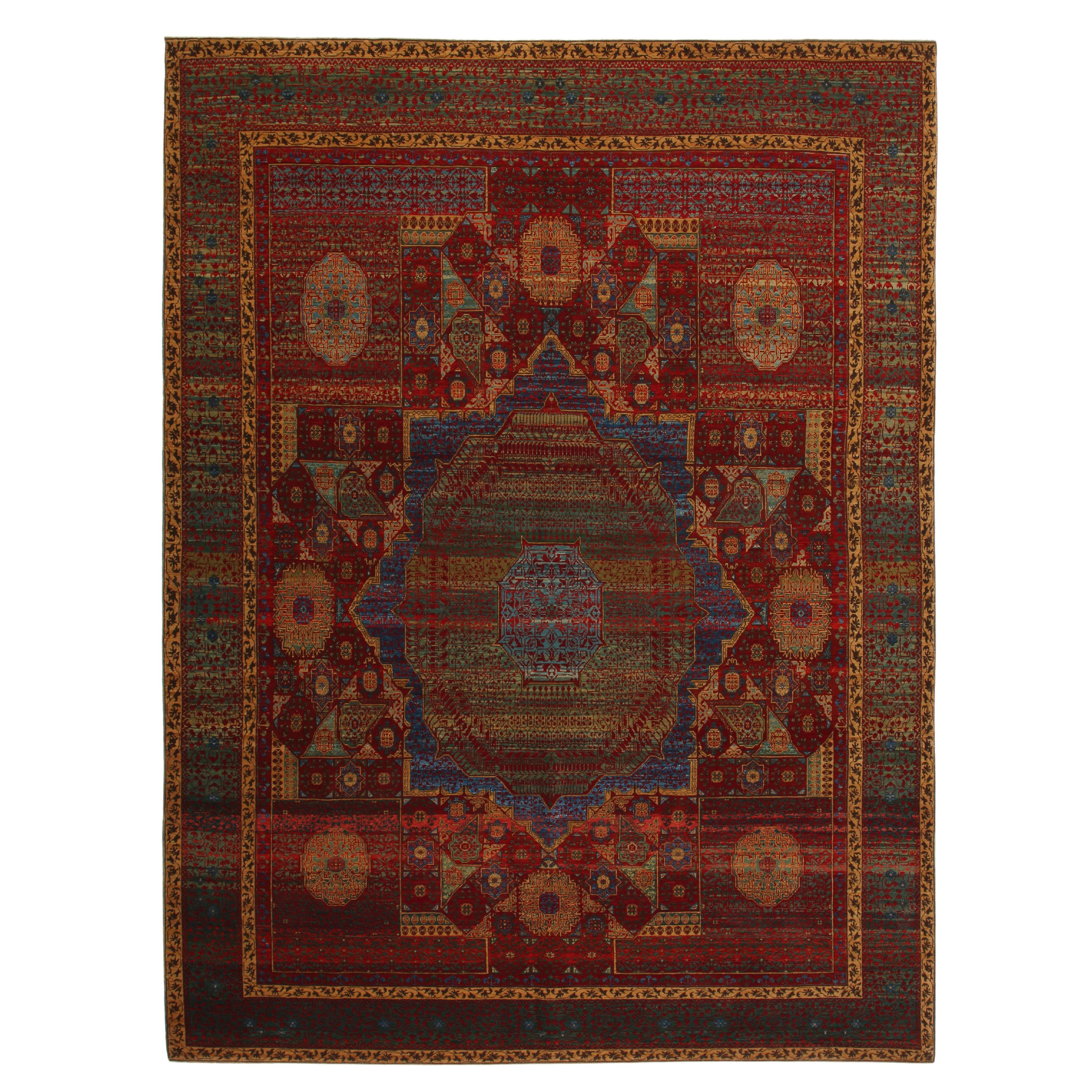
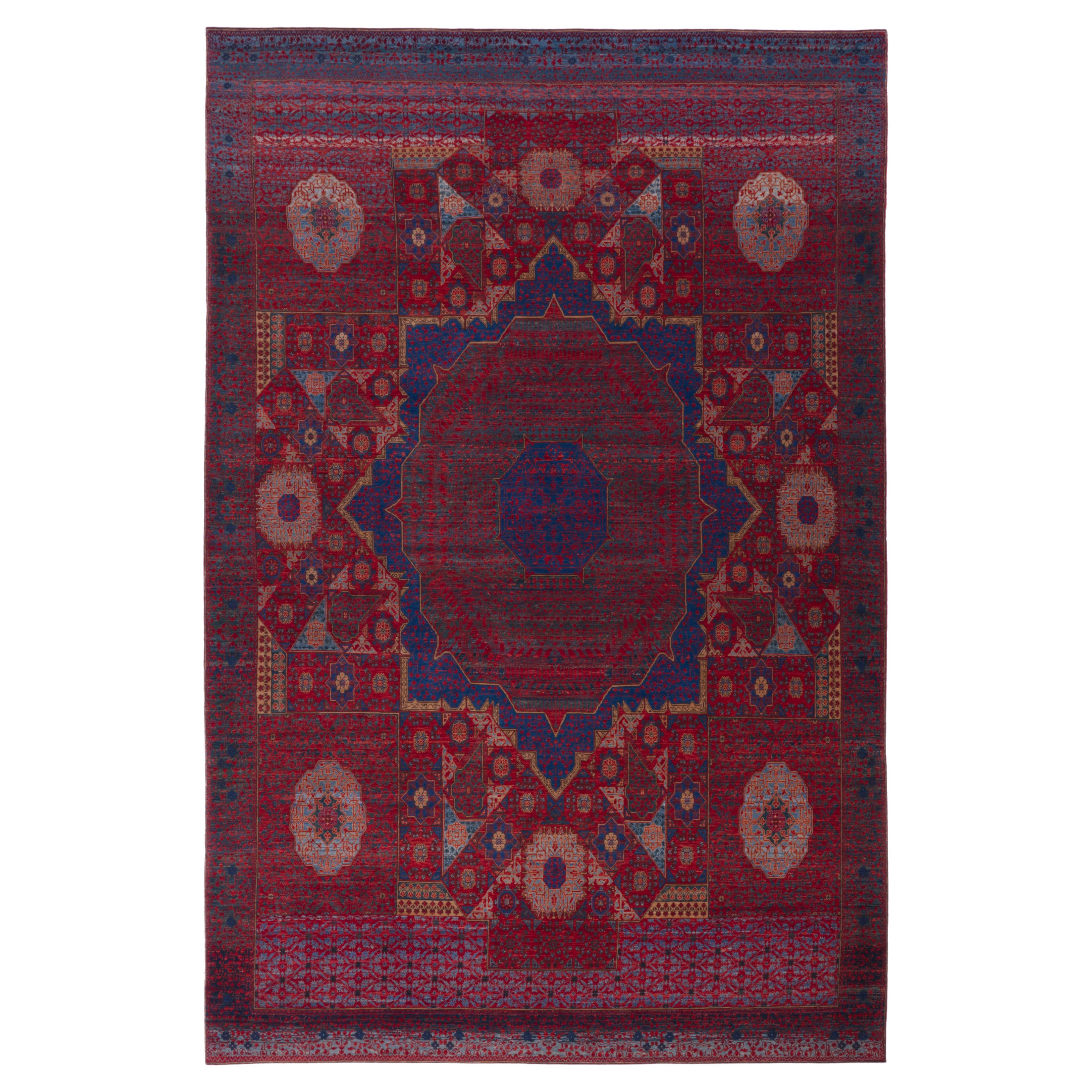
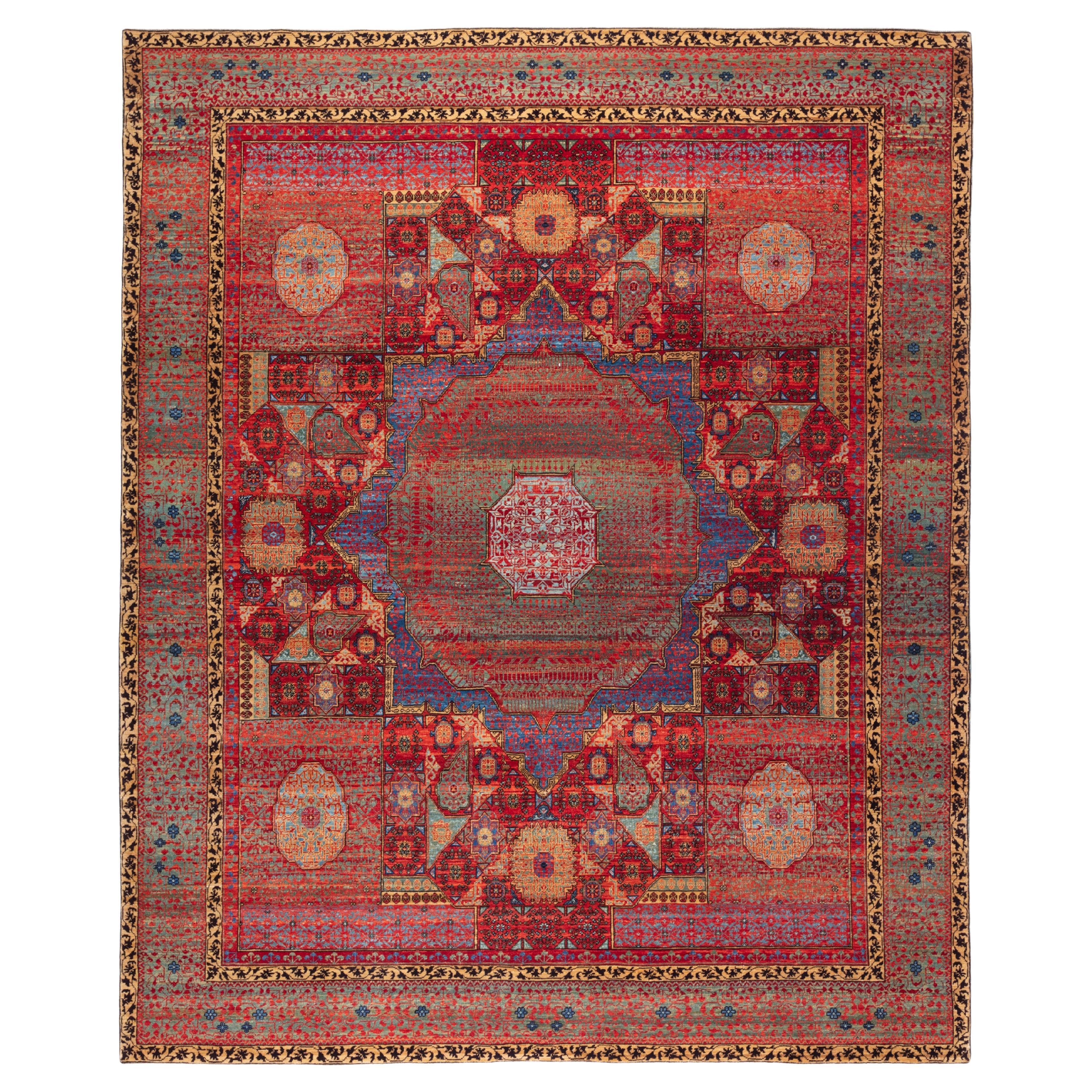
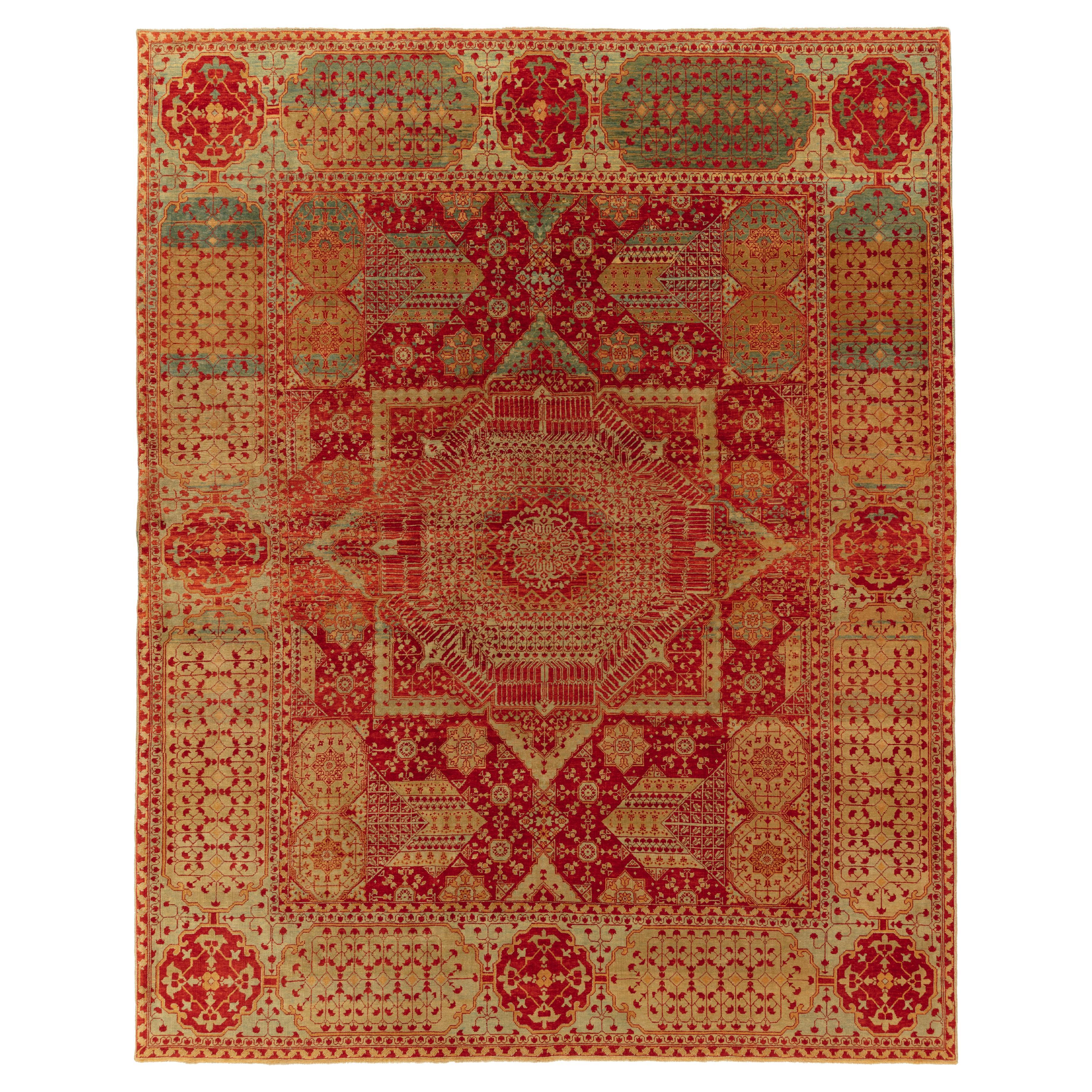
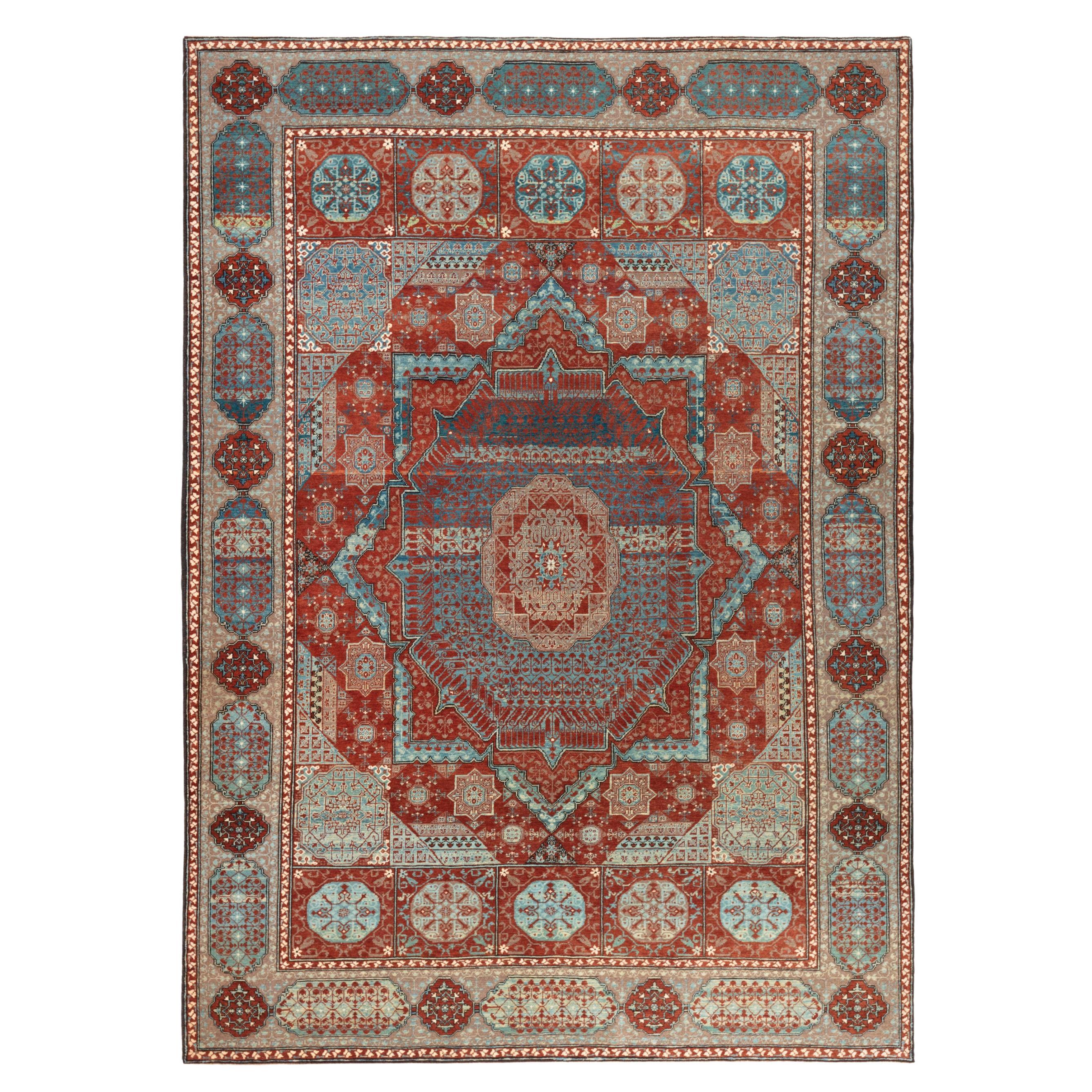
Ararat Rugs Mamluk Rug with Central Star, 16th C. Revival Carpet, Natural Dyed
$16,300
£12,171.23
€14,019.61
CA$22,745.91
A$24,048.30
CHF 12,922.89
MX$288,823.71
NOK 161,817.53
SEK 148,074.98
DKK 104,695.58
About the Item
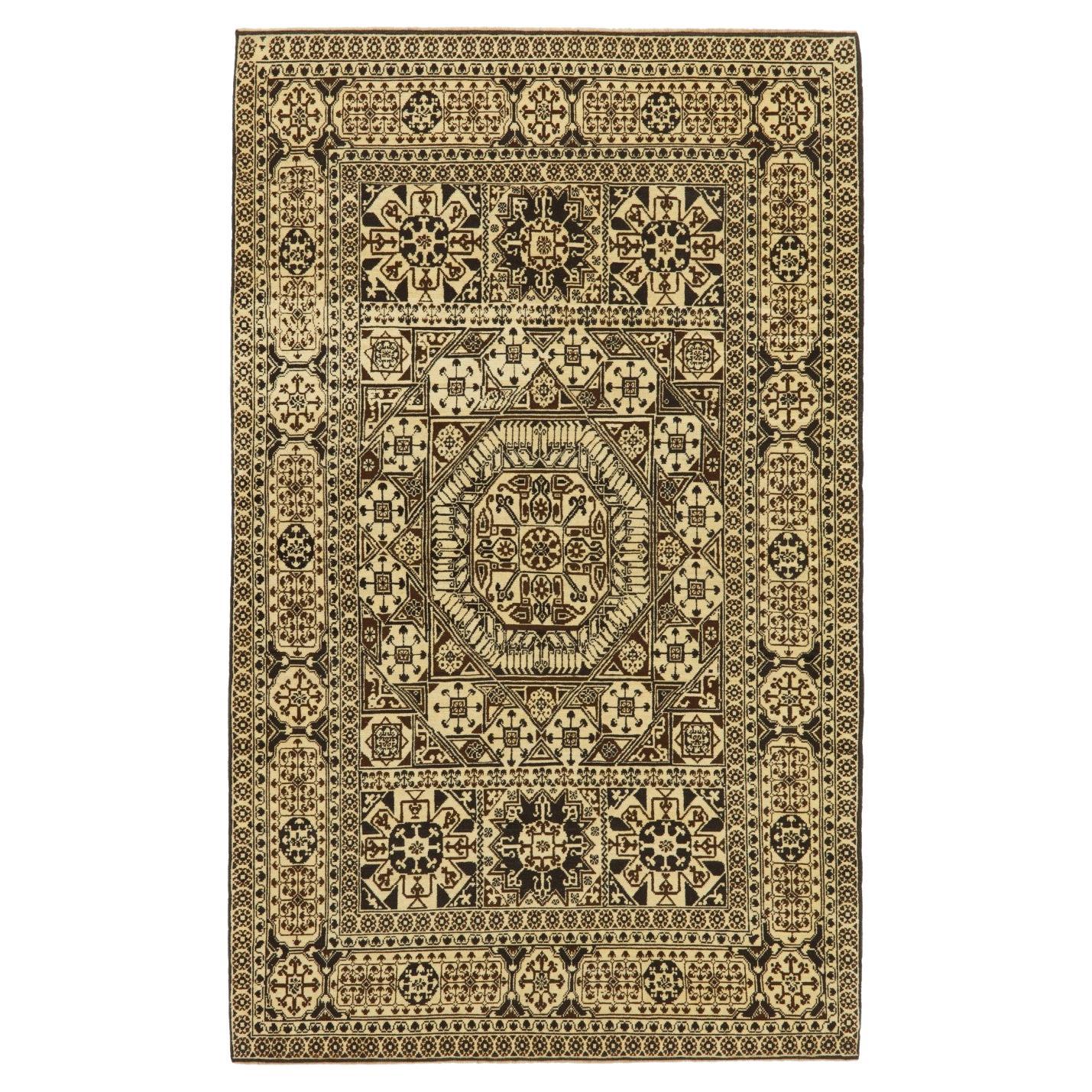
The source of the rug comes from the Textile Museum, Washington D.C., inv. R 16.2.4. This rug with the central star was designed in the early 16th century rug by the Mamluk Sultan of Cairo, Egypt. Acquired by Mr.Myers at the 1926 Benguiat Sale(“a Damascus Gothic Carpet”) and exhibited at the 1947 Chicago Exhibition, this carpet breaks with the usual standard format. Not long enough for a 3-medallion carpet, the field has been elongated between the Elem and the central medallion.
Attempting to read early carpets produced in workshops in Cairo provides an entirely different set of challenges. Cairene carpets, distinguished by their limited color palette, symmetrical knotting, and unusual construction of S-spun wool (Z-spun wool being the norm almost everywhere in the Islamic world), underwent a sudden change in design sometime after the Ottoman Turks conquered the Mamluk Empire in 1517. The Simonetti Carpet was probably woven after the conquest but exhibits the “old” 15th-century style of the Mamluks. Long and narrow, it was woven on a standard-sized Egyptian roller-beam loom, capable of producing carpets of varying lengths. It consists of five major focal areas of design in an A-B-C-B-A pattern, meaning the first and fifth and the second and fourth areas are paired, while the middle is unique. We can easily term these five focal areas medallions, but they are geometric in both layout and detail, and their style (as opposed to the actual date of the weaving) predates the carpet design revolution that gave rise to the medallion format. We can surmise that the designs and colors of Mamluk carpets, with their unusual combination of insect-derived red, blue, green, and sometimes yellow, with virtually no undyed white at all, constitute an effort to create a recognizable brand in the early modern market, especially in Europe, where Mamluk carpets such as this, with their subtle coloration, incredibly detailed design, and mosaic-like layout of small and intricately patterned geometric motifs, constituted an appealing alternative to the more coarsely woven and brightly colored carpets from Anatolia, such as Ushak medallion carpets. While the weaving of carpets in the traditional geometric Mamluk designs apparently continued well into the seventeenth century, sometime around the mid-sixteenth century, Cairene weavers began to create an entirely new kind of carpet, using their traditional Mamluk materials, technique, and coloration but reflecting the latest styles then being created at the court of the Ottoman sultans in Istanbul. The design of the rug is interpreted by our designers, and soft colors are used for this rug.
Color summary: 4 colors in total;
Imperial red 415 (Madder Root)
Emerald green 407 (Chamomile – Indigo)
Cadet blue 26 (Indigo – Spurge)
Sunray color 405 (Henna)
Group: Islamic Rugs Family
Area: Mamluk
Material of Pile: Natural dyed hand-spun wool
Material Warp / Weft: Wool on Wool
Structure: Symmetrical knot on depressed warp inclining to the right
Knots Density: 39x39
Production Place: Southeastern Anatolia - Harran
Stock Location: Tokyo
Size (EU): 202 X 284cm
Size (US): 6'7" X 9'3"
Area (EU): 5.7m²
Area (US): 61.8ft²
- Creator:Ararat Rugs (Manufacturer)
- Dimensions:Width: 79.53 in (202 cm)Length: 111.82 in (284 cm)
- Style:Revival (In the Style Of)
- Materials and Techniques:
- Place of Origin:
- Period:
- Date of Manufacture:2022
- Production Type:New Custom(One of a Kind)
- Estimated Production Time:Available Now
- Condition:
- Seller Location:Tokyo, JP
- Reference Number:Seller: 000281stDibs: LU8206233002442
ARARAT RUGS
We know and believe that the geography we come from, our past, and our lifestyle are the most important bond between us to carry the oriental carpet art and culture to the next generations along with our core values in our ongoing growth journey.
We are aware that the way to achieve this goal and carry this priceless art and culture to the future depends on a lot of work with all our people every day while adhering to our core values.
For us, art is meaningful in the sense that it brings together various cultures around the world. It is an honor for us that oriental carpet art and culture have been instrumental in this for centuries and that we are a part of this business.
We are tirelessly keeping an eye on auction house information around the world about carpets. New York's Metropolitan, London's Victoria
Albert Museums, and other famous art museums, as well as small specialized museums that house private collections, and books about oriental carpets to collect information on outstanding carpet designs and patterns from around the world. It's our Self-improving and Self-developing culture.
As Turkish Culture of Hospitality, the Kurdish Culture of Generosity, and as Japanese Culture of Business Punctuality; are the most important values that this multicultural background has taught and bequeathed to us. It is essential and valuable for us that you feel this feeling not only by looking at our oriental carpets but from the moment you contact us.
About the Seller
5.0
Platinum Seller
Premium sellers with a 4.7+ rating and 24-hour response times
Established in 1970
1stDibs seller since 2023
69 sales on 1stDibs
Typical response time: 1 hour
- ShippingRetrieving quote...Shipping from: Tokyo, Japan
- Return Policy
More From This Seller
View AllArarat Rugs Mamluk Carpet with Central Star 16th Century Revival, Natural Dyed
By Ararat Rugs
Located in Tokyo, JP
The source of the rug comes from the book Völker, Angela, Die orientalischen Knüpfteppiche das MAK, Vienna: Böhlau, 2001: 42–5. This rug with the central star was designed in the early 16th century by the Mamluk Sultan of Cairo, Egypt. It is exhibited at MAK – Museum of Applied Arts, Vienna, Austria. As its impressive size, materials, and design quality suggest, the carpet is a product of an accomplished court workshop and likely dates from the late period of the last Mamluk dynasty. The quantity of the colors used speaks for an earlier date around 1500; the delicate vegetal border with leaf tendrils and the characteristic umbrella leaves...
Category
21st Century and Contemporary Turkish Revival Turkish Rugs
Materials
Wool, Natural Fiber, Organic Material
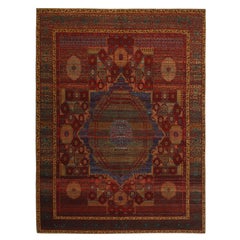
Ararat Rugs Mamluk Carpet with Central Star 16th Century Revival - Natural Dyed
By Ararat Rugs
Located in Tokyo, JP
The source of the rug comes from the book Völker, Angela, Die orientalischen Knüpfteppiche das MAK, Vienna: Böhlau, 2001: 42–5. This rug with the central star was designed in the early 16th-century rug by Mamluk Sultane of Cairo, Egypt. It is exhibited at MAK – Museum of Applied Arts, Vienna Austria. As its impressive size, materials, and design quality suggest, the carpet is a product of an accomplished court workshop and likely dates from the late period of the last Mamluk dynasty. The quantity of the colors used speaks for an earlier date around 1500; the delicate vegetal border with leaf tendrils and the characteristic umbrella leaves...
Category
21st Century and Contemporary Turkish Revival Turkish Rugs
Materials
Wool, Natural Fiber, Organic Material
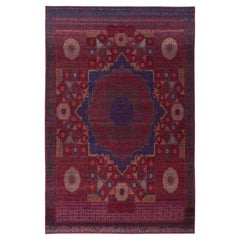
Ararat Rugs Mamluk Carpet with Central Star 16th Century Revival, Natural Dyed
By Ararat Rugs
Located in Tokyo, JP
The source of the rug comes from the book Völker, Angela, Die orientalischen Knüpfteppiche das MAK, Vienna: Böhlau, 2001: 42–5. This rug with the central star was designed in the early 16th-century rug by Mamluk Sultane of Cairo, Egypt. It is exhibited at MAK – Museum of Applied Arts, Vienna Austria. As its impressive size, materials, and design quality suggest, the carpet is a product of an accomplished court workshop and likely dates from the late period of the last Mamluk dynasty. The quantity of the colors used speaks for an earlier date around 1500; the delicate vegetal border with leaf tendrils and the characteristic umbrella leaves...
Category
21st Century and Contemporary Turkish Revival Turkish Rugs
Materials
Wool, Natural Fiber, Organic Material
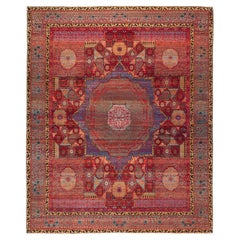
Ararat Rugs the Simonetti Mamluk Carpet 16th Century Revival Rug, Natural Dyed
By Ararat Rugs
Located in Tokyo, JP
The source of carpet comes from the book How to Read – Islamic Carpets, Walter B. Denny, The Metropolitan Museum of Art, New York 2014 fig.61,62. The five-star-medallion carpet was d...
Category
21st Century and Contemporary Turkish Revival Turkish Rugs
Materials
Wool, Natural Fiber, Organic Material
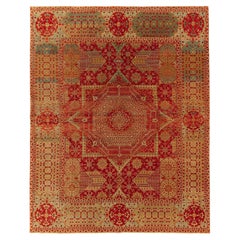
Ararat Rugs the Simonetti Mamluk Carpet 16th Century Revival Rug, Natural Dyed
By Ararat Rugs
Located in Tokyo, JP
The source of carpet comes from the book How to Read – Islamic Carpets, Walter B. Denny, The Metropolitan Museum of Art, New York 2014 fig.61,62. The five-star-medallion carpet was d...
Category
21st Century and Contemporary Turkish Revival Turkish Rugs
Materials
Wool, Natural Fiber, Organic Material
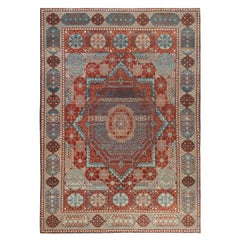
Ararat Rugs Mamluk Rug with Central Star, 16th C. Revival Carpet, Natural Colors
By Ararat Rugs
Located in Tokyo, JP
This rug with the central star was designed in the early 16th-century rug by Mamluk Sultane of Cairo, Egypt. Attempting to read early carpets produced in workshops in Cairo provides ...
Category
21st Century and Contemporary Turkish Revival Turkish Rugs
Materials
Wool, Natural Fiber, Organic Material
You May Also Like
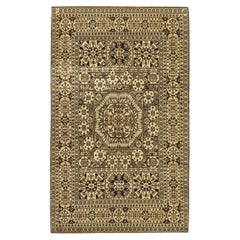
Turkish Vintage Oushak Rug With Medallion Design With Interconnected Motifs
Located in Atlanta, GA
Measures: 3'7 x 5'7
Turkish Vintage Oushak Rug With Medallion Design With Interconnected Motifs. Keivan Woven Arts rug / TU-MTU-4672, country of origin / type: Turkey / Oushak, circ...
Category
Mid-20th Century Turkish Oushak Turkish Rugs
Materials
Wool
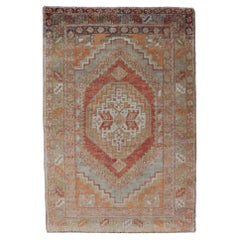
Natural Dye Mamluk Revival Bliss Collection
By Mehraban Rugs
Located in WEST HOLLYWOOD, CA
Be amazed with this sophisticated Mamluk Rug from our Bliss Collection that was made using vegetable dye. Rectilinear design is well placed together with sets of medallions...
Category
2010s Afghan Central Asian Rugs
Materials
Wool
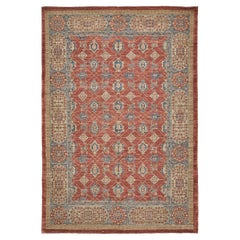
5.2x9.3 Ft Vintage Handmade Turkish Oriental Rug with Medallion Design, All Wool
Located in Spring Valley, NY
A finely hand-knotted vintage Turkish rug from 1980s. The rug is made of medium wool pile on wool foundation. It is heavy and lays flat on the floor, in very good condition with no i...
Category
Vintage 1980s Turkish Tribal Turkish Rugs
Materials
Wool
$1,187 Sale Price
30% Off
Free Shipping
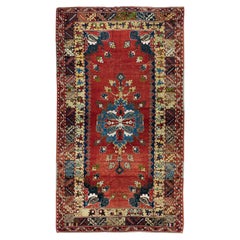
Vintage Distressed Oushak Rug with Medallion Design
Located in New York, NY
This stunning Hereke rug, measuring 6.4 x 10.6, is a magnificent representation of fine Turkish weaving. The intricate, all-over pattern features a symphony of small, detailed floral...
Category
Early 20th Century Turkish Oushak Turkish Rugs
Materials
Wool
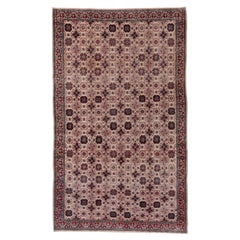
Handwoven 19th Century Antique Turkish Oushak Rug
By Mehraban Rugs
Located in WEST HOLLYWOOD, CA
Neutral and orange toned antique Turkish Oushak rug handmade in ancient Turkey during the later half of the 19th century. The authentic vintage piece i...
Category
Antique 19th Century Turkish Turkish Rugs
Materials
Wool
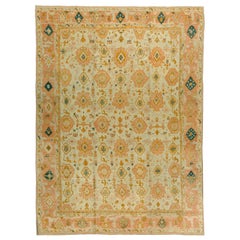
Late 19th Century Turkish Oushak Rug from West Anatolia
Located in West Hollywood, CA
This traditional handwoven Turkish Oushak rug has a coral field with scrolling vines issuing palmettes and floral motif, with a central golden medallion enclosing similar scrolling v...
Category
Antique Late 19th Century Turkish Oushak Turkish Rugs
Materials
Angora
More Ways To Browse
Console Table Mexico
Floating Legs
Geometric Coffee Tables
Gilt Bohemian Glass
Green Pouf
Hans Wegner Oak Dining Chair
Hollywood Regency Black Lacquer Tables
Italian Art Deco Chair
Italy Metal Wall Decorations
Metal Anchors
Mid Century Glass Bronze Side Table
Mid Century Glass Side Table Shelf
Midcentury French Doors
Mr Brown
Nailed Leather
Oak Drop Leaf Dining Tables
Pair Of Travertine Side Table
Pencil Reed Rattan