1 of 1
Mamluk Kensington Raved from Erased Heritage Carpet Collection by Jan Kath
About the Item
- Creator:Jan Kath (Designer)
- Dimensions:Width: 96 in (243.84 cm)Length: 120 in (304.8 cm)
- Style:Modern (Of the Period)
- Materials and Techniques:
- Place of Origin:
- Period:
- Date of Manufacture:2016
- Production Type:New Custom(Current Production)
- Estimated Production Time:20-21 weeks
- Condition:
- Seller Location:New York, NY
- Reference Number:1stDibs: LU140225184653
Authenticity Guarantee
In the unlikely event there’s an issue with an item’s authenticity, contact us within 1 year for a full refund. DetailsMoney-Back Guarantee
If your item is not as described, is damaged in transit, or does not arrive, contact us within 7 days for a full refund. Details24-Hour Cancellation
You have a 24-hour grace period in which to reconsider your purchase, with no questions asked.Vetted Professional Sellers
Our world-class sellers must adhere to strict standards for service and quality, maintaining the integrity of our listings.Price-Match Guarantee
If you find that a seller listed the same item for a lower price elsewhere, we’ll match it.Trusted Global Delivery
Our best-in-class carrier network provides specialized shipping options worldwide, including custom delivery.You May Also Like
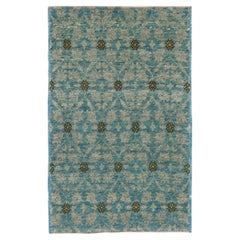
Ararat Collection, Mamluk Wagireh Rug with Flower Lattice Natural Dye Mat Carpet
By Ararat Rugs
Located in Tokyo, JP
The source of carpet comes from the book Völker, Angela, Die orientalischen Knüpfteppiche das MAK, Vienna: Böhlau, 2001: 42–5. This rug with the central star was designed in the early 16th-century rug by Mamluk Sultane of Cairo, Egypt. It is exhibited at MAK – Museum of Applied Arts, Vienna Austria. The interpreted design is composed of a flower lattice pattern taken from a part of the MAK Museum’s rug...
Category
21st Century and Contemporary Turkish Revival Turkish Rugs
Materials
Wool, Natural Fiber, Organic Material
$618 Sale Price
25% Off
Free Shipping
W 21.66 in L 33.08 in
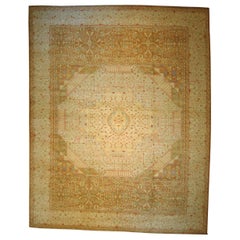
Carpet with the pattern of ancient Mamluk carpets and light shade
Located in Firenze, IT
Important contemporary production carpet made entirely by hand in Turkey, which is inspired by the famous "Mamluk" carpets. Mamluks are called Egyptian-made carpets, probably from Ca...
Category
2010s Turkish Moorish Turkish Rugs
Materials
Wool
Ararat Rugs Chessboard Carpet Mamlouk Checkerboard Rug Antique Mamluk Revival
By Ararat Rugs
Located in Tokyo, JP
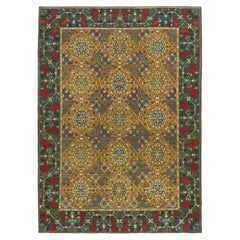
This hand-knotted rug is a bold reinterpretation of the historic Mamluk “chessboard” layout—an architectural field design built from a grid of repeated octagonal star motifs. Unlike classical Mamluk rugs, which often featured deep crimson and emerald tones, this version introduces an earthy and luminous palette of ochre gold, teal green, soft ivory, and sky blue. The result is a brighter, more contemporary vision of a centuries-old form.
The source of carpet comes from the book Islamic Carpets, Joseph V. McMullan, Near Eastern Art Research Center Inc., New York 1965 nr.28. The field of the so-called "Chessboard" Carpet ( so-called Checkerboard Rug...
Category
21st Century and Contemporary Turkish Revival Turkish Rugs
Materials
Wool, Natural Fiber, Organic Material
$9,750 Sale Price
29% Off
Free Shipping
W 71.66 in L 100.79 in
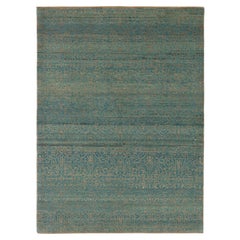
Ararat Rugs Modern Rug with Mamluk Geometric Design, Natural Dyed Carpet
By Ararat Rugs
Located in Tokyo, JP
This rug has an interpreted design composed of a geometric lattice pattern taken from a part of the Mamluk rug, filling the field elegantly, has the impression that it is only part o...
Category
21st Century and Contemporary Turkish Revival Turkish Rugs
Materials
Wool, Natural Fiber, Organic Material
$4,520
Free Shipping
W 57.09 in L 76.38 in
Ararat Rugs Modern Rug with Mamluk Geometric Design, Natural Dyed Carpet
By Ararat Rugs
Located in Tokyo, JP
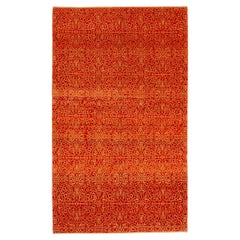
This rug has an interpreted design composed of a geometric lattice pattern taken from a part of the Mamluk rug, filling the field elegantly, has the impression that it is only part of a larger scheme designed 15th-century rug from the Mamluk era, Cairo region, Eygpt. Mamluk carpets originated in a physical environment that lacked the combination of abundant marginal grazing land and a temperate climate with cool winters that were common to most carpet-weaving areas in the Islamic world. While related to a broader tradition of Turkish weaving centered in Anatolia, far to the north, the designs of these carpets include atypical elements, such as stylized papyrus plants, that are deeply rooted in Egyptian tradition. Their unusual composition and layout probably represent an attempt to develop a distinctive product that could in effect establish a “Mamluk brand” in the lucrative European export market. The uncharacteristic color scheme—devoid of the undyed white pile and employing a limited range of three or five hues in much the same value—also suggests a conscious attempt to create a particular stylistic identity. Also virtually unique in the world of Islamic carpets is the S-spun wool. It has been argued that the tradition of clockwise wool spinning originated in Egypt because of the earlier Egyptian tradition of spinning flax into linen thread. Details of the plant’s botanical structure make it impossible to spin flax fiber in the more common counterclockwise direction utilized throughout the Middle East for wool and cotton.
Mamluk carpets with the color combinations seen in the Simonetti are now generally accepted as part of an earlier tradition that has many links to the weaving of Anatolia, Iran, and Syria. The “three-color” Mamluk carpets, well represented in the Metropolitan’s collection, represent a later development that continued well after the Ottoman conquest of Egypt in 1517. Many such carpets may have been produced well into the seventeenth century, and possibly even later. (Walter B. Denny in [Ekhtiar, Soucek, Canby, and Haidar 2011]). The design of the rug is interpreted by our designers from our Mamlouk-type rugs collection and vivid colors are used for this rug.
Color summary: 2 colors in total;
Imperial Red 426 (Madder Root)
Sunray Color 405 (Henna)
Group: Islamic Rugs...
Category
21st Century and Contemporary Turkish Revival Turkish Rugs
Materials
Wool, Natural Fiber, Organic Material
$7,400
Free Shipping
W 63 in L 105.52 in
Ararat Rugs Mamluk Wagireh Rug Lattice Pattern Revival Carpet Natural Dyed
By Ararat Rugs
Located in Tokyo, JP
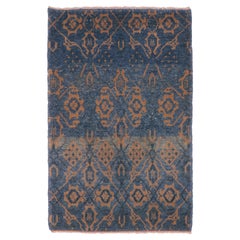
This lattice pattern is composed of palmettes and leaves filling the various compartments against the imposing ground. One has the impression that it is only part of a larger scheme ...
Category
21st Century and Contemporary Turkish Revival Turkish Rugs
Materials
Wool, Natural Fiber, Organic Material
$825
Free Shipping
W 20.08 in L 31.11 in
Ararat Rugs Mamluk Wagireh Rug Lattice Pattern Revival Carpet Natural Dyed
By Ararat Rugs
Located in Tokyo, JP
This lattice pattern is composed of palmettes and leaves filling the various compartments against the imposing ground. One has the impression that it is only part of a larger scheme ...
Category
21st Century and Contemporary Turkish Revival Turkish Rugs
Materials
Wool, Natural Fiber, Organic Material
$618 Sale Price
25% Off
Free Shipping
W 22.84 in L 33.47 in
Ararat Rugs Mamluk Wagireh Rug Lattice Pattern Revival Carpet Natural Dyed
By Ararat Rugs
Located in Tokyo, JP
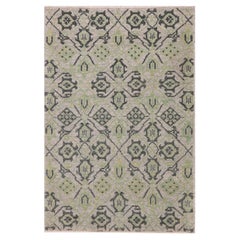
This lattice pattern is composed of palmettes and leaves filling the various compartments against the imposing ground. One has the impression that it is only part of a larger scheme designed 15th-century rug from the Mamluk era, Cairo region, Eygpt. These designs have often been described as wagirehs or samplers and were said to have been used as weaver`s aids, or for demonstration purposes, made as a template or pattern for the carpet design and production of larger rugs, they are generally small pieces of the size of a scatter rug or mat.
Mamluk carpets originated in a physical environment that lacked the combination of abundant marginal grazing land and a temperate climate with cool winters that were common to most carpet-weaving areas in the Islamic world. While related to a broader tradition of Turkish weaving centered in Anatolia, far to the north, the designs of these carpets include atypical elements, such as stylized papyrus plants, that are deeply rooted in Egyptian tradition. Their unusual composition and layout probably represent an attempt to develop a distinctive product that could in effect establish a “Mamluk brand” in the lucrative European export market. The uncharacteristic color scheme—devoid of the undyed white pile and employing a limited range of three or five hues in much the same value—also suggests a conscious attempt to create a particular stylistic identity. Also virtually unique in the world of Islamic carpets is the S-spun wool. It has been argued that the tradition of clockwise wool spinning originated in Egypt because of the earlier Egyptian tradition of spinning flax into linen thread. Details of the plant’s botanical structure make it impossible to spin flax fiber in the more common counterclockwise direction utilized throughout the Middle East for wool and cotton.
Mamluk carpets with the color combinations seen in the Simonetti are now generally accepted as part of an earlier tradition that has many links to the weaving of Anatolia, Iran, and Syria. The “three-color” Mamluk carpets, well represented in the Metropolitan’s collection, represent a later development that continued well after the Ottoman conquest of Egypt in 1517. Many such carpets may have been produced well into the seventeenth century, and possibly even later. (Walter B. Denny in [Ekhtiar, Soucek, Canby, and Haidar 2011]). The design of the rug is interpreted by our designers from our Mamlouk-type rugs collection and soft colors are used for this rug.
Color summary: 3 colors in total;
Moss Green 27 (Spurge – Indigo)
Mount Olive...
Category
21st Century and Contemporary Turkish Revival Turkish Rugs
Materials
Wool, Natural Fiber, Organic Material
$618 Sale Price
25% Off
Free Shipping
W 20.87 in L 33.08 in
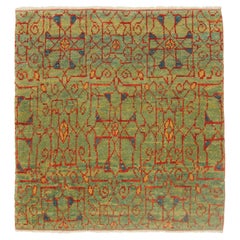
Ararat Rugs Mamluk Wagireh Rug with Jerrehian Border Design Egypt Revival Carpet
By Ararat Rugs
Located in Tokyo, JP
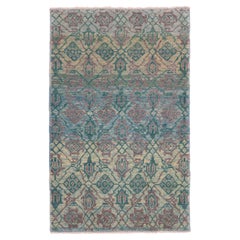
The design source of the rug comes from the possession of Endre Unger, which was sold at Sotheby’s in 1992. That rug with the central star was designed in the early 16th-century rug ...
Category
21st Century and Contemporary Turkish Revival Turkish Rugs
Materials
Wool, Natural Fiber, Organic Material
$300 Sale Price
25% Off
Free Shipping
W 20.08 in L 20.48 in
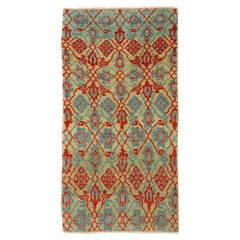
Ararat Rugs Mamluk Wagireh Rug Yastik Size Doormat Entrance Mat Carpet Natural
By Ararat Rugs
Located in Tokyo, JP
This lattice pattern is composed of palmettes and leaves filling the various compartments against the imposing ground. One has the impression that it is only part of a larger scheme ...
Category
21st Century and Contemporary Turkish Revival Turkish Rugs
Materials
Wool, Natural Fiber, Organic Material
$825
Free Shipping
W 20.08 in L 38.98 in
Still Thinking About These?
All Recently ViewedMore Ways To Browse
Antique Mahogany Settee
Antique Meissen Plates
Antique Punch Bowl
Art Deco Face
Art Deco Glass Figure
Art Deco U Base Table
Art Deco Walnut Desk
Bar Table Chess Game
Beach Lounge
Brown Mohair Sofa
Burgundy Chairs
Burl Writing Desk
Carved Chinese Chair
Cast Iron Figural
Cast Iron Figure
Chesterfield Mid Century
Classic Chesterfield
Curtis Jere Signed