Items Similar to 1940s Portuguese Needlepoint Rug with Floral Trellis Design Doris Leslie Blau
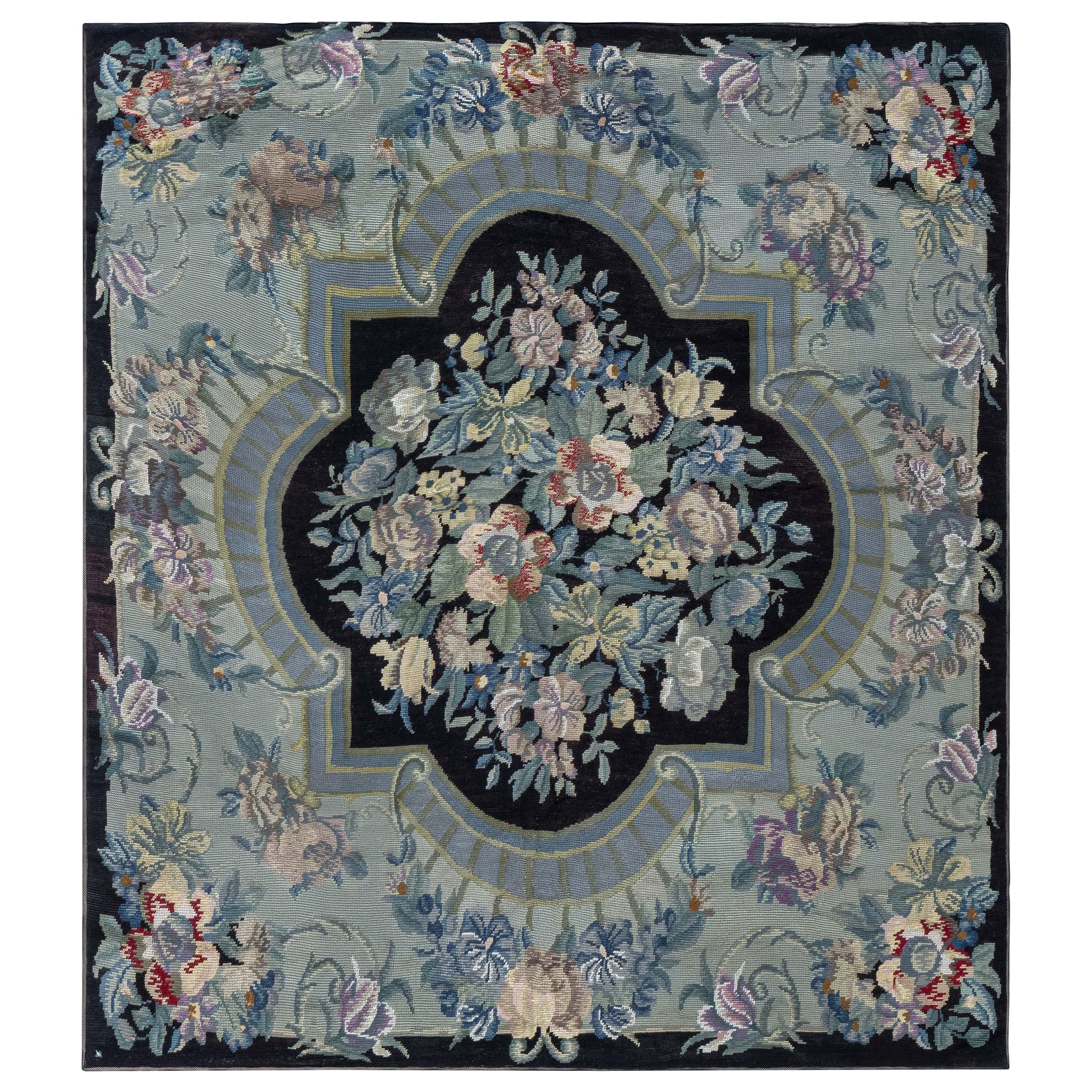
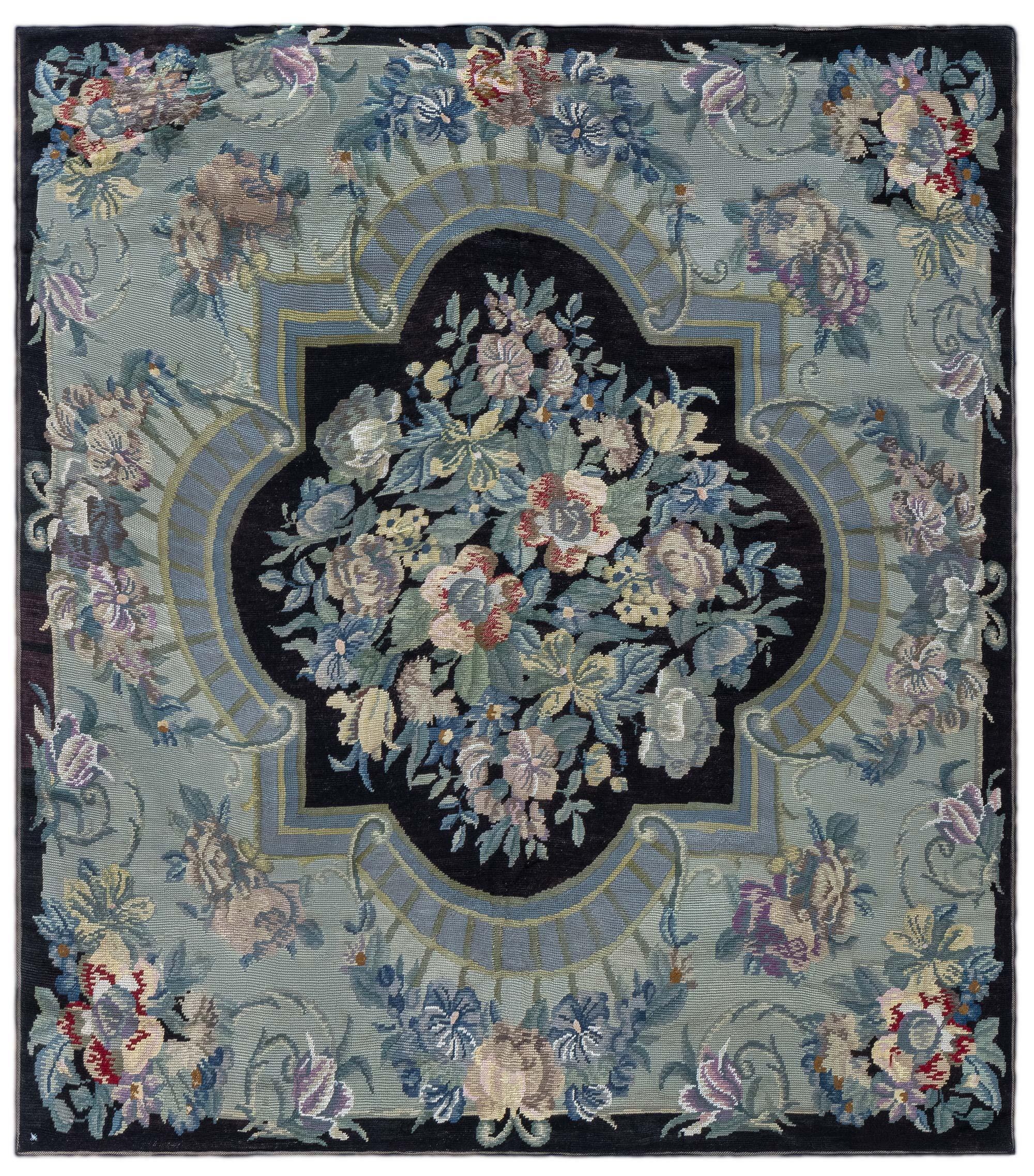
Want more images or videos?
Request additional images or videos from the seller
1 of 6
1940s Portuguese Needlepoint Rug with Floral Trellis Design Doris Leslie Blau
$22,000
£16,701.98
€19,254.66
CA$31,122.04
A$33,505.70
CHF 17,942.96
MX$403,731.80
NOK 226,390.38
SEK 207,183.76
DKK 143,878.55
About the Item
1940s Portuguese Needlepoint Rug with Floral Trellis Design Doris Leslie Blau
Size: 18'0" × 22'3" (548 × 678 cm)
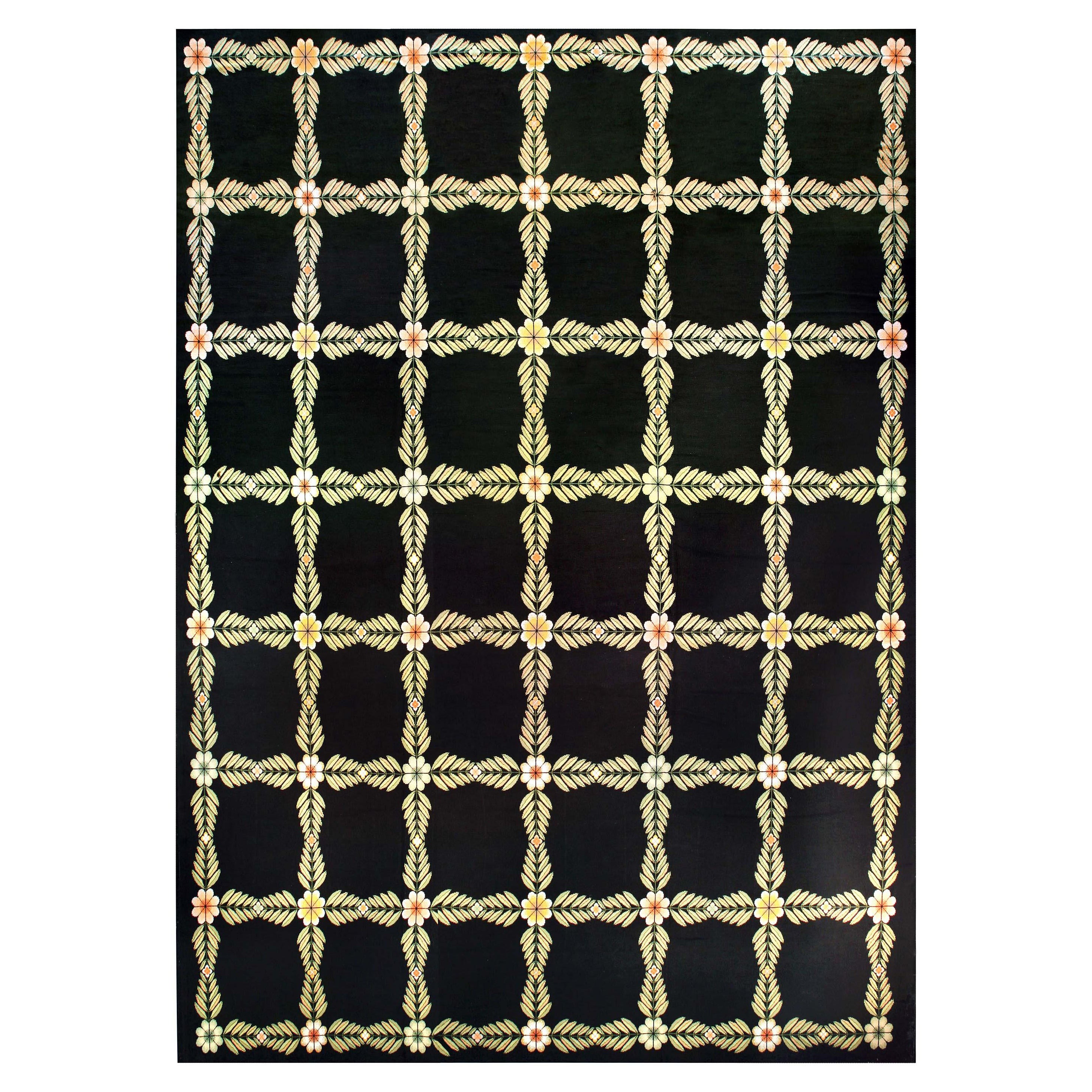
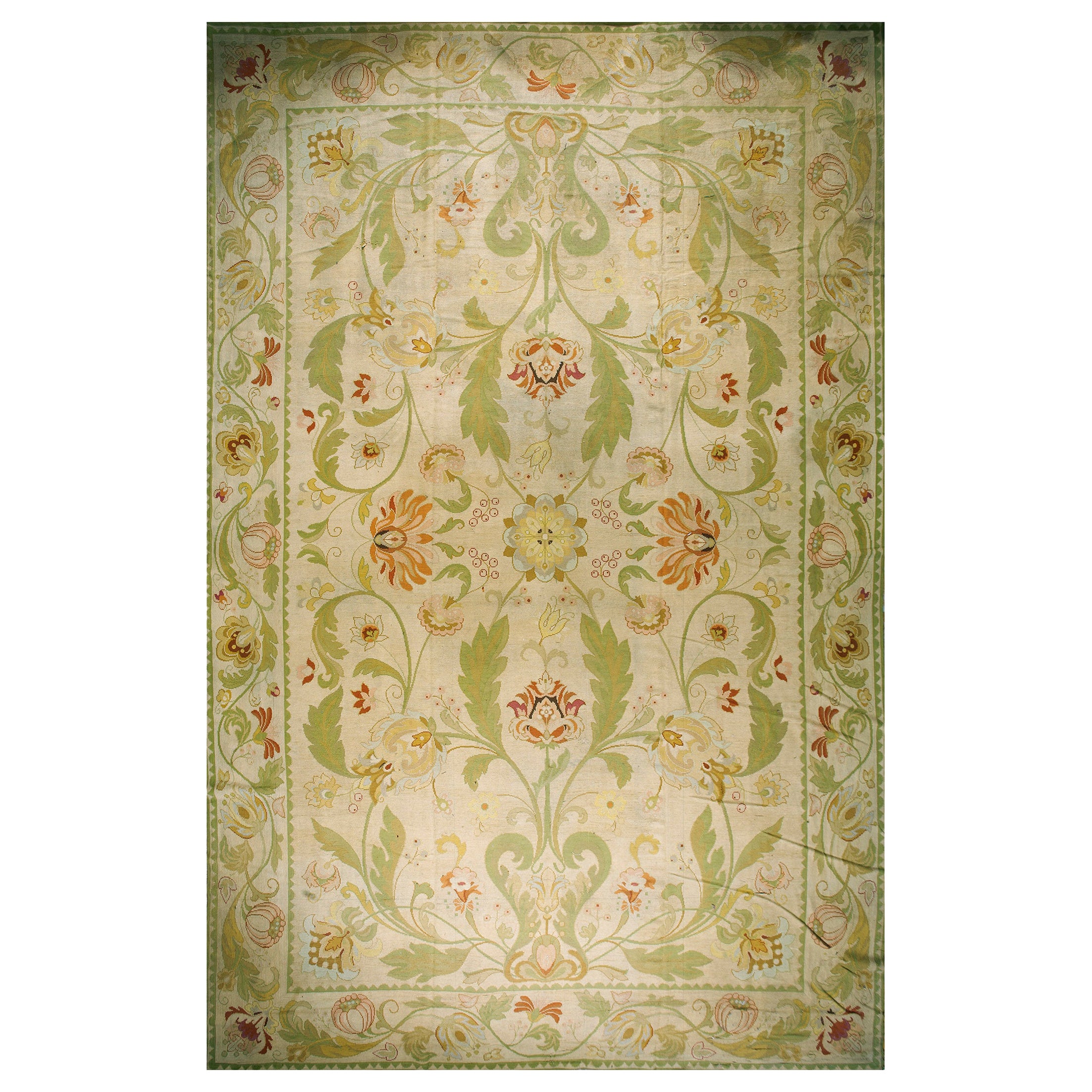
This antique Portuguese needlepoint rug from the 1940s radiates understated charm and graphic elegance, combining the artisanal richness of traditional craftsmanship with a modern decorative appeal. Characterized by its crisply organized layout and playful floral accents, the piece offers a refreshing and sophisticated design that feels both timeless and versatile.
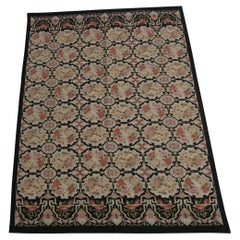
Set against a deep, nearly black background, the rug’s surface is structured into a grid of squares formed by stylized leafy garlands that intersect in rosette-like blossoms. Each crossing is adorned with a delicate six-petal flower in soft shades of cream, apricot, and pale yellow—adding a subtle touch of color and warmth to the composition. The symmetry of the design evokes the feeling of a botanical trellis, lending structure without sacrificing softness.
Handcrafted using traditional Portuguese needlepoint techniques, the rug features a flatwoven texture and a tight, durable weave typical of this regional style. The precision of the stitchwork and the consistency of the pattern demonstrate a high level of skill and attention to detail.
With its geometric clarity softened by floral motifs, this piece bridges the line between classical ornamentation and mid-20th-century decorative sensibilities. It would be a striking addition to both traditional interiors and more minimalist or modern settings, bringing refinement and visual rhythm to any space.
A rare piece from the Doris Leslie Blau Collection, this rug exemplifies superior artistry and tradition. Doris Leslie Blau offers a broad and varied pricing spectrum, accommodating collectors and designers across a range of budgets—from modest vintage finds to rare, museum-worthy masterpieces.
- Dimensions:Width: 216 in (548.64 cm)Length: 267 in (678.18 cm)
- Materials and Techniques:Wool,Needlepoint
- Place of Origin:
- Period:
- Date of Manufacture:Mid-20th Century
- Condition:
- Seller Location:New York, NY
- Reference Number:Seller: BB39911stDibs: LU822646692682
About the Seller
4.8
Gold Seller
Premium sellers maintaining a 4.3+ rating and 24-hour response times
Established in 1965
1stDibs seller since 2006
248 sales on 1stDibs
Typical response time: 8 hours
- ShippingRetrieving quote...Shipping from: New York, NY
- Return Policy
More From This Seller
View All1940s Portuguese Needlepoint Rug with Floral Trellis Design Doris Leslie Blau
Located in New York, NY
1940s Portuguese Needlepoint Rug with Floral Trellis Design Doris Leslie Blau
Size: 18'0" × 22'3" (548 × 678 cm)
This antique Portuguese needlepoint rug from the 1940s radiates under...
Category
Mid-20th Century Portuguese Western European Rugs
Materials
Wool
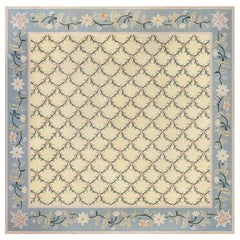
Doris Leslie Blau Vintage Portuguese Needlepoint Rug
Located in New York, NY
One-of-a-kind Vintage Portuguese Needlepoint Carpet
Size: 14'6" × 14'9" (441 × 449 cm).
This exceptional vintage Portuguese needlepoint rug, crafted circa 1940, exemplifies the rich ...
Category
Mid-20th Century Portuguese Mid-Century Modern Western European Rugs
Materials
Wool
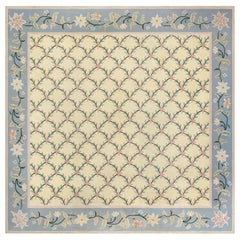
Doris Leslie Blau Vintage Portuguese Needlepoint Rug
Located in New York, NY
One-of-a-kind Vintage Portuguese Needlepoint Carpet
Size: 14'6" × 14'9" (441 × 449 cm).
This exceptional vintage Portuguese needlepoint rug, crafted circa 1940, exemplifies the rich ...
Category
Mid-20th Century Portuguese Mid-Century Modern Western European Rugs
Materials
Wool
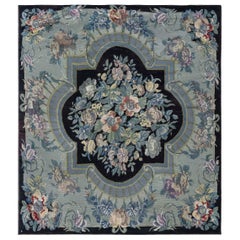
Doris Leslie Blau 1920s English Needlepoint Rug with Floral Medallion Design
Located in New York, NY
1920s English Needlepoint Rug with Floral Medallion Design
Size: 4'8" × 4'10" (142 × 147 cm)
This exquisite antique English needlepoint rug, circa 1920, radiates timeless elegance an...
Category
Early 20th Century English Western European Rugs
Materials
Wool
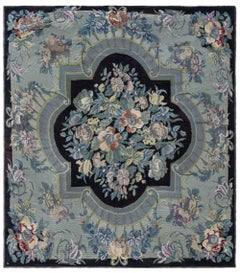
Doris Leslie Blau 1920s English Needlepoint Rug with Floral Medallion Design
Located in New York, NY
1920s English Needlepoint Rug with Floral Medallion Design
Size: 4'8" × 4'10" (142 × 147 cm)
This exquisite antique English needlepoint rug, circa 1920, radiates timeless elegance an...
Category
Early 20th Century English Western European Rugs
Materials
Wool
Doris Leslie Blau Antique English Needlepoint Rug
Located in New York, NY
Antique English Needlepoint Rug
Size: 6'1" × 8'9" (185 × 266 cm)
Color: beige, blue, green, purple, red, yellow.
This exquisite antique English needlepoint rug from the 1890s is a qu...
Category
Antique Late 19th Century English Western European Rugs
Materials
Wool
You May Also Like
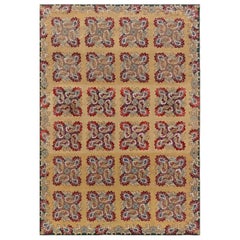
1930s Portuguese Arraiolos Needlepoint Carpet ( 14
2" x 23
- 432 x 702 )
Located in New York, NY
1930s Portuguese Arraiolos Needlepoint Carpet ( 14'2" x 23' - 432 x 702 )
Category
Vintage 1930s Portuguese Western European Rugs
Materials
Wool
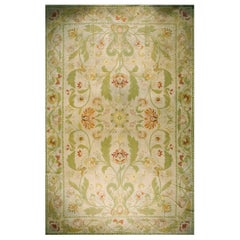
The Andalusian Garden: An Antique Spanish Needlepoint of Timeless Elegance
Located in Dallas, TX
72494 Antique Spanish Needlepoint Rug, 10'08 x 14'10. This antique Spanish needlepoint rug is a remarkable testament to Spanish artistry, blend...
Category
Early 20th Century Spanish Aesthetic Movement Western European Rugs
Materials
Wool
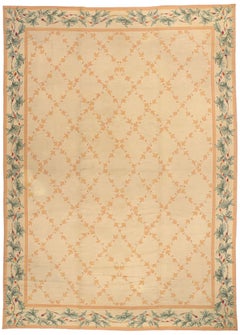
Early 20th Century Handmade French Needlepoint Large Oversize Carpet, circa 1920
Located in New York, NY
An antique French needlepoint large oversized carpet handmade during the early 20th century. Spaced small stars fill the burgundy field while scrolli...
Category
Early 20th Century French Art Deco Western European Rugs
Materials
Wool
$18,500 Sale Price
20% Off
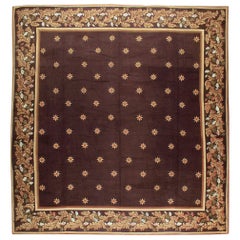
1950s Vintage Floral Design Needlepoint Rug
Located in Los Angeles, US
Ancient Roots Of Needlepoint Rugs
Archaeologists and scholars consider the roots of needlepoint to have been around 1500 BC. They consider the first needlepoint to include the fine diagonal stitches that were used to sew tents together by the ancient Egyptians. The art eventually evolved into tapestry weaving. However, a tapestry weaving differs significantly from needlepoint in that it uses a loom and vertical warp.
Tapestry weaving is closer to the weaving of kilims and pile rugs than canvas work. However, some still include tapestry weaving in the category of needlepoint because of the fine work that appeared during the late Renaissance. It can have a similar appearance to the untrained eye. Technically, tapestry weaving and needlepoint are not the same, and they do not use the same technique.
The first actual needlepoint rugs and needle-points began to appear in the late Renaissance. Needlepoint is worked by creating stitches on a stiff canvas. The canvas is typically made from jute or linen and is quite durable. Pieces from the Renaissance were used to cover footstools, chairs, pillows, bed headboards, and other furnishings. They were also used as table coverings and wall coverings. You could also find them on many small items such as purses, shoes, and various adornments for clothing.
During the Renaissance, the craft reached a high level of skill, and the designs became incredibly detailed and realistic. They mimicked many of the subjects and styles of famous paintings of the time. They created florals, still life designs, scenes, and geometric tiled pieces. Some of them mimicked the designs found in Persian Carpets.
Needlepoint reached its peak popularity in the 19th century when it was considered a proper occupation for a lady. Needlepoint and embroidery held a similar place in societal status at the time. During this time, the work became finer, with some of the canvas reaching a high level of detail. The level of detail is determined by counting the number of mesh in an inch. During this time petit point by French needlewomen could have a mesh count as high as 45 mesh. This allowed women to create highly intricate designs with incredible levels of detail.
Historical Needlepoint Carpets and Rugs
It is possible to find many antique pieces of needlepoint besides rugs. Needlepoint rugs were popular in France and Spain, where the technique was adapted to create highly intricate designs that mimicked the designs in architecture and fashion. They were popular because they were durable, and it could be fashioned into a variety of items. The canvases themselves were durable, and the wool that they used was also strong, which means that many of the pieces were able to withstand daily use. We have many artifacts that have survived from this time period.
Needlepoint rugs are important collectibles because they are different from the pile rugs and kilims that are typically found on the market. Needlepoint carpets are special because they take many hours to create, especially larger works. Needlepoint pieces of any type became popular throughout Europe during the 19th century. It is still a popular hobby today, but perhaps one of the most interesting stories is that of the Portuguese needlewomen of Arraiolos.
The story of these women and their beautiful carpets begins in 1492. Needlepoint was a popular occupation in Spain, which had a large population of Moors and Jews. They were an integral part of Spanish culture. However, in 1492, Queen Isabella of Spain issued a proclamation that gave these ethnic groups the order to pack their bags and board ships headed...
Category
Vintage 1950s Other Russian and Scandinavian Rugs
Materials
Wool
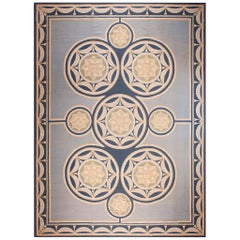
Magnificent Blue Color with Art Nouveau Style Antique Portuguese Needlepoint Rug
Located in New York, NY
Early 20th Century Portuguese Needlepoint Carpet ( 15'6"x 21'6" - 472 x 655 )
Category
Vintage 1930s Portuguese Art Nouveau Western European Rugs
Materials
Wool
$13,000
Free Shipping
Amazing beige and brown Color with Florid Design Antique Needlepoint Rug
Located in New York, NY
Antique European needlepoint rug, size: 4'8" x 5'6".
Category
Antique 1890s English Other Western European Rugs
Materials
Wool