Items Similar to Franco Albini Pl19 or Tre Pezzi Armchair in Black Mongolian Wool for Poggi Italy
Want more images or videos?
Request additional images or videos from the seller
1 of 7
Franco Albini Pl19 or Tre Pezzi Armchair in Black Mongolian Wool for Poggi Italy
$18,934.91
£14,149.53
€16,000
CA$26,365.92
A$28,332.95
CHF 15,202.27
MX$333,744.85
NOK 191,151.72
SEK 174,615.86
DKK 121,969.23
About the Item
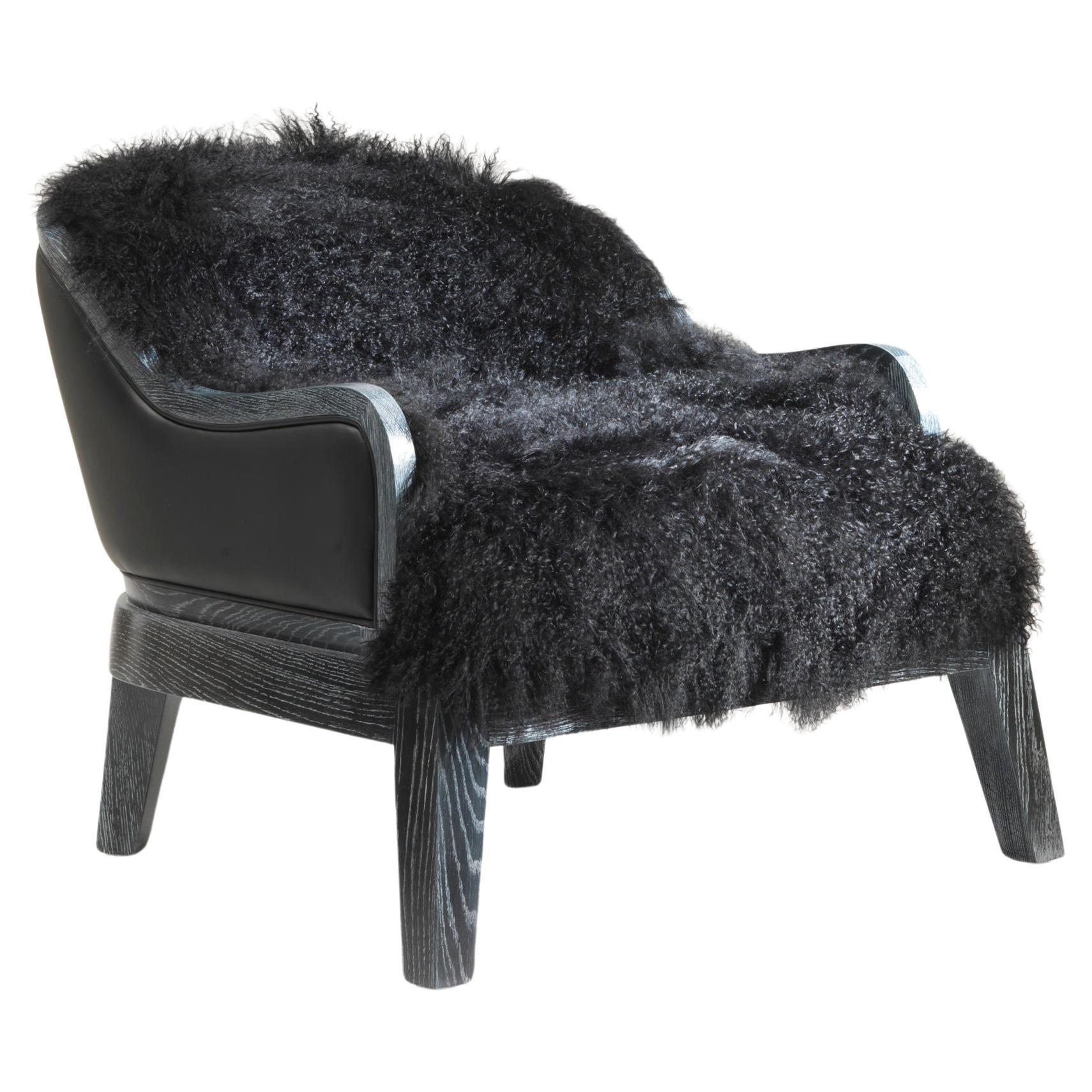
PL19 also known as Tre Pezzi armchair with black enameled steel tube structure, upholstered in black Mongolian goat wool.
Designed by Franco Albini
Franca Helg for Poggi, Pavia produced since the late 1950s to 1970s.
After spending his childhood and part of his youth in Robbiate in Brianza, where he was born in 1905, Franco Albini moved with his family to Milan. Here he enrolled in the Faculty of Architecture of the Polytechnic and graduated in 1929. He starts his professional activity in the studio of Gio Ponti and Emilio Lancia, with whom he collaborates for three years. He probably had his first international contacts here
In those three years, the works carried out are admittedly of a twentieth-century imprint. It was the meeting with Edoardo Persico that marked a clear turning point towards rationalism and the rapprochement with the group of editors of “Casabella”.
The new phase that that meeting provoked starts with the opening of the first professional studio in via Panizza with Renato Camus and Giancarlo Palanti. The group of architects began to deal with public housing by participating in the competition for the Baracca neighborhood in San Siro in 1932 and then creating the Ifacp neighborhoods: Fabio Filzi (1936/38), Gabriele D’Annunzio and Ettore Ponti (1939).
Also in those years Albini worked on his first villa Pestarini.
But it is above all in the context of the exhibitions that the Milanese master experiments his compromise between that “rigor and poetic fantasy” coining the elements that will be a recurring theme in all the declinations of his work – architecture, interiors, design pieces . The opening in 1933 of the new headquarters of the Triennale in Milan, in the Palazzo dell’Arte, becomes an important opportunity to express the strong innovative character of rationalist thought, a gym in which to freely experiment with new materials and new solutions, but above all a “method”.
Together with Giancarlo Palanti, Albini on the occasion of the V Triennale di Milano sets up the steel structure house, for which he also designs the ‘furniture. At the subsequent Triennale of 1936, marked by the untimely death of Persico, together with a group of young designers gathered by Pagano in the previous edition of 1933, Franco Albini takes care of the preparation of the exhibition of the house, in which the furniture of three types of accommodation. The staging of Stanza per un uomo, at that same Triennale, allows us to understand the acute and ironic approach that is part of Albini, as a man and as a designer: the theme addressed is that of the existenzminimum and the reference of the project is to the fascist myth of the athletic and sporty man, but it is also a way to reflect on low-cost housing, the reduction of surfaces to a minimum and respect for the way of living.
In that same year Albini and Romano designed the Ancient Italian Goldsmith’s Exhibition: vertical uprights, simple linear rods, design the space. A theme, that of the “flagpole”, which seems to be the center of the evolution of his production and creative process. The concept is reworked over time, with the technique of decomposition and recomposition typical of Albinian planning: in the setting up of the Scipio Exhibition and of contemporary drawings (1941) the tapered flagpoles, on which the paintings and display cases are hung, are supported by a grid of steel cables; in the Vanzetti stand (1942) they take on the V shape; in the Olivetti store in Paris (1956) the uprights in polished mahogany support the shelves for displaying typewriters and calculators. The reflection on this theme arises from the desire to interpret the architectural space, to read it through the use of a grid, to introduce the third dimension, the vertical one, while maintaining a sense of lightness and transparency.
The flagpole is found, however, also in areas other than the exhibition ones. In the apartments he designed, it is used as a pivot on which the paintings can be suspended and rotated to allow different points of view, but at the same time as an element capable of dividing spaces. The Veliero bookcase, built in a single prototype in 1940, has two main uprights, made up of slender curved and juxtaposed bars, linked by a complex tensile structure. The lightened upright is also found in the LB7 bookcase, produced by Poggi in the 1950s.
Like the evolution of the upright, also the decomposition and recomposition of the architectural elements and the use of the module, constitute the elements of a method that tends to simplify the complex phenomena of design down to the essential nuclei.
Albini is a complete designer, whose work ranges from construction to design, from installations to urban planning. Among his masterpieces are: the Genoese Museums that change the way the public uses the work of art, the Pirovano Refuge in Cervinia, the Rinascente in Rome and the Milan Metro, which inspires the projects of the New York and Sao Paulo.
Silent, rigorous, ironic man, Albini works incessantly, supported by a moral code that accompanies him throughout his career. He firmly believes in the social role of the architect as a profession at the service of the people. He considers it the very reason for its existence.
- Creator:Poggi (Manufacturer),Franco Albini and Franca Helg (Designer)
- Dimensions:Height: 35.44 in (90 cm)Width: 29.14 in (74 cm)Depth: 25.6 in (65 cm)
- Style:Other (Of the Period)
- Materials and Techniques:
- Place of Origin:
- Period:
- Date of Manufacture:1950s
- Condition:Reupholstered.
- Seller Location:Cascina, IT
- Reference Number:1stDibs: LU5304227512642
About the Seller
4.9
Gold Seller
Premium sellers maintaining a 4.3+ rating and 24-hour response times
1stDibs seller since 2020
136 sales on 1stDibs
Typical response time: 10 hours
- ShippingRetrieving quote...Shipping from: Florence, Italy
- Return Policy
More From This Seller
View AllFranco Albini PL19 or Tre Pezzi Armchair in White Wool by Poggi Pavia, 1950s
By Poggi, Franco Albini and Franca Helg
Located in Cascina, Pisa
PL19 also known as Tre Pezzi armchair with black enameled steel tube structure, upholstered in white Mongolian goat wool.
Designed by Franco Albini & Franca Helg for Poggi, Pavia...
Category
Vintage 1950s Italian Post-Modern Armchairs
Materials
Steel

Franco Albini PL19 or Tre Pezzi Armchair in Red Fabric by Poggi 1970s
By Poggi, Franco Albini and Franca Helg
Located in Cascina, Pisa
PL19 or Tre Pezzi armchair with frame in black lacquered tubular steel, seat and back in padded red fabric.
Designed by Franco Albini and Franca Helg in 1959 for the Nuove terme Lui...
Category
Vintage 1970s Italian Mid-Century Modern Armchairs
Materials
Steel
Gio Ponti Fireside Chair in Black Beech Wood and Straw by Casa
Giardino 50s
By Gio Ponti, Casa e Giardino
Located in Cascina, Pisa
A fireside chair with a structure in black lacquered beech wood and a seat in hand-woven rush. This iconic fireside chair was designed by Gio Ponti in 1939 and produced by Casa & Giardino during the 1950s.
The peculiar look of this chair is due especially to the high sculptural back, which presents beautifully carved details and a rustic seat in a natural hand-woven rush.
Literature: Domus n. 143, November 1939, pag. 60.
Gio Ponti was an icon of the modernist movement: the Italian designer, architect, artist and publisher contributed significantly to the worlds of architecture and design with his extensive work in fine furniture and ceramics, education, office and residential buildings, and everything in between.
Giovanni, known as Gio Ponti was born in 1891 in Milan. It was there that he spent his childhood, and in 1921 he began to study architecture at the Politecnico di Milano. From 1923 to 1930 he served as the artistic director of the Richard-Ginori porcelain factory. In 1927, Ponti started his first architectural office, together with Emilio Lancia, and in 1928 he started the magazine Domus, which is still regarded as one of the most influential European magazines for architecture and design. He was also very influential during the period as a curator of the Milan Triennale.
After his collaboration with Emilio Lancia had come to an end, upon completion of the Torre Rasini, he began to work as an architect together with the engineers Antonio Fornaroli and Eugenio Soncini...
Category
Vintage 1940s Italian Mid-Century Modern Chairs
Materials
Beech, Rush
$2,958 / item
Free Shipping
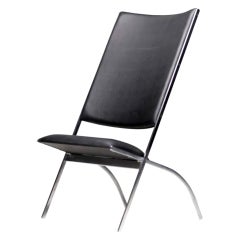
Gio Ponti Gabriella Folding Lounge Chair in Black Vynil by Pallucco 1991 Italy
By Gio Ponti, Pallucco
Located in Cascina, Pisa
Gabriella folding lounge chair with a steel frame, seat, and back upholstered in black vinyl or Naugahyde.
This iconic chair was designed by the Italian designer Gio Ponti and rele...
Category
1990s Italian Post-Modern Chairs
Materials
Steel
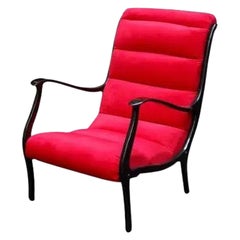
Ezio Longhi Mitzi Armchair in Black Wood and Red Velvet for Elam Italy 1950s
By Elam, Ezio Longhi
Located in Cascina, Pisa
Mid-century modern Mitzi armchair with a black ebonized wooden structure, seat, and, back upholstered with a bright red velvet.
Designed by the Italian designer Ezio Longhi for E...
Category
Vintage 1950s Italian Mid-Century Modern Armchairs
Materials
Velvet, Wood
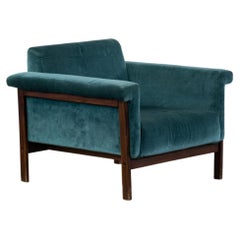
Ettore Sottsass Canada Armchair in Blue Velvet and Wood Poltronova 1960s
By Ettore Sottsass, Poltronova
Located in Cascina, Pisa
Canada settee armchair with a structure in wood, seat, and back in padded blue-green velvet.
It was designed by Ettore Sottsass Jr in 1959 and produced by the Italian company Poltro...
Category
Vintage 1950s Italian Mid-Century Modern Armchairs
Materials
Velvet, Wood
You May Also Like
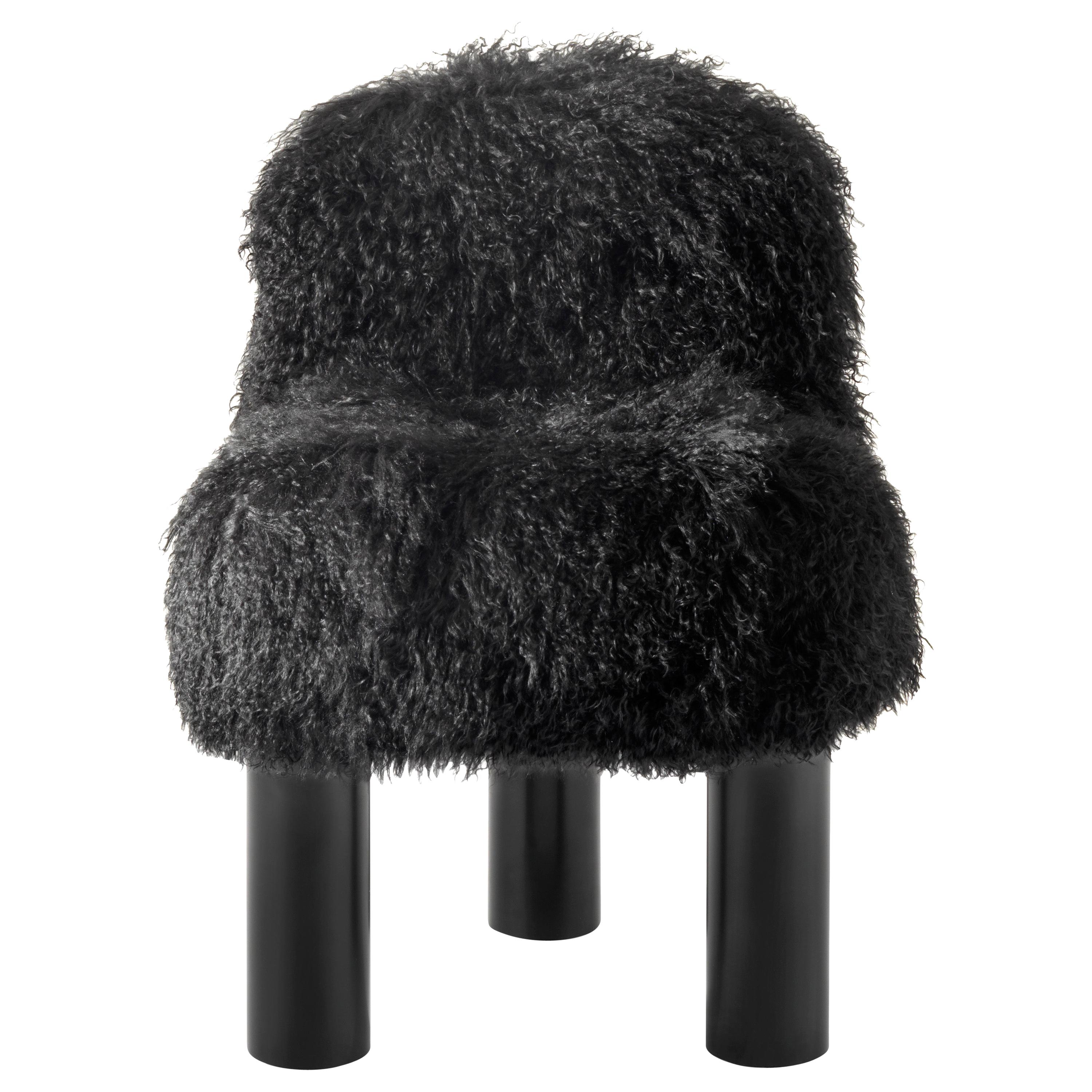
Arflex Botolo High Back Armchair in Black Fur and Black Metal Legs by Cini Boeri
By Arflex, Cini Boeri
Located in Brooklyn, NY
An innovative upholstered rolling chair with three large tubular legs. Botolo is an ideal place to sit, relax and be creative.Cini Boeri designed Botolo in 1973, giving life to a new design style, where you could choose the height of the legs to have a dining chair in the high version or a style, at that time modern, "the living at a low level", a way of living...
Category
21st Century and Contemporary Italian Modern Armchairs
Materials
Fur

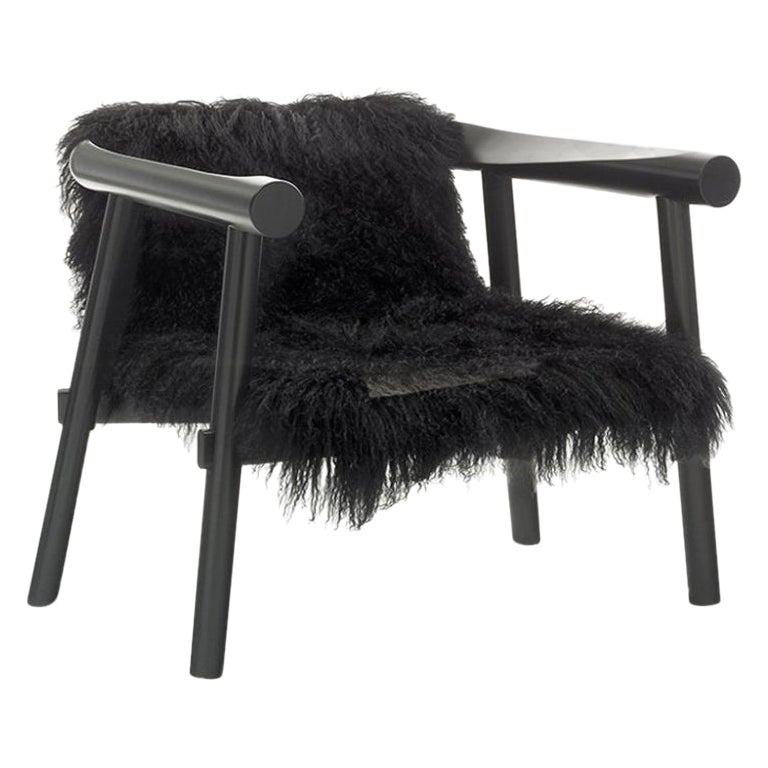
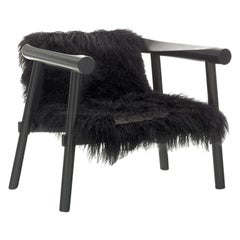
Black Goatskin Altay Armchair by Patricia Urquiola
Located in Geneve, CH
Black Goatskin Altay armchair by Patricia Urquiola
Materials: Black lacquered solid beech structure. Seat covered with black Mongolian goatskin.
Technique: Lacquered and stained wood...
Category
2010s French Modern Armchairs
Materials
Goatskin, Goat Hair, Beech
$4,556 / item
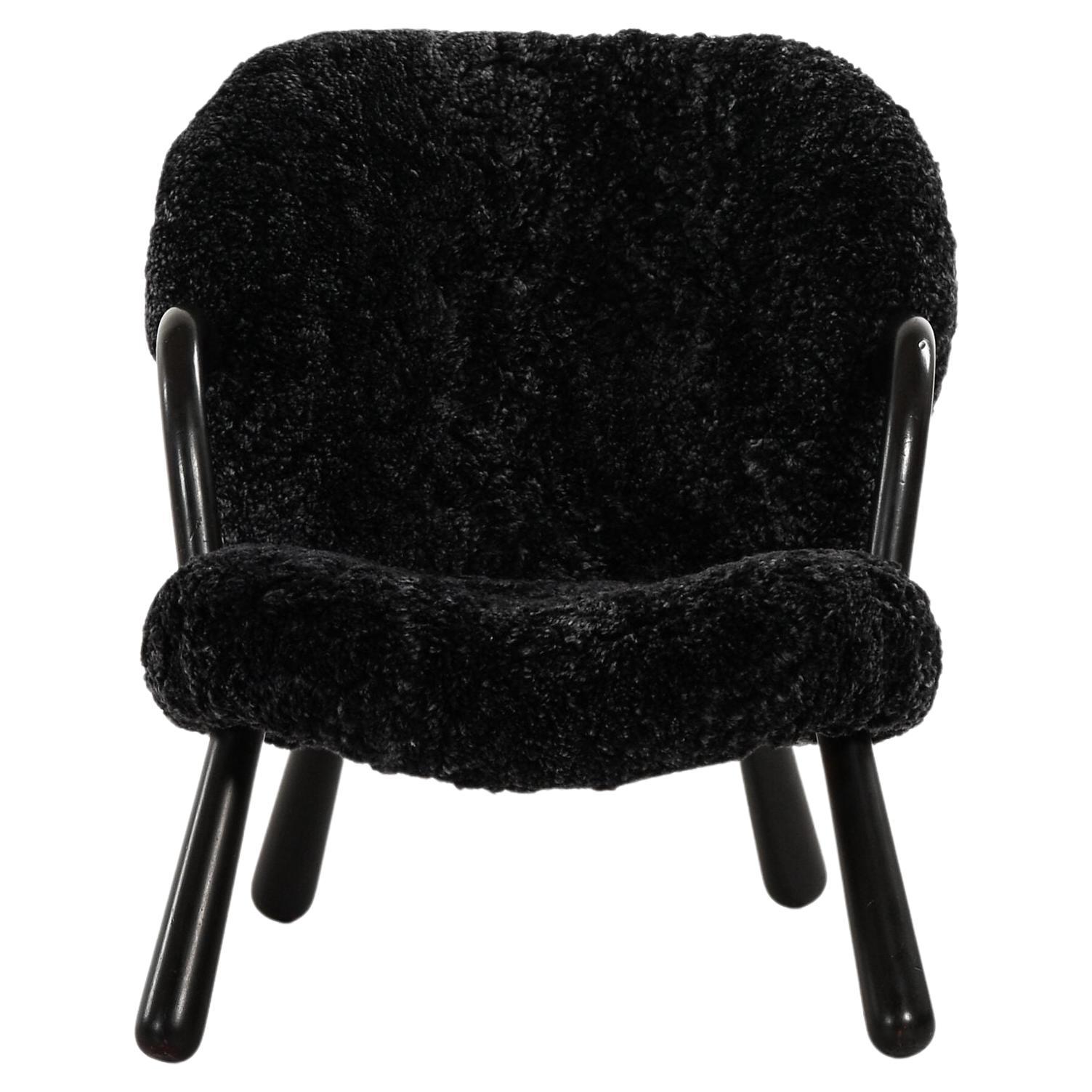
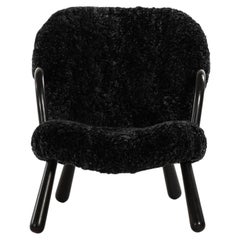
Clam Easy Chair in Black Colored Wood and Sheepskin by Arnold Madsen, 1944
By Arnold Madsen
Located in Limhamn, Skåne län
Clam Easy Chair in Black Colored Wood and Sheepskin by Arnold Madsen, 1944
Additional Information:
Material: Black colored wood and sheepskin
Style: Mid century, Scandinavian
Produc...
Category
20th Century Danish Scandinavian Modern Chairs
Materials
Sheepskin
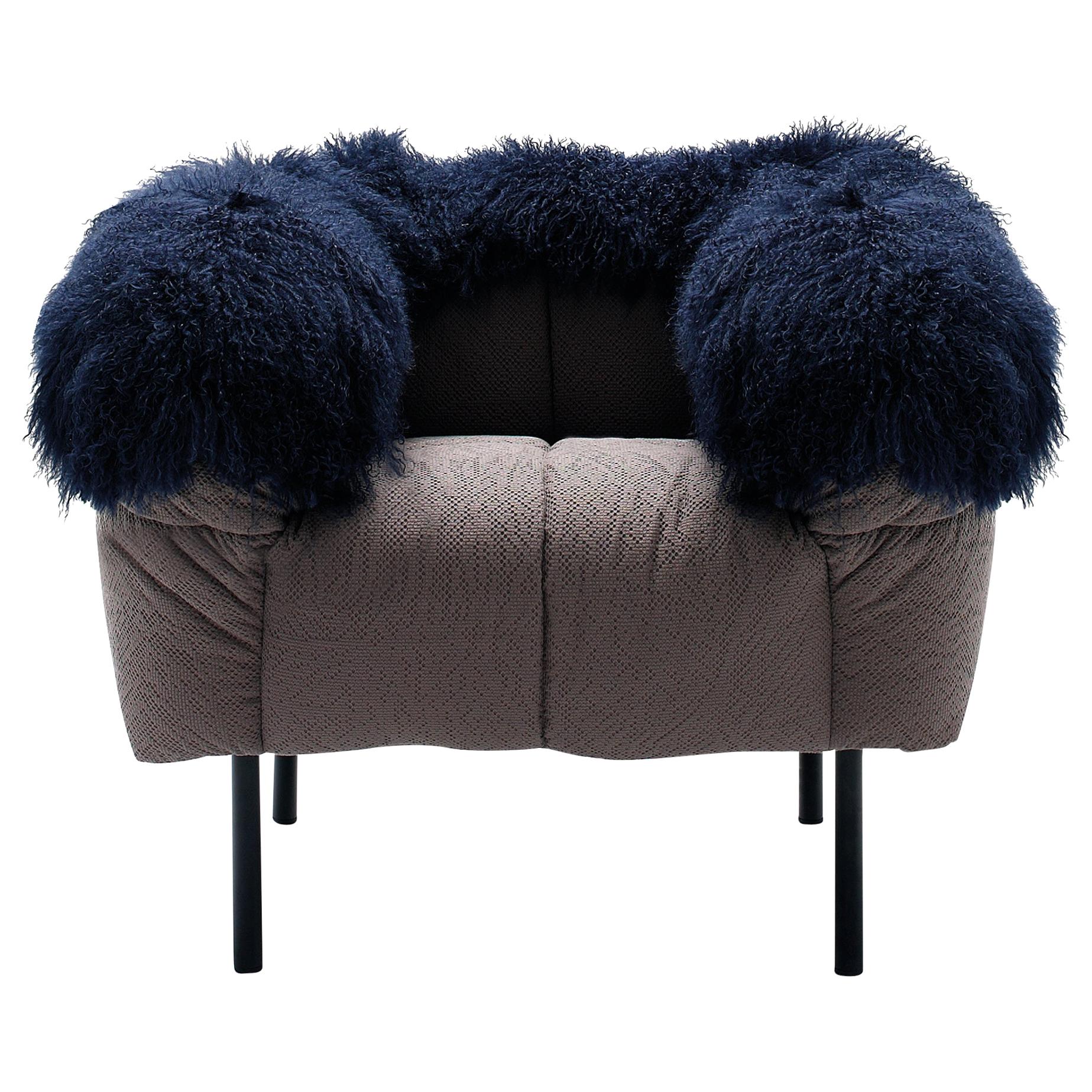
Arflex Pecorelle Armchair in Denver Fabric and Black Fur Corners by Cini Boeri
By Cini Boeri, Arflex
Located in Brooklyn, NY
The architect Cini Boeri tells that she was inspired by Christo Vladimirov Javasev's and Jeanne-Claude Denat de Guillebon's works, masters in the art of landscape painting. Nature pr...
Category
21st Century and Contemporary Italian Modern Armchairs
Materials
Metal

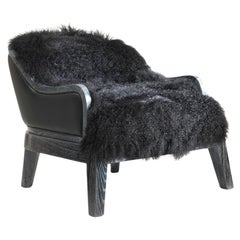
Madama black lamb fur wooden low armchair in oak
By Fratelli Boffi
Located in Lentate sul Seveso, Monza e Brianza
Unveil the allure of sophistication with the Madama low armchair, a creation designed by Archer Humphryes Architects that seamlessly merges form and elegance. This exquisite piece is...
Category
2010s Italian Armchairs
Materials
Fur, Lambskin, Leather, Faux Leather, Faux Fur, Wood, Oak
$6,227 / item
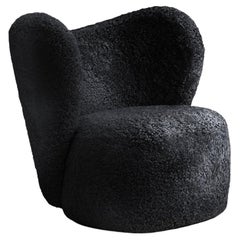
Little Big Chair
Swivel Armchair in Sheepskin Black by Norr11
By Kristian Sofus Hansen, Norr11, Tommy Hyldahl
Located in Paris, IDF
Little big chair armchair
Signed by Kristian Sofus Hansen and Tommy Hyldahl for Norr11.
Model shown on the picture:
Fabric: Sheepskin (01 Black)
Made in Italy
With its sculptural ...
Category
21st Century and Contemporary Danish Scandinavian Modern Armchairs
Materials
Sheepskin
More Ways To Browse
Mongolian Fur
Lancia Emilio
Vintage Mongolian Fur
Black Mongolian Fur
Tre Pezzi
Franco Albini Tre Pezzi Armchair
Franco Albini Tre Pezzi
San Siro
Franco Albini Pl19
Peach Velvet
Pierre Jeanneret Cushion
Rolled Armchair
Ss France
Throne Upholstered
Vintage Velvet Pictures
Wainscot Armchair
Antimott Knoll
Antique Gold Silk Fabric