Items Similar to Pair of lounge armchairs model “Teiza Isu” or “5016” by Junzo Sakakura
Want more images or videos?
Request additional images or videos from the seller
1 of 6
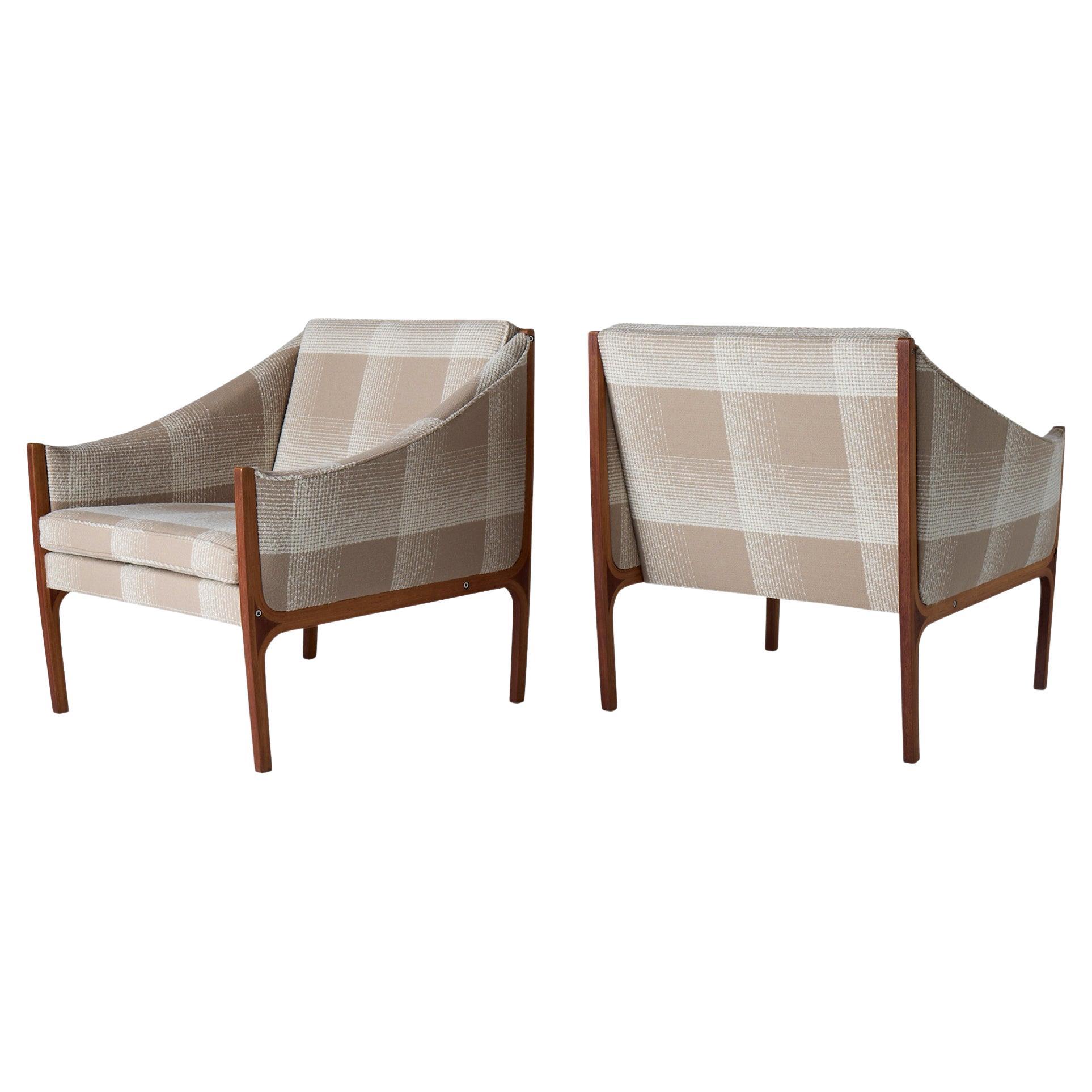
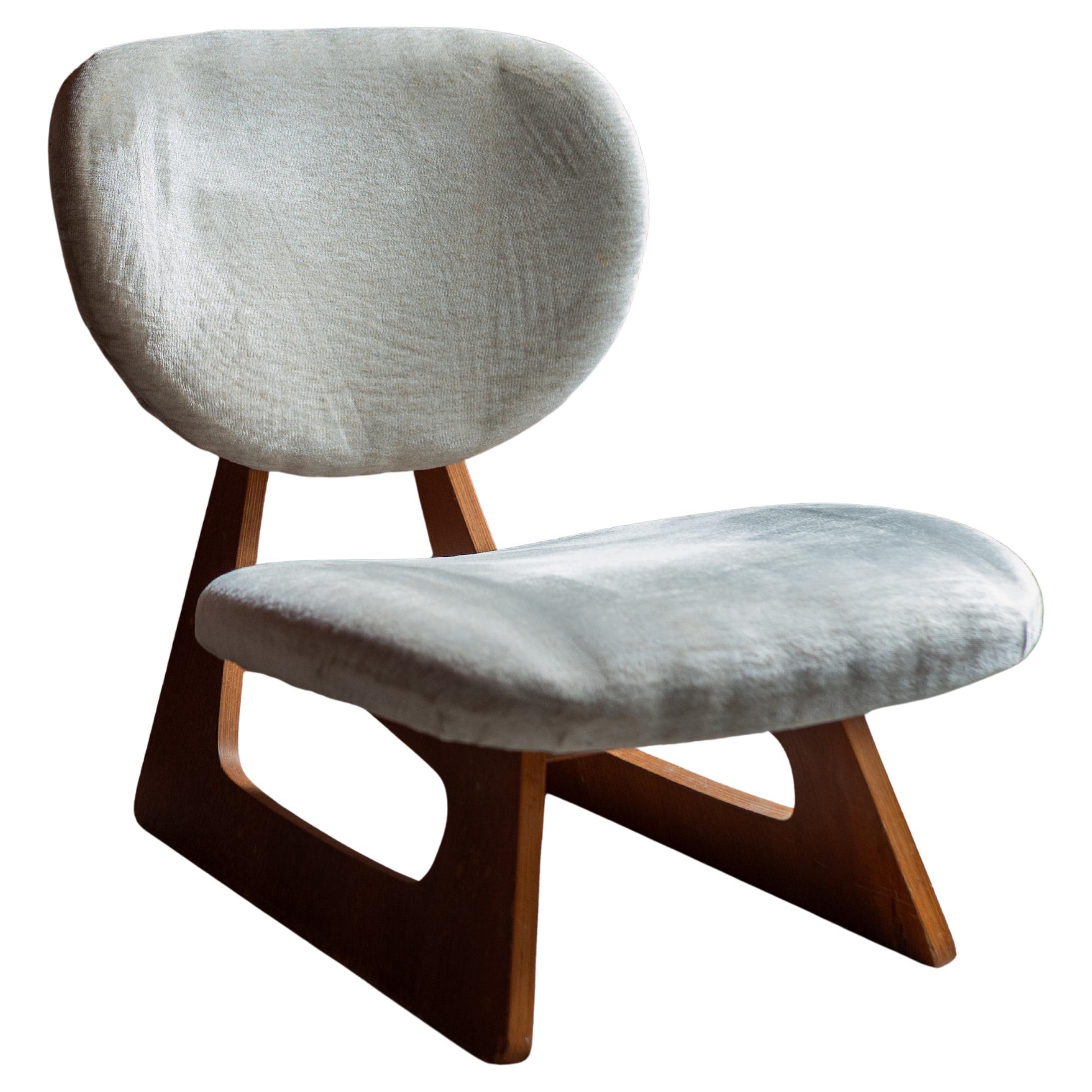
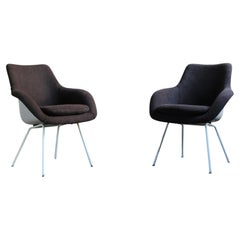
Pair of lounge armchairs model “Teiza Isu” or “5016” by Junzo Sakakura
$22,758.34
£17,023.58
€19,000
CA$31,359.90
A$34,472.17
CHF 18,097.73
MX$409,898.87
NOK 232,415.92
SEK 211,705.78
DKK 144,799.70
About the Item
Pair of lounge armchairs model “Teiza Isu” or “5016”
Manufactured by Tendo Mokko
Japan, 1957
Veneered plywood, cachemire fabric by Loro Piana
Measurements
55 x 70 x 65h cm
22 x 28 x 26h in
Provenance
Private collection, Tokyo
Exhibition :
Side Gallery, PAD London, 2025.
Side Gallery, Barcelona, 2025.
- Creator:Junzo Sakakura (Designer)
- Dimensions:Height: 25.6 in (65 cm)Width: 27.56 in (70 cm)Depth: 21.66 in (55 cm)
- Materials and Techniques:
- Period:
- Date of Manufacture:1957
- Condition:
- Seller Location:Barcelona, ES
- Reference Number:1stDibs: LU2374348001662
About the Seller
5.0
Recognized Seller
These prestigious sellers are industry leaders and represent the highest echelon for item quality and design.
Established in 2015
1stDibs seller since 2016
101 sales on 1stDibs
Typical response time: 20 hours
- ShippingRetrieving quote...Shipping from: Barcelona, Spain
- Return Policy
More From This Seller
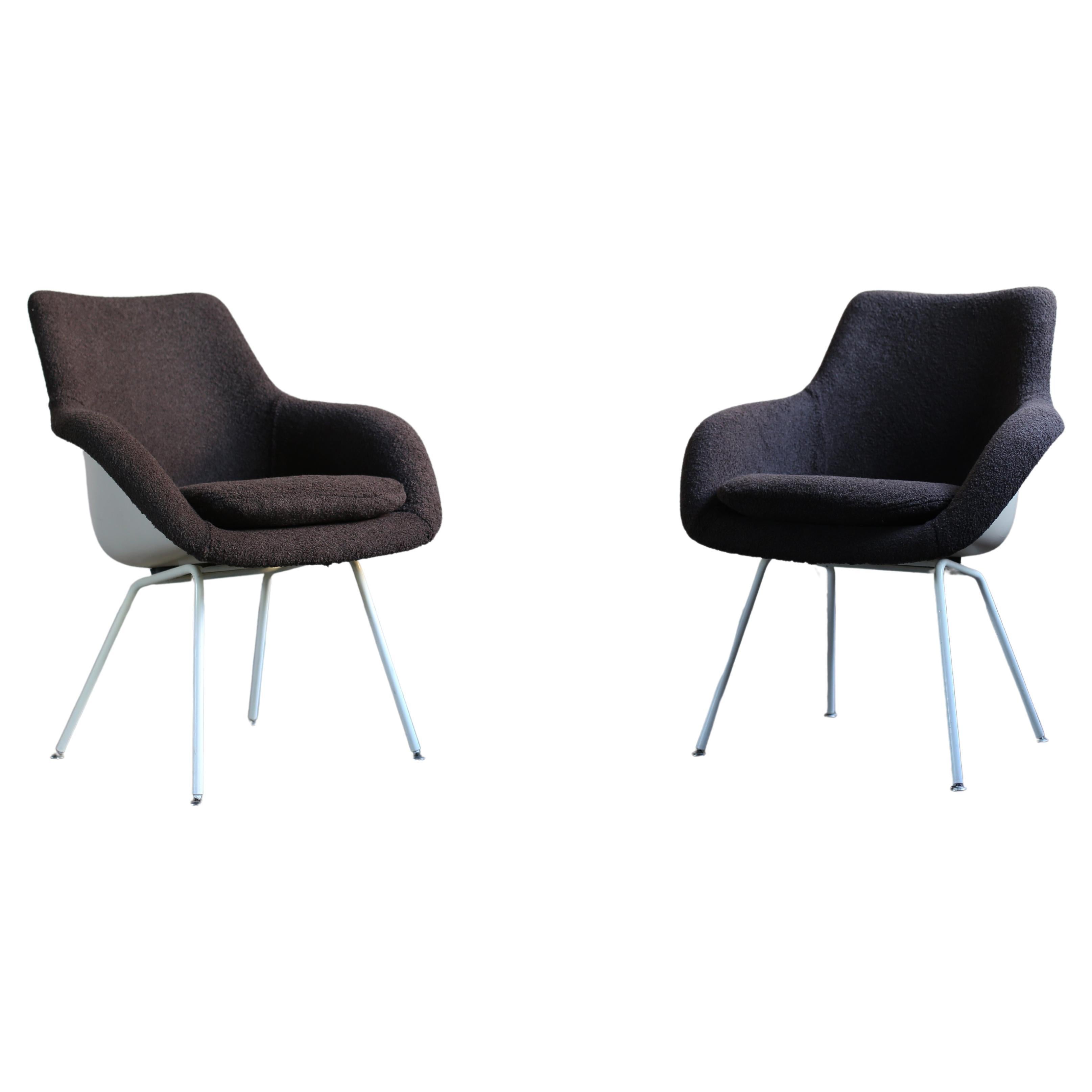
View AllPair of Armchairs model "OM5082" by DAISAKU CHOH
By Daisaku Cho
Located in Barcelona, ES
Pair of Armchairs model "OM5082"
From Series “H”
Manufactured by Tendo Mokko
Japan, 1970s
Teak, rosewood plywood, upholstery
Measurements (each)
74 × 71 × 70h cm
29,1 × 28 × 27,6h i...
Category
Vintage 1970s Japanese Chairs
Materials
Upholstery, Rosewood, Teak, Plywood
Joaquim Tenreiro Pair of Armchairs Model “Concha” Brasil, 1950
By Joaquim Tenreiro
Located in Barcelona, ES
Joaquim Tenreiro
Pair of armchairs model “Concha”
Manufactured by Tenreiro Moveis e Decoraçaos
Brasil, 1950
Pau marfim wood, upholstery
From the archives of Side Gallery, Barce...
Category
Vintage 1950s Brazilian Armchairs
Materials
Fabric, Wood
Joe Colombo 20th Century Pair of Armchairs from the Series “Additional System”
By Joe Colombo
Located in Barcelona, ES
Pair of armchairs
From the series “Additional System”
Manufactured by Sormani
Italy, 1968
From the archives of Side Gallery Barcelona
Aluminium,...
Category
Vintage 1960s Italian Mid-Century Modern Armchairs
Materials
Aluminum
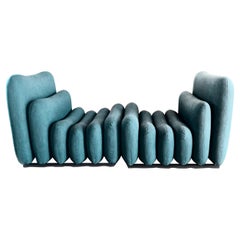
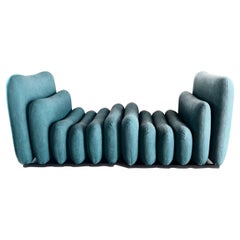
Joe Colombo 20th Century Pair of Armchairs from the Series “Additional System”
By Joe Colombo
Located in Barcelona, ES
Pair of armchairs
From the series “Additional System”
Manufactured by Sormani
Italy, 1968
From the archives of Side Gallery Barcelona
Aluminium,...
Category
Vintage 1960s Italian Mid-Century Modern Armchairs
Materials
Aluminum
Jose Zanine Caldas Pair of Mid-century modern BrazilianArmchairs Model "H"
By José Zanine Caldas
Located in Barcelona, ES
JOSE ZANINE DE CALDAS (1919-2001).
Pair of armchairs model “H.”
Manufactured by Moveis Artísticos Z.
Brazil, 1949.
Marine plywood, fabric upholstery.
Measuremenents
58 cm x 50 cm x 80 H cm.
Literature: Habitat, nº9, Sao Paulo 1952.
José Zanine Caldas (Belmonte, Bahia, 1918 - Vitória, Espírito Santo, 2001) was an architect and designer. Caldas stands out on the national architecture in Brazil for his exploration of the constructive qualities of Brazilian woods, defining his work with a warm rustic ambience, working on both high-end residential projects and also popular constructions.
Never actually training as an architect, he starting working in the 1940s as a designer at Severo & Villares and as a member of the National Artistic Historical Heritage Service (Sphan). He opens a maquet studio in Rio de Janeiro, where he worked between 1941 and 1948, and, at the suggestion of Oswaldo Bratke (1907-1997), moved the studio to São Paulo, from 1949 to 1955. The studio served important modern architects of the two cities, and was responsible for most of the models presented in the book Modern Architecture in Brazil, 1956, by Henrique E. Mindlin (1911-1971)..
During the 1940s, he also began developing and researching at the Institute of Technological Research of the University of São Paulo (IPT/USP), and was first introduced to plywood. In 1949, he founded the Fábrica Móveis Artísticos Z, with the objective of producing large-scale industrialized furniture, good quaility and afforable, the furniture was to be materialized using plywood sheets. This method minimized material waste and the need for artisan skills, as the parts were mechanically produced and the use of labor was only needed for the assembling of the furniture.
His time at Móveis Artísticos Z, in 1953 was rather short lived and left the company in 1953 and instead worked on landscape projects until 1958 in São Paulo, when he moved to Brasília, where he built his first house, also in 1958, and coordinated the construction of others until 1964. Appointed by Rocha Miranda to Darcy Ribeiro (1922-1997), he joined the University of Brasília (UnB) in 1962 and taught modeling classes until 1964, when he lost his position due to the military coup. He set off and travelled through Latin America and Africa, an experience that had a remarkable effect on his work.
On return to Brazil he built his second house, the first of a series of projects in the Joatinga region of Rio de Janeiro. In 1968, he moved to Nova Viçosa, Bahia, and opened a workshop, which ran up until 1980. His experience in the Bahian city was shaped by his renewed love and contact with nature, and he began working closely with environmentalists. In one of these collaborations, he participated in the project of an environmental reserve with the artist Frans Krajcberg (1921-2017) for whom he also designed a studio in 1971. The furniture he designed during this period, is reflective of his ecological sensitivity, his works were constructed with crude logs of wood, whose twisted lines inspire his drawings.
It is also in Nova Viçosa that the architect builds the Casa dos Triângulos (1970) and casa da Beira do Rio (1970), in which he adopted a very artisanal construction system with typical woods of the region. According to the historian and architecture critic Roberto Conduru, Caldas' performance was relevant for the diffusion of environmental values in architectural projects: a "taste for the alternative and the rustic was disseminated throughout the Brazilian territory [...], encouraged by environmental preservation campaigns, by the wear and tear of the current models in reinforced concrete and by the re-emergence of the regionalist ideal in the international panorama"1.
Between 1970 and 1978, he kept an office in Rio de Janeiro, where he returned in 1982. In 1975, the filmmaker Antonio Carlos da Fontoura made the film Arquitetura de Morar, about the houses of Joatinga, with a soundtrack by Tom Jobim (1927-1993), for whom Caldas designed a house. Two years later, the architect's work was exhibited at the Museum of Modern Art of Rio de Janeiro (MAM/RJ), at the São Paulo Museum of Art Assis Chateaubriand (Masp) in Belo Horizonte, and the following year at Solar do Unhão, in Salvador.
Between 1980 and 1982 The Helium House Olga Jr was designed and built in São Paulo. Caldas outlined the plans for the construction sourcing the all the wood, the actual assembly of the house was carried out by the owner. The house, is defined by wooden structure that stands out from the fence walls, the clay tile roof of wide eaves and the demolition materials that give the building the feeling of rusticity, warmth and nostalgia. The house was similar to those built in the 1970s for Eurico Ficher and Pedro Valente, in Joatinga.
In 1983, Calders founded the Center for the Development of Applications of The Woods of Brazil (DAM), and gave it to UnB in 1985. During this period, he proposed the creation of the Escola do Fazer, a teaching center focused on the use of wood for the construction of houses, furniture and utilitarian objects for the low-income population.
Despite the fact that much of Calders early work was centered around building houses for the elite, in the 1980s the designer dedicates himself the DAM where he rigorously researches popular housing based on artisan construction processes and whereby the users participate in the construction process. At the Brasília unit, he developed prototypes of popular houses with eucalyptus logs as a structure and sealing in soil-cement, betting on an ideal of self-construction already tested at Casa do Nilo, in São Gonçalo, Rio de Janeiro. From that moment on, as occurred with his the furniture designs, Caldas adopts the use of crude wood logs rolled...
Category
Mid-20th Century Brazilian Mid-Century Modern Armchairs
Materials
Plywood, Velvet
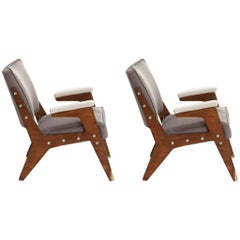
Pair of Armchairs manufactured by Móveis Cantu
By Jorge Jabour
Located in Barcelona, ES
Pair of Armchairs Manufactured by Móveis Cantu Brazil, 1960s
Structures executed in solid jacaranda, upholstered bodies and seats covered in grey fabric
Measurements : 74cmx 80cmx99...
Category
Vintage 1960s South American Armchairs
Materials
Fabric, Jacaranda
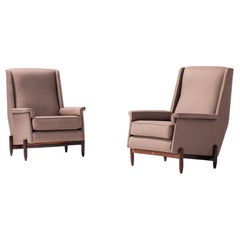
$56,296 / item
You May Also Like
Pair of Lounge Chairs by Junzo Sakakura Architectural Institute
By Junzo Sakakura
Located in San Francisco, CA
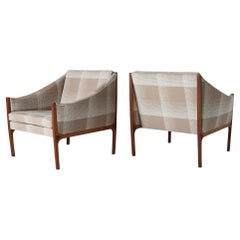
A pair of lounge chairs designed by architect Junzo Sakakura, who worked in Le Corbusier's atelier and was a pioneer of Japanese modernism.
Teak frame with rosewood plywood inlay o...
Category
Vintage 1970s Japanese Modern Lounge Chairs
Materials
Rosewood, Teak
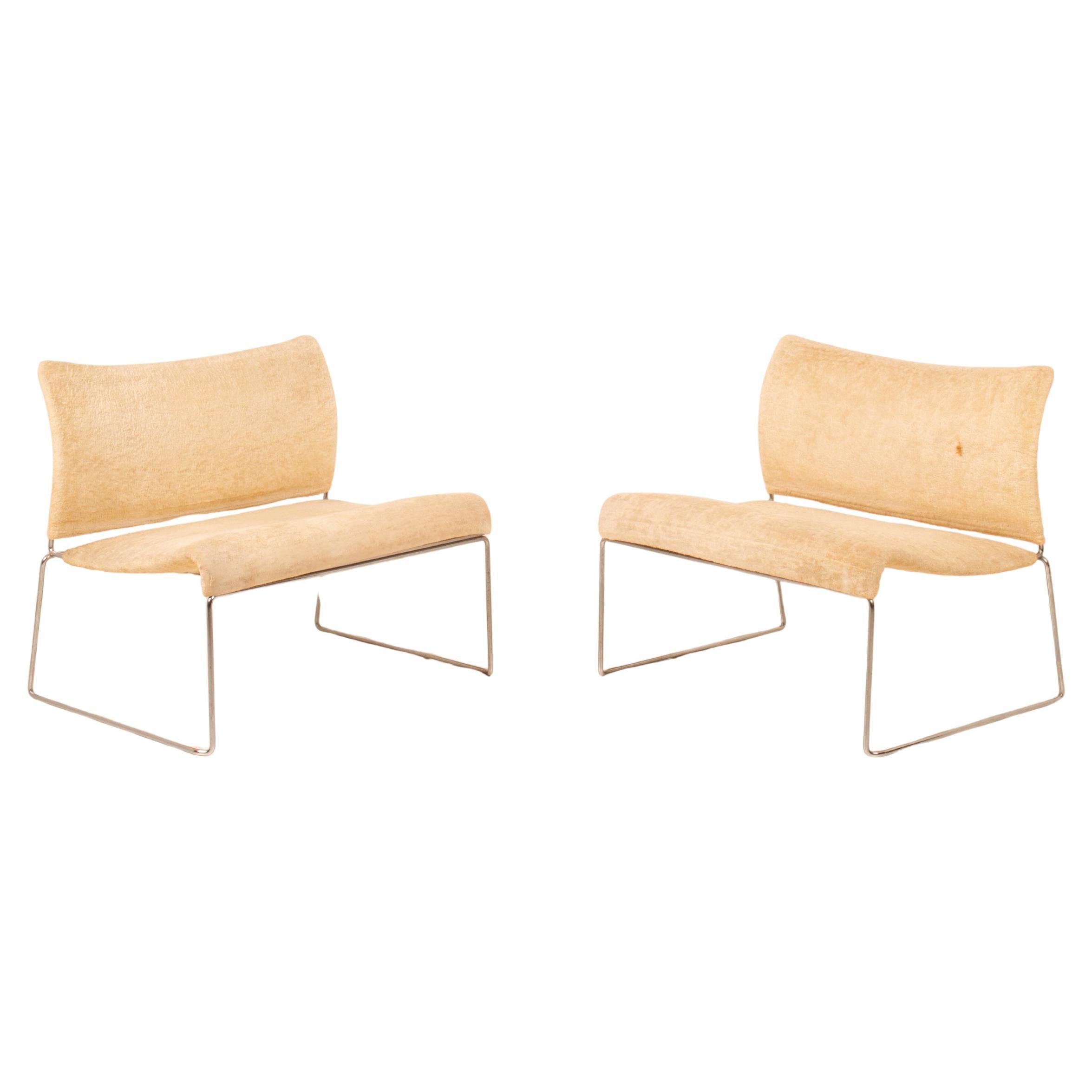
Pair of Saghi Armchairs by Kazuhide Takahama for Simon – 1970s
By Simon Gavina Editions, Kazuhide Takahama
Located in Conversano, IT
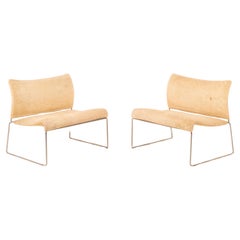
Designed by Kazuhide Takahama and produced by Simon International, the “Saghi” armchairs are one of the finest examples of the meeting between Japanese rigor and Italian design visio...
Category
Vintage 1970s Italian Armchairs
Materials
Steel
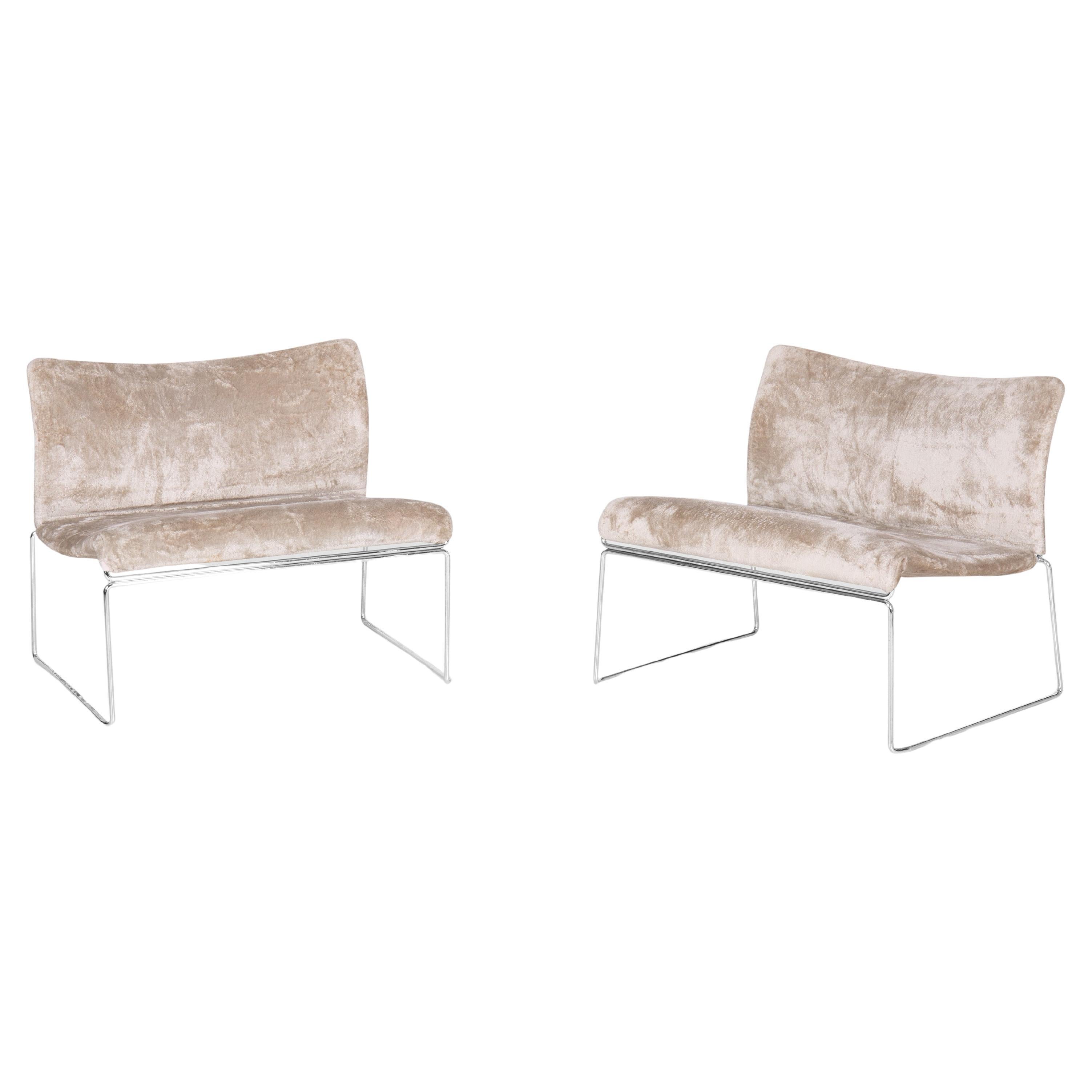
Pair of Saghi armchairs by Kazuhide Takahama for Simon, 1970
By Kazuhide Takahama
Located in Ozzano Dell
emilia, IT
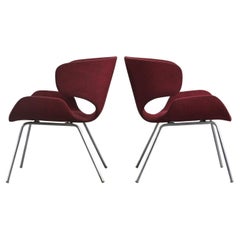
Pair of Saghi armchairs designed by Kazuhide Takahama. Two sets available. Structure in chrome-plated steel rod with original removable upholstery in velvet. Seat and backrest slight...
Category
Vintage 1970s Italian Mid-Century Modern Armchairs
Materials
Steel

Pair of Kabuto Armchairs by Isamu Kenmochi, Tendo Mokko Japan 1965
By Isamu Kenmochi
Located in VILLEURBANNE, FR
Pair of "Kabuto" lounge chairs, model OM 5006, designed by Isamu Kenmochi and manufactured by Tendo Mokko, starting in 1961, Japan.
With a fixed base, this model stands out for its enveloping silhouette and soft pink fabric upholstery. The curved backrest is designed to follow the natural lines of the body, while the thick cushioning offers a comfortable and supportive seat.
Developed in close partnership with Tendo Mokko, the Kabuto chair...
Category
Mid-20th Century Japanese Mid-Century Modern Chairs
Materials
Metal
Teiza Isu, Lounge Chair by Junzo Sakakura & Daisaku Cho, Tendo Mokko, Japan
By Tendo Mokko, Junzo Sakakura, Daisaku Cho
Located in Tokyo, Tokyo
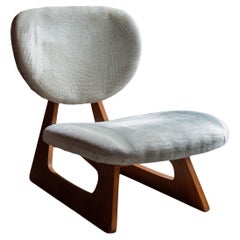
A refined and sculptural lounge chair born from the visionary collaboration between Daisaku Cho and Junzo Sakakura—central figures of Japanese modernism. Produced by Tendo Mokko, th...
Category
Vintage 1950s Japanese Chairs
Materials
Fabric, Plywood
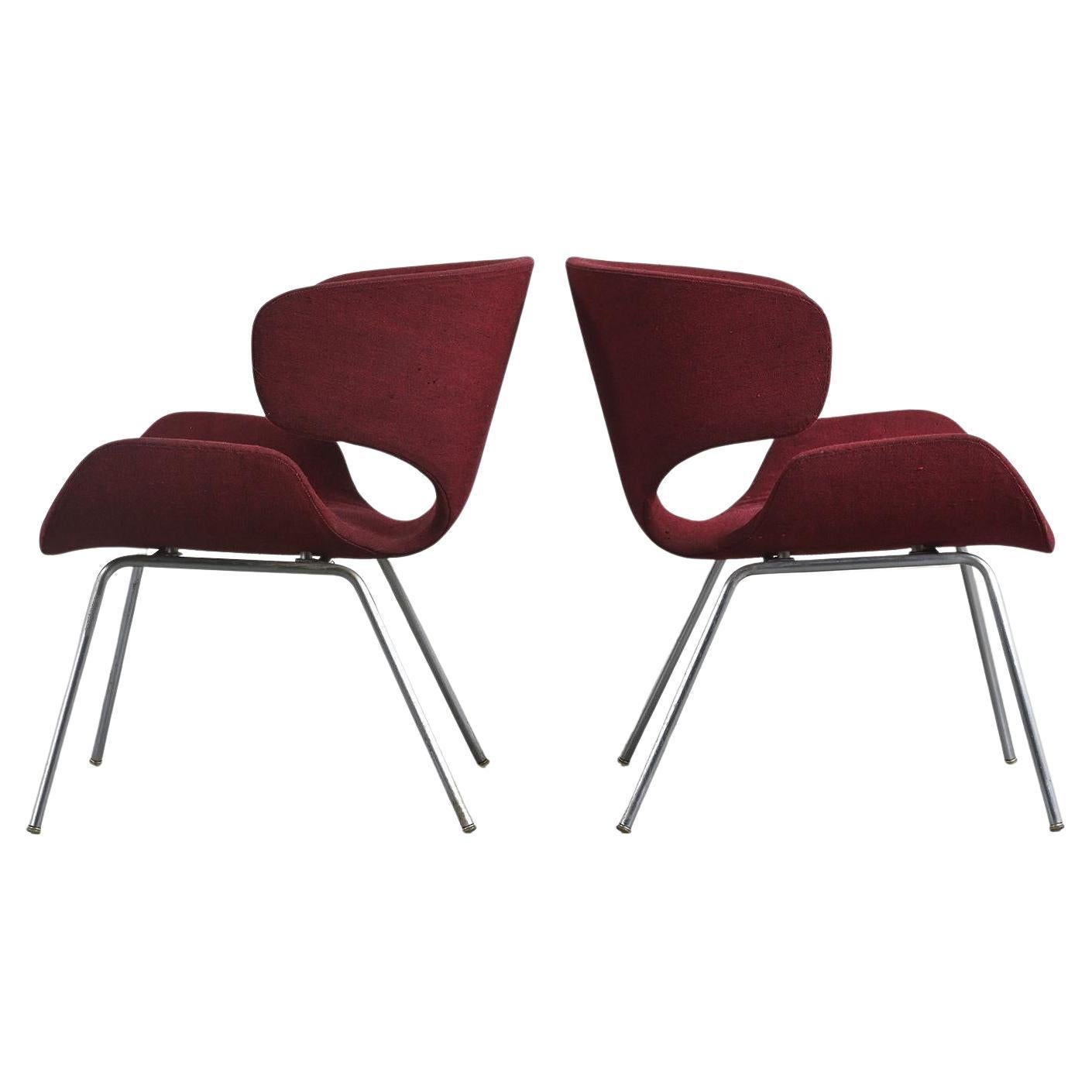
Pair of Armchairs by Isamu Kenmochi for Kotobuki
By Isamu Kenmochi, Kotobuki
Located in Sammu-shi, Chiba
FRP manufacturing technology was introduced to Japan from America in 1954, as exemplified by the Charles & Ray Eames chairs of the 1950s.
By making it possible to create free three-dimensional curved surfaces that were impossible with conventional molded plywood, Isamu Kenmochi, Sori Yanagi, Kenzo Tange, and other designers and architects of the time created numerous FRP products together with Kotobuki, the pioneer Japanese FRP manufacturer.
The chair introduced this time is also designed by Isamu Kenmochi and released by Kotobuki.
This is a vintage product from the 60's. This model can be found in the book "Kenmochi Isamu...
Category
Vintage 1970s Japanese Showa Chairs
Materials
Acrylic
$4,000 / set