Items Similar to Rare Double Cathedra Made from Walnut Wood Sculpted, and Inlaid, Around 1500
Want more images or videos?
Request additional images or videos from the seller
1 of 5
Rare Double Cathedra Made from Walnut Wood Sculpted, and Inlaid, Around 1500
$56,825.44
£42,452.98
€48,000
CA$79,126.58
A$85,017.10
CHF 45,611.50
MX$1,001,599.45
About the Item
Rare double Cathedra made from walnut wood, sculpted, and inlaid, around 1500
Origin: Southern Germany
Period: Late 15th Century - Early 16th Century
Height: 221cm
Width: 146,5cm
Depth: 60,4cm
Walnut wood and inlaid
Good state of conservation
Description:
This double cathedra in walnut wood was probably intended for an abbey, according to the sculpted decor.
This cathedra is made from a symmetrical aspect and is divided into three levels. The bottom level has a base sustained by six feet. In the front, the base is decorated by four sculpted elements flattened with a “napkin fold decoration”. Each of the seat rises, revealing a trunk.
The intermediate level in divided by three straight and solid armrests. The lower part of the backrest has two inlaid panels with “tarsia certosina” for geometric patterns. This technique also called “inlay in the mass” consists in digging a cavity in the wood to inlay decorative elements. Those panels are framed with the “tarsia a toppo” technique.
The top level is divided in two elements. The top part of the backrest has two panels, where parchment patterns frame two badges. Three pinnacles dominate the summit of the backrest.
The center of the backrest is sculpted in a rectangular shape. Inside, there are two niches with biblical characters: Saint Anthony the Great and the Virgin Mary.
Saint Anthony the Great:
Or Antony the Ermit is a monk considered as the father of the Christian monasticism. Born around 251 in Egypt, he withdraws very early into a spirituel solitude. Divine powers are conferred to Saint Antony thanks to the exorcism of the king of Catalonia’s family. But also, the piglet’s episode, born blind.
During the XI century, a hospital Order is founded under the invocation of the saint which makes him a holy thaumaturgist.
His iconography appears during this period, often represented as an old man with a bear wearing a hooded bute dress, characteristic of the monks of his order, sign of poverty. Also, wearing a long coat. This bas-relief takes back all its usual attributes.
- The tau: holding in his left hand, which serves as an abbot’s crook. Also embroidered on his coat.
- The bell: hanging from his right hand, also known as hermits’ attribute, used to repel demons.
- The book of “la règle des Antonins”: sign of the diffusion of the Faith and the precepts of the Order.
- The pig: first, from the piglet’s episode. Then he often is linked to demons, and has another function here: he represents firefighting, coming from the fact that his meat could cure ill people from ergot poisoning. In Italie, he’s known as “Antonio del porco”.
- Flames: are associated to the French name of the ergot poisoning (“le feu saint Antoine”: Saint Anthony fire). This attribute is emerging during the XVI century.
Furthermore, a nimbus crowns the hermit. The two olive branches symbolize peace. We can see resilience and the pain of the saint who bares the disease of humanity.
The Virgin of the Apocalypse:
Saint Antony is looking at the Woman of the Apocalypse. This biblical character appears in the twelfth chapter, described by Saint John. Theologians have recognized the appearance of the Virgin even though there are differences for this identification. As a matter of facts, to some, this figure could be the New Eve holding the New Adam in her arms.
Other iconographic representations, such as the Immaculate Conception or the Assumption, use the Woman of the Apocalypse attributes.
In fact, the Virgin is crowned by angels, holding the Christ. This representation of the Virgin of the Apocalypse is being formed during the Middle Ages and the Renaissance. This iconography takes it rises during the XVI century.
In our cathedra, the Virgin is standing up, wrapped in a long flowing drape falling down her feet. The collar of her tunic is decorated with embroidery and brocades.
Mary is wearing her hair down, framing a calm and benevolent face, looking down. Two angels are crowning her, with gemstones.
She seems to be holding a Christ gesticulating. The baby Jesus hangs on Mary’s neck.
Finally, the Virgin is resting on a moon cross. The moon symbolizes the frontier between the incorruptible world and the corruptible one, which in the ancient tradition, used to be under the moon. And so, the Virgin seems incorruptible.
Literature
• RÉAU, Louis, Iconographie de l’Art Chrétien, Iconographie des saints (A-F), Tome III, Presses Universitaires de France, Paris, 1988, p. 101-113
• SAINT JEAN, « l'Apocalypse » (XII, 1-2), Bible de Jérusalem, Les Éditions du Cerf, 1997.
- Dimensions:Height: 87.01 in (221 cm)Width: 57.68 in (146.5 cm)Depth: 23.78 in (60.4 cm)
- Materials and Techniques:
- Period:
- Date of Manufacture:circa 1500
- Condition:Repaired. Wear consistent with age and use.
- Seller Location:Saint-Ouen, FR
- Reference Number:1stDibs: LU3115330449632
About the Seller
5.0
Vetted Professional Seller
Every seller passes strict standards for authenticity and reliability
Established in 2016
1stDibs seller since 2017
212 sales on 1stDibs
Typical response time: 1 hour
- ShippingRetrieving quote...Shipping from: Saint-Ouen, France
- Return Policy
More From This Seller
View AllRenaissance Cathedra with Perspective Motif
Located in Saint-Ouen, FR
RENAISSANCE CHAYÈRE WITH PERSPECTIVE MOTIF
ORIGIN: FRANCE, LYON
ÉPOQUE: FIRST HALF OF THE XVI CENTURY
Height: 166cm
Width: 74cm
Depth: 47cm
Walnut wood
From: Château de Quintin’...
Category
Antique 16th Century Office Chairs and Desk Chairs
Materials
Walnut
Northern Italy Renaissance Cathedra with a Canopy
Located in Saint-Ouen, FR
This cathedra or chayère chair is conceived following rules of monumental architecture. The seat can be lift open to reveal a chest. Both curved arm-rests are supported by a baluster...
Category
Antique 16th Century Italian Renaissance Armchairs
Materials
Walnut
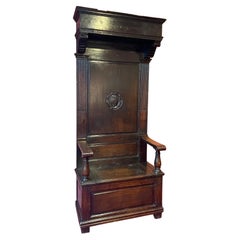
16th Century Spanish Walnut Chair
Located in Saint-Ouen, FR
This walnut chair stands on four square-section feet linked by four crossbars. The front spacer is carved as an intertwined branch. The backrest’s jambs are adorned with leaves motif...
Category
Antique 16th Century Spanish Renaissance Chairs
Materials
Leather, Fabric, Walnut
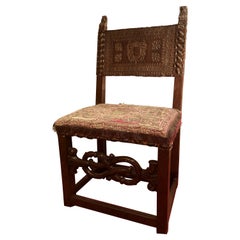
Beautiful Renaissance Carved Walnut Armchair
Located in Saint-Ouen, FR
Beautiful Renaissance Carved Walnut armchair
Origin : Italy
Period : 16th century
Dimensions:
Height: 114 cm Seat height: 52 cm
Widt...
Category
Antique 16th Century Armchairs
Materials
Walnut
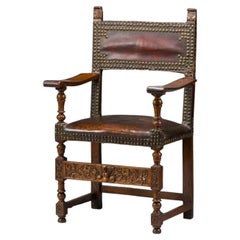
Beautiful Renaissance Carved Walnut Armchair
Located in Saint-Ouen, FR
Beautiful renaissance carved walnut armchair
Origin : Italy
Period : 16th century
Dimensions :
Height : 111,5 cm Seat height : 52 cm
...
Category
Antique 16th Century Armchairs
Materials
Walnut
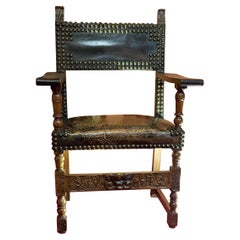
Renaissance "Chayère" Chair
Located in Saint-Ouen, FR
This chayère chair of beautiful proportions stands on a rectangular box base enriched by vermiculure motifs executed in flat-plane. This base is topped by a moulding of strong gadroo...
Category
Antique 16th Century French Renaissance Armchairs
Materials
Walnut
$35,502
You May Also Like
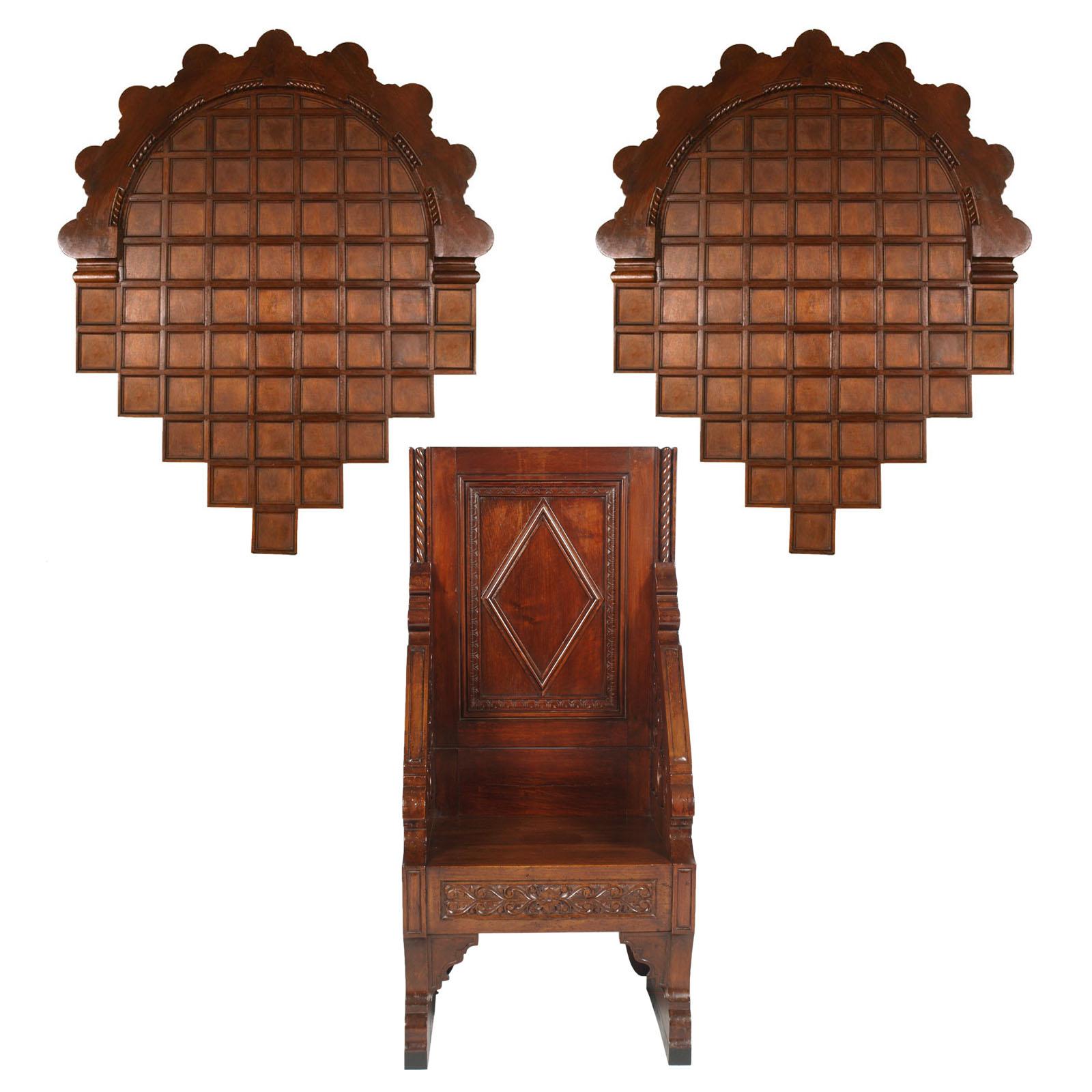
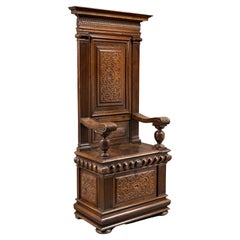
18th Century Renaissance Hand-Carved Throne, Walnut Armchair with Two Crowns
Located in Vigonza, Padua
Antique Renaissance carved throne with decorative wood panels in solid hand-carved walnut, as well as the two crowns panels. The Throne with the two crowns have been restored and pol...
Category
Antique Early 18th Century Italian Renaissance Armchairs
Materials
Walnut
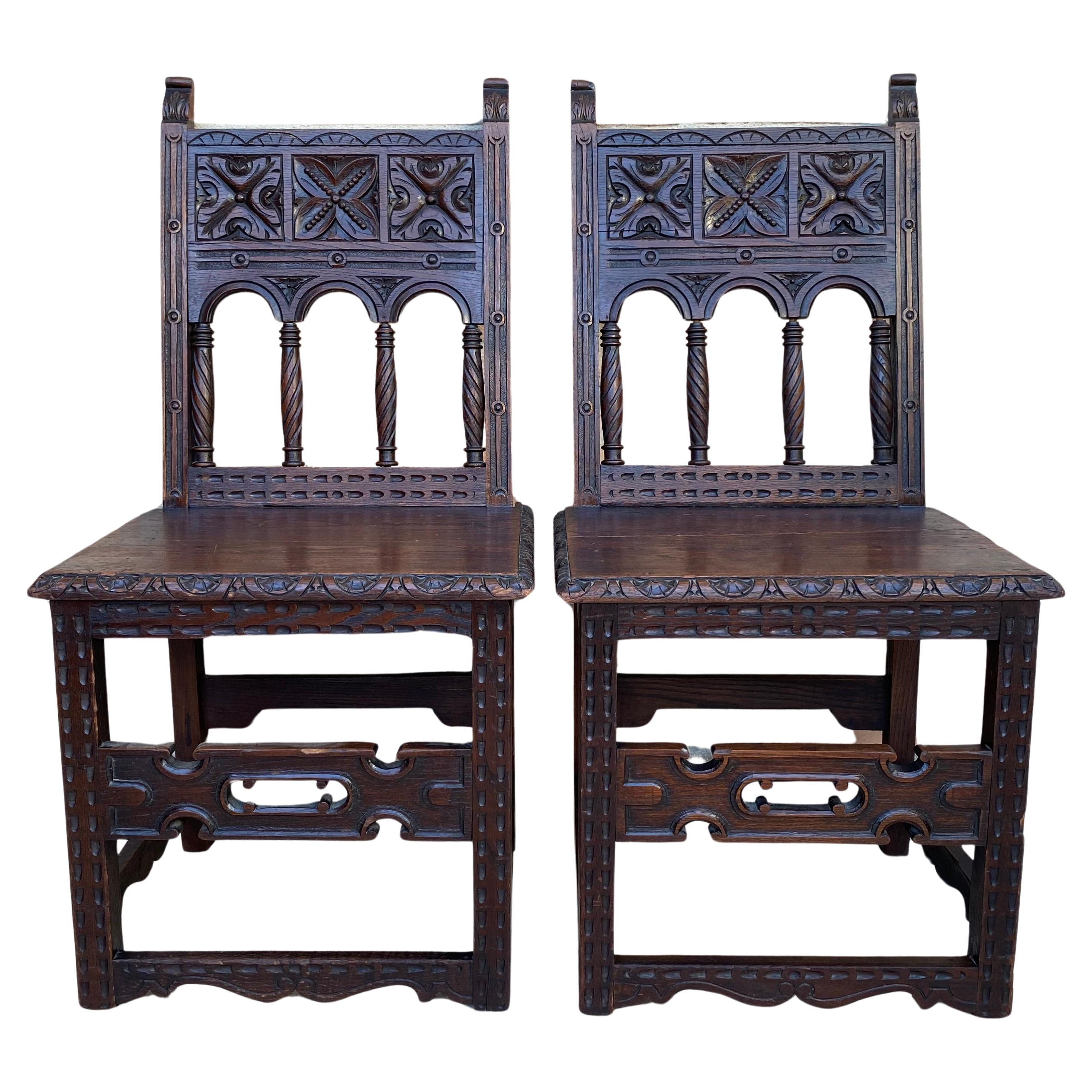
Early 20th Century Spanish Carved Chairs with Wood Seat, 1890s, Set of 2
Located in Miami, FL
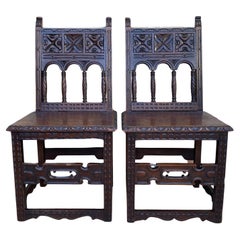
Set of 2 Spanish chairs with wooden seats on walnut and sycamore structure with hand-carved decoration. These chairs are faithful to the Spanish character and each one features carvi...
Category
Antique 1890s Spanish Baroque Chairs
Materials
Walnut
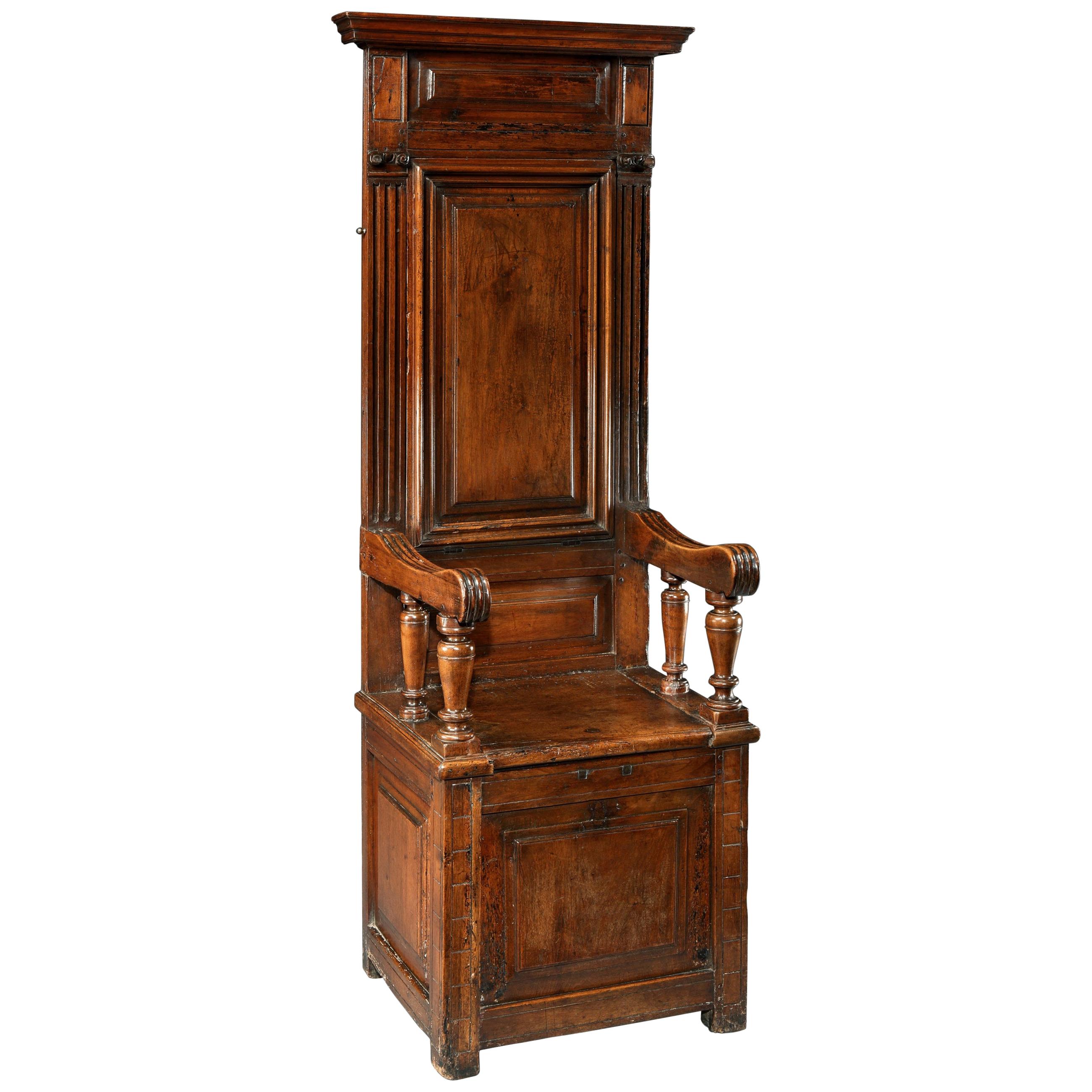
Cathedra or Throne Chair, Late 16th Century, French Second Renaissance, Walnut
Located in BUNGAY, SUFFOLK
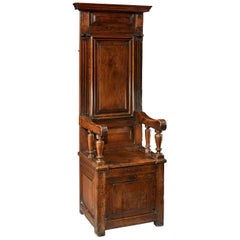
A moulded cornice sits above the high, panelled back with fluting and applied roundels. The later, metal pin on the left edge releases the central, moulded panel in the back which retains its original hinges. When the pin is removed the panel can be lowered, revealing a large area behind. The scroll arms are supported by tapering turnings which can be compared with mid-16th century benches of the nave such as those in the churches in Gerberoy and Coivrel which are in Oise, the Piccardie region of Frances.
The panelled, box seat has later 18th century hinges...
Category
Antique 16th Century French Renaissance Armchairs
Materials
Walnut
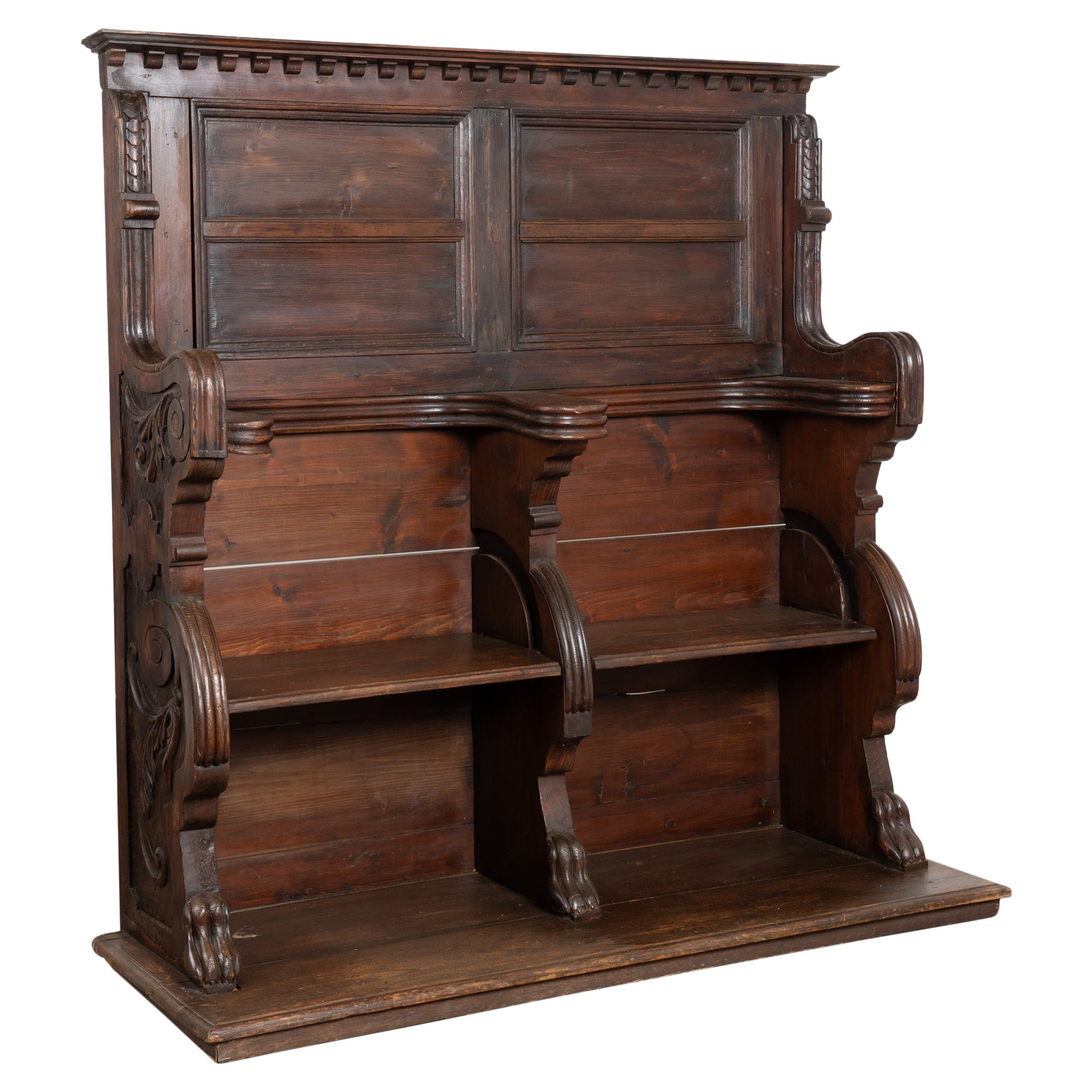
19th Century Baroque Carved Oak Cathedral Chapel Chairs Bench
Located in Round Top, TX
The baroque styling is revealed in the high relief carving of these cathedral chapel chairs. The tall back and sides allowed for privacy, while in this example the two seats are join...
Category
Antique Early 19th Century Danish Baroque Benches
Materials
Oak
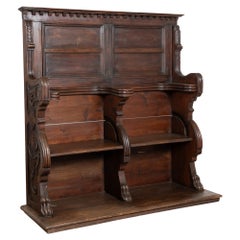
19th Century English Gothic Revival Carved Throne Chair with Mythical Motifs
Located in Queens, NY
English Gothic Revival style (19th Cent) oak high back carved and filigree Bishops throne chair with griffin finials.
Category
Antique 19th Century Gothic Armchairs
Materials
Oak
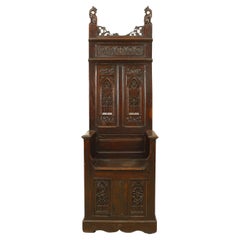
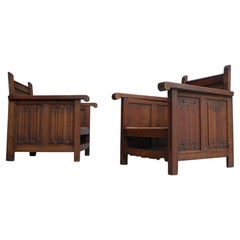
Pair of Carved Art Deco Parish Brutalist Gothic Armchairs in Oak with Rush Seats
Located in Den Haag, NL
Pair of Carved Art Deco Parish Brutalist Armchairs in Solid Oak with Rush Seats. Beautiful wood carvings in the form of curtains, a star and candles
Category
Vintage 1920s Dutch Brutalist Armchairs
Materials
Oak
More Ways To Browse
Copes Caster
Fd Armchair
Finn Juhl Diplomat
Fluffy Armchair
French Giltwood Arm Chairs
French Library Chairs
Gerrit Rietveld Crate
Giancarlo Piretti Plona
Hans Wegner Round Chair Cane
High Back Velvet Armchair
Jean Michel Frank Armchair
Jonas Lutz
Kilim Armchairs
Levi Rino
Louis Armchair Pink
Louis Xvi Bes
Lucite Waterfall Chair
Luxury Leather Armchair