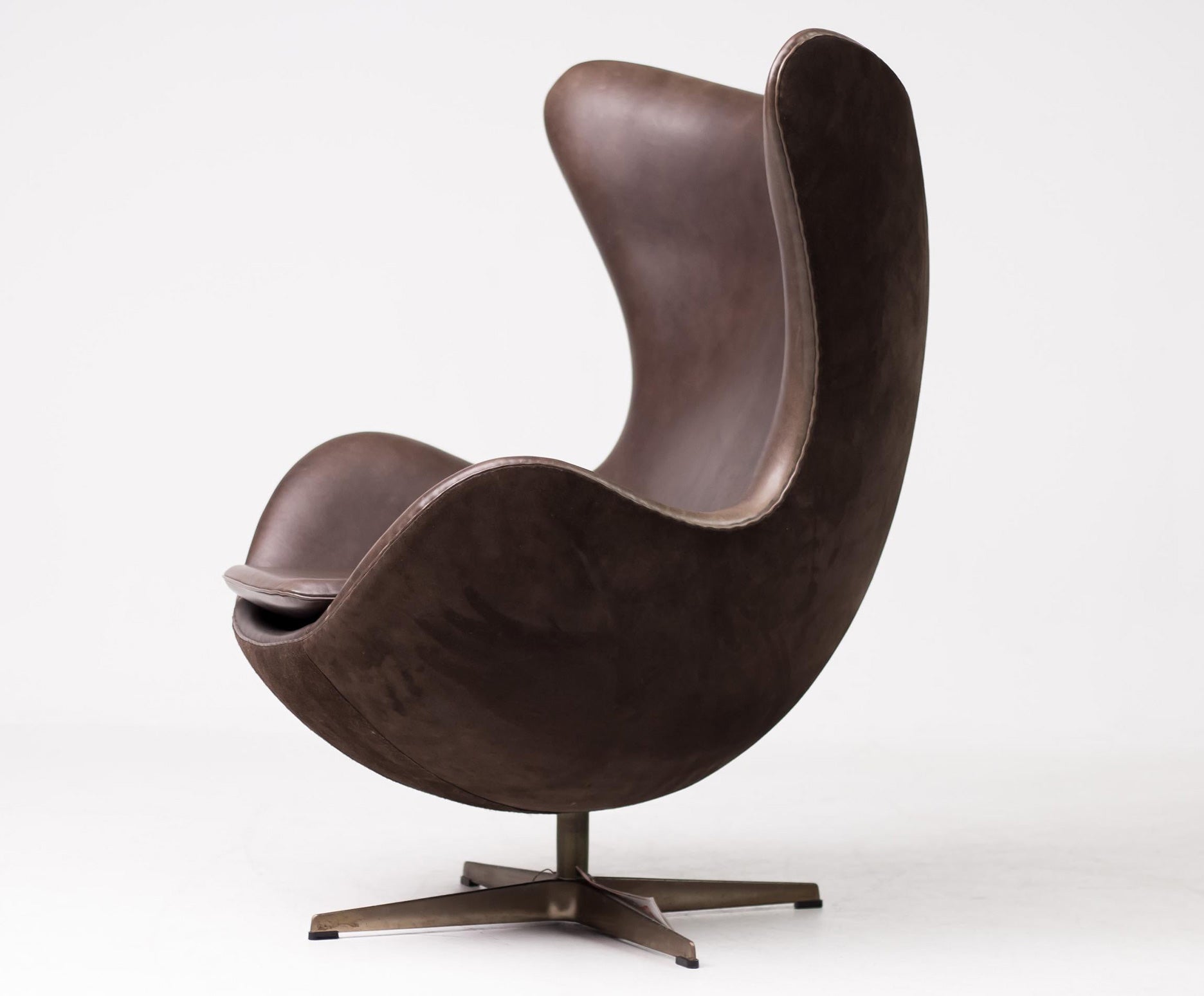
Arne Jacobsen "The Egg Chair" with Footstool in Dark Brown Leather
About the Item
- Creator:Arne Jacobsen (Artist),Fritz Hansen (Cabinetmaker)
- Design:
- Dimensions:Height: 42.13 in (107 cm)Width: 33.86 in (86 cm)Depth: 31.11 in (79 cm)Seat Height: 15.75 in (40 cm)
- Style:Scandinavian Modern (Of the Period)
- Materials and Techniques:
- Place of Origin:
- Period:
- Date of Manufacture:2003
- Condition:Wear consistent with age and use.
- Seller Location:Kastrup, DK
- Reference Number:Seller: 1025041stDibs: LU1007414368862
Egg Chair
Designed in 1958 for the SAS Royal Hotel in Copenhagen, Arne Jacobsen's Egg chair is a Scandinavian classic that has over the years become a fixture of corporate offices. It bears every mark of Jacobsen's outsized perfectionism, for which the Danish architect was widely known.
The Egg chair was notable for its overtly organic appearance, which Jacobsen (1902–71) achieved with craft-based padding and upholstery finishing. Unlike the furniture maker’s previous range of shell chairs designed in laminated wood for Fritz Hansen, the Egg — and the Swan chair along with it — reflected a soulful new vision of modernity. Both created for the accommodation property, which opened in 1960, the chairs were meant to contrast with the SAS Royal Hotel’s straight lines as well as showcase Jacobsen’s eye for interiors.
A graduate from the Royal Danish Academy of Fine Arts, Jacobsen was a polymath who made just about everything — light fixtures, ashtrays, silverware and even door handles. For the SAS Air Terminal and Royal Hotel, he handled every detail, from textiles to furnishings. In the 1940s, the one-time mason found considerable success as an industrial designer, most notably with the Ant chair and Series 7 chairs for Fritz Hansen.
Jacobsen was influenced by modernism and designers like Ludwig Mies van der Rohe. Forward-looking projects like the “House of the Future” — codesigned with Flemming Lassen in 1929 and featuring a then-revolutionary automatic garage door opener — cemented his status as an innovator. Throughout his career, Jacobsen earned many awards, including the prestigious RIBA Bronze Medal in 1963.
With the Egg chair, Jacobsen continued his ongoing experimentation with synthetic materials. First, he devised small-scale clay models in his garage. The prototypes' finished shells were made of fiberglass-reinforced polyurethane foam, padded with cast latex foam rubber and then, upholstered with leather — or, in the cost-conscious hotel’s case, fabric.
Today, the Egg chair is supported by welded steel tubing and is mounted on a lightweight aluminum base. It is available from Fritz Hansen.
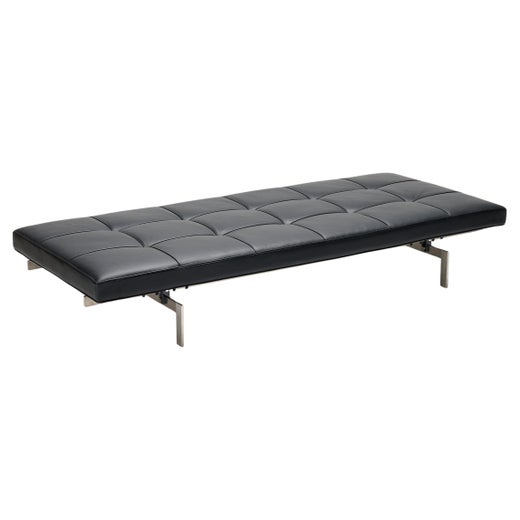
Fritz Hansen
When the Copenhagen-based furniture maker Fritz Hansen opened for business more than 140 years ago, the company — which today styles itself The Republic of Fritz Hansen — adhered to the traditional, time-honored Danish values of craftsmanship in woodworking and joinery. Yet thanks to the postwar innovations of Arne Jacobsen and others, Fritz Hansen would become the country’s leader in Scandinavian modern design using new, forward-looking materials and methods.
Fritz Hansen started his company in 1872, specializing in the manufacture of small furniture parts. In 1915, the firm became the first in Denmark to make chairs using steam-bent wood (a technique most familiar from birch used in the ubiquitous café chairs by Austrian maker Thonet). At the time, Fritz Hansen was best known for seating that featured curved legs and curlicue splats and referenced 18th-century Chippendale designs.
In the next few decades, the company promoted simple, plain chairs with slatted backs and cane or rush seats designed by such proto-modernist masters as Kaare Klint and Søren Hansen. Still, the most aesthetically striking piece Fritz Hansen produced in the first half of the 20th century was arguably the China chair of 1944 by Hans Wegner — and that piece, with its yoke-shaped bentwood back- and armrest, was based on seating manufactured in China during the Ming dynasty. (Wegner was moved by portraits he’d seen of Danish merchants in the Chinese chairs.)
Everything changed in 1952 with Arne Jacobsen’s Ant chair. The collaboration between the architect and Fritz Hansen officially originated in 1934 — that year, Jacobsen created his inaugural piece for the manufacturer, the solid beechwood Bellevue chair for a restaurant commission. The Ant chair, however, was the breakthrough.
With assistance from his then-apprentice Verner Panton, Jacobsen designed the Ant chair for the cafeteria of a Danish healthcare company called Novo Nordisk. The chair was composed of a seat and backrest formed from a single piece of molded plywood attached, in its original iteration, to three tubular metal legs. Its silhouette suggests the shape of the insect’s body, and the lightweight, stackable chair and its biomorphic form became an international hit.
Jacobsen followed with more plywood successes, such as the Grand Prix chair of 1957. The following year he designed the SAS Royal Hotel in Copenhagen and its furnishings, including the Egg chair and the Swan chair. Those two upholstered pieces, with their lush, organic frames made of fiberglass-reinforced polyurethane, have become the two chairs most emblematic of mid-20th-century cool. Moreover, the Egg and Swan led Fritz Hansen to fully embrace new man-made materials, like foam, plastic and steel wire used to realize the avant-garde creations of later generations of designers with whom the firm collaborated, such as Piet Hein, Jørn Utzon (the architect of the Sydney Opera House) and Verner Panton. If the Fritz Hansen of 1872 would not now recognize his company, today’s connoisseurs certainly do.
Find a collection of vintage Fritz Hansen tables, lounge chairs, sofas and other furniture on 1stDibs.
You May Also Like
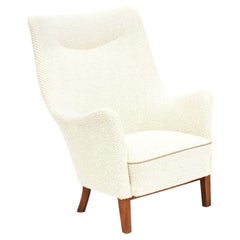
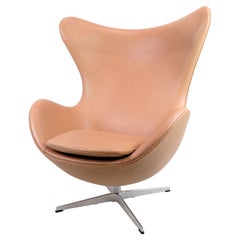
21st Century and Contemporary Danish Mid-Century Modern Lounge Chairs
Aluminum
Vintage 1950s Danish Scandinavian Modern Lounge Chairs
Wool
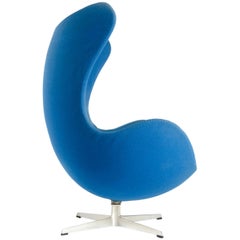
Vintage 1960s Danish Scandinavian Modern Lounge Chairs
Leather
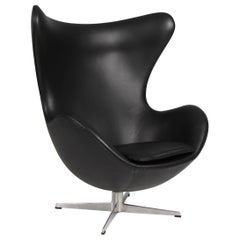
Vintage 1960s Danish Scandinavian Modern Lounge Chairs
Leather
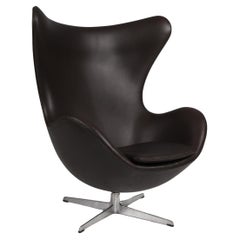
2010s Danish Scandinavian Modern Lounge Chairs
Leather
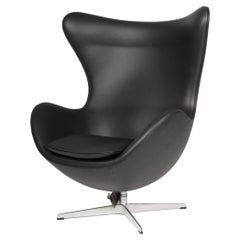
Vintage 1960s Danish Scandinavian Modern Lounge Chairs
Leather
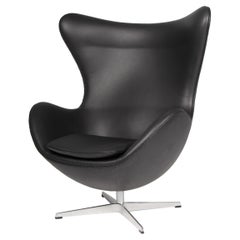
Vintage 1960s Danish Scandinavian Modern Lounge Chairs
Leather
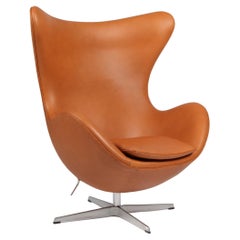
2010s Danish Scandinavian Modern Lounge Chairs
Leather
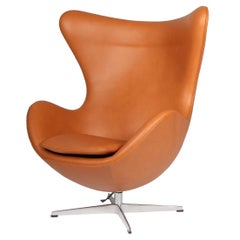
Vintage 1960s Danish Scandinavian Modern Lounge Chairs
Leather
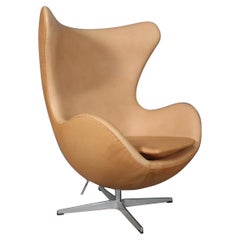
21st Century and Contemporary Danish Scandinavian Modern Lounge Chairs
Metal, Aluminum
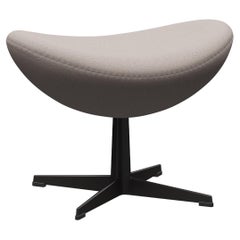
More From This Seller
View AllMid-20th Century Danish Modern Lounge Chairs
Leather, Teak
Late 20th Century Danish Modern Lounge Chairs
Stainless Steel
Mid-20th Century Danish Modern Lounge Chairs
Beech
Mid-20th Century Mid-Century Modern Chairs
Leather

Late 20th Century Danish Mid-Century Modern Lounge Chairs
Leather, Plywood
Mid-20th Century Danish Scandinavian Modern Lounge Chairs
Bouclé, Beech