1 of 6
Black Mid-Century Cane Bottom Horseshoe Style Brass Foot Chair
$975List Price
About the Item
- Dimensions:Height: 36 in (91.44 cm)Width: 19 in (48.26 cm)Depth: 23 in (58.42 cm)Seat Height: 17 in (43.18 cm)
- Style:Mid-Century Modern (Of the Period)
- Materials and Techniques:
- Place of Origin:
- Period:
- Date of Manufacture:circa 1950
- Condition:Wear consistent with age and use. Fabulous Mid century piece.
- Seller Location:Birmingham, AL
- Reference Number:1stDibs: LU106641612852
Authenticity Guarantee
In the unlikely event there’s an issue with an item’s authenticity, contact us within 1 year for a full refund. DetailsMoney-Back Guarantee
If your item is not as described, is damaged in transit, or does not arrive, contact us within 7 days for a full refund. Details24-Hour Cancellation
You have a 24-hour grace period in which to reconsider your purchase, with no questions asked.Vetted Professional Sellers
Our world-class sellers must adhere to strict standards for service and quality, maintaining the integrity of our listings.Price-Match Guarantee
If you find that a seller listed the same item for a lower price elsewhere, we’ll match it.Trusted Global Delivery
Our best-in-class carrier network provides specialized shipping options worldwide, including custom delivery.You May Also Like
Late 19th Century Bamboo
Cane Victorian Bedroom Chair, C.1890
Located in San Francisco, CA
Late 19th century bamboo & cane Victorian bedroom chair, C.1890
Outstanding English Victorian bamboo chair with woven cane seat
Hand painted deta...
Category
Antique Late 19th Century English Chinese Export Chairs
Materials
Bamboo, Cane

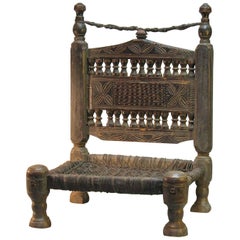
Traditional Tribal Chair of the Swat Valley, Northern Pakistan, 19th Century
Located in Ottawa, Ontario
Traditional tribal chair of the Swat Valley, Northern Pakistan, 19th century. A chair with low seat height 6 1/2"-inches high to seat, in the typical style of the Swat Valley region ...
Category
Antique Early 19th Century Tribal Chairs
Materials
Leather, Hardwood
$795
H 26.5 in W 19 in D 17 in
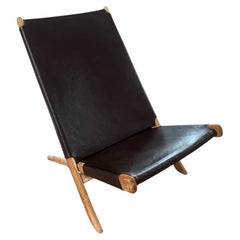
Andrianna Shamaris Minimalist Folding Leather Chair
By Andrianna Shamaris
Located in New York, NY
Chocolate stained premium quality leather wrapped around a natural teak frame to produce a minimalist folding chair. Full dimensions; Seat 18-11” high x 23” wide x 17.5” deep x back ...
Category
2010s Asian Organic Modern Chairs
Materials
Leather, Wood, Teak, Reclaimed Wood
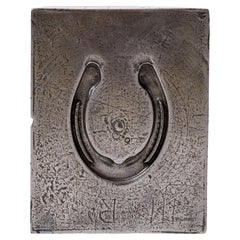
Patinated Steel Horseshoe Mold
Located in Sagaponack, NY
Patinated Horseshoe mold in stainless steel
Category
21st Century and Contemporary More Asian Art, Objects and Furniture
Materials
Metal
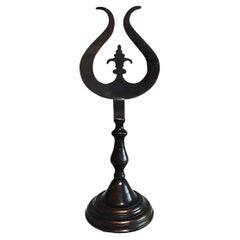
Turkish Brass Finial, Mid 20th Century
Located in New York, NY
A cast brass Finial from Turkey, mounted on a circular base. Measures: 18 1/4" High, 7" Wide, on 6 3/4" Diameter base.
Category
Vintage 1960s Turkish Other Mounted Objects
Materials
Brass
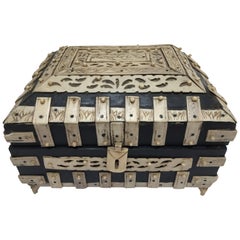
Anglo-Indian Vizagapatam Bombay Mughal Style Footed Box With Bone Overlay
Located in Moreno Valley, CA
Nice and unusual Indian Mughal style large decorative box, filigree and carved horn.
Anglo-Indian footed domed box with exceptional engraved details throughout with filigree and carved veneered bone plaques with arabesque carving.
Vizagapatam, late 19th century.
History of the Anglo-Indian Boxes
Beginning in the early part of the 18th century, Indian artisans made what came to be known as Anglo-Indian boxes for the English residents living in India, who eventually brought or sent them back to England. At the beginning of the 19th century, India began exporting these boxes commercially, although not in any significant numbers until the 1850s. People valued them so highly that manufacturers of tins copied the designs on them in the late 19th and early 20th century.
Anglo-Indian boxes fall into four groups: Rosewood or ebony boxes inlaid;
sandalwood boxes veneered; sandalwood boxes covered with Sadeli mosaic; and carved boxes often combined with Sadeli mosaic/
The first two categories came from Vizagapatam in East India while the last two came from Bombay in West India.
English traders discovered the rich woods and intricate workmanship of Indian artisans, so colonial government officials began to recognize the work of the Indian artists and craftsmen as a source for satisfying the need for furniture and boxes, which would both serve to enhance English households in India. This gave rise to the cabinetmaking workshops in Vizagapatam between Calcutta and Madras.
Craftsmen made the first boxes to be decorated with Sadeli mosaic of rosewood or ebony, incised to give further definition to the decoration, directly inlaid into the wood. The shape of the early boxes was either sloping at the front with a flatter section at the back, reminiscent of English writing slopes, or rectangular. Artisans inlaid the borders with stylized floral scrolls and the centers with a single floral motif following a circular or oval symmetrical or asymmetrical pattern. The edging was ornamental and protective, both helped protect the end grain against the weather.
Made in Vizagapatam, situated on the south east coast of India, near Madras
These exotic boxes...
Category
Antique Late 19th Century Indian Anglo Raj Decorative Boxes
Materials
Wood
$1,650
H 6.5 in W 9.75 in D 8 in
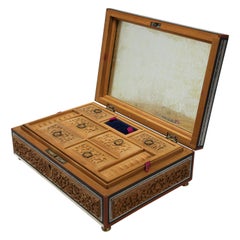
Anglo-Indian Footed Box with Lidded Compartments, 19th Century
Located in Moreno Valley, CA
19th century Anglo-Indian wooden box fitted with various compartments finely hand carved.
The top is finely hand carved with the Taj Mahal.
The interior with removable hand carved nine-lidded compartments, the front cover has a mirror, the whole exhibiting very fine workmanship.
This fine late Victorian Anglo-Indian box from India is in great condition for it age.
A beautiful example of an Anglo-Indian fine art...
Category
Antique Late 19th Century Indian Anglo-Indian Decorative Boxes
Materials
Sandalwood
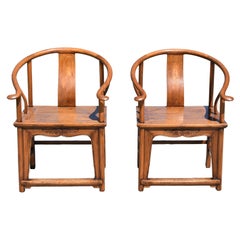
Chinese Horseshoe Chairs Oversize 19th Century
Located in Somis, CA
A pair of extra large, sold wood, 19th century Chinese Horseshoe Chairs. The solid, 2" thick, continuous rounded crest rail is composed of thre...
Category
Antique 19th Century Chinese Ming Furniture
Materials
Elm, Wood
$2,800 Sale Price / set
38% Off
H 38.5 in W 28 in D 25 in
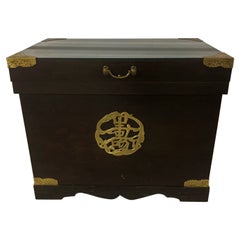
Black Asian Trunk with Brass Fittings, Early 20th Century
Located in Savannah, GA
Black Asian trunk with brass fittings, Early 20th century. Glass top that can be removed.
Category
Early 20th Century Japanese Furniture
Materials
Wood
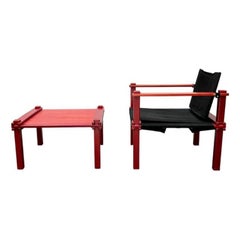
Set of 5 Mid-Century German Farmer Series Chairs and Table by Gerd Lange, 1960s
By Gerd Lange
Located in Hamburg, DE
Design classic from the “Bofinger Farmer Program” based on designs by Gerd Lange from the 1960s. Here in a rare version from the end of the 60s in red and black.
This collapsible fu...
Category
20th Century German Mid-Century Modern More Asian Art, Objects and Furni...
Materials
Cotton, Ash
$9,378 / set
H 27.95 in W 25.59 in D 25.59 in
Still Thinking About These?
All Recently ViewedMore Ways To Browse
Chinese Style Brass Chair
Varier Peel Chair
Varier Peel
Vintage Leather Massage Chair
Vintage Virginia House Maple Furniture
Vono Chair
Sempronia Chair
Marina Zalszupin
Spy Chair
Temi Stool
Vitra Id Trim
Vladimir Kagan Outdoor
Artek 62
Contemporary Iron Klismos Chair
Elf Chair
Jasper Morrison Ply
Julep Chaise Lounge
Julep Chaise