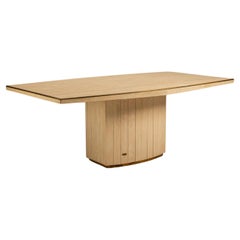
Dining Room Consist of Four Chairs, Two Armchairs and One Table by Willy Rizzo
About the Item
- Creator:Missoni (Designer),Willy Rizzo (Designer)
- Dimensions:Height: 28.75 in (73 cm)Width: 77.96 in (198 cm)Depth: 43.31 in (110 cm)
- Sold As:Set of 7
- Materials and Techniques:
- Place of Origin:
- Period:
- Date of Manufacture:1970s
- Condition:
- Seller Location:Illetas- Mallorca, ES
- Reference Number:1stDibs: LU161423341092
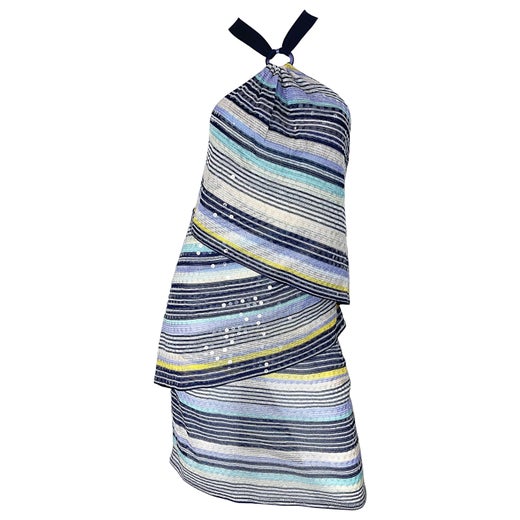
Missoni
In 1953, Ottavio “Tai” Missoni (1921–2013) and Rosita Missoni (b. 1931) opened a small knitwear shop in Gallarate, Italy, paving the way for what would become an iconic style of colorful chevron knit.
Missoni began with a tracksuit, which featured zippers down the legs because, as Rosita recalls it, “Tai was too lazy to take off his shoes when putting them on.” The couple’s fashion really took off, though, once they discovered the Raschel knitting machine on a trip to a shawl factory. The machine enabled the Missonis to knit multiple colors in a zigzag pattern, a motif that would go on to become synonymous with the Missoni brand across everything from its alluring vintage day dresses and sweaters to its purses, seating and rugs.
Missoni held its first fashion show in Florence in 1967 and caused a bit of a sensation when the models’ Lurex dresses proved translucent under the lights at the Pitti Palace. Scandal aside, the show went down in history as a hit, and the Missonis soon made their debut in the United States with the help of legendary fashion editor Diana Vreeland, who gave the variegated Missoni stripe the Vogue seal of approval, saying, “Who says a rainbow has seven colors? It has many shades.” (It was also Vreeland who reportedly introduced the Missonis to Neiman Marcus president Stanley Marcus, effectively shepherding the brand to the American market.)
Missoni’s many-shaded rainbow would soon become an emblem of the 1970s fashion scene, earning the brand a permanent place in the fashion canon. In 1973, the New York Times proclaimed: “Missoni’s weaved garments have ended up universal materialistic trifles, as Vuitton sacks and Gucci shoes.”
The brand branched into the home market in 1983, with Rosita overseeing this new venture, Missoni Home, which included furniture, textiles and accessories. Daughter Angela succeeded her mother at the helm of the brand, where she served as creative director until 2021 and is currently president; her brother Luca is CEO, while her daughter Margherita was creative director of M Missoni, a modestly priced offshoot that was discontinued in 2021.
Find vintage Missoni clothing and accessories today on 1stDibs.
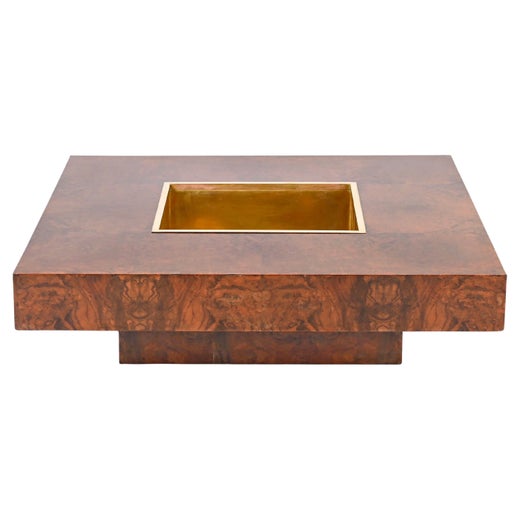
Willy Rizzo
Renowned Italian furniture designer Willy Rizzo is celebrated for having produced eye-catching, sensational showpieces that merged plush fabrics with wood, metal and glass. Influenced by European modernists and drawing on the spare forms and clean lines of the American mid-century modern style, Rizzo prized functionality and simplicity in his dazzling work.
Born in Naples, Rizzo never intended on designing furniture. Instead, he began pursuing photography at the age of 12. By the 1960s, he had become a notable photographer, having captured images of such celebrities as Marilyn Monroe, Fred Astaire and Spanish artist Salvador Dalí. His experience with furniture design came about inadvertently when he moved to Rome in 1966. There, Rizzo rented an apartment with his wife Elsa that he described as "practically uninhabitable." Dissatisfied with the Scandinavian furniture options on offer, Rizzo built sofas, coffee tables and other furniture to suit the space's strong modern vibe. When his friends saw what he had accomplished, they were enamored by his furniture creations and commissioned him to build similar items for them.
The demand for Rizzo’s furniture grew from there. He established a production facility and workshop in Tivoli, just outside of Rome, which grew to house over 150 employees. There, finding inspiration in the work of iconic architects including Ludwig Mies van der Rohe and Le Corbusier, he created more than 30 unique furniture designs. Over the years he opened boutiques around the world to showcase and sell his furniture.
Rizzo prided himself on seamlessly blending the contemporary with the classic. “It was about creating something new for a traditional setting,” he said of his work. From his sleek sideboards to his low-profile side tables, elegant chairs and entire living room sets, Rizzo's style sensibility is evident throughout every detail of his designs.
Rizzo sold his company in 1978 and returned to photography. However, the presence of his furniture resonated into the new century and is sure to impact interior décor enthusiasts into the next. Over the years, high-profile collectors of Rizzo’s work have included French actress Brigitte Bardot, Salvador Dalí and American musician Lenny Kravitz.
On 1stDibs, find a range of vintage Willy Rizzo tables, lighting, seating and storage pieces.
You May Also Like
Vintage 1960s Italian Dining Room Tables
Marble
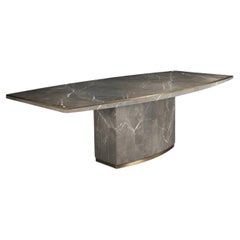
Late 20th Century Italian Modern Dining Room Tables
Chrome
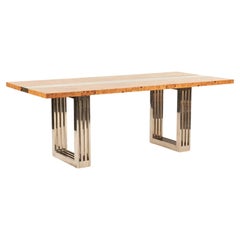
Late 20th Century Italian Organic Modern Dining Room Tables
Travertine
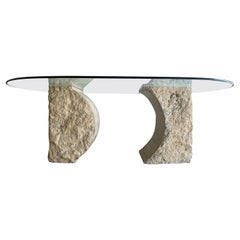
Vintage 1970s Italian Mid-Century Modern Dining Room Tables
Chrome
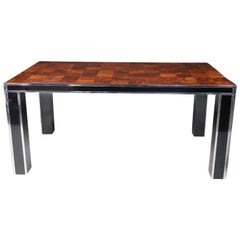
Vintage 1970s Italian Mid-Century Modern Dining Room Tables
Brass
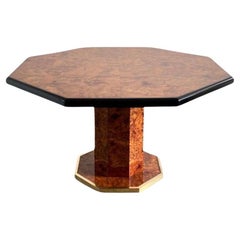
Vintage 1970s French Mid-Century Modern Dining Room Tables
Travertine, Brass
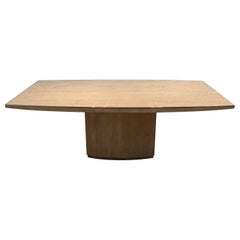
Vintage 1970s Dining Room Tables
Wood
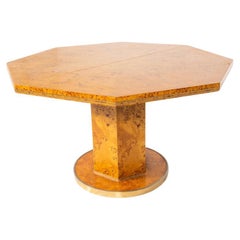
Vintage 1970s Italian Mid-Century Modern Dining Room Tables
Brass
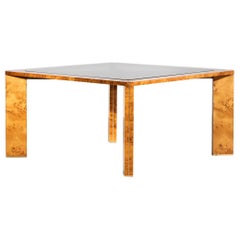
Vintage 1970s Italian Mid-Century Modern Dining Room Tables
Brass, Chrome
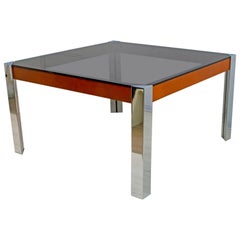
Vintage 1970s French Brutalist Dining Room Tables
Travertine, Brass