1 of 13

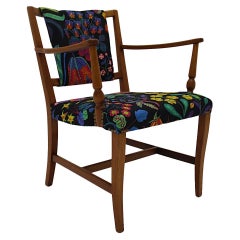
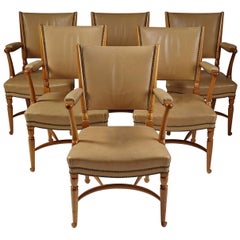
Vintage Green Josef Frank “Chair 2025” with Bamboo and Textile, Sweden, 1970s

$2,166.43List Price

You May Also Like

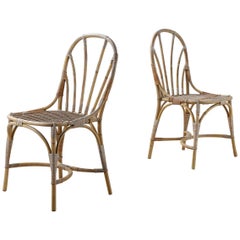
Pair of Bamboo Rattan Chairs by Josef Frank
By Josef Frank
Located in London, Charterhouse Square
A pair of Bamboo & Rattan Chairs designed in 1947 by Josef Frank in Sweden. The Austrian born architect is considered to be one of the most important figures in Swedish design. Fra...
Category

Vintage 1940s Swedish Chairs

Materials

Cane

Pair of Bamboo 
Rattan Chairs by Josef Frank
$2,429 / set
H 33.08 in W 16.15 in D 14.97 in
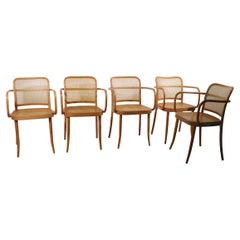
Set of 5 Josef Frank Prague Chairs Made in Czechoslovakia, circa 1970s
By Thonet, Josef Frank
Located in New York, NY
Exceptional set of five bentwood armchairs design attributed to Josef Frank, marked Made in Czechoslovakia. The chairs are constructed of steam bent wood, probably beech, and nylon, circa 1970's. A Mid 20th C version of the early 20th C Frank...
Category

Mid-20th Century Czech Vienna Secession Dining Room Chairs

Materials

Beech, Bentwood

Set of 5 Josef Frank Prague Chairs Made in Czechoslovakia, circa 1970s
$2,400 Sale Price / set
20% Off
H 31 in W 20 in D 17 in
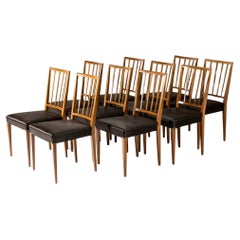
Modernist Mahogany and Horsehair Dining Chairs, Josef Frank, Sweden, 1940s
By Svenskt Tenn, Josef Frank
Located in Stockholm, SE
Set of ten dining chairs by Josef Frank, model #815, made from mahogany. Elegant, ribbed backs. Decor of brass nails around the corners of the seats. Original seats made from woven ...
Category

Vintage 1940s Swedish Scandinavian Modern Chairs

Materials

Mahogany

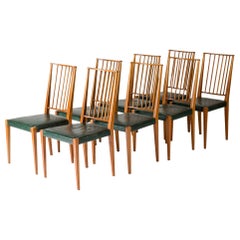
Midcentury Modern Mahogany and Leather Dining Chairs, Josef Frank, Sweden, 1950s
By Svenskt Tenn, Josef Frank
Located in Stockholm, SE
Set of eight dining chairs by Josef Frank, made from mahogany with green leather seats. Elegant slender lines with tall, ribbed backs. Decor of brass nails around the corners of the ...
Category

Vintage 1950s Swedish Scandinavian Modern Chairs

Materials

Leather, Mahogany

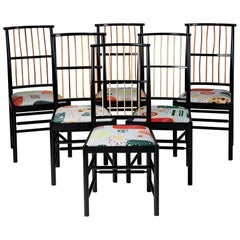
Set of Six Chairs Model 2025 Designed by Josef Frank for Svenskt Tenn
By Josef Frank
Located in Stockholm, SE
Set of six chairs model 2025 designed by Josef Frank for Svenskt Tenn, Sweden, 1950s. Lacquered wood frame and a fabric upholstered seat. Marked. Josef Frank designed this chair i...
Category

Mid-20th Century Swedish Mid-Century Modern Chairs

Materials

Fabric, Upholstery, Wood, Bentwood, Lacquer
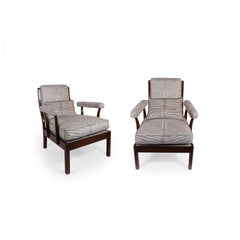
A Pair of Josef Frank Model 354 Chairs
By Svenskt Tenn, Josef Frank
Located in New York, NY
A pair of Model 354 lounge chairs designed by Josef Frank for Svenskt Tenn. Each chair has a sculpted solid mahogany frame with a gently angled back and curved legs. The front legs a...
Category

Vintage 1930s Swedish Chairs

Materials

Mahogany

A Pair of Josef Frank Model 354 Chairs
$21,000 / set
H 35 in W 25 in D 31 in
Josef Frank Side Chair Easy Chair Model 2067 for Svenskt Tenn circa 1948 Sweden
By Svenskt Tenn, Josef Frank
Located in Vienna, AT
Josef Frank side chair or easy chair model no. 2067 from walnut and fabric for Svenskt Tenn 1947, Sweden. A fabulous side chair or easy chair designed by Josef Frank for Svenskt Ten...
Category

Vintage 1940s Swedish Side Chairs

Materials

Fabric, Walnut

Easy Chair in Beech and Original Fabric by Josef Frank, 1934
By Josef Frank
Located in Limhamn, Skåne län
Easy Chair in Beech and Original Fabric by Josef Frank, 1934 Additional Information: Material: Beech and original fabric Style: Mid century, Scandinavian Rare easy chair model 336 P...
Category

20th Century Swedish Scandinavian Modern Chairs

Materials

Beech, Fabric

Set of Six Chairs Designed by Josef Frank for Svensk Tenn, Model 725, Sweden
By Svenskt Tenn, Josef Frank
Located in Stockholm, SE
Set of six chairs designed by Josef Frank for Svensk Tenn, Model 725. Sweden. 1938. Mahogany and original leather. Literature: Kristina Wängberg Eriksson, Jan Christer Eriksson, "Josef Frank Möbelformgivaren", Carlsson Bokförlag, Stockholm 2014, p. K 18 H: 90 cm W: 58 cm D: 63 cm SH: 43 cm Armrest height: 69 cm (at the highest point) Josef Frank was a true European, he was also a pioneer of what would become classic 20th century Swedish design and the “Scandinavian Design Style”. Austrian- born Frank started his design career as an architect after having trained at the Technische Hochschule in Vienna between 1903 and 1910. After his training he went on to teach at Kunstgewerbeschule (The Viennese School of Arts and crafts) where he developed and espoused the new school of modernist thinking towards Architecture and Design that was coming to fruition in Vienna at the time. He also went on to lead the Vienna Werkbund throughout the 1920s. This was a truly progressive group of Architects and Designers who set about improving the daily lives of Austrian people through modernist design and architecture in partnership with Arts and Crafts ideals and construction. Frank’s leadership of the Werkbund had already cemented his place at the forefront of European design. Frank’s time in Vienna was typified by his design for the “Die Wohnung” exhibition of the Deutscher Werkbund in Stuttgart, 1927 where he exhibited along side his contemporaries at the forefront of design, such as the likes of Le Corbusier and Walter Gropius. Here he showed a specially designed pair of flat-roofed reinforced concrete houses in what is now seen as a typical modernist style. What separated Frank’s house from the other 32 houses of the exhibition was the interior and furniture inside the building. It was described as “Neo-Classical” and filled with an eclectic mix of period pieces, modern design and pieces designed by Frank himself that seemed to cross the two worlds. This was a complete opposite direction to that which his fellow Architects were travelling in with their pared back and angular aesthetics. Frank said of his own work: “The house is not a work of art, simply a place where one lives,” and by this reasoning Frank rejected the regimental mechanisation of the living space that his contemporaries believed in, instead he set about creating congenial and spontaneous interiors. Frank’s practice saw him placing the bright colours and the soft forms of nature back into the furnishings and interiors that he thought modernism sorely mist. Frank, along with Oskar Walch set up Haus und Garten in Vienna in 1925. This was Frank’s first commercial foray into furniture and home furnishings and the company went on to become the most influential furnishing house in Vienna with a riotous depth of colour and interesting shapes becoming the trademark of their design. However this success was to come to an end with rise of Nazism in Vienna in the early 1930’s. Frank was Jewish, and he and his wife Anna decided they would leave Vienna for her motherland: Sweden, in 1933. Frank continued to design for Haus and Garten, visiting Vienna occasionally and designing the pieces that would continue to be the company’s best...
Category

Vintage 1930s Swedish Scandinavian Modern Chairs

Materials

Leather, Mahogany

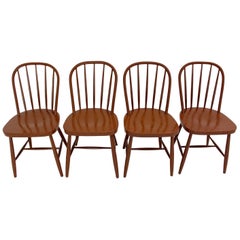
Art Deco Vintage Brown Beech Windsor Chairs Josef Frank, circa 1930, Vienna
By Josef Frank
Located in Vienna, AT
Art Deco vintage Windsor chairs or dining chairs Josef Frank attributed circa 1930 in Vienna and executed by Thonet-Mundus. It features a company´s branding label. The chairs from br...
Category

Vintage 1930s Austrian Art Deco Windsor Chairs

Materials

Bentwood, Beech

Still Thinking About These?

All Recently Viewed