Items Similar to Vintage Set Four French Ash and Rush Seated Straw Original Charlotte Perriand No
Want more images or videos?
Request additional images or videos from the seller
1 of 12
Vintage Set Four French Ash and Rush Seated Straw Original Charlotte Perriand No
$2,595.95
£1,900
€2,231.56
CA$3,606.56
A$3,879.37
CHF 2,073.25
MX$45,726.68
NOK 26,138.78
SEK 23,895.81
DKK 16,673.49
About the Item
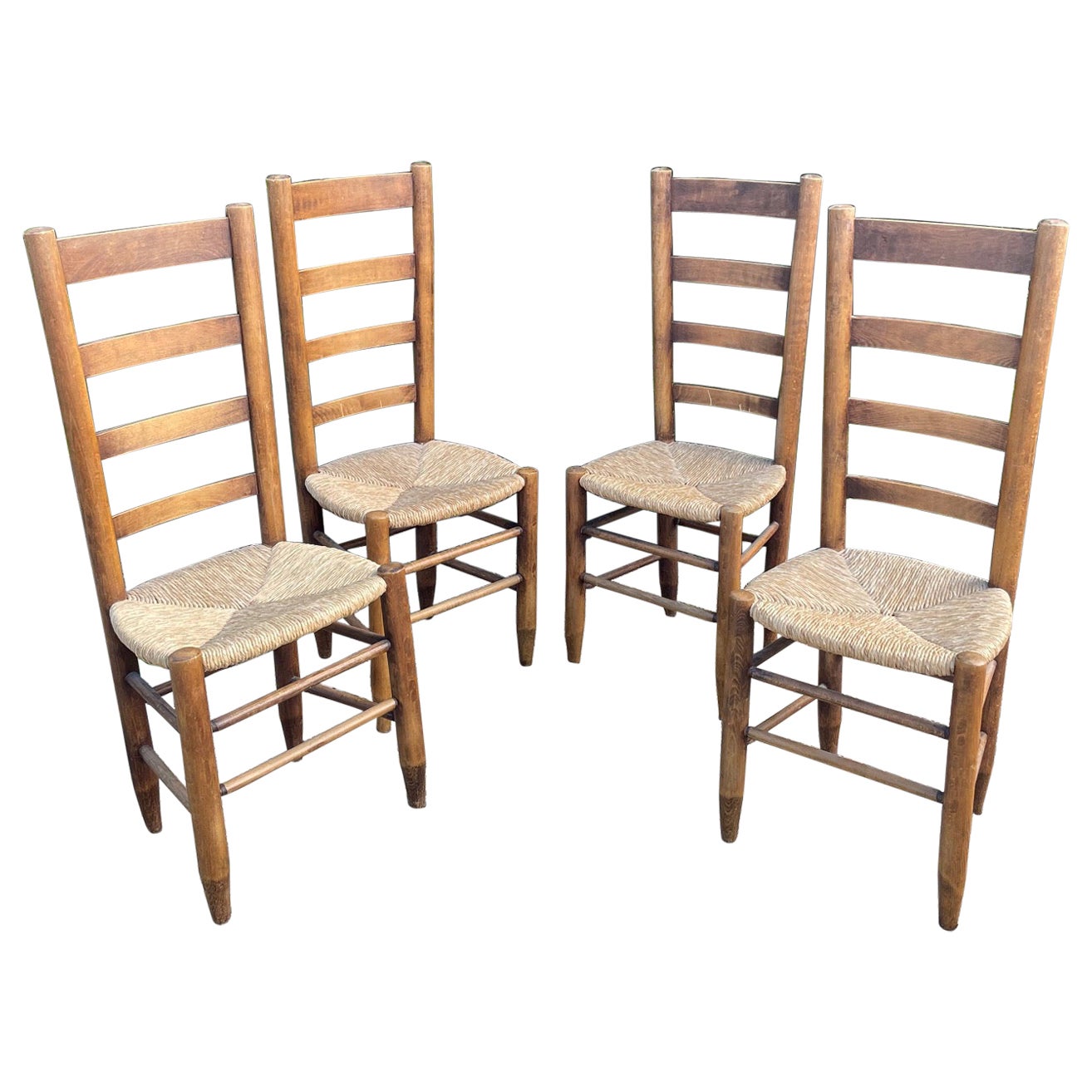
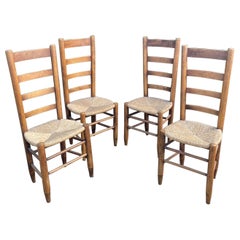
Vintage Set Four French Ash and Rush Seated Straw Original Charlotte Perriand No. 19 Bauche Chairs
The Model No. 19 chair was designed by architect Charlotte Perriand in the 1940s. Bearing label “Prod Auth No” to each frame. Dating from the mid twentieth century. Good solid order throughout.
This set of four French ash and rush-seated chairs, based on Charlotte Perriand’s celebrated Model No. 19, represents a compelling intersection of modernist thought, vernacular craft, and human-centred design. Originally conceived in the 1940s, these chairs are rooted in one of the most influential periods of twentieth-century furniture design—an era when European designers sought to reconcile the ideals of modernism with the warmth, tactility, and moral responsibility of traditional craftsmanship. Bearing “Prod Auth No” labels to each frame and dating from the late twentieth century, these examples are faithful to the original design, constructed with sensitivity to form, material, and intent. They remain in good, solid order throughout, offering not only functional seating but also an enduring testament to one of modernism’s most important creative voices.
Charlotte Perriand (1903–1999) was among the most radical and transformative designers of the modern movement. While she is often discussed in relation to her collaboration with Le Corbusier, her independent work stands as one of the most significant contributions to twentieth-century design in its own right. Perriand rejected the idea that modernism should be cold, industrial, or detached from human experience. Instead, she believed that furniture should respond directly to the way people lived—how they sat, ate, worked, rested, and gathered. Her work was grounded in ergonomics, social responsibility, and a deep respect for natural materials.
Model No. 19 exemplifies these principles. The chair’s structure is simple yet considered, its form understated but expressive. The ash frame offers strength, resilience, and visual warmth, while the rush seat introduces a tactile, organic surface that softens the geometry of the piece. Unlike the tubular steel furniture often associated with early modernism, these chairs feel rooted in the countryside as much as the studio. They belong as comfortably in a farmhouse kitchen as they do in a minimalist interior, bridging centuries of European furniture tradition with the clarity of twentieth-century design thinking.
Perriand’s interest in rural forms and vernacular materials became particularly pronounced during and after the Second World War. Like many designers of her generation, she became increasingly disillusioned with the mechanistic idealism of pre-war modernism. The devastation of Europe prompted a reassessment of how design could serve society in a more humane and sustainable way. Perriand turned to wood, straw, rush, and handcrafted techniques, believing that these materials carried both emotional resonance and ecological wisdom. The No. 19 chair reflects this shift: it is not a statement of industrial progress, but one of quiet, enduring utility.
The rush seat, woven by hand, is central to the chair’s character. It is breathable, flexible, and responsive to the body, ageing gracefully with use. Over time, rush develops a soft patina, enhancing its visual depth rather than diminishing it. This emphasis on ageing was important to Perriand. She believed that furniture should not be disposable, but should evolve alongside its owners, accumulating memory and meaning through use.
While Charlotte Perriand was fiercely independent, her most famous professional relationship was with Le Corbusier, whom she joined in 1927 at the age of just 24. Initially dismissed by him with the remark, “We don’t embroider cushions here,” she soon proved herself indispensable. Perriand brought a sensitivity to materials, a deep understanding of ergonomics, and a humanistic approach that profoundly shaped the direction of the studio. Many of the iconic designs attributed to Le Corbusier from this period—most notably the LC4 chaise longue, LC2 armchair, and LC3 sofa—were co-designed with Perriand and Pierre Jeanneret.
In many ways, Perriand became both muse and counterweight to Le Corbusier. Where he often approached design from a theoretical and architectural standpoint, she brought an intuitive understanding of lived experience. She observed how people sat, leaned, stretched, and relaxed. She introduced warmth where he sought precision, natural materials where he favoured industrial ones, and emotional intelligence where he pursued abstraction. Their creative tension was productive, pushing modernism into new and more humane territory.
The Model No. 19 chair belongs to the later phase of Perriand’s career, when she had moved beyond the strict rationalism of early modernism and embraced a more organic, nature-inspired language. During the 1940s and 1950s, she spent time in Japan, where she was deeply influenced by traditional Japanese architecture, joinery, and spatial philosophy. She admired the way Japanese design prioritised simplicity, modularity, and harmony with nature—values that resonated strongly with her own evolving beliefs.
This influence is evident in the No. 19 chair. Its proportions are calm and balanced, its joints honest and visible, its materials allowed to speak for themselves. There is no superfluous ornament, yet the chair feels far from austere. Instead, it exudes a quiet poetry, born of restraint and purpose. Perriand once said, “The extension of the art of dwelling is the art of living.” This chair embodies that idea: it is not merely something to sit on, but a tool for living well.
The late twentieth-century examples offered here maintain the spirit of the original designs while benefiting from modern craftsmanship and stability. The “Prod Auth No” labels confirm their authorised production, reflecting the continued relevance of Perriand’s work decades after its inception. These chairs were not conceived as museum objects but as living furniture—meant to be used, moved, gathered around, and passed down.
What makes Perriand’s designs so enduring is their refusal to be dogmatic. While deeply modern, they never feel dogmatically modernist. They accept the contradictions of life: the need for both order and comfort, clarity and warmth, structure and softness. In this sense, her work stands apart from many of her contemporaries. Where some modernist furniture feels like an ideological manifesto, Perriand’s feels like an invitation.
Her legacy today is immense. Contemporary designers continue to draw inspiration from her emphasis on modular living, sustainability, and adaptability. In a world increasingly concerned with ecological responsibility and emotional wellbeing, her work feels more relevant than ever. The No. 19 chair is not a relic of a bygone era; it is a blueprint for a better one.
Placed within an interior, these chairs function on multiple levels. Visually, they bring warmth and texture, their rush seats catching light in subtle ways. Structurally, they offer reliability and comfort. Conceptually, they anchor a space in design history, connecting the present with one of the most fertile moments of twentieth-century creativity.
In dining rooms, studios, or reading spaces, they lend an atmosphere of quiet intelligence. They do not demand attention, but they reward it. Each woven seat reveals the hand of the maker; each frame speaks of careful proportion. There is nothing accidental here—only considered simplicity.
Charlotte Perriand once remarked that design should be “in the service of man.” These chairs fulfil that brief with humility and grace. They do not dominate a space; they support it. They do not impose; they adapt. They are at once modest and monumental, practical and poetic.
To own such chairs is to own a piece of design history—not the loud, manifesto-driven modernism of steel and slogans, but the gentler modernism of human needs, natural materials, and enduring beauty. They speak of a time when designers believed that good furniture could improve daily life, not through spectacle, but through understanding.
This set of four chairs offers not only seating, but a story: of a woman who reshaped modernism from within, of a partnership that changed the course of design history, and of a philosophy that continues to resonate. They are objects of use, objects of thought, and objects of quiet pleasure.
- Attributed to:Charlotte Perriand (Artist)
- Dimensions:Height: 31.89 in (81 cm)Width: 16.93 in (43 cm)Depth: 15.36 in (39 cm)Seat Height: 19.3 in (49 cm)
- Style:Arts and Crafts (In the Style Of)
- Materials and Techniques:
- Place of Origin:
- Period:
- Date of Manufacture:1940
- Condition:Wear consistent with age and use. Good solid order throughout.1900.
- Seller Location:Nottingham, GB
- Reference Number:Seller: 17221stDibs: LU10787248378532
About the Seller
New to 1stDibs
Joined in the past six months.
No Reviews Yet
Vetted Professional Seller
Every seller passes strict standards for authenticity and reliability
1stDibs seller since 2026
- ShippingRetrieving quote...Shipping from: Nottingham, United Kingdom
- Return Policy
More From This Seller
View AllVintage Rare Robert Thompson “Mouseman” Adzed Oak Double Settle Panelled Bench
By Robert (Mouseman) Thompson
Located in Nottingham, GB
Vintage Rare Robert Thompson “Mouseman” Adzed Oak Double Settle Panelled Bench A rare and highly desirable vintage oak double settle by Robert Thompson of Kilburn, Yorkshire, widely ...
Category
Mid-20th Century British Arts and Crafts Benches
Materials
Oak
You May Also Like
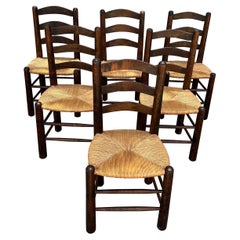
Set of 6 Charlotte Perriand Style Rush Chair
By Charlotte Perriand
Located in Miami, FL
Set of 6 Charlotte Perriand Style Rush Chair.
Category
Vintage 1960s French Mid-Century Modern Dining Room Chairs
Materials
Rush, Wood
$5,450 / set
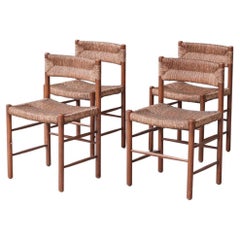
Set of Four Mid-Century Charlotte Perriand
Dordogne
Rush Dining Chairs
By Charlotte Perriand
Located in London, GB
A set of four dining chairs by Charlotte Perriand for Robert Sentou.
Rush seat rests and backs on ash frames.
France, c1950s.
'Dordogne' Model.
Vintage condition, the...
Category
Mid-20th Century French Dining Room Chairs
Materials
Wood
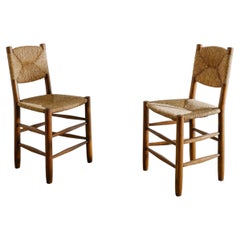
Pair of French "N19" Wooden Chairs in Ash
Straw by Charlotte Perriand, 1960s
By Charlotte Perriand
Located in Stockholm, SE
Rare pair of French mid century "Meribel N 19" dining / office chairs in dark stained ash and straw rattan seats by Charlotte Perriand produced for Steph Simmon in France 1950s. In g...
Category
Vintage 1960s French Mid-Century Modern Dining Room Chairs
Materials
Straw, Ash
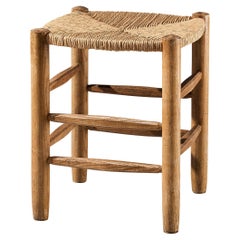
Charlotte Perriand Stool in Ash and Straw
By Charlotte Perriand
Located in Waalwijk, NL
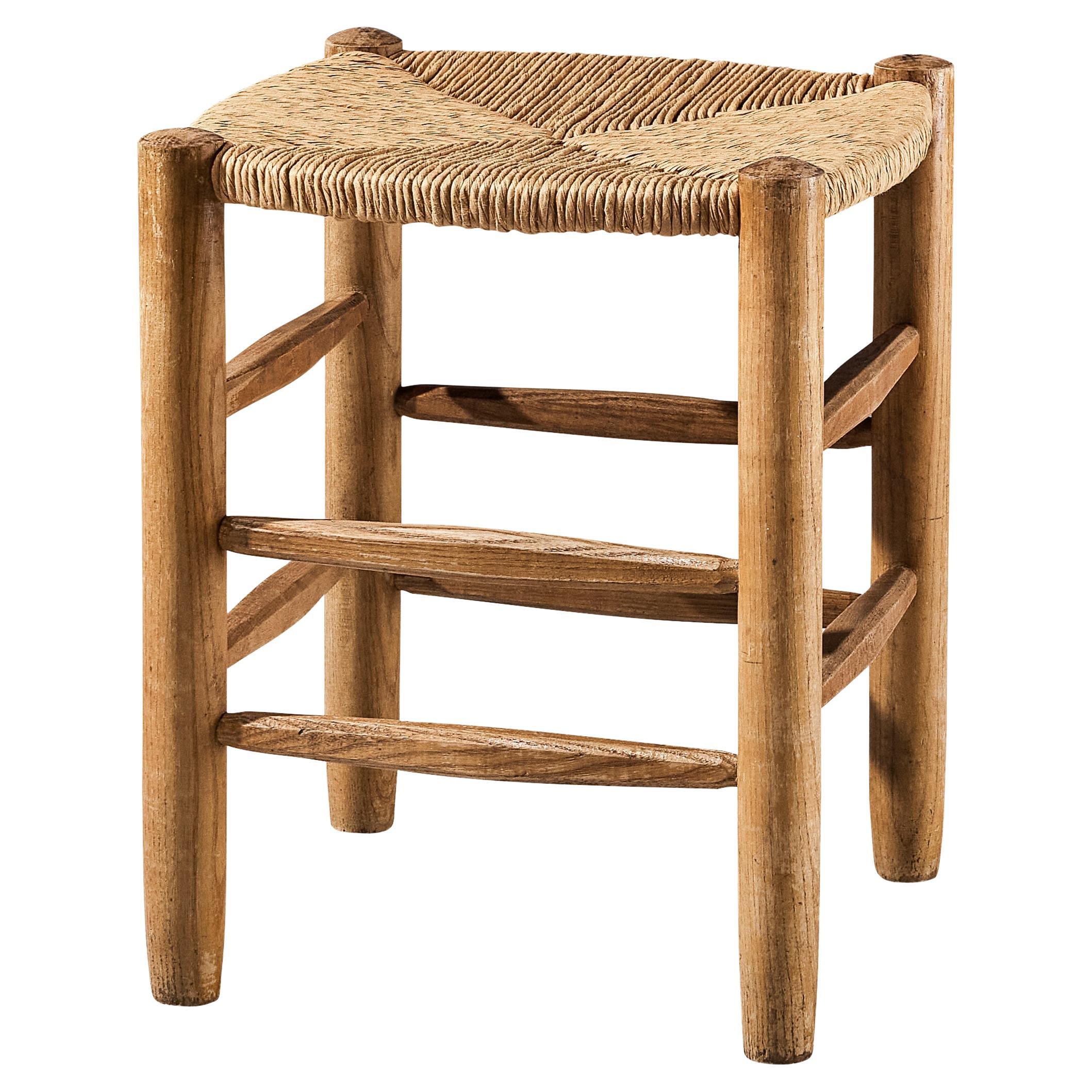
Charlotte Perriand, stool, part of the '19' series, ash, straw, France, 1950s
A beautiful design by Charlotte Perriand: this stool, a piece from the 1950s that embodies natural beauty and impeccable design. Crafted with precision, the stool features a sturdy ash frame, boasting four straight, thick legs...
Category
Vintage 1930s French Mid-Century Modern Stools
Materials
Straw, Ash
Set of 4 Straw Chairs in the style of Charlotte Perriand
By Charlotte Perriand
Located in Brooklyn, NY
In good original condition, with minor wear consistent with age and use, preserving a beautiful patina.
Category
Mid-20th Century Mid-Century Modern Chairs
Materials
Straw, Wood, Beech
$2,100 Sale Price / set
50% Off
Set of 2 Vico Magistretti / Charlotte Perriand Style Rush Dining Room Chairs
By Vico Magistretti, Charlotte Perriand, Cassina
Located in Boven Leeuwen, NL
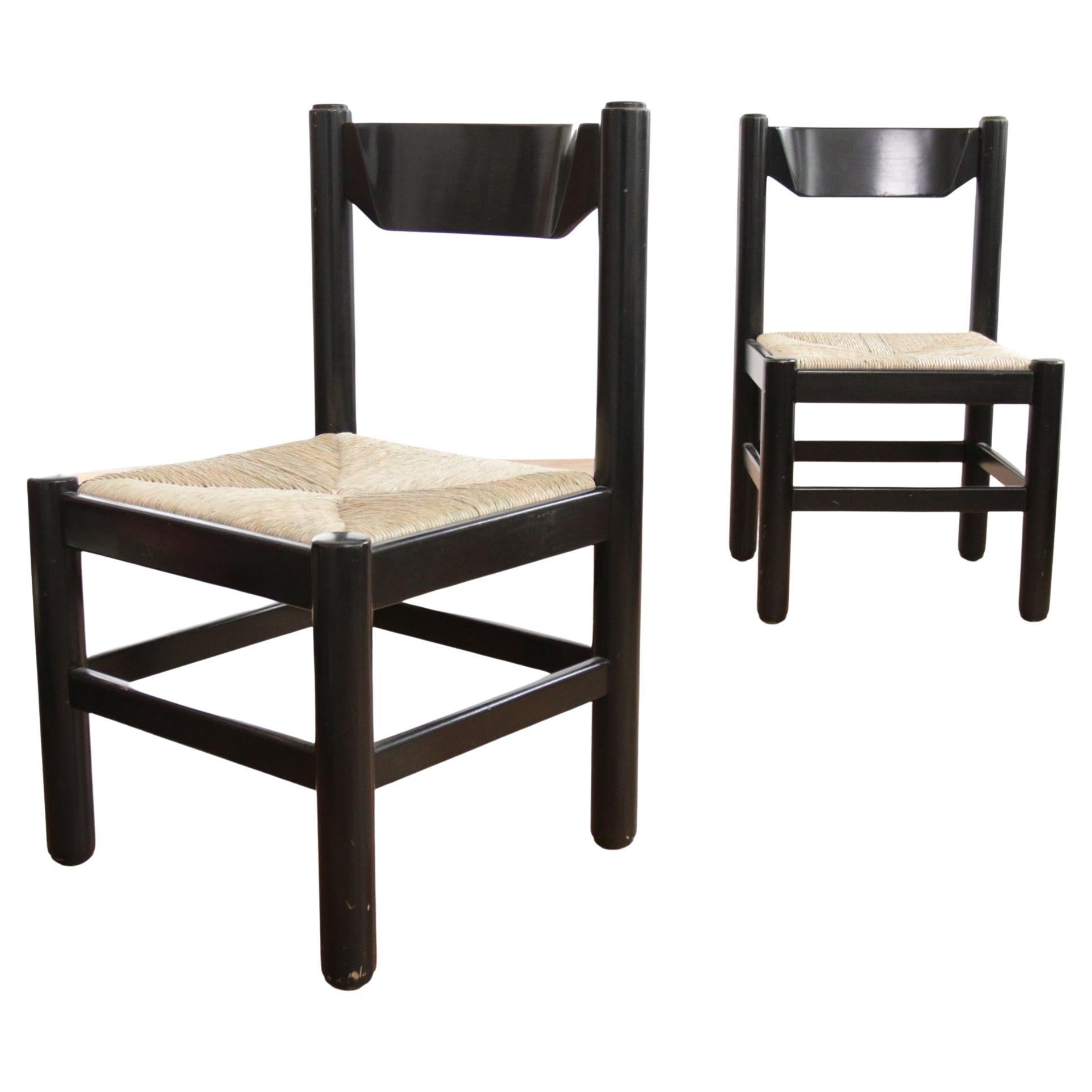
Beautiful design dining room chairs dating from the ‘70s.
These chairs are often attributed to Vico Magistretti, produced by Cassina, made in Italy.
Made of solid black coated woo...
Category
Vintage 1970s Italian Mid-Century Modern Chairs
Materials
Wood, Rush