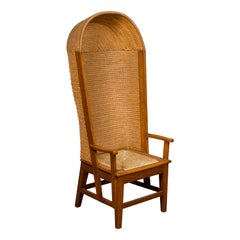
Original Liberty of London Orkney Chair in Pine and Oat Straw, Ca. 1900
About the Item
- Creator:Liberty of London (Retailer)
- Dimensions:Height: 41 in (104.14 cm)Width: 23.5 in (59.69 cm)Depth: 22.5 in (57.15 cm)Seat Height: 14.75 in (37.47 cm)
- Style:Edwardian (Of the Period)
- Materials and Techniques:
- Place of Origin:
- Period:
- Date of Manufacture:Late 1800s-Early 1900s
- Condition:Wear consistent with age and use. In fine antique condition with wear typical for its age.
- Seller Location:Peabody, MA
- Reference Number:1stDibs: LU888023750792
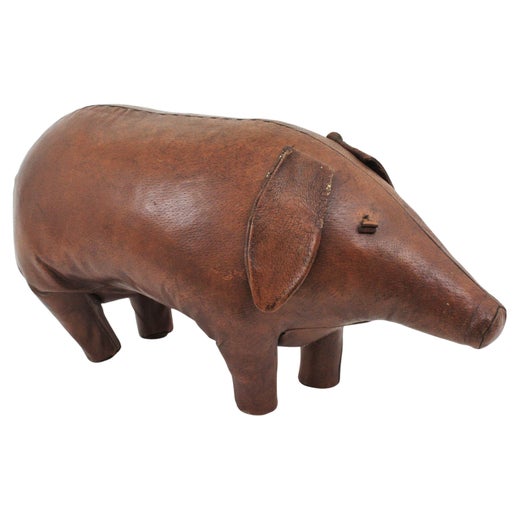
Liberty of London
The Liberty of London department store, located in the fashionable west end of London in the United Kingdom, has been selling luxury items since 1875. From leather footstools in the shape of a hippo to elegantly hand-carved Moroccan coffee tables, there’s something to please every discerning collector. And while it became a reputable retailer over time, the original Liberty Co. was a pivotal force in the development of the Aesthetic, Art Nouveau and the Arts and Crafts movements. As the champion of eclectic design throughout the centuries, Liberty continues to collaborate with designers to produce covetable interior fashion and accessories.
Arthur Liberty was born in 1843 in Buckinghamshire, England. His father, a draper, encouraged him to apprentice as a draper at age 16. Instead, he took an offer to work at Farmer and Rogers, a women’s fashion store. After ten years, he decided to strike out on his own. In 1875 he borrowed money from his father-in-law and leased a small store on the very prominent Regent Street, naming it the East India House.
Liberty’s store was very eclectic. It served as an emporium for Eastern imports, with a wildly varied collection of ornaments, fabrics and objects d’art — including imported antiques — on offer. In London, there was already a demand for and an interest in imported goods from India and elsewhere, so his business concept was an immediate success. He repaid his loan in less than two years and continually expanded by buying up all the buildings on his side of the street. His company was so successful that even the original Victoria and Albert Museum purchased Eastern textiles for its collection from his store.
By 1890, the firm came to be known as Liberty Company. Liberty died in 1917, but the business continued to thrive. In 1924, the current iteration — and now world-famous — of the store was constructed. It was built in the Tudor Revival style and the structure's frame was made of wood salvaged from two British warships. In the 1950s and '60s, the store, now known as Liberty’s, helped spark the counterculture youth movements of the era as beatniks and hippies purchased fabrics and furnishings from this iconic store.
On 1stDibs, find antique Liberty of London tables, decorative objects, seating and more.
You May Also Like
21st Century and Contemporary Chairs
Wood
Antique 1880s French Victorian Chairs
Upholstery, Pine
Antique Early 1900s Chinese Edwardian Furniture
Hardwood
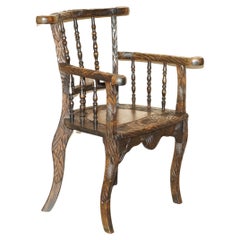
Antique Early 1900s Chinese Qing Chairs
Wood
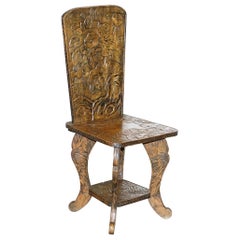
Vintage 1960s European Mid-Century Modern Chairs
Straw, Elm
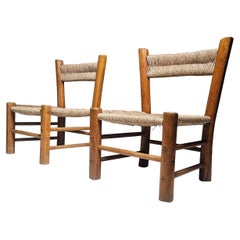
Mid-20th Century English Mid-Century Modern Stools
Leather
Early 20th Century Scottish Wingback Chairs
Straw, Wood, Rush
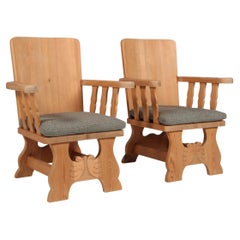
Vintage 1970s Norwegian Scandinavian Modern Lounge Chairs
Bouclé, Pine
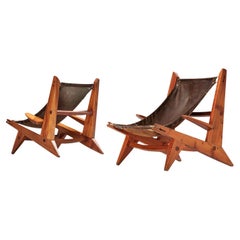
Vintage 1950s French Mid-Century Modern Lounge Chairs
Leather, Pine
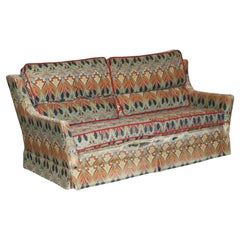
Early 20th Century English Art Deco Sofas
Upholstery
More From This Seller
View All1990s French Post-Modern Lounge Chairs
Steel
Vintage 1950s Hong Kong Campaign Armchairs
Brass
20th Century Unknown Art Deco Lounge Chairs
Leather, Oak
Vintage 1960s Danish Scandinavian Modern Lounge Chairs
Leather, Upholstery, Wood
Vintage 1950s Danish Scandinavian Modern Lounge Chairs
Upholstery, Teak
Vintage 1950s American Mid-Century Modern Lounge Chairs
Upholstery, Wood