1 of 7
French Napoleon III Rope Stool
$4,800List Price
About the Item
- Dimensions:Height: 16 in (40.64 cm)Diameter: 22 in (55.88 cm)Seat Height: 16 in (40.64 cm)
- Style:Napoleon III (Of the Period)
- Materials and Techniques:
- Place of Origin:
- Period:
- Date of Manufacture:19th Century
- Condition:Wear consistent with age and use.
- Seller Location:Natchez, MS
- Reference Number:Seller: 33131stDibs: LU808118396992
Authenticity Guarantee
In the unlikely event there’s an issue with an item’s authenticity, contact us within 1 year for a full refund. DetailsMoney-Back Guarantee
If your item is not as described, is damaged in transit, or does not arrive, contact us within 7 days for a full refund. Details24-Hour Cancellation
You have a 24-hour grace period in which to reconsider your purchase, with no questions asked.Vetted Professional Sellers
Our world-class sellers must adhere to strict standards for service and quality, maintaining the integrity of our listings.Price-Match Guarantee
If you find that a seller listed the same item for a lower price elsewhere, we’ll match it.Trusted Global Delivery
Our best-in-class carrier network provides specialized shipping options worldwide, including custom delivery.You May Also Like
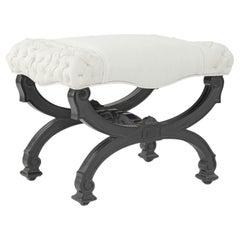
Napoleon III Stool
Located in Houston, TX
Napoleon III stool, circa 1870-1889: ebonized frame newly covered in white linen.
Note: Regional differences in humidity and climate during shipping may cause antique and vintage wood...
Category
Antique Late 19th Century French Napoleon III Footstools
Materials
Linen, Wood
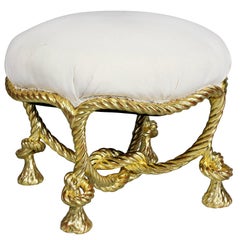
Napoleon III Giltwood Rope Tabouret
Located in Essex, MA
Circular with new muslin upholstery, conforming carved rope legs and stretchers ending on tassel feet, casters. Completely regilded with 23-karat gold leaf.
Category
Antique 1860s French Napoleon III Stools
Materials
Other
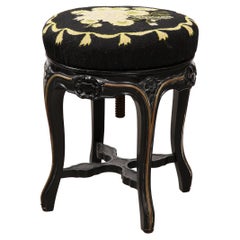
French Napoleon III Piano Stool
Located in Lyndhurst, NJ
Having an early needle point upholstered seat which can be turned to adjust height. The elegantly carved frame with an ebonized and gilded finish.
Category
Antique 19th Century Stools
Materials
Wood
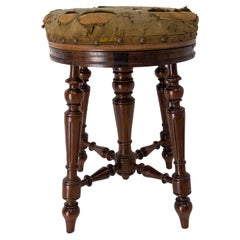
Pair of Walnut French Napoleon III Style Stools
Located in New York, NY
Pair of walnut French Napoleon III style stools /ottomans. Upholstered in a linen-blend.
Category
Vintage 1950s Napoleon III Stools
Materials
Linen, Walnut

Napoleon III Walnut Piano Stool French, circa 1880
Located in Labrit, Landes
Piano stool height-adjustable to be recovered.
Circa 1880, French, of the period Napoleon III
Good condition.
Shipping:
L35 P35 H49 7,2 kg.
Category
Antique 1880s French Napoleon III Stools
Materials
Upholstery, Walnut
French Napoléon III 1870s Walnut Upholstered Stools with Scrolling Accents
Located in Atlanta, GA
A pair of French Napoléon III walnut stools from the late 19th century, with scrolling accents and new upholstery. Created in France at the end of Emperor Napoléon III's reign, each ...
Category
Antique Late 19th Century French Napoleon III Stools
Materials
Upholstery, Walnut

$5,500 / set
H 23.75 in W 23 in D 17.5 in
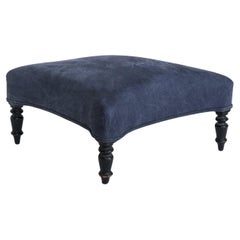
Antique French 19th C Napoleon III Style Stool or Foot Bench
Located in AMSTERDAM, NH
Refined 19th Century Napoleon III Style Stool or Foot Bench with a distinctive blue linen upholstery, ca. 1880.
This exquisite stool serves as a comfortable complement to any sofa, ...
Category
Antique 19th Century French Napoleon III Stools
Materials
Linen, Wood
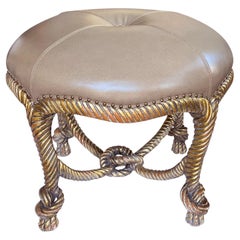
Napoleon III Style Carved Giltwood Rope-Twist Stool; Manner of A.M.E. Fournier
By A.M.E Fournier
Located in San Francisco, CA
the circular tabouret with new decking above a rope-twist giltwood frame with cabriole supports with knotted feet all joined by an x-form stretcher centering a robust central knot; f...
Category
Vintage 1950s French Rococo Stools
Materials
Wood
$5,500
H 20 in Dm 25 in
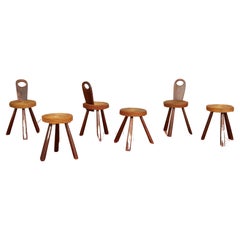
French Rope Stools
By Adrien Audoux and Frida Minnet
Located in Beverly Hills, CA
French rope stools attributed to Audoux Minet with fantastic patina
Sold individually
Category
Vintage 1950s French Stools
Materials
Rope, Oak
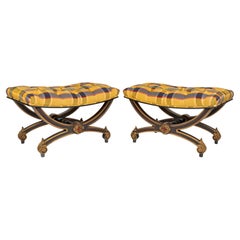
A French Napoleon III Pair of Louis XVI Style Curule Stools, circa 1900
By Maison Jansen
Located in Saint-Ouen, FR
A French 19th Century Pair of Large Rectangular Curule Stools
Partially gilt, blackened and red lacquered wood, carved decoration with acanthus leaves and rosaces.
The 4 feet linked by a stretcher.
Louis XVI Style
Napoléon III Period
Circa 1900
Used tartan chintz upholstery
Attributed to Maison Jansen
Jansen, the French Luxury
Opulence, refinement, audacity of style marriages… so many words agree with Maison Jansen. Through this name, a whole era sounds like a reminder of a certain French chic…
Some names evoke immutable images, atmospheres... Like Jansen, for example. Let’s close our eyes… The 1960s and 1970s are at their peak. France is doing well. It is a country of full employment where everything seems possible. Within the international Jet Set, a carefree crowd of movie stars, public figures, literary idols and crowned heads, we love the Maison Jansen, its taste for styles struck with a good quality exuberance, and its brilliant side.
It all began in 1880, when the Dutchman Jean Henri Jansen founded the eponymous house in Paris. Jansen is part of the continuity of these world-famous furniture manufacturers and companies that operated under the Second Empire and at the time of the Universal Exhibitions, as the ‘Escalier de Cristal’ teaches.
At that time, the Union Centrale des Beaux-Arts appliqués à l'Industrie and the Société du musée des Arts Décoratifs merged to form the Union Centrale des Arts Décoratifs.
Supported by both gallery owners, collectors and manufacturers, this
organization gives the «la» to the whole profession, and in the prevailing politico-ideological slump (France was defeated by Prussia in 1871 and Napoleon III is in exile), the ‘Union Centrale des Art Décoratifs’ focuses production on the celebration of past styles. While this nostalgia evokes memories of an era that we imagine more stable, an innovative exoticism will be all the rage: the reign of Turkish style and Japonisme.
The Jansen house masterfully rushed into the «exotic» trend, but quickly
developed a style derived from the ornamental splendor of the eighteenth, then a little later, so-called «imperial» styles mainly intended for royal families. After the First World War, J.H Jansen was joined by the cartoonist Albert Cazes, by Stéphane Boudin and by Pierre Delbée, who successively directed the house when it disappeared in 1929. At the end of the Kennedy era, Boudin completely redecorated the White House, at the request of the First Lady, Jackie, who had fallen in love with his work after discovering it at Malmaison.
In 1971, Jansen joined forces with Leleu-Deshays and continued its quest for excellence. From 1969 to 1979, the dandy decorator Serge Robin took the reins of the house, granting it an eclectic and luxurious style: he revisited the great eras of French art, from the Renaissance to Louis XVI, by modernizing them with more contemporary pieces in Plexiglas or wrought iron. His recom-posed and sophisticated style met with resounding success. When Jackie Kennedy, who became the wife of the great Greek shipowner Aristotle Onassis, moved to France, the young architect married Louis XVI-style furniture to modernist designs from the 1950s.
When the Shah of Iran decided to celebrate the 250th anniversary of the Persian Empire in 1971, Serge Robin and his teams turned to the grandiose and ephemeral setting of Persepolis. A hundred semi-trailers then left the workshops on Rue Saint-Sabin to reach Teheran. At the same time, Princess Soraya of Iran commissioned her a sumptuous palace for Avenue Montaigne, the princes Faisal bin Fahd of Arabia and Mubarak Al-Sabah, and the Agnelli snatched it.
On the French side, he puts his talent at the service of Brigitte Bardot, for whom he completely revamped the Madrague and the Lannes boulevard.
Serge Robin embodies all the audacity of the name Jansen with the most im-probable weddings. With him, Plexiglas tables, Japanese chairs from the 50s, gold thread curtains, zebra sofas and leather Louis XVI style chests of drawers decorated the most fashionable apartments of the «seventies».
All the best stories have an end. At the dawn of the 1990s, weakened by the changes of a society plagued by concern, the disappearance or the remoteness of noble families, and the increasing scarcity of bourgeois residences, the Jansen house lost its aging clientele. The brand is missing the turn of modernity, and cannot adapt to changes in society, changing tastes, and the importance of design.
In 1989, it was closed. Jansen has not disappeared from the landscape: the house’s creations are still present on the market and in the French auction houses, but also in the United States, where they are very appreciated. Transparent Plexiglas tables, leather and metal armchairs, zebra sofas, exotic cabinets...
Category
Antique 1890s French Napoleon III Stools
Materials
Wood
$5,140 / set
H 14.57 in W 27.56 in D 17.72 in
Still Thinking About These?
All Recently ViewedMore Ways To Browse
French Rope Stool
Napoleon Rope
Gilt Rope Stool
Napoleon Iii Rope Stool
Giltwood Rope Stool
French Napoleon Iii Giltwood Rope Stool
French Gold Stool
Leopard Stool
Mid Century Brutalist Bar Stools
Artist Stools
Bar Stools with Backs
Burnt Wood Stools
Marshmallow Stools
Vintage Pedestal Stools
Wooden Stool Side Table
X Base Stools
Aalto Leg
French Rattan Stool