Items Similar to Pair of Steel and Leather Mid-century Modern Italian Bar Stools by Marzio Cecchi
Want more images or videos?
Request additional images or videos from the seller
1 of 7
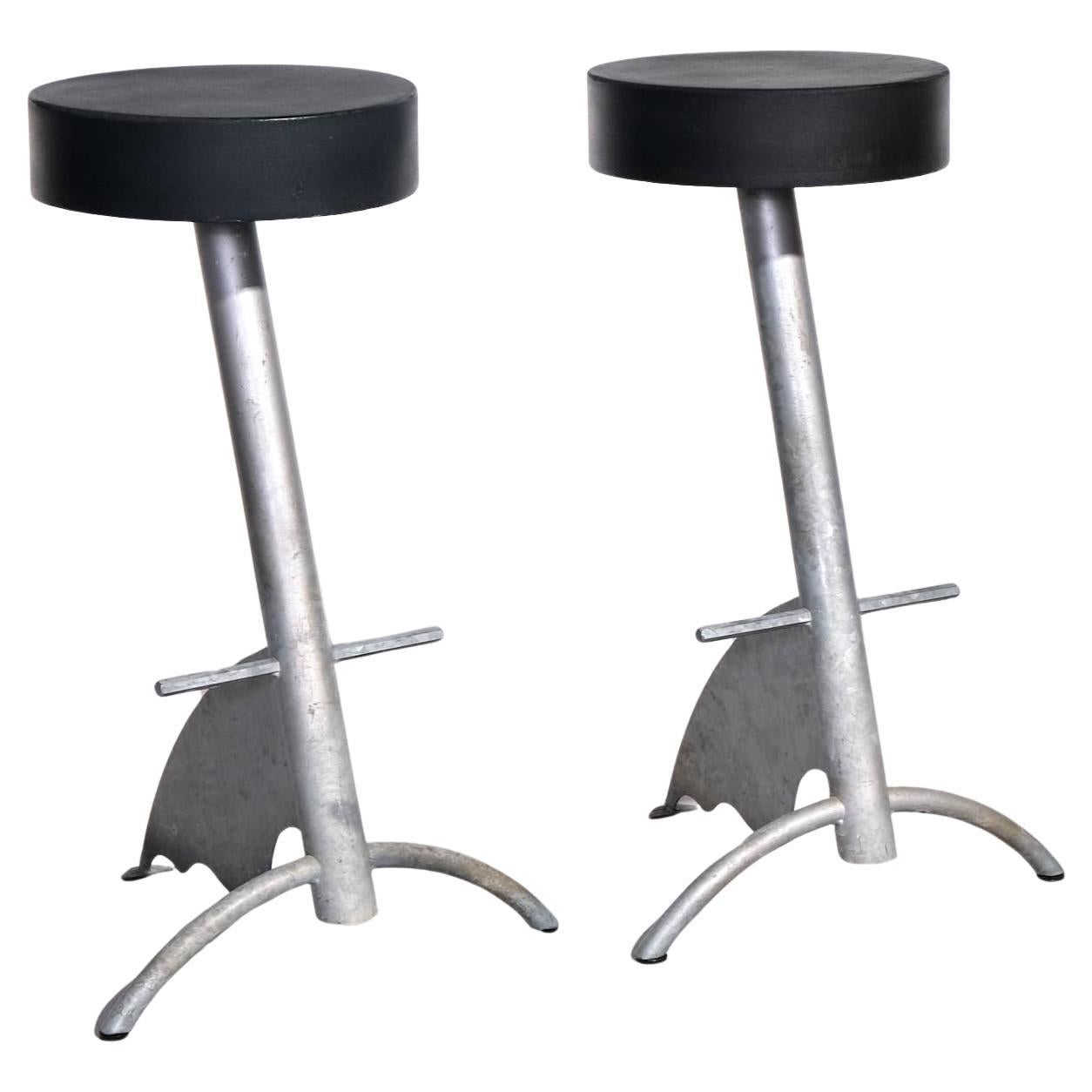
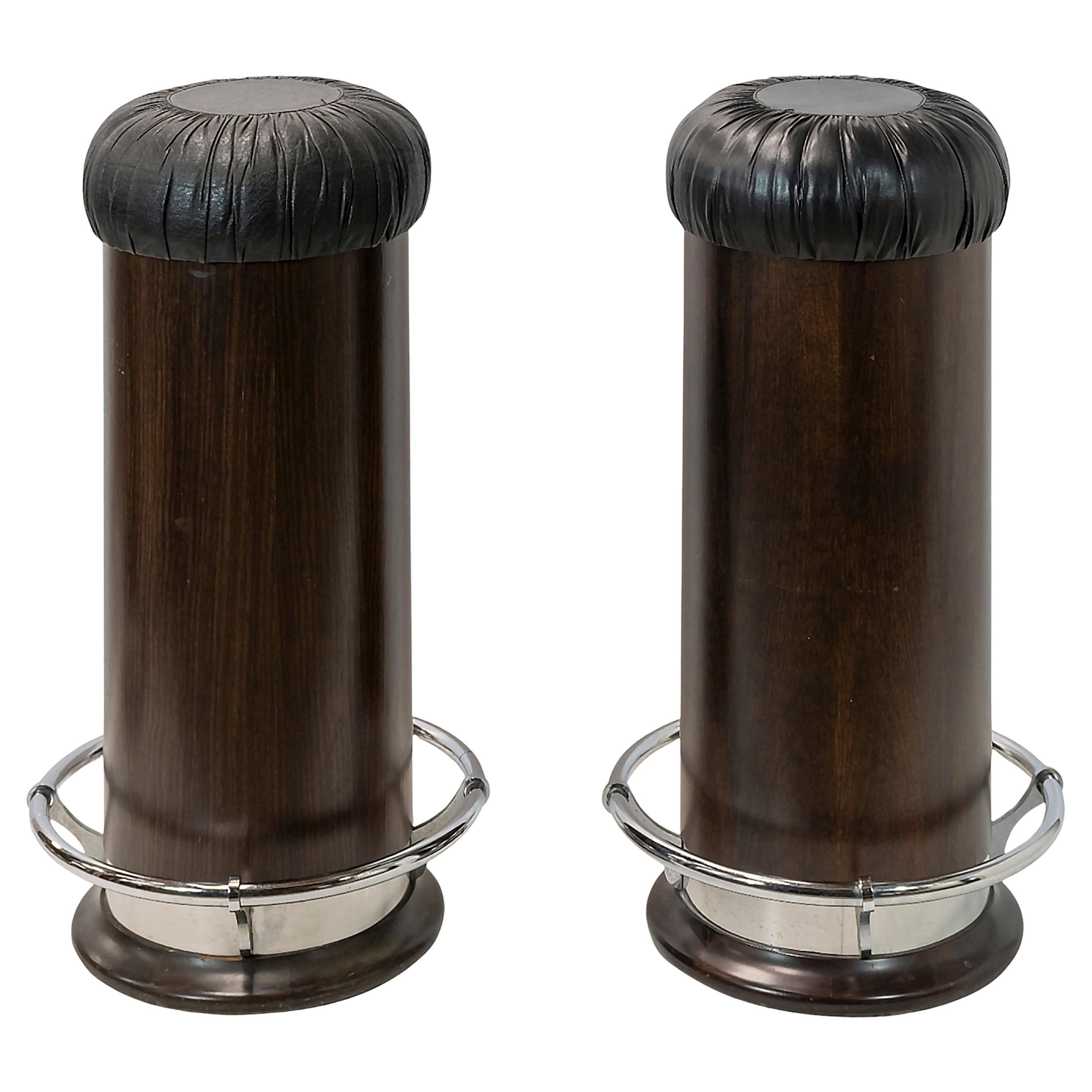
Pair of Steel and Leather Mid-century Modern Italian Bar Stools by Marzio Cecchi
$11,259.67per set
£8,419.70per set
€9,400per set
CA$15,513.01per set
A$16,919.11per set
CHF 8,962.60per set
MX$202,836.13per set
NOK 114,143.74per set
SEK 104,375.98per set
DKK 71,631.75per set
About the Item
Marzio cecchi (1940-1990)
Pair of bar stools
Manufactured by Most Studio
Produced for Ringo bar in Firenze
Italy, 1970s
Steel, leather
Measurements
51 cm x 48 cm x 94 H cm
20 in x 18.89 in x 37 H in
Bio
Marzio Cecchi (1940-1990) was an Italian (Florence) Architect and Designer. Though best known for his design’s for Studio Most in Florence, throughout his career Cecchi had locations in Rome, Düsseldorf, Tokio, Sao Paulo, Los Angeles and New York at the end of the 1960s. His works, both functional and innovative, have received prestigious awards and have been acquired by the important museums around the world. Cecchi died in New York on January 1st 1990, leaving timeless designs and one of a kind pieces highly collectible on the market.
- Creator:Marzio Cecchi (Designer)
- Dimensions:Height: 37.01 in (94 cm)Width: 20.08 in (51 cm)Depth: 18.9 in (48 cm)
- Sold As:Set of 2
- Materials and Techniques:
- Place of Origin:
- Period:
- Date of Manufacture:1970
- Condition:
- Seller Location:Barcelona, ES
- Reference Number:1stDibs: LU2374313986352
Marzio Cecchi
Born near Florence on March 1st 1940, Marzio Cecchi comes from a design environment, his mother being Giulia Carla Cecchi, a name famous in the world of fashion with her haute couture creations paraded at Palazzo Vecchio and Palazzo Pitti in Florence, Italy. Marzio Cecchi was a famous architect from Firenze who totally designed his projects. He graduated as an Architect from the University of Florence. Marzio Cecchi was an eclectic and visionary Architect, Designer and Artist. He died in an accident in New York on January 1st 1990, leaving timeless designs and one of a kind pieces highly collectible on the market.
About the Seller
5.0
Recognized Seller
These prestigious sellers are industry leaders and represent the highest echelon for item quality and design.
Established in 2015
1stDibs seller since 2016
101 sales on 1stDibs
Typical response time: 20 hours
- ShippingRetrieving quote...Shipping from: Barcelona, Spain
- Return Policy
More From This Seller
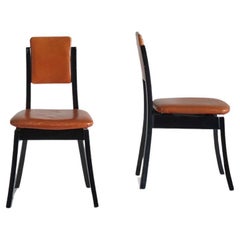
View AllChairs S-11 by Angelo Mangiarotti
By Angelo Mangiarotti
Located in Barcelona, ES
Chairs S-11
Manufactured by Sorgente del Mobile
Italy, 1972
Lacquered wood, upholstered vinyl leather
Measurements
40 cm x 42 cm x 77 h cm
15,7 in x 16,5 in x...
Category
Vintage 1970s Italian Chairs
Materials
Leather, Wood
$22,758 / set
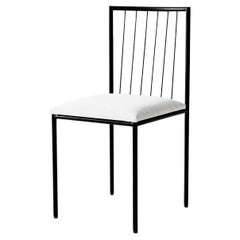
Pair of chairs by Geraldo De Barros
By Geraldo de Barros
Located in Barcelona, ES
Pair of chairs
Manufactured by Unilabor
Brazil, 1955
Iron, fabric upholstered
Measurements
40 cm x 43 cm x 82h cm
15,78 in x 16,9 in x 32,28h in
Literature
Unilabor, by Mauro Claro...
Category
Vintage 1950s Brazilian Chairs
Materials
Iron
$23,956 / set
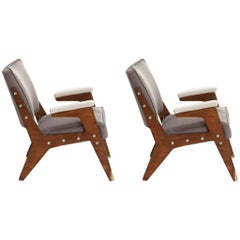
Jose Zanine Caldas Pair of Mid-century modern BrazilianArmchairs Model "H"
By José Zanine Caldas
Located in Barcelona, ES
JOSE ZANINE DE CALDAS (1919-2001).
Pair of armchairs model “H.”
Manufactured by Moveis Artísticos Z.
Brazil, 1949.
Marine plywood, fabric upholstery.
Measuremenents
58 cm x 50 cm x 80 H cm.
Literature: Habitat, nº9, Sao Paulo 1952.
José Zanine Caldas (Belmonte, Bahia, 1918 - Vitória, Espírito Santo, 2001) was an architect and designer. Caldas stands out on the national architecture in Brazil for his exploration of the constructive qualities of Brazilian woods, defining his work with a warm rustic ambience, working on both high-end residential projects and also popular constructions.
Never actually training as an architect, he starting working in the 1940s as a designer at Severo & Villares and as a member of the National Artistic Historical Heritage Service (Sphan). He opens a maquet studio in Rio de Janeiro, where he worked between 1941 and 1948, and, at the suggestion of Oswaldo Bratke (1907-1997), moved the studio to São Paulo, from 1949 to 1955. The studio served important modern architects of the two cities, and was responsible for most of the models presented in the book Modern Architecture in Brazil, 1956, by Henrique E. Mindlin (1911-1971)..
During the 1940s, he also began developing and researching at the Institute of Technological Research of the University of São Paulo (IPT/USP), and was first introduced to plywood. In 1949, he founded the Fábrica Móveis Artísticos Z, with the objective of producing large-scale industrialized furniture, good quaility and afforable, the furniture was to be materialized using plywood sheets. This method minimized material waste and the need for artisan skills, as the parts were mechanically produced and the use of labor was only needed for the assembling of the furniture.
His time at Móveis Artísticos Z, in 1953 was rather short lived and left the company in 1953 and instead worked on landscape projects until 1958 in São Paulo, when he moved to Brasília, where he built his first house, also in 1958, and coordinated the construction of others until 1964. Appointed by Rocha Miranda to Darcy Ribeiro (1922-1997), he joined the University of Brasília (UnB) in 1962 and taught modeling classes until 1964, when he lost his position due to the military coup. He set off and travelled through Latin America and Africa, an experience that had a remarkable effect on his work.
On return to Brazil he built his second house, the first of a series of projects in the Joatinga region of Rio de Janeiro. In 1968, he moved to Nova Viçosa, Bahia, and opened a workshop, which ran up until 1980. His experience in the Bahian city was shaped by his renewed love and contact with nature, and he began working closely with environmentalists. In one of these collaborations, he participated in the project of an environmental reserve with the artist Frans Krajcberg (1921-2017) for whom he also designed a studio in 1971. The furniture he designed during this period, is reflective of his ecological sensitivity, his works were constructed with crude logs of wood, whose twisted lines inspire his drawings.
It is also in Nova Viçosa that the architect builds the Casa dos Triângulos (1970) and casa da Beira do Rio (1970), in which he adopted a very artisanal construction system with typical woods of the region. According to the historian and architecture critic Roberto Conduru, Caldas' performance was relevant for the diffusion of environmental values in architectural projects: a "taste for the alternative and the rustic was disseminated throughout the Brazilian territory [...], encouraged by environmental preservation campaigns, by the wear and tear of the current models in reinforced concrete and by the re-emergence of the regionalist ideal in the international panorama"1.
Between 1970 and 1978, he kept an office in Rio de Janeiro, where he returned in 1982. In 1975, the filmmaker Antonio Carlos da Fontoura made the film Arquitetura de Morar, about the houses of Joatinga, with a soundtrack by Tom Jobim (1927-1993), for whom Caldas designed a house. Two years later, the architect's work was exhibited at the Museum of Modern Art of Rio de Janeiro (MAM/RJ), at the São Paulo Museum of Art Assis Chateaubriand (Masp) in Belo Horizonte, and the following year at Solar do Unhão, in Salvador.
Between 1980 and 1982 The Helium House Olga Jr was designed and built in São Paulo. Caldas outlined the plans for the construction sourcing the all the wood, the actual assembly of the house was carried out by the owner. The house, is defined by wooden structure that stands out from the fence walls, the clay tile roof of wide eaves and the demolition materials that give the building the feeling of rusticity, warmth and nostalgia. The house was similar to those built in the 1970s for Eurico Ficher and Pedro Valente, in Joatinga.
In 1983, Calders founded the Center for the Development of Applications of The Woods of Brazil (DAM), and gave it to UnB in 1985. During this period, he proposed the creation of the Escola do Fazer, a teaching center focused on the use of wood for the construction of houses, furniture and utilitarian objects for the low-income population.
Despite the fact that much of Calders early work was centered around building houses for the elite, in the 1980s the designer dedicates himself the DAM where he rigorously researches popular housing based on artisan construction processes and whereby the users participate in the construction process. At the Brasília unit, he developed prototypes of popular houses with eucalyptus logs as a structure and sealing in soil-cement, betting on an ideal of self-construction already tested at Casa do Nilo, in São Gonçalo, Rio de Janeiro. From that moment on, as occurred with his the furniture designs, Caldas adopts the use of crude wood logs rolled...
Category
Mid-20th Century Brazilian Mid-Century Modern Armchairs
Materials
Plywood, Velvet
Joaquim Tenreiro, Pair of Armchairs, 1950
By Joaquim Tenreiro
Located in Barcelona, ES
Pair of armchairs
Manufactured by Tenreiro Moveis e Decoraçaos
Brasil, 1950
Upholstery, jacaranda legs
Measurements:
67 cm x 89 cm x 73 H cm
26.38 in x 35.04 in x 228.75 H in...
Category
Vintage 1950s Brazilian Armchairs
Materials
Jacaranda
$17,248 / set
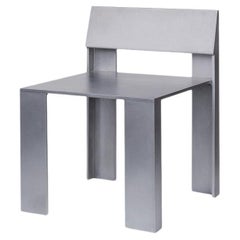
Contemporary Industrial Waxed Aluminum-Metal Chair, Model LAC, Johan Viladrich
By Johan Viladrich
Located in Barcelona, ES
Chair model “LAC”
Manufactured by Johan Viladrich.
Montpellier, 2023.
Vibrated and Waxed Aluminium
Measurements
50 x 50 x 65h cm
19.7 x 19.7 x 25.6H in
Seat height: 40 cm ...
Category
2010s French Chairs
Materials
Aluminum
Joaquim Tenreiro Pair of Armchairs Model “Concha” Brasil, 1950
By Joaquim Tenreiro
Located in Barcelona, ES
Joaquim Tenreiro
Pair of armchairs model “Concha”
Manufactured by Tenreiro Moveis e Decoraçaos
Brasil, 1950
Pau marfim wood, upholstery
From the archives of Side Gallery, Barce...
Category
Vintage 1950s Brazilian Armchairs
Materials
Fabric, Wood
You May Also Like
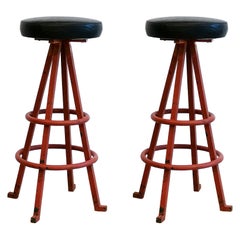
Pair Mid-Century Modern Stools in Steel and Faux Leather -Spain, Barcelona 1960s
Located in Girona, Girona
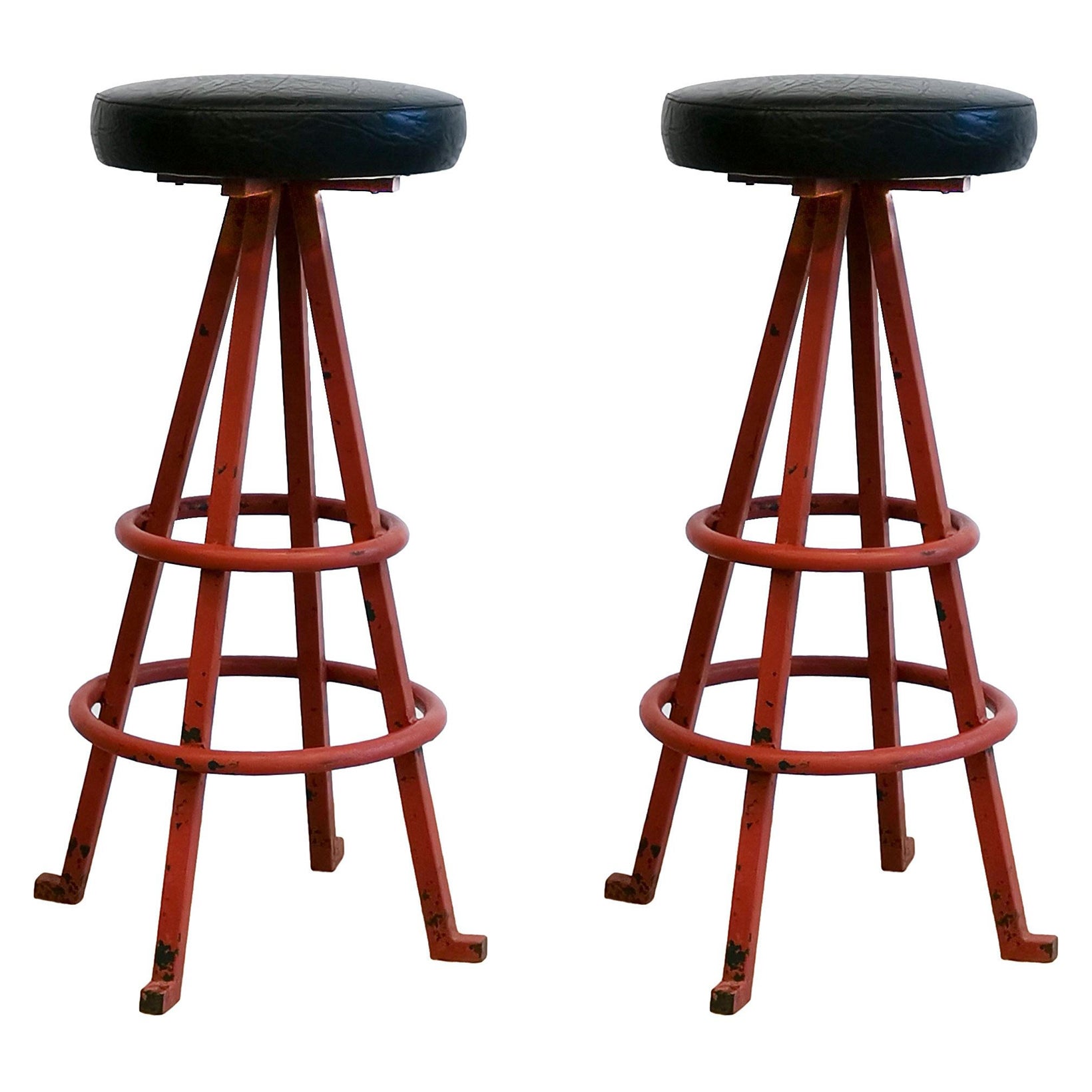
Pair of bar stools, red painted steel and original black leatherette.
Spain, Barcelona c. 1960
Diameter base cm 40/ seat 30 x 75
Diameter base inches 15.75/ seat 11.81 x 29.53.
Category
Vintage 1960s Spanish Mid-Century Modern Stools
Materials
Steel
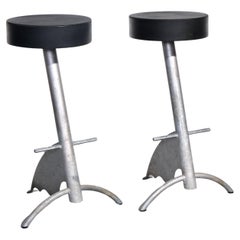
Pair of Platform Bar Stools by Maurizio Peregalli for Zeus Noto
By Maurizio Peregalli
Located in London, GB
Maurizio Peregalli for Zeus Noto, Pair of Platform Bar Stools, c.1980s
A pair of bar stools designed by Maurizio Peregalli for Zeus Noto in the 1980s. These stools feature a minimal...
Category
Vintage 1980s Italian Mid-Century Modern Stools
Materials
Steel
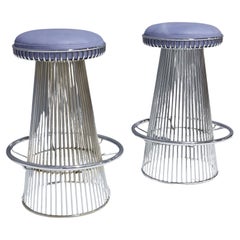
Pair of Sculptural Bar Stools in Nickeled Steel and Leather by Cy Mann Designs
By Cy Mann
Located in Dallas, TX
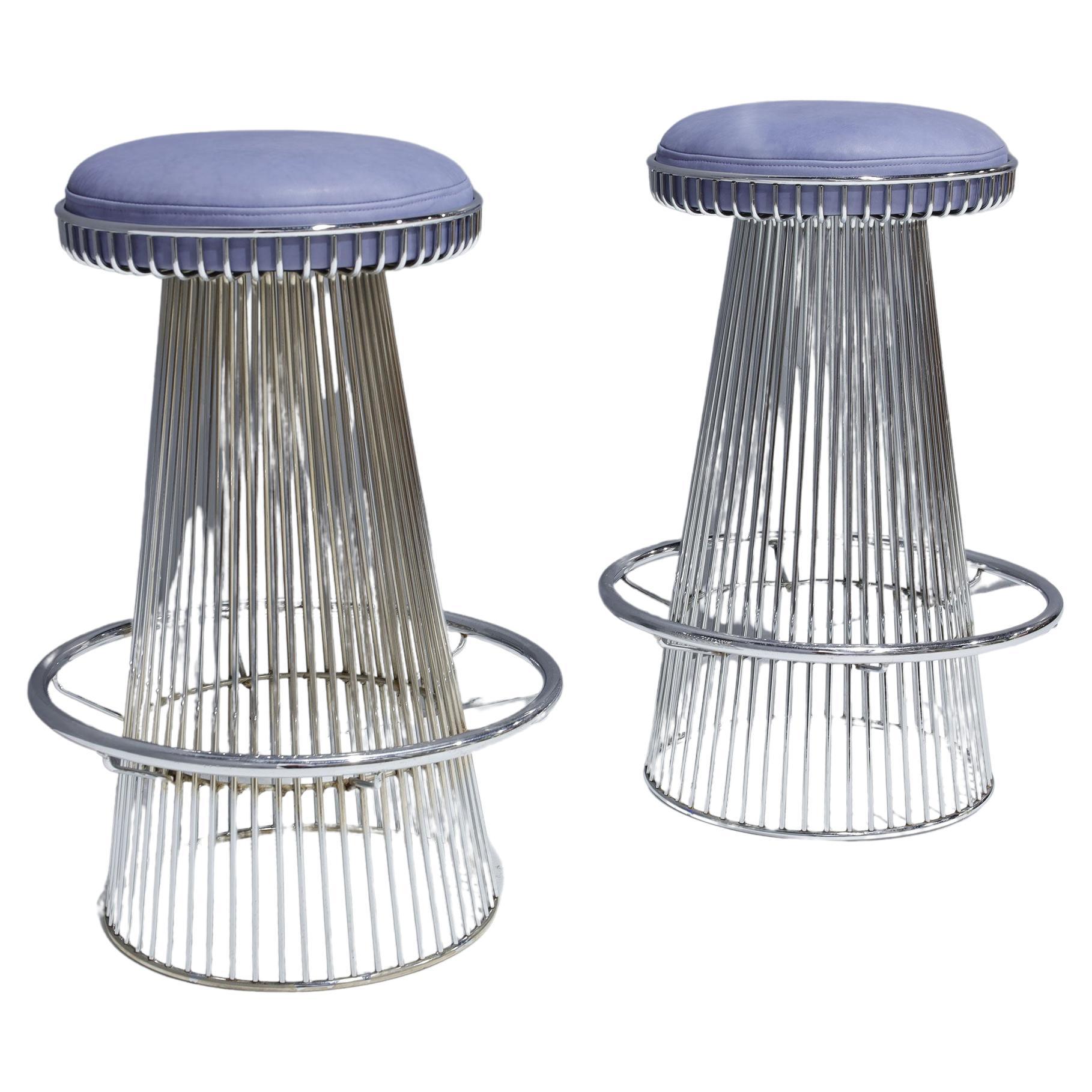
A great looking pair of steel bar stools with leather cushions, these sculptural pieces by Cy Mann are often attributed to Warren Platner. New York's Cy Mann supplied the trade with ...
Category
20th Century American Mid-Century Modern Stools
Materials
Steel
$2,700 Sale Price / set
40% Off
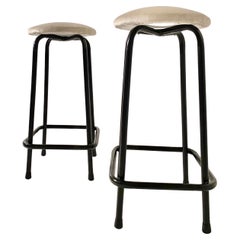
Vintage Industrial Stools, Set of Two, Italy 1960s
Located in Ceglie Messapica, IT
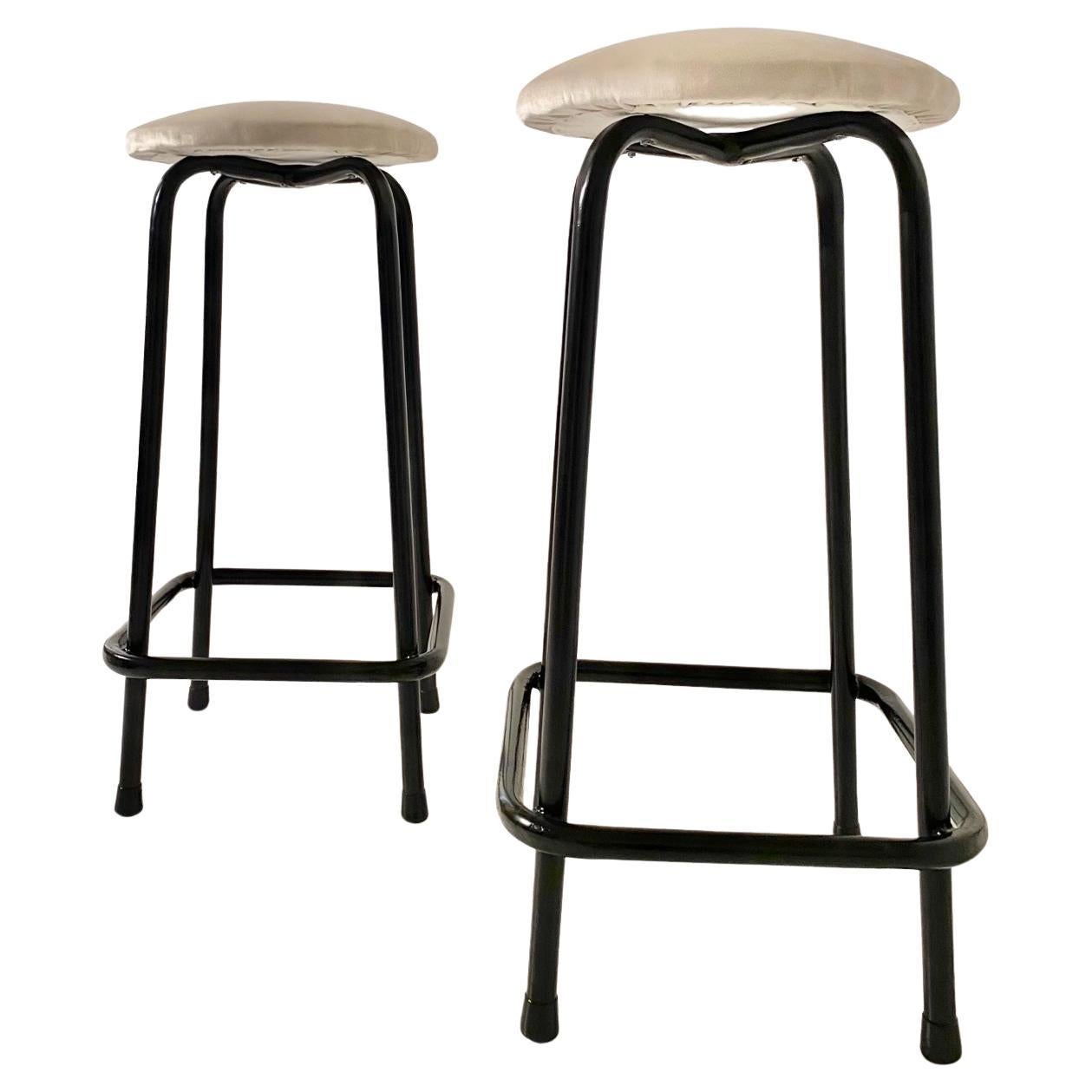
Vintage Industrial Stools, Set of Two, Italy 1960s
A pair of beautiful vintage velvet stools. Seats in bright velvet with four legs iron black pa...
Category
Vintage 1960s Italian Mid-Century Modern Stools
Materials
Iron
$862 Sale Price / set
52% Off
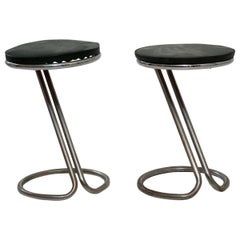
Two Art Deco Piano Stools, in Chrome Steel, Original Seating, 1960s
Located in Aalsgaarde, DK
Two Art Deco piano stools, in chrome steel, original seating, 1960s.
Measures: height 50 – 54, diameter 35 cm.
Height 19.7 - 21.3, diameter 13.8...
Category
Mid-20th Century Scandinavian Mid-Century Modern Stools
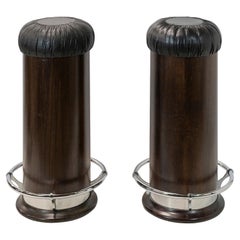
Set of 2 Pcs. Italian Mid-Century Luciano Frigerio Bar Stools, 1970
s
By Luciano Frigerio
Located in Vilnius, LT
Pair of Italian Mid-Century Luciano Frigerio bar stools from 1970's.
Each stool is made in polished rosewood veneer, painted wood base, chromed metal footrest and black natural leath...
Category
Mid-20th Century Italian Mid-Century Modern Chairs
Materials
Metal, Chrome
More Ways To Browse
Sculptural Stool Solid
Unusual Stools
Antique French Piano
Stools In Mexico
Leather Piano
French Rustic Wood Stool
Green Velvet Stool
Louis Kahn
Mahogany Piano
Mid Century Rope Stool
Room And Board Paris Chair
Stool Family
Stool Patterned
Teak Bar Stools
Brass Upholstered Stool
Red Bar Stools
Curule French
French Aluminum Dining Room Chairs