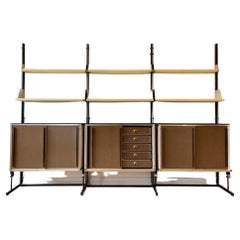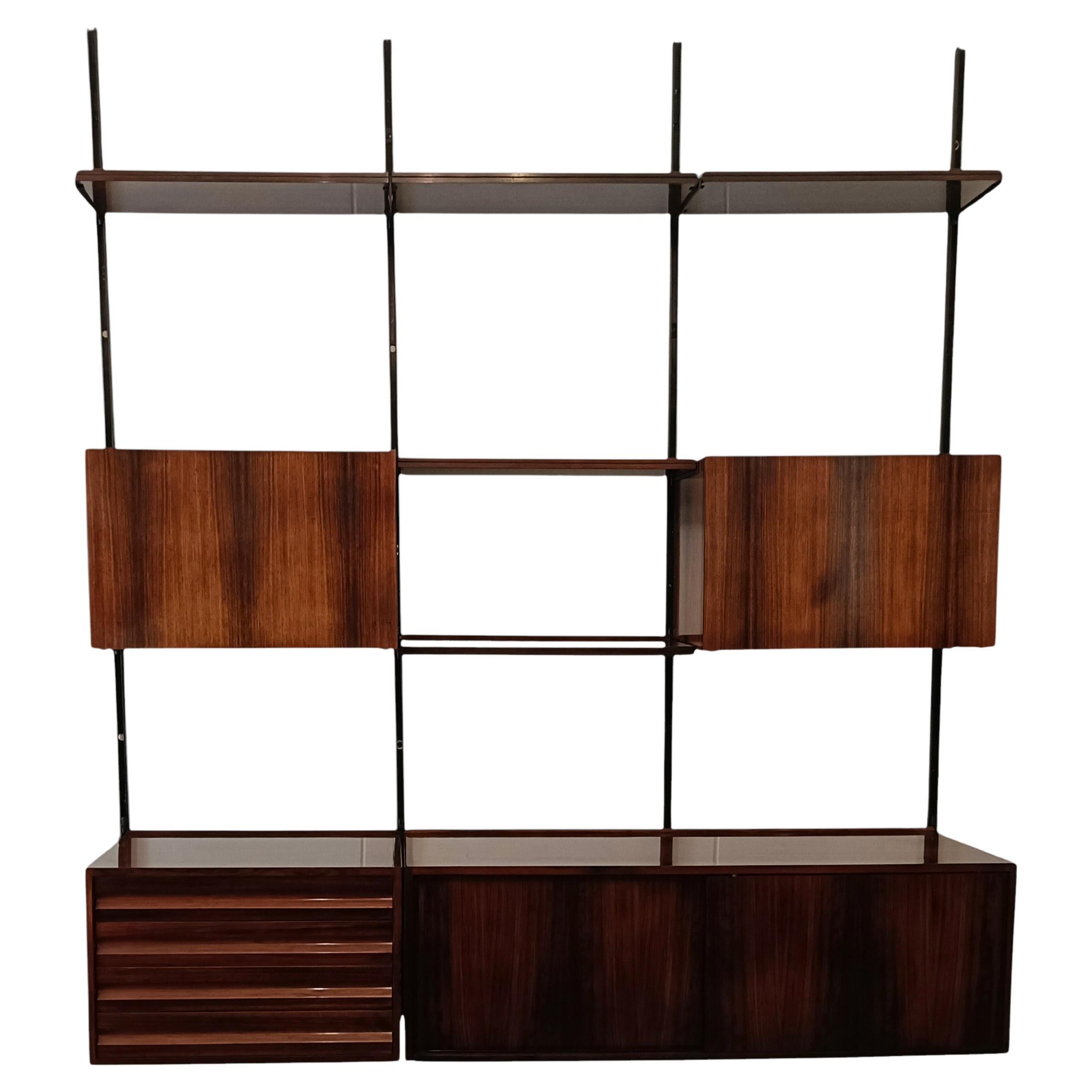
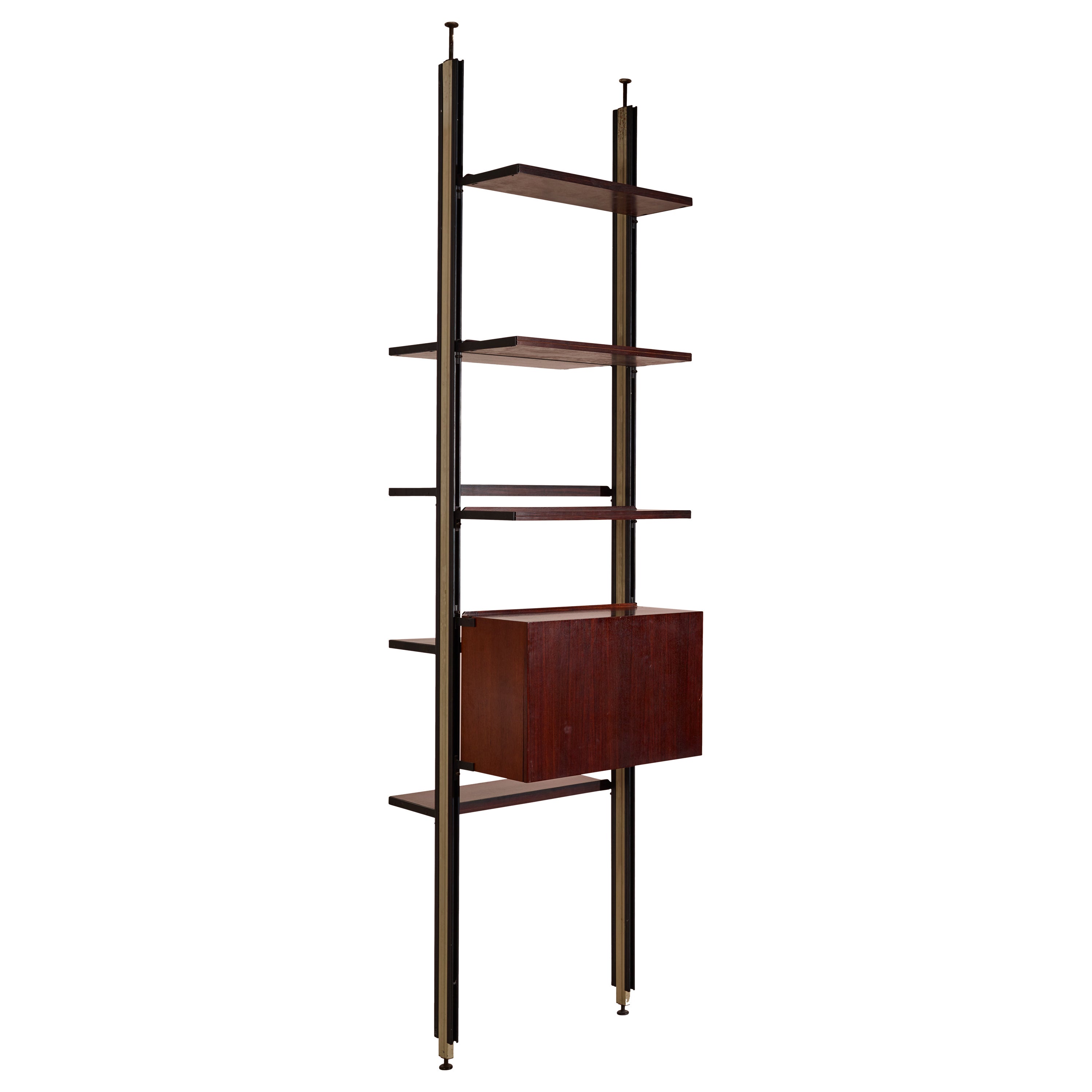
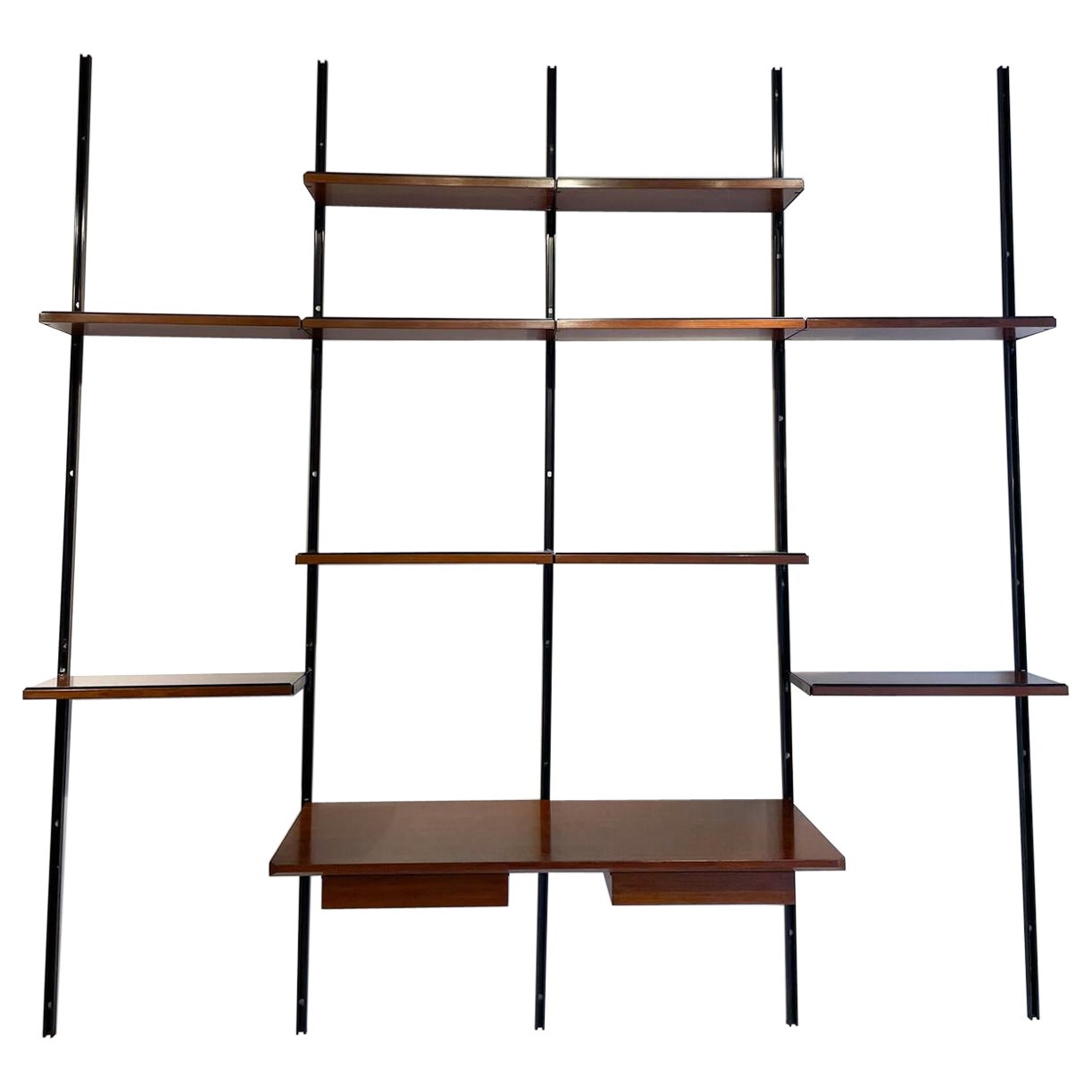
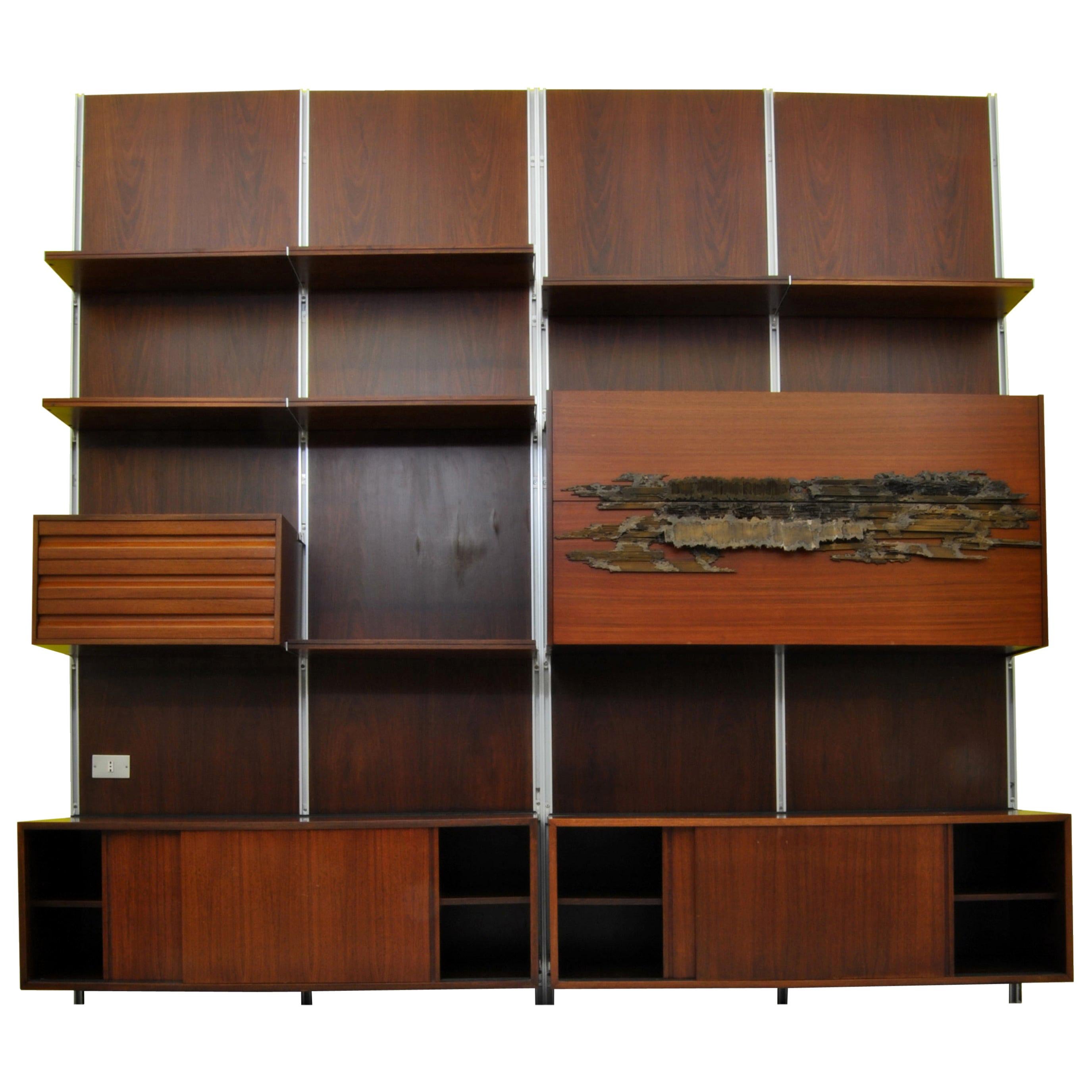
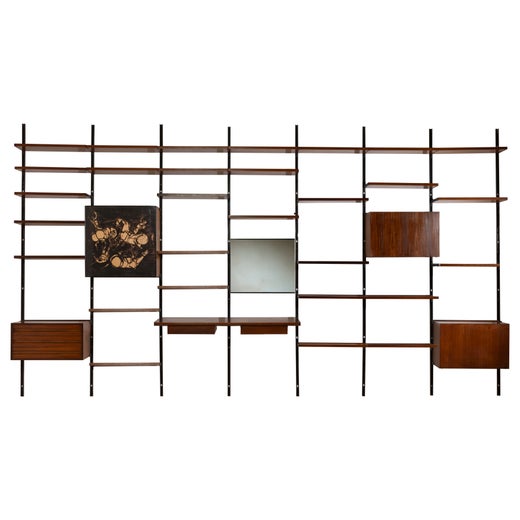
Osvaldo Borsani and Agenore Fabbri E22 shelving system for Tecno, Italy, 1950s
About the Item
- Creator:
- Dimensions:Height: 113.39 in (288 cm)Width: 194.3 in (493.5 cm)Depth: 16.93 in (43 cm)
- Style:Mid-Century Modern (Of the Period)
- Materials and Techniques:
- Place of Origin:
- Period:
- Date of Manufacture:1950s
- Condition:Refinished. Wear consistent with age and use.
- Seller Location:Chiavari, IT
- Reference Number:1stDibs: LU6764246978682
Osvaldo Borsani
With his stylish and technically innovative furniture, Osvaldo Borsani helped change the face of Italian design in the 1950s and ’60s. His sofas and chairs, featuring deeply upholstered seating and adjustable position settings, have an aura of optimism and efficiency that still seems fresh and lively today.
Born in the commune of Varedo in northern Italy’s Lombardy region, Borsani studied at the Brera Academy in Milan — the same school attended by such luminaries as designer Piero Fornasetti and artist Lucio Fontana — as well as the Polytechnic University of Milan. Borsani first worked for his father’s furniture-making firm, Arredamenti Borsani, an atelier influenced by the more expressive and curvaceous wing of Art Deco design.
By 1953, when, along with his twin brother, Fulgenzio — the pair also created this visionary mid-century villa — Borsani opened the furniture company Tecno, his design sensibilities had evolved toward furnishings with strong, simple forms enhanced by mechanical innovations, as with the P40 adjustable armchair. Borsani would be the firm’s lead designer for 30 years, while fostering work by Vico Magistretti, Carlo De Carli, Robin Day and others.
Similar to Gio Ponti in the earliest years of his career, Borsani first created designs marked by lush and buoyant lines: tables with voluptuous curved legs, sofas with undulating backrests.
But Borsani’s best-known and most novel pieces date from Tecno’s initial furniture lines: the adjustable D70 sofa, which folds open to make a daybed, and the P40 recliner. The latter — now included in the collections of the Museum of Modern Art and the Victoria Albert Museum — is an articulated lounger with a back, seat and leg rest that can be moved into 486 different positions. Not only is it extremely comfortable, it is also enduringly chic.
Find a collection of vintage Osvaldo Borsani tables, dining chairs and other furniture on 1stDibs.
Agenore Fabbri
Agenore Fabbri was an Italian painter and sculptor. When he was only 12, he entered the School of Arts and Crafts in Pistoia, and then was admitted to the Florence Academy of Fine Arts, where he frequented the artists' Caffè Giubbe Rosse, the meeting point for the intellectuals known as the Ermetici Group and came into contact with painter Ottone Rosai and poet Mario Luzi. During his life, he also met other famous artists, among others Picasso, Arturo Martini, Lucio Fontana. In 1967, he illustrated 10 poems by Nobel Prize winner Salvatore Quasimodo, who after a long friendship, had dedicated an open letter to Fabbri. The letter was published in the Italian weekly magazine Tempo on the occasion of his solo exhibition at the Galleria Arte Borgogna, Milan. Fabbri received a lot of awards, including the International Sculpture Award (1955 and 1959), the First Prize at the Mostra d'Arte Sacra in Trieste (1966), and those of the Milan Triennale, where he was appointed with two Gold Medals and the Grand Prix for Ceramics. Fabbri worked mainly with ceramic and terracotta, developing progressively new solutions such as riflessatura (reflection), while in the following two decades, he preferred bronze and wood. He also executed many artworks using materials like iron, tin, zinc and steel. From 1981, he discovered painting, before using the classic oil and acrylic colors and then, in the last phase of his career, adding to the canvas materials of recovery such as sand, stones, rags and textiles, tin cans and much more.
- ShippingRetrieving quote...Shipping from: Chiavari, Italy
- Return Policy
More From This Seller
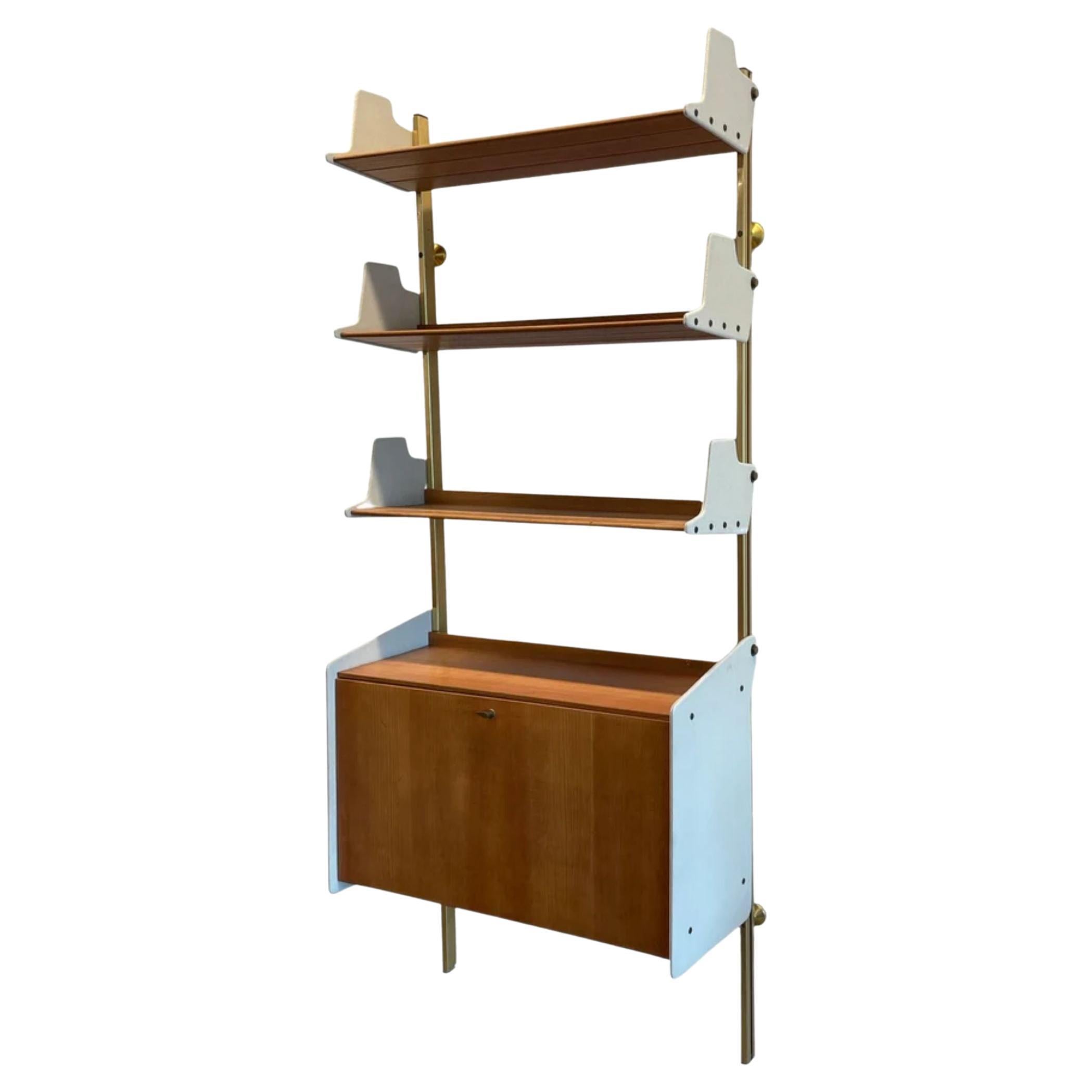
View AllVintage 1950s Italian Mid-Century Modern Bookcases
Metal
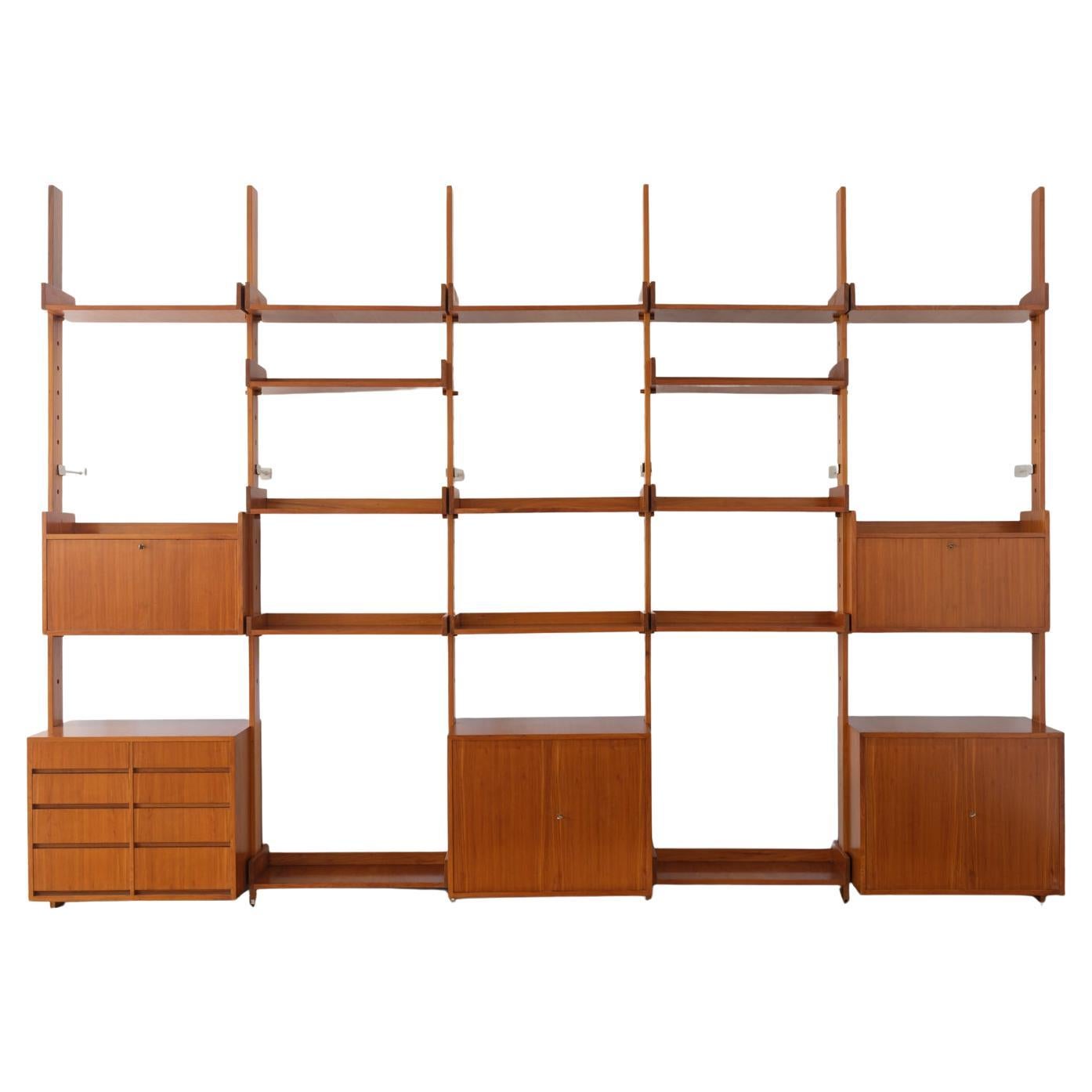
Vintage 1950s Italian Mid-Century Modern Bookcases
Ash
Vintage 1950s Italian Mid-Century Modern Bookcases
Aluminum
Vintage 1960s Italian Neoclassical Revival Cupboards
Cherry, Burl, Teak
Vintage 1950s Italian Mid-Century Modern Coat Racks and Stands
Brass
Vintage 1940s Italian Mid-Century Modern Cabinets
Chestnut

You May Also Like
Vintage 1960s Italian Mid-Century Modern Bookcases
Metal
Vintage 1960s Italian Bookcases
Wood
Vintage 1960s Italian Bookcases
Rosewood
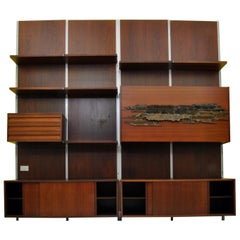
20th Century Italian Mid-Century Modern Dry Bars
Pearwood, Patent Leather, Walnut
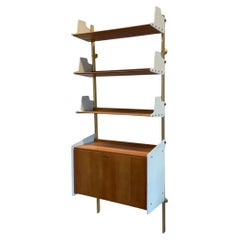
Vintage 1950s Brazilian Mid-Century Modern Bookcases
Wood, Hardwood
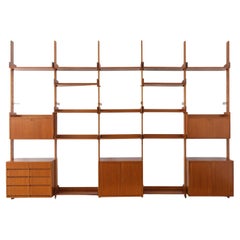
Vintage 1950s Italian Mid-Century Modern Bookcases
Aluminum, Brass, Steel