Items Similar to Early 18th century Japanese Lacquer Cabinet on Stand
Want more images or videos?
Request additional images or videos from the seller
1 of 10
Early 18th century Japanese Lacquer Cabinet on Stand
$23,956.15
£17,919.56
€20,000
CA$33,010.42
A$36,286.49
CHF 19,050.24
MX$431,472.50
NOK 244,648.33
SEK 222,848.19
DKK 152,420.74
About the Item
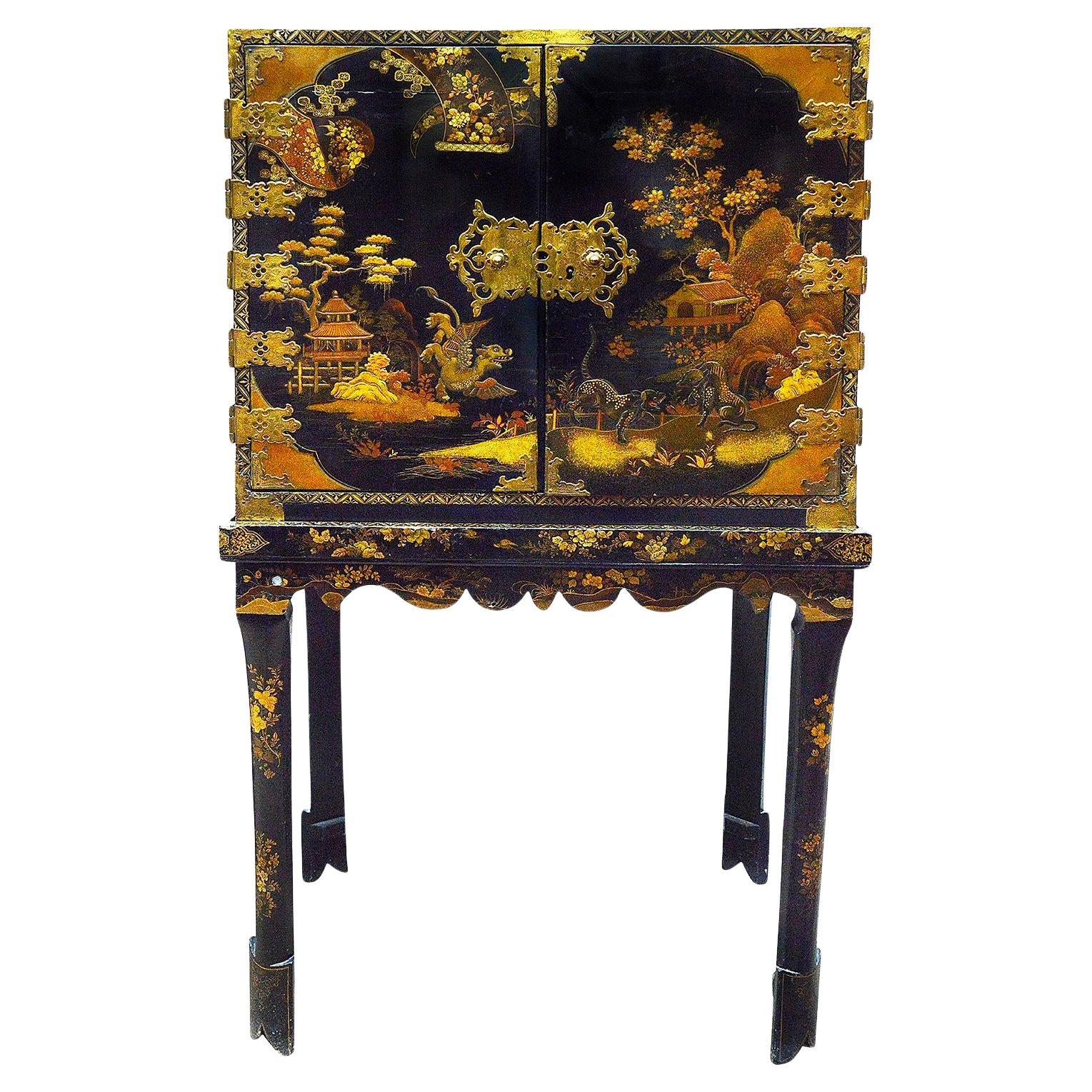
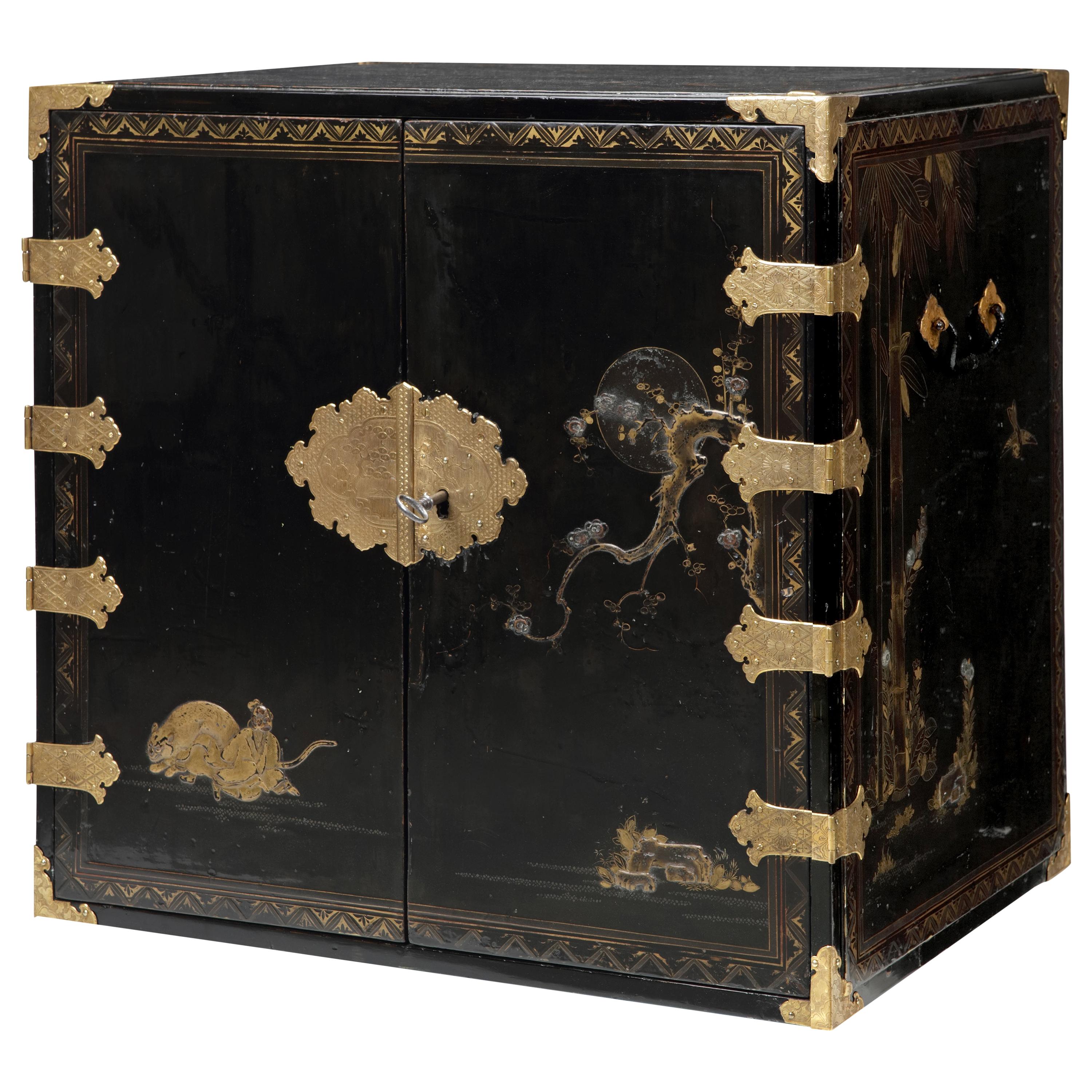
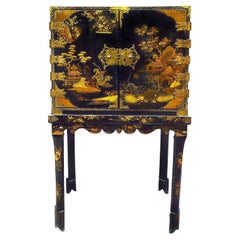
Rectangular cabinet has nine drawers inside. Hinges, corner mounts and lock plates in gilt brass. Decorated with river landscapes, insects, birds and animals in pairs. The stand is in later European style. Patina consistent with age and use, cracks, lacquer missing in some places. Worn but in pleasant condition
The fashion for oriental lacquer during the baroque period led to a production of japanned furniture in Northen Europe and England.
- Dimensions:Height: 61.03 in (155 cm)Width: 42.52 in (108 cm)Depth: 21.66 in (55 cm)
- Style:George III (Of the Period)
- Materials and Techniques:
- Place of Origin:
- Period:
- Date of Manufacture:circa 1750
- Condition:Wear consistent with age and use.
- Seller Location:Rīga, LV
- Reference Number:1stDibs: LU10440244981332
About the Seller
No Reviews Yet
Vetted Professional Seller
Every seller passes strict standards for authenticity and reliability
1stDibs seller since 2025
- ShippingRetrieving quote...Shipping from: Rīga, Latvia
- Return Policy
More From This Seller
View AllAntique Empire Style Ottomans
Located in Rīga, LV
Pieces are fully restored: new upholstery with coordinated trim, wood was restored and new lacquer applied, brass details are cleaned and refinished
Category
Early 20th Century Swedish Empire Ottomans and Poufs
Materials
Fabric, Wood
$3,353 / set
Late 19th Century Swedish Gustavian Klismos Chairs
By Erik Öhrmark
Located in Rīga, LV
An elegant pair of 19th Century Gustavian Klismos chairs are very comfortable and have wonderful proportion. The chairs have robust frame and s...
Category
Antique Early 19th Century Swedish Gustavian Lounge Chairs
Materials
Fabric, Wood
$26,351 / set
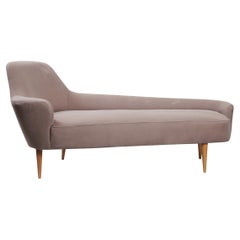
Singoalla Chaise Lounge
By IKEA
Located in Rīga, LV
Upholstery of this compact and comfortable chaise lounge is in beautiful pale rose color (probably cotton) and has some minor stains
Literature: Svenska Möbler, Andreas Siesing.
Category
Mid-20th Century Swedish Mid-Century Modern Chaise Longues
Materials
Fabric, Wood
$2,874
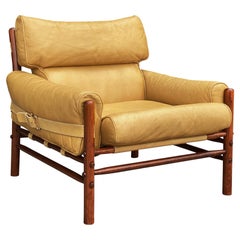
Kontiki Chair from Arne Norell Ab
By Arne Norell, Norell Möbel AB
Located in Rīga, LV
Very comfortable armchair Kontiki designed by Arne Norell in camel color leather. Wood parts were refinished (cleaned and re-lacquered), leather belts were steamed and tighten, leath...
Category
Mid-20th Century Swedish Scandinavian Modern Armchairs
Materials
Leather, Wood
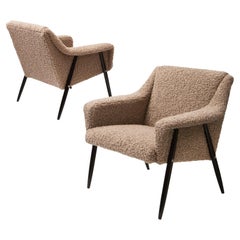
Mid-Century Lounge Chairs in faux Sheepskin
Located in Rīga, LV
Fully restored Mid-Century Armchairs: new upholstery in faux sheepskin, legs are refinished and repainted
Category
Mid-20th Century Mid-Century Modern Armchairs
Materials
Fabric, Wood
$4,072 / set
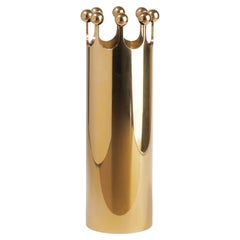
Mid-Century Modern Brass Vase by Pierre Forsell for Skultuna
By Pierre Forsell, Skultuna
Located in Rīga, LV
Solid crown vase of brass by Pierre Forsell for Skultuna
The item has maker's mark - see the pictures
Category
Vintage 1960s Swedish Scandinavian Modern Vases
Materials
Brass
You May Also Like
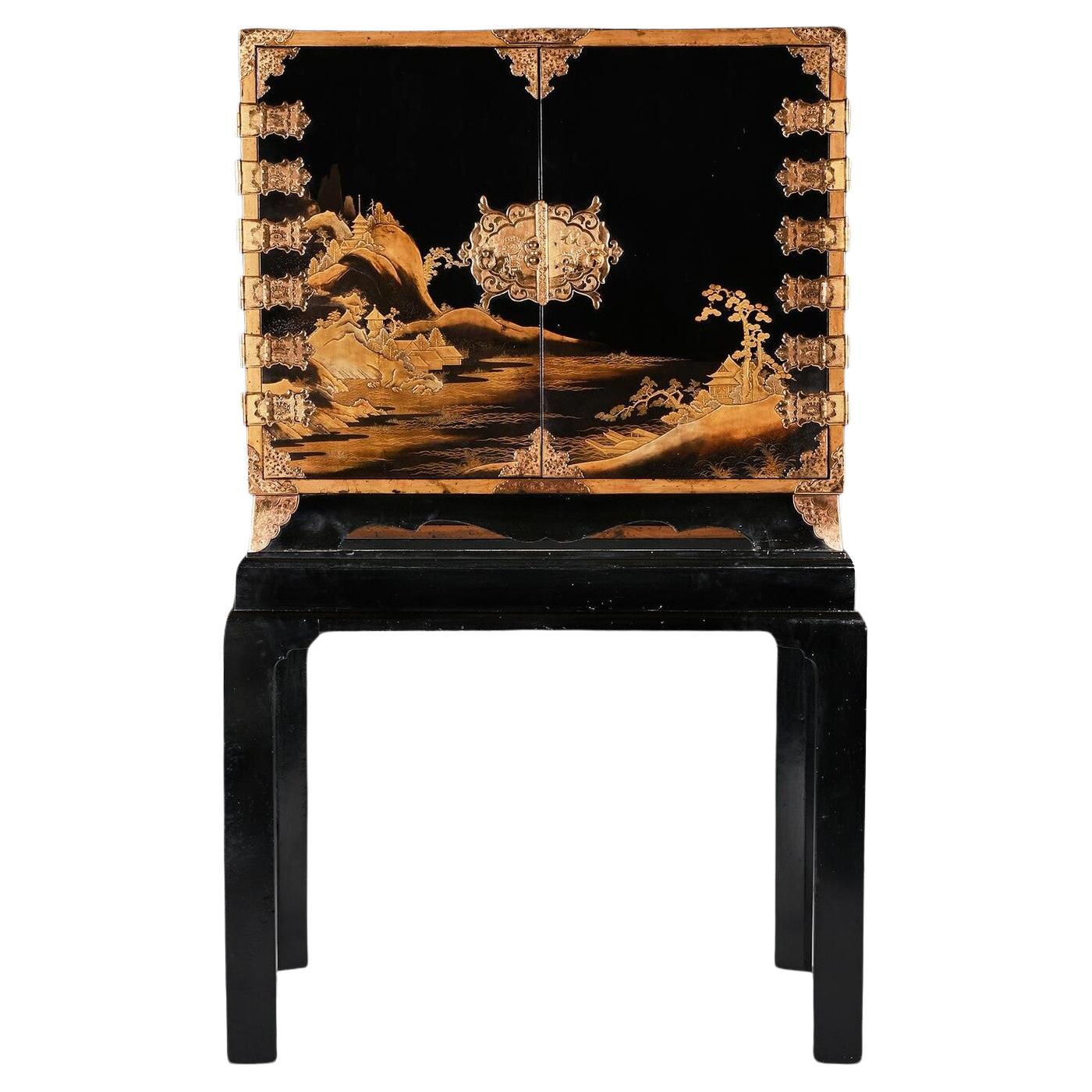
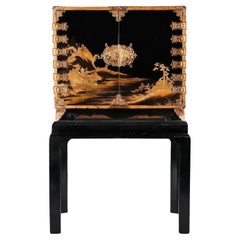
An Important Late 17th Century Japanese Lacquered Cabinet Edo Period on Stand
Located in Benington, Herts
An extremely fine, elegant and rare late 17th Century Japanese lacquer cabinet, from the Eco period, on later lacquered black stand.
Japanese circa 1690
Provenance
A private Scottish collection
This outstanding cabinet is a fascinating fusion of east and west. The cabinet itself would have been made in Japan, c.1690, and is decorated to the outside with hiramaki-e lacquer. This technique involves the use of sprinkled gold powder which adheres to the lacquer surface. On the best pieces, as with this example, many layers are added in order to create areas of high relief and give depth to the surface decoration. The taste of the Japanese workshops in this period was often for quite restrained pieces with plenty of the black background visible, unlike some of the busier Chinese lacquer or European japanned examples produced around the same time. The Japanese makers seemed content to rely on the outstanding quality of the lacquer itself, regarded by most experts as the finest lacquer ever produced, and did not see the need to cover every surface believing that less was more in this respect. The lacquer here is used to produce a mountainous scene with buildings on the bank of a river, the other side of the river with more buildings and a contrasting flatter and forested landscape. The fine perspective achieved is the result of the clever use of raised and flatter areas in the lacquer itself in combination with the drawing of the design itself.
Another remarkable aspect of this piece is the fine metalware throughout, but particularly the lockplate / hasp, hinges and foot mounts to the front. This is all beautifully cast and engraved contrasting against the black background. Interestingly another cabinet on stand with near identical metalwork was advertised in the Burlington Magazine, November 1913, with the dealer W. Williamson and Sons of Guildford. The lacquer on that piece is similarly refined and it seems likely that both pieces came from the same workshop.
The European influence in our piece can be seen in both the later ebonised stand and in the japanned decoration which has been applied to the inside of the doors and is also very fine indeed. This consists of two panels with birds of prey perched on branches in colours set against a golden background. The cabinet has a recent Scottish provenance and so it is likely that the ebonised stand was made in Britain though such pieces were made throughout Europe as a way of quite literally elevating these imported pieces of eastern lacquer as in Japan these would have been used on the floor. Inside the cabinet there is a combination of more Japanese lacquer and lock plates and European drawer handles. Most of the lacquer drawer fronts incorporate mountainous scenes and birds in combination, with a few purely one or the other of the two subjects. Again the lacquer is in excellent condition and is of exceptional quality with multiple layers of relief used in one single scene in many cases.
As mentioned above, Japanese lacquer is the most technically brilliant of the eastern lacquers and, as such, was highly prized by collectors and connoisseurs throughout Europe when this piece was made. The acquisition of such pieces would only have been possible for a small group of incredibly wealthy individuals, largely royal or high ranking courtiers or merchants connected with the East India trade...
Category
Antique 1690s Japanese Edo Cabinets
Materials
Lacquer
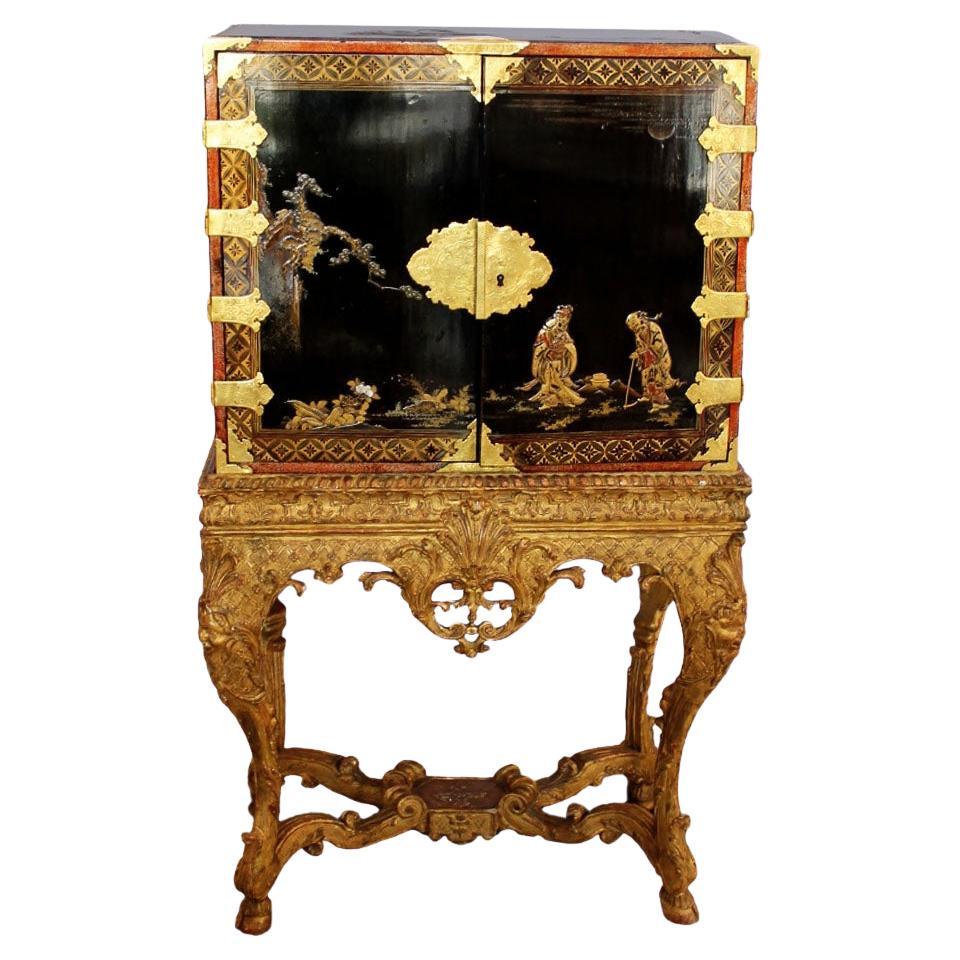
Japanese Lacquer Cabinet on Regence Giltwood Stand, circa 1725
Located in Palm Desert, CA
Japanese lacquer cabinet on Regence Giltwood stand. The stand - Circa 1725 and the lacquer cabinet - late 17th/early 18th Century. Decorated overall with figures in a landscape and d...
Category
Antique Early 18th Century European Louis XV Cabinets
Materials
Giltwood
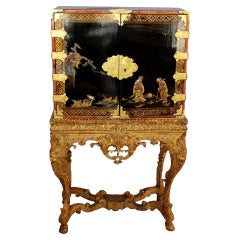
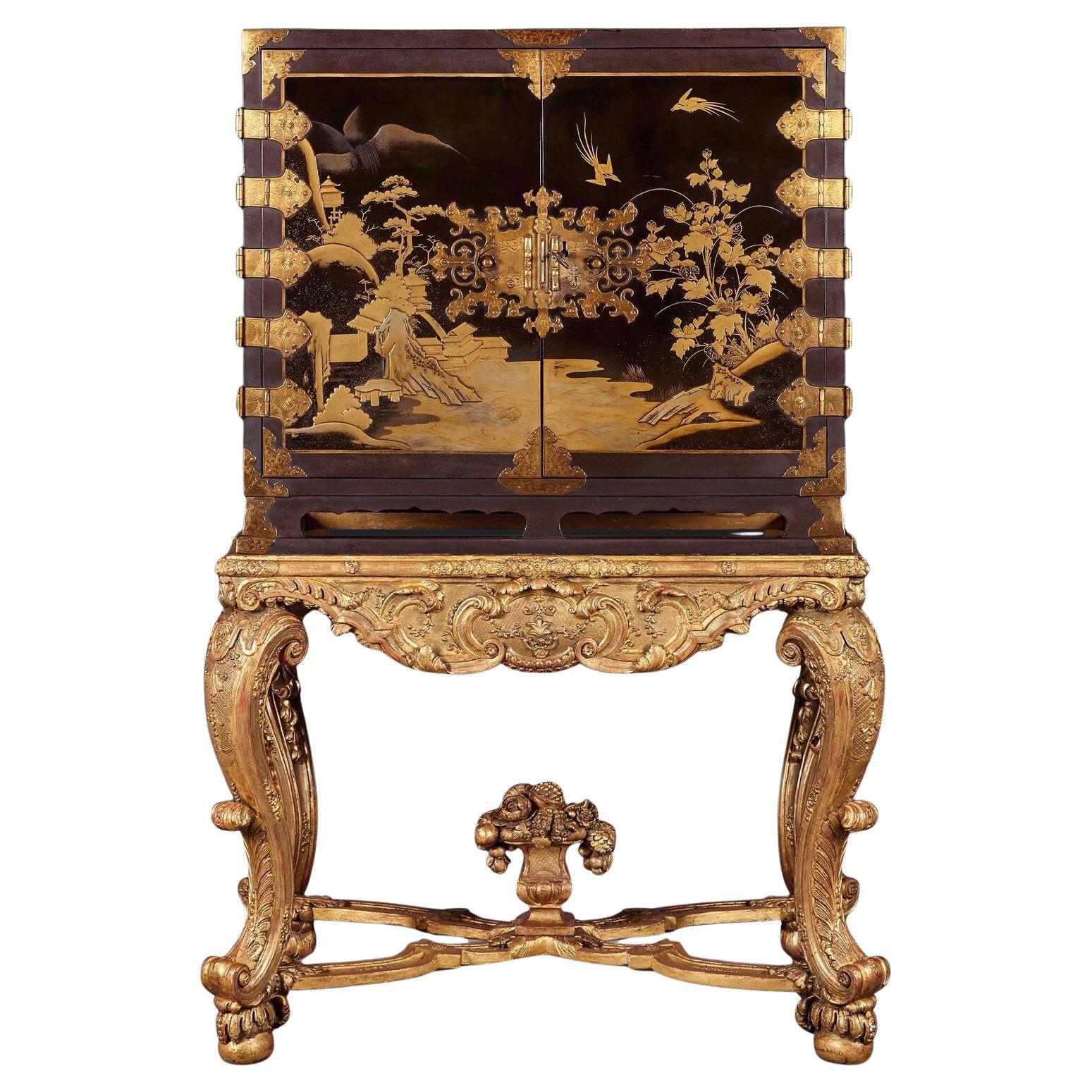
17th Century Japanese Lacquer Cabinet On French Giltwood Regence Stand
Located in Benington, Herts
An Extremely Fine and Very Important 17th Century Japanese Lacquer Cabinet on French Giltwood Stand of Regence Period circa 1680-1690
Provenance
Likely acquired by Herman Willem ...
Category
Antique 17th Century Japanese Edo Cabinets
Materials
Giltwood, Lacquer
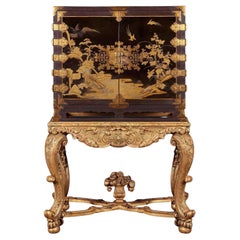
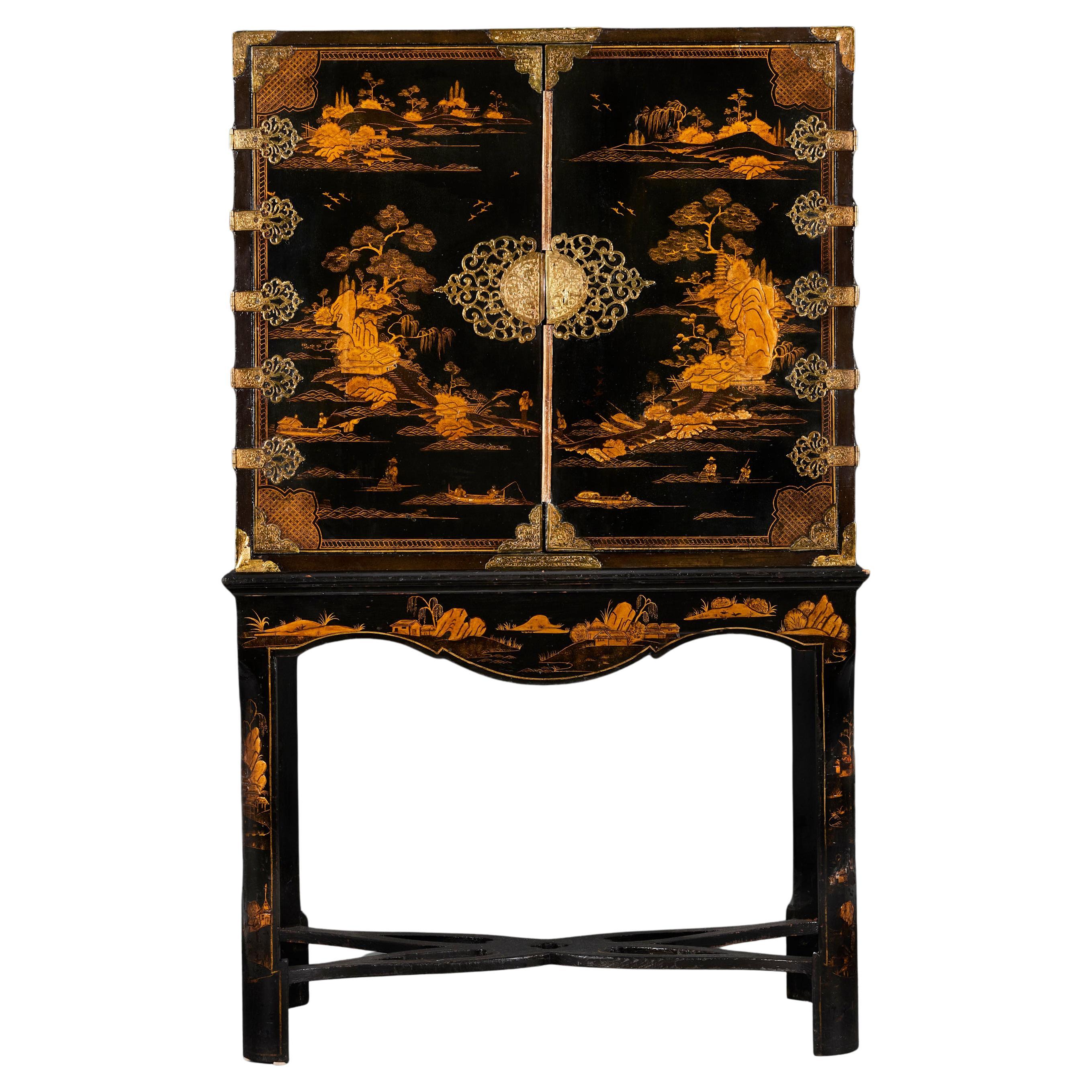
A Rare Mid 18th Century Black Japanned Lacquer Cabinet on Stand
Located in London, GB
England, circa 1760.
A fine mid-eighteenth century Japanned lacquer cabinet, with two doors revealing an interior fitted with eleven drawers with ring handles, all decorated with naturalistic scenes including fishermen and rural life. Retaining the original mid-eighteenth century stand, also with comparable chinoiserie decoration and X form stretcher with central pierced quatrefoil.
Height 161.00 centimetres.
Width 98.00 centimetres.
Depth 51.00 centimetres.
The art of 18th-century Japanning was a European practise that sought to imitate Japanese lacquerware and became a method of emulating the aesthetics of East Asia within the home. The term originates from the late 17th century as the opening of trade routes in the East triggered an interest in Chinese and Japanese fashions in Britain, France, Italy and the Netherlands.
It’s popularity reflected this era of imperial ambition when the West was fascinated by the exoticism of the East and saw the rise of an orientalist attitude. During this time, Europe’s demand for lacquerware began to grow and The East India Company's importation of lacquered objects and screens created a desire for larger, more practical items with similar decorative finishes.
To replicate the appearance of oriental lacquerwork, European cabinet-makers turned to John Stalker and George Parker's 1688 ‘A Treatise of Japaning and Varnishing: Being a Compleat Discovery of Those Arts’. This book contained formulas for creating and applying lacquers as well as various chinoiserie illustrations for readers to copy and modify, having made a concerted effort to reference designs on Chinese porcelain and textiles.
European japanning differed from traditional East Asian lacquer work which used sap from the Toxicodendron vernicifluum tree (also known as the Chinese lacquer tree...
Category
Antique 18th Century English Cabinets
Materials
Lacquer
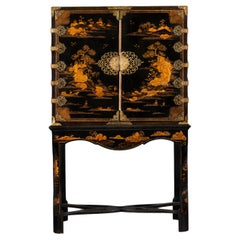
18th Century Queen Anne Lacquer cabinet on stand.
Located in Brighton, Sussex
A beautifully decorated Queen Anne period lacquer cabinet on stand. Having pierced, fretted brass hinges and lock plates. Chinoiserie scenes to the doors, opening to reveal ten fitte...
Category
Antique 18th Century English Cabinets
Materials
Lacquer
Rare Charming 17th Century Japanese Lacquer Cabinet with Gilt-Bronze Mounts
Located in Amsterdam, NL
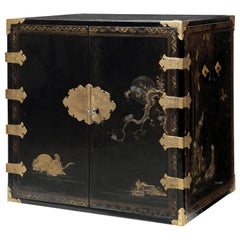
A fine Japanese pictoral style lacquer cabinet with gilt-metal mounts
Kyoto, Edo period, 1670-1690
Decorated in Japanese relief lacquer work, black lacquer ground decorated...
Category
Antique Late 17th Century Japanese Furniture
Materials
Bronze
$44,917 Sale Price
25% Off
Free Shipping
More Ways To Browse
Japanese Cabinet On Gilt Stand
Japanned Cabinet 18th Century
Japanned Cabinet On Stand
Brass Insect
White Ebony Furniture
1920 Jacobean
Antique Pine China Cabinet
Antique Wood Furniture Parts
Arabesque Panel
Baroque Cabinet On Stand
Bonnet Top Cabinet
Bureau Du Roi
Chinese Tall Cabinet
Chippendale Display Cabinet
Flat File Cabinet
Georgian Display Cabinet
H W Batley
Italian Kitchen Units