Items Similar to Japanese Antique Sliding-Door Cabinet (Cha Tansu), Taisho Era (1912–1926), Wabi
Video Loading
Want more images or videos?
Request additional images or videos from the seller
1 of 22
Japanese Antique Sliding-Door Cabinet (Cha Tansu), Taisho Era (1912–1926), Wabi
$1,000
£760.85
€876.66
CA$1,419.69
A$1,523.07
CHF 816.94
MX$18,337.56
NOK 10,298.53
SEK 9,390.83
DKK 6,549.81
About the Item
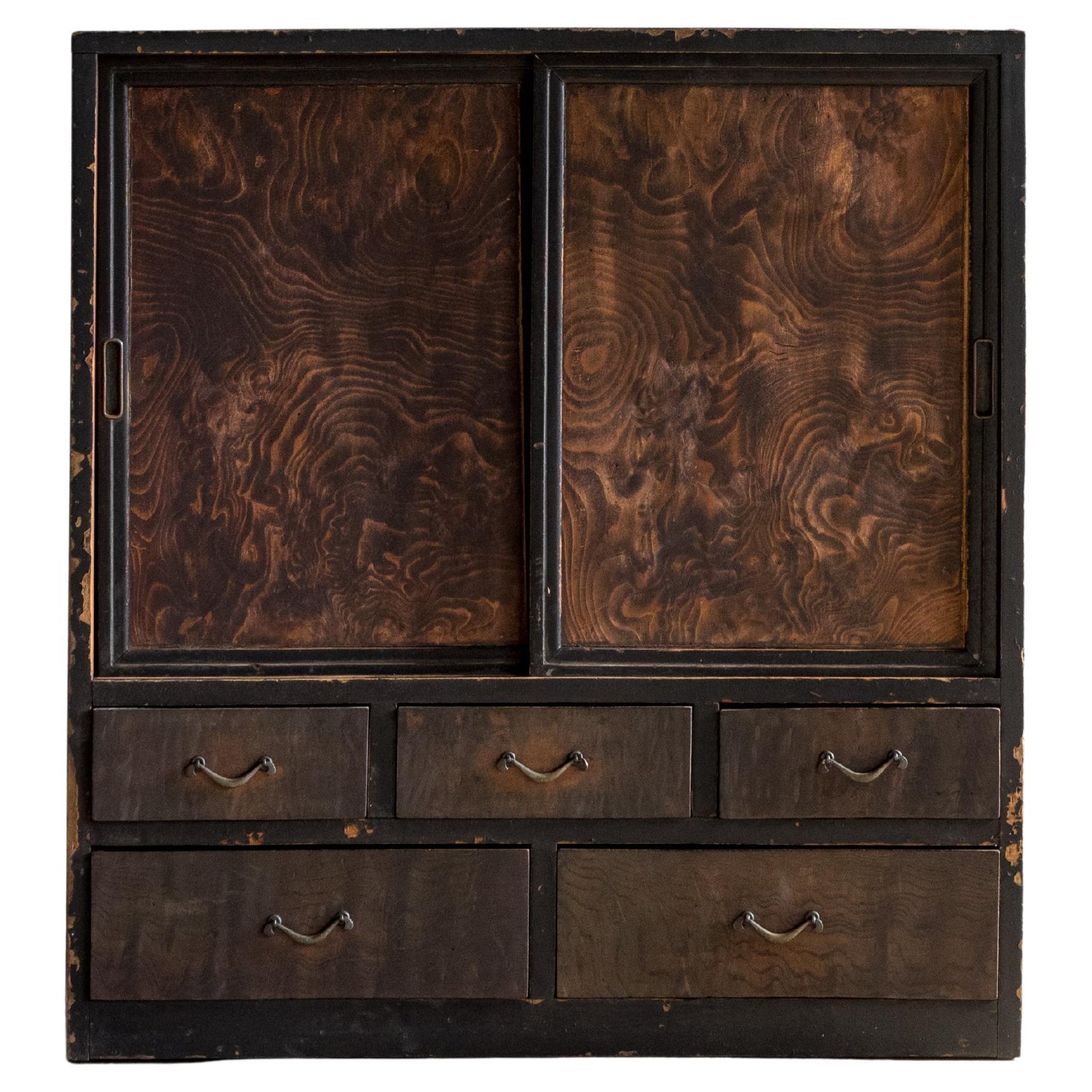
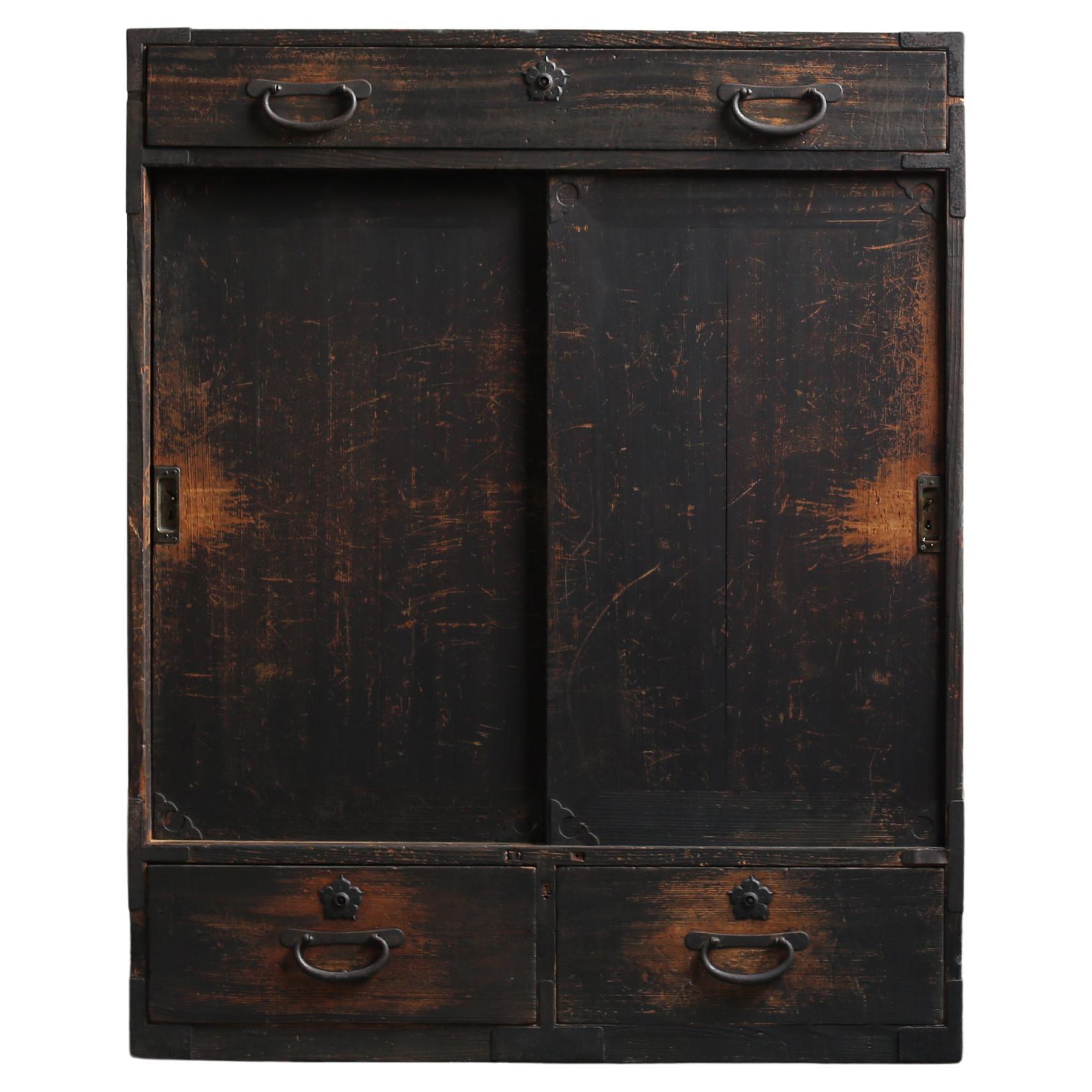
This Japanese sliding-door cabinet (cha tansu) was crafted during the Taisho Period (1912–1926) using a thoughtful combination of woods: kiri (paulownia) for the frame, sugi (Japanese cedar) for the door panels, and kuwa (mulberry) for the drawer fronts. Each wood was chosen for its particular qualities—paulownia for lightness and resistance to warping, cedar for its straight grain and gentle aroma, and mulberry for its fine, dense character.
The exterior is finished in a deep, smoky brown achieved with kakishibu (persimmon tannin) combined with pine soot, a traditional method that both colors and protects the wood. The top surface and interior retain traces of reddish-brown lacquer, a quiet detail that adds warmth and visual interest. Over time, these layered finishes have worn and softened, revealing the natural materials beneath and the piece’s history of use.
Originally designed for storing tea utensils and ceramics, the cabinet features open shelving behind sliding doors, with three drawers below for organizing smaller items. The restrained design and rich patina reflect the aesthetic ideals of wabi-sabi—finding beauty in simplicity, age, and imperfection.
This cabinet works beautifully in modern interiors—as a tea station, bar cabinet, entry console, or display piece for ceramics, books, and objects. Its slender depth makes it ideal for narrow spaces or against walls, adding presence without overwhelming the room.
- Structure is sound and stable with no wobble or structural issues
- Kakishibu and pine soot finish shows age-related wear with areas of loss, revealing the wood beneath
- Top surface and interior retain traces of original reddish-brown lacquer
- Drawer interiors show some discoloration and staining from age and use
- Surface has minor chips, scratches, and dents consistent with age
- Back panel shows gaps between boards due to natural wood contraction over time (does not affect stability)
- All drawers and sliding doors operate smoothly
Cleaned and disinfected with a non-toxic solution.
As an authentic Taisho-era piece, this cabinet exhibits natural signs of age and use inherent to Japanese antique furniture. Characteristics such as finish wear, wood movement, surface marks, and structural aging are reflections of authenticity and history, not defects. Please review all photos carefully—condition details are visible in images—and feel free to contact us with any questions before purchasing.
Cabinet interior dimensions (approximate):
Upper compartment (behind sliding door): W: 26.6" (67.5 cm) / D: 10.6" (27 cm) / H: 5.9" (15 cm)
Middle compartment (behind sliding door):
Shallow shelf area: W: 27.2" (69 cm) / D: 5.5" (14 cm) / H: 5.9" (15 cm)
Deep lower space: W: 27.2" (69 cm) / D: 10.6" (27 cm) / H: 10.4" (26.5 cm)
Drawers: W: 8.0" (20.4 cm) / D: 11.9" (30.2 cm) / H: 3.9" (9.9 cm)
Weight: 25.1 lbs (11.4 kg)
Shipping Information:
We ship from Japan. I will provide my own shipping quote. Please ask.
Import duties, taxes, and customs fees are the responsibility of the buyer.
- Dimensions:Height: 29.77 in (75.6 cm)Width: 30.79 in (78.2 cm)Depth: 13 in (33 cm)
- Style:Taisho (Of the Period)
- Materials and Techniques:
- Place of Origin:
- Period:
- Date of Manufacture:Circa 1920
- Condition:Refinished. Wear consistent with age and use. Cleaned and disinfected. Structure sound and stable. Kakishibu finish shows wear. Top and interior retain lacquer traces. Drawers show discoloration. Surface has chips, scratches, dents. Back has gaps from wood contraction (does not affect stability).
- Seller Location:Hitachiomiya-shi, JP
- Reference Number:1stDibs: LU7430247728332
About the Seller
5.0
Platinum Seller
Premium sellers with a 4.7+ rating and 24-hour response times
Established in 2019
1stDibs seller since 2022
84 sales on 1stDibs
Typical response time: 1 hour
- ShippingRetrieving quote...Shipping from: Hitachiomiya, Japan
- Return Policy
More From This Seller
View AllJapanese Vintage Sliding-Door Cabinet (Cha Tansu), Early Showa Era, Wabi Sabi
Located in Hitachiomiya-shi, 08
This Japanese sliding-door cabinet (cha tansu) was crafted during the early Showa Period (1926–1945) in hinoki cypress, a wood valued for its fine grain, durability, and calming natu...
Category
Mid-20th Century Japanese Showa Cabinets
Materials
Cypress, Wood
Japanese Antique Small Cabinet with Wooden Door, Taisho Era
1912-1926
Wabi Sabi
Located in Hitachiomiya-shi, 08
This antique small cabinet was crafted in the Taisho Era (1912-1926), reflecting the exceptional craftsmanship of the period. The front panel is made from exquisite keyaki wood, with...
Category
Early 20th Century Japanese Taisho Cabinets
Materials
Wood
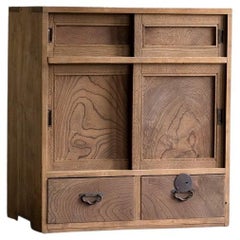
Japanese Vintage Sliding-Door Cabinet, Early Showa Period (1926–1945), Wabi Sabi
Located in Hitachiomiya-shi, 08
This Japanese sliding-door cabinet was crafted in the early Showa Period (1926–1945) from sugi (Japanese cedar). Compact and warm in character, it features a simple pair of wooden sl...
Category
Mid-20th Century Japanese Showa Cabinets
Materials
Cedar

Japanese Antique Large Tansu, "Mizuya" Sidebord, Meiji Era 1868-1912, Wabi Sabi
Located in Hitachiomiya-shi, 08
This antique large Mizuya Tansu was crafted in the Meiji Era (1868–1912).
Its simple sliding panel doors and dark, timeworn finish reflect the quiet beauty of wabi-sabi. The surface...
Category
Antique Mid-19th Century Japanese Meiji Cabinets
Materials
Cedar
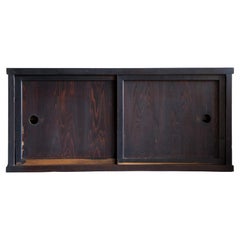
Japanese vintage Storage Cabinet"Mizuya Tansu", Sideboards Early Showa
1926-
Located in Hitachiomiya-shi, 08
This vintage cabinet was crafted in the Early Showa Period (1926–).
It was originally used as a traditional Japanese kitchen cabinet, or Mizu...
Category
Mid-20th Century Japanese Showa Cabinets
Materials
Cypress
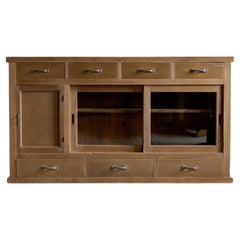
Japanese Vintage Small Sliding-Door Cabinet, Early Showa Period (1926–1945)
Located in Hitachiomiya-shi, 08
This Japanese vintage small sliding-door cabinet was crafted in the early Showa Period (1926–1945) entirely from Japanese sen wood. Compact in size and simple in design, it reflects ...
Category
Mid-20th Century Japanese Showa Cabinets
Materials
Wood
You May Also Like
Japanese Antique Tansu Cabinet / Taishō–Shōwa Period 1910s–1940s
Located in Sammu-shi, Chiba
A refined Cha-dansu (tea cabinet) crafted in Japan during the Taishō to early Shōwa period, made from richly grained keyaki (zelkova) wood. The cabinet features a striking natural gr...
Category
Early 20th Century Japanese Taisho Cabinets
Materials
Wood
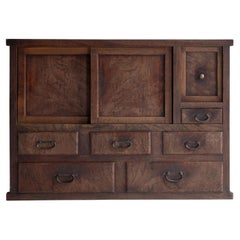
Japanese Taishō Period Early 20th Century Kiri Wood Mizuya Dansu Kitchen Cabinet
Located in Yonkers, NY
A Japanese Taisho period kiri wood clothing Mizuya Dansu kitchen cabinet from the early 20th century, with sliding doors and 10 drawers. Created in Japan during the early years of th...
Category
Early 20th Century Japanese Taisho Cabinets
Materials
Metal
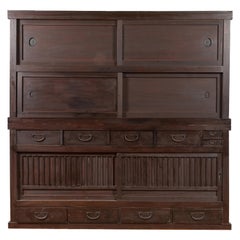
Japanese Antique Tansu Cabinet/ Wabi-sabi / Taishō–Shōwa Period 1910-40s
Located in Sammu-shi, Chiba
This cha dansu tea cabinet was crafted in Japan during the Taishō to early Shōwa period, using richly grained keyaki (zelkova) wood.
The bold, flowing grain that appears continuously...
Category
Early 20th Century Japanese Taisho Cabinets
Materials
Wood
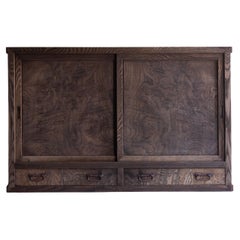
Japanese BK Tansu 1920-1940 / Showa Period / Cabinet Sideboard Wabi sabi
Located in Sammu-shi, Chiba
This is an antique Japanese Tansu.
The patina developed over time is truly exquisite.
It has been meticulously maintained to preserve its patina.
The doors operate smoothly.
It is i...
Category
Early 20th Century Japanese Showa Cabinets
Materials
Cedar
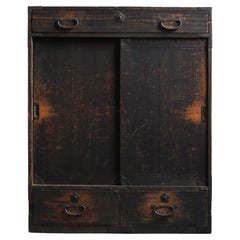
1930s - 1940s Japanese antique mid-size closet with drawers, wabi sabi organic
Located in 常陸大宮市, JP
New finds from a Kominka in Ibaraki pref, Japan.
This mid-size wooden closet is a product of 1930s - 40s (early Showa period) estimate from the style, conditions, also hearing from...
Category
20th Century Japanese Showa Cabinets
Materials
Brass
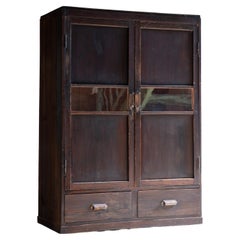
Japanese Antique Sen Wood Cabinet, 1920s–1940s - Japandi Wabi-Sabi
Located in Chiba, Chiba
A Japanese antique cabinet crafted from sen wood (Japanese ash), dating from the 1920s–1940s.
Combining double doors with glass sliding panels, the piece offers versatile usefulness ...
Category
Early 20th Century Japanese Furniture
Materials
Wood