Items Similar to Japanese Style Cabinet-Secretary Attributed to G. Viardot, France, Circa 1880
Want more images or videos?
Request additional images or videos from the seller
1 of 13
Japanese Style Cabinet-Secretary Attributed to G. Viardot, France, Circa 1880
$5,033.70
£3,729.49
€4,200
CA$6,941.44
A$7,349.18
CHF 3,977.17
MX$87,836.16
NOK 49,574.85
SEK 45,334.44
DKK 31,995.98
About the Item
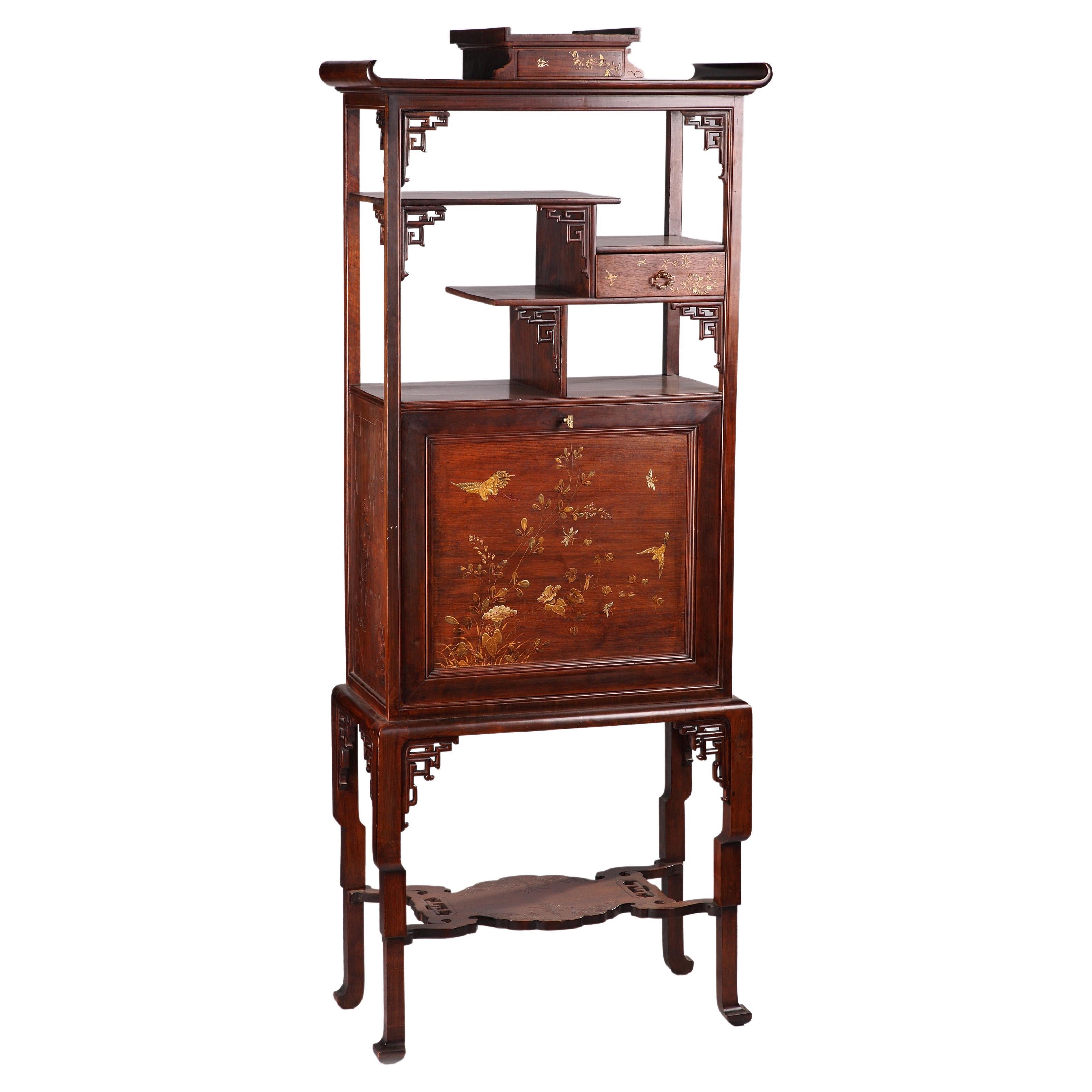
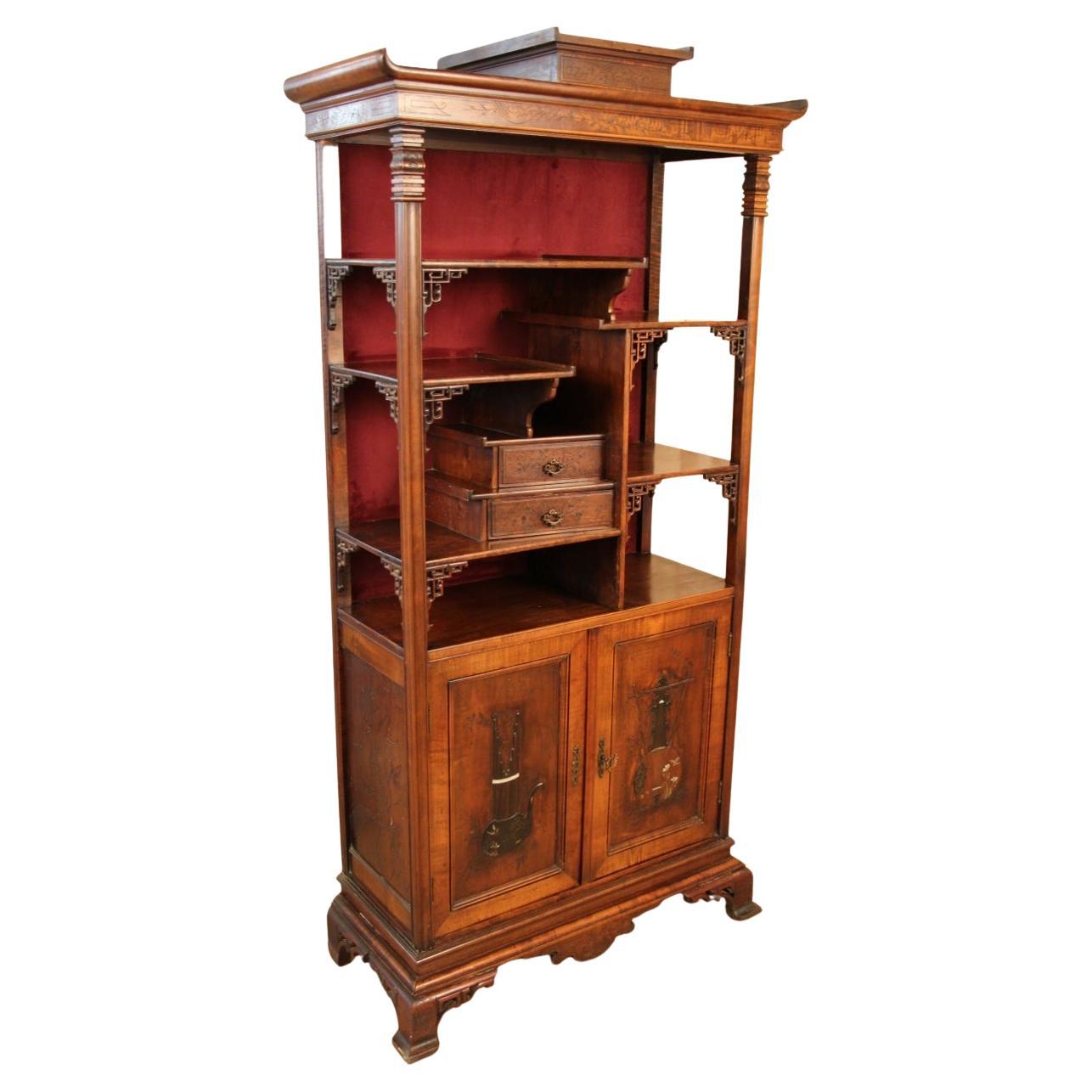
A Japanese style carved wood cabinet attributed to G. Viardot. A painted decor imitating Japanese lacquer, ornamented with flowers, birds and butterflies. Opening onto two drawers and a paper filer, the upright-secretary door is also fitted with red velvet. Surmounted by a drawer and asymmetrical shelves, composed in the Japanese 'zen' spirit, the cabinet stands on four legs joined by a engraved stretcher.
The great influence of the Far-East, through China and Japan, in the second half of the 19th century French art could be found first in painting and soon after in decorative arts and furniture as well.
Following the Franco-English military Campaign led in 1860 against the Imperial army in China, the French troops of Napoleon III brought back from the Summer Palace, a part of the Chinese Imperial court treasure, which will make up the famous Chinese Museum of Empress Eugénie at the Fontainebleau Palace. The French artists won’t be long to take inspiration from those exotic and sumptuous objects for their creations, as they used to do in the 18th century, when the best French cabinet-makers adapted the Chinese lacquers on the luxurious royal chests.
But the influence of Japan, at the Meiji period (1868-1912), came also very quickly to France, thanks to the opening of the country in the middle of the 19th century, as well as the development of traveling and the amazing Universal Exhibitions, in which Japan participated for the first time in 1867 in Paris. Then many Japanese objects and prints were imported to France and to all Europe, and for which some collectors spent already fortunes.
With Manet and Impressionists generation, the passion for Japanese art, more than a simple taste for an exotic style, was still in fashion until the turn of the 19th century. It provoked not only a craze among the French aristocratic families as well as the wealthy Paris High Society, wishing renew their mansion inner decoration, but turned also to a real revolutionary movement among the “avant-garde” artists. Those artists, whoever they were, painters, cabinet-makers or designers of ceramic, bronze and crystal objects, adapted then those techniques and naturalistic motifs unknown until this time.
- Attributed to:Gabriel Viardot (Cabinetmaker)
- Dimensions:Height: 65.75 in (167 cm)Width: 25.6 in (65 cm)Depth: 12.6 in (32 cm)
- Style:Japonisme (In the Style Of)
- Materials and Techniques:
- Place of Origin:
- Period:
- Date of Manufacture:circa 1880
- Condition:Wear consistent with age and use.
- Seller Location:PARIS, FR
- Reference Number:1stDibs: LU3860313043212
About the Seller
4.9
Vetted Professional Seller
Every seller passes strict standards for authenticity and reliability
Established in 1997
1stDibs seller since 2018
91 sales on 1stDibs
Associations
International Confederation of Art and Antique Dealers
Associations
- ShippingRetrieving quote...Shipping from: PARIS, France
- Return Policy
More From This Seller
View AllJapanese Style Cabinet-Secretary Att. to Perret
Vibert, France, circa 1880
By Perret et Vibert
Located in PARIS, FR
A Japanese style carved wood cabinet, with a painted decor imitating Japanese lacquer, ornamented with flowers, birds and butterflies. Opening onto two drawers and a paper filer, the upright-secretary door is also fitted with red velvet. Surmounted by a drawer and asymmetrical shelves, composed in the Japanese « zen » spirit, the cabinet stands on four legs joined by an engraved stretcher.
The great influence of the Far-East, through China and Japan, in the second half of the 19th century French art could be found first in painting and soon after in decorative arts and furniture as well.
Following the Franco-English military campaign led in 1860 against the Imperial army in China, the French troops of Napoleon III brought back from the Summer Palace, a part of the Chinese Imperial court treasure, which will make up the famous Chinese Museum of Empress Eugénie at the Fontainebleau Palace. The French artists won’t be long to take inspiration from those exotic and sumptuous objects for their creations, as they used to do in the 18th century, when the best French cabinet-makers adapted the Chinese lacquers on the luxurious royal chests.
But the influence of Japan, at the Meiji period (1868-1912), came also very quickly to France, thanks to the opening of the country in the middle of the 19th century, as well as the development of traveling and the amazing Universal Exhibitions, in which Japan participated for the first time in 1867 in Paris. Then many Japanese objects and prints were imported to France and to all Europe, and for which some collectors spent already fortunes.
With Manet and Impressionists generation, the passion for Japanese art, more than a simple taste for an exotic style, was still in fashion until the turn of the 19th century. It provoked not only a craze among the French aristocratic families as well as the wealthy Paris high society, wishing renew their mansion inner decoration, but turned also to a real revolutionary movement among the “avant-garde” artists. Those artists, whoever they were, painters, cabinet-makers or designers of ceramic, bronze and crystal objects, adapted then those techniques and naturalistic motifs unknown until this time.
Christofle, very famous since 1867 as a silversmith, was also one of the leaders among the inventors of Japanism. He knew how to use Japanese elements to his own splendid works made in silver or “cloisonné” enameled bronze. During the 1878 Paris Universal Exhibition, Christofle presented with great success his life-sized bronze Japanese ladies torcheres, executed by the renowned sculptor Guillemin.
Another famous company to be mentioned, is “L’Escalier de Cristal”, producing art objects and furniture, all of high standard quality and innovating much with their Japanese decor. Highly remarked during the Universal Exhibitions, “L’Escalier de Cristal” collaborated with the greatest artists, such Gallé and Rousseau for glass- and ceramic wares, and the cabinet-makers Lièvre and Viardot, whom made furniture including sometimes authentic Japanese elements.
In 1872, Alfred Perret and Ernest Vibert opened in Paris, at 33 rue du Quatre-Septembre a store that offered “natural bamboo furniture and cane seats” and all kinds of textile fittings for furniture. This furniture used for winter gardens and terraces of mansions knew then a resounding success. They developed their business around 1884 with their Japanese style furniture, very close to that executed by Gabriel Viardot (1830-1906). In 1886, the company appearing in the category of “Chinoiserie and Japoneries” offered, in addition to furniture and seating creation, works of art and inlaid furniture directly imported from the Far East ; an activity that expanded rapidly. Their exotic fantasy furniture presented at the Universal Exhibition of Paris in 1889 and 1900, rewarded them two silver medals. In 1894, the company was listed under the name “Perret et Vibert”, headed by the son of Alfred Perret and Ernest Vibert. The same year, they redesigned their store on rue du Quatre-Septembre, creating ten new show-rooms, showing complete furniture sets of Japanese and Chinese style inspiration. It was not until 1895, that the company was finally named “La Maison des Bambous” and organized then in their shops an “exhibition of country furniture and seats for castles and villas”, which was visited by Empress Eugenie to furnish her villa Cyrnos at Cap Martin. She actually was a regular customer of the “Maison des Bambous” as she bought repeatedly furniture. In October of the same year, the king of Greece...
Category
Antique 1880s French Japonisme Secretaires
Materials
Wood
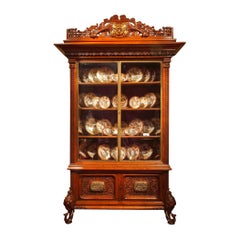
"Japonisme" Vitrine Attributed to A. Giroux, France, Circa 1880
By Maison Giroux
Located in PARIS, FR
Rare aesthetic movement showcase, opening in its upper part by two beveled glass doors framed by brass moldings, in its lower part by two door panels in carved walnut decorated with blooming branches and gilded bronze ornaments representing dragons and birds. The sides are carved, like wicker woven.
This showcase is topped by an important carved and gilded walnut cornice depicting a Fô Dog in its center, with a protective power, and rests on elephant head with overtuned trunk shaped feet.
This type of elephant head with overtuned trunk shaped feet is a characteristic of the Maison Giroux, which can be found on many objects they produced. Aesthetic movement cabinet, signed Maison Alphonse Giroux...
Category
Antique 1880s French Japonisme Vitrines
Materials
Bronze
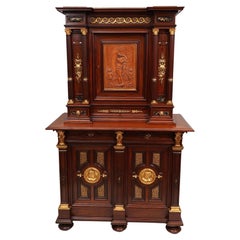
Neo-Renaissance Cabinet by P. Sormani and attr. to E. Lièvre, France, Circa 1870
By Edouard Lievre, Paul Sormani
Located in PARIS, FR
Signed twice on the lock P. SORMANI 10 rue Charlot Paris
Rare neo-Renaissance cabinet in carved wood and Portor marble, adorned with chiseled and gilded bronze.
The upper, part, surmounted by a frieze of posts and marble cabochons, consists of a central door decorated with a carved panel representing the birth of Venus, framed by two pairs of ringed and fluted columns with Corinthians capitals in gilded bronze revealing two doors with secret opening. Two drawers with lion’s head shaped handles and a central drawer decorated with tracery in gilded bronze complete the upper part of this cabinet.
In the lower part, two drawers on the belt with diamond...
Category
Antique 1870s French Renaissance Cabinets
Materials
Marble, Bronze
$58,007 Sale Price
44% Off
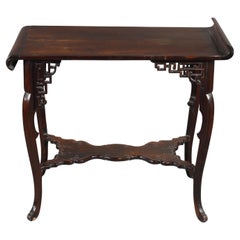
"Pagoda" table, Attributed to G. Viardot, France, Circa 1880
By Gabriel Viardot
Located in PARIS, FR
Charming Japanese-inspired « pagoda » table in tinted and carved wood attributed to G. Viardot. The rectangular top rests on four slightly curved legs adorned with openwork and sculpted geometric interlacing, joined by an engraved stretcher with a stylized cutout.
Gabriel Viardot career began as a wood carver and he produced small furniture, sculpturally carved with naturalistic motifs and animals. In the 1855 Universal Exhibition in Paris, his finely sculpted objects were well received. However, with the increasing importation of similarly produced Swiss and German articles, he found less opportunity for these and decided to innovate. G. Viardot succeeded to his father's business in 1861 installed rue Rambuteau in Paris. Around 1870 he turned to the idea of producing « Meubles genre Chinois et Japonais ». The taste in Europe for exotic furniture, incorporating sometimes authentic Chinese or Japanese objects...
Category
Antique 1880s French Japonisme Tables
Materials
Wood
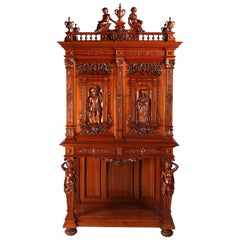
Renaissance Style Wooden Cabinet Attributed to H.A. Fourdinois, France, 1893
Located in PARIS, FR
A wooden cupboard, elaborately carved throughout, dated "1893" on the crest and attributed to H.A. Fourdinois. The upper section with a pair of cherubs at the center of a balustrade ornamented with two-handled urns, two architectonic doors below, carved with lady and gentleman in niches surrounded by extensive carving with classical motifs. The lower section with two drawers above a standing female caryatid support at each front corner. The all reposing on four gadronned round feet.
The Fourdinois company was founded in 1835 by Alexandre-Georges Fourdinois (1799-1871). The Universal Exhibition held in London in 1851 was undoubtedly their first great artistic and public success. Winning the Great medal for a neo-Renaissance buffet...
Category
Antique 1890s French Renaissance Cabinets
Materials
Wood
$16,179 Sale Price
38% Off
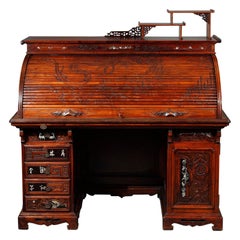
"Japonisme" Cylinder Desk Att. to G. Viardot, France, circa 1880
By Gabriel Viardot
Located in PARIS, FR
Rare Japanese style cylinder desk in tinted and carved wood, richly engraved on all sides with foliage, cherry branches and geometric interlacing. Surmounted by two asymmetrical shelves, the cylinder is decorated with an engraved dragon. Opening this cylinder reveals many compartments with adjustable dimensions, a drawer with engraved decoration and letter storage. The cylinder sides can open laterally, allowing a larger area for working and writing.
The lower part of the desk is formed on the left by five superimposed drawers decorated with geometric interlacing and carved branches, as well as Japanese characters, deer and mother-of-pearl foliage. On the right, there is a drawer and a door decorated with carved leaves and mother-of-pearl interlacing, revealing four drawers forming compartments.
An ingenious mechanism makes it possible, when the cylinder is closed with a key, to completely lock the desk.
Gabriel Viardot career began as a wood carver and he produced small furniture, sculpturally carved with naturalistic motifs and animals. In the 1855 Exposition Universelle in Paris, his finely sculpted objects were well received. However, with the increasing importation of similarly produced Swiss and German articles, he found less opportunity for these and decided to innovate. G. Viardot succeeded to his father’s business in 1861 installed rue Rambuteau in Paris. Around 1870 he turned to the idea of producing « Meubles genre Chinois et Japonais ». The taste in Europe for exotic furniture, incorporating sometimes authentic Chinese or Japanese objects...
Category
Antique 1880s French Japonisme Desks
Materials
Mother-of-Pearl, Wood
You May Also Like
Japanese Collector
s Cabinet Attributed To Viardot
By Gabriel Viardot
Located in Charmes, FR
Cabinet in the style of Viardot, with inlays in the doors, the fabric of the bottom has been changed, minimal wear from use and time in good condition, some old holes from xylophages
Category
Antique Late 19th Century French Japonisme Vitrines
Materials
Wood

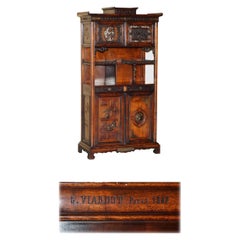
IMPORTANT ANTiQUE GABRIELD VIARDOT 1830-1906 SIGNED JAPONISME DISPLAY CUPBOARD
By Gabriel Viardot
Located in West Sussex, Pulborough
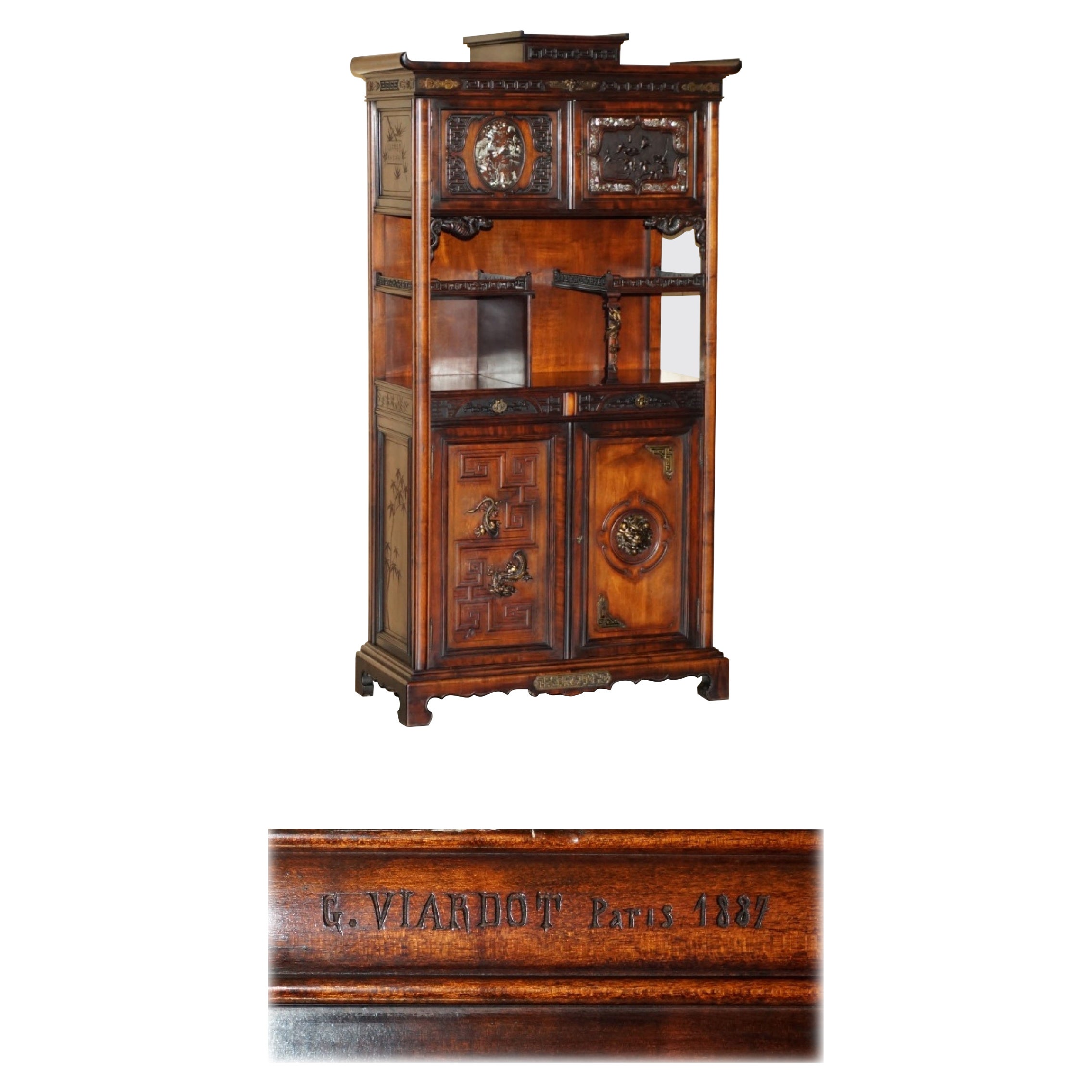
Very rare and important, Museum quality Gabriel Viardot 1830-1906 display cabinet signed to the side G Viardot Paris 1887, finished with Mother of Pearl inlay and Gold Gilt oriental ...
Category
Antique 1880s French Japonisme Cabinets
Materials
Hardwood, Mother-of-Pearl
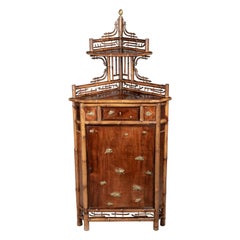
19th Century French Japonisme Bamboo Corner Cabinet
Located in Winter Park, FL
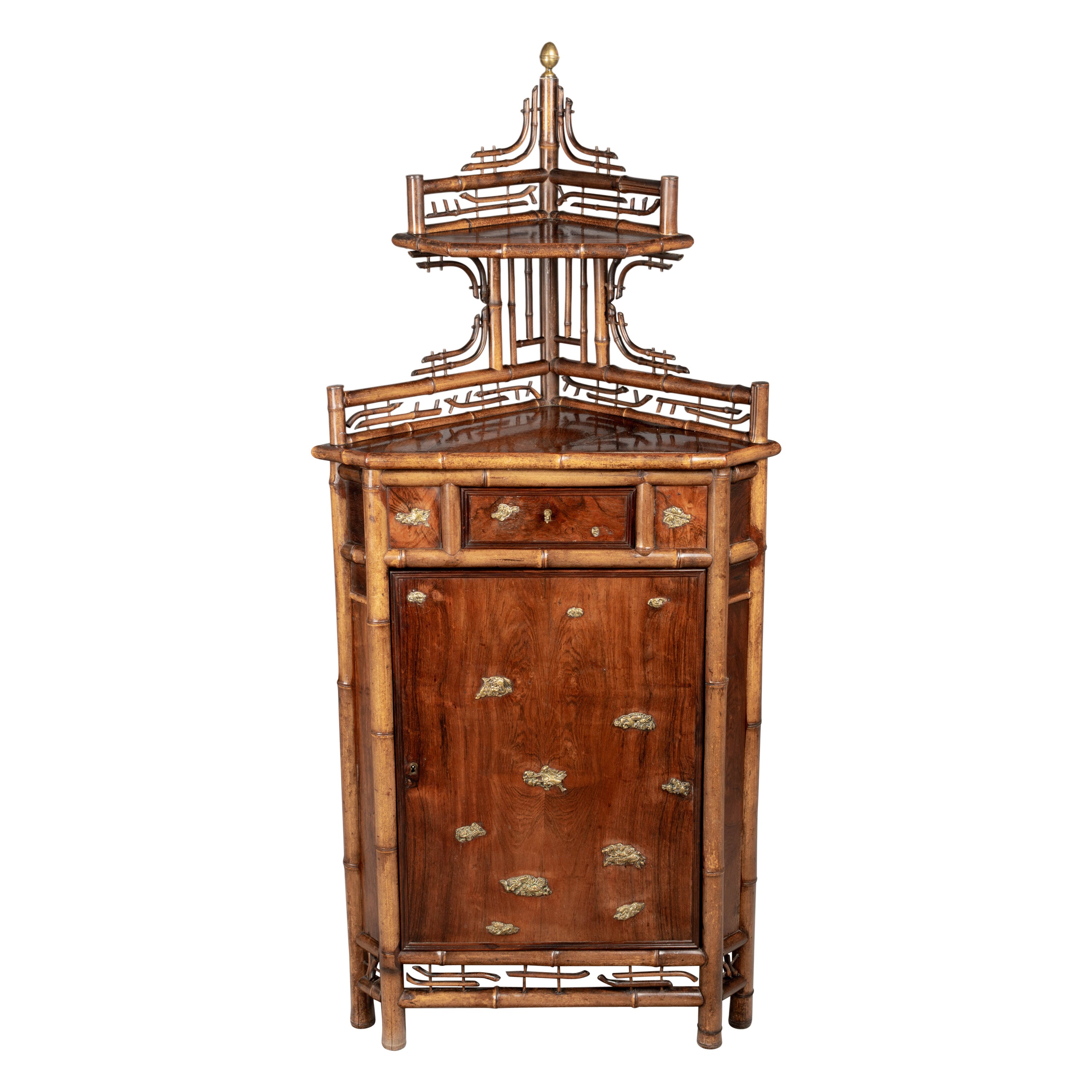
A 19th century French Japonisme style corner cabinet with sturdy burnt bamboo frame and solid rosewood panels. Above the cabinet is an open shelf supp...
Category
Antique 19th Century English Japonisme Corner Cupboards
Materials
Metal
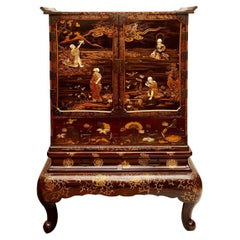
Japanese Lacquer Meiji Period Cabinet on Stand, circa 1890
Located in Brighton, Sussex
A exquisite, fine quality Meiji period (1868-1912) Japanese black lacquer cabinet on stand with wonderful scrolling gilded decoration. H...
Category
Antique Late 19th Century Japanese Japonisme Lacquer
Materials
Lacquer
$35,243 Sale Price
20% Off
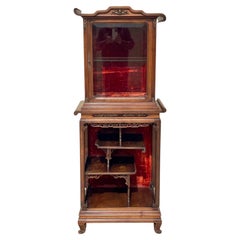
Attr. to Gabriel Viardot - Japanese Vitrine / Cabinet
By Gabriel Viardot
Located in Beaune, FR
Lovely little Japanese-style vitrine in carved wood in the style of Gabriel VIARDOT. Vitrine in the upper part and shelves in the lower part. This small piece of furniture is in good...
Category
Antique 19th Century French Chinese Export Vitrines
Materials
Fruitwood
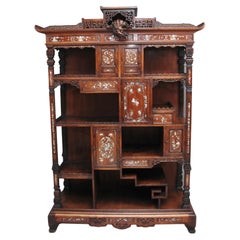
Fabulous Quality 19th Century French Japanese Style Shodona
Located in Martlesham, GB
A fabulous quality 19th century French Japanese style shodona, finely inlaid with mother of pearl of the highest quality depicting various oriental patterns, flowers and butterflies ...
Category
Antique 1880s French Cabinets
Materials
Hardwood
More Ways To Browse
French Antique Cabinets
Secretary Cabinets
Japanese Antique Cabinet
Antique Cabinet Circa 1880
French Japonisme
French Secretary Cabinet
Japanese Kitchen Cabinet
Empress Eugenie
Painted Secretary
Chinese Lacquered Chest
Antique Painted Secretary
Antique Japanese Decor
Antique Chinese Lacquer Chest
Viardot Gabriel
English Country Chest Of Drawers
Artist Cabinet
Japanese Lacquer Cabinet On Stand
Chinese Lacquer Cabinet On Stand