Want more images or videos?
Request additional images or videos from the seller
1 of 8

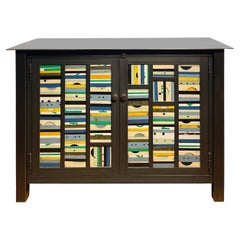
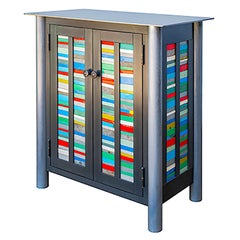
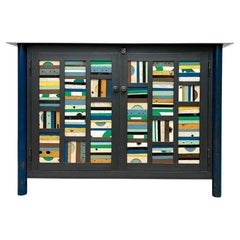
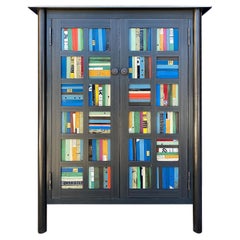
Jim Rose Two-Door Multicolor Block Quilt Cupboard, Steel Art Furniture

$6,500List Price

You May Also Like

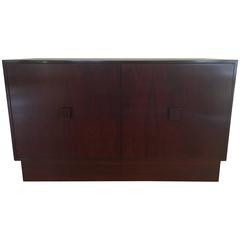
French Rosewood Two-Door Sideboard Cabinet
Located in Westport, CT
Small-scale French rosewood two-door sideboard cabinet, with two shelf interior and pedestal base. Simple design with large rosewood square pull.
Category

Mid-20th Century French Mid-Century Modern Cabinets

Materials

Rosewood

French Rosewood Two-Door Sideboard Cabinet
$6,900
H 31 in W 56 in D 18 in
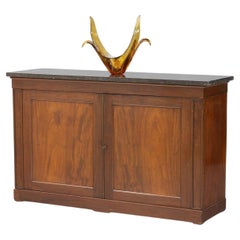
Large Two Door Cupboard
Located in London, England
Two door mahogany cupboard base with adjustable shelves and granite top. Circa 1840. H 99cm x W 161cm x D 50cm
Category

Antique 1840s Sideboards

Materials

Mahogany

Large Two Door Cupboard
$3,863
H 38.19 in W 63.39 in D 19.69 in
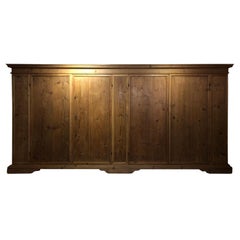
17th Century Italian Four Doors Pine Wood Big Shelves Cupboards
Located in IT
17th century Italian pine wood big cabinet four doors, arranged internally with shelves, original hardware ( lockers, hinges and keys). Restoration: conservative. Dismountable size: ...
Category

Antique Early 1600s Italian Romantic Cabinets

Materials

Pine

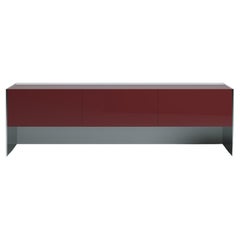
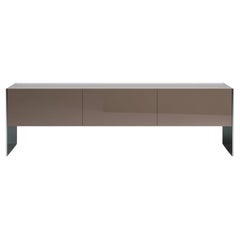
Acerbis Steel Sideboard in Glossy Lacquered Burgundy Top Doors w Steel Sides
By Lodovico Acerbis, Oscar e Gabriele Buratti, Acerbis
Located in Brooklyn, NY
The sideboard is provided with mirror polished stainless inox steel sides and with adjustable bar. Finishings and fittings like New Concepts sideboards. Lighting system CE standard, ...
Category

21st Century and Contemporary Sideboards

Materials

Lacquer

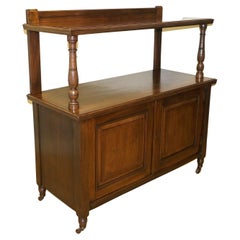
Beautiful Victorian Brown Hardwood Two Tier Whatnot Cupboard on Castors
Located in West Sussex, Pulborough
We are delighted to offer for sale this charming brown Mahogany Victorian Whatnot cupboard on castors. This attractive and solid piece is well pre...
Category

Antique 19th Century English Victorian Sideboards

Materials

Hardwood

Acerbis Steel Sideboard in Glossy Lacquered Clay Top Doors with Steel Sides
By Oscar e Gabriele Buratti, Lodovico Acerbis, Acerbis
Located in Brooklyn, NY
The sideboard is provided with mirror polished stainless inox steel sides and with adjustable bar. Finishings and fittings like New Concepts sideboards. Lighting system CE standard,...
Category

21st Century and Contemporary Sideboards

Materials

Lacquer

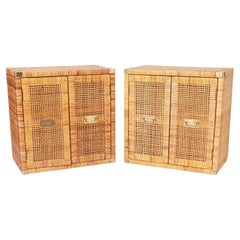
Pair of Campaign Style Two Door Woven Wicker Stands
By Bielecky Brothers
Located in Palm Beach, FL
Impressive pair of vintage Bielecky Brothers stands hand crafted in woven reed in a campaign style with brass hardware, two doors in front, and plenty of storage.
Category

20th Century American Campaign Cabinets

Materials

Reed

Pair of Campaign Style Two Door Woven Wicker Stands
$5,950 / set
H 30 in W 30 in D 18 in
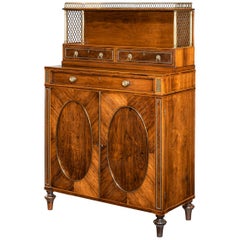
Regency Rosewood Two-Door Side Cabinet, Attributed to John Mclean
By John Mclean
Located in Lymington, Hampshire
A fine high Regency rosewood two-door side cabinet, attributed to John Mclean, of upright rectangular form, the upper section comprising two small drawers ...
Category

Antique 1810s English Regency Cabinets

Materials

Rosewood

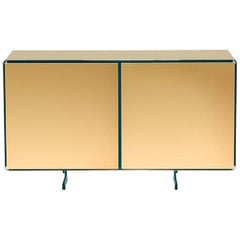
Gold Contemporary Two Doors Sideboard, 24-Karat Polished Gold-Plated
By SEM, Paolo Rizzo
Located in Brooklyn, NY
SEM Gold collection, two doors sideboard. Verdemare lacquered wooden structure, gloss finish. Available more colorway variants. External shell in 24-karat polished yellow gold-plated...
Category

21st Century and Contemporary Italian Modern Sideboards

Materials

Steel, Gold

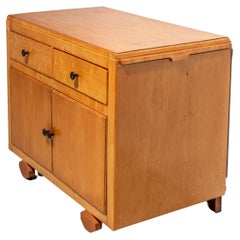
Small french two-door Cabinet with extractable side leafs in wood, 1970 s
Located in Uithoorn, NL
Lovely artisanal two-door sideboard wit diamond feet. Lovely blonde almost yellow wood that has stayed very good over the years. Pretty handy too with those extractable leafs that en...
Category

Vintage 1970s French Mid-Century Modern Cabinets

Materials

Bakelite, Wood

More From This Seller

View All
Jim Rose Two-Door Chinese Coins Quilt Cupboard, Functional Art Steel Furniture
By Jim Rose
Located in Chicago, IL
This Two Door Chinese Coin Quilt Cupboard represents a mature synthesis of Jim Rose’s legacy, where material ethics, cultural reference, and formal discipline converge with exceptional clarity. The cabinet’s surface draws directly from the visual language of Gee’s Bend quilts, particularly those incorporating circular or coin-like motifs, whose rhythmic repetition and improvisational structure resonate strongly with Rose’s own compositional instincts. As with his other quilt cabinets, the color and pattern here are not authored through paint but assembled through selection. Every colored panel is fabricated from found, pre-painted steel salvaged from signage, industrial machinery, and utilitarian structures, and all hues remain in their original state. Rose did not alter these surfaces; instead, he composed them with the care of a quilter, honoring their prior function and embedded histories. This approach situates the work within a lineage of resourcefulness and reuse, aligning Rose’s practice ethically as well as visually with the Gee’s Bend tradition. The dark steel framework provides a stabilizing armature, its rectilinear grid holding the animated interior panels in balance. The cabinet form itself—familiar, grounded, and domestic—anchors the visual complexity, ensuring that the piece remains furniture first, not image alone. The “coin” references introduce a subtle circular counterpoint to the otherwise linear composition, deepening the sense of rhythm and movement across the doors. Within Jim Rose’s broader body of work, this cupboard stands as a powerful statement of continuity: between craft traditions, between past and present, and between material life cycles. It exemplifies his enduring contribution to contemporary furniture—demonstrating how objects can carry cultural memory not through imitation, but through thoughtful reuse, disciplined composition, and profound respect for the origins of both material and form. Jim Rose Two Door Chinese Coin Quilt Cupboard hot roll and found painted steel 38.25h x 53.88w x 21d in 97.16h x 136.84w x 53.34d cm JR0249 Bio Jim Rose (1966–2023) was an American furniture maker, artist, and metalworker whose work occupied a singular position between studio craft, sculpture, and functional design. Born in Beech Grove, Indiana, Rose trained as a sculptor, earning his BFA from the School of the Art Institute of Chicago in 1988 after a brief period of study at Bard College. This sculptural foundation shaped his approach to furniture, in which proportion, structure, and surface were treated with the same rigor as utility, and everyday objects were understood as vehicles for aesthetic and ethical values. Working primarily in steel—often reclaimed or salvaged—Rose challenged conventional expectations of furniture materials. Through brushing, waxing, and patination, he developed surfaces that softened steel’s industrial associations, imparting warmth, depth, and a sense of age. His work drew on diverse historical and cultural sources, including Shaker furniture, Asian cabinetry, and the quilts of Gee’s Bend, yet these influences were never literal. Instead, Rose translated their underlying principles—clarity, restraint, repetition, and balance—into a contemporary language grounded in material honesty. Based for much of his career in Wisconsin, Rose was closely associated with the John Michael Kohler Arts Center, including participation in its Arts/Industry residency program. His furniture and objects were widely exhibited in galleries and design fairs across the United States and featured in publications such as American Craft and Architectural Digest. His work entered both private and institutional collections during his lifetime, reflecting a sustained engagement with collectors, curators, and designers. Rose’s furniture is distinguished by its emphasis on durability, adaptability, and use. Cabinets, chairs, benches, and tables were engineered for longevity and daily life, incorporating practical features such as steel drawer glides, modular construction, and discreet accommodations for modern technology. This functional intelligence was inseparable from his broader philosophy: furniture, for Rose, was a form of quiet service, meant to support human activity while carrying forward the history embedded in its materials. Jim Rose’s work is held in the permanent collections of major institutions including the Smithsonian American Art Museum, the Museum of Arts and Design in New York, the Milwaukee Art Museum, the Carnegie Museum of Art, and the John Michael Kohler Arts Center. Following his death in 2023, his legacy endures through a body of work that demonstrates how contemporary furniture can be both materially rigorous and deeply humane—objects shaped by patience, integrity, and an enduring respect for use. Education: 1989 B.F.A., Sculpture, The School of the Art Institute of Chicago, IL 1988 Student at Large, Welding Technology, Triton College, Chicago, IL 1985 Undergraduate Photography Bard College, Annandale-on-Hudson, New York Awards: 2008 Wisconsin Arts Board Fellowship Award, Madison, WI 2005 Elizabeth R. Raphael Founder’s Prize, Society for Contemporary Craft, Pittsburgh, PA 2003 Grant Recipient for Shaker Interpretations in Cast Iron, PA Arts Assoc / WI Arts Board 2003 Arts/Industry Residency Program for Visual Artists, John Michael Kohler Arts Center, Sheboygan, Wisconsin Solo Exhibitions: 2023 CODA Final Show, Gallery VICTOR, Chicago, IL 2017 New Work, Tory Folliard Gallery, Milwaukee, WI 2012 Simply Steel, Leigh Yawkey Woodson Art Museum, Wausau, WI 2007 Variation, Ann Nathan Gallery, Chicago, IL 2003 New Work, Ann Nathan Gallery, Chicago, IL 2001 Shaker in Steel / New Work, Ann Nathan Gallery, Chicago, IL 2000 Shaker in Steel / New Work, Ann Nathan Gallery, Chicago, IL 1999 Hands and Heart to Steel III, Ann Nathan Gallery, Chicago, IL National Exhibitions: 2023 Intersect Palm Springs, Gallery VICTOR, Palm Springs Convention Center, CA 2017 - 2018 SOFA Chicago – Gallery Victor Armendariz 1995 - 2016 SOFA Chicago, New York, Palm Beach - Ann Nathan Gallery 2011 - 2002 Art Chicago - Ann Nathan Gallery Group Exhibitions: 2022 Wunderkammer: Victor's Cabinet of Curiosities – 5th Anniversary Special Exhibit, Gallery VICTOR, Chicago, IL 2017 Coming Attractions: Inaugural Exhibition, Gallery Victor Armendariz, Chicago, IL 2017 Living with Art: The Newman Collection, 108 Contemporary, Tulsa, Oklahoma 2016 Form Follows Function: The Intersection of Art and Craft, The Hardy Gallery...
Category

2010s American Mid-Century Modern Cupboards

Materials

Steel

Jim Rose Two-Door Strips Quilt Cupboard, Brightly Colored Steel Art Furniture
By Jim Rose
Located in Chicago, IL
This Two-Door Strips Quilt Cupboard stands as a concise and confident expression of Jim Rose’s legacy, encapsulating his commitment to reuse, historical dialogue, and disciplined making. The cabinet’s surface draws directly from the strip-quilt tradition of Gee’s Bend, whose layered bands, irregular rhythms, and intuitive compositions offered Rose a powerful model for organizing difference within order. As in those quilts, the surface here reads as both structured and improvisational—anchored by repetition, yet animated by variation. Crucially, the color in this work is entirely inherited rather than applied. All of the colored panels are fabricated from found, pre-painted steel salvaged from signage, industrial machinery, and utilitarian sources, and the hues remain exactly as discovered. Rose did not paint or alter these surfaces; instead, he selected and composed them, allowing scratches, wear, and traces of former use to remain visible. This approach aligns his practice materially and ethically with the Gee’s Bend tradition, where resourcefulness and reuse are fundamental acts of making. The dark steel framework and cylindrical corner posts provide a stabilizing architectural armature, holding the vibrant strips in quiet tension and grounding the piece firmly in furniture rather than image alone. The familiar two-door cupboard form reinforces Rose’s belief that even the most visually complex surfaces must ultimately serve domestic function and daily life. Within Rose’s broader body of work, this cupboard exemplifies his enduring contribution to contemporary furniture: demonstrating how objects can carry cultural memory through material itself, how restraint can coexist with richness, and how thoughtful reuse can transform industrial remnants into furniture of warmth, dignity, and lasting presence. Jim Rose Two-door strips quilt cupboard Hot roll and found painted steel 36 H x 35 W x 18 D in 91.44 H x 88.90 W x 45.72 D cm Bio Jim Rose (1966–2023) was an American furniture maker, artist, and metalworker whose work occupied a singular position between studio craft, sculpture, and functional design. Born in Beech Grove, Indiana, Rose trained as a sculptor, earning his BFA from the School of the Art Institute of Chicago in 1988 after a brief period of study at Bard College. This sculptural foundation shaped his approach to furniture, in which proportion, structure, and surface were treated with the same rigor as utility, and everyday objects were understood as vehicles for aesthetic and ethical values. Working primarily in steel—often reclaimed or salvaged—Rose challenged conventional expectations of furniture materials. Through brushing, waxing, and patination, he developed surfaces that softened steel’s industrial associations, imparting warmth, depth, and a sense of age. His work drew on diverse historical and cultural sources, including Shaker furniture, Asian cabinetry, and the quilts of Gee’s Bend, yet these influences were never literal. Instead, Rose translated their underlying principles—clarity, restraint, repetition, and balance—into a contemporary language grounded in material honesty. Based for much of his career in Wisconsin, Rose was closely associated with the John Michael Kohler Arts Center, including participation in its Arts/Industry residency program. His furniture and objects were widely exhibited in galleries and design fairs across the United States and featured in publications such as American Craft and Architectural Digest. His work entered both private and institutional collections during his lifetime, reflecting a sustained engagement with collectors, curators, and designers. Rose’s furniture is distinguished by its emphasis on durability, adaptability, and use. Cabinets, chairs, benches, and tables were engineered for longevity and daily life, incorporating practical features such as steel drawer glides, modular construction, and discreet accommodations for modern technology. This functional intelligence was inseparable from his broader philosophy: furniture, for Rose, was a form of quiet service, meant to support human activity while carrying forward the history embedded in its materials. Jim Rose’s work is held in the permanent collections of major institutions including the Smithsonian American Art Museum, the Museum of Arts and Design in New York, the Milwaukee Art Museum, the Carnegie Museum of Art, and the John Michael Kohler Arts Center. Following his death in 2023, his legacy endures through a body of work that demonstrates how contemporary furniture can be both materially rigorous and deeply humane—objects shaped by patience, integrity, and an enduring respect for use. Education: 1989 B.F.A., Sculpture, The School of the Art Institute of Chicago, IL 1988 Student at Large, Welding Technology, Triton College, Chicago, IL 1985 Undergraduate Photography Bard College, Annandale-on-Hudson, New York Awards: 2008 Wisconsin Arts Board Fellowship Award, Madison, WI 2005 Elizabeth R. Raphael Founder’s Prize, Society for Contemporary Craft, Pittsburgh, PA 2003 Grant Recipient for Shaker Interpretations in Cast Iron, PA Arts Assoc / WI Arts Board 2003 Arts/Industry Residency Program for Visual Artists, John Michael Kohler Arts Center, Sheboygan, Wisconsin Solo Exhibitions: 2023 CODA Final Show, Gallery VICTOR, Chicago, IL 2017 New Work, Tory Folliard Gallery, Milwaukee, WI 2012 Simply Steel, Leigh Yawkey Woodson Art Museum, Wausau, WI 2007 Variation, Ann Nathan Gallery, Chicago, IL 2003 New Work, Ann Nathan Gallery, Chicago, IL 2001 Shaker in Steel / New Work, Ann Nathan Gallery, Chicago, IL 2000 Shaker in Steel / New Work, Ann Nathan Gallery, Chicago, IL 1999 Hands and Heart to Steel III, Ann Nathan Gallery, Chicago, IL National Exhibitions: 2023 Intersect Palm Springs, Gallery VICTOR, Palm Springs Convention Center, CA 2017 - 2018 SOFA Chicago – Gallery Victor Armendariz 1995 - 2016 SOFA Chicago, New York, Palm Beach - Ann Nathan Gallery 2011 - 2002 Art Chicago - Ann Nathan Gallery Group Exhibitions: 2022 Wunderkammer: Victor's Cabinet of Curiosities – 5th Anniversary Special Exhibit, Gallery VICTOR, Chicago, IL 2017 Coming Attractions: Inaugural Exhibition, Gallery Victor Armendariz, Chicago, IL 2017 Living with Art: The Newman Collection, 108 Contemporary, Tulsa, Oklahoma 2016 Form Follows Function: The Intersection of Art and Craft, The Hardy...
Category

2010s American Mid-Century Modern Cupboards

Materials

Steel

Jim Rose, Two Door Strip Quilt Cabinet, Functional Art Steel Furniture
By Jim Rose
Located in Chicago, IL
This Two Door Strip Quilt Cabinet stands as one of the clearest expressions of Jim Rose’s legacy, uniting his commitments to material honesty, historical...
Category

2010s American Mid-Century Modern Cupboards

Materials

Steel

Jim Rose Two-Door Housetop Weave Multi-Color Steel Quilt Pattern Cupboard
By Jim Rose
Located in Chicago, IL
This Two Door Strip Quilt Cupboard (2022) stands as a late and deeply resolved expression of Jim Rose’s legacy, bringing together his lifelong commitments to material honesty, historical continuity, and disciplined composition. The cabinet’s surface draws directly from the strip quilt tradition of Gee’s Bend, whose improvisational bands, shifting rhythms, and intuitive balance offered Rose a powerful model for structuring variation within order. As with all of Rose’s quilt cabinets, the color here is not applied but inherited. Every panel is made from found, pre-painted steel salvaged from signage, industrial machinery, and utilitarian infrastructure, and all colors remain exactly as discovered. Rose did not paint these surfaces; instead, he selected, cut, and arranged them, allowing each fragment’s prior life—scratches, holes, typography, and wear—to remain legible. This method aligns Rose’s practice ethically and materially with the Gee’s Bend tradition, where reuse and transformation are acts of respect rather than aesthetic affectation. The cabinet’s dark steel framework acts as a stabilizing armature, its rectilinear grid holding the animated color fields in quiet tension. The familiar two-door cupboard form grounds the work in domestic function, ensuring that visual complexity never eclipses use. Verticality and symmetry lend the piece a calm authority, while subtle asymmetries within the panels keep the surface alive and responsive. Created near the end of Rose’s career, this cupboard reads as both culmination and affirmation. It encapsulates his enduring contribution to contemporary furniture: demonstrating that objects can carry cultural memory through material itself, that restraint can coexist with richness, and that furniture—made with patience, respect, and clarity—can function simultaneously as utility, composition, and quiet witness to lived histories. Jim Rose Two Door Strip Quilt Cupboard, 2022 hot roll and found painted steel 48h x 39w x 18.50d in 121.92h x 99.06w x 46.99d cm JR0241 Bio Jim Rose (1966–2023) was an American furniture maker, artist, and metalworker whose work occupied a singular position between studio craft, sculpture, and functional design. Born in Beech Grove, Indiana, Rose trained as a sculptor, earning his BFA from the School of the Art Institute of Chicago in 1988 after a brief period of study at Bard College. This sculptural foundation shaped his approach to furniture, in which proportion, structure, and surface were treated with the same rigor as utility, and everyday objects were understood as vehicles for aesthetic and ethical values. Working primarily in steel—often reclaimed or salvaged—Rose challenged conventional expectations of furniture materials. Through brushing, waxing, and patination, he developed surfaces that softened steel’s industrial associations, imparting warmth, depth, and a sense of age. His work drew on diverse historical and cultural sources, including Shaker furniture, Asian cabinetry, and the quilts of Gee’s Bend, yet these influences were never literal. Instead, Rose translated their underlying principles—clarity, restraint, repetition, and balance—into a contemporary language grounded in material honesty. Based for much of his career in Wisconsin, Rose was closely associated with the John Michael Kohler Arts Center, including participation in its Arts/Industry residency program. His furniture and objects were widely exhibited in galleries and design fairs across the United States and featured in publications such as American Craft and Architectural Digest. His work entered both private and institutional collections during his lifetime, reflecting a sustained engagement with collectors, curators, and designers. Rose’s furniture is distinguished by its emphasis on durability, adaptability, and use. Cabinets, chairs, benches, and tables were engineered for longevity and daily life, incorporating practical features such as steel drawer glides, modular construction, and discreet accommodations for modern technology. This functional intelligence was inseparable from his broader philosophy: furniture, for Rose, was a form of quiet service, meant to support human activity while carrying forward the history embedded in its materials. Jim Rose’s work is held in the permanent collections of major institutions including the Smithsonian American Art Museum, the Museum of Arts and Design in New York, the Milwaukee Art Museum, the Carnegie Museum of Art, and the John Michael Kohler Arts Center. Following his death in 2023, his legacy endures through a body of work that demonstrates how contemporary furniture can be both materially rigorous and deeply humane—objects shaped by patience, integrity, and an enduring respect for use. Education: 1989 B.F.A., Sculpture, The School of the Art Institute of Chicago, IL 1988 Student at Large, Welding Technology, Triton College, Chicago, IL 1985 Undergraduate Photography Bard College, Annandale-on-Hudson, New York Awards: 2008 Wisconsin Arts Board Fellowship Award, Madison, WI 2005 Elizabeth R. Raphael Founder’s Prize, Society for Contemporary Craft, Pittsburgh, PA 2003 Grant Recipient for Shaker Interpretations in Cast Iron, PA Arts Assoc / WI Arts Board 2003 Arts/Industry Residency Program for Visual Artists, John Michael Kohler Arts Center, Sheboygan, Wisconsin Solo Exhibitions: 2023 CODA Final Show, Gallery VICTOR, Chicago, IL 2017 New Work, Tory Folliard Gallery, Milwaukee, WI 2012 Simply Steel, Leigh Yawkey Woodson Art Museum, Wausau, WI 2007 Variation, Ann Nathan Gallery, Chicago, IL 2003 New Work, Ann Nathan Gallery, Chicago, IL 2001 Shaker in Steel / New Work, Ann Nathan Gallery, Chicago, IL 2000 Shaker in Steel / New Work, Ann Nathan Gallery, Chicago, IL 1999 Hands and Heart to Steel III, Ann Nathan Gallery, Chicago, IL National Exhibitions: 2023 Intersect Palm Springs, Gallery VICTOR, Palm Springs Convention Center, CA 2017 - 2018 SOFA Chicago – Gallery Victor Armendariz 1995 - 2016 SOFA Chicago, New York, Palm Beach - Ann Nathan Gallery 2011 - 2002 Art Chicago - Ann Nathan Gallery Group Exhibitions: 2022 Wunderkammer: Victor's Cabinet of Curiosities – 5th Anniversary Special Exhibit, Gallery VICTOR, Chicago, IL 2017 Coming Attractions: Inaugural Exhibition, Gallery Victor Armendariz, Chicago, IL 2017 Living with Art: The Newman Collection, 108 Contemporary, Tulsa, Oklahoma 2016 Form Follows Function: The Intersection of Art and Craft, The Hardy Gallery, Ephraim, Wi 2015 NEO, Chipstone Foundation, Milwaukee Art Museum, Milwaukee, WI 2015 ICFF, Furniture Society, Javits Convention Center, New York City, NY 2013 Vahki Revisited, The Enduring Spirit of a Craft Collection” Mesa Contemporary Arts, Mesa, AZ 2013 Fearless Furniture, Indiana State Museum and Historic Sites, Indianapolis, IN 2013 Inaugural Exhibition, Museum Wisconsin of Art, West Bend, WI 2012 Sitting Pretty: Furniture from RAM’s Collection, Racine Art Museum, WI 2011 Hiding Places: Memory in the Arts, John Michael Kohler Arts Center, WI 2010 Living with Art, Strohl Art Center, Chautauqua Institution, NY 2009 Summer in Wisconsin, Tory Folliard Gallery, Milwaukee, WI 2009 High Honors, James Watrous Gallery, Madison, WI 2008 Second Lives: Remixing the Ordinary, Museum of Art and Design, NY 2007 Transformation 5: Contemporary Works in Found Materials, Art Association, Jackson, WY 2007 Transformation 5: Contemporary Works in Found Materials, Houston Center for Contemporary Craft, Houston, TX (traveling exhibition) 2006 Show us Your Drawers, Herron School of Art, Indianapolis, IN 2006 Marriage of the Minds, Fairfield Center for Contemporary Art, Sturgeon Bay, WI 2006 27th Annual Contemporary Crafts, Mesa Contemporary Arts, Mesa, AZ 2006 Containers of All Dimensions, Mesa Contemporary Arts, Mesa, AZ 2005 Transformation 5: Contemporary Works in Found Materials, Society for Contemporary Craft, Pittsburgh, PA 2004 Right at Home: American Studio Furniture, Renwick Gallery, Smithsonian American Art Museum, Washington, D.C. 2004 American Collections, Milwaukee Art Museum, Milwaukee, WI 2004 More Than Drawers-Wisconsin Cabinets, Leigh Yawkey Woodson Art Museum, Wausau, WI 2004 Objects of Wonder, John Michael Kohler Arts Center, Sheboygan, WI 2003 Planting, Potting and Pruning, Wustum Museum of Fine Art, Racine, WI 2003 Men at Work, Miller Art Museum, Sturgeon Bay, WI 2002 Case Pieces: Contemporary Studio Furniture, Elvehjem Museum of Art, Univ of WI-Madison 2002 Sitting Pretty: Contemporary Wisconsin Chairs...
Category

2010s American American Craftsman Cupboards

Materials

Steel

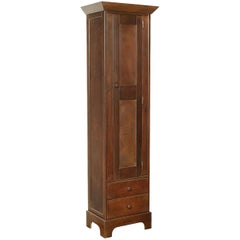
Shaker Tall Cabinet With Door and Drawers, Steel Cupboard by Jim Rose
By Jim Rose
Located in Chicago, IL
This tall cabinet exemplifies Jim Rose’s legacy at its most distilled and disciplined—an object where verticality, restraint, and material intelligence converge into a quietly commanding presence. The form recalls early American and Shaker cupboards, particularly storage pieces meant to stand apart and serve specific, practical purposes, yet Rose’s execution in steel transforms that lineage into something resolutely contemporary. The cabinet’s slender proportions and emphatic vertical lines highlight Rose’s sculptural training, giving the piece a bodily, almost architectural stance. The stepped cornice and subtly flared top introduce a sense of ceremony without ornament, while the paneled door and drawers below establish a rhythm of framed surfaces that echo traditional joinery, translated here into metal. As in much of Rose’s work, the steel is finished to suggest age and warmth, dissolving the boundary between industrial material and domestic familiarity. Functionally precise yet emotionally resonant, the piece reflects Rose’s belief that furniture should feel purpose-built and enduring. The single-door cabinet and drawers below offer a clear hierarchy of use, reinforcing his preference for clarity over excess. Nothing is superfluous; every decision supports balance, usability, and longevity. Within Rose’s broader body of work, this cabinet stands as a meditation on scale and solitude—a piece that does not dominate a room through size, but through presence. It underscores his enduring contribution to contemporary furniture: proving that steel, when handled with patience and respect for tradition, can carry the same sense of history, dignity, and quiet service as the finest wooden furniture. Jim Rose Legacy Collection Tall Cabinet, 2003 found steel with natural rust patina 80h x 23w x 16d in 203.20h x 58.42w x 40.64d cm Bio Jim Rose (1966–2023) was an American furniture maker, artist, and metalworker whose work occupied a singular position between studio craft, sculpture, and functional design. Born in Beech Grove, Indiana, Rose trained as a sculptor, earning his BFA from the School of the Art Institute of Chicago in 1988 after a brief period of study at Bard College. This sculptural foundation shaped his approach to furniture, in which proportion, structure, and surface were treated with the same rigor as utility, and everyday objects were understood as vehicles for aesthetic and ethical values. Working primarily in steel—often reclaimed or salvaged—Rose challenged conventional expectations of furniture materials. Through brushing, waxing, and patination, he developed surfaces that softened steel’s industrial associations, imparting warmth, depth, and a sense of age. His work drew on diverse historical and cultural sources, including Shaker furniture, Asian cabinetry, and the quilts of Gee’s Bend, yet these influences were never literal. Instead, Rose translated their underlying principles—clarity, restraint, repetition, and balance—into a contemporary language grounded in material honesty. Based for much of his career in Wisconsin, Rose was closely associated with the John Michael Kohler Arts Center, including participation in its Arts/Industry residency program. His furniture and objects were widely exhibited in galleries and design fairs across the United States and featured in publications such as American Craft and Architectural Digest. His work entered both private and institutional collections during his lifetime, reflecting a sustained engagement with collectors, curators, and designers. Rose’s furniture is distinguished by its emphasis on durability, adaptability, and use. Cabinets, chairs, benches, and tables were engineered for longevity and daily life, incorporating practical features such as steel drawer glides, modular construction, and discreet accommodations for modern technology. This functional intelligence was inseparable from his broader philosophy: furniture, for Rose, was a form of quiet service, meant to support human activity while carrying forward the history embedded in its materials. Jim Rose’s work is held in the permanent collections of major institutions including the Smithsonian American Art Museum, the Museum of Arts and Design in New York, the Milwaukee Art Museum, the Carnegie Museum of Art, and the John Michael Kohler Arts Center. Following his death in 2023, his legacy endures through a body of work that demonstrates how contemporary furniture can be both materially rigorous and deeply humane—objects shaped by patience, integrity, and an enduring respect for use. Education: 1989 B.F.A., Sculpture, The School of the Art Institute of Chicago, IL 1988 Student at Large, Welding Technology, Triton College, Chicago, IL 1985 Undergraduate Photography Bard College, Annandale-on-Hudson, New York Awards: 2008 Wisconsin Arts Board Fellowship Award, Madison, WI 2005 Elizabeth R. Raphael Founder’s Prize, Society for Contemporary Craft, Pittsburgh, PA 2003 Grant Recipient for Shaker Interpretations in Cast Iron, PA Arts Assoc / WI Arts Board 2003 Arts/Industry Residency Program for Visual Artists, John Michael Kohler Arts Center, Sheboygan, Wisconsin Solo Exhibitions: 2023 CODA Final Show, Gallery VICTOR, Chicago, IL 2017 New Work, Tory Folliard Gallery, Milwaukee, WI 2012 Simply Steel, Leigh Yawkey Woodson Art Museum, Wausau, WI 2007 Variation, Ann Nathan Gallery, Chicago, IL 2003 New Work, Ann Nathan Gallery, Chicago, IL 2001 Shaker in Steel / New Work, Ann Nathan Gallery, Chicago, IL 2000 Shaker in Steel / New Work, Ann Nathan Gallery, Chicago, IL 1999 Hands and Heart to Steel III, Ann Nathan Gallery, Chicago, IL National Exhibitions: 2023 Intersect Palm Springs, Gallery VICTOR, Palm Springs Convention Center, CA 2017 - 2018 SOFA Chicago – Gallery Victor Armendariz 1995 - 2016 SOFA Chicago, New York, Palm Beach - Ann Nathan Gallery 2011 - 2002 Art Chicago - Ann Nathan Gallery Group Exhibitions: 2022 Wunderkammer: Victor's Cabinet of Curiosities – 5th Anniversary Special Exhibit, Gallery VICTOR, Chicago, IL 2017 Coming Attractions: Inaugural Exhibition, Gallery Victor Armendariz, Chicago, IL 2017 Living with Art: The Newman Collection, 108 Contemporary, Tulsa, Oklahoma 2016 Form Follows Function: The Intersection of Art and Craft, The Hardy Gallery, Ephraim, Wi 2015 NEO, Chipstone Foundation, Milwaukee Art Museum, Milwaukee, WI 2015 ICFF, Furniture Society, Javits Convention Center, New York City, NY 2013 Vahki Revisited, The Enduring Spirit of a Craft Collection” Mesa Contemporary Arts, Mesa, AZ 2013 Fearless Furniture, Indiana State Museum and Historic Sites, Indianapolis, IN 2013 Inaugural Exhibition, Museum Wisconsin of Art, West Bend, WI 2012 Sitting Pretty: Furniture from RAM’s Collection, Racine Art Museum, WI 2011 Hiding Places: Memory in the Arts, John Michael Kohler Arts Center, WI 2010 Living with Art, Strohl Art Center, Chautauqua Institution, NY 2009 Summer in Wisconsin, Tory Folliard Gallery, Milwaukee, WI 2009 High Honors, James Watrous Gallery, Madison, WI 2008 Second Lives: Remixing the Ordinary, Museum of Art and Design, NY 2007 Transformation 5: Contemporary Works in Found Materials, Art Association, Jackson, WY 2007 Transformation 5: Contemporary Works in Found Materials, Houston Center for Contemporary Craft, Houston, TX (traveling exhibition) 2006 Show us Your Drawers, Herron School of Art, Indianapolis, IN 2006 Marriage of the Minds, Fairfield Center for Contemporary Art, Sturgeon Bay, WI 2006 27th Annual Contemporary Crafts, Mesa Contemporary Arts, Mesa, AZ 2006 Containers of All Dimensions, Mesa Contemporary Arts, Mesa, AZ 2005 Transformation 5: Contemporary Works in Found Materials, Society for Contemporary Craft, Pittsburgh, PA 2004 Right at Home: American Studio Furniture, Renwick Gallery, Smithsonian American Art Museum, Washington, D.C. 2004 American Collections, Milwaukee Art Museum, Milwaukee, WI 2004 More Than Drawers-Wisconsin Cabinets, Leigh Yawkey Woodson Art Museum, Wausau, WI 2004 Objects of Wonder, John Michael Kohler Arts Center, Sheboygan, WI 2003 Planting, Potting and Pruning, Wustum Museum of Fine Art, Racine, WI 2003 Men at Work, Miller Art Museum, Sturgeon Bay, WI 2002 Case Pieces: Contemporary Studio Furniture, Elvehjem Museum of Art, Univ of WI-Madison 2002 Sitting Pretty: Contemporary Wisconsin Chairs...
Category

Early 2000s American Shaker Cabinets

Materials

Steel

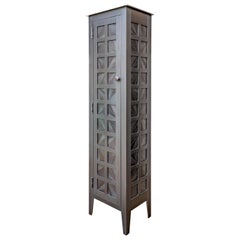
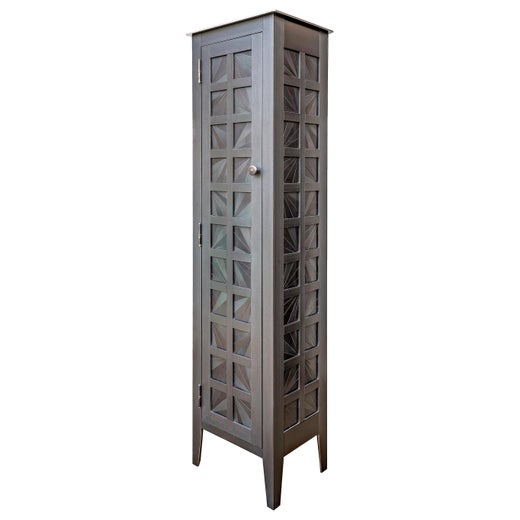
Jim Rose - Original Tall One Door "Fans" Quilt Cupboard, Monochromatic Pattern
By Jim Rose
Located in Chicago, IL
This One Door Fans Quilt Cupboard occupies a particularly refined place within Jim Rose’s legacy, demonstrating how his engagement with the Gee’s Bend quilt tradition extended beyond...
Category

2010s American Modern Cabinets

Materials

Steel

Still Thinking About These?

All Recently Viewed