Items Similar to A Rare Mid 18th Century Black Japanned Lacquer Cabinet on Stand
Want more images or videos?
Request additional images or videos from the seller
1 of 10
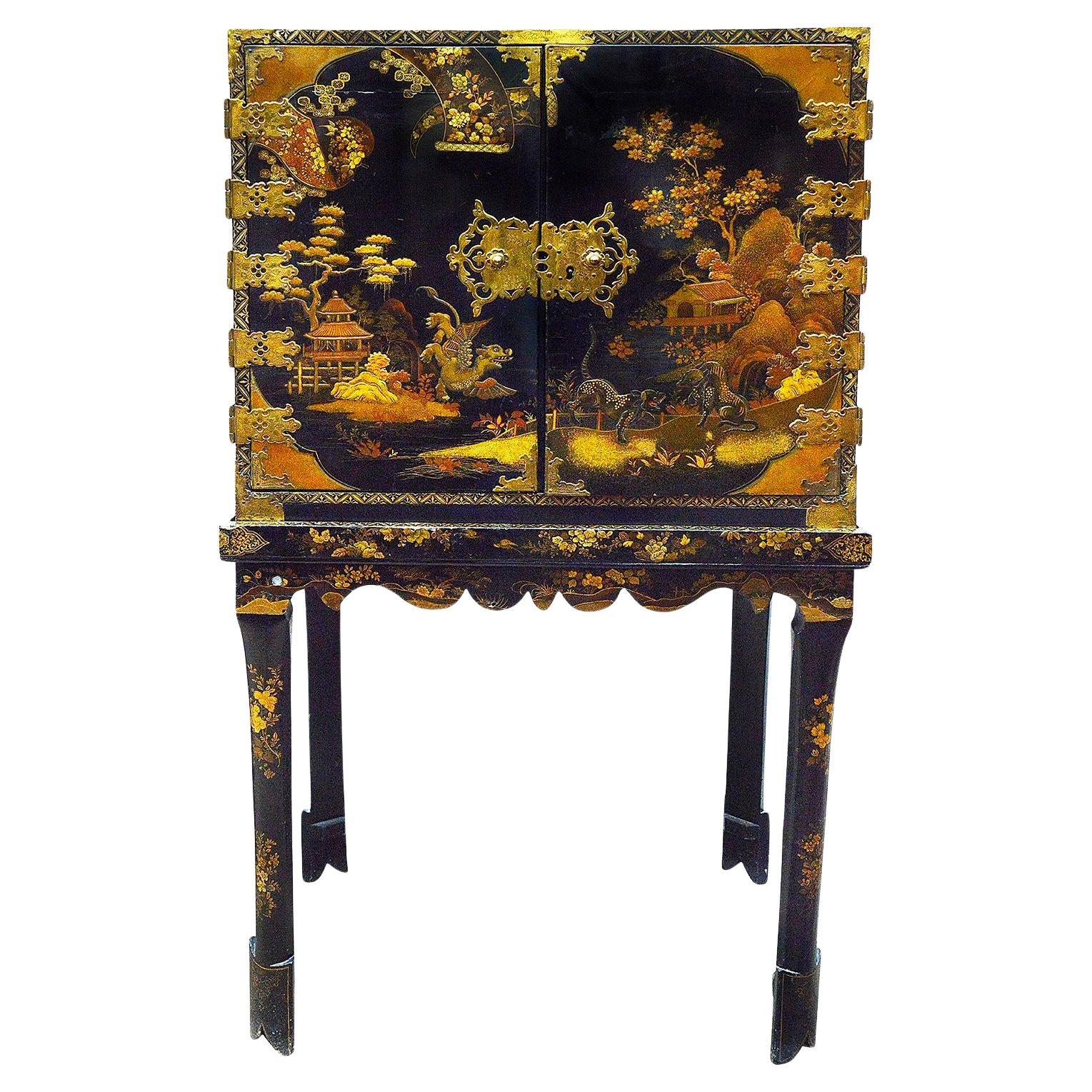
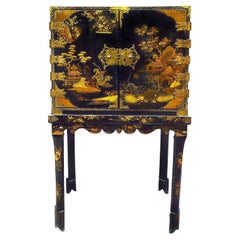
A Rare Mid 18th Century Black Japanned Lacquer Cabinet on Stand
$26,648.50
£19,400
€22,725.84
CA$36,611.04
A$39,803.58
CHF 21,103.90
MX$477,143.97
NOK 268,219.77
SEK 245,725.77
DKK 169,846.85
About the Item
England, circa 1760.
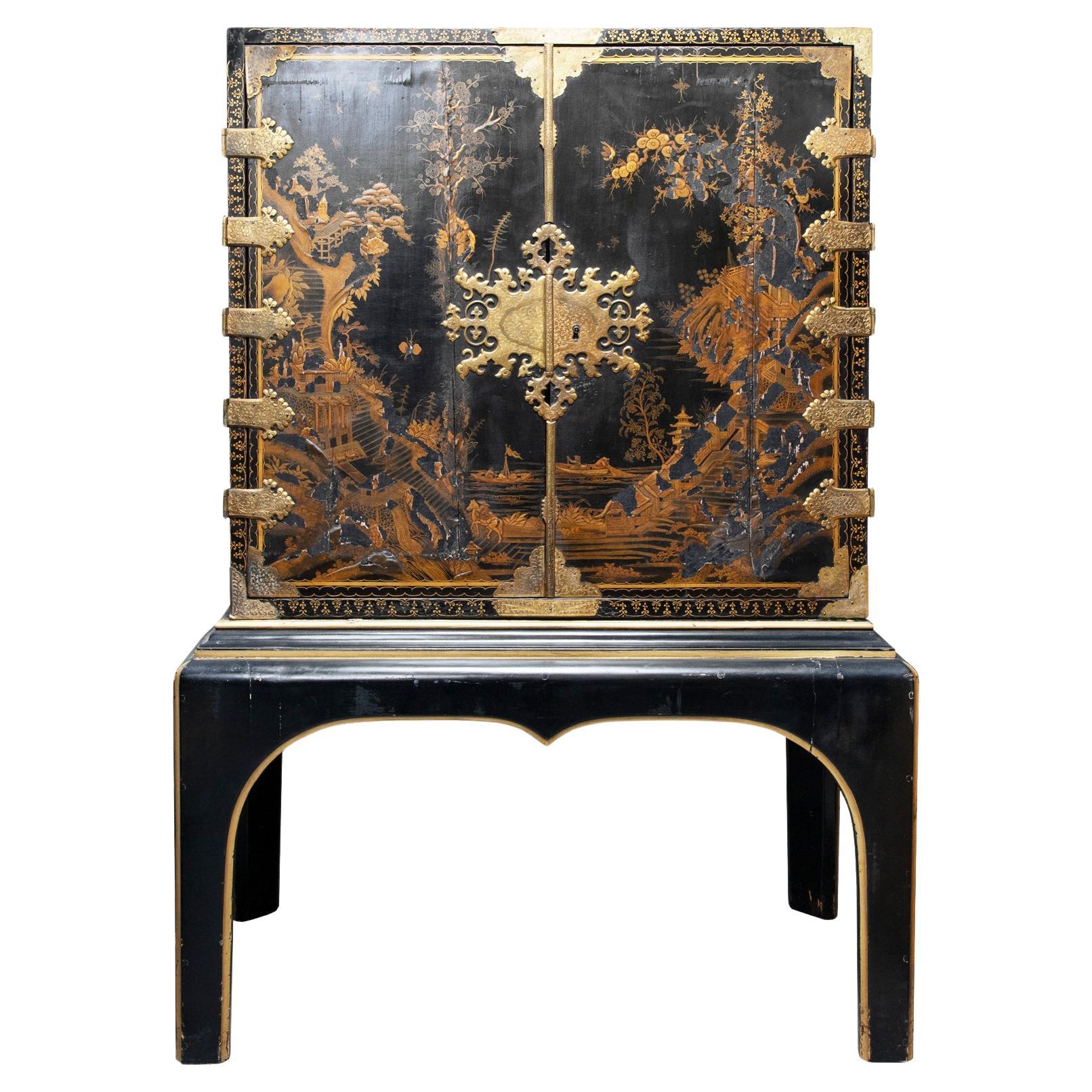
A fine mid-eighteenth century Japanned lacquer cabinet, with two doors revealing an interior fitted with eleven drawers with ring handles, all decorated with naturalistic scenes including fishermen and rural life. Retaining the original mid-eighteenth century stand, also with comparable chinoiserie decoration and X form stretcher with central pierced quatrefoil.
Height 161.00 centimetres.
Width 98.00 centimetres.
Depth 51.00 centimetres.
The art of 18th-century Japanning was a European practise that sought to imitate Japanese lacquerware and became a method of emulating the aesthetics of East Asia within the home. The term originates from the late 17th century as the opening of trade routes in the East triggered an interest in Chinese and Japanese fashions in Britain, France, Italy and the Netherlands.
It’s popularity reflected this era of imperial ambition when the West was fascinated by the exoticism of the East and saw the rise of an orientalist attitude. During this time, Europe’s demand for lacquerware began to grow and The East India Company's importation of lacquered objects and screens created a desire for larger, more practical items with similar decorative finishes.
To replicate the appearance of oriental lacquerwork, European cabinet-makers turned to John Stalker and George Parker's 1688 ‘A Treatise of Japaning and Varnishing: Being a Compleat Discovery of Those Arts’. This book contained formulas for creating and applying lacquers as well as various chinoiserie illustrations for readers to copy and modify, having made a concerted effort to reference designs on Chinese porcelain and textiles.
European japanning differed from traditional East Asian lacquer work which used sap from the Toxicodendron vernicifluum tree (also known as the Chinese lacquer tree), which is not indigenous to the West. Instead, japanned furniture in Europe and North America uses resin-based varnishes, similar to Shellac.
These varnishes were used alongside molten asphalt, drying oils and turpentine in thin layers upon materials like wood, metal or papier-mâché, which were then polished to a high gloss to resemble the finish of imported lacquer. As the base colour was typically a rich black, the chinoiserie designs applied on top were predominantly gold to contrast with the base, although red, green and blue were also colours commonly used as the base varnish.
By the mid-18th century examples of japanning could be seen on items of fine furniture, trays and all manner of chests and boxes throughout the manor houses and country seats of England. Indeed by 1760 the fashion had become so popular that more than 20 firms operated professionally in Wolverhampton alone.
Soon commercial companies were applying the art of japanning to a vast range of household objects and demand for their products remained popular throughout the Victorian era, with some firms continuing production well into the 20th century.
- Dimensions:Height: 63.39 in (161 cm)Width: 38.59 in (98 cm)Depth: 20.08 in (51 cm)
- Materials and Techniques:
- Place of Origin:
- Period:
- Date of Manufacture:circa 1760
- Condition:Wear consistent with age and use.
- Seller Location:London, GB
- Reference Number:1stDibs: LU957347164822
About the Seller
4.6
Vetted Professional Seller
Every seller passes strict standards for authenticity and reliability
1stDibs seller since 2012
157 sales on 1stDibs
Typical response time: 10 hours
Associations
The British Antique Dealers
Association
- ShippingRetrieving quote...Shipping from: London, United Kingdom
- Return Policy
More From This Seller
View AllA Rare Mid 19th Century Anglo Chinese Amboyna Bookcase
Located in London, GB
Anglo Chinese, circa 1860
A rare mid nineteenth century Anglo Chinese campaign amboyna and ebonised bookcase with glazed upper section, the doors revealing three shelves and two dra...
Category
Antique Mid-19th Century Chinese Campaign Bookcases
Materials
Amboyna
$15,989 Sale Price
20% Off
A George I Mulberry Secretaire Bureau Attributed to Coxed
Woster
By Coxed and Woster
Located in London, GB
England, circa 1710.
An important George I secretaire bureau in finely veneered ‘mulberry wood’ attributed to Coxed & Woster, with satinwood crossbanding, rosewood mouldings and pew...
Category
Antique Early 18th Century English George I Secretaires
Materials
Pewter
A 16th Century Augsberg Cabinet enclosed in an 18th Century Walnut Chest
Located in London, GB
Germany, circa 1600 and later
A rare late sixteenth century South German Augsberg cabinet comprising of eleven drawers surrounding a central tabernacle fitted with a further bank of secret drawers hidden behind a drop down slide to the left. The façades decorated with elaborate stained marquetry depicting hunting scenes, various dogs, a lion and unicorn. The cabinet has later been adapted by an English collector in the early eighteenth century, fitted with figured walnut crossbanded double doors to reveal the marquetry interior, and mounted upon a walnut chest of drawers with ring pull...
Category
Antique Early 18th Century German Cabinets
Materials
Walnut
A Nineteenth Century Empire Corner Cupboard
Located in London, GB
France, circa 1860
A mid nineteenth century mahogany corner cupboard, opening with two doors to the front, with inlaid marquetry beaded borders to the doors and the uprights, the up...
Category
Antique Mid-19th Century European Cupboards
Materials
Mahogany
$3,571 Sale Price
43% Off
A Fine Pair of Late 19th Century Flame Mahogany Cabinets
Located in London, GB
France, circa 1890
A fine pair of late nineteenth century flame mahogany cabinets with six equal drawers, original brass handles and escutcheons, surmounted by black marble tops.
...
Category
Antique Late 19th Century French Cabinets
Materials
Marble
Fine Nineteenth Century Empire Commode
Located in London, GB
French, circa 1820
A fine early nineteenth century mahogany Empire commode, with three graduated drawers with a diamond brass inlay and rectangular lozenges of brass, retaining the ...
Category
Antique Early 19th Century Commodes and Chests of Drawers
Materials
Mahogany
$10,219 Sale Price
20% Off
You May Also Like
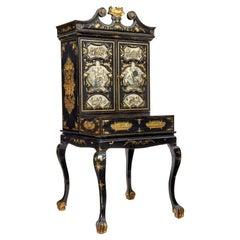
19th century Chinese Canton black lacquered desk cabinet
Located in Debenham, Suffolk
19th century chinese canton black lacquered desk cabinet, circa 1830.
Stunning quality chinese export desk, circa 1830. Main feature is the rare alabaster doors which have been hand...
Category
Antique Early 19th Century Chinese Regency Desks
Materials
Alabaster
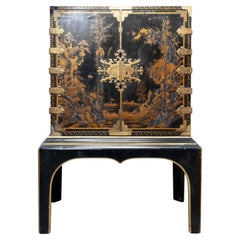
Early 18th century Japanese Lacquer Cabinet on Stand
Located in Rīga, LV
Rectangular cabinet has nine drawers inside. Hinges, corner mounts and lock plates in gilt brass. Decorated with river landscapes, insects, birds and animals in pairs. The stand is i...
Category
Antique Early 18th Century English George III Cabinets
Materials
Wood, Lacquer
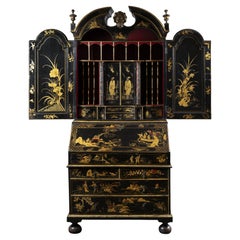
An English Black Lacquered Chinoiserie Bureau Cabinet, 18th Century
Located in ARMADALE, VIC
An English Black Lacquered Chinoiserie Bureau Cabinet, 18th Century
Description:
The upper section with a breakfront arched pedimental cornice flanked by a pair of urn finials, over...
Category
Antique 18th Century English Chinoiserie Cabinets
Materials
Wood
$38,500 Sale Price
30% Off
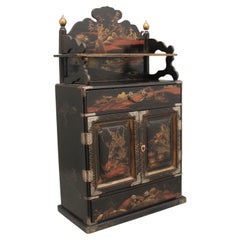
19th Century black lacquered and painted table cabinet
Located in Martlesham, GB
19th Century freestanding Japanese black lacquered and painted table top cabinet from the Meiji period (1868-1912) The cabinet throughout depicting Japanese countryside scenes, vario...
Category
Antique 1880s Japanese Meiji Cabinets
Materials
Wood
18th Century Queen Anne Lacquer cabinet on stand.
Located in Brighton, Sussex
A beautifully decorated Queen Anne period lacquer cabinet on stand. Having pierced, fretted brass hinges and lock plates. Chinoiserie scenes to the doors, opening to reveal ten fitte...
Category
Antique 18th Century English Cabinets
Materials
Lacquer
Early 19th Century Black Lacquer Cabinet
Located in Santa Monica, CA
This black lacquer cabinet has a mitered body frame with floating panels. The thick lacquer finishes are well preserved; however, the gilt paintings are quite worn already. From the ...
Category
Antique Early 19th Century Chinese Furniture
Materials
Hardwood
$700 Sale Price
53% Off